Viajá con Gus
HomeMexicoCuernavaca
Cuernavaca
🇲🇽 Mexico · Central Mexico

Cuernavaca

Jump to what you need
📌State
Morelos (Mexico). Cuernavaca is the capital of the state of Morelos, in the center of the country, some 85 km south of Mexico City, on the other side of the range that separates the Valley of Mexico from the Morelos valley. It sits at around 1,500 meters, lower and milder than the capital, which has given it its privileged climate and its most famous nickname: 'the city of eternal spring'. It's a classic destination for resting, weekends and learning Spanish
📌Service city
Cuernavaca itself has all the services: hotels, water parks, restaurants, hospitals, language schools, shops and bus terminals. It's very well connected by the Mexico City–Cuernavaca highway (the 'autopista del Sol'), with frequent coach services from several Mexico City terminals (among them Terminal del Sur / Taxqueña). It's also the natural base for touring Morelos: Tepoztlán, Xochicalco, Taxco, the water parks and the towns of the region. It has no significant commercial airport; you use Mexico City's
📌Best time to go
Thanks to its eternal-spring climate, Cuernavaca is enjoyable all year, with mild, pleasant temperatures almost always. The dry season (November to April) brings sunny days and clear skies, ideal for the gardens and the water parks. The rainy season (June to September) brings afternoon downpours that cool things off and leave everything green, without any cold. On weekends, long weekends and holidays the city fills with visitors from Mexico City, so for more calm go midweek. The region's festivals and carnivals liven up certain moments in the calendar
📌Suggested days
With 1 or 2 days you cover the essentials of Cuernavaca: the Palacio de Cortés, the Cathedral, the Jardín Borda, the squares downtown and a water park or garden. With 3 or 4 days you can settle into a slower pace, enjoy the water parks and restaurants, and use the city as a base for trips to Tepoztlán, the Xochicalco archaeological site, Taxco or the towns of Morelos. Many travelers visit as a weekend getaway from the capital
💱 MXN exchange rate
Loading rate…
🌤️ Weather in Cuernavaca
Loading weather…

A little over an hour from Mexico City, dropping down the range towards the south, the air changes: it turns warmer, softer, scented with flowers. That's the first impression of Cuernavaca, the capital of Morelos, known across Mexico as 'the city of eternal spring'. Its mild year-round climate made it, from pre-Hispanic times on, a resting place for the powerful: emperors, viceroys, hacienda owners and, later, generations of Mexico City residents escaping the cold and the bustle of the big city have all had holiday homes here.

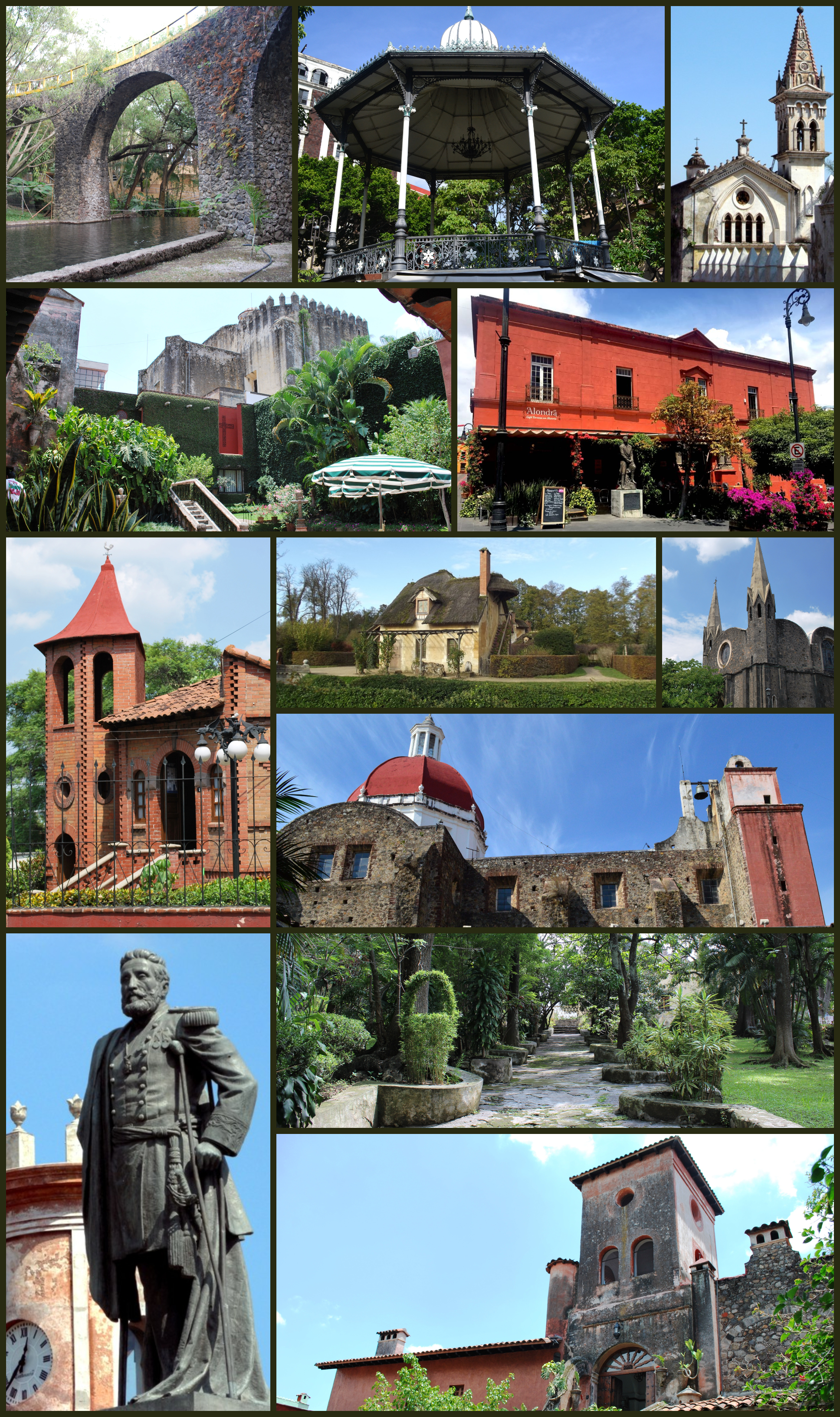
Cuernavaca combines history, gardens and water. It keeps monuments that tell the story of the conquest and the viceroyalty —like the imposing Palacio de Cortés, with Diego Rivera's celebrated murals, and the old Franciscan Cathedral— alongside historic gardens like the Jardín Borda, refuge of Maximilian and Carlota. All around are the water parks and hot springs that tap the region's springs, a tradition that goes back a long way. And for decades it has been one of the world's capitals for learning Spanish, with dozens of language schools.

This guide covers the essentials of Cuernavaca with a practical, warm eye: how to get there from Mexico City, what to see in its historic center, which gardens and water parks to visit, how to use it as a base for exploring Morelos, where to eat and what to keep in mind. An ideal destination for a relaxed getaway, with sun, gardens and plenty of history close at hand.

📖 History of Cuernavaca

The Cuernavaca region was inhabited from pre-Hispanic times by the Tlahuica, a Nahuatl-speaking people whose main domain was called Cuauhnáhuac, meaning something like 'next to the trees' or 'place at the edge of the woods'. The Spanish, who couldn't pronounce that name properly, twisted it until it became 'Cuernavaca'. The domain was conquered by the Mexica in the 15th century and became a place of rest and supply for the elite of Tenochtitlan, drawn by its climate and its fertility. After the Spanish conquest, Hernán Cortés took the region as part of his Marquisate of the Valley of Oaxaca and had a fortified palace built in Cuernavaca (today the Palacio de Cortés) and promoted sugarcane growing, which gave rise to great sugar haciendas across Morelos. During the viceroyalty and the 19th century, the city was a retreat for viceroys, nobles and, famously, Emperor Maximilian and Empress Carlota, who chose it as their summer refuge. At the start of the 20th century, Morelos was the heart of the agrarian Revolution led by Emiliano Zapata, born in the state, who fought for peasant land against the power of the haciendas. Through the 20th century, Cuernavaca cemented its reputation as a city of rest, of weekend houses for Mexico City residents and of Spanish-language study. The full history is on our history page.

Read the full history ↓

🏛️ Cuernavaca is in Morelos

The province of 'eternal spring' south of the capital: land of Xochicalco and of ancient Cuauhnáhuac, refuge of Cortés, of the mysticism of Tepoztlán and birthplace of Emiliano Zapata and his cry of 'Tierra y Libertad'.

Read the history of Morelos →

🗺️ What to see

1
Palacio de Cortés (Regional Museum)
The fortified palace Hernán Cortés had built, now a museum, with Diego Rivera's famous murals.
The Palacio de Cortés is Cuernavaca's most emblematic monument and one of the oldest civil buildings of colonial origin in continental America. Hernán Cortés had it built from the 1520s on, over pre-Hispanic Tlahuica structures, as a fortified residence from which he administered his vast holdings in the Marquisate of the Valley. Its look, with arches, towers and terraces, mixes defensive and residential function. Today the palace houses a regional museum devoted to the history and culture of Morelos, from pre-Hispanic times to the Revolution, with archaeological pieces, colonial objects and exhibits on life in the region. But its greatest treasure is on one of its terraces: the set of murals Diego Rivera painted in the 1920s, commissioned by the US ambassador Dwight Morrow, telling the history of Morelos, the conquest, the exploitation of Indigenous peoples and Emiliano Zapata's struggle. They are among the most important works of Mexican muralism. From its terraces and arches you also get lovely views of the city and, on clear days, of the volcanoes. Important: the palace was closed after the 2017 earthquake and reopened in 2023, with its second floor restored and reinaugurated in October 2024, now under the name Museo Regional de los Pueblos de Morelos (the Rivera murals and the galleries can be visited again). It opens Tuesday to Sunday from 9:00 to 18:00. Getting there: it's right in the historic center, next to the Plaza de Armas (calle Francisco Leyva 100). Best time and hours: in the morning, with good light for the murals. Tips: take your time reading Rivera's murals, which tell the whole history of Morelos in images; combine it with a walk around the neighboring squares.
ℹ️ Distance: Historic center, next to the Plaza de Armas · Best time: In the morning (good light for the murals) · Admission: $90 MXN (INAH rate; source: inah.gob.mx, verified July 2026); free on Sundays for Mexicans and residents, and always for under-13s, students, teachers, people with disabilities and INAPAM cardholders · Hours: Tuesday to Sunday from 9:00 to 18:00 (verified July 2026) · Duration: 1.5 to 2 hours
2
Cuernavaca Cathedral (former convent of La Asunción)
One of the oldest Franciscan convent complexes in the Americas, with rediscovered colonial murals.
Cuernavaca Cathedral is part of a 16th-century Franciscan convent, one of the first built in New Spain and part of the group of monasteries on the slopes of Popocatépetl declared a World Heritage Site by UNESCO. Its exterior is plain and solid, almost fortress-like, typical of those first missionary convents, with high walls and an austere atmosphere. Inside it holds a remarkable surprise: under later layers of paint, large colonial murals were uncovered that depict, according to the most widespread interpretation, the martyrdom of Franciscan missionaries in Japan. They are unique paintings that bear witness to the order's missionary calling and to the Spanish empire's ties with Asia. The complex also includes open chapels and other spaces typical of 16th-century convent architecture. The grounds, with their gardens and atrium, are an oasis of calm right downtown. Getting there: it's in the historic center, a few blocks from the Plaza de Armas and the Palacio de Cortés. Best time and hours: respecting service times; mornings are usually quieter. Tips: look for the colonial murals inside, which are the most singular thing about the place; the atrium and gardens invite you to rest in the shade.
ℹ️ Distance: Historic center, a few blocks from the Plaza de Armas · Best time: In the morning (respect service times) · Admission: Free entry to the church (donation suggested; check the hours) · Duration: 45 minutes to 1 hour
3
Jardín Borda
The historic 18th-century garden, refuge of Maximilian and Carlota, with ponds, fountains and green spaces.
The Jardín Borda is one of the most charming corners of Cuernavaca and a testimony to the taste for gardening of the colonial era and the 19th century. It was created in the 18th century as part of the residence of the Borda family, a powerful family with mining origins (linked to Taxco), who used Cuernavaca's climate and water to create a European-style pleasure garden, with terraces, ponds, fountains and a great variety of plants. Its fame grew in the 19th century when Emperor Maximilian of Habsburg and Empress Carlota chose it as their retreat during the Second Empire, turning it into a kind of imperial garden. Today it's a cultural space open to the public, with its ponds (which you can row on), its tree-lined paths, exhibition rooms and a serene atmosphere that invites an unhurried stroll. It's an ideal place for a quiet walk, photos among the greenery and a rest in the shade halfway through a tour of the center. Getting there: it's in the center of the city, near the Cathedral. Best time and hours: morning or late afternoon, when it's cooler. Tips: confirm the hours and whether there's an exhibition on; combine it with the Cathedral, which is very close.
ℹ️ Distance: City center, near the Cathedral · Best time: Morning or late afternoon, when it's cooler · Admission: $30 MXN general / $15 MXN students, teachers, INAPAM cardholders and people with disabilities (source: Centro Cultural Jardín Borda, verified July 2026); free on Sundays and, with Morelos resident ID, free Tuesday to Saturday · Duration: 1 to 1.5 hours
4
Plaza de Armas, Jardín Juárez and the historic center
Cuernavaca's civic heart, with its squares, arcades, the bandstand and the life of the city.
Cuernavaca's historic center revolves around two adjoining spaces: the Plaza de Armas (the main square, also called the Zócalo) and the Jardín Juárez, separated by barely a street. It's the civic and social heart of the city, a place to sit and watch life go by, have a drink under the arcades and soak up the relaxed 'eternal spring' atmosphere. The Plaza de Armas is flanked by government buildings and the Palacio de Cortés, and is usually busy with vendors, shoeshiners, balloons and people strolling. The neighboring Jardín Juárez, shadier and more wooded, has an iron bandstand (attributed to Gustave Eiffel's school) where there's often music in the afternoons and at weekends. Cafés, ice cream parlors, restaurants and shops cluster around them. It's the best starting point for exploring the center on foot, since from here you can walk to the Palacio de Cortés, the Cathedral and the Jardín Borda. Getting there: it's the center of the city; the whole historic quarter is walkable. Best time and hours: in the afternoon, when the square comes alive; weekends have more atmosphere. Tips: it's a good place to try nieves and antojitos, see the bandstand and get your bearings before visiting the nearby monuments.
ℹ️ Distance: City center (all on foot) · Best time: Afternoons and weekends, with more atmosphere · Admission: Free (public space) · Duration: 1 hour or more
5
Water parks and hot springs of Morelos
The region's springs and swimming parks, a bathing tradition built on the water and the warm climate.
One of the great traditions of Cuernavaca and of Morelos in general are its balnearios, the swimming parks that tap the region's abundant springs and warm climate. Since pre-Hispanic times, water has been part of this land's appeal, and today there are numerous balnearios and water parks —in and around the city— very popular with families and weekend visitors. Some are traditional, with pools fed by springs and wooded settings; others are large water parks with slides and rides. Around Cuernavaca and in nearby Morelos municipalities there are also balnearios famous nationwide. It's an ideal plan for hot days and for anyone traveling with kids. The offering is wide and changeable, so it's worth checking which ones are open, their hours and their services. Getting there: there are balnearios in the city itself and in nearby municipalities; by car or local transport. Best time and hours: sunny, warm days; midweek is less crowded than weekends and holidays. Tips: bring swimwear, sunscreen and cash; check the hours and whether it's worth booking in high season; weekends get packed.
ℹ️ Distance: In the city and in nearby Morelos municipalities (car or local transport) · Best time: Sunny, warm days; midweek for fewer people · Admission: $80-250 MXN per person depending on the balneario; large water parks up to $350-450 MXN (source: Morelos balnearios, verified July 2026) · Duration: Half a day to a full day
6
Excursion to Tepoztlán and Xochicalco
Two nearby jewels of Morelos: the pueblo mágico of Tepoztlán and the Xochicalco archaeological site, a World Heritage Site.
Cuernavaca is an excellent base for getting to know Morelos, and two of its best day trips are very close. Tepoztlán, about 25 km away, is a pueblo mágico at the foot of the spectacular Tepozteco range, famous for its market, its food, its bohemian atmosphere and the Tepozteco pyramid at the top of the hill, reached by a demanding trail with magnificent views (Tepoztlán has its own guide). The Xochicalco archaeological site, some 40 km to the southwest, is one of the most important pre-Hispanic sites in central Mexico and a UNESCO World Heritage Site. It was a fortified city that flourished towards the end of the Classic period, after the fall of Teotihuacan, with notable structures such as the Pyramid of the Feathered Serpents, decorated with reliefs, and an observatory in a cave. Its site museum is one of the most modern in the country. Both can be visited on day trips from Cuernavaca. Getting there: by car, local transport or organized tour. Best time and hours: in the morning, to make the most of the day and avoid the heat (there's little shade at Xochicalco). Tips: for Xochicalco, bring water, a hat and sun protection; for Tepoztlán, comfortable shoes if you're climbing the Tepozteco.
ℹ️ Distance: Tepoztlán about 25 km; Xochicalco about 40 km from Cuernavaca · Best time: In the morning (heat and little shade at midday at Xochicalco) · Admission: Xochicalco $105 MXN for Mexicans and residents ($210 general; INAH rate; source: inah.gob.mx, verified July 2026); free on Sundays for Mexicans and residents; Tepoztlán free, except for specific sites · Duration: Half a day to a full day each
7
Museums and cultural houses (Robert Brady, La Tallera and others)
Small museums and house-museums showing the art, the collecting and the cultural life of Cuernavaca.
Cuernavaca has a rich cultural life for its size, with several house-museums and art spaces worth discovering. One of the most singular is the Robert Brady Museum, set in a mansion downtown (part of it once belonged to the old convent) that was the home of the American artist and collector Robert Brady. Its rooms preserve, just as he left them, an astonishing collection of art, furniture and objects from all over the world (Mexican paintings, African, Asian and colonial art), in an intimate and very personal setting. In contemporary art, La Tallera is a cultural space built around the former studio of the muralist David Alfaro Siqueiros, who lived and worked in Cuernavaca; today it's a museum and art center with exhibitions and the artist's enormous murals and sketches. There are also other small museums, galleries and cultural centers scattered around the city. These places are ideal for an unhurried visit, away from the crowds, and for seeing another side of Cuernavaca, more artistic and intimate. Getting there: the Robert Brady Museum is downtown; the other spaces are in different neighborhoods (car or taxi/app). Best time and hours: confirm the hours, which can be short and with closing days. Tips: the Robert Brady Museum is a little-known gem; combine it with a walk around the historic center.
ℹ️ Distance: Robert Brady Museum downtown; other spaces in different neighborhoods · Best time: Check the hours (they tend to be short and with closing days) · Admission: Robert Brady Museum approx. $60-80 MXN; La Tallera $30-50 MXN or free depending on the exhibition (source: the museums' websites, verified July 2026) · Duration: 1 to 2 hours
Advertisements
What nobody tells you

💵 Prices

Tickets

TypePrice
Palacio de Cortés (Museo Regional de los Pueblos de Morelos)$90 MXN (INAH rate; reopened 2023-2024 after the 2017 earthquake; source: inah.gob.mx, verified July 2026); free on Sundays for Mexicans and residents
Cuernavaca CathedralFree entry (donation suggested; check the hours)
Jardín Borda$30 MXN general / $15 MXN students and INAPAM cardholders (source: Centro Cultural Jardín Borda, verified July 2026); free on Sundays
Plaza de Armas and Jardín JuárezFree (public spaces)
Robert Brady MuseumApprox. $60-80 MXN (source: Robert Brady Museum, verified July 2026)
Balnearios and water parks$80-450 MXN per person depending on the balneario (source: Morelos balnearios, verified July 2026)
Xochicalco archaeological site (excursion)$105 MXN Mexicans/residents ($210 general; INAH rate; source: inah.gob.mx, verified July 2026); free on Sundays for Mexicans and residents
🔄 updated monthlyOfficial / reference values · double-check when buying

Activities and tours

ActivityPriceDurationOperator
Walking tour of the historic center (Palacio de Cortés, Cathedral, Jardín Borda)$300-500 MXN per person (local guide, 2-3 h)Half a dayLocal guides and Cuernavaca agencies
Excursion to Xochicalco (archaeological site, World Heritage)$500-900 MXN per person (includes transport and admission)Half a day to a full dayAgencies in Cuernavaca and Mexico City
A day at a balneario / water park$80-450 MXN per person depending on the balneario (verified July 2026)Half a day to a full dayMorelos balnearios
Spanish course at a language schoolUS$ 150-300 a week (group, 20 h) depending on the school; homestay accommodation separate, US$ 20-35/nightVariable (days to weeks)Cuernavaca Spanish schools (e.g. Cemanahuac, Universal)
Excursion to Tepoztlán and the Tepozteco$400-800 MXN per person (transport + free time)Half a day to a full dayLocal agencies and guides
Route of the sugar haciendas of Morelos$600-1,200 MXN per person (full day with transport)Half a day to a full dayMorelos tour agencies
🔄 updated monthlyOfficial / reference values · double-check when buying
Advertisements

🚌 How to get there and distances

Getting around

ModePriceDurationNotes
On foot around the historic centerNo costVariableThe historic quarter (Palacio de Cortés, Cathedral, Jardín Borda, the squares) is comfortably walkable. Comfortable shoes for the sloping streets
Taxi and apps (DiDi / Uber)$40-80 MXN for short trips in the city; $100-200 MXN to the outskirts (source: local guides, verified July 2026)VariableThe most practical way to reach balnearios, distant museums or move between neighborhoods. Uber and DiDi work in Cuernavaca alongside the taxi stands; with an app you pay by card and skip the haggling. In a street taxi, agree the fare beforehand because they don't always use the meter.
Combis and rutas (urban transport)Minimum fare $10 MXN a ride in Morelos; paid in cash to the driver (source: Morelos Mobility and Transport Coordination / La Jornada, verified July 2026)VariableA wide network of combis and 'rutas' (shared vans) connecting the city and nearby municipalities. They're the cheapest option but you need to know the routes. There is an electronic payment system with a transfer discount (50% when you board a second vehicle and 75% on the third, within 90 minutes), though most people still pay in cash.
App for getting around (Moovit / Google Maps)FreeIn Cuernavaca the app that best shows the combi routes and the timetables is Moovit, with the city's routes loaded; Google Maps also gives public transport directions. They're the best way to find your way through the tangle of routes without knowing them by heart. Verified July 2026.
Private or rental carRental from $600-1,000 MXN/day; parking $20-40 MXN/hour downtownVariableHandy for the excursions around Morelos (Xochicalco, Tepoztlán, the balnearios); the center has narrow streets and limited parking
🔄 updated monthlyOfficial / reference values · double-check when buying

How to get there

RouteAirlines / operatorsAvg. priceDuration
Mexico City → Cuernavaca by busPullman de Morelos, from Terminal del Sur (Taxqueña) and the WTC$190-245 MXN depending on the service (source: Pullman de Morelos, verified July 2026)Approx. 1 to 1.5 hours (depending on traffic)
Mexico City → Cuernavaca by car (the autopista del Sol)Private or rental car; toll on the Mexico City–Cuernavaca highwayToll approx. $150-200 MXN + fuel1 to 1.5 h depending on traffic (about 85 km)
Mexico City International Airport (AICM) → CuernavacaDirect buses from the airport to Cuernavaca, or a taxi/private transferDirect bus approx. $250-350 MXN; taxi/private transfer $900-1,300 MXNApprox. 1.5 to 2 hours depending on traffic
Cuernavaca as a base for the rest of Morelos (Tepoztlán, Xochicalco, Taxco)Local buses, combis or car$20-60 MXN by combi/local bus; by car depending on fuel and tollsDepends on the destination (from 30 min to 1.5 h)
🔄 updated monthlyOfficial / reference values · double-check when buying

🏨 Where to stay

No exact prices: a scale from $ (budget) to $$$$$ (luxury), with 2-3 options per category.

CategoryPriceRecommended options
Boutique hotels and luxury haciendas$$$$$US$ 100-220 a night; e.g. Hotel & Spa Hacienda de Cortés, Fiesta Americana Hacienda San Antonio, old haciendas with gardens, pools and a spa
Mid-range and resort hotels$$$$$US$ 45-90 a night; mid-range hotels in the city and on the outskirts, many with a garden and pool, designed for weekend getaways
Guesthouses and accommodation for Spanish students$$$$$US$ 20-35 a night with a family (meals included); language school residences, ideal for long stays
Hostels and budget options$$$$$US$ 12-25 for a dorm bed; US$ 30-50 for a private room; hostels and budget hotels downtown

🍴 Where to eat

TypePriceOptions / signature dish
Morelos and traditional Mexican cooking$$$$$$150-320 MXN per dish; cecina from Yecapixtla, tacos acorazados, mole, itacates, pipián and antojitos in restaurants and on terraces downtown
Garden and hacienda restaurants$$$$$$350-700 MXN per dish; eating in restaurants with gardens, terraces and old haciendas, a relaxed setting ideal for a weekend lunch
Cafés, ice cream parlors and desserts$$$$$$40-90 MXN for a coffee or an ice; $50-120 MXN for dessert. Cafés downtown and ice cream parlors with artisan flavors next to the Jardín Juárez
Markets and cheap eats$$$$$$40-100 MXN for an antojito or the dish of the day; the city market and fondas with home cooking at accessible prices
Advertisements

📖 History of Cuernavaca

Origins, formation and what the sources say.

The origin of the name: from Cuauhnáhuac to Cuernavaca

The name Cuernavaca hides a story of linguistic transformation running from Nahuatl into Spanish. The original pre-Hispanic settlement was called Cuauhnáhuac, a Nahuatl word usually translated as 'next to the trees', 'at the edge of the woods' or 'place surrounded by trees', a reference to the vegetation and the fertility of the area, helped by its mild climate and its water.

When the Spanish arrived, they found the name Cuauhnáhuac hard to pronounce. Through a process of phonetic adaptation —and, tradition says, with a bit of humor or plain convenience— they warped the word until it became something familiar in Spanish: 'Cuernavaca', which literally suggests 'cow's horn', though it has nothing to do with the original meaning. It's a classic example of the many Mexican place names that went through this kind of distorting 'translation'.

The city's coat of arms and its symbolism keep the memory of that origin: the pre-Hispanic glyph for Cuauhnáhuac depicted a tree, alluding to the Nahuatl name. So although today we say 'Cuernavaca', the name holds at its root the memory of the wooded, fertile place that captivated Tlahuica, Mexica and conquistadors alike.

The meaning of Cuauhnáhuac
The most accepted translation of Cuauhnáhuac is 'next to (or at the edge of) the trees' or 'place surrounded by woods', from the Nahuatl roots 'cuáuitl' (tree) and 'náhuac' (next to, near). The glyph associated with the city depicted a tree.
Source: https://es.wikipedia.org/wiki/Cuernavaca
The distortion into 'Cuernavaca'
The current form 'Cuernavaca' is the result of the phonetic adaptation the Spanish made of the difficult 'Cuauhnáhuac', pulling it closer to familiar Spanish words. It's a widely repeated folk etymology, though the Spanish name bears no relation in meaning to the original.
Source: https://en.wikipedia.org/wiki/Cuernavaca

The Tlahuica and the domain of Cuauhnáhuac under Mexica rule

Long before the Spanish arrived, the Cuernavaca region was inhabited by the Tlahuica, a Nahuatl-speaking people who settled in the warm valleys of what is now Morelos. The Tlahuica developed prosperous domains, helped by a fertile setting with a benign climate that allowed abundant crops, such as cotton, highly valued across Mesoamerica. Cuauhnáhuac was one of their most important centers.

The region's prosperity made it a coveted target. In the 15th century, at the height of Mexica expansion, the Tlahuica domains were subdued by the Triple Alliance led by Tenochtitlan. Cuauhnáhuac became a tributary province of the Mexica, who received cotton and other goods from it and folded it into their network of power and trade.

The relationship between the Mexica and Cuauhnáhuac was also dynastic: the chronicles mention kinship ties between the nobility of both places. The spring-like climate and the wealth of the region made Cuauhnáhuac a place of rest and supply prized by the elite of Tenochtitlan, foreshadowing in pre-Hispanic times the vocation as a 'place of leisure' that the city would keep across the centuries.

The Tlahuica as the original people
The sources agree in identifying the Tlahuica, a Nahuatl-speaking people, as the pre-Hispanic inhabitants of the Cuernavaca region and much of what is now Morelos, with an economy based on agriculture (cotton above all).
Source: https://es.wikipedia.org/wiki/Cuernavaca
Incorporation into the Mexica empire
Cuauhnáhuac was conquered and incorporated as a tributary province of the Mexica empire during its 15th-century expansion. The chronicles record both the military subjection and dynastic ties between the Tlahuica and Mexica nobility.
Source: https://en.wikipedia.org/wiki/Cuernavaca

The conquest, Hernán Cortés and the sugar cycle

After the fall of Tenochtitlan in 1521, the region of Cuauhnáhuac came under Spanish control and took a central place in Hernán Cortés's plans. The conquistador was rewarded with an enormous domain, the Marquisate of the Valley of Oaxaca, which included vast lands in different parts of New Spain, and Cuernavaca was one of his most cherished holdings, drawn as he was by its climate and its agricultural wealth.

From the 1520s on, Cortés had a fortified palace built in Cuernavaca —today's Palacio de Cortés— raised over pre-Hispanic structures, which served him as a residence and as the administrative center of his lands. He also drove in the region an enterprise that would shape its history for centuries: sugarcane growing. Morelos's warm climate and abundant water proved ideal for cane, and mills and sugar haciendas soon appeared and became the economic engine of the area.

At the same time, the religious orders undertook evangelization. The Franciscans founded in Cuernavaca one of the first convents in New Spain (the complex of today's Cathedral), part of the notable group of 16th-century monasteries on the slopes of Popocatépetl. During the viceroyalty, Cuernavaca thus consolidated its double character: land of sugar haciendas and, at the same time, a place of rest and leisure thanks to its eternal spring.

The Palacio de Cortés and the Marquisate of the Valley
Hernán Cortés had a fortified palace built in Cuernavaca on pre-Hispanic foundations, as the seat of his Marquisate of the Valley of Oaxaca. It is considered one of the oldest buildings of civil origin in continental America.
Source: https://es.wikipedia.org/wiki/Palacio_de_Cort%C3%A9s
The sugar cycle in Morelos
Cortés introduced and promoted sugarcane growing in the region, which gave rise to a system of sugar haciendas and mills that dominated the economy of Morelos through the viceroyalty and up to the Revolution, at a heavy social cost to peasant communities.
Source: https://en.wikipedia.org/wiki/Cuernavaca

The 19th century: Cuernavaca, refuge of Maximilian and Carlota

Through the 19th century, in an independent Mexico, Cuernavaca kept and reinforced its reputation as a place of rest. Its mild climate and its closeness to the capital made it the favorite destination for the elites escaping the cold and the bustle of Mexico City. Mansions, villas and gardens multiplied, and the city definitively earned its nickname, 'the city of eternal spring'.

The most celebrated episode of this period came during the Second Mexican Empire (1864-1867), when Emperor Maximilian of Habsburg and Empress Carlota, imposed by the French intervention, chose Cuernavaca as their place of retreat and rest. The imperial couple fell for the city's climate and gardens, and adopted the Jardín Borda —the splendid pleasure garden created in the 18th century by the Borda family— as one of their favorite residences, giving it the air of an imperial garden.

Maximilian left other marks on the region, tied to his fondness for the area, before the Empire collapsed and he was executed in 1867. That imperial episode reinforced Cuernavaca's prestige as an elegant summer retreat and left the Jardín Borda a romantic patina it still keeps. The 19th century, in short, consolidated the city's image as a haven of rest for the powerful, a vocation inherited from the days of the Mexica and of Cortés.

Maximilian and Carlota at the Jardín Borda
It is well documented that Emperor Maximilian and Empress Carlota used Cuernavaca as a rest residence during the Second Empire (mid-1860s), adopting the Jardín Borda as one of their favorite places.
Source: https://es.wikipedia.org/wiki/Jard%C3%ADn_Borda
The origin of the Jardín Borda
The Jardín Borda was created in the 18th century by the Borda family, whose origins were tied to the mines of Taxco, as a European-style pleasure garden. Its later fame is largely due to its use by the imperial couple in the 19th century.
Source: https://es.wikipedia.org/wiki/Cuernavaca

The Revolution, Emiliano Zapata and the land of Morelos

At the start of the 20th century, Morelos —with Cuernavaca as its capital— was one of the central stages of the Mexican Revolution, and very especially of its agrarian strand. The state lived under the dominance of the great sugar haciendas, which had been swallowing up land and water at the expense of peasant communities stripped of their communal ground. That deep injustice made Morelos a social powder keg.

Out of that land came one of the most emblematic figures of the Revolution: Emiliano Zapata, born in Anenecuilco, Morelos. Zapata led the agrarian movement of the south under the slogan 'Land and Liberty', demanding the return of the land to the peasants. His program was set down in the Plan de Ayala (1911). Zapatismo controlled much of Morelos during the fighting and turned the region into a stronghold of the peasant cause, facing down successive governments until Zapata's assassination in 1919.

The Revolution left an indelible mark on the identity of Morelos and of Cuernavaca, where Zapata's figure is revered to this day. It is no accident that the famous murals Diego Rivera painted in the Palacio de Cortés in the 1920s culminate precisely with the image of Zapata: the artist wanted to sum up in them the whole history of Morelos, from the conquest and the exploitation of Indigenous and peasant communities to the revolutionary struggle for the land.

Morelos as the cradle of Zapatismo
Emiliano Zapata, born in Morelos, led the agrarian movement of the south during the Mexican Revolution under the slogan 'Land and Liberty' and the Plan de Ayala. The state was one of the main strongholds of Zapatismo, in response to the seizure of land by the sugar haciendas.
Source: https://es.wikipedia.org/wiki/Emiliano_Zapata
Rivera's murals in the Palacio de Cortés
In the 1920s, commissioned by ambassador Dwight Morrow, Diego Rivera painted a set of murals in the Palacio de Cortés that tell the history of Morelos —conquest, exploitation and Revolution— and culminate in the figure of Emiliano Zapata. They are a key work of Mexican muralism.
Source: https://en.wikipedia.org/wiki/Cuernavaca

The 20th century and today: a city of rest, culture and Spanish learning

Through the 20th century, Cuernavaca cemented its character as the resting city par excellence for the people of Mexico City. Building the highway that linked the two cities brought Cuernavaca even closer to the capital and multiplied the weekend houses, the hotels, the villas with gardens and pools and the balnearios that tap the region's springs. 'Eternal spring' became synonymous with relaxing an hour from the big city.

The city also drew artists, writers and intellectuals, Mexican and foreign alike, seduced by its climate and its atmosphere. The muralist David Alfaro Siqueiros lived and worked here (his studio is today the cultural space La Tallera), and the collector Robert Brady gathered in his house downtown an astonishing art collection now turned into a museum. Cuernavaca thus cultivated a rich cultural life for its size.

One of the most characteristic features of contemporary Cuernavaca is its worldwide fame as a place to learn Spanish. Dozens of language schools draw students from all over the world, who combine classes with immersion in local culture and homestays with Mexican families. Today, Cuernavaca remains what it has been for centuries: a refuge of gentle climate, gardens and history, capital of a state, Morelos, loaded with pre-Hispanic, colonial and revolutionary past.

Cuernavaca and Spanish immersion
In the second half of the 20th century Cuernavaca established itself as one of the most internationally recognized destinations for learning Spanish, thanks to its climate, its closeness to Mexico City and a wide offering of language schools and homestay accommodation.
Source: https://en.wikipedia.org/wiki/Cuernavaca
Artists and intellectuals in Cuernavaca
Numerous artists and intellectuals were connected to the city. David Alfaro Siqueiros had his studio here (today La Tallera) and Robert Brady installed his celebrated collection, now a museum. Cuernavaca had a reputation as a creative, cosmopolitan refuge throughout the 20th century.
Source: https://es.wikipedia.org/wiki/Cuernavaca

📚 Bibliography

  • Wikipedia (ES) — «Cuernavaca»: https://es.wikipedia.org/wiki/Cuernavaca
  • Wikipedia (EN) — «Cuernavaca»: https://en.wikipedia.org/wiki/Cuernavaca
  • Wikipedia (ES) — «Palacio de Cortés»: https://es.wikipedia.org/wiki/Palacio_de_Cort%C3%A9s
  • Wikipedia (ES) — «Jardín Borda»: https://es.wikipedia.org/wiki/Jard%C3%ADn_Borda
  • Wikipedia (ES) — «Emiliano Zapata»: https://es.wikipedia.org/wiki/Emiliano_Zapata
  • INAH — Museo Regional de los Pueblos de Morelos (Palacio de Cortés): https://www.inah.gob.mx/
  • UNESCO — «Earliest 16th-Century Monasteries on the Slopes of Popocatepetl»: https://whc.unesco.org/en/list/702/
  • Gobierno del Estado de Morelos — Turismo: https://morelos.gob.mx/

❓ Frequently asked questions

How do I get to Cuernavaca from Mexico City?+
The most comfortable way is by bus: there are frequent services (like Pullman de Morelos) from Terminal del Sur (Taxqueña) and other terminals, taking around an hour and a half depending on traffic. By car, you get there on the autopista del Sol (Mexico City–Cuernavaca) in a similar time. There are even direct buses from Mexico City airport.
Why do they call it 'the city of eternal spring'?+
Because of its mild, pleasant climate almost all year, warmer than Mexico City's since it's at a lower altitude and on the other side of the range. That permanent spring made it, from pre-Hispanic times, a resting place for emperors, viceroys and, today, for many people from the capital who escape here at weekends.
How many days do I need in Cuernavaca?+
To see the essentials (the Palacio de Cortés, the Cathedral, the Jardín Borda and the squares) one or two days is enough. If you want to add balnearios, downtime and use it as a base for Tepoztlán, Xochicalco or Taxco, count on three or four days. Many travelers visit as a weekend getaway.
What can't I miss in Cuernavaca?+
The must-sees are the Palacio de Cortés with Diego Rivera's murals, the old Franciscan Cathedral with its colonial murals, the historic Jardín Borda and the squares downtown. If you have time, add a balneario, the Robert Brady Museum and a trip to Xochicalco or Tepoztlán.
Is it a good place to learn Spanish?+
Yes, Cuernavaca is one of the most famous destinations in the world for learning Spanish, with many language schools and the option of staying with local families. The pleasant climate, the closeness to Mexico City and the quiet setting made it popular for study stays.
Is it worth using it as a base for exploring Morelos?+
Absolutely. From Cuernavaca it's easy to reach Tepoztlán and its Tepozteco, the Xochicalco archaeological site (World Heritage), Taxco and numerous balnearios and haciendas. It's a comfortable, well-connected base for exploring the state on day trips.
When is the best time to visit?+
With its eternal-spring climate it's enjoyable all year. The dry season (November to April) brings clear days; the rainy season (June to September) cools the afternoons and leaves everything green. For more calm go midweek, since weekends and long weekends fill with visitors from the capital.
Sources consulted (15)
Still planning?
Explore more destinations in Mexico
See all destinations →
Advertisements
Image credits
Photos from Wikimedia Commons, each under its own licence (CC BY, CC BY-SA or public domain). Open each file to see its author and licence.
Montaje de Cuernavaca