Siby is the nature and adventure getaway par excellence near Bamako: a Mandinka village just over an hour from the capital, at the foot of the Manding Mountains, surrounded by reddish sandstone plateaus, stone arches, waterfalls and cliffs that draw hikers and climbers. It is where people from Bamako go to breathe fresh air, walk through the savannah and swim in the waterfalls after the rainy season.
Beyond its nature, Siby carries strong historical and cultural weight: it is a Malinké village with medieval roots, linked to the epic of Sundiata Keïta and the founding of the Mali Empire. Its most famous monument, the Kamandjan arch, is wrapped in legend: tradition says that the warrior king Kamandjan Camara, Sundiata's childhood friend, cut through the mountain with a single sword stroke. Siby thus combines hiking, climbing and a journey to the roots of the Mandinka world.
As everywhere in Mali, you have to be honest about the situation: although Siby is in one of the relatively less exposed areas of the south, the country is going through a serious security crisis and foreign ministries advise against travel. That is why this guide serves mainly a cultural and informative purpose, and any travel decision should be based on up-to-date official advisories and professional security advice.
Siby is an old Mandinka village in the Mandé country, the region that was the cradle of the Mali Empire. According to the epic of Sundiata Keïta, the king of Siby, Kamandjan Camara, Sundiata's childhood friend, gathered the kings of the allied tribes here to confront the tyrant Sumaoro Kanté, the Sosso king, in the struggle that would lead to the founding of the empire around 1235. The natural stone arch crowning the plateau, the 'arche de Kamandjan', became tied to that legend: tradition says the warrior opened it with a single sword stroke. Today Siby combines that historical memory with its reputation as a hiking and climbing paradise near Bamako. Its full story is told on our history page.
Read the full history ↓The capital on the banks of the Niger and the historic heart of the Malinké people: Kangaba is where the Mali Empire was born and where the memory of the Kurukan Fuga Charter is kept.
Read the history of Bamako and the Mandinka south-west →No exact prices: a scale from $ (budget) to $$$$$ (luxury), with 2-3 options per category.
Origins, formation and what the sources say.
Siby is an old Mandinka (Malinké) village in south-western Mali, at the foot of the Manding Mountains, in the heart of the Mandé country (Manden): the land of hills, plateaus and savannah that was the cradle of the Malinké people and of the Mali Empire. Oral tradition credits ancestors of the Camara clan with founding Siby in the Middle Ages, in a region whose settlement and clan hierarchies go back to before the great medieval empire.
Geologically, Siby's surroundings are shaped by the sandstone plateaus of the Manding Mountains, carved by millions of years of erosion into cliffs, waterfalls and unusual formations such as the famous natural arch of Kamandjan. That landscape of reddish rock, green valleys and savannah is the natural backdrop to the history and legends of the area.
Like the rest of the Mandé country, Siby fell within the orbit of the great powers that followed one another in the western Sahel (first the Ghana Empire, then the Mali Empire) and always kept a strong Malinké identity, with its clans, its castes, its griots and its oral tradition. That identity and that historical memory are an essential part of what makes Siby special today, beyond its appeal as a nature destination.
Siby's great historical chapter is tied to the epic of Sundiata Keïta, the founding story of the Mali Empire that griots have passed down orally for almost eight hundred years. In the 13th century, the Mandinka peoples suffered under the oppression of the Soso (Sosso) king Sumaoro Kanté, a powerful blacksmith-king who, according to tradition, spread terror across the region. Faced with that threat, the Mandinka kings and clans united around Sundiata Keïta, the exiled prince who came back to free his people.
According to the epic, the king of Siby, Kamandjan Camara, a childhood friend of Sundiata, played a prominent role in that coalition. Tradition tells that in Siby, or nearby, Kamandjan gathered the kings of the allied tribes to prepare the war against Sumaoro Kanté. In one of the most famous scenes of the story, during an evening gathering in which the griot Balla Fasséké asked each king to show what he was capable of, Kamandjan Camara is said to have cut through the mountain with a single stroke of his sabre, opening the stone arch that bears his name today.
The Mandinka coalition led by Sundiata finally defeated Sumaoro Kanté at the battle of Kirina, around 1235, and the Mali Empire was born from that victory. Siby thus became part of the empire's founding myth, and its Kamandjan arch turned into a monument full of meaning, where geology and legend merge into the landscape.
Over the following centuries, Siby was a rural Mandinka village devoted to farming, herding and traditional crafts, in an area that passed through the Bambara kingdom of Ségou, the empire of El Hadj Oumar Tall and other regional powers. Its location on the route linking Bamako with Guinea and the Kangaba area kept it connected to the major routes of the south-west.
With French colonisation, in the late 19th century and the 20th century, the region became part of French Sudan, and Siby remained a farming village, shaped by the nearness of the capital, Bamako, which kept growing. After Mali's independence in 1960, its closeness to Bamako gradually turned Siby into a getaway for people from the capital, drawn by its nature, its waterfalls and its peace and quiet.
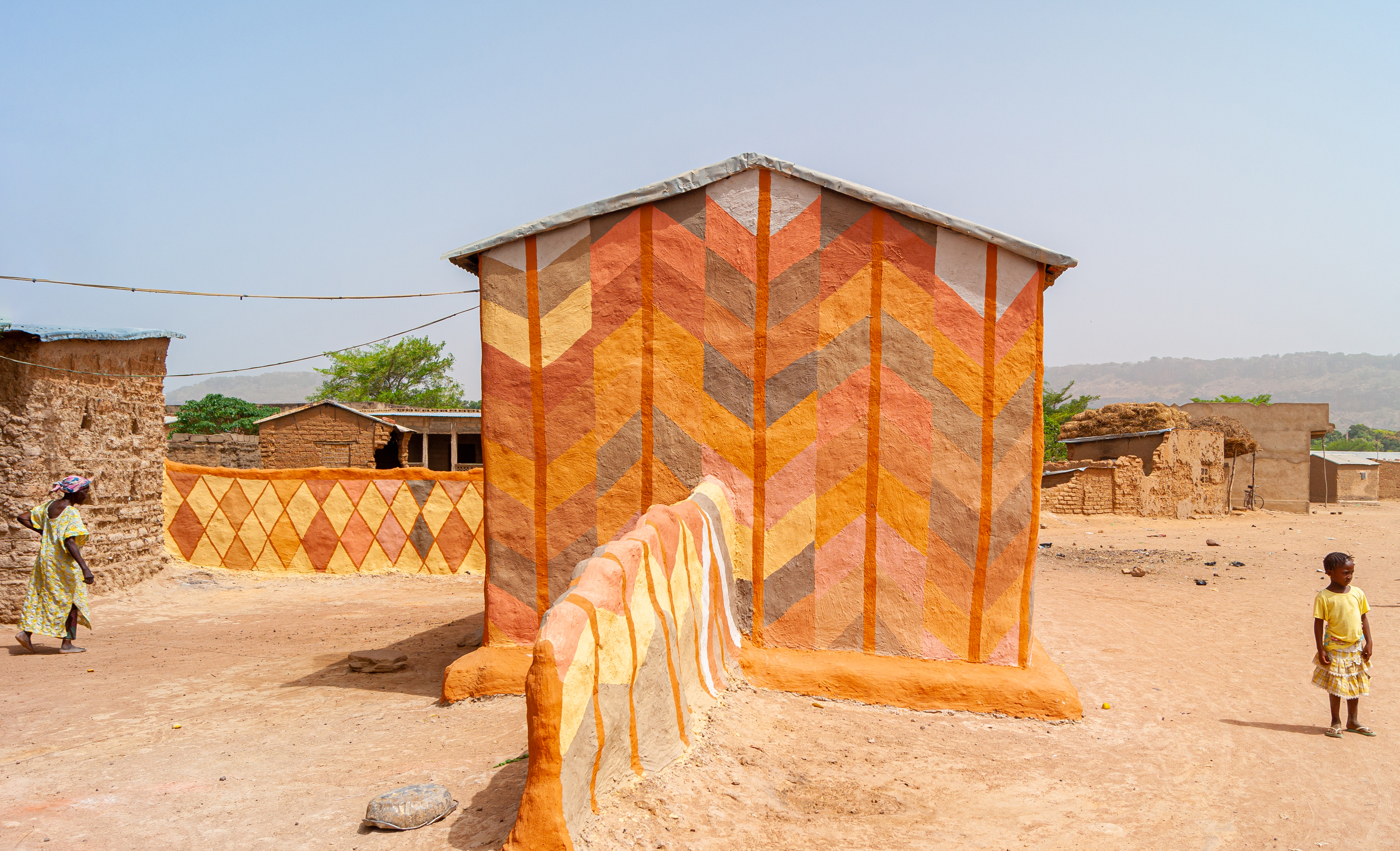
That traditional life still coexists today with openness to the outside world: Siby keeps its character as a Malinké village, with its mud houses, its fields and its oral tradition, but it has gradually adapted to its new role as a nature and adventure destination, creating a small economy of guides, campements and handicrafts.
In recent decades, Siby has established itself as the leading nature and adventure destination near Bamako. Its combination of a natural arch, waterfalls, plateaus and cliffs, just over an hour from the capital, made it the favourite weekend getaway for people from Bamako and a regular stop for foreign travellers passing through Mali.
The big leap came with the growth of rock climbing. The sandstone cliffs of the Manding Mountains turned out to be ideal for the sport, and a team of young Malian guides (some trained in mountain techniques in Chamonix, in the Alps) bolted dozens of routes, making Siby one of the main climbing sites in West Africa. Alongside this, hiking, campements and a range of rural and cultural tourism grew up, giving the village new economic opportunities.
Siby thus showed how a village with a deep historical memory could open up to nature tourism without losing its Malinké identity. Local guides don't just accompany hikers and climbers; they also pass on the legends of Kamandjan and Sundiata, linking outdoor adventure with the age-old story of the Mandé country.
Siby's tourism boom was held back, as everywhere in Mali, by the deep security crisis the country has been going through since 2012. Although the south-west, and in particular the strip near Bamako where Siby lies, has been one of the relatively less exposed areas of the country, jihadist violence spread over the years from the north to the centre, west and south, gradually getting closer to the area around the capital.
Foreign ministries around the world advise against travel to Mali because of the terrorist threat, the risk of kidnapping and armed violence, and that advice covers the whole country. The fuel crisis caused by the jihadist blockade in 2025 made the overall situation even worse, affecting mobility and daily life throughout the Bamako region.
Even so, Siby is still a much-loved place for Malians: a corner of nature, history and legend within reach of the capital. Telling the story of its heritage (the Kamandjan arch, the waterfalls, the epic of Sundiata, climbing in the Manding Mountains) is a way of keeping alive the hope that, when the situation allows, this Mandinka village will welcome visitors again. Until then, any trip must be based solely on official security advice and professional guidance.