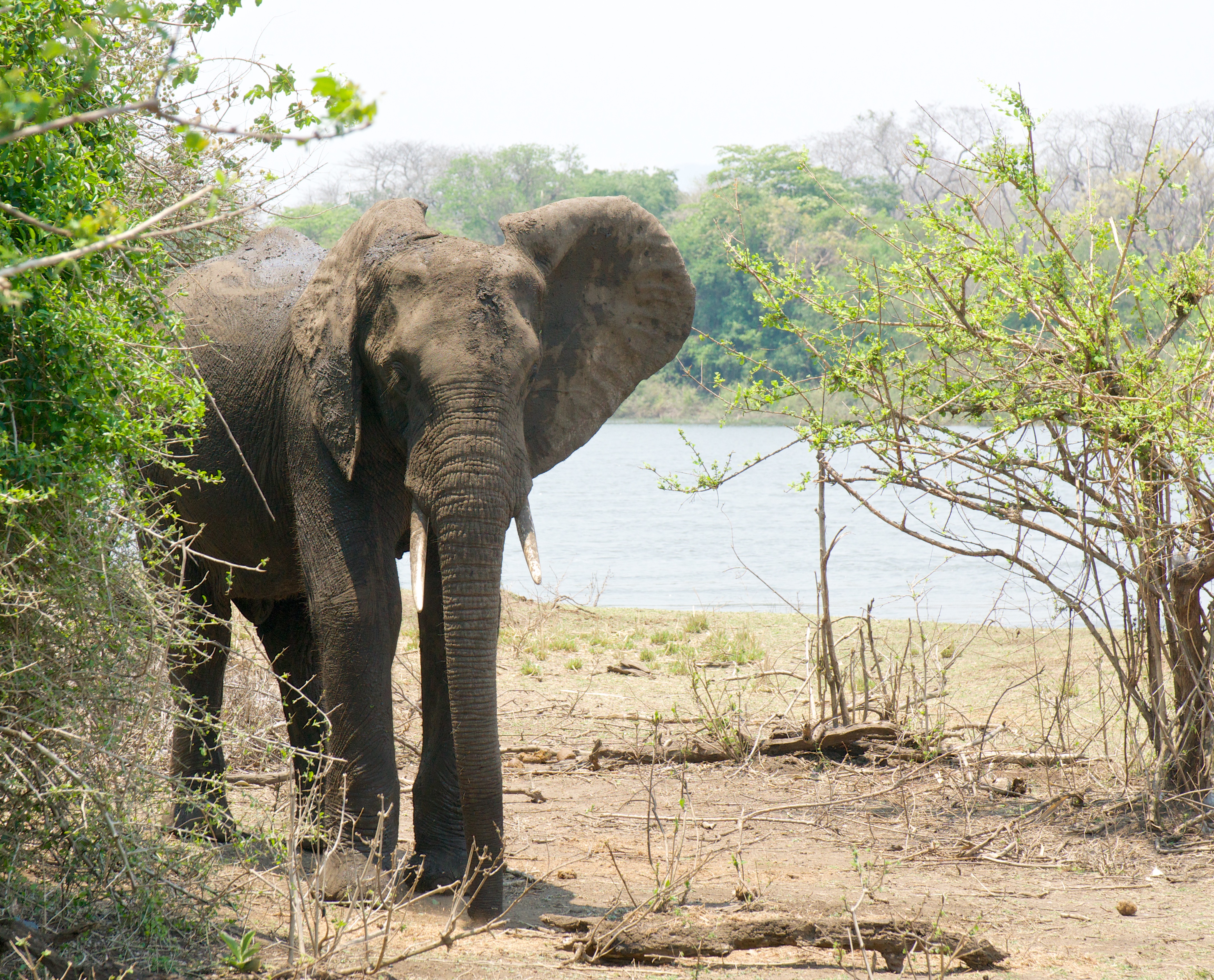
Majete Wildlife Reserve is, above all, a story of hope. At the end of the 20th century it was a desolate place: poaching had wiped out almost all of its wildlife, the last elephant had been killed and there were no large animals left to see. Today, barely two decades later, Majete is Malawi's first Big Five park, with lions, leopards, elephants, buffalo and black rhinos roaming its miombo hills and its Shire valley.
The force behind this miracle is African Parks, the NGO that in 2003 signed its very first agreement to manage a reserve with the Malawian government. It put up a perimeter fence, stopped the poaching, built infrastructure and, above all, moved thousands of animals of fourteen different species to restock the reserve from scratch. In 2012, the reintroduction of lions completed the Big Five and turned Majete into the emblem of Malawian conservation.
This guide covers Majete from a practical angle: what wildlife you'll see and how, game drives, boat safaris and walks, when to go, how to get there from Blantyre, where to stay (from the African Parks camp to the luxurious Mkulumadzi) and how to combine the reserve with Liwonde, Zomba or the lake. For anyone arriving in southern Malawi, Majete is the perfect gateway to safari, with a moving story on top.
Majete was declared a game reserve in 1955, in the days of colonial Nyasaland, but for decades poaching emptied it almost completely: by the early 1990s the elephants, rhinos, lions and practically all the large wildlife had disappeared, and the reserve was left abandoned and without visitors. The turning point came in 2003, when the NGO African Parks signed the first management agreement in its history with the government of Malawi and undertook the full rehabilitation of Majete: fencing, anti-poaching control and the relocation, between 2003 and 2012, of more than 2.500 animals of fourteen species, including the Big Five. With the reintroduction of lions in 2012, Majete became the country's first Big Five park. The full story is told on our history page.
Read the full history ↓The economic and historical heart of Malawi: the mission city of Blantyre, the old capital of Zomba, the reborn parks of the Shire River and the granite massif of Mulanje.
Read the history of The deep south: the Shire and the mountains →No exact prices: a scale from $ (budget) to $$$$$ (luxury), with 2-3 options per category.
Origins, formation and what the sources say.
Majete stretches across the lower valley of the Shire River, in the far south of Malawi, where the great river draining Lake Malawi drops through rapids and waterfalls towards the hot lowlands that lead to the Zambezi. It's a region of contrasts: to the west, hills covered in miombo woodland, cooler and more humid; to the east, a low, dry, hot valley dotted with baobabs and crossed by the Shire. That variety of habitats supports remarkable biodiversity.
The Shire River is the backbone of life in Majete. Its rapids, among them the historic Kapichira Falls, which marked the limit of river navigation in the 19th century, and its banks draw hippos, crocodiles and, in the dry season, the wildlife that comes down to drink. The reserve's name and landscape are tied to this river, which was also a route for exploration and trade in the days of the explorer David Livingstone.
Majete was declared a game reserve in 1955, during the colonial era of Nyasaland, to protect the wildlife of the Shire Valley. In its early decades it was home to elephants, black rhinos, buffalo, antelope and large predators. But its location, in a poor and densely populated region, and the lack of effective protection would leave it sadly vulnerable to what came next.
Through the 1970s, 1980s and 1990s, Majete suffered an almost total ecological collapse. Poaching, driven by poverty in the surrounding communities, a lack of resources for patrols and demand for bushmeat and ivory, systematically wiped out the reserve's wildlife. Poachers killed everything from antelope for meat to elephants for their ivory, and with no rangers and no means to stop them, Majete became a no man's land.
The damage was so severe that by the late 1990s the reserve was practically empty. The black rhinos were gone, the lions had vanished, and in 1992 what is considered Majete's last elephant was shot. The few animals left were scarce and elusive, and with them went any chance of tourism. Majete became a symbol of conservation failure: a reserve on paper, but without the wildlife it was meant to protect.
On top of the loss of animals came the degradation of the woodland itself: logging for firewood and charcoal, fires and pressure on natural resources went unchecked. For neighbouring communities, the reserve brought no benefit at all; if anything, it was a source of conflict and off-limits land. By the early 21st century, Majete looked like a lost cause. And that is exactly why it became the setting for a pioneering recovery experiment.
The turning point came in 2003, when the NGO African Parks, a conservation organisation founded shortly before with an innovative model, signed an agreement with Malawi's Department of National Parks and Wildlife to take on the rehabilitation and long-term management of Majete. It was the first agreement of its kind in African Parks' history, and years later the organisation would replicate the model in dozens of parks across Africa. Majete thus became the testing ground for a new way of doing conservation.
The plan was ambitious: rebuild a reserve from scratch. African Parks started with the basics: stopping poaching with professional rangers and surveillance, and putting up a perimeter fence to protect the area and allow wildlife to be reintroduced without it dispersing or coming into conflict with villages. It also built roads, management infrastructure and the first tourist facilities, and laid the groundwork for working with neighbouring communities.
With the reserve secured, the most spectacular part began: restocking. Between 2003 and 2012, African Parks moved more than 2,500 animals of fourteen different species to Majete, brought from other reserves in Malawi and the region. Elephants, buffalo, sable and roan antelope, zebras, black rhinos and many other species returned. Majete, once empty, began filling with life again, animal by animal, in one of the largest reintroduction operations ever undertaken in the country.
Majete's restocking reached its peak in August 2012, when African Parks reintroduced lions to the reserve. With the return of the king of the savannah, joining the elephants, buffalo, leopards and black rhinos already reintroduced, Majete became Malawi's first and only Big Five park. A place that twenty years earlier had practically no large wildlife now offered the chance to see the five most iconic animals of the African safari.
The achievement was huge, not only for the wildlife but for what it proved: that an African park on the brink of collapse could fully recover with management, sustained funding and political will. Majete became African Parks' calling card and a source of inspiration for conservation across the continent. Its success led the Malawian government to entrust other areas to the same organisation: Liwonde and Nkhotakota in 2015, and later Mangochi Forest.
Majete also became a 'donor' reserve. Its now-thriving populations were used to restock other parks: lions from Majete helped reintroduce the species to Liwonde in 2018, and its elephants took part in major translocations to Nkhotakota. From an empty reserve, Majete became an engine of wildlife recovery on a national scale, sending animals to the very parks it had helped bring back to life.
Today Majete is a living, thriving reserve and one of the great success stories of African conservation. It's home to the Big Five and dozens of other species, welcomes travellers from all over the world and generates income that funds its own protection. Since African Parks took over, long stretches have passed without a single rhino or elephant lost to poaching, a stark contrast with the empty reserve of the 1990s.
Much of that success rests on the neighbouring communities. From the start, African Parks understood that conservation only lasts if it benefits the people living next to the park. That's why it promoted environmental education programmes in schools, local jobs, beekeeping, crafts, community tourism and controlled access to certain resources. For many local families, Majete went from being a source of conflict to a source of opportunity, which completely changed how they felt about the reserve.
Majete is now the gateway to safari for anyone arriving in southern Malawi, just over an hour from Blantyre, with options ranging from the luxurious Mkulumadzi to the simple African Parks campsite. But above all, it's a symbol: proof that a reserve given up for lost can fill up again with lions, elephants and rhinos. Majete's story, from the last elephant shot in 1992 to today's Big Five park, is one of the most hopeful that conservation in Africa has to tell.