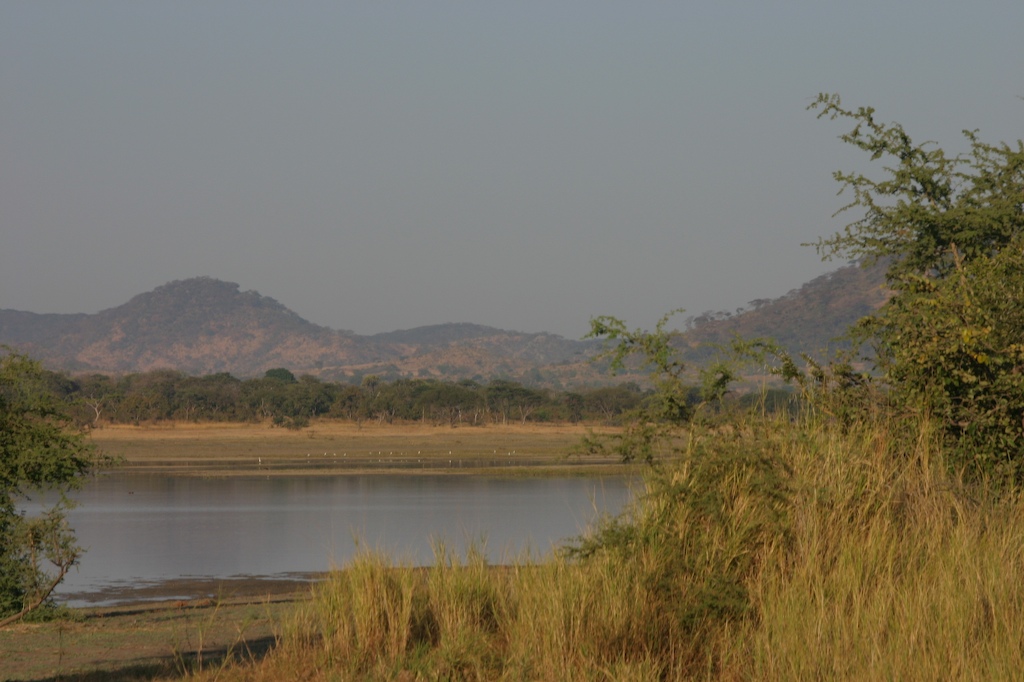
Vwaza Marsh Wildlife Reserve is one of the best-kept secrets of northern Malawi: a wild, little-visited wetland at the foot of the Nyika Plateau, where you can see plenty of wildlife without the crowds of other parks. Its heart is Lake Kazuni, a shallow lagoon surrounded by marshland, woodland and savannah, where elephants, hippos and antelope gather in an intimate and authentic natural spectacle.
Vwaza is famous for two things: its elephant herds, which come down to the lake to drink and bathe, and its hippos, one of the most accessible populations in the country, visible and audible almost from Kazuni camp itself. Add to that buffalo, a wide variety of antelope and around 300 bird species that make the reserve a small paradise for birders, especially in the wet season.
This guide takes a practical look at Vwaza: what wildlife you can see and how, game drives, walking safaris and boat trips on Lake Kazuni, when to go, how to get there from Rumphi or Mzuzu, where to stay (from the simple Kazuni camp to community lodges) and how to combine it with the Nyika Plateau. For travellers looking for wildlife, peace and authenticity away from the crowds, Vwaza Marsh is a hidden gem of northern Malawi.
Vwaza Marsh was declared a wildlife reserve in 1977 to protect this northern wetland, its marshes and its wildlife, particularly the elephants and the hippos of Lake Kazuni. Like so many African parks, it suffered for decades from poaching pressure and conflicts with neighbouring communities, which reduced its wildlife. In recent years, with the support of organisations such as the Nyika-Vwaza Trust and improved management, the reserve has rebuilt its elephant and other animal populations, and developed low-impact, community-based tourism. The full story is told on our history page.
Read the full history ↓The roof of Malawi with the feel of a Scottish moor: the time-frozen mission of Livingstonia, the grassland plateau of Nyika and the elephant wetland of Vwaza.
Read the history of The northern highlands →No exact prices: a scale from $ (budget) to $$$$$ (luxury), with 2-3 options per category.
Origins, formation and what the sources say.
Vwaza Marsh stretches across a strip of lowland in northern Malawi, at the western foot of the great Nyika Plateau and next to the border with Zambia. Unlike the cool highlands of Nyika, Vwaza is a world of warm, humid lowlands: marshes, lagoons, miombo woodland and savannah, all arranged around Lake Kazuni, a shallow wetland that is the heart of the reserve and the magnet for its wildlife.
Water is the key to Vwaza. The rivers that come down from the Nyika Plateau and the highlands feed the marshes and Lake Kazuni, creating an oasis for wildlife in a region that turns harsh and dusty in the dry season. Elephants, hippos, buffalo, antelope and a huge variety of birds gather around the water, making this wetland one of the richest corners of northern Malawi for wildlife.
For centuries this area was part of the territory of the peoples of northern Malawi, especially the Tumbuka, who used its resources for hunting, fishing and grazing. The abundance of wildlife and the presence of water made Vwaza a valuable area long before anyone thought of protecting it, and also a coveted one, which over time would expose it to hunting pressure.
Vwaza Marsh was declared a wildlife reserve in 1977, as part of independent Malawi's effort to protect its natural heritage, which years earlier had led to the creation of Nyika National Park (1965), its neighbour in the highlands. The aim was to preserve this unique wetland and its wildlife, particularly the elephant herds and the hippo populations of Lake Kazuni, as well as the buffalo and the wide variety of antelope in the area.
From the start, the reserve was linked to Nyika in managing conservation in northern Malawi, and together they form a group of highly valuable protected areas. The two share challenges and, often, support: conservation organisations have worked for decades to protect both areas jointly, aware that wildlife moves between them and that their fates are intertwined.
In its early decades Vwaza was home to abundant wildlife but, like so many African reserves, it lacked the resources for effective protection for a long time. Surrounded by poor, densely populated rural communities and close to an international border, the reserve was exposed to poaching and to conflicts over the use of land and water, which in the following decades would reduce its wildlife and put its survival to the test.
During the 1980s and 1990s, Vwaza Marsh came under the combined pressure of poaching and conflict with neighbouring communities. Illegal hunting — for bushmeat and for elephant ivory — decimated part of the wildlife, and the reserve, with little surveillance, struggled to stop it. At the same time, the nearby villages created tensions: elephants raided crops and animals competed with people for water and land.
These conflicts are the great dilemma of many African protected areas: for poor families living nearby, wildlife could mean destroyed crops or danger rather than a benefit, which fed hostility towards the reserve and tolerance of poaching. Without the cooperation of the communities, no protection could be sustainable, and Vwaza went through difficult years in which its wildlife suffered and its future seemed uncertain.
The situation also reflected the country's circumstances. Malawi is one of the poorest nations in the world, with enormous population pressure on land and resources, and for a long time conservation lacked the means it needed. Remote and little known, Vwaza was sidelined, and its recovery would have to wait for a change of approach that put communities at the centre of conservation.
Over the last two decades, Vwaza Marsh has seen a gradual recovery thanks to better management and the support of conservation organisations. The Nyika-Vwaza Trust and other bodies have spent years funding anti-poaching patrols, wildlife research, infrastructure improvements and, above all, programmes with the surrounding communities, convinced that the reserve only has a future if it benefits the people who live alongside it.
That community approach has been key. Community-based tourism, local employment, environmental education and development projects have been promoted, so that neighbouring villages gain income and advantages from the reserve's existence and poaching and conflict are reduced as a result. Camps and lodges run or supported by the communities have appeared, offering visitors an authentic experience and keeping part of their earnings in the area.
With better protection, the populations of elephants and other species have recovered, and Vwaza has once again established itself as a wildlife destination, low-key but valuable. The return of elephant herds to Lake Kazuni and the steady presence of hippos, buffalo and antelope are the best sign that the wetland, battered in the past, is alive and protected once more.
Today Vwaza Marsh is one of Malawi's quietest and most authentic wildlife destinations, a hidden gem of the north that gets few visitors and keeps an intimate, wild atmosphere. Its great draw is still Lake Kazuni, with its pods of hippos and its elephants coming down to drink, often in full view of the camp, in a scene that sums up the reserve's serene charm.
Travellers who make it to Vwaza enjoy 4x4 safaris, guided walks, boat trips when the water level allows and excellent birdwatching — some 300 species — all without the crowds. The reserve pairs beautifully with the neighbouring Nyika Plateau, so different from it, letting visitors experience both the cool grassland highlands and the hot lowland wetland on the same trip.
The story of Vwaza — from a reserve created in 1977 and battered by poaching to a wetland restored through community-based conservation — sums up the challenges and hopes of nature protection in Malawi. Its future depends, as always, on the balance between wildlife and the neighbouring communities; but the return of the elephants to Lake Kazuni shows that this balance is possible, and that Vwaza has a lot to offer the traveller who decides to discover it.