Viajá con Gus
Home › Japan › Himeji
Himeji
🇯🇵 Japan · Kansai (Kyoto, Osaka and Nara)

Himeji

🪪 What do I need to enter Japan?Pick your citizenship and we tell you the visa, the days and the paperwork, with the official source.

By leaving your email and citizenship you agree to receive the documents you asked for and weekly travel news. You can unsubscribe whenever you want. How we handle your data.
Jump to what you need
📍Region
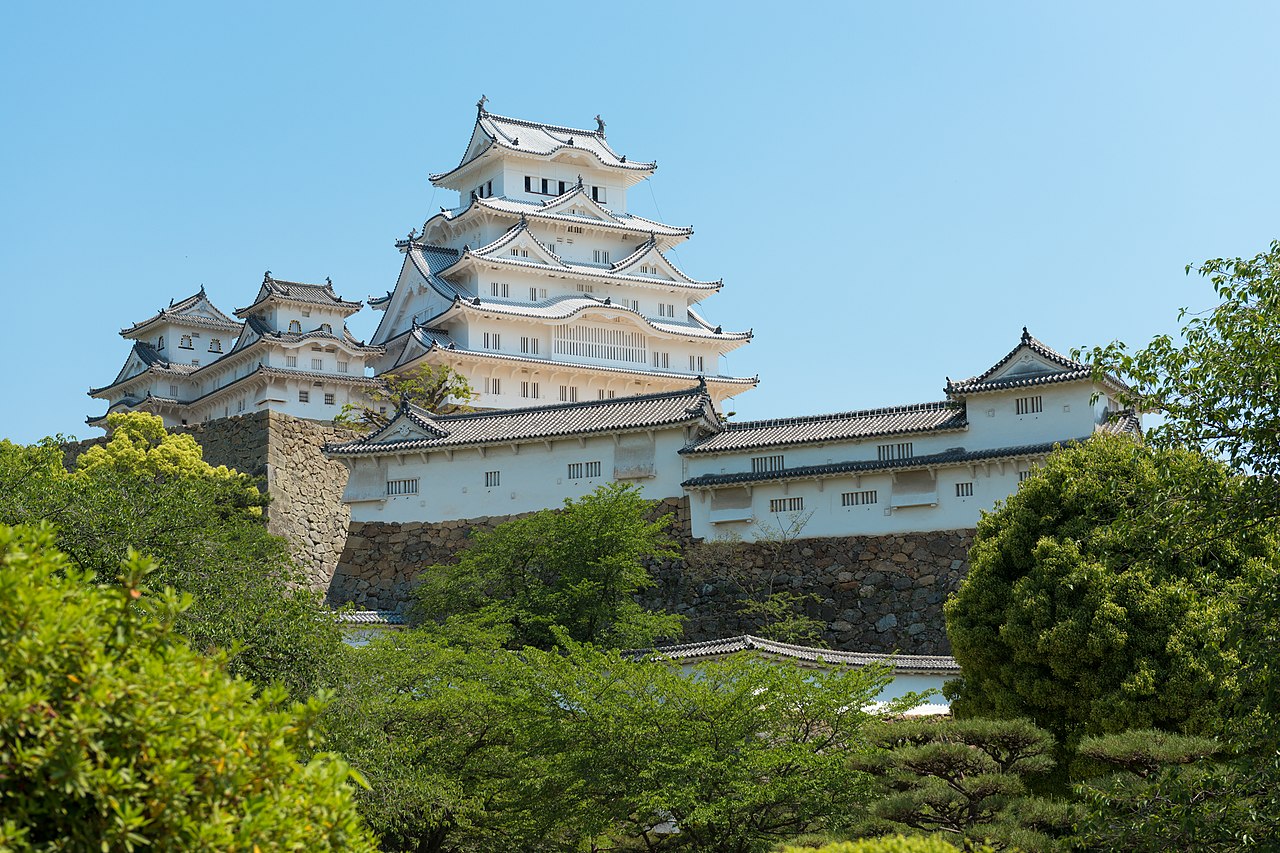
Himeji is a city in Hyogo Prefecture, in the Kansai region, on the Seto Inland Sea coast in the west of Honshu island. It has around 520,000 inhabitants and is the second most populous city in Hyogo after Kobe. Its worldwide fame rests on a single monument: Himeji Castle (Himeji-jo), the largest, best-preserved and most beautiful of Japan's feudal castles, nicknamed 'the White Heron Castle' for its dazzling white silhouette. It was one of the first two Japanese sites inscribed as a UNESCO World Heritage Site, in 1993.
📌Getting there
Himeji is on the San'yo shinkansen line, which makes it very easy to visit as a day trip. From Shin-Osaka it's about 30-45 min by shinkansen (Hikari/Sakura); from Kyoto, around 55 min; from Hiroshima, about 1 hour. Himeji Station is a 15-20 minute walk from the castle along Otemae-dori avenue, in a straight line with the castle always in view. The Japan Rail Pass covers Hikari, Sakura and Kodama trains (not Nozomi or Mizuho).
📌Best time
Spring (late March to early April) is spectacular: cherry blossoms surround the castle and create one of Japan's most famous postcard views, though with big crowds. Autumn (October-November) brings pleasant temperatures and reddish foliage, and in October the fiery Nada no Kenka Matsuri festival takes place. Summer is hot and humid; winter is cool but sunny, with the castle's white standing out against clear skies and no crowds.
📌Suggested days
Half a day is enough for the castle and Koko-en Garden, which is what most people do as a day trip from Osaka or Kyoto. With a full day you can add Mount Shosha and Engyo-ji temple (where 'The Last Samurai' was filmed), a thousand-year-old Buddhist complex on the mountain that you reach by cable car. Two days let you enjoy the city calmly, with its museums and local food, without rushing.
📌Getting around
Central Himeji is easy to explore on foot: it's 5 minutes from the castle to Koko-en Garden. For Mount Shosha and Engyo-ji, take the Shinki Bus city bus (the line to 'Mt. Shosha Ropeway', about 280-320 ¥, 30 min) and then the cable car. There's a circular sightseeing bus ('Castle Loop Bus') linking the station with the main sights. Rental bikes and taxis round out the options.
📌Language and currency
The language is Japanese; at the castle and tourist sights there are signs and leaflets in English, but little Spanish. The currency is the Japanese yen (JPY, ¥). As a reference, 1.000 ¥ is roughly 6-7 dollars or euros (July 2026). It's worth carrying some cash: many small shops and temples don't take cards, although convenience stores (konbini) and stations do. IC cards (ICOCA, Suica) work for transport and small purchases.
💱 JPY exchange rate
Loading rate…
🌤️ Weather in Himeji
Loading weather…

Himeji is a city with one great star, and what a star: Himeji Castle, 'Shirasagi-jo' or 'the White Heron Castle', is the most imposing and best-preserved in all of Japan. Unlike most Japanese castles —concrete reconstructions built after fires, earthquakes or the bombings of the Second World War—, Himeji-jo is a wooden original from the early 17th century that survived four centuries of wars, earthquakes and bombs intact. Seeing it appear at the end of the avenue, white and floating above its hill, with roofs that look like outstretched wings, is one of the great sights of the country.

But Himeji isn't just its castle. At its feet lies Koko-en Garden, a set of nine walled Edo-style gardens; on the neighbouring mountain hides the thousand-year-old Engyo-ji temple on Mount Shosha, a place of such cinematic serenity that Hollywood chose it to film 'The Last Samurai'. And all of this is just half an hour by shinkansen from Osaka and less than an hour from Kyoto, which makes Himeji one of the most well-rounded and rewarding day trips in the Kansai region.

This guide covers the essentials of Himeji with a practical eye: how to get there and plan your visit to the castle (which you explore in full, climbing to the top of the keep up extremely steep wooden stairs), how to combine it with Koko-en Garden and Mount Shosha, how much the tickets cost and when it's best to go. In just a few hours, Himeji gives you the finest surviving example of what a samurai castle was like in its heyday.

📖 History of Himeji

Himeji's origins go back to 1333, when the lord Akamatsu Norimura built a fort on Himeyama hill. On that base, Toyotomi Hideyoshi built a three-storey keep in 1581, but the castle as we see it today is the work of Ikeda Terumasa, son-in-law of Tokugawa Ieyasu, who between 1601 and 1609 completely rebuilt and expanded it into the huge complex of more than eighty buildings, moats and walls that has survived to our day. Named 'the White Heron Castle' for its colour and shape, Himeji-jo had the extraordinary good fortune never to be destroyed: it survived the abolition of the feudal system in the Meiji era, earthquakes and the bombings of 1945 (an incendiary bomb fell on the keep without exploding). In 1993 it was inscribed, together with the Buddhist monuments of Horyu-ji, as one of Japan's first two World Heritage Sites. After the great 'Heisei' restoration from 2009 to 2015, which brought back the gleaming white of its walls, today it looks as it did in its prime. The full story, with its lords and legends, is on our history page.

Read the full history ↓

🏛️ Himeji is in Kansai (Kyoto, Osaka and Nara)

The historical cradle of Japan: Nara and Kyoto, the first two imperial capitals, plus mercantile Osaka, Himeji Castle and the sacred Mount Koya.

Read the history of Kansai (Kyoto, Osaka and Nara) →

🗺️ What to see

Tours nearby, in Osaka

If you only have one day, take a guided tour on the first one: it sets up the rest of your trip and saves you a lot of walking. We look ours up on Civitatis: guided in Spanish and booked online with no fuss. They have 19 activities in Osaka. And there are free tours here: you book without paying and tip the guide whatever you think at the end, so trying one costs you nothing. Three are below so you get the idea: tap any of them and they all open.

They depart from Osaka, 76 km away. If you book from this link we earn a commission and you pay no more.

1
Himeji Castle (Himeji-jo)
The largest, most beautiful and best-preserved feudal castle in Japan, a World Heritage Site and the city's ultimate symbol.
Leer más ↓
Himeji Castle is the jewel that makes the trip worthwhile and, for many, the most beautiful castle in Japan. Unlike almost all the others, it's an original: its great keep (tenshu), six storeys on the outside and seven levels inside, was completed in 1609 by Ikeda Terumasa and was never destroyed or rebuilt in concrete, so walking through its interior means walking on wood and stone more than four centuries old. It's nicknamed 'Shirasagi-jo', the White Heron Castle, for its white plaster and for the way its curved roofs look like the wings of a bird about to take flight. The visit starts at the Otemon gate and the great courtyard, and continues through a deliberate maze of ramps, gates and walls designed to confuse and slow down any attacker: the path zigzags, narrows and doubles back before reaching the keep. Inside, you climb very steep wooden stairs to the top floor, where there's a small shrine and a view over the whole city. Along the way you'll see the loopholes for arquebuses and arrows, the openings for dropping stones, the weapon stores and the ingenious defensive systems that make the castle a masterpiece of military architecture. It's best to go early, especially in cherry blossom season (late March-early April) and at weekends, because the climb up the keep is done in a queue and on very busy days visitor numbers are limited. You have to take your shoes off to enter the keep (you walk in socks and carry your shoes in a bag), so comfortable footwear is a good idea. Admission to the walled grounds, including the climb up the keep and the Nishi-no-maru area, is all covered by the same ticket.
ℹ️ Distance: 15-20 min walk from Himeji Station along Otemae-dori avenue; or Castle Loop Bus · Best time: Early morning; cherry blossoms in late March/early April (with big crowds) · Admission: 2.500 ¥ non-resident adults (18+), free for under-18s. Combined with Koko-en 2.600 ¥. Prices in effect since 1 March 2026 (official Visit Himeji, verified July 2026) · Opening hours: 9:00-17:00 (last entry 16:00); in summer 9:00-18:00 (last entry 17:00). Verified July 2026 · Duration: 1,5 to 2,5 hours including the climb up the keep
2
Nishi-no-maru and Princess Sen's corridor
The castle's west bailey, with the long wooden corridor where Princess Senhime, Ieyasu's granddaughter, lived.
Leer más ↓
The Nishi-no-maru ('west bailey') is one of the most charming parts of the castle and is usually less crowded than the keep. It's a long wooden building of almost 300 metres —the Hyakken Roka or 'hundred-ken corridor'— running along the west wall, with a row of rooms you walk through barefoot. It was built as the residence of Princess Sen (Senhime), granddaughter of shogun Tokugawa Ieyasu, who came to Himeji in 1617 after being widowed and remarrying the lord of the castle, Honda Tadatoki. The corridor has an intimate, homely feel very different from the austere military keep: here you understand how the warrior aristocracy lived, with its ladies-in-waiting's rooms, its latticed windows and the dressing tower (Kesho Yagura) where, according to tradition, Senhime got ready. Its windows offer some of the best views of the great white keep against the sky, a perfect angle for photos. It's included in the same castle ticket, so don't skip it: many people queue for the keep and leave without seeing the Nishi-no-maru, missing out on a delightful part of the visit. You walk barefoot on polished wooden boards, so in winter it's worth bringing warm socks.
ℹ️ Distance: Inside the castle grounds, west section · Best time: Any time during the visit; good views of the keep for photos · Admission: Included in the castle ticket (2.500 ¥ non-residents), verified July 2026 · Duration: 30 to 45 minutes
3
Koko-en Garden
A set of nine walled Edo-style gardens next to the castle, with ponds, waterfalls and a teahouse.
Leer más ↓
Right next to the castle, on the land where the old samurai residences (the Nishi-Oyashiki) once stood, lies Koko-en Garden, opened in 1992 to mark the centenary of the city of Himeji. It isn't an old garden, but it's designed so faithfully in the Edo-era style that it feels like it belongs to another time. There are nine different walled gardens, each with its own character: the lord's residence garden, with a large pond and a waterfall; the pine garden, the bamboo garden, the flower garden, the fruit tree garden and other smaller ones, connected by paths, clay walls and wooden gates. The most famous is the central pond, full of huge, colourful koi carp, crossed by a covered bridge and surrounded by maples that turn deep red in autumn. There's a teahouse (Souju-an) where you can have matcha with a traditional sweet, and a restaurant overlooking the water. It's a haven of calm after the intensity of the castle, and a lovely spot for photos in spring (cherry blossoms) and autumn (momiji). It's a 5-minute walk from the castle exit, and it's worth buying the combined ticket, which works out cheaper than the two separately. Koko-en has been used as a location for many Japanese historical films and series (jidaigeki), thanks to its impeccable period atmosphere.
ℹ️ Distance: 5-minute walk from Himeji Castle · Best time: Autumn (red maples) and spring (cherry blossoms); teahouse all year round · Admission: 400 ¥ adults (320 ¥ in groups of 30 or more); combined castle + Koko-en 2.600 ¥. Free for under-18s and for Himeji residents aged 65 or over with the municipal senior card (official Koko-en Garden website, Himeji City Urban Development Promotion Foundation, himeji-machishin.jp, accessed 08/08/2026) · Opening hours: 9:00-17:00 (last entry 16:30); in summer until 18:00. Verified July 2026 · Duration: 45 min to 1 hour
4
Mount Shosha and Engyo-ji temple
A thousand-year-old Buddhist complex on the mountain, reached by cable car, where 'The Last Samurai' was filmed.
Leer más ↓
On the outskirts of Himeji, on Mount Shosha (Shoshazan), hides one of the most impressive and least crowded temples in Kansai: Engyo-ji, a Tendai Buddhist complex founded in 966, with more than a thousand years of history. You go up the mountain on a four-minute cable car and, at the top, a path through forests of giant cedars leads to a series of dark wooden halls that seem to come from another time. The highlight is the Maniden, a wooden hall built on pillars on the mountainside, in the style of Kyoto's Kiyomizu-dera, with a gallery that juts out over the drop among the trees. Further on, in a forest clearing, stand the three great halls known as Mitsunodo: the Daikodo (main hall), the Jikido (former monks' dormitory and dining hall, now a treasure hall) and the Jogyodo. It was precisely in this setting, among these buildings and this forest, that several scenes of the film 'The Last Samurai' (2003) with Tom Cruise were shot. To get there, take the city bus from Himeji Station to the cable car base (about 280-320 ¥, half an hour), ride the ropeway and then walk up the mountain (or take an optional minibus). It's a half-day visit that's well worth it for its serene atmosphere and its forest. Note: the cable car usually closes for maintenance between late January and March, so check before you go.
ℹ️ Distance: Outskirts of Himeji; Shinki Bus to 'Mt. Shosha Ropeway' (280-320 ¥, 30 min) + cable car · Best time: Spring and autumn; check that the cable car isn't closed for maintenance (late January to March) · Admission: Cable car 1.200 ¥ return (600 ¥ children); temple admission 500 ¥ (over 19); bus extra. Verified July 2026 (Mt. Shosha Ropeway and japan-guide) · Opening hours: Cable car every 15 min, approx. 8:30-18:00 depending on the season; temple until mid-afternoon. Verified July 2026 · Duration: Half a day
5
Otemae-dori avenue and castle views
The grand avenue linking the station to the castle, ideal for front-on photos of Himeji-jo.
Leer más ↓
Otemae-dori is the wide, tree-lined avenue that runs in a straight line from the north exit of Himeji Station to the castle entrance, about 800 metres of easy walking with the white keep always ahead, growing bigger as you get closer. It's one of those streets designed for theatrical effect: from the plaza in front of the station you can already see the castle framed by the avenue, and it's the best spot for the classic front-on photo of Himeji-jo. Along the avenue and in the side streets there are shops, cafés, restaurants and covered arcades (shotengai) where you can eat and buy souvenirs. Near the castle, the outer moat and surrounding parks (such as Shiromizu Park and Otokoyama, a small hill to the west with a lovely side view of the castle) offer alternative angles for photographing it, especially at sunset, when golden light bathes the white walls. It's a free, pleasant walk, ideal for killing time before the castle opens or for wrapping up the visit with a meal. In spring, the cherry trees around the moat turn the whole area into a sea of pink.
ℹ️ Distance: Between Himeji Station and the castle (800 m in a straight line) · Best time: Sunset for the light on the castle; spring for the cherry blossoms · Admission: Free (public street) · Duration: 20 to 40 minutes' walk
6
Himeji City Museum of Art
An elegant Meiji-era red-brick building with the white castle as a backdrop.
Leer más ↓
East of the castle, within its former outer grounds, is the Himeji City Museum of Art, housed in a beautiful red-brick building built in the early 20th century that served as an army arsenal and later as municipal offices. The contrast between the museum's reddish façade and the white castle rising behind it is one of Himeji's best-loved photo spots, especially in spring. The museum holds a collection of modern and contemporary art, with European works (Belgian and Northern European art) and pieces by local Japanese artists, plus temporary exhibitions. While it isn't a must for everyone, its garden and exterior are a pleasure to stroll around, and the area brings together several historic brick buildings and the Hyogo Prefectural Museum of History, designed by architect Kenzo Tange, with models of Japanese castles. It's a good option to round off the castle visit with some art and architecture, or simply to walk through its gardens with the best rear view of Himeji-jo. Admission to the permanent collection is inexpensive; temporary exhibitions are charged separately.
ℹ️ Distance: East of the castle, within the former outer grounds; 10 min walk · Best time: Spring for the contrast with the cherry blossoms and the castle · Admission: Permanent collection approx. 210-300 ¥ adults; temporary exhibitions extra, 2025-2026 (check the museum's website) · Opening hours: 10:00-17:00, closed on Mondays. Verified July 2026 · Duration: 45 min to 1 hour
7
Nada no Kenka Matsuri festival
One of Japan's fieriest festivals: clashing floats and portable shrines every October.
Leer más ↓
If your trip coincides with mid-October (the 14th and 15th), it's worth heading to Matsubara Hachiman shrine, south of Himeji, to witness the Nada no Kenka Matsuri, the 'Nada fighting festival', one of the most intense and spectacular festivals in Japan. Teams of men carry extremely heavy portable shrines (mikoshi) and huge decorated floats (yatai) and smash them into each other with force, in a display of collective energy that draws thousands of people. The thunder of the drums, the shouts of the participants dressed in traditional loincloths and the crash of the structures create an electric atmosphere. It's a festival with centuries-old roots, linked to purification rites and the festive rivalry between the neighbourhoods and villages of the Shirahama and Nada area. It's recognised as an Intangible Cultural Property of the prefecture. Outside those dates there's no festival to see, but you can still visit Matsubara Hachiman shrine. For those travelling in October, it's an unforgettable experience and very different from the calm of the castle. Arrive early, because it gets packed, and follow the instructions: it's a massive, physical event.
ℹ️ Distance: Matsubara Hachiman shrine, south of Himeji; local train to Shirahama-no-miya (San'yo line) · Best time: 14 and 15 October (fixed festival dates) · Admission: Free to watch from the street; grandstand seats at a cost (check each year) · Duration: Half a day
📶I have never landed without internet. I arrive and my phone connects to the strongest network in the country I am visiting: I can say I landed, sort out transport, book tours and keep posting, at a seriously good price. I always use the Maya eSIM — check their plans by clicking the banner.See plans →Maya Mobile eSIM — skip roaming fees, unlimited data
What nobody tells you

💵 Prices

Tickets

TypePrice
Castillo de Himeji (adultos no residentes, 18+)2.500 ¥, free for under-18s. In effect since 1 March 2026 (official Visit Himeji, verified July 2026)
Castillo de Himeji + jardín Koko-en (combinado)2.600 ¥ adults (official Visit Himeji, verified July 2026)
Jardín Koko-en (solo)400 ¥ per adult and 320 ¥ in groups of 30 or more; free for under-18s. Registered residents of Himeji aged 65 or over also enter free on showing the senior welfare card or senior citizens' booklet issued by the city council. Closed on 29 and 30 December (official Koko-en Garden website, Himeji City Urban Development Promotion Foundation, himeji-machishin.jp, accessed 08/08/2026)
Teleférico del monte Shosha (ida y vuelta)1.200 ¥ adults, 600 ¥ children (official Mt. Shosha Ropeway, verified July 2026)
Templo Engyo-ji (entrada)500 ¥ over 19 (verified July 2026)
Combo bus + teleférico + Engyo-ji (2 días)Combined 'Himeji & Shoshazan' ticket approx. 2.700 ¥ (Visit Himeji, check the season)
Museo de Arte de Himeji (colección permanente)Approx. 210-300 ¥ adults (check the museum's website)
🔄 updated monthlyOfficial / reference values · double-check when buying

Activities and tours

ActivityPriceDurationOperator
Guided tour of Himeji Castle (volunteers/official guides)Free volunteer guides with booking; private tours from 5.000-10.000 ¥ per group, 2025-20261,5 to 2 hHimeji Good Will Guides / agencies (check)
Day trip from Osaka or Kyoto (castle + Koko-en)Train extra; guided tours from 8.000-15.000 ¥ per person, 2025-2026Full dayKansai agencies (check)
Tea ceremony at Koko-en's Souju-an teahouseApprox. 500-700 ¥ (matcha + sweet), 2025-202620-30 minKoko-en Garden
Kimono rental for photos in front of the castleApprox. 3,000-6,000 ¥ per day, 2025-2026Half dayKimono rental shops in Himeji (check)
Bike tour around the city (rental)Approx. 500-1,000 ¥ per day, 2025-2026Half dayMunicipal rental at the station (check)
🔄 updated monthlyOfficial / reference values · double-check when buying

🚌 How to get there and distances

Getting around

On foot
Free
DurationVariable
Notes
The castle and Koko-en Garden are a 15-20 min walk from the station, straight up Otemae-dori avenue. It's the best way to get around the centre
Castle Loop Bus (circular sightseeing bus)
PriceApprox. 100 ¥ per ride; day pass approx. 400 ¥, 2025-2026
DurationVariable
Notes
Retro-style bus linking the station with the castle, the museums and the main sights in the centre. Handy if you'd rather skip the walk
Shinki Bus city bus (to Mount Shosha)
Price280-320 ¥ per ride to the ropeway base, 2025-2026
Duration30 min
Notes
Leaves from the Himeji Station bus terminal towards 'Mt. Shosha Ropeway'. You need it to visit Engyo-ji. You can pay with an IC card (ICOCA/Suica)
Taxi
DurationVariable
Price
Flag fare approx. 700 ¥; short rides in the centre 1,000-1,500 ¥, 2025-2026
Notes
Useful for reaching Mount Shosha without waiting for the bus, or for groups. Metered taxis at the station ranks
IC card (ICOCA / Suica)
PriceVariable top-up; card with a 500 ¥ deposit
DurationVariable
Notes
Works on trains, city buses and for purchases at konbini and shops. The most practical way to get around without buying a ticket every time
🔄 updated monthlyOfficial / reference values · double-check when buying

How to get there

RouteAirlines / operatorsAvg. priceDuration
Shin-Osaka → Himeji on the San'yo shinkansenJR West (Hikari, Sakura, Kodama; the Japan Rail Pass covers Hikari/Sakura/Kodama, not Nozomi/Mizuho)Approx. 3,500 ¥ per trip (reserved seat), 2025-202630 to 45 min
Kyoto → Himeji on the San'yo shinkansenJR West (Hikari, Sakura, Kodama)Approx. 5,000-5,500 ¥ per trip, 2025-2026About 55 min direct
Osaka (central station) → Himeji on the JR Special Rapid trainJR West (Special Rapid Service, San'yo/Tokaido main line)Approx. 1,520 ¥ per trip (no shinkansen), 2025-2026About 60-70 min
Hiroshima → Himeji on the San'yo shinkansenJR West (Sakura, Hikari, Kodama)Approx. 8,000-10,000 ¥ per trip, 2025-2026Approx. 1 hour
Tokyo → Himeji by shinkansen (Tokaido + San'yo)JR Central/JR West (Nozomi, or Hikari with a change)Approx. 15,500-16,000 ¥ per trip, 2025-2026About 3 to 3.5 hours
🔄 updated monthlyOfficial / reference values · double-check when buying

🏨 Where to stay

No exact prices: a scale from $ (budget) to $$$$$ (luxury), with 2-3 options per category.

Upscale hotels next to the station
Price$$$$$
Recommended options
12,000-25,000 ¥ per night, 2025-2026. Modern, comfortable hotels such as those of the Nikko/Monterey chains and higher-end business hotels next to Himeji Station, some with castle views. Ideal for the convenience of being steps from the shinkansen
Mid-range business hotels
Price$$$$$
Recommended options
7,000-12,000 ¥ per night, 2025-2026. A wide choice of functional, clean business hotels (APA, Toyoko Inn, Daiwa Roynet, Comfort) around the station, with good value for location if you're staying the night before moving on
Ryokan and traditional lodging
Price$$$$$
Recommended options
10,000-20,000 ¥ per person with dinner and breakfast, 2025-2026. Some ryokan and Japanese-style hotels in and around Himeji let you experience tatami, futon and kaiseki cuisine. For a night with more local character
Budget / hostels
Price$$$$$
Recommended options
3,000-6,000 ¥ per person in dorms or capsules; 5,000-7,000 ¥ for budget private rooms, 2025-2026. Hostels and capsule hotels near the station, popular with backpackers stopping in Himeji between Kansai and Hiroshima

🍴 Where to eat

Himeji oden (guiso local con salsa de jengibre)
Price$$$$$
Options / signature dish
800-1,800 ¥ per person, 2025-2026. Himeji's signature dish: oden served with a ginger and soy sauce (shoga-joyu), different from the oden found in the rest of Japan. You'll find it in taverns (izakaya) and traditional spots in the centre
Anago (congrio) a la parrilla
Price$$$$$
Options / signature dish
2,000-4,000 ¥ per dish, 2025-2026. The Seto Inland Sea area is famous for anago (conger eel), served grilled over rice (anago-don) or in a box, a very tasty speciality of the Himeji region
Ramen y comida callejera
Price$$$$$
Options / signature dish
700-1,200 ¥ per dish, 2025-2026. The shopping arcades (shotengai) near the station have ramen, gyoza, okonomiyaki and Japanese fast-food stalls at good prices, ideal for lunch between visits
Cafés y dulces (almejas y dulces locales)
Price$$$$$
Options / signature dish
500-1,500 ¥ per person, 2025-2026. Cafés on Otemae-dori and in the centre for a rest, with traditional sweets, matcha and desserts; some with a view of the castle. Ideal for a mid-afternoon break

📖 History of Himeji

Origins, formation and what the sources say.

From Himeyama hill to the first fort (14th century)

Before the dazzling white castle we know today, there was a hill and a wooden fort. The story of Himeji-jo begins in 1333, amid the upheaval of medieval Japan, when the warlord Akamatsu Norimura built a fortification on top of Himeyama hill. The rise overlooked the Harima plain and controlled the routes towards western Honshu and the Seto Inland Sea. The power of the Kamakura shogunate was collapsing and the warrior clans were fighting over territory, so a high, defensible position like Himeyama was worth its weight in gold.

A few years later, in 1346, Norimura's son, Akamatsu Sadanori, turned that fort into a more formal castle, Himeyama Castle. Over the next two centuries the site changed hands between different clans as the wars of the Sengoku period came and went. This was the 'age of warring states', when Japan broke up into dozens of rival domains. The Kuroda clan, vassals of the Akamatsu, ran the fortress for generations and kept enlarging it.

The location explains why the site never lost its importance. The Harima plain was a rich, strategic area, the gateway to Kansai from the west. Whoever controlled Himeyama controlled a key crossroads and a first-class defensive position. On that hill, layer by layer, one of the most perfect castles in Japan would be built over time.

Hideyoshi and the age of warriors: the first great keep (1581)

Himeyama's fate changed in the 16th century with the arrival of one of the most extraordinary figures in Japanese history: Toyotomi Hideyoshi, the general of humble origins who went on to unify Japan. During his campaign to subdue the west of the country on behalf of his lord, Oda Nobunaga, Hideyoshi used the Himeyama fortress as his base. In 1580 the Kuroda clan handed the castle over to him. The following year, in 1581, Hideyoshi ordered it rebuilt and added a three-storey keep (tenshu), giving the fortress the look of a monumental castle for the first time.

From Himeyama, Hideyoshi launched his campaigns against the clans of the west. After Nobunaga's death in 1582, he became the most powerful man in Japan and completed the country's unification. The castle then passed to his relatives and allies. That era, the end of the Sengoku period, was one of constant war, but also of a revolution in military architecture. Firearms brought by the Portuguese forced a rethink of fortresses, which went from simple mountain stockades to complexes of stone and wood with keeps, moats and walls designed to withstand a siege.

Hideyoshi's three-storey keep no longer exists. It was demolished a few decades later to make way for today's great keep. But its construction marked the moment Himeyama stopped being a local fort and became a top-tier castle. The real transformation, the one that would give the world the 'White Heron Castle', was about to arrive at the hands of another lord.

Ikeda Terumasa and the building of today's castle (1601-1609)

The Himeji-jo we admire today was born of a political reward. In 1600 the Battle of Sekigahara decided Japan's future. Tokugawa Ieyasu defeated the rival coalition and became the country's undisputed ruler, founding the Tokugawa shogunate, which would rule for more than two and a half centuries. Among his supporters was Ikeda Terumasa, a powerful lord married to one of Ieyasu's daughters. As a reward for his loyalty, Ieyasu granted him the domain of Harima and Himeji Castle.

Terumasa wasn't satisfied with the fortress he found. Between 1601 and 1609 he carried out a complete and colossal rebuild. He demolished Hideyoshi's old keep and raised the great six-storey tenshu, about 46 metres tall, that crowns the hill. Around it he added smaller connected keeps, mazes of walls, three concentric moats and more than eighty buildings. The work is estimated to have taken the equivalent of 2.5 million working days. The result was the largest and most sophisticated castle in Japan, a masterpiece of military engineering in which every ramp, gate and wall was designed to confuse, slow down and destroy any attacker.

The castle was given its fire-resistant white plaster finish, which also gave it its distinctive brightness. That's when it earned its poetic nickname: 'Shirasagi-jo', the White Heron Castle (or White Egret Castle), for its spotless colour and for the outline of its curved roofs, which call to mind a bird with its wings spread, about to take off. Ironically, this marvel of defensive architecture was never tested in battle. By the time it was finished, the age of great wars was over and the long Tokugawa peace was beginning. Himeji-jo would be, above all, a symbol of the power and prestige of its lords.

The castle in the Edo peace: lords, Princess Sen and feudal life

During the Edo period (1603-1868), the two and a half centuries of peace imposed by the Tokugawa shogunate, Himeji was the seat of a prosperous, strategic domain (han), the western gateway to the heart of the country. The castle passed through the hands of several daimyo clans: the Ikeda, Honda, Sakakibara, Matsudaira and finally the Sakai. They took turns governing according to the shogunate's delicate political balancing act. The shogunate often moved lords around to stop them putting down roots too deeply in any one territory.

One of the most touching stories of the period is that of Princess Sen, or Senhime, granddaughter of the shogun Tokugawa Ieyasu. She was married as a child to Toyotomi Hideyori, Hideyoshi's heir, and was widowed when Osaka Castle fell in 1615 and her first husband died there. Soon afterwards she married Honda Tadatoki, lord of Himeji, and moved into the castle. The Nishi-no-maru, the west bailey with its long wooden corridor, was built for her. She spent her happiest years there, until the deaths of her husband and her son took her back to Edo. Her name has been tied to the castle ever since.

In the shadow of the great white keep grew the castle town (jokamachi) of Himeji, with its samurai quarters, its merchant and craftsmen districts, its temples and its markets. The domain's economy relied on rice from the fertile Harima plain, on cotton, leather and trade on the Inland Sea. Like so many Japanese castles, Himeji also gathered its share of legends. The most famous is that of Okiku, a servant falsely accused and thrown into a well, whose ghost, so the story goes, counts plates in the dark. 'Okiku's well' can still be seen within the castle grounds.

A miraculous survival: Meiji, modernisation and war

In 1868 the Meiji Restoration ended seven centuries of samurai rule and abolished the feudal system. Castles, symbols of an order the new Japan wanted to leave behind, fell out of favour. Many were demolished, abandoned or sold for their timber and stone. Himeji very nearly met the same fate. In 1871 the castle was auctioned off for a ridiculously small sum, and there were plans to pull it down and use the land. But the scale and cost of demolition, together with the obvious value of the monument, saved it. The imperial army used it as a barracks, which caused some damage but also helped keep it standing.

The biggest threat came in the 20th century. During the Second World War, Himeji was bombed by US aircraft, and the city was devastated by the 1945 firebombing raids, which flattened much of the urban centre. The castle, however, survived almost miraculously. An incendiary bomb did land on the main keep, but it failed to go off. According to the story, it lodged in the building without starting a fire. Surrounded by ruins and ash, the great white keep remained standing and intact, a sign of continuity in the middle of the destruction.

That survival makes Himeji unique. Most of the great Japanese castles visited today are 20th-century concrete reconstructions, since Osaka, Nagoya, Hiroshima and many others burned or were bombed. Himeji, by contrast, keeps its original wooden structure from the early 17th century. It is quite literally the best surviving example of what a Japanese castle looked like in its heyday, which is why its value is beyond measure.

World Heritage and the Heisei restoration: Himeji today

International recognition came in 1993. On 11 December that year, UNESCO added Himeji-jo to the World Heritage List, in the same round as the Buddhist monuments of Horyu-ji. They were the first two sites in Japan to receive the distinction. UNESCO singled out Himeji as 'the finest surviving example of early 17th-century Japanese castle architecture', a group of 83 buildings with highly sophisticated defence systems and exceptional architectural beauty that brings together military function and aesthetic harmony.

To keep that treasure alive, Japan has invested in its conservation over the years. The 'great Showa restoration' of 1956 to 1964 had already dismantled and strengthened much of the structure. But the work that gave the castle back its visual splendour was the 'Heisei restoration', carried out between 2009 and 2015. For almost six years the main keep was hidden under scaffolding and a huge protective structure while the walls were cleaned and repaired, the roof tiles replaced and the white plaster restored. When the scaffolding came down, the castle reappeared so brilliantly white that many Japanese jokingly called it 'the freshly bathed heron'.

Today Himeji-jo is one of the most visited monuments in Japan and the absolute pride of its city, which has grown up around it to more than half a million people. Every spring, the cherry trees around its moats turn it into one of the country's most famous postcard views. Every autumn, the maples of Koko-en garden blaze red at its feet. Four centuries after Ikeda Terumasa built it, and after surviving the end of feudalism, earthquakes and bombs, the white heron still stands on its hill with its wings spread, looking out over the Harima plain just as it did on the first day.

📚 Bibliography

  • Wikipedia (ES) — «Castillo Himeji»: https://es.wikipedia.org/wiki/Castillo_Himeji
  • Wikipedia (EN) — «Himeji Castle»: https://en.wikipedia.org/wiki/Himeji_Castle
  • UNESCO — «Himeji-jo» (World Heritage, 1993): https://whc.unesco.org/en/list/661/
  • Himeji Castle (official site) — History: https://www.himejicastle.jp/en/guide/history/
  • World History Encyclopedia — «Himeji Castle»: https://www.worldhistory.org/Himeji_Castle/
  • Nippon.com — «Himeji Castle: Japan's Grandest Feudal Keep»: https://www.nippon.com/en/guide-to-japan/gu900254/
  • ArchDaily — «AD Classics: Himeji Castle / Ikeda Terumasa»: https://www.archdaily.com/872445/ad-classics-himeji-castle-ikeda-terumasa
  • Himejijo (official) — «Lords of Himeji Castle»: https://himejijo-jpn.info/en/lords.html
  • Visit Himeji — «Himeji Castle: Amazing History and Tips»: https://visit-himeji.com/en/trip-ideas/himeji-castle-amazing-history-and-tips-on-how-to-enjoy-your-visit/
  • Japan Tourism Agency — «Himeji Castle History»: https://www.mlit.go.jp/tagengo-db/en/R1-00663.html

❓ Frequently asked questions

How much time do I need to visit Himeji?+
Half a day is enough for the castle and Koko-en Garden, which is what most people do as a day trip from Osaka (30-45 min by shinkansen) or Kyoto (55 min). If you want to add Mount Shosha and Engyo-ji temple, allow a full day. The castle visit alone takes between 1.5 and 2.5 hours, depending on the queue to climb the keep.
How much does admission to Himeji Castle cost?+
Since 1 March 2026, admission for adults not resident in Japan is 2,500 ¥ (about 16-17 dollars), while residents pay 1,000 ¥ and under-18s get in free. The combined ticket with Koko-en Garden costs 2,600 ¥, which is worth it if you're seeing both. Prices verified in July 2026 on the official Visit Himeji website.
Can Himeji be done as a day trip from Osaka or Kyoto?+
Yes, it's one of the most popular and convenient day trips in Kansai. From Shin-Osaka it's 30-45 min by shinkansen; from Kyoto, about 55 min. Himeji Station is a 15-20 min walk from the castle. If you have a Japan Rail Pass, it covers Hikari, Sakura and Kodama trains (not Nozomi or Mizuho). You can go in the morning, see the castle and Koko-en, have lunch and head back.
Is Himeji Castle original or a reconstruction?+
It's original, and that's what makes it special: unlike almost every other Japanese castle (rebuilt in concrete after fires, earthquakes or the 1945 bombings), Himeji's keep was completed in 1609 and has never been destroyed. The wooden structure you climb is the real thing, restored with traditional techniques during the major Heisei restoration of 2009-2015. That's why it has been a World Heritage Site since 1993.
Is it worth going up Mount Shosha and Engyo-ji temple?+
Very much so, if you have a full day. Engyo-ji is a thousand-year-old Buddhist temple on the mountain, with wooden halls among cedar forests and a calm, cinematic atmosphere ('The Last Samurai' was filmed there). You go up by ropeway (1,200 ¥ return) after taking a bus from the station. Check that the ropeway isn't closed for maintenance, which usually happens between late January and March.
When is the best time to see the castle?+
Spring (late March to early April) is the most spectacular, with cherry blossoms surrounding the castle, but also the busiest. Autumn (October-November) is pleasant, with red foliage in Koko-en. Winter has the advantage of clear skies, the white castle gleaming and few crowds. Whatever the season, it's best to go early to avoid queues.

More places in Japan

HiroshimaKamakuraKanazawaKiotoKoyasan (Monte Koya)Miyajima (Itsukushima)
See every place in Japan →The history of Japan →
Sources consulted (17)
Still planning?
Explore more destinations in Japan
See all destinations →