Viajá con Gus
Home › Ghana › Accra
Accra
🇬🇭 Ghana · Greater Accra and the east coast

Accra

🪪 What do I need to enter Ghana?Pick your citizenship and we tell you the visa, the days and the paperwork, with the official source.

By leaving your email and citizenship you agree to receive the documents you asked for and weekly travel news. You can unsubscribe whenever you want. How we handle your data.
Jump to what you need
📍Region
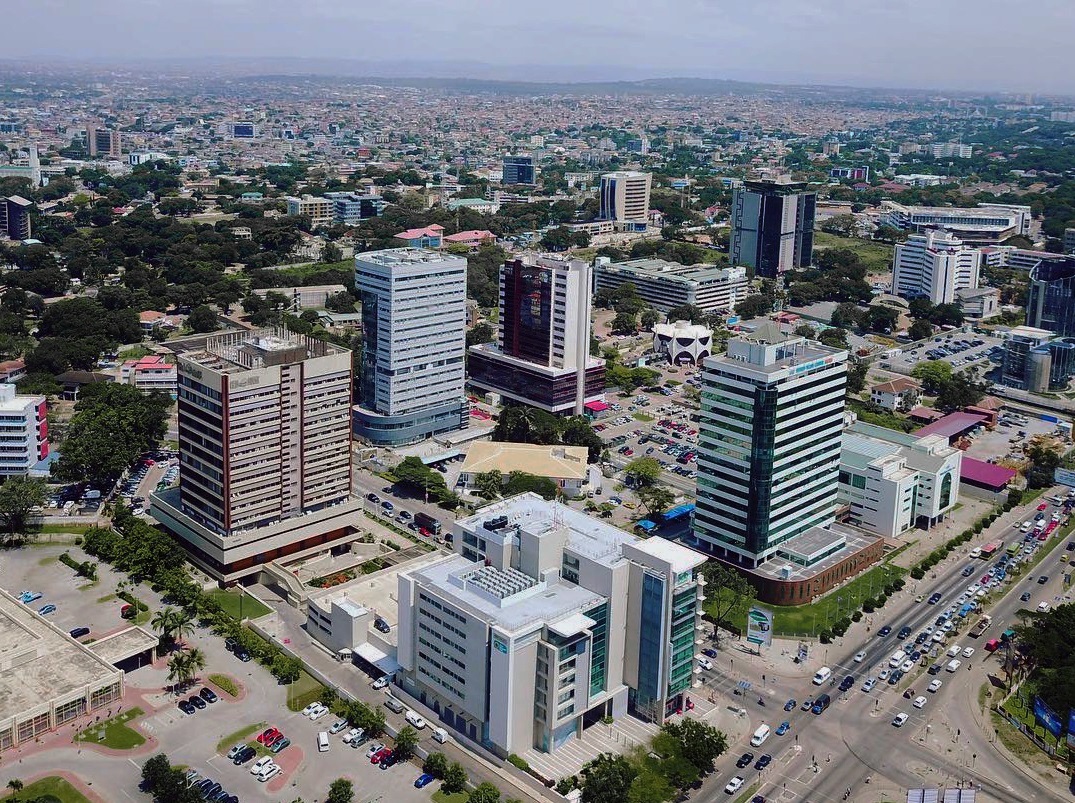
Accra is the capital of Ghana and its largest city, with more than 2,5 million people in the municipality and around 5 million in the metropolitan area. It sits on the Atlantic coast of the Gulf of Guinea, in the Greater Accra Region, and is the political, economic and cultural heart of the country. It's a chaotic, vibrant city, a mix of overflowing markets, colonial neighbourhoods by the sea, modern high-rises and a highlife and afrobeats music scene that never stops. It was the capital of the British colony of the Gold Coast and, since 1957, of the first nation in sub-Saharan Africa to gain independence.
📌Best time to go
Accra has a warm tropical climate all year round, with temperatures of around 26-31 °C. The best time to visit is the dry season, from November to March, when there's less humidity and rain. The Harmattan (December-February) brings a dry, dusty wind from the Sahara that takes the edge off the heat but leaves the sky hazy. The 'major rains' run from April to mid-July and the 'minor rains' fall in September-October. December is high season thanks to the 'Detty December' phenomenon, with concerts, festivals and the diaspora coming home.
📌Suggested days
With 2 or 3 full days you can see the essentials of Accra: Kwame Nkrumah Memorial Park, the historic Jamestown neighbourhood and its lighthouse, Makola Market, the National Museum, Independence Square and an afternoon on Labadi Beach or in the bars of Osu. Many travellers use Accra as a base for day trips to the castles of Cape Coast and Elmina or to the Ada Foah estuary.
📌Getting there
Kotoka International Airport (ACC), right in the city, is the country's main airport and receives flights from Europe, the Middle East, North America and all of West Africa. It's only 15-20 minutes from the centre and from Osu. From the airport to your hotel, it's best to take a taxi with an agreed fare, Bolt or Uber (around GHS 40-120 depending on the area). By land, Accra is connected by bus (VIP, STC) to Kumasi, Cape Coast, Takoradi and neighbouring countries.
📌Getting around
The most practical and safest option for travellers is the Bolt and Uber apps, which are widely used and cheap. 'Tro-tros' (shared minibuses) are the popular way to get around: dirt cheap but packed, with no fixed timetables and hard for visitors to figure out. There are also shared taxis and private taxis whose fare you should agree before getting in. Accra's traffic is heavy at rush hour. There's no metro or urban rail.
📌Language and currency
The official language is English, which is spoken all over the city, so getting around is very easy; on the street you'll also hear Twi (Akan), Ga and Ewe. The currency is the Ghanaian cedi (GHS or GH₵); in mid-2026 the exchange rate is around 11,5 cedis to the US dollar. It's a good idea to carry some cash for markets, taxis and admission fees; mobile money is everywhere and cards are accepted in hotels and larger shops.
💱 GHS exchange rate
Loading rate…
🌤️ Weather in Accra
Loading weather…

Accra is one of the liveliest and most contradictory capitals in West Africa: chaotic, hot and noisy, yet warm, welcoming and bursting with energy. Born from the merging of several Ga fishing villages next to the European forts on the coast, today it's an Atlantic metropolis of overflowing markets, endless traffic, evangelical churches, new skyscrapers and a nonstop soundtrack of highlife, hiplife and afrobeats. It's the best place to take the pulse of modern Ghana.

The city holds a central place in African history: it was in Accra that Kwame Nkrumah proclaimed Ghana's independence in 1957, the first colony in sub-Saharan Africa to break free, lighting the fuse of decolonisation across the continent. That Pan-African legacy is palpable at the Nkrumah Memorial Park, Independence Square and the W.E.B. Du Bois Centre, and makes Accra a destination of strong symbolic weight for the African diaspora, especially since the 2019 'Year of Return'.

This guide takes a practical look at Accra: what to see between historic Jamestown and the great memorials, how to lose yourself (carefully) in Makola Market, where to eat good 'jollof' and grilled fish, how to get around safely and how to use the capital as a base for the coastal castles and the beaches to the east. With two or three well-planned days, Accra stops being just a gateway and becomes a memorable part of your trip through Ghana.

📖 History of Accra

Accra grew out of several villages of the Ga people who settled by the sea centuries ago and who, in the 17th and 18th centuries, found themselves surrounded by three rival European forts: the British James Fort, the Dutch Ussher Fort and the Danish Christiansborg. The city emerged from these outposts of the gold and slave trade, and in 1877 it became the capital of the British colony of the Gold Coast. From its Independence Square, Kwame Nkrumah proclaimed Ghana's independence in 1957, and Accra became a symbol of Pan-Africanism and the nation's capital. Its full story —from the Ga villages to 'Detty December'— is told on our history page.

Read the full history ↓

🏛️ Accra is in Greater Accra and the east coast

The capital and its coastline: from the Ga fishing villages and the forts of Jamestown to Nkrumah's Accra, all the way to the mouth of the Volta at Ada Foah.

Read the history of Greater Accra and the east coast →

🗺️ What to see

Tours you can book

If you book from here we earn a commission and you pay no more. Prices and availability come from Civitatis.

1
Kwame Nkrumah Memorial Park
The mausoleum and museum of the father of Ghana's independence, in the heart of Accra, with its striking marble tomb and a fountain surrounded by sculptures.
Leer más ↓
Kwame Nkrumah Memorial Park is the great place of political pilgrimage in Accra and for Pan-Africanism. It houses the mausoleum where Kwame Nkrumah, Ghana's first president and leader of the independence movement, rests alongside his wife Fathia. The monument, opened in 1992 on the spot where Nkrumah proclaimed independence in 1957, is shaped like a truncated tree —a symbol of a life and work cut short by the 1966 coup— and is clad in Italian marble, surrounded by fountains and sculptures of musicians playing. In the gardens there's a statue of Nkrumah and, in a small museum, personal belongings, photographs with figures such as Kennedy, Nasser, Mao and Queen Elizabeth II, and mementos of his life. A guided visit tells the story of Nkrumah, his Pan-African ideals and his downfall. It's the best starting point for understanding contemporary Ghana and the country's role as a beacon of African decolonisation. Getting there: it's in the centre, near Independence Square and Makola; easy to reach by Bolt or taxi. Best time: in the morning, to avoid the heat. Tips: admission includes a guide; combine it with the National Museum and Jamestown on the same day.
ℹ️ Location: High Street, central Accra, next to Independence Square · Opening hours: Monday to Saturday 9 am to 7 pm; Sundays 10 am to 7 pm · Admission: Non-residents GHS 100 adult (~USD 9), GHS 60 students, GHS 30 children (official KNMP rate, verified July 2026) · Duration: 1 to 1,5 hours
2
Jamestown (Ga Mashie) and the lighthouse
Accra's oldest and most photogenic fishing neighbourhood, with its colonial lighthouse, James Fort, Ussher Fort, murals and a bustling Ga community.
Leer más ↓
Jamestown (part of the old Ga quarter known as Ga Mashie) is the Accra neighbourhood with the most character: a coastal maze of peeling colonial houses, fishing nets, colourful canoes, street murals and children playing between the walls of two old forts. It grew up around the British James Fort (1673) and today it's a working-class neighbourhood, poor but full of life, and the pride of the Ga community. The most famous spot is the Jamestown Lighthouse, from the early 20th century, whose top offers views over the fishing harbour, the sea and the neighbourhood's rooftops. Down below, by the beach, hundreds of Ga fishermen work as they have for generations. Jamestown is also the cradle of Ghanaian boxing and home to the Ga people's Homowo festival and the Chale Wote cultural festival, which fills the streets with urban art every August. It's best explored with a local guide, both for safety and to understand what you're seeing. Getting there: at the western end of the centre, by the sea; by Bolt or taxi. Best time: in the morning, when the fishing canoes come back. Tips: hire a community guide (there are Jamestown tours), don't photograph people without permission and bring cash for the lighthouse climb and tips.
ℹ️ Location: Western end of central Accra, on the coast · Opening hours: Neighbourhood open; lighthouse open to visitors during the day · Admission: Lighthouse climb around GHS 20-50 per person; guided neighbourhood tours are paid separately (verified July 2026) · Duration: 1,5 to 2 hours
3
Makola Market
Accra's biggest and busiest market, a sea of stalls selling everything, run by the powerful 'market women'.
Leer más ↓
Makola is Accra's commercial heart and one of the most intense markets in West Africa: a tangle of streets and stalls selling absolutely everything —wax print fabrics, food, spices, cosmetics, electronics, medicinal herbs, beads, household goods— with tens of thousands of people passing through every day. It's run by the famous 'market women', Ga and Akan traders who are a major economic and social force in the city. It's not a market 'for tourists' but the real pulse of Accra: chaotic, noisy, overwhelming and fascinating. It's the best place to buy colourful fabrics, sandals, Krobo glass beads and souvenirs, always haggling with good humour. Travel light, keep an eye on your bag and belongings, and take it slowly. Many travellers visit it on a walking tour that combines Makola with Jamestown and the Nkrumah memorial. Getting there: right in the centre, near the Nkrumah memorial; by Bolt or taxi. Best time: in the morning; avoid rush-hour traffic. Tips: watch out for pickpockets, keep little cash on show and ask permission before photographing vendors.
ℹ️ Location: Central Accra, Kojo Thompson Rd / Kimberley Ave · Opening hours: Every day during daylight hours (liveliest in the morning) · Admission: Free (market); always haggle and look after your belongings · Duration: 1 to 2 hours
4
Independence Square and Independence Arch
Ghana's great ceremonial esplanade, with the Independence Arch and the Black Star, the setting for the 6 March parades.
Leer más ↓
Independence Square (Black Star Square), on the seafront, is Ghana's great civic esplanade, built by Nkrumah in 1961 for major national celebrations. It's one of the largest ceremonial squares in Africa and the setting for the Independence Day parade every 6 March. It's presided over by the Independence Arch and, above all, the Black Star Gate monument, the black star that is the symbol of Ghana and of Pan-Africanism and that gave its name to the national football team, the 'Black Stars'. Right next to it is the Independence Stadium and, a short distance away, the arch honours the ex-servicemen and the three veterans killed in 1948, whose case sped up the independence movement. Outside official events the esplanade is usually empty and hot, but it's a place loaded with symbolism and a quick, photogenic stop facing the Atlantic. Getting there: on the coast, next to the centre; by Bolt or taxi. Best time: early or at sunset, because of the heat. Tips: it pairs well with nearby Labadi Beach and the Nkrumah memorial.
ℹ️ Location: On the seafront, next to central Accra · Opening hours: Open esplanade; very busy on 6 March · Admission: Free (public square) · Duration: 30 to 45 minutes
5
National Museum of Ghana
The country's main museum, with archaeology, art, and the history of the Ashanti kingdom and the slave trade, reopened after a major renovation.
Leer más ↓
The National Museum of Ghana, opened in 1957 with independence and reopened in 2022 after years of renovation, is the best place to understand the country's culture and history in just a few hours. Its galleries cover the archaeology and prehistory of West Africa, the art and crafts of Ghana's peoples (Akan, Ga, Ewe, Dagomba and others), Ashanti goldwork and gold weights, kente and adinkra cloth, talking drums and royal regalia. Part of the visit takes a serious look at the history of the transatlantic slave trade and colonialism, complementing a visit to the coastal castles. The museum, housed in a modernist building in the centre, is a comfortable, air-conditioned stop, ideal on a hot day or for some cultural context before travelling around the country. Since the refurbishment, the displays are much more modern and informative. Getting there: in the centre, near Barnes Road; by Bolt or taxi. Best time: any day (closed on some public holidays). Tips: allow 1,5-2 hours; guides are available and there's a craft shop.
ℹ️ Location: Barnes Road, central Accra · Opening hours: Every day approx. 9 am to 4:30 pm (confirm) · Admission: Non-residents around GHS 60-100 (~USD 5-9), depending on category (verified July 2026) · Duration: 1,5 to 2 hours
6
W.E.B. Du Bois Centre for Pan-African Culture
The home and grave of African American intellectual W.E.B. Du Bois, father of Pan-Africanism, now a centre for memory and study.
Leer más ↓
The W.E.B. Du Bois Memorial Centre for Pan-African Culture, in the Cantonments neighbourhood, occupies the house where African American sociologist and intellectual W.E.B. Du Bois, one of the great fathers of Pan-Africanism, spent his last years and died in 1963. Invited by Nkrumah, Du Bois settled in Accra at the end of his life, renounced his US citizenship and worked on the 'Encyclopedia Africana'. His grave and that of his wife Shirley are in the garden. The centre preserves his personal library, belongings, photographs and study, and serves as a place of study and remembrance of the struggle for civil rights and African unity. It's a quiet visit with great symbolic weight, especially meaningful for the African American diaspora, above all since the 2019 'Year of Return'. It was closed for a while for expansion work, so it's best to confirm opening hours before you go. Getting there: in Cantonments, the embassy district; by Bolt or taxi. Best time: any weekday. Tips: combine it with the Nkrumah memorial for a Pan-African route; guided visits are available.
ℹ️ Location: 1st Circular Road, Cantonments, Accra · Opening hours: Monday to Friday 9 am to 4 pm; Saturday mornings (confirm) · Admission: Non-residents around GHS 50-100; guided visit (verified July 2026) · Duration: 1 hour
7
Labadi Beach and Osu (Oxford Street)
Accra's most popular city beach, with live music and horse riders, and the Osu neighbourhood, the epicentre of nightlife and food.
Leer más ↓
Labadi Beach (La Pleasure Beach) is Accra's liveliest city beach: at weekends it fills up with families, live highlife and reggae, food stalls, riders offering horseback rides and dancers. It's not the cleanest or the quietest beach in the country, but it has the best atmosphere and is the best place to experience an Accra weekend. There's a small admission fee, and several hotels and bars give access to better-kept stretches. A few minutes away is Osu, the city's most cosmopolitan neighbourhood, built around Oxford Street (Cardoso Road): it's packed with restaurants from all over the world, cafés, bars, nightclubs, shops and galleries, and it's the epicentre of nightlife, especially in December. Osu is also home to the old Danish fort of Christiansborg (Osu Castle), for a long time the seat of government. It's the best area for dinner, going out and taking the pulse of young, modern Accra. Getting there: Labadi and Osu are east of the centre; by Bolt or taxi. Best time: Labadi at weekends; Osu at night. Tips: at Labadi keep an eye on your things and agree on horse ride prices beforehand; in Osu, choose busy places.
ℹ️ Location: Labadi and Osu, east of central Accra · Opening hours: Beach during the day; Osu day and night · Admission: Labadi around GHS 20-40 per person; Osu free to wander (verified July 2026) · Duration: Half a day
📶I have never landed without internet. I arrive and my phone connects to the strongest network in the country I am visiting: I can say I landed, sort out transport, book tours and keep posting, at a seriously good price. I always use the Maya eSIM — check their plans by clicking the banner.See plans →Maya Mobile eSIM — turn travel mode on
What nobody tells you

💵 Prices

Tickets

TypePrice
Parque Memorial Kwame Nkrumah (no residente, adulto)GHS 100 / ~USD 9 (official KNMP rate; GHS 60 students, GHS 30 children, verified July 2026)
Museo Nacional de Ghana (no residente)Around GHS 60-100 / USD 5-9 depending on category (verified July 2026)
Centro W.E.B. Du Bois (no residente)Around GHS 50-100 / USD 4-9, with guided visit (verified July 2026)
Faro de Jamestown (subida)Around GHS 20-50 per person (verified July 2026)
Playa de Labadi (La Pleasure Beach)Around GHS 20-40 per person (verified July 2026)
Tour a pie por Jamestown con guía comunitarioFrom around GHS 150-400 per person/group depending on the operator (verified July 2026)
🔄 updated monthlyOfficial / reference values · double-check when buying

Activities and tours

ActivityPriceDurationOperator
Walking tour of Jamestown, the lighthouse and the forts with a local guideFrom around USD 15-40 per person (verified July 2026)2 to 3 hoursJamestown community guides / Accra operators
Combined city tour: Nkrumah + Makola + Jamestown + National MuseumFrom around USD 40-80 per person with transport, admission not included (verified July 2026)Half day to full dayDay tour operators in Accra
Day trip to Cape Coast and Elmina castles + KakumFrom around USD 90-160 per person with transport, admission not included (verified July 2026)Full day (12-14 h)Accra operators (Easy Track, Jolinaiko, etc.)
Highlife/afrobeats music night in Osu and live music barsEntry and drinks from around USD 10-30 per person (verified July 2026)EveningBars and clubs in Osu/Labone
Beach afternoon with live music at LabadiAdmission GHS 20-40 + drinks (verified July 2026)Half a dayLa Pleasure Beach
🔄 updated monthlyOfficial / reference values · double-check when buying

🚌 How to get there and distances

Getting around

Bolt and Uber (apps)
DurationVariable
Price
City trips from around GHS 30-120 (approx. USD 3-10, verified July 2026)
Notes
The most practical and safest option for travellers; fixed price through the app. Widely used in Accra. Avoid taxis without an agreed fare
Private taxi (price to be negotiated)
DurationVaries with traffic
Price
Short trips from around GHS 40-100; airport to the centre GHS 60-150 (verified July 2026)
Notes
Always agree on the fare before getting in; many hotels offer airport transfers
Tro-tro (shared minibus)
PriceGHS 3-15 per trip (verified July 2026)
DurationVariable
Notes
The dirt-cheap popular transport, but crowded, with no timetable and hard to figure out; not really recommended if you don't know the city
Shared taxi
PriceFrom around GHS 5-20 per trip on fixed routes (verified July 2026)
DurationVariable
Notes
Runs fixed routes like the tro-tros, but by car; cheap, but you need to know the routes
🔄 updated monthlyOfficial / reference values · double-check when buying

How to get there

RouteAirlines / operatorsAvg. priceDuration
Kotoka International Airport (ACC) → central Accra / OsuBolt, Uber, taxi, hotel transferGHS 40-150 (USD 4-13, verified July 2026)15 to 30 min depending on area and traffic
Accra ↔ Kumasi by roadVIP Jeoun, STC (buses)Approx. GHS 120-250 per person (verified July 2026)5 to 6 h (about 250 km)
Accra ↔ Cape Coast / ElminaSTC, Ford/tro-tro (Kaneshie), cars with driverTro-tro/bus GHS 80-120; private car more expensive (verified July 2026)3 to 4 h (about 145 km)
Accra → Ada Foah (Volta estuary)Tro-tro (Tudu/Tema station), private taxiTro-tro from ~GHS 40-60; private taxi GHS 100-150 (verified July 2026)1.5 to 2 h (about 100 km)
Accra ↔ Takoradi by roadSTC, VIP (buses)Approx. GHS 100-180 per person (verified July 2026)4 to 5 h
🔄 updated monthlyOfficial / reference values · double-check when buying

🏨 Where to stay

No exact prices: a scale from $ (budget) to $$$$$ (luxury), with 2-3 options per category.

Luxury (5-star and boutique)
Price$$$$$
Recommended options
From around USD 150-350+ per night; options include Kempinski Hotel Gold Coast City, Labadi Beach Hotel, Movenpick Ambassador, Villa Monticello (boutique) and Alisa Hotel, in Airport City, Ridge and Labadi
Mid-range (4-star and business)
Price$$$$$
Recommended options
Approx. USD 70-150 per night; comfortable, well-located hotels such as Fiesta Royale, Best Western Premier Accra, Tang Palace or African Regent, ideal for 2-3 nights
Budget (guesthouses and hostels)
Price$$$$$
Recommended options
From around USD 20-60 per night; backpacker hostels and guesthouses in Osu, Labone and Cantonments such as Somewhere Nice Hostel or Sleepy Hippo, popular with independent travellers

🍴 Where to eat

Chop bars y comida ghanesa popular
Price$$$$$
Options / signature dish
From around USD 3-8 per person; jollof rice, banku with tilapia, fufu with goat soup, kelewele (spiced fried plantain) and waakye at local 'chop bars' and street stalls
Pescado y marisco a la parrilla junto al mar
Price$$$$$
Options / signature dish
USD 8-20 per person; grilled tilapia and red snapper with banku at coastal spots in Labadi, Osu and along the coast
Restaurantes de Osu y cocina internacional
Price$$$$$
Options / signature dish
USD 15-40 per person; Lebanese, Indian, Italian, Japanese and contemporary African cuisine on Oxford Street and in Cantonments
Cafés, brunch y repostería
Price$$$$$
Options / signature dish
USD 6-18 per person; good coffee, brunch and desserts at modern cafés in Osu, Airport and Cantonments

📖 History of Accra

Origins, formation and what the sources say.

The Ga villages and the European forts

Before it became a nation's capital, Accra was — and in some ways still is — a constellation of Ga villages by the sea. The Ga, a people of farmers, fishers and traders, settled on this stretch of the Gulf of Guinea coast probably around the 15th and 16th centuries, arriving from the east. They founded several coastal settlements, among them the ones that now make up the old town of Ga Mashie, with Jamestown and Ussher Town. These settlements lived from fishing, salt and trade with the interior. The name 'Accra' probably comes from 'nkran', the Akan word for soldier ants, a reference to the people who lived there.

The city's history changed course when the Europeans arrived. From the late 15th century, the Portuguese, Dutch, English, Danes and others competed in this 'Gold Coast' for the trade in gold, ivory and, more and more, human beings. In Accra that rivalry took shape as three forts built almost side by side during the 17th century: the Dutch Fort Crèvecoeur (later Ussher Fort, 1649), the English James Fort (1673) and the Danish Christiansborg (Osu Castle, expanded from 1661). Each one anchored a rival trading enclave.

The neighbourhoods that would shape the city grew up around those forts: James Town next to the English fort, Ussher Town next to the Dutch one and Osu next to the Danish one. For almost two centuries Accra was a handful of Ga villages and rival European trading posts. Gold from the interior passed through them, and so did captives bound for the Atlantic slave trade. The mark of those forts, now monuments and some in ruins, still shapes the map of old Accra.

es.wikipedia.org · Acraen.wikipedia.org · Accra

From coastal village to capital of the Gold Coast

Over the 19th century, European power on the coast passed more and more into British hands. Britain bought the Danish forts (including Christiansborg) in 1850 and the Dutch ones in 1872, and it tightened its control over the Gold Coast, which formally became a British colony in 1874. In 1877 the British moved the colony's capital from Cape Coast to Accra, drawn by its somewhat drier, healthier climate and by its location. This was the start of the city's rise.

As the colonial capital, Accra grew quickly. It gained the administration, the port, the railway to the interior (built to carry out cocoa and minerals), churches, mission schools and European residential districts. The old Danish castle of Christiansborg, in Osu, became the seat of the colonial government. The city spread beyond the old Ga neighbourhoods but kept its two-sided layout: dense, working-class African districts on one side and roomier colonial areas on the other. An earthquake in 1939 meant much of the old town had to be rebuilt.

Ghana, then called the Gold Coast, became one of the most prosperous colonies in Africa thanks to gold mining and to cocoa, of which it became the world's leading producer. That wealth fed the rise of an educated African elite, along with newspapers and associations that began to demand a bigger say and, in time, independence. As the capital, Accra was the natural stage for all this political ferment.

en.wikipedia.org · Accraen.wikipedia.org · Gold Coast (British colony)

Nkrumah and the first independence in sub-Saharan Africa

The road to independence sped up after the Second World War. In February 1948, in Accra, colonial police opened fire on a peaceful march of ex-servicemen who were demanding what they had been promised, and three veterans were killed (the so-called 'Christiansborg Crossroads' incident). The shooting set off riots in the city and radicalised the nationalist movement. Out of that crisis came Kwame Nkrumah, a young Pan-Africanist leader. In 1949 he founded the Convention People's Party (CPP) and launched a campaign of 'positive action', made up of strikes and civil disobedience, to demand 'self-government now'.

The British jailed Nkrumah, but his party swept the elections and he left prison to lead the government. After years of negotiation and pressure, on 6 March 1957, on Accra's old parade ground, Nkrumah declared the independence of Ghana, named after an ancient West African empire. It was the first colony in sub-Saharan Africa to free itself from European rule. The event echoed across the continent and the diaspora, and Ghana became a symbol and a beacon of African decolonisation.

Nkrumah became president in 1960. He pushed ahead with major projects, among them the Akosombo Dam and Lake Volta, universities, industries and Independence Square (1961), along with a Pan-Africanist policy that sought to unite the continent. But his government slid into authoritarianism and economic trouble, and in 1966, while he was abroad, a military coup removed him from power. He died in exile in 1972. Decades later, Ghana built the memorial park that bears his name in Accra, on the very spot where he had declared freedom. Today Nkrumah is celebrated as the father of the nation and a hero of Pan-Africanism.

en.wikipedia.org · Kwame Nkrumahes.wikipedia.org · Ghana

Coups, democracy and explosive growth

The decades after independence were turbulent. Ghana went through a string of coups and military governments in the middle of economic crises. The dominant figure of the 1980s and 1990s was Jerry Rawlings, an officer who seized power in 1979 and again in 1981. He ruled with a heavy hand but ended up steering the transition: a new democratic constitution was approved in 1992, and Rawlings won multi-party elections. Since then Ghana has become one of Africa's most stable democracies, with peaceful handovers of power, and Accra has been its political capital.

At the same time, the city grew explosively. It went from a few hundred thousand people at independence to several million in the metropolitan area, swallowing nearby villages and spreading inland. That growth brought huge contrasts. Well-off neighbourhoods such as Cantonments, Airport Residential and East Legon, with embassies, office towers and shopping malls, sit alongside dense, precarious settlements such as Old Fadama (Agbogbloshie), known for its huge electronic-waste dump. Traffic, strain on water and power supplies, and inequality are the capital's biggest challenges.

Today Accra is the economic and cultural engine of Ghana. It is home to the government, to banks, to universities and to a booming creative industry, and the port of Tema is close by. The city has become a reference point for afrobeats, contemporary art and West African fashion, and it draws investors, artists and visitors from across the continent and the diaspora.

en.wikipedia.org · Accraen.wikipedia.org · History of Ghana

Pan-African capital: from the 'Year of Return' to 'Detty December'

In recent decades Accra has strengthened its role as the symbolic capital of Pan-Africanism and of reconnection with the diaspora. The city holds the graves of two founding figures of that idea. One is Kwame Nkrumah, in his memorial park. The other is the African American intellectual W.E.B. Du Bois, who settled in Accra late in life and died here in 1963, in the house that is now a centre for Pan-African culture. For years Ghana has offered citizenship and other help to people of African descent who want to 'return' to the continent.

That message peaked in 2019 with the 'Year of Return', a major campaign marking 400 years since the first enslaved Africans arrived in North America and inviting the diaspora to rediscover Ghana. The initiative drew hundreds of thousands of visitors, many of them African American and Afro-Caribbean. It gave a strong boost to heritage tourism to the coastal castles and confirmed Accra as the gateway for that reconnection. Programmes such as 'Beyond the Return' followed.

All of this also gave rise to 'Detty December'. Every December, Accra becomes one of Africa's party capitals, with afrobeats concerts, festivals, parades and a wave of returnees and tourists filling Osu, Labadi and the city's clubs. A city of Ga villages, capital of the Gold Coast, birthplace of the first African independence and today a vibrant creative metropolis, Accra sums up much of the past and present of Ghana and West Africa in its history: young, contradictory, proud and full of future.

en.wikipedia.org · Year of Return, Ghana 2019en.wikipedia.org · W. E. B. Du Bois Memorial Centre for Pan…

📚 Bibliography

  • Wikipedia (EN) — «Accra»: https://en.wikipedia.org/wiki/Accra
  • Wikipedia (ES) — «Acra»: https://es.wikipedia.org/wiki/Acra
  • Wikipedia (EN) — «Kwame Nkrumah»: https://en.wikipedia.org/wiki/Kwame_Nkrumah
  • Wikipedia (EN) — «History of Ghana»: https://en.wikipedia.org/wiki/History_of_Ghana
  • Wikipedia (EN) — «Gold Coast (British colony)»: https://en.wikipedia.org/wiki/Gold_Coast_(British_colony)
  • Wikipedia (EN) — «Jamestown, Accra»: https://en.wikipedia.org/wiki/Jamestown/Usshertown
  • Wikipedia (EN) — «Year of Return, Ghana 2019»: https://en.wikipedia.org/wiki/Year_of_Return,_Ghana_2019
  • Wikipedia (EN) — «W. E. B. Du Bois Memorial Centre for Pan African Culture»: https://en.wikipedia.org/wiki/W._E._B._Du_Bois_Memorial_Centre_for_Pan_African_Culture
  • Kwame Nkrumah Memorial Park (KNMP) — official site: https://knmp.gov.gh/
  • Visit Ghana (Ghana Tourism Authority): https://visitghana.com/
  • Britannica — «Accra»: https://www.britannica.com/place/Accra

❓ Frequently asked questions

Is Accra safe for tourists?+
Accra is generally a calm, welcoming capital, safer than other large African cities, but it's worth taking basic precautions: get around by Bolt/Uber or taxis with an agreed fare, don't walk through dark areas or along the beach at night, keep an eye on your phone and bag in markets like Makola, and don't show off valuables. In Jamestown it's best to go with a local guide. Most travellers have no incidents at all.
How many days should I stay in Accra?+
With 2 or 3 full days you can see the essentials: the Nkrumah memorial, Jamestown and its lighthouse, Makola, the National Museum, Independence Square, plus an afternoon at the beach and a night out in Osu. Many travellers use Accra as a base for day trips to Cape Coast and Elmina or to Ada Foah, adding nights depending on the pace of their trip.
What currency do I use and how do I pay?+
The currency is the Ghanaian cedi (GHS); in mid-2026 it's around 11.5 cedis to the dollar. Carry some cash for taxis, markets, admission fees and tips; mobile payments ('mobile money', MTN MoMo) are everywhere, and cards are accepted at hotels, supermarkets and larger restaurants. There are ATMs all over the city; withdraw cedis and keep small notes handy.
Can you visit Cape Coast and Elmina in a day from Accra?+
Yes, it's one of the most popular excursions. The Cape Coast and Elmina castles and Kakum National Park are about 3-4 hours from Accra by road, and many operators offer day tours (long ones, 12-14 hours). It's intense but doable; if you have time, you can spend the night in Cape Coast or Elmina and take it more slowly.
What are 'Detty December' and the 'Year of Return'?+
'Detty December' is the season of parties, concerts and festivals that fills Accra every December, when the Ghanaian diaspora comes home and international afrobeats artists put on shows; it's the liveliest (and most expensive) time to visit. The 'Year of Return' was a 2019 campaign, marking 400 years since the first enslaved Africans arrived in North America, that invited the African diaspora to 'return' to Ghana; Pan-African roots tourism has grown a lot since then.

More places in Ghana

Ada FoahAximBonwireBusuaCape CoastCataratas Wli (Agumatsa)
See every place in Ghana →The history of Ghana →
Sources consulted (7)
Still planning?
Explore more destinations in Ghana
See all destinations →