Viajá con Gus
Home › Ghana › Ada Foah
Ada Foah
🇬🇭 Ghana · Greater Accra and the east coast

Ada Foah

🪪 What do I need to enter Ghana?Pick your citizenship and we tell you the visa, the days and the paperwork, with the official source.

By leaving your email and citizenship you agree to receive the documents you asked for and weekly travel news. You can unsubscribe whenever you want. How we handle your data.
Jump to what you need
📍Region
Ada Foah is a coastal town in the Greater Accra Region, at the point where the Volta River flows into the Atlantic Ocean, about 100 km east of Accra. It is an estuary landscape of sandbars, islands, mangroves and lagoons between the river and the sea, home to the Dangme (Adangbe) people. It was once a Danish trading post, and today it is a very popular weekend getaway from the capital, known for its water sports, boat trips and golden sand beaches where the river meets the ocean.
📌Best time to visit
The climate is warm and tropical all year round (26-32 °C). The best time to visit Ada Foah is the dry season, from November to March. It is ideal for the beach, boat trips and water sports, with less rain and calmer water. The main rainy season (April-July) can bring a higher river. The area is especially lively at weekends and during the December festive season. On weekdays it is much quieter. Sea turtle nesting season runs roughly from November to March.
📌Suggested days
One or two nights over a weekend is enough to enjoy Ada Foah: a boat trip through the estuary to the river mouth ('Estuary' or 'Meet me there'), a day of beach and water sports, a sunset over the river and, in season, a turtle-watching outing at dawn. Many visitors come on a day trip from Accra, but spending the night at a riverside eco-lodge lets you enjoy the place at a slower pace.
📌Getting there
Ada Foah is about 100-110 km east of Accra, 1.5 to 2 hours along the Accra-Ada road (via Tema and Sege). You can get there by tro-tro from the Tudu or Tema stations in Accra (changing at Ada Kasseh) or, more comfortably, by private taxi or car with driver (approx. GHS 100-150). Many lodges arrange transfers. Once there, many of the estuary lodges can be reached by boat or canoe from the town.
📌Getting around
In Ada Foah town people get around on foot, by motorbike taxi ('okada') or by shared taxi. But the real way to get around the area is by water: boats, motorboats and canoes cross the Volta estuary to the sandbars, the islands and the lodges built on the riverbank or between the river and the sea. Lodges and operators arrange boat transfers and excursions. It is best to agree on river transport with your lodge in advance.
📌Language and currency
The local language is Dangme (Adangbe), but English, Ghana's official language, is widely understood at lodges and by tour operators. The currency is the Ghanaian cedi (GHS); in mid-2026 it is around 11.5 cedis to the dollar. In Ada Foah it is best to carry cash, because many lodges, boatmen and stalls do not accept cards. Mobile money payments are fairly widespread. There are ATMs in town, but it is safer to bring cedis from Accra.
💱 GHS exchange rate
Loading rate…
🌤️ Weather in Ada Foah
Loading weather…

Ada Foah is the great beach and river escape of eastern Ghana: the place where the mighty Volta River, after crossing half the country, opens into a maze of islands, sandbars and mangroves and merges with the Atlantic Ocean. This meeting of fresh and salt water creates a unique estuary landscape, with golden beaches on one side and the wide river on the other, dotted with eco-lodges that can only be reached by boat. Just over an hour and a half from Accra, it is where people from the capital like to go to switch off.

Ada Foah's appeal lies in the water: boat trips through the estuary to the river mouth, kayaking, jet-skiing, windsurfing, fishing, birdwatching and, in season, sea turtles nesting on its beaches. It is also a place with history: it was a Danish and British trading post, it holds the ruins of Fort Kongensten, and it lies near the great Akosombo Dam, which created Lake Volta upstream. Nearby Ada also borders the Songor Lagoon, important for salt and birdlife.

This guide takes a practical look at Ada Foah: how to get there from Accra, what to do on the Volta estuary, where to stay by the river, how to arrange boat trips and water sports, and what to expect from the turtles and mangroves. It's ideal for a relaxing weekend, a laid-back end to a trip around Ghana or a beach day that's different from the classic ones in the west of the country.

📖 History of Ada Foah

Ada Foah began as a Dangme settlement at the mouth of the Volta and, in the 18th and 19th centuries, became a European trading post: the Danes built Fort Kongensten here (1784), and the British later controlled the area, which traded in salt, ivory, palm oil and slaves. Salt from the Songor Lagoon was a key source of wealth for the region for centuries. In the 20th century, the construction of the Akosombo Dam upstream (1965) transformed the entire Volta system. Today Ada Foah is a quiet destination for the estuary, the beach and ecotourism. Its history is covered on our history page.

Read the full history ↓

🏛️ Ada Foah is in Greater Accra and the east coast

The capital and its coastline: from the Ga fishing villages and the forts of Jamestown to Nkrumah's Accra, all the way to the mouth of the Volta at Ada Foah.

Read the history of Greater Accra and the east coast →

🗺️ What to see

Tours nearby, in Acra

They depart from Acra, 93 km away. If you book from this link we earn a commission and you pay no more.

1
Volta River estuary (river mouth)
The spectacular spot where the Volta River meets the Atlantic Ocean, an unmissable boat trip among islands and sandbars.
Leer más ↓
The star of Ada Foah is the Volta estuary: the place where the second most important river in West Africa, after thousands of kilometres, opens into a delta of islands, sandbanks and channels and flows into the Atlantic. The classic trip is to take a boat or motorboat from the town and sail through the estuary to the river mouth, a narrow strip of sand where the ocean breaks on one side and the river flows calmly on the other. Stepping ashore there, with rough sea on one side and fresh water on the other, is the experience people remember most. Along the way you will see fishing villages, coconut palms, herons and other waterbirds, fishing nets and other boats. Many well-known lodges (such as Maranatha Beach Camp or Cocoloko) sit right on these sandbars and can only be reached by water. The trip can be combined with a stop for a swim, a lunch of fresh fish or a sunset over the river, one of the most beautiful on the Ghanaian coast. Getting there: boats leave from the Ada Foah jetty and are arranged by lodges and operators. Best time: dry season, with calm water; morning or sunset departures. Tips: agree on the boat price before boarding, and bring sunscreen, water and cash.
ℹ️ Location: Mouth of the Volta, opposite Ada Foah town · Best time: Dry season (Nov-Mar); morning or sunset · Price: Boat trip through the estuary from about GHS 150-400 per boat/group depending on duration (verified July 2026) · Duration: 1.5 to 3 hours
2
Estuary beaches and swimming between river and sea
Long golden sand beaches on the sandbars where the Volta meets the Atlantic, ideal for relaxing and swimming in the river.
Leer más ↓
The sandbars that separate the river from the ocean form some of Ghana's most unusual beaches: on one side, the Atlantic with its strong surf; on the other, the calm waters of the Volta, perfect for swimming. Beaches such as Azizanya, Cocobeach and those around the estuary camps are long, golden and lined with coconut palms, with very few people on weekdays. It is a place to relax with your feet in the sand, swim in the river (safer than the open sea, which has strong currents), sunbathe, read and watch the fishermen's canoes go by. In the late afternoon the sun sets over the estuary and the sky turns orange, one of the area's big attractions. Many travellers come for exactly this: a quiet, different kind of beach, an hour and a half from the capital. Getting there: the sandbars are reached by boat, or directly from the beach at some lodges. Best time: all year round; best in the dry season. Tips: on the sea side, watch out for currents and swim on the river side. Bring what you need, as there are few services on the more isolated beaches.
ℹ️ Location: Sandbars between the Volta and the Atlantic (Azizanya, Cocobeach) · Best time: All year round; ideal in the dry season · Price: Access depends on the lodge; boat transport is paid separately · Duration: As long as you like (half a day or overnight)
3
Water sports on the Volta
Kayaking, jet-skiing, windsurfing, paddleboarding and motorboat rides on the calm waters of the estuary, a small paradise for water activities.
Leer más ↓
The wide, relatively calm waters of the Volta estuary make Ada Foah one of the best places in Ghana for water sports. Several lodges and operators offer rentals and lessons for kayaking, stand-up paddleboarding, windsurfing and jet-skiing, as well as speedboat rides and fishing trips. It's ideal for families and groups, and an active way to explore the estuary and its islands. The steady coastal wind is good for windsurfing and dinghy sailing, while kayaking and paddleboarding let you explore the channels at a gentle pace and get close to the mangroves and riverside villages. Sport and traditional fishing are also popular in the area. Check with your lodge which activities and equipment it offers, as availability varies by lodge and season. Getting there: activities leave from the estuary lodges and the town. Best time: dry season, with calmer water. Tips: agree on prices and duration beforehand; many activities are booked through your lodge.
ℹ️ Location: Volta estuary, from the Ada Foah lodges · Best time: Dry season; windy days for windsurfing · Price: Kayak/paddleboard rental from about GHS 100-250/h; jet-skis cost more (verified July 2026) · Duration: 1 hour to half a day
4
Sea turtle watching
In season, leatherback, green and olive ridley turtles nest on Ada's beaches; community conservation tours run at dawn.
Leer más ↓
Ada's beaches on the Volta estuary are a nesting site for sea turtles, including the huge leatherback, the green turtle and the olive ridley. Roughly between November and March, females come ashore at night to lay their eggs in the sand, and weeks later the hatchlings scramble towards the sea. Several community projects and lodges (such as Maranatha Beach Camp) protect the nests from poaching and offer guided tours so visitors can see them responsibly. Sightings take place at night or at dawn, with local guides who work in conservation, following strict rules: no flash, no disturbing the animals, and keeping your distance. Watching a leatherback lay her eggs or the hatchlings head for the ocean is a memorable experience and a way to support the protection of these endangered species. Sightings are not guaranteed, as they depend on nature. Getting there: tours leave from the beach lodges and Ada's community projects. Best time: approx. November to March (nesting season). Tips: book with a reputable conservation project, follow the guide's instructions and don't use flash or strong torches.
ℹ️ Location: Ada estuary beaches (e.g. Maranatha Beach Camp) · Best time: Nesting season, approx. November to March · Price: Guided tour from about GHS 100-250 per person, supports conservation (verified July 2026) · Duration: 1 to 2 hours (at night or at dawn)
5
Mangroves, birds and Songor Lagoon
Mangrove and wetland ecosystems around the estuary and the nearby Songor Lagoon, rich in birdlife and in the salt-making tradition.
Leer más ↓
Around the Volta estuary and the nearby Songor Lagoon lies an ecosystem of mangroves, wetlands and salt flats of great ecological value. Songor Lagoon is a Ramsar site (a wetland of international importance) and a key spot for waterbirds and migratory birds, as well as a historic centre of traditional salt production, an activity that has supported many local families for centuries. On canoe trips through the estuary's channels you can see herons, kingfishers, ospreys and many other birds, as well as the mangroves that protect the coast and act as fish nurseries. It is a quiet, nature-focused outing that complements the beach and water sports. Some community operators offer tours that combine birdwatching with visits to the salt flats and fishing villages. Getting there: mangrove and wetland tours leave from Ada Foah and the Ada area; Songor is nearby. Best time: dry season; early morning for birds. Tips: bring binoculars, a hat and insect repellent; ask your lodge about bird and mangrove tours.
ℹ️ Location: Volta estuary and Songor Lagoon (Ada, Greater Accra) · Best time: Dry season; dawn for birdwatching · Price: Mangrove canoe trip from about GHS 150-350 per boat/group (verified July 2026) · Duration: 1.5 to 3 hours
6
Ada Foah town and Fort Kongensten
The bustling fishing town, its market, life along the river and the ruins of the old Danish Fort Kongensten.
Leer más ↓
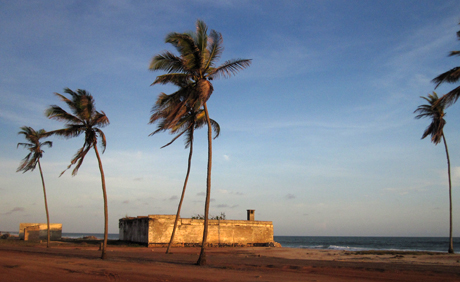
Ada Foah town has its own charm: it is a Dangme fishing settlement on the banks of the Volta, with a market, churches, colourful houses, jetties where canoes tie up and a daily life centred on the river and the sea. Wandering its streets, watching the fish being landed and chatting with people gives you a real sense of life on the estuary, far from the pace of Accra. Ada also has a colonial past: it was a Danish and British trading post, and it keeps the ruins of Fort Kongensten, built by the Danes in 1784 to control trade at the river mouth (salt, ivory, palm oil and slaves). Although little of it is still standing, the site recalls Ada's role in the Atlantic trade routes. The region is also known for its salt and, curiously, as the birthplace of a famous local gin brand ('akpeteshie' and spirits). Getting there: the town is the starting point for all excursions and can be explored on foot. Best time: in the morning, when the fishing activity is under way. Tips: ask permission before photographing people; combine the town with a river trip.
ℹ️ Location: Ada Foah town, on the bank of the Volta · Best time: Mornings, when the fishing port is busy · Price: Walking around the town is free; local guides and fort entry, a tip/small contribution · Duration: 1 to 2 hours
📶I have never landed without internet. I arrive and my phone connects to the strongest network in the country I am visiting: I can say I landed, sort out transport, book tours and keep posting, at a seriously good price. I always use the Maya eSIM — check their plans by clicking the banner.See plans →Maya Mobile eSIM — download, install, go
What nobody tells you

💵 Prices

Tickets

TypePrice
Paseo en barco por el estuario del VoltaFrom about GHS 150-400 per boat/group depending on duration (verified July 2026)
Recorrido guiado de tortugas marinas (temporada)From about GHS 100-250 per person, supports conservation (verified July 2026)
Alquiler de kayak / stand-up paddleFrom about GHS 100-250 per hour (verified July 2026)
Paseo en canoa por manglares / observación de avesFrom about GHS 150-350 per boat/group (verified July 2026)
Ruinas del fuerte Kongensten / guía local del puebloTip or small contribution (verified July 2026)
🔄 updated monthlyOfficial / reference values · double-check when buying

Activities and tours

ActivityPriceDurationOperator
Boat trip to the 'river mouth' (where river meets sea)From about USD 15-40 per person in a group (verified July 2026)1.5 to 3 hoursLocal boatmen / estuary lodges
Water sports (kayaking, paddleboarding, windsurfing, jet-skiing)From about USD 10-40 depending on the activity (verified July 2026)1 hour to half a dayAda lodges and operators
Sea turtle watching (Nov-Mar)From about USD 10-25 per person (verified July 2026)1 to 2 hours (at night)Community conservation projects (e.g. Maranatha)
Day trip to Ada Foah from AccraFrom about USD 60-120 per person including transport and boat (verified July 2026)Full dayAccra operators (Easy Track, etc.)
Traditional / sport fishing on the estuaryDepends on boat and duration (verified July 2026)Half dayLocal fishermen and lodges
🔄 updated monthlyOfficial / reference values · double-check when buying

🚌 How to get there and distances

Getting around

ModePriceDurationNotes
Boat / motorboat through the estuaryFrom about GHS 150-400 per boat/group depending on route (verified July 2026)VariableThe essential way to reach the sandbars and riverside lodges; arranged by your accommodation
Traditional canoeFrom about GHS 50-150 per trip/group (verified July 2026)VariableFor short trips, mangroves and villages; agree on the price beforehand
Motorbike taxi ('okada') and shared taxi in townGHS 5-30 per short trip (verified July 2026)A few minutesTo get around town and to the jetties; negotiate the price
Private taxi / lodge transferDepends on distance; transfers from Ada Kasseh or Accra by arrangement (verified July 2026)VariableMany lodges arrange transfers from the main road or from Accra
🔄 updated monthlyOfficial / reference values · double-check when buying

How to get there

RouteAirlines / operatorsAvg. priceDuration
Accra → Ada Foah by roadTro-tro (Tudu/Tema stations, change at Ada Kasseh), private taxiTro-tro from ~GHS 40-60; private taxi GHS 100-150 (verified July 2026)1.5 to 2 h (about 100-110 km)
Ada Kasseh (junction on the N1) → Ada FoahShared taxi, motorbike taxi, lodge transferFrom about GHS 10-40 (verified July 2026)20 to 30 min
Ada Foah ↔ Akosombo / Lake VoltaCar with driver, tro-tros with changesDepends on route and operator (verified July 2026)2.5 to 3 h by road
Ada Foah jetty → estuary lodges (Maranatha, Cocoloko, etc.)Lodge boats and canoesBoat transfer included or from about GHS 100-250 per group (verified July 2026)15 to 40 min by boat
🔄 updated monthlyOfficial / reference values · double-check when buying

🏨 Where to stay

No exact prices: a scale from $ (budget) to $$$$$ (luxury), with 2-3 options per category.

River resort (upmarket)
Price$$$$$
Recommended options
From about USD 120-300 a night; resorts facing the Volta such as Aqua Safari Resort (the biggest and best-equipped, with pools and water sports) and other upmarket options around Ada
Estuary eco-lodges and camps
Price$$$$$
Recommended options
Approx. USD 40-120 a night; charming places to stay on the sand spits, reachable by boat, such as Cocoloko, Tsarley Korpey or similar, with bungalows facing the river
Beach camps and budget options
Price$$$$$
Recommended options
From about USD 10-40 a night; beach and backpacker camps such as Maranatha Beach Camp (famous for its turtles) and Azizanya Coconut Grove, with simple huts and a laid-back vibe

🍴 Where to eat

Pescado y marisco fresco del estuario
Price$$$$$
Options / signature dish
From about USD 6-18 per person; grilled tilapia, red snapper, river prawns and more at the lodges and waterside stalls
Comida ghanesa en el pueblo
Price$$$$$
Options / signature dish
USD 3-8 per person; banku with fish, jollof rice, fufu and local dishes at 'chop bars' in Ada Foah
Restaurantes de resort
Price$$$$$
Options / signature dish
USD 12-30 per person; a wider menu of international and Ghanaian food at resorts such as Aqua Safari and other upmarket hotels

📖 History of Ada Foah

Origins, formation and what the sources say.

The Dangme people and the mouth of the Volta

Ada Foah sits in one of Ghana's most remarkable geographical spots: the mouth of the Volta River. Here West Africa's second great river, after flowing thousands of kilometres from the Sahel, opens into a delta of islands, channels and sand spits and pours its waters into the Atlantic Ocean. This meeting of fresh and salt water, of river and sea, has shaped life in the region for centuries, and it explains why the area has always lived from fishing, salt and trade.

The area is home to the Ada people, a branch of the Dangme (Adangbe). They speak a Kwa language, are related to the Ga of Accra, and probably settled in the estuary several centuries ago. The Ada lived, and still live, from fishing in the river and the sea, from farming and above all from salt. Songor Lagoon, next to the river mouth, is one of the country's main sources of sea salt. For generations, hand-harvesting it has brought the community wealth, and it has also caused conflict.

The Volta estuary was a natural place of passage and exchange between the coast and the interior. Salt, dried fish, beads, cloth and farm produce moved along its waters and paths. When Europeans reached the coast, the mouth of the Volta became a strategic trading point, and the powers competing for the Gold Coast turned their attention to the Ada villages.

en.wikipedia.org · Ada Foahen.wikipedia.org · Ada, Ghana

The Danes, the British and Fort Kongensten

In the 17th and 18th centuries, the mouth of the Volta was drawn fully into the contest between European powers over Gold Coast trade. The region fell within the Danish sphere of influence, as Denmark controlled several outposts in what is now eastern Ghana. In 1784, the Danes built Fort Kongensten ("the King's Stone") at Ada. This small fort was meant to protect and control the area's trade: salt, ivory, palm oil and also human beings, as part of the Atlantic slave trade that left its mark on this whole coast.

Denmark abolished the slave trade on the Gold Coast in 1803 and Britain did so in 1807, although the illegal trade went on for a while. In 1850, Denmark sold all its possessions on the coast, including the Ada area, to Britain. The British strengthened their hold on the region and made it part of the Gold Coast colony. Under British rule, Ada Foah became a fairly important river and trading port in the east of the country, where goods carried down the Volta were shipped out.

The old Danish fort gradually lost its purpose, and today only ruins remain, quiet reminders of that commercial and colonial past. The Ada region stayed tied to Ghana's Atlantic history, though its role was smaller than that of the great castles at Cape Coast and Elmina. It also kept its Ada identity, its Dangme language and its traditions linked to the river, fishing and salt.

en.wikipedia.org · Ada Foahen.wikipedia.org · Danish Gold Coast

The tamed river: the Akosombo Dam and Lake Volta

The 20th century brought the biggest change to the whole Volta system and, with it, to the area around Ada Foah. After independence, President Kwame Nkrumah championed one of the most ambitious projects in postcolonial Africa: the Akosombo Dam, built upstream on the Volta River between 1961 and 1965. The dam was meant to generate electricity to industrialise the country, especially for aluminium production, and to bring power and development to Ghana.

The project's most dramatic result was Lake Volta, the largest artificial lake in the world by surface area. It flooded a huge stretch of the country's east-central region and forced tens of thousands of people to move. Because the dam now controls the river's flow, the water reaching the mouth at Ada changed for good. Floods, the movement of sediment and the balance of the estuary all shifted, which affected fishing, farming and even the shape of the delta.

In the decades that followed, the mouth of the Volta remained a place of fishermen, salt workers and small villages while the country changed around it. Salt production at Songor Lagoon stayed central to the local economy, with periods of tension between traditional communities and companies. Ada kept its character as an estuary town, somewhat off the main tourist routes in the west.

en.wikipedia.org · Akosombo Damen.wikipedia.org · Lake Volta

From river port to ecotourism destination

In recent decades, Ada Foah has found a new role as a place for ecotourism and weekend breaks. It is only an hour and a half by road from Accra, and it has a unique estuary landscape, golden beaches and waters suited to water sports. That made it a favourite getaway for people from the capital. It also shows up more and more on the itineraries of foreign travellers looking for something different from the castles and the rainforest.

Eco-lodges and beach camps have opened along the sand spits and islands of the estuary, and many of them can only be reached by boat. They offer riverside bungalows, fresh fish, kayaking, windsurfing, boat trips and unforgettable sunsets. Larger resorts such as Aqua Safari and simpler, more bohemian camps such as Maranatha Beach Camp make up a varied choice of places to stay. Maranatha Beach Camp also became known for its work protecting the sea turtles that nest in the area.

Today Ada Foah combines its traditional life as a fishing and salt-making town with nature tourism that values exactly that authenticity. Visitors come for the meeting of river and sea, the mangroves and wetlands of Songor, which are a Ramsar site of international importance, and for the birds, the turtles and the calm of the estuary. From the old Danish fort to the eco-lodge on the sand, the story of Ada Foah is the story of a place where the great Volta River, after crossing an entire country, says goodbye to the continent in front of the Atlantic.

visitghana.com · Ada foah tourismen.wikipedia.org · Songor Lagoon

📚 Bibliography

  • Wikipedia (EN) — «Ada Foah»: https://en.wikipedia.org/wiki/Ada_Foah
  • Wikipedia (EN) — «Ada, Ghana»: https://en.wikipedia.org/wiki/Ada,_Ghana
  • Wikipedia (EN) — «Danish Gold Coast»: https://en.wikipedia.org/wiki/Danish_Gold_Coast
  • Wikipedia (EN) — «Akosombo Dam»: https://en.wikipedia.org/wiki/Akosombo_Dam
  • Wikipedia (EN) — «Lake Volta»: https://en.wikipedia.org/wiki/Lake_Volta
  • Wikipedia (EN) — «Songor Lagoon»: https://en.wikipedia.org/wiki/Songor_Lagoon
  • Wikipedia (EN) — «Volta River»: https://en.wikipedia.org/wiki/Volta_River
  • Visit Ghana (Ghana Tourism Authority) — Ada Foah: https://visitghana.com/ada-foah-tourism/
  • Ada Tourism — Ada and the Volta estuary: https://adatourism.com/
  • Easy Track Ghana — Ada / Volta estuary: https://www.easytrackghana.com/day-trip-Ada.php

❓ Frequently asked questions

Is Ada Foah worth the trip from Accra?+
Yes, especially for a weekend or as a relaxed finale to a trip around Ghana. Just 1.5-2 hours from the capital, it offers a unique estuary landscape where the Volta River meets the sea, quiet beaches, boat trips, water sports and, in season, sea turtles. It's a very different experience from the historic castles in the west.
How do I get to the estuary lodges?+
Many of the nicest places to stay sit on the sand spits between the river and the sea, and you can only reach them by boat or canoe from the Ada Foah jetty. When you book, arrange the river transfer with the lodge (sometimes included, sometimes charged separately) and the time, especially if you're arriving late. Bring cash, as there are usually no ATMs or card payments on the estuary.
When can you see sea turtles?+
The nesting season runs roughly from November to March. During those months, female leatherback, green and olive ridley turtles come ashore at night to lay their eggs on Ada's beaches, and later the hatchlings emerge. Several community projects offer guided night-time or dawn walks to see them responsibly (no flash, and respecting the animals). Sightings aren't guaranteed: it's up to nature.
Is it safe to swim at Ada Foah?+
The river side (the Volta) usually has calm water and is ideal for swimming. The Atlantic Ocean side, on the other hand, can have strong waves and dangerous rip currents, so it's best to swim on the river side or only in areas the lodge says are safe. As always, don't stray too far, don't swim alone at night or after drinking, and ask the locals.
What should I pack for Ada Foah?+
Bring cash in cedis (many lodges and boatmen don't take cards), sunscreen, insect repellent, a hat, swimwear, a light layer for evenings by the river, and binoculars if you're into birds. If you're going to see turtles, avoid strong torches. Book your accommodation in advance in high season and at weekends, when Ada fills up with people from Accra.

More places in Ghana

AximBonwireBusuaCape CoastCataratas Wli (Agumatsa)Elmina
See every place in Ghana →The history of Ghana →
Sources consulted (6)
Still planning?
Explore more destinations in Ghana
See all destinations →