Viajá con Gus
Home › Gabon › Lambaréné
Lambaréné
🇬🇦 Gabon · The river heart: the Ogooué

Lambaréné

🪪 What do I need to enter Gabon?Pick your citizenship and we tell you the visa, the days and the paperwork, with the official source.

By leaving your email and citizenship you agree to receive the documents you asked for and weekly travel news. You can unsubscribe whenever you want. How we handle your data.
Jump to what you need
📍Region
Lambaréné is the capital of Moyen-Ogooué province, in west-central Gabon, about 240 km southeast of Libreville. It is a river town spread across both banks and an island of the Ogooué, Gabon's great river, which here opens into a maze of channels, lakes and flooded forest. It has around 40,000 inhabitants and lives off the river, trade and, above all, its worldwide fame: the hospital founded here in 1913 by the Alsatian doctor and musician Albert Schweitzer, winner of the 1952 Nobel Peace Prize. It is a quiet, tropical stop steeped in history, and the best base for exploring the lakes of the lower Ogooué by boat.
📌Best time
The climate is equatorial, hot and humid all year round (25-30 °C). The best times to visit are the two dry seasons: the long one, from June to September, and the short one, from December to January, when there is less rain, the roads are in better shape and it is more comfortable to travel by pirogue on the river and lakes. The long rainy season (February to May) and the short one in October-November bring heavy downpours, but also a swollen river and the forest at its greenest. Always carry repellent: the malaria mosquito is present all year.
📌Suggested days
With 1 full day you can cover the essentials: Albert Schweitzer's old hospital and museum, with his grave and that of his wife Hélène, and a walk around town and its two bridges over the Ogooué. A second day lets you add a pirogue trip on the lakes of the lower Ogooué (Lake Zilé, Onangué or Evaro) to see birds, fishermen and, with luck, hippos. Many travellers stop for a night in Lambaréné on the overland route between Libreville and the south or the interior of the country.
📌Getting there
From Libreville you reach it on the paved N1 national road in about 3 to 5 hours (240 km) by private car, shared taxi or the minibuses and 'clandos' that leave from the Libreville station. There is also a small airfield with occasional flights. The town is split by the river: the right bank (Isaac), the central island with the town centre and the market, and the left bank (Adouma/Atongowanga), linked by two bridges. The old Schweitzer hospital is on the riverbank, upstream, and can be reached by local taxi or pirogue.
📌Getting around
In town, shared taxis (coloured, with a fixed fare for short trips, about 200-500 XAF) are the basic means of transport; there are also motorbike taxis. To cross to the island and between banks you use the bridges or, for stretches over water, motorised pirogues. To visit the Schweitzer hospital and especially the lakes you need to hire a pirogue with a local pilot: it is best to arrange it the day before at the landing stage or through your accommodation. There is no organised public transport to the lakes.
📌Language and currency
The official language is French, spoken by almost everyone; on the street you will also hear local languages such as Mpongwe, Galoa and Fang. The currency is the Central African CFA franc (XAF), pegged to the euro at 655.957 XAF per euro; in mid-2026 it was around 575 XAF per US dollar. Cash is king: there are a few ATMs and banks in the centre, but it is best to carry CFA francs in cash, as cards are hardly accepted outside town.
💱 XAF exchange rate
Loading rate…
🌤️ Weather in Lambaréné
Loading weather…

Lambaréné is one of those towns where history and nature go hand in hand. Spread across two banks and an island of the Ogooué, Gabon's largest river, it is a quiet tropical town of low houses, mango trees and palms that would be just another stop on the road to the interior if it weren't for a name that made it famous worldwide: Albert Schweitzer.

Here, deep in the equatorial forest, the Alsatian doctor, theologian, philosopher and organist founded a hospital in 1913 to treat the local population free of charge. His work over almost half a century, guided by his ethic of 'reverence for life', earned him the Nobel Peace Prize in 1952 and turned Lambaréné into a place of pilgrimage. Part of the historic hospital is now a moving museum, with his house, his consulting room and his grave on the riverbank.

This guide shows you how to visit the old Schweitzer hospital and museum, how to get around this river town and how to head out by pirogue on the lakes of the lower Ogooué, a maze of water, forest and fishing villages full of birds and life. Lambaréné can be seen in a short time, but it leaves a mark that is hard to forget: that of a corner of Africa where one man showed what compassion can do.

📖 History of Lambaréné

The name Lambaréné is forever linked to Albert Schweitzer, who in 1913 left a brilliant career as a theologian and organist in Europe to set up a hospital here, on the banks of the Ogooué, where he treated the sick of the forest free of charge. But the place's history goes further back: it was the land of the Galoa and Mpongwe peoples, a stopover on the French colonial push up the river and home to Protestant and Catholic missions from the 19th century. Schweitzer's work over almost half a century, crowned by the 1952 Nobel Peace Prize, made the town a worldwide symbol of humanitarian aid. The full story is told on our history page.

Read the full history ↓

🏛️ Lambaréné is in the river heart: the Ogooué

Gabon's great artery: the Ogooué River that Brazza explored, Lambaréné with Albert Schweitzer's hospital, and a maze of lakes, channels and flooded forest you explore by dugout canoe.

Read the history of The river heart: the Ogooué →

🗺️ What to see

1
Antiguo Hospital y Museo Albert Schweitzer
The historic hospital Schweitzer founded in 1913, now a museum, with his house, his consulting room, the pharmacy and his grave by the river.
Leer más ↓
It is the must-see visit in Lambaréné and one of the most moving in Gabon. Albert Schweitzer's old hospital, on the bank of the Ogooué upstream from the centre, has been preserved as a museum since the nearby modern hospital opened in 1981. You walk through the original wooden wards —consulting room, laboratory, delivery room, dentist's chair, pharmacy and operating theatre—, with the instruments and furniture just as they were left, and the house where the doctor and his wife Hélène lived, with their furniture, his desk, his pedal-piano and personal belongings. The tour tells the story of Schweitzer's life and his philosophy of 'reverence for life' (Ehrfurcht vor dem Leben), and ends in the small cemetery in the shade of the trees, where the graves of the doctor (who died here in 1965) and Hélène lie, marked with simple wooden crosses. From the grounds you can see the Ogooué river he used to cross by canoe. There is often a pelican called Albert wandering around, a nod to the animals the doctor took in. Getting there: a few minutes from the centre by local taxi or pirogue. Best time: in the morning, with better light and less heat. Allow around 1 h 30 to see it at a relaxed pace; let them know in advance if you are a group. Tips: bring cash in CFA francs for admission.
ℹ️ Distance: Bank of the Ogooué, a few minutes from the centre of Lambaréné · Best time: All year; in the morning to avoid the heat · Admission: 5.000 XAF (approx. USD 9 / EUR 8) foreigners; 2.000 XAF Gabonese residents (2024; check when visiting) · Duration: 1 to 1.5 hours
2
Today's Albert Schweitzer Hospital and its foundation
The modern hospital that carries on Schweitzer's work, still running and home to a prestigious medical research centre.
Leer más ↓
Next to the museum stands the modern Albert Schweitzer Hospital, opened in 1981, which continues the doctor's work as one of the region's main health centres, supported by international foundations. It also houses the Centre de Recherches Médicales de Lambaréné (CERMEL), a leading research institute in Central Africa, renowned for its studies on malaria and tuberculosis and its vaccine trials (it took part in trials of malaria and Ebola vaccines). It is not a museum but a working hospital, so you don't 'visit' the inside as an attraction, but understanding that Schweitzer's foundation is still alive more than a century later, healing and researching, gives the visit to the historic hospital next door its full meaning. Many travellers stop by the reception or the chapel and take the chance to learn about how the project continues. Getting there: right next to the museum, on the same bank. Best time: all year. Tips: remember it is a working health centre; to learn about its history, the neighbouring museum is the place to go.
ℹ️ Distance: Next to the old hospital-museum, same bank of the Ogooué · Best time: All year · Admission: Working hospital (not a tourist attraction); the historic visit is to the adjoining museum · Duration: Complements the museum visit
3
The Ogooué river and the two bridges
Gabon's great river splitting the town into two banks and an island, with its bridges, pirogues coming and going and sunsets over the water.
Leer más ↓
The Ogooué, Gabon's longest river (about 1.200 km), is the soul of Lambaréné. The town spreads over its two banks and a large central island, linked by two bridges that make a walk in themselves: from them you can see the wide brown river, the fishermen's pirogues, the landing stages and the flooded forest that begins on the outskirts. At sunset, the light on the water and the silhouettes of the canoes make for one of the most beautiful scenes in inland Gabon. The central island holds the market, the shops and much of everyday life; walking its streets, browsing the fish and fruit market and heading down to the landing stages lets you take the town's pulse. From here pirogues leave for the hospital, the riverside villages and the lakes. The river was also the 'highway' along which missionaries, traders and Schweitzer himself arrived. Getting there: the centre and the bridges are the heart of town, on foot. Best time: at dawn or sunset, for the light and the cooler air. Tips: ask permission before photographing people at the market or the landing stages.
ℹ️ Distance: Centre of Lambaréné, on the Ogooué river · Best time: Dawn and sunset · Admission: Free · Duration: 1 to 2 hours' walk
4
Catholic mission and Protestant mission (Andende)
The old Christian missions on the riverbank, including Andende, the first site of Schweitzer's project.
Leer más ↓
Lambaréné was an important missionary centre from the 19th century, and the old missions on the riverbank still stand. The Protestant mission of Andende, founded by missionaries of the Paris Evangelical Missionary Society, was where Albert Schweitzer set up his first dispensary in 1913, before building his own hospital a little further away. The Catholic mission, with its church, completes the town's religious landscape. These missions tell the story of evangelisation and education in colonial Gabon, and of the role they played in the life of the Ogooué peoples. They are quiet visits of historical and architectural interest that help you understand the setting Schweitzer arrived in and why he chose Lambaréné. Some keep old wooden buildings and lovely waterside settings. Getting there: on the riverbank, a short distance from the centre by local taxi or pirogue. Best time: all year, in the morning. Tips: they are active places of worship; visit respectfully and check opening times.
ℹ️ Distance: Banks of the Ogooué, near the centre · Best time: All year · Admission: Free or by donation (places of worship) · Duration: 30 to 60 minutes
5
Pirogue trip on the Ogooué
An outing by motorised canoe along the river and its channels, past fishing villages, flooded forest and birds — the best way to feel Lambaréné.
Leer más ↓
Beyond its monuments, the essence of Lambaréné lies on the water. A motorised pirogue trip on the Ogooué and its channels is the experience not to miss: you glide between banks of dense forest, pass Galoa fishing villages, and spot herons, kingfishers, fish eagles and, sometimes, monkeys in the trees along the bank. It is also how you reach the historic hospital from the water, just as Schweitzer himself did. Short trips of one or two hours around the town are a perfect taster for the big excursion to the lakes of the lower Ogooué, which deserves half a day or a full day. It is best to arrange the outing with a local pilot at the landing stages or through your accommodation, agreeing on the route, time and price in advance, since you pay for the pirogue and the fuel. Getting there: from the landing stages in the centre or on the banks. Best time: dry season and early in the day. Tips: bring water, a hat, sunscreen and repellent; agree on the price before boarding.
ℹ️ Distance: From the Lambaréné landing stages · Best time: Dry season; dawn or sunset · Admission: Pirogue with pilot from about 15.000-40.000 XAF per short trip depending on duration and group size (2024; to be agreed) · Duration: 1 to 3 hours (or half a day to the lakes)
6
Market and river life on the island
Lambaréné's central market and the daily bustle of a town that lives off the river: smoked fish, tropical fruit and crafts.
Leer más ↓
The central island is where Lambaréné's everyday life beats. Its market is a good place to immerse yourself in daily Gabonese life: stalls of fresh and smoked fish brought from the river and the lakes, cassava, plantains, pineapple, mango, palm nuts and forest produce, plus all kinds of goods. The smells, colours and bustle give a genuine picture of the riverside economy, where fishing is still central. You will also find some local crafts and basketwork, and it is a natural stop between the museum visit and the river trip. Buying fruit, trying a local dish or simply watching the rhythm of river trade round off the portrait of this quiet town. Many of the fishermen you see here are the same ones who later take travellers by pirogue to the lakes. Getting there: in the centre of the island, on foot. Best time: in the morning, when the fish comes in. Tips: carry cash in small notes and ask permission before photographing people.
ℹ️ Distance: Central island of Lambaréné · Best time: Mornings · Admission: Free · Duration: 30 to 60 minutes
📶I have never landed without internet. I arrive and my phone connects to the strongest network in the country I am visiting: I can say I landed, sort out transport, book tours and keep posting, at a seriously good price. I always use the Maya eSIM — check their plans by clicking the banner.See plans →Maya Mobile eSIM — skip roaming fees, unlimited data
What nobody tells you

💵 Prices

Tickets

TypePrice
Museo Albert Schweitzer (extranjero, adulto)5.000 XAF (approx. USD 9 / EUR 8), 2024; check when visiting
Museo Albert Schweitzer (residente gabonés)2.000 XAF (approx. USD 3,5), 2024; check when visiting
Misiones católica y protestante de AndendeFree admission or donation (places of worship)
Paseo del centro y los puentesFree
🔄 updated monthlyOfficial / reference values · double-check when buying

Activities and tours

ActivityPriceDurationOperator
Guided visit to the Albert Schweitzer museumAdmission 5.000 XAF foreigners; guide usually included (2024; check)1 to 1.5 hoursSchweitzer foundation / museum
Short pirogue trip on the OgoouéFrom about 15.000-40.000 XAF for the pirogue depending on duration and group size (2024; to be agreed)1 to 3 hoursLocal pilots / accommodation
Day trip to the lakes of the lower Ogooué (Zilé, Onangué, Evaro)From about 40.000-100.000 XAF for the pirogue and pilot depending on lake and duration (2024; to be agreed)Half day to full dayLocal pilots / ecotourism operators
Traditional fishing with local fishermenTo be agreed with the fishermen (2024)VariableGaloa fishermen
🔄 updated monthlyOfficial / reference values · double-check when buying

🚌 How to get there and distances

Getting around

ModePriceDurationNotes
Urban shared taxi200-500 XAF per short trip (2024)VariableThe town's basic transport; shared with other passengers on fixed routes
Motorbike taxiFrom about 300-500 XAF per trip (2024)VariableQuick for getting around town and the banks; wear a helmet if offered one
Motorised pirogue (crossings on the water)Depending on route; short crossings from about 1.000-5.000 XAF (2024; to be agreed)VariableFor crossing to riverside spots and reaching the hospital or villages; agree on the price first
Hire car with driverTo be agreed; useful for overland excursions (2024)VariableUncommon; arranged through your hotel or local contacts
🔄 updated monthlyOfficial / reference values · double-check when buying

How to get there

RouteAirlines / operatorsAvg. priceDuration
Libreville → Lambaréné via the N1 road (private car or taxi)Private cars, intercity taxisBy shared taxi from around 8,000-15,000 XAF per person (2024; to be confirmed)3 to 5 hours (240 km, paved)
Libreville → Lambaréné by minibus / 'clando'Minibuses and shared cars from the Libreville stationFrom around 6,000-12,000 XAF per person (2024; to be confirmed)4 to 6 hours depending on stops
Lambaréné → the south (Mouila, Tchibanga) and the interior via the N1Intercity taxis and minibusesDepends on destination (2024; check at the station)Several hours depending on destination
Occasional flight to Lambaréné airfieldOccasional domestic flights / charterSubject to availability (2024; check)Short from Libreville; irregular service
🔄 updated monthlyOfficial / reference values · double-check when buying

🏨 Where to stay

No exact prices: a scale from $ (budget) to $$$$$ (luxury), with 2-3 options per category.

Mid-range hotels
Price$$$$$
Recommended options
From around 30,000-55,000 XAF a night (approx. USD 55-95); places like the Hôtel Ogooué Palace, by the river, with air conditioning and a restaurant, the most comfortable in town
Simple hotels and auberges
Price$$$$$
Recommended options
Approx. 15,000-30,000 XAF a night (USD 25-55); basic hotels and guesthouses with a fan or A/C in the centre and along the riverbanks
Guesthouses and missions
Price$$$$$
Recommended options
From around 8,000-15,000 XAF a night (USD 15-25); very simple rooms, sometimes at religious missions or private homes, for tight budgets
Ecotourism camps on the lakes
Price$$$$$
Recommended options
Depends on the camp and package (sometimes includes a pirogue and meals); an option for sleeping by the lakes of the lower Ogooué (2024; check availability)

🍴 Where to eat

Cocina gabonesa de río
Price$$$$$
Options / signature dish
From around 3,000-8,000 XAF per person; fish from the Ogooué (capitaine, tilapia), poulet nyembwe (chicken in palm nut sauce), cassava and plantain, at maquis and local eateries
Restaurantes de hotel
Price$$$$$
Options / signature dish
Approx. 6,000-15,000 XAF per person; a wider menu with Gabonese and French dishes at hotels such as the Ogooué Palace, by the river
Maquis y puestos callejeros
Price$$$$$
Options / signature dish
From around 1,500-4,000 XAF; skewers, smoked fish, beignets and dishes of the day at market stalls and on the street
Cafés y desayunos
Price$$$$$
Options / signature dish
Around 1,500-5,000 XAF; coffee, bread, beignets and tropical fruit at cafés and bakeries in the centre

📖 History of Lambaréné

Origins, formation and what the sources say.

The Ogooué River and the peoples of the forest

Long before its name became known around the world, Lambaréné was a meeting point on the Ogooué River, the great waterway running through central Gabon. This area of channels, islands and flooded forest was home to peoples such as the Galoa and the Mpongwe, both part of the Myene group. Further inland lived the Fang, who migrated gradually south and west over the 19th century. The river was both lifeline and highway: dugout canoes travelled along it carrying fish, ivory, okoumé wood and forest produce, and people used it to move between riverside villages.

According to local tradition, the place name itself means something like 'let's try, let's see', or refers to a meeting place in the language of the river peoples, a sign of its role as a point of contact and trade. The region belonged to an equatorial world of societies organised into clans and lineages. They had a rich material culture, including masks, statuary and the Bwiti tradition, and an economy based on fishing, hunting, gathering and the growing of cassava and plantain in forest clearings.

By the mid-19th century the Gabonese coast was already within Europe's orbit: in 1849 France founded Libreville, on the Gabon estuary, as a settlement for freed slaves. From there, explorers, traders and missionaries began heading up the rivers into the interior. The Ogooué became the natural route inland, and Lambaréné's strategic position on the river made it an unavoidable stop in an expansion that would change the lives of the forest peoples forever.

britannica.com · Lambareneen.wikipedia.org · Lambaréné

Explorers, traders and missionaries

The second half of the 19th century was the era of European exploration of the Ogooué. The best known of these travellers was the Franco-Italian Pierre Savorgnan de Brazza. Between 1875 and 1885 he led several expeditions up the river, signed treaties with local chiefs and laid the foundations of French colonial rule in the region, which would eventually become part of French Equatorial Africa. Lambaréné, midway along the river, was at the heart of that push inland.

Christian missions followed in the wake of trade and administration, and they played a decisive role in local history. Protestant missionaries from the Paris Evangelical Missionary Society, and later Catholic ones, settled on the riverbanks and founded chapels, schools and dispensaries. Years later, the Protestant mission at Andende, upstream from Lambaréné, would be where an Alsatian doctor began his work. The missions evangelised, taught people to read and write, and profoundly transformed the lives of the Galoa and Fang peoples, though not without tension with their traditional beliefs and social structures.

By around 1900 Lambaréné was a modest but busy colonial and mission post, with a French administration, a trade in timber and forest produce, missions, and a constant flow of canoes along the river. It was also a region ravaged by malaria, sleeping sickness, leprosy and dysentery, and most of its people had little or no access to medical care. That is what Albert Schweitzer found when he arrived in 1913, and it explains why he stayed to treat the sick for almost half a century.

en.wikipedia.org · Lambarénéen.wikipedia.org · Pierre Savorgnan de Brazza

Albert Schweitzer and the founding of the hospital (1913)

Albert Schweitzer (1875-1965), born in Kaysersberg in Alsace, which was then part of Germany, was one of the most remarkable figures of the 20th century. By the age of thirty he was already a theologian famous for his studies of the historical Jesus, a respected philosopher, and one of Europe's leading organists and Johann Sebastian Bach scholars. At the height of this triple career he made a decision that astonished everyone: he would study medicine and go to Africa to treat the sick, as a practical answer to his own ethics. He qualified as a doctor and set off for Gabon with his wife, Hélène Bresslau, a nurse.

They reached Lambaréné in April 1913. With the permission of the Protestant mission at Andende, Schweitzer began seeing patients in an old chicken coop turned into a dispensary, and the sick immediately came in by canoe from miles around. Soon afterwards he built his own hospital of wooden and corrugated-iron wards on the riverbank. He treated malaria, dysentery, leprosy, hernias, wounds and the dreaded sleeping sickness, operating and prescribing in extremely harsh conditions, and he paid for it all with his organ concerts and books in Europe.

The First World War brought the project to a halt. As German citizens in a French colony, the Schweitzers were interned and sent to camps in France in 1917 and 1918. They came back in 1924, and Albert rebuilt and enlarged the hospital on a new, somewhat larger site. It grew into a small hospital village with hundreds of beds, where patients arrived with their families, who cooked for them and cared for them in keeping with local custom. That mix of Western medicine and respect for African ways of life became his hallmark.

en.wikipedia.org · Albert Schweitzeren.wikipedia.org · Hôpital Albert Schweitzer

'Reverence for life' and the Nobel Peace Prize

At the heart of Schweitzer's work was a philosophical idea that, by his own account, came to him while travelling on the Ogooué in 1915: 'reverence for life' (in German, Ehrfurcht vor dem Leben). For him, ethics came down to reverence for every form of life, and this conviction shaped both his medicine and his thinking. He published books on the philosophy of civilisation and on theology, kept playing and recording Bach to fund the hospital, and became a moral celebrity admired around the world.

In 1952 he was awarded the Nobel Peace Prize, presented in 1953, for his humanitarian work and his philosophy. He used the prize money to expand the hospital and build a ward for leprosy patients. In his later years Schweitzer also used his enormous prestige to speak out against nuclear weapons, making international appeals for disarmament during the Cold War. He was not without his critics. He was faulted for a paternalistic manner and for holding his era's views on the relationship between Europe and Africa, and that debate is still open whenever his legacy is judged by today's standards.

Albert Schweitzer died in Lambaréné on 4 September 1965, aged 90. He was buried on the banks of the Ogooué beside the grave of his wife Hélène, who had died in 1957, under simple wooden crosses that can still be seen today. By then the little jungle hospital was famous worldwide, and Lambaréné had become a byword for selfless dedication. The doctor left behind not just a hospital but a lasting symbol of what compassion can achieve.

en.wikipedia.org · Albert Schweitzernobelprize.org · Facts

A living legacy: from museum to research centre

Schweitzer's work did not end with his death. The hospital kept running with the support of international foundations. In 1981 a modern hospital opened nearby, and it remains one of the region's main health centres today. The old wooden wards where the doctor worked for decades have been preserved as a museum. It holds his house, his consulting room, the pharmacy, his medical instruments and his personal belongings, and it draws visitors from all over the world who want to see where this story took place.

A first-rate scientific legacy also grew up on the same site. The Centre de Recherches Médicales de Lambaréné (CERMEL), heir to the hospital's spirit, is now one of the most important biomedical research institutes in Central Africa. Researchers there study malaria, tuberculosis and other tropical diseases, and the centre has run clinical vaccine trials, including trials related to malaria and Ebola, that have put this small forest town on the map of world science. The medicine Schweitzer brought by canoe has become cutting-edge research.

Beyond the hospital, Lambaréné is still a quiet provincial capital that lives off the river, fishing and trade, along with growing interest in ecotourism on the lakes of the lower Ogooué. These lakes form a wetland of international importance, protected as a Ramsar site. The town that was once a stopover for explorers and missionaries, and that an Alsatian doctor made famous, still feels like a crossroads between water and forest, history and nature. That makes it one of the most endearing stops in the interior of Gabon.

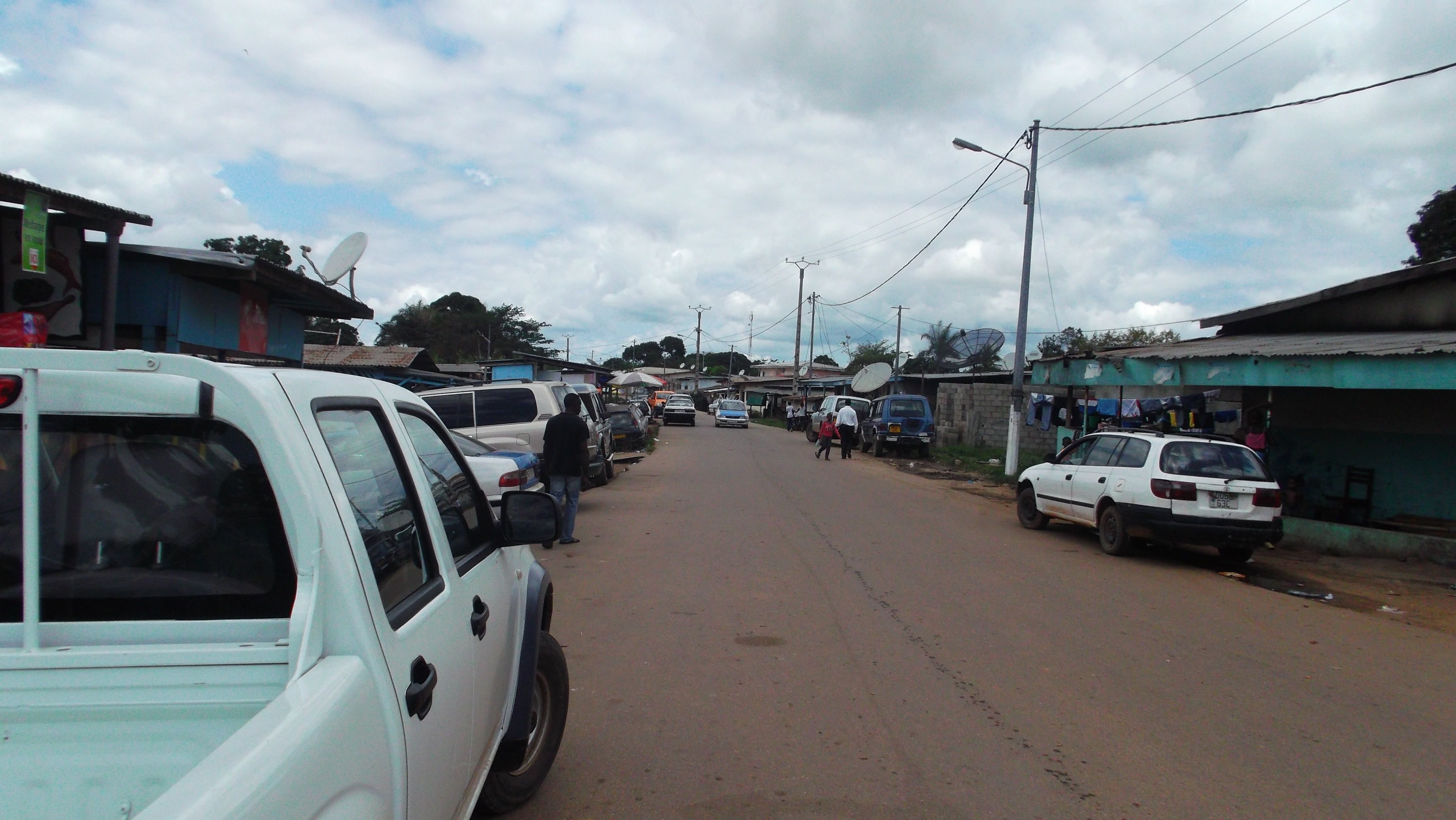
en.wikipedia.org · Hôpital Albert Schweitzeren.wikipedia.org · Lambaréné

📚 Bibliography

  • Britannica — «Lambaréné»: https://www.britannica.com/place/Lambarene
  • Wikipedia (EN) — «Lambaréné»: https://en.wikipedia.org/wiki/Lambar%C3%A9n%C3%A9
  • Wikipedia (EN) — «Albert Schweitzer»: https://en.wikipedia.org/wiki/Albert_Schweitzer
  • Wikipedia (EN) — «Hôpital Albert Schweitzer»: https://en.wikipedia.org/wiki/H%C3%B4pital_Albert_Schweitzer
  • The Nobel Prize — «Albert Schweitzer, Peace 1952»: https://www.nobelprize.org/prizes/peace/1952/schweitzer/facts/
  • UNESCO — «Ancien Hôpital Albert Schweitzer de Lambaréné» (tentative list): https://whc.unesco.org/en/tentativelists/
  • Wikipedia (EN) — «Pierre Savorgnan de Brazza»: https://en.wikipedia.org/wiki/Pierre_Savorgnan_de_Brazza
  • Wikipedia (EN) — «Centre de Recherches Médicales de Lambaréné»: https://en.wikipedia.org/wiki/Centre_de_Recherches_M%C3%A9dicales_de_Lambar%C3%A9n%C3%A9
  • Britannica — «Gabon: History»: https://www.britannica.com/place/Gabon
  • Amazing Gabon — «The Moyen-Ogooué Province»: https://www.amazinggabon.com/en/the-moyen-ogooue-province/

❓ Frequently asked questions

Can you visit Albert Schweitzer's hospital?+
Yes. What you visit is the old hospital, now a museum, with Schweitzer's house, his consulting rooms, the pharmacy, the operating theatre and his grave by the river. Admission costs around 5,000 XAF for foreigners and 2,000 XAF for Gabonese (2024), and the visit takes about an hour and a half. The modern hospital that carries on his work runs next door, but it is an active health centre, not a tourist attraction.
How do I get to Lambaréné from Libreville?+
Along the paved N1 national road, in about 3 to 5 hours (240 km). You can go by private car, by shared intercity taxi, or by the minibuses and shared cars ('clandos') that leave from the Libreville station, for around 6,000-15,000 XAF per person depending on the service. There is also an airfield with occasional flights, but the usual route is overland.
Is the lake trip worth it?+
Very much so. The lakes of the lower Ogooué (Zilé, Onangué, Evaro) are a maze of water, rainforest and fishing villages of huge ecological value, ideal for exploring by pirogue among the birds, and with luck hippos or manatees. It is arranged from Lambaréné with a local boatman; it's best to set it up the day before and allow half a day or a full day. It's the best way to round off the historical visit with some nature.
Do I need any health precautions?+
Yes. Gabon is a malaria zone all year round, so antimalarial prophylaxis is recommended, along with repellent, long sleeves at dusk and a mosquito net. Yellow fever vaccination is mandatory to enter the country (vaccination certificate). Drink bottled or treated water. Lambaréné, paradoxically, is home to a major medical research centre (CERMEL), but it's wise to travel with insurance and a first-aid kit.
What currency should I bring, and are there ATMs?+
The currency is the Central African CFA franc (XAF), pegged at 655.957 to the euro (in mid-2026, around 575 XAF to the dollar). There are a few banks and ATMs in the centre, but they don't always work and cards are hardly accepted outside town, so it's best to arrive with enough cash in CFA francs for admissions, pirogues, meals and accommodation.

More places in Gabon

LibrevilleParque Nacional de AkandaParque Nacional de Ivindo y las cataratas de KongouParque Nacional de LoangoParque Nacional de la LopéParque Nacional de Mayumba
See every place in Gabon →The history of Gabon →
Sources consulted (7)
Still planning?
Explore more destinations in Gabon
See all destinations →
Image credits
Photos from Wikimedia Commons, each under its own licence (CC BY, CC BY-SA or public domain). Open each file to see its author and licence.
Lambarene1