Viajá con Gus
Home › Gabon › Lopé National Park
Lopé National Park
🇬🇦 Gabon · The centre: Lopé and Ivindo

Lopé National Park

🪪 What do I need to enter Gabon?Pick your citizenship and we tell you the visa, the days and the paperwork, with the official source.

By leaving your email and citizenship you agree to receive the documents you asked for and weekly travel news. You can unsubscribe whenever you want. How we handle your data.
Jump to what you need
📍Region
Lopé National Park covers some 4.910 km² in the geographical centre of Gabon, in Ogooué-Ivindo province, on the banks of the Ogooué River. It is the country's oldest and most accessible park (you can get there by train), and what makes it truly special is the landscape: a unique mosaic of grassy savannah and equatorial rainforest, a legacy of the climate shifts of the last ice age. It is home to huge groups of mandrills, forest elephants, buffalo, gorillas and chimpanzees, plus thousands of ancient petroglyphs. Since 2007 it has been a UNESCO World Heritage Site as the Ecosystem and Relict Cultural Landscape of Lopé-Okanda.
📌Best time
The best times are the dry seasons: the long one, from June to September, and the short one, from December to January. They're ideal for driving the savannah tracks by 4x4, spotting wildlife and hiking. The big mandrill season comes around the dry season, when enormous hordes — hundreds, even more than a thousand individuals — gather in the north of the park to breed, a spectacle found nowhere else on Earth. In the rainy season (February-May and October-November) the landscape is green and lush, but the tracks get tricky and the rain is heavy.
📌Suggested days
2 days are enough for a good visit: 4x4 safaris across the savannahs to see mandrills, buffalo and elephants, and an outing to the petroglyphs. With 3 or 4 days you can add forest walks in search of gorillas and chimpanzees, birdwatching and a climb up to one of the savannah viewpoints. Lopé pairs very well with a ride on the Transgabonais railway and with visits to other parks in central and south-eastern Gabon.
📌Getting there
Lopé's big advantage is that you can get there by train: the Transgabonais (SETRAG) links Owendo (Libreville) with Franceville and stops at Lopé station, right next to the village and the park entrance. The journey from Owendo takes 6 to 8 hours, depending on whether you take the omnibus or the express. You can also get there by road (a dirt track, several hours from Libreville, tough going in the rainy season) or by charter flight to the nearby airstrip. Trips into the park are organised from the station and Lopé village with the ANPN and the lodges.
📌Getting around
Inside the park, outings are done by 4x4 with a guide along the savannah tracks, and on foot for forest walks (gorillas, chimpanzees, petroglyphs). You can't drive around freely: outings are organised with the ANPN (Agence Nationale des Parcs Nationaux) and the lodges, which provide guides and trackers. Lopé village, next to the station, is the logistics base. It's best to book guides, vehicle and accommodation in advance, especially in high season.
📌Language and currency
The language is French, along with local languages. The currency is the Central African CFA franc (XAF), pegged at 655,957 to the euro (as of mid-2026, around 575 XAF to the dollar). There are no ATMs or large shops in Lopé: bring all the cash you'll need in CFA francs from Libreville or Franceville to pay for park fees, guides, vehicle and accommodation, since almost nothing can be paid by card.
💱 XAF exchange rate
Loading rate…
🌤️ Weather in Lopé National Park
Loading weather…

In the very heart of Gabon, Lopé National Park is one of the country's most astonishing and accessible places. Its great rarity is obvious the moment you arrive: instead of the dense rainforest that covers almost all of Gabon, here wide grassy savannahs open up, dotted with small groves — a landscape that feels almost like an East African safari in the middle of the equatorial forest. It's a unique mosaic, the legacy of major climate changes thousands of years ago.

That open landscape makes Lopé the best place in Gabon to see wildlife: huge groups of mandrills — the primates with the most spectacularly coloured faces and rumps on the planet, which gather here in hordes of hundreds and even more than a thousand individuals — forest elephants, buffalo, antelopes, gorillas and chimpanzees. And as if that weren't enough, the region holds a human treasure: thousands of ancient petroglyphs and archaeological sites documenting tens of thousands of years of human presence, which earned it UNESCO World Heritage status.

On top of all that, Lopé is the easiest park to visit in Gabon because you get there by train, on the legendary Transgabonais, which crosses the country from Libreville to Franceville. This guide tells you how to get there, when to go to see the big mandrill groups, how to explore the savannahs by 4x4, where to see the petroglyphs and where to stay. Lopé is the perfect gateway to Gabon's wild nature, no impossible expeditions required.

📖 History of Lopé National Park

Lopé is both a natural wonder and one of the great archives of human history in Central Africa. Its mosaic of savannah and forest is a relic of the climate changes of the last ice age, when the forest retreated and advanced, leaving these grasslands in the middle of the equatorial forest. And its thousands of petroglyphs and archaeological sites document tens of thousands of years of human occupation, from the Stone Age to the Bantu migrations and iron metallurgy. Because of this dual value, natural and cultural, UNESCO declared it a World Heritage Site in 2007 as the 'Ecosystem and Relict Cultural Landscape of Lopé-Okanda'. The full story is on our history page.

Read the full history ↓

🏛️ Lopé National Park is in the centre: Lopé and Ivindo

Gabon's forest heart and its two UNESCO World Heritage gems: Lopé, where savannah meets rainforest and ancient petroglyphs survive, and Ivindo, with its great waterfalls and forest clearings.

Read the history of The centre: Lopé and Ivindo →

🗺️ What to see

1
The great mandrill groups
The best place in the world to see mandrills, which gather in the dry season in hordes of hundreds and even more than a thousand individuals.
Leer más ↓
The mandrill (Mandrillus sphinx) is Lopé's star and the reason many naturalists make the pilgrimage here. It's the most colourful primate on the planet: adult males sport a face striped in red and blue and an equally showy rump. Lopé is recognised as the best place in the world to see them, above all because of a unique phenomenon: in the dry season, enormous hordes of mandrills come together in the north of the park to breed, forming gigantic groups of hundreds and up to more than a thousand individuals (in 1996 a record group of about 1.350 was counted), the largest known gathering of non-human primates. Seeing them takes patience, an expert guide and a bit of luck, since they move through the forest and along the edges of the savannah, but the sight of a river of mandrills flowing through the forest is unforgettable. Researchers have been studying them here for decades, which has made Lopé a world reference centre for the species. There are other primates too: gorillas, chimpanzees, colobus monkeys and guenons. Getting there: with ANPN or lodge guides, by 4x4 and on foot in the north of the park. Best time: dry season (June-September), the season of the great hordes. Tips: get up early, bring binoculars and always follow the tracker's instructions.
ℹ️ Distance: North of the park; departures from Lopé village with a guide · Best time: Dry season (June-September) for the great hordes · Admission: Requires park entry + ANPN/lodge guide (enquire; ANPN rates) · Duration: Half a day to a full day of searching
2
Savannah safari by 4x4
Drives through the rare mosaic of savannah and forest, with forest elephants, buffalo, antelopes and birds.
Leer más ↓
What makes Lopé unique is its landscape: north of the Ogooué River, rolling grassy savannahs stretch out, dotted with islands of forest — an open setting that's extraordinary in Gabon's rainforest and lets you explore the park by 4x4 and spot wildlife at a distance, something almost impossible under the closed canopy found in the rest of the country. It's the closest thing to a savannah safari Gabon has to offer, with the added thrill that the forest could appear around any bend. On these drives you'll see forest elephants — smaller and more elusive than savannah elephants — forest buffalo, antelopes such as the sitatunga and several duikers, red river hogs and a wide variety of birds. At sunset, the golden light over the grassy hills and the animals coming out to graze make for magnificent scenes. ANPN and lodge guides know the best spots and times. Getting there: by 4x4 with a guide from Lopé village. Best time: dry season; sunrise and sunset. Tips: wear neutral-coloured clothes and bring binoculars and a camera with a good zoom; the cool of dawn is the best time.
ℹ️ Distance: Savannahs north of the Ogooué, from Lopé village · Best time: Dry season; first and last hours of the day · Admission: Park entry + 4x4 vehicle and guide (enquire with ANPN/lodges) · Duration: Half a day per outing
3
The ancient petroglyphs
Thousands of rock carvings on the park's stones, evidence of tens of thousands of years of human presence in the region.
Leer más ↓
Lopé's value isn't only natural: the Lopé-Okanda region holds one of the richest archaeological ensembles in Central Africa. On rocks scattered across the park there are some 1,800 petroglyphs — rock carvings with geometric motifs, circles, spirals and figures — made by the peoples who lived in the area centuries ago, in the Iron Age. Alongside them, archaeological sites document continuous human occupation over tens of thousands of years, from the Stone Age to the Bantu migrations and the development of iron metallurgy. Visiting the petroglyphs, guided by ANPN staff, is a journey into the prehistory and protohistory of Africa, in a landscape that served as a corridor for human migration for millennia. This cultural heritage, combined with the park's exceptional nature, is what led UNESCO to inscribe Lopé-Okanda as a World Heritage Site in 2007, one of the few mixed (natural and cultural) sites in Africa. Getting there: with ANPN guides, to the park's rock outcrops, on foot and by vehicle. Best time: dry season, for comfort. Tips: respect the carvings (don't touch); a good guide will explain their meaning and context.
ℹ️ Distance: On rock outcrops in the park, with an ANPN guide · Best time: Dry season · Admission: Guided outing inside the park (ANPN rates + guide; enquire) · Duration: Half a day
4
Trek in search of gorillas and chimpanzees
Forest trekking with trackers to try to see western lowland gorillas and chimpanzees in their natural habitat.
Leer más ↓
As well as its savannahs, Lopé preserves large stretches of equatorial rainforest that are home to western lowland gorillas and chimpanzees, plus other primates. With ANPN trackers, forest walks are organised to try to observe them in their natural habitat — a demanding, exciting experience that calls for silence, physical fitness and respect for distance and health protocols so as not to disturb the animals or pass on disease. Sightings aren't guaranteed — these primates are elusive and move through dense forest — but just heading into the forest following trails, listening to the sounds of the jungle and learning to read tracks, nests and food remains is fascinating. Lopé has also been the setting for major scientific studies on gorillas and chimpanzees, which helped us understand their ecology in the Gabonese forest. Getting there: guided walks from Lopé village or the lodges. Best time: dry season, for comfort and access. Tips: follow the distance and health rules; bring trekking shoes, water and insect repellent.
ℹ️ Distance: Forest areas of the park, with trackers · Best time: Dry season (June-September) · Admission: Park entry + guide/tracker (enquire with ANPN/lodges) · Duration: Half a day to a full day
5
The Ogooué River and the savannah viewpoints
The great river that borders the park and the grassy hills from which you can take in the unique mosaic of savannah and forest.
Leer más ↓
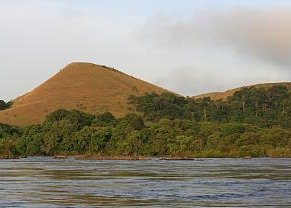
The Ogooué River marks the park's southern boundary and separates the savannahs in the north from the forest in the south, creating one of the most photogenic landscapes in Gabon. From Lopé village and from several viewpoints on the grassy hills you can take in the whole mosaic: rolling grasslands, islands of forest, the winding river and, in the distance, the dense rainforest that covers the rest of the country. It's the perfect place to understand at a glance why Lopé is so special. At sunrise and sunset, with mist rising off the river and low light raking across the hills, these viewpoints offer some of the most beautiful panoramas in central Gabon. They're also good spots for birdwatching and, with luck, for seeing elephants or buffalo crossing the savannah in the distance. The guides know the best spots and times to enjoy them. Getting there: from Lopé village and on the savannah drives. Best time: dry season; dawn and dusk. Tips: bring a camera and binoculars; misty sunrises over the Ogooué are unforgettable.
ℹ️ Distance: Around Lopé village and the northern savannahs · Best time: Dry season; sunrise and sunset · Admission: Included in park outings · Duration: 1 to 2 hours
6
The Transgabonais and Lopé station
The historic train that crosses Gabon and makes Lopé the easiest park to reach, with the adventure of arriving by rail.
Leer más ↓
Getting to Lopé is already part of the experience. The Transgabonais, the railway linking Owendo (Libreville) with Franceville across the country from west to east, stops at Lopé station, which makes this park the most accessible in Gabon and one of the few in the world you can reach by train. The 6 to 8 hour journey from the coast runs through forests, rivers and villages, and is an unforgettable trip through the green heart of Central Africa in itself. The small Lopé station and the neighbouring village are the logistics base for your visit: this is where outings are organised with the ANPN and the lodges, where you hire guides and vehicles and pick up last-minute supplies. Combining the train with a stay in the park — and possibly carrying on towards Ivindo or Franceville — is one of the best ways to explore inland Gabon without relying on difficult tracks. Getting there: on the Transgabonais from Owendo/Libreville or from Franceville. Best time: all year round; book your ticket in advance. Tips: check the latest SETRAG timetables (they change every season) and book 48 h ahead.
ℹ️ Distance: Lopé station, next to the village and the park entrance · Best time: All year round; book the train in advance · Admission: Train ticket depending on class (see 'Getting to the city') · Duration: 6 to 8 h journey from Owendo
📶I have never landed without internet. I arrive and my phone connects to the strongest network in the country I am visiting: I can say I landed, sort out transport, book tours and keep posting, at a seriously good price. I always use the Maya eSIM — check their plans by clicking the banner.See plans →Maya Mobile eSIM — download, install, go
What nobody tells you

💵 Prices

Tickets

TypePrice
Entrada al Parque Nacional de la Lopé (gestión ANPN)ANPN fee per day of visit; paid at the park office in Lopé (2024; check the current amount with the ANPN)
Guía obligatorio de la ANPN / lodgeDepends on activity and duration; booked in Lopé (2024; enquire)
Excursión a los petroglifosGuided, included in park fee + guide (2024; enquire)
Permiso/actividad de primates (gorilas, chimpancés, mandriles)Depends on activity and specialist guide (2024; enquire with ANPN/lodges)
🔄 updated monthlyOfficial / reference values · double-check when buying

Activities and tours

ActivityPriceDurationOperator
4x4 safari across the savannahsDepends on vehicle, guide and duration (half day); booked in Lopé (2024; to be agreed)Half a dayANPN / lodges (Lopé Hotel, camps)
Mandrill tracking with a guideDepends on specialist guide and duration (2024; enquire)Half a day to a full dayANPN / specialist guides
Gorilla and chimpanzee trekDepends on trackers and permit (2024; enquire)Half a day to a full dayANPN / lodges
Guided visit to the petroglyphsIncluded in park fee + guide (2024; enquire)Half a dayANPN
BirdwatchingWith a guide; depends on duration (2024; enquire)VariableANPN / local guides
🔄 updated monthlyOfficial / reference values · double-check when buying

🚌 How to get there and distances

Getting around

ModePriceDurationNotes
4x4 vehicle with guide inside the parkPer outing; booked in Lopé (2024; to be agreed)Half a day per outingNo independent driving; outings are organised with the ANPN and the lodges
Station/village ↔ lodge transferShort; usually arranged by your accommodation (2024)A few minutesLopé village, next to the station, is the base; the lodges arrange transfers
Walks on foot with trackersIncluded in trekking activities (2024)VariableFor petroglyphs, gorillas and chimpanzees; always with a guide
🔄 updated monthlyOfficial / reference values · double-check when buying

How to get there

RouteAirlines / operatorsAvg. priceDuration
Owendo (Libreville) → Lopé on the Trans-Gabon Railway (SETRAG)SETRAG (Trans-Gabon Railway)2nd class from about 20,000 XAF; 1st class costs more (2024; check with SETRAG)6 to 8 hours depending on whether it's the omnibus or express train
Franceville → Lopé on the Trans-Gabon Railway (SETRAG)SETRAG (Trans-Gabon Railway)Depends on class; intermediate section of the route (2024; check with SETRAG)Several hours
Libreville → Lopé by road (dirt track)Private 4x4 vehicles, operatorsDepends on vehicle; tough going in the rainy season (2024)Several hours (dirt track, difficult in the rains)
Charter flight to an airstrip near LopéSafari / charter operatorsDepends on service (2024; enquire)Short from Libreville
🔄 updated monthlyOfficial / reference values · double-check when buying

🏨 Where to stay

No exact prices: a scale from $ (budget) to $$$$$ (luxury), with 2-3 options per category.

Flagship lodge
Price$$$$$
Recommended options
Lopé Hotel, on the banks of the Ogooué, with air-conditioned rooms, a pool and a restaurant, the most comfortable place to stay in the park; mid-to-upper range price depending on season (2024; book ahead)
Savannah camps (tented camps)
Price$$$$$
Recommended options
Camps such as Moabi Tented Camp, on the savannah to the north, about 40 minutes from the station, with equipped tents and a safari atmosphere; price depends on package (2024)
Simple accommodation in Lopé village
Price$$$$$
Recommended options
Basic lodgings and guesthouses in the village, next to the station, for tight budgets (2024)
Camps inside the park (safari)
Price$$$$$
Recommended options
Managed camps for multi-day safaris, with guides and meals included depending on package (2024; enquire with operators)

🍴 Where to eat

Restaurante del lodge
Price$$$$$
Options / signature dish
At Lopé Hotel and the camps, menus with Gabonese and international cuisine; usually half board or full board depending on package
Cocina gabonesa en el pueblo
Price$$$$$
Options / signature dish
From about 3,000-8,000 XAF; maquis and simple eateries in Lopé village serving fish, chicken nyembwe, cassava and plantain
Comida de campamento (pensión completa)
Price$$$$$
Options / signature dish
Meals included in safari packages, prepared at the camps with local produce
Provisiones y puestos
Price$$$$$
Options / signature dish
Stalls and small shops in the village for water, drinks and some food; it's best to arrive stocked up from Libreville

📖 History of Lopé National Park

Origins, formation and what the sources say.

A landscape inherited from the ice ages

The first question anyone arriving in Lopé asks is why, in a country of equatorial rainforest, there are wide grassy savannahs here. The answer lies in the climate of the distant past. During the great glacial and interglacial cycles of the last few hundred thousand years, the climate of Central Africa changed dramatically: in the colder, drier phases the forest shrank and broke up, and grasslands spread; in the warm, wet phases the forest expanded again. Lopé preserves a mosaic of savannah and forest that is, to a large extent, a relic of those swings: its savannahs are remnants of a landscape that was far more widespread in drier times.

This 'relict' character is so distinctive that it is part of the name under which UNESCO recognised the site: 'Ecosystem and Relict Cultural Landscape of Lopé-Okanda'. Today the savannahs survive partly thanks to seasonal fires and to the wildlife, in a delicate balance with the surrounding forest, which tends to take them back. The result is a transition ecosystem with exceptional biodiversity, where forest and savannah species share the same territory.

That natural wealth turned Lopé into a first-rate scientific laboratory. From the 1980s and 1990s, researchers studied forest and savannah ecology here, along with the behaviour of mandrills, gorillas and chimpanzees and the way the landscape changes over time. The Lopé Research Station and the work of international scientists made the park one of the best-studied places in Central Africa. It also became key to understanding how equatorial forests responded to past climate change.

whc.unesco.orgen.wikipedia.org · Lopé National Park

Tens of thousands of years of human presence

Those open savannahs, set in the middle of impenetrable forest, were a natural corridor for people for millennia. The archaeological sites of Lopé-Okanda record tens of thousands of years of human occupation, going back to the Stone Age. On a continent where rainforest usually destroys such remains, these grasslands and their rocky outcrops have kept an extraordinary record of the human story in Central Africa: stone tools, campsite remains and evidence of successive cultures.

The Lopé landscape witnessed one of the great events of African history: the Bantu expansion. Over the last couple of millennia BCE and the first centuries CE, Bantu-speaking peoples from West Africa moved south and east across the continent, bringing farming and iron-working with them. The Ogooué valley and savannah corridors like Lopé's were routes for these migrations, which reshaped the human map of sub-Saharan Africa.

That long presence left its most spectacular mark on the rock. Around 1,800 petroglyphs are scattered across the park: rock carvings of circles, spirals, geometric patterns and figures, attributed to Iron Age peoples. They are a unique record of the symbols and culture of those who lived in the region, and one of the reasons Lopé is recognised internationally. Walking among these carved stones is a glimpse into the minds of communities that lived here centuries ago.

whc.unesco.orgen.wikipedia.org · Lopé National Park

From colonial reserve to national park

Formal protection of Lopé began in colonial times. In 1946, the authorities of French Equatorial Africa created the Lopé-Okanda Wildlife Reserve in recognition of the area's exceptional animal life, with its mandrills, elephants, buffalo and primates. It was one of the territory's first protected areas and laid the groundwork for conserving this unique mosaic of savannah and forest, at a time when much of Africa still saw wildlife mainly as game.

After Gabon's independence in 1960, the reserve was kept, and its scientific value grew with the research of the following decades. Studies of mandrills (which in Lopé form the largest known groups of the species), of gorillas and chimpanzees, and of how the landscape changes gave Lopé an international reputation. The area became a symbol of Gabon's natural heritage and a strong argument for taking its protection a step further.

That step came in 2002. In a historic decision announced at the Johannesburg summit, President Omar Bongo created a network of 13 national parks in one go, protecting about 11% of Gabon's territory. Lopé was one of them, turning from a wildlife reserve into Lopé National Park. The decision put Gabon at the forefront of conservation in Africa and laid the foundations of the 'Green Gabon' model the country has promoted ever since.

en.wikipedia.org · Lopé National Parken.wikipedia.org · National parks of Gabon

World Heritage Site (2007)

The crowning recognition came in 2007, when UNESCO added the 'Ecosystem and Relict Cultural Landscape of Lopé-Okanda' to the World Heritage List. It is a rare mixed site, valued for both its nature and its culture, a category very few places in Africa or the world achieve. The committee highlighted two things. One was the relict mosaic of rainforest and savannah, an outstanding example of ecological processes and of how ecosystems responded to past climate change. The other was the set of archaeological sites and petroglyphs that record successive human populations passing through.

UNESCO stressed that Lopé-Okanda illustrates a crucial moment in human history in Africa: the spread of Bantu and other West African peoples along the Ogooué valley, bringing farming and iron, through one of the continent's most important migration corridors. The site combines the long story of how the landscape evolved with the story of human evolution, which is truly unusual.

This double recognition established Lopé as a jewel of world heritage and a symbol of Gabon's commitment to conservation. The park is managed by the Agence Nationale des Parcs Nationaux (ANPN), created in 2007 to run the country's park network. Since then, Lopé has faced the challenge of protecting its nature and heritage while opening up to responsible tourism and scientific research.

whc.unesco.orgen.wikipedia.org · National Agency for National Parks

Lopé today: science, trains and ecotourism

Today, Lopé National Park is a wildlife sanctuary, an archaeological site of global importance and the most accessible park in Gabon. Its most practical quirk is that you can get there by train. The Trans-Gabon Railway, opened in stages between 1978 and 1986 to link the coast with the manganese mines in the south-east, stops at Lopé, so you can reach the country's wild heart without relying on difficult dirt roads. This mix of easy access, unique landscape and spectacular wildlife makes Lopé the ideal gateway to Gabon's nature.

The park is also still a leading research centre. Research on mandrills, whose hordes of over a thousand individuals are a phenomenon found nowhere else, continues to add to what we know about these primates. Work on gorillas, chimpanzees, forest elephants and the changing landscape keeps Lopé on the world's scientific map. The ANPN and its partners also work to protect the park from threats such as poaching and the pressure on forest elephants, which have been hit hard by the ivory trade across Central Africa.

At the same time, Lopé is betting on careful ecotourism: 4x4 safaris across the savannahs, primate walks, visits to the petroglyphs and stays in lodges and camps, always with local guides and conservation protocols. For travellers, it is a chance to experience a Gabon that is both wild and within reach. In a single day you can see mandrills crossing the savannah and ancient rock carvings, then watch the sun set over the Ogooué River. Nature and human memory come together in one of Africa's most extraordinary corners.

en.wikipedia.org · Lopé National Parken.wikipedia.org · Trans Gabon Railway

📚 Bibliography

  • UNESCO — «Ecosystem and Relict Cultural Landscape of Lopé-Okanda»: https://whc.unesco.org/en/list/1147/
  • Wikipedia (EN) — «Lopé National Park»: https://en.wikipedia.org/wiki/Lop%C3%A9_National_Park
  • Wikipedia (EN) — «National parks of Gabon»: https://en.wikipedia.org/wiki/National_parks_of_Gabon
  • Wikipedia (EN) — «National Agency for National Parks (ANPN)»: https://en.wikipedia.org/wiki/National_Agency_for_National_Parks
  • Wikipedia (EN) — «Mandrill»: https://en.wikipedia.org/wiki/Mandrill
  • Wikipedia (EN) — «Trans-Gabon Railway»: https://en.wikipedia.org/wiki/Trans-Gabon_Railway
  • Wikipedia (EN) — «Bantu expansion»: https://en.wikipedia.org/wiki/Bantu_expansion
  • The Travel — «Lopé National Park»: https://www.thetravel.com/what-to-know-about-lope-national-park-in-gabon/
  • Journeys by Design — «Lopé National Park»: https://journeysbydesign.com/destinations/gabon/lope-national-park
  • Britannica — «Gabon»: https://www.britannica.com/place/Gabon

❓ Frequently asked questions

Can you really get to Lopé by train?+
Yes, and it's one of its big advantages. The Trans-Gabon Railway (SETRAG) links Owendo, next to Libreville, with Franceville, and stops at Lopé station, right by the village and the park entrance. The trip from the coast takes between 6 and 8 hours depending on whether it's the omnibus or express train. It's one of the few parks in the world you can reach by rail, which makes Lopé the most accessible park in Gabon. Book your ticket in advance and check the timetables, which change by season.
When can you see the big groups of mandrills?+
In the dry season (especially June to September), when huge hordes of mandrills gather in the north of the park to breed, forming groups of hundreds and even more than a thousand individuals, a phenomenon found nowhere else in the world. Even so, seeing them takes an expert guide, patience and some luck, as they move through the forest and along the edges of the savannah. Lopé is recognised as the best place on the planet to watch mandrills.
What makes Lopé's landscape special?+
Its mosaic of savannah and forest. Unlike the rest of Gabon, which is covered in dense forest, Lopé opens up into wide grassy savannahs dotted with small groves, a legacy of the climate changes of the last ice age. This open landscape lets you explore the park by 4x4 and see wildlife from a distance —forest elephants, buffalo, antelope—, something almost impossible under the canopy of the equatorial forest. It's the closest thing to a savannah safari the country has to offer.
Why is it a World Heritage Site?+
Because it combines exceptional natural and cultural value. UNESCO inscribed it in 2007 as 'Ecosystem and Relict Cultural Landscape of Lopé-Okanda': on one hand, its unique mosaic of savannah and forest, a relic of past climate changes; on the other, its archaeological sites and nearly 1,800 petroglyphs, which document tens of thousands of years of human presence, Bantu migrations and iron metallurgy. It's one of the few mixed (natural and cultural) sites in Africa.
How do I organise the visit and what should I bring?+
Excursions are arranged in Lopé village with the ANPN (Agence Nationale des Parcs Nationaux) and the lodges, which provide guides, trackers and 4x4 vehicles; it's best to book accommodation and activities in advance. Bring all the cash you'll need in CFA francs (there are no ATMs), neutral-coloured trekking clothes, comfortable footwear, binoculars, a camera with a zoom lens, sun protection, insect repellent and malaria prophylaxis. Yellow fever vaccination is mandatory to enter Gabon.

More places in Gabon

Parque Nacional de MayumbaParque Nacional de los Montes de CristalParque Nacional de los Plateaux BatékéParque Nacional de PongaraPointe-DenisPort-Gentil
See every place in Gabon →The history of Gabon →
Sources consulted (7)
Still planning?
Explore more destinations in Gabon
See all destinations →
Image credits
Photos from Wikimedia Commons, each under its own licence (CC BY, CC BY-SA or public domain). Open each file to see its author and licence.
Lopé National Park river crop