Viajá con Gus
Home › Gabon › Franceville
Franceville
🇬🇦 Gabon · The southeast: plateaus and waterfalls

Franceville

🪪 What do I need to enter Gabon?Pick your citizenship and we tell you the visa, the days and the paperwork, with the official source.

By leaving your email and citizenship you agree to receive the documents you asked for and weekly travel news. You can unsubscribe whenever you want. How we handle your data.
Jump to what you need
📍Region
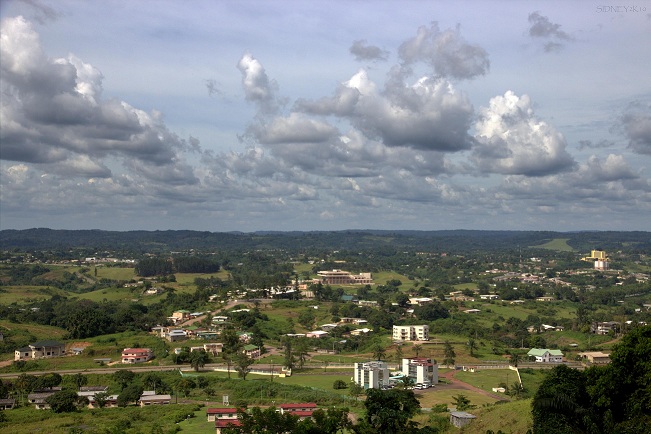
Franceville (Masuku in the local language) is the capital of Haut-Ogooué province, in the far southeast of Gabon, near the border with the Republic of the Congo. It is the country's third-largest city, with more than 100,000 inhabitants, and the end of the Trans-Gabon Railway line. Set in the highlands of the upper Ogooué, it is the gateway to a landscape that breaks with the forest covering the rest of Gabon: grassy plateaus, red sandstone canyons, waterfalls and savannahs. The region is also a political heartland (former president Omar Bongo came from here) and home to a major medical research centre, the CIRMF.
📌Best time to visit
As in almost all of Gabon, the best times are the dry seasons: the long one, from June to September, and the short one, from December to January, with less rain and more passable roads for trips to the waterfalls, the Léconi canyons and the reserves. The main rainy season (February-May) brings heavy downpours, but also waterfalls at their fullest and the greenest scenery. The highland climate of Haut-Ogooué is somewhat cooler and more comfortable than on the coast.
📌Suggested days
2 or 3 days are enough to make the most of the region: one day for the city and the Poubara falls and liana bridge, one day for the red canyons of Léconi (about 2 hours away) and one day for the Parc de la Lékédi, in Bakoumba, with mandrills and gorillas. Many travellers reach Franceville at the end of the Trans-Gabon train journey from Libreville, or use it as a base to explore the southeast before heading on to the Plateaux Batéké.
📌Getting there
There are three options. By air: Franceville-Mvengue International Airport (MVB), about 20-25 km from the city, receives domestic flights from Libreville (approx. 1-1.5 h). By train: Franceville (Owendo-Franceville station) is the eastern terminus of the Trans-Gabon Railway, with a journey of 8-14 h from Owendo/Libreville depending on the service. By road: it is a very long drive from the coast, partly on dirt tracks. Flying or taking the train is the most practical option for most travellers.
📌Getting around
In the city there are shared taxis (fixed fare per trip) and motorbike taxis. For trips to Poubara, Léconi or the Lékédi, it's best to hire a vehicle with a driver or book a local operator, as there is no organised public transport for tourists and some access roads require a 4x4, especially in the rainy season. From Mvengue airport to the city you can take a taxi. It's a good idea to arrange transfers through your accommodation or local guides.
📌Language and currency
The language is French, along with local languages such as Teke, Nzebi and Mbede. The currency is the Central African CFA franc (XAF), pegged at 655.957 to the euro (in mid-2026, around 575 XAF to the dollar). As a provincial capital, Franceville has banks and ATMs, but outside the city (Léconi, Bakoumba, villages) almost everything is cash, so bring enough CFA francs in notes.
💱 XAF exchange rate
Loading rate…
🌤️ Weather in Franceville
Loading weather…

Franceville, in the far southeast of Gabon, is the gateway to a country hardly anyone expects: one of grassy plateaus, red sand canyons and savannahs, a landscape that breaks completely with the dense forest covering the rest of the territory. The country's third-largest city and the end of the legendary Trans-Gabon Railway, it is a comfortable base for exploring the natural wonders of Haut-Ogooué.

Just outside the city, the Ogooué River plunges over the spectacular Poubara falls, crossed by one of the oldest and most famous liana bridges in Africa, woven by hand by the Batéké people. A little further on lie the red canyons of Léconi, the most photographed landscape in Gabon, and the Parc de la Lékédi, where you can see mandrills and gorillas. All with a highland climate that is somewhat cooler and more comfortable than on the coast.

This guide shows you what to see in and around Franceville, how to get there by plane or train, how to organise trips to Poubara, Léconi and the Lékédi, and where to sleep and eat. Steeped in political history —former president Omar Bongo came from here— and home to an important scientific centre, Franceville is much more than the end of the line: it is the beginning of Gabon's plateau country.

📖 History of Franceville

Franceville was born in 1880, when the Franco-Italian explorer Pierre Savorgnan de Brazza founded a post on the upper Ogooué that he gave this name, and which served as a settlement for freed slaves, hence its name 'city of the free'. Teke territory, the region was a key mining area throughout the 20th century —the manganese of Moanda is one of the largest reserves in the world— and the birthplace of the man who ruled Gabon for more than four decades, Omar Bongo, who endowed it with infrastructure, a university and a prestigious medical research centre. The full story is told on our history page.

Read the full history ↓

🏛️ Franceville is in the southeast: plateaux and waterfalls

The Gabon beyond the rainforest: the grassy Batéké plateaux, the Poubara falls with their liana bridge, and Franceville, the town Brazza founded at the end of the Trans-Gabon line.

Read the history of The southeast: plateaux and waterfalls →

🗺️ What to see

1
Poubara Falls and liana bridge
A spectacular drop of the Ogooué 15 km from the city, crossed by a historic suspension bridge woven from thousands of lianas by the Batéké people.
Leer más ↓
About 15 km south of Franceville, the Ogooué River tumbles over granite steps to form the Poubara falls, one of the great attractions of southeastern Gabon. Next to them is the famous Poubara liana bridge, a traditional suspension bridge woven entirely from lianas and plant fibres by the Batéké people, who rebuild it every generation. The original was about 120 metres long; the current one, shorter, is still a marvel of natural engineering that you can cross on foot, swaying above the river's rough waters. Crossing the bridge, feeling the lianas sway and hearing the roar of the water below is a thrilling experience that connects with the region's ancestral traditions. The falls and the bridge together are the tourist symbol of Haut-Ogooué and a must-see stop. Nearby, upstream, is the large Grand Poubara hydroelectric dam, which supplies power to the region. Getting there: about 15 km from Franceville, by taxi, vehicle with driver or operator. Best time: dry season for access; end of the rains for the highest water flow. Tips: wear sturdy shoes to cross the bridge and mind the swaying; mornings are ideal.
ℹ️ Distance: About 15 km south of Franceville · Best time: Dry season (access); end of the rains (more water) · Admission: Small local fee / tip for the bridge keeper (2024; to be verified) · Duration: Half day (including transfer)
2
Léconi Canyons (Canyon de la Léconi)
Spectacular canyons of red sand and clay in the middle of the savannah, the most photographed landscape in Gabon, about 2 hours from Franceville.
Leer más ↓
About two hours east of Franceville, near the town of Léconi and the border with the Congo, lie the Léconi canyons, perhaps the most spectacular and photographed landscape in Gabon. They are vast amphitheatres of sand and clay in shades of red, ochre and orange, sculpted by erosion in the midst of savannah and plateau, in stark contrast with the green of the vegetation. From the rim you get impressive panoramic views of the gorges and, at times, of a lake at the bottom. It is a unique place in the country, more like the red deserts of southern Africa than the Gabonese forest, and proof of the surprising diversity of landscapes in Haut-Ogooué. The area is part of the Batéké plateaus, with their grassy savannah, and is also home to savannah wildlife that is unusual in Gabon. A local guide helps you find the best viewpoints and move safely across the terrain. Getting there: about 2 h from Franceville by road, ideally with a suitable vehicle and a guide. Best time: dry season, with clear skies. Tips: bring water, a hat and sun protection; sunsets turn the canyons a deep red.
ℹ️ Distance: About 2 hours east of Franceville (near Léconi) · Best time: Dry season; sunset for the best light · Admission: Free access / local fee depending on management (2024; to be verified) · Duration: Full day (round trip)
3
Parc de la Lékédi (Bakoumba)
A 14,000 ha private reserve near Bakoumba, with mandrills, rehabilitated gorillas, buffalo and nature activities.
Leer más ↓
The Parc de la Lékédi, near the mining town of Bakoumba, southwest of Franceville, is one of the best accessible wildlife experiences in the region. It is a large, privately managed reserve of several thousand hectares of savannah, forest and lakes, where you can see mandrills, gorillas (part of rehabilitation programmes for orphaned young), guenons, buffalo, sitatungas and plenty of birds. It offers guided walks, vehicle and boat outings, and tourist infrastructure that is rare in Gabon. It is ideal for anyone who wants to see primates and wildlife without taking on tough expeditions: the Lékédi combines conservation, research (it has collaborated on studies of primates and diseases) and ecotourism in a beautiful, well-organised setting. Its proximity to Franceville and Bakoumba makes it easy to include in a trip through the southeast. Getting there: near Bakoumba, a couple of hours from Franceville, by road. Best time: dry season. Tips: book activities and accommodation in advance; check the times of the wildlife outings.
ℹ️ Distance: Near Bakoumba, a couple of hours from Franceville · Best time: Dry season (June-September) · Admission: Depends on the park's activities and packages (2024; ask the park) · Duration: Half day to full day (or overnight)
4
Franceville city and its market
A stroll through Gabon's third-largest city, with its lively market, Batéké crafts and the feel of the plateau capital.
Leer más ↓
Franceville itself is worth a stroll. The country's third-largest city and capital of Haut-Ogooué, it spreads over the hills of the upper Ogooué with the relaxed feel of a provincial capital. Its central market is the heart of local life: stalls of fruit and vegetables, fish, regional meat, fabrics and crafts, and a good place to feel the daily pulse and buy souvenirs such as wooden figurines, basketry and Batéké objects. The city also bears traces of its recent political history, with buildings and projects promoted in the Omar Bongo era. It is a comfortable base for excursions in the region, with hotels, restaurants, banks and the warm atmosphere of southeastern Gabon. A walk through its neighbourhoods, its market and its viewpoints over the valley rounds off the visit and gives human context to the natural landscapes nearby. Nearby Moanda, the manganese mining town, can be visited as an add-on to understand the region's economy. Getting there: on foot and by taxi around the city. Best time: all year; mornings for the market. Tips: ask permission before photographing people; bring cash in small notes for the market.
ℹ️ Distance: Central Franceville · Best time: All year; mornings for the market · Admission: Free · Duration: Half day
5
Grand Poubara Dam and the Ogooué River
A major hydroelectric project on the Ogooué near Franceville, and the river that shapes the landscape of the upper Ogooué.
Leer más ↓
About 15 km south of Franceville, on the Ogooué River and near the falls, stands the Grand Poubara dam, a large gravity hydroelectric project with a power station of about 160 MW opened in the 2010s, which supplies energy to the city and to the region's mining industry. Although it is an industrial facility, its setting on the Ogooué and its proximity to the falls and the liana bridge make it a point of interest on a visit to Poubara. The Ogooué River, which rises here on the southeastern plateaus before setting off on its long journey to the Atlantic, shapes the whole landscape of Haut-Ogooué. Seeing that the same river that opens into lakes at Lambaréné and forms waterfalls in Ivindo is born in these highlands helps you understand Gabon's geography. Within a few kilometres, the Poubara area brings together nature, tradition (the liana bridge) and development (the dam). Getting there: next to the Poubara falls, 15 km from Franceville. Best time: dry season. Tips: combine it with a visit to the falls and the liana bridge; check whether there are access restrictions at the dam.
ℹ️ Distance: About 15 km south of Franceville, next to Poubara · Best time: Dry season · Admission: Industrial facility; visible from around Poubara (restricted access) · Duration: Combined with Poubara
6
CIRMF: science in the forest
The International Centre for Medical Research in Franceville, an African benchmark in the study of primates and emerging diseases.
Leer más ↓
Franceville is home to the CIRMF (Centre International de Recherches Médicales de Franceville), one of the most important biomedical research centres in Central Africa, founded in 1979 during Omar Bongo's presidency. The CIRMF is renowned for its studies on emerging diseases —it played a leading role in research on the Ebola virus and other zoonoses—, on reproduction and on primates, with a primatology centre that has been a world reference in the study of gorillas, mandrills and chimpanzees. It is not a museum or a tourist attraction as such, but its existence explains part of the scientific importance of Franceville and Haut-Ogooué, a region that combines exceptional nature, strategic mining and cutting-edge research. For travellers interested in science and conservation, knowing about the CIRMF's role adds a fascinating layer to understanding the city and Gabon as a laboratory of tropical biology. Getting there: in the city of Franceville. Best time: all year. Tips: it is a working research centre, not an open tourist visit; its interest is contextual and informative.
ℹ️ Distance: In Franceville · Best time: All year (contextual interest) · Admission: Research centre (not an open tourist attraction) · Duration: Context for the city visit
📶I have never landed without internet. I arrive and my phone connects to the strongest network in the country I am visiting: I can say I landed, sort out transport, book tours and keep posting, at a seriously good price. I always use the Maya eSIM — check their plans by clicking the banner.See plans →Maya Mobile eSIM — connect before you land
What nobody tells you

💵 Prices

Tickets

TypePrice
Puente de lianas de PoubaraSmall local fee or tip for the keeper/community (2024; to be verified on site)
Cañones de LéconiAccess generally free; local guide recommended (2024; to be verified depending on management)
Parc de la Lékédi (Bakoumba)Depends on activities and packages (safari, primates, accommodation), 2024; check with the park
Mercado y ciudad de FrancevilleFree
🔄 updated monthlyOfficial / reference values · double-check when buying

Activities and tours

ActivityPriceDurationOperator
Trip to the Poubara falls and liana bridgeDepends on vehicle/guide; half day from Franceville (2024; to be agreed)Half dayTaxi drivers, vehicles with driver, local operators
Trip to the Léconi canyonsDepends on vehicle and guide; full day (2024; to be agreed)Full dayLocal operators / 4x4 vehicles with driver
Primate safari at the Parc de la LékédiDepends on the park's package (mandrills, gorillas, boat) (2024; to be confirmed)Half day to full dayParc de la Lékédi (Bakoumba)
Visit to Franceville city and marketFree; optional guide (2024)Half dayLocal guides
Trip to Moanda (manganese mine)Depends on vehicle; full day (2024; to be agreed)Full dayLocal operators
🔄 updated monthlyOfficial / reference values · double-check when buying

🚌 How to get there and distances

Getting around

ModePriceDurationNotes
Shared city taxiShort trips from about 200-500 XAF (2024)VariableThe city's basic transport; shared along fixed routes
Motorbike taxiFrom about 300-500 XAF per trip (2024)VariableQuick for getting around the city; wear a helmet if offered one
Vehicle with driver / 4x4 for excursionsDepends on destination and day; to be agreed (2024)Half day to full dayNeeded for Poubara, Léconi and the Lékédi; some access roads require a 4x4
Mvengue airport ↔ Franceville taxiDepends on distance (20-25 km); to be agreed (2024)30-40 minThe airport is on the outskirts; agree on the fare before getting in
🔄 updated monthlyOfficial / reference values · double-check when buying

How to get there

Libreville → Franceville by plane (Mvengue airport, MVB)
Airlines / operatorsDomestic flights (depending on availability)
Avg. priceDepending on availability (2024; ask for details)
DurationApprox. 1 to 1.5 h flight
Owendo (Libreville) → Franceville on the Trans-Gabon railway (SETRAG)
Airlines / operatorsSETRAG (Trans-Gabon railway)
Duration8 to 14 h depending on omnibus or express service
Avg. price
2nd class from about 33,000-42,000 XAF; 1st class about 47,000-56,000 XAF; VIP up to ~64,000 XAF (2024; check with SETRAG)
Franceville → surroundings (Poubara, Léconi, Bakoumba/Lékédi, Moanda)
Airlines / operatorsVehicles with driver, local operators
Avg. priceDepending on destination (2024; to be agreed)
DurationFrom 30 min (Poubara) to 2 h (Léconi, Bakoumba)
Franceville → border with Congo
Depending on destination (2024)
Airlines / operatorsLocal overland transport
DurationVariable; the region borders the Republic of the Congo
🔄 updated monthlyOfficial / reference values · double-check when buying

🏨 Where to stay

No exact prices: a scale from $ (budget) to $$$$$ (luxury), with 2-3 options per category.

Upmarket hotels
Price$$$$$
Recommended options
From about 45,000-90,000 XAF per night; hotels such as Le Poubara and other well-known establishments in the city, with A/C, a restaurant and sometimes a pool, a legacy of the development of the Bongo era
Mid-range hotels
Price$$$$$
Recommended options
Approx. 25,000-45,000 XAF per night; comfortable hotels with A/C and a restaurant in various neighbourhoods of Franceville
Budget hotels and auberges
Price$$$$$
Recommended options
From about 12,000-25,000 XAF per night; simple guesthouses with a fan or basic A/C for tight budgets
Accommodation in the Parc de la Lékédi (Bakoumba)
Price$$$$$
Recommended options
Cabins and accommodation inside or near the Parc de la Lékédi, depending on the wildlife package and length of stay (2024; ask for details)

🍴 Where to eat

Cocina gabonesa del sureste
Price$$$$$
Options / signature dish
From about 3,000-8,000 XAF per person; local meat, fish, poulet nyembwe, cassava and plantain in maquis and local eateries
Restaurantes de hotel
Price$$$$$
Options / signature dish
Approx. 8,000-18,000 XAF per person; a wider menu with Gabonese and French dishes in the city's hotels
Maquis y puestos callejeros
Price$$$$$
Options / signature dish
From about 1,500-4,000 XAF; skewers, grilled fish and chicken, beignets and dishes of the day at the market and on the streets
Cafés y panaderías
Price$$$$$
Options / signature dish
About 1,500-5,000 XAF; coffee, bread, beignets and tropical fruit in cafés in the centre

📖 History of Franceville

Origins, formation and what the sources say.

Masuku: the land of the Batéké

Long before it was called Franceville, this corner of the upper Ogooué was known as Masuku, as it still is in the local language. It lies at the heart of the territory of the Batéké (or Téké) people. The Batéké are a Bantu people who live on the sandstone plateaus of south-eastern Gabon and the neighbouring regions of the Republic of the Congo. It is an unusual landscape of grassy savannahs, hills and canyons, quite unlike the rainforest that covers the rest of the country. They lived by growing cassava, hunting on the savannah and fishing in the Ogooué, and they had a rich material and spiritual culture.

The Batéké are famous for their art and traditions: flat masks painted in geometric colours (the well-known Téké-Kidumu masks), carved power figures and, above all, their skill at weaving plant fibres. You can see that skill in works like the legendary liana bridges over the Ogooué. Their society was organised around chiefdoms and lineages. Their history is tied to that of the great Téké kingdoms that controlled part of the Congo Basin before colonial times.

The upper Ogooué was a crossroads. People, goods and knowledge travelled along the river and the savannah routes between the interior of Central Africa and the Atlantic coast. When Europeans travelled up the Ogooué in the 19th century, they found well-organised Téké societies here, on the plateaus where Franceville would later be built. The Batéké heritage is still very present in the region: in the language, the crafts, the food and in living traditions such as the Poubara liana bridge.

en.wikipedia.org · Teke peopleen.wikipedia.org · Franceville

Brazza and the 'city of the free' (1880)

The founding of Franceville is tied to one of the most unusual figures in African exploration. Pierre Savorgnan de Brazza was an aristocrat of Italian origin in the service of France, and he led several expeditions up the Ogooué from the 1870s onwards. In 1880, as he pushed inland and France competed with other colonial powers for the Congo Basin, Brazza founded a post on the upper Ogooué and named it Franceville. The name had two meanings: it honoured France and it suggested the idea of freedom.

That is because Franceville began, to a large extent, as a settlement for freed slaves. Brazza stood out for being somewhat less violent than other colonisers and for opposing slavery. He freed captives and settled them at the new post, which is where the idea of the 'city of the free' comes from. So, at the far south-eastern edge of what would become Gabon, a settlement appeared that was both a step in French colonial expansion and an anti-slavery gesture, right in the middle of the European scramble for Africa.

For the next few decades, Franceville was a small administrative and trading post in a remote region that became part of French Equatorial Africa. It lay more than 700 kilometres from the coast through forest and along the river. That distance kept it isolated and slow to grow for most of the colonial period. But its strategic position on the upper Ogooué, close to mineral resources that nobody was mining yet, held a future no one could have imagined at the time: it would become one of the country's main cities.

en.wikipedia.org · Francevilleen.wikipedia.org · Pierre Savorgnan de Brazza

Manganese, the railway and the rise of Haut-Ogooué

What changed the fate of south-eastern Gabon was geology. In the Moanda area, a few dozen kilometres from Franceville, lies one of the largest manganese deposits in the world, and manganese is essential for making steel. The company COMILOG began mining it in the late 1950s. That turned Haut-Ogooué into a strategic mining region and one of the engines of Gabon's economy, a role it still plays today: the country is one of the world's leading manganese producers.

Getting the ore out of such a remote inland region was a huge logistical challenge. For years, a cross-border cable car carried the manganese to the Congo, and the Congolese railway took it on to the sea. The lasting solution was the Transgabonais, the great national railway built between 1974 and 1986. It runs across the country from west to east, linking the port of Owendo, next to Libreville, with Franceville. The line was built largely to carry manganese and timber, and it made Franceville the country's eastern terminus, with a modern link to the coast.

The railway and mining drove the growth of Franceville and the whole of Haut-Ogooué. The population grew, the city gained new infrastructure and it became one of Gabon's main cities. Mineral resources, the railway and, later, hydroelectric power from dams on the Ogooué such as the one at Poubara laid the foundations for developing a region that had spent decades as a remote corner of forest and savannah.

en.wikipedia.org · Moanda, Gabonen.wikipedia.org · Trans Gabon Railway

The Bongo era: birthplace of a president

You can't separate the modern history of Franceville from the story of Omar Bongo Ondimba, the man who ruled Gabon for more than four decades. He was born in 1935 in Lewai (now Bongoville), in Haut-Ogooué, near Franceville. Bongo became president in 1967 after the death of Léon Mba, the first president of independent Gabon. He held power until his own death in 2009, one of the longest rules in African history. His roots in the region shaped Franceville's future in a big way.

As president, Bongo poured money and projects into his home region. Franceville got infrastructure, government buildings and a university, the Université des Sciences et Techniques de Masuku (USTM). Above all, it got the prestigious Centre International de Recherches Médicales de Franceville (CIRMF), founded in 1979. The centre made the city a leading scientific hub in Central Africa, known for its studies of primates and of emerging diseases such as Ebola. Franceville owes much of its rise as a modern provincial capital to this period.

All that investment also reflected how power worked in Gabon at the time, where regional loyalties and money from oil and mining carried a lot of weight. With that boost, Franceville became the country's third-largest city, with facilities you rarely find in a town in the African interior. After Omar Bongo died, his son Ali Bongo led the country until 2023. That year a military coup ended more than half a century of rule by the Bongo family and opened a new chapter in the history of Gabon and its south-east.

en.wikipedia.org · Omar Bongoen.wikipedia.org · Franceville

Franceville today: plateaus, science and tourism

Today Franceville is a lively provincial capital of more than a hundred thousand people. It is Gabon's third-largest city and the gateway to some of the country's most striking scenery. It is a mining and administrative centre and a university and science hub, thanks to the USTM and the CIRMF. It is also drawing more and more visitors, who come for the natural wonders of Haut-Ogooué: the Poubara falls and liana bridge, the red canyons of Léconi, the savannahs of the Batéké plateaus and wildlife reserves such as the Parc de la Lékédi.

The city is also the end of the line for the Transgabonais railway, which connects it to Lopé and the coast and puts it on the travel routes through the interior. Its altitude makes it a little cooler, and its relaxed atmosphere makes it a pleasant base for exploring a region that breaks every cliché about Gabon. Here the landscape isn't dense rainforest but savannah, plateau and red rock: a world of wide-open horizons that even many Gabonese from the coast know little about.

Franceville began as a colonial post founded by Brazza for freed slaves. It went on to become a mining town, a president's birthplace and the capital of the plateaus. Along the way it sums up much of Gabon's modern history: exploration, the fight against slavery, mineral wealth, political power and now a bet on science and ecotourism. For travellers, it is the perfect starting point for discovering the unexpected Gabon of the south-east, where the great Ogooué River begins among red canyons and liana bridges.

en.wikipedia.org · Francevilleen.wikipedia.org · Haut Ogooué

📚 Bibliography

  • Wikipedia (EN) — «Franceville»: https://en.wikipedia.org/wiki/Franceville
  • Wikipedia (EN) — «Pierre Savorgnan de Brazza»: https://en.wikipedia.org/wiki/Pierre_Savorgnan_de_Brazza
  • Wikipedia (EN) — «Teke people»: https://en.wikipedia.org/wiki/Teke_people
  • Wikipedia (EN) — «Moanda, Gabon»: https://en.wikipedia.org/wiki/Moanda,_Gabon
  • Wikipedia (EN) — «Trans-Gabon Railway»: https://en.wikipedia.org/wiki/Trans-Gabon_Railway
  • Wikipedia (EN) — «Omar Bongo»: https://en.wikipedia.org/wiki/Omar_Bongo
  • Wikipedia (EN) — «Haut-Ogooué Province»: https://en.wikipedia.org/wiki/Haut-Ogoou%C3%A9
  • Wikipedia (EN) — «CIRMF»: https://en.wikipedia.org/wiki/Centre_international_de_recherches_m%C3%A9dicales_de_Franceville
  • Britannica — «Franceville»: https://www.britannica.com/place/Franceville
  • Take Your Backpack — «Franceville City Guide (Gabon)»: https://www.takeyourbackpack.com/backpacking-in-gabon/visit-franceville/

❓ Frequently asked questions

How do I get to Franceville from Libreville?+
There are two practical options. By plane, with domestic flights from Libreville to Franceville-Mvengue airport (MVB), in about 1 to 1.5 hours; this is the fastest. By train, taking the Trans-Gabon railway from Owendo (next to Libreville), a journey of 8 to 14 hours depending on whether it is the omnibus or the express, which is an adventure in itself and lets you stop at Lopé. By road it is a very long trip, partly on dirt tracks, and not really advisable except for travellers with time and a suitable vehicle.
What shouldn't I miss in the area?+
The Poubara falls and liana bridge (15 km away), symbol of the southeast; the red canyons of Léconi (2 h away), the most photographed landscape in Gabon; and the Parc de la Lékédi, near Bakoumba, to see mandrills and gorillas. They combine well over 2-3 days. The city itself, its market and nearby Moanda (manganese mining) round out the picture of the Haut-Ogooué.
Can you cross the Poubara liana bridge?+
Yes. The liana bridge, hand-woven by the Batéké people from thousands of lianas and rebuilt every generation, can be crossed on foot, swaying over the waters of the Ogooué beside the falls. It is a thrilling experience and one of the country's most famous living traditions. There is usually a local caretaker who is given a small fee or tip. Wear sturdy shoes and watch out for the sway.
Is it easy to get around the surrounding area?+
Within the city there are shared taxis and motorbike taxis. For excursions (Poubara, Léconi, Lékédi) there is no public tourist transport: the best option is to hire a vehicle with a driver or book a local operator, and some access roads require a 4x4, especially in the rainy season. It's a good idea to arrange transfers through your accommodation or a guide. Withdraw cash in Franceville, because outside the city almost everything is paid in CFA francs in cash.
Why is Franceville important in Gabon's history?+
It was founded in 1880 by the explorer Pierre Savorgnan de Brazza as a post and settlement for freed slaves (hence its name, 'city of the free'). In the 20th century it became strategic thanks to manganese mining in neighbouring Moanda, one of the largest in the world, and as the birthplace of Omar Bongo, president of Gabon for more than four decades, who endowed the city with infrastructure, a university and the CIRMF medical research centre. It is one of the country's three largest cities.

More places in Gabon

Lagos del bajo OgoouéLambarénéLibrevilleParque Nacional de AkandaParque Nacional de Ivindo y las cataratas de KongouParque Nacional de Loango
See every place in Gabon →The history of Gabon →
Sources consulted (7)
Still planning?
Explore more destinations in Gabon
See all destinations →
Image credits
Photos from Wikimedia Commons, each under its own licence (CC BY, CC BY-SA or public domain). Open each file to see its author and licence.
Franceville