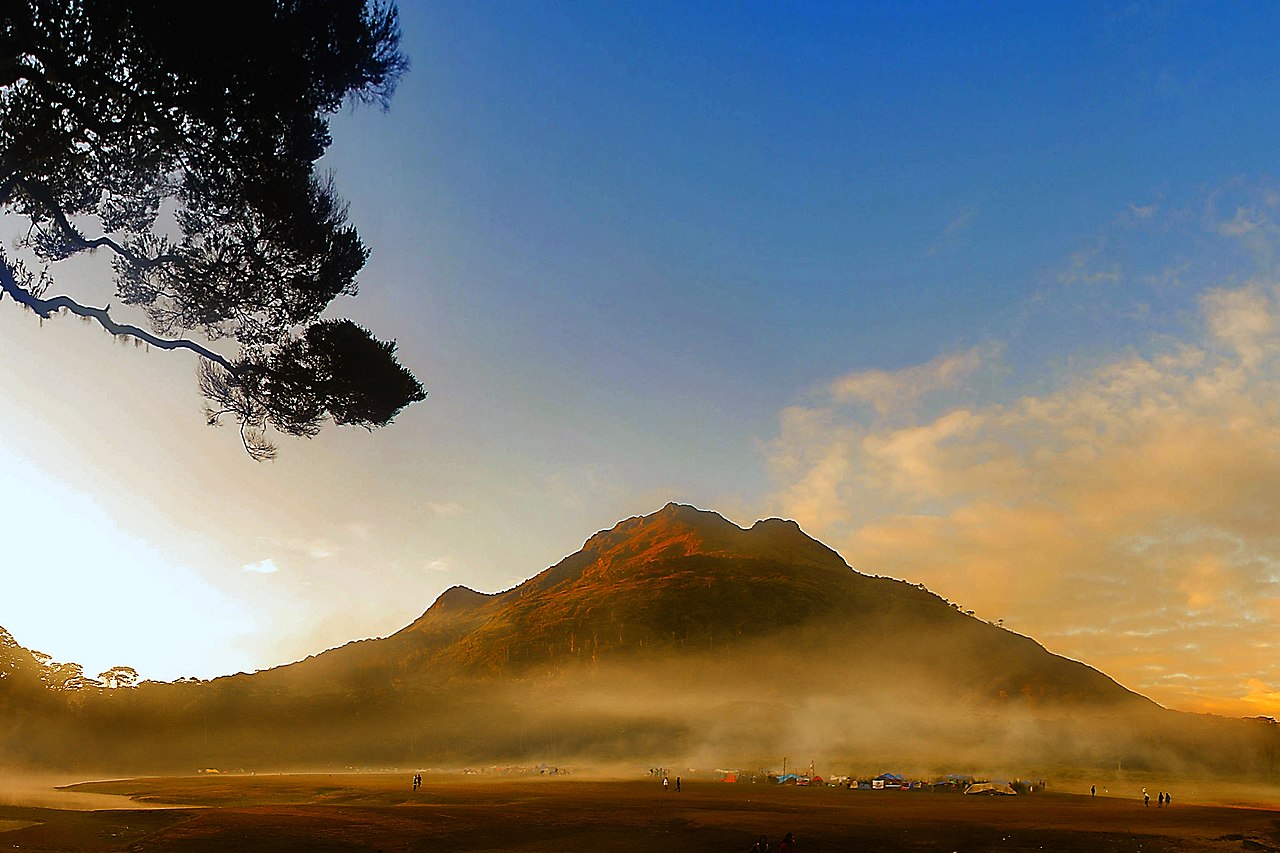
Davao is the big city of the south, the urban heart of Mindanao: a modern, orderly and surprisingly green metropolis, stretched out between the Davao Gulf and the silhouette of Mount Apo, the highest peak in the Philippines. It is the city of the durian (that spiky fruit with a powerful smell and an addictive taste that is the object of a cult here), of the Philippine eagle (the national bird, one of the rarest and most majestic animals on the planet) and of nature that starts almost in the city itself: mountains, waterfalls, beaches and an island, Samal, a stone's throw away.
Unlike the tourist rhythm of Cebu or Palawan, Davao is more a city to live in than a postcard destination, and that is exactly its charm: here you get to know the other side of the Philippines, the big southern island, with its mix of Indigenous peoples (lumad), Muslims and Christians, its huge tropical fruit market and its local pride. It is considered one of the safest and cleanest cities in the country, with well-kept parks, good food and a life of its own that has little to do with a beach resort.
This guide lays out Davao with a practical eye: what to see in the city and its surroundings (the Philippine Eagle Center, People's Park, Eden Nature Park, the durian markets), how to escape to Samal Island or climb Mount Apo, and what everything costs, all with real prices. Davao rewards the curious traveller, the one who wants to understand Mindanao beyond the headlines and, along the way, try the most controversial fruit in the world.
For centuries Davao was the territory of Indigenous peoples (the Bagobo, the Mandaya, the Kalagan and other lumad and Muslim groups) living in communities at the foot of Mount Apo, the sacred mountain they call 'Apo Sandawa'. Spanish colonisation reached this part of Mindanao late and with difficulty: only in 1848 did an expedition led by José Uyanguren take the Muslim settlement of datu Bago, at the mouth of the Davao River, and found the Christian town of Nueva Vergara, later renamed Davao. In the early 20th century, under US administration, the area became a major agricultural hub of abaca (Manila hemp), coconut and fruit plantations, with a notable colony of Japanese immigrants in the Mintal district, who left a cultural mark that is still visible. During the Second World War, Davao was occupied by Japan and heavily bombed. After the war it grew into the great metropolis of the south, with an intense political history and an identity of its own, proud of its diversity and its nature.
Read the full history ↓The great south of the Philippines: the land Spain never fully subdued, with its Muslim sultanates, its volcanoes and its intense nature, and a recent history of conflict and peace.
Read the history of Mindanao (south) →If you book from here we earn a commission and you pay no more. Prices and availability come from Civitatis.
No exact prices: a scale from $ (budget) to $$$$$ (luxury), with 2-3 options per category.
Origins, formation and what the sources say.
Long before there was a city, the Gulf of Davao and the slopes of Mount Apo were the territory of Indigenous peoples who had lived here for thousands of years. The great mountain, the highest in the archipelago, wasn't called Apo by chance: 'apo' means 'grandfather', 'lord' or 'ancestor', and for the Bagobo and other peoples it was, and still is, a sacred mountain. It is home to spirits and the dead, a place to be respected and never desecrated. Its full name in local traditions is 'Apo Sandawa'.
The Davao region is one of the most diverse corners of the Philippines in terms of its peoples. Many ethnic groups lived (and still live) in its mountains and valleys. Today they are grouped under the name 'Lumad', a Visayan word meaning 'native' or 'Indigenous': the Bagobo, the Mandaya, the Mansaka, the Ata, the B'laan, the Tagakaolo, the Matigsalug and others. Each has its own language, animist beliefs, rituals and crafts. The Bagobo, for example, are famous for their dyed abacá textiles and their bead and bronze ornaments. Alongside them, especially on the coast, lived Muslim communities such as the Kalagan and the Maguindanao, who had been Islamised centuries earlier as Islam spread from the south of the archipelago.
That Davao before the conquest was neither empty nor a 'wild' land. It was a mosaic of communities with chiefs (datus), trade networks and alliances, and a deep bond with the forest, the rivers and the mountain. Understanding that foundation is key to understanding today's Davao. The city still celebrates this heritage in festivals like Kadayawan and recognises eleven tribes as its Indigenous peoples. Davao's history doesn't begin with the Spanish. It begins much earlier, in the shadow of grandfather Apo.
Spanish colonisation reached Davao late and with difficulty. For more than three centuries Spain ruled much of the Philippines from Manila, but this corner of southern Mindanao stayed on the margins. It was the land of Muslim and Lumad peoples whom the Spanish never fully subdued, during the long wars between the Spanish Crown and the southern sultanates (the so-called 'Moro wars').
By the mid-19th century, the mouth of the Davao River was controlled by a Muslim chief, Datu Bago, whose settlement dominated the area. In 1847 the colonial government gave José Cruz de Uyanguren, a businessman and adventurer of Basque origin, the task of conquering and colonising the region in exchange for trading privileges. Uyanguren organised an expedition and, after several battles during 1848, took Datu Bago's settlement, and the datu withdrew upriver. On that site Uyanguren founded a Christian town he called 'Nueva Vergara', after his Basque homeland. Over time it came to be called Davao.
Colonisation, however, was slow and fragile. The climate, disease, resistance from local peoples and a shortage of settlers meant Nueva Vergara grew very little for decades. Until the end of the 19th century, Davao remained a remote frontier post, a Christian outpost in mostly Lumad and Muslim territory. It was very different from the thriving colonial cities of the north, such as Vigan or Cebu. That 'last frontier' character shaped its identity. It also explains why Davao's colonial history is much shorter and more unusual than the rest of the country's.
The end of Spanish rule in 1898 brought a new master, not independence. After the Spanish-American War, the Philippines passed to the United States, and under American administration Davao went through its first big economic transformation. The region's fertile volcanic soil turned it into a huge farming hub. Plantations of abacá ('Manila hemp', a plant fibre highly prized for making rope and cord), coconut and tropical fruit spread across the whole valley.
Surprisingly, Japanese immigrants were the main engine of that boom. In the early 20th century, thousands of Japanese workers came to Davao, drawn by the abacá plantations. Many were veterans of building the Kennon Road in Baguio. Led by the businessman Kyosaburo Ohta, they founded a large, thriving Japanese colony, centred mainly on the district of Mintal, which became known as Davao's 'Little Tokyo'. In the 1920s and 1930s Davao had the largest Japanese community in Southeast Asia, with Japanese-language schools, shops, temples and newspapers, and much of the abacá economy in its hands.
That cosmopolitan, agricultural Davao grew fast. It was a mix of Lumad, Christian Filipinos from the Visayas and Luzon, Muslims and Japanese. It became the great centre of the south, with a port, trade and a multicultural identity unlike anywhere else in the country. But that prosperity had a dark side that would surface a few years later. In 1941-1942, the strong Japanese presence made Davao one of the first and main targets of the invasion by the Empire of Japan.
The Second World War hit Davao especially hard, largely because of its big Japanese community. A few days after the attack on Pearl Harbor in December 1941, Japanese planes bombed the city. In the first months of 1942, forces of the Empire of Japan occupied it and used it as a key base for operations in the southern Philippines and towards the Dutch East Indies. In many cases, Davao's large Japanese colony helped and supported that occupation.
During the war years Davao went through a dark period of military occupation, with forced labour, hunger and repression, while Filipino guerrillas fought on in the mountains. The area was also home to a prisoner-of-war camp, the Davao Penal Colony (DAPECOL). American and Filipino soldiers captured after the fall of Bataan and Corregidor were held there in brutal conditions. In 1943 it was the scene of one of the few successful escapes by Allied prisoners in the Pacific war.
Liberation came in 1945, when American and Filipino forces retook Mindanao. The fighting and bombing of those months left much of the city in ruins. With the war over, the Japanese community that had defined pre-war Davao was dismantled. Most of its members were repatriated or interned, and their property was confiscated. Davao came out of the war devastated, but with a new chapter ahead. Within a few decades, post-war reconstruction would set it on course to become the great metropolis of the south.
Davao rose from the ruins of the war with extraordinary energy. It had already become a city in 1936, and in the post-war decades it grew rapidly. It absorbed a vast area of plantations and mountains, which made it one of the largest cities in the world by land area. Migrants from every region of the Philippines, especially the Visayas, came to settle there. Davao became the great economic, commercial and educational centre of Mindanao, with a port, an international airport and an economy built on farming (bananas, coconuts, durian), trade and services.
The growth wasn't smooth. In the 1970s and 1980s, during the years of dictatorship and insurgency, Davao went through a very violent period. Whole neighbourhoods, such as Agdao (grimly nicknamed 'Nicaragdao'), saw clashes between communist guerrillas, the army and paramilitary groups. For years the city had a reputation for danger and for a hard line on security. It is a complex and controversial chapter of its recent history, tied to the long political career of the Duterte family, which ran the city for decades.
21st-century Davao is a modern, prosperous metropolis with a reputation for being orderly, clean and safe, and it is proud of its diversity. It is the gateway to the southern Philippines, the durian capital, home of the Philippine eagle and a base for exploring Mindanao's nature. Every August, the Kadayawan Festival fills its streets with dance, fruit and flowers to celebrate the harvest and, above all, the city's eleven Indigenous peoples. Five centuries after the first caravels reached the archipelago, and always in the shadow of grandfather Apo, Davao is still what it has always been: a frontier land and a meeting place of peoples, where the heart of the south beats.