Viajá con Gus
Home › Philippines › Boracay
Boracay
🇵🇭 Philippines · Visayas (central)

Boracay

🪪 What do I need to enter Philippines?Pick your citizenship and we tell you the visa, the days and the paperwork, with the official source.

By leaving your email and citizenship you agree to receive the documents you asked for and weekly travel news. You can unsubscribe whenever you want. How we handle your data.
Jump to what you need
📍Region
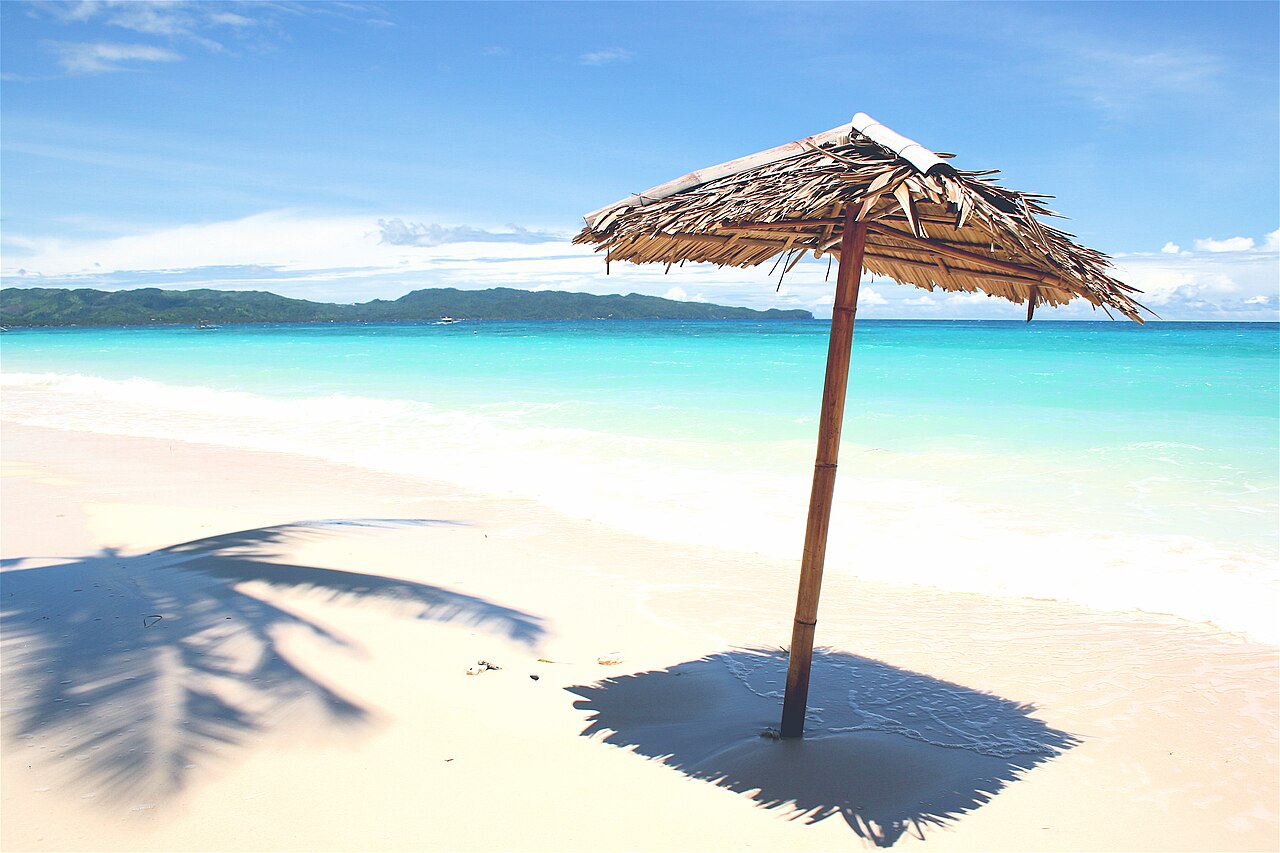
Boracay is a small island in the central Philippines (Aklan province, off the northwest tip of Panay island), in the Western Visayas. It is only about 7 km long and is world-famous for White Beach: four kilometres of ultra-fine white sand and turquoise water that for years ranked it among the best beaches on the planet. It is the most famous beach in the Philippines, with picture-postcard sunsets, water sports, restaurants and nightlife. After years of uncontrolled tourism, the government closed it for six months in 2018 to rehabilitate it, and today it runs under stricter sustainability rules. You reach it from the mainland (Caticlan) on a short ferry ride.
📌Best time to visit
The best season is the dry season of gentle winds (amihan), from November to April/May, with calm sea on the White Beach side, clear skies and the best conditions for the beach and sunsets; this is high season. From June to October the habagat (southwest monsoon) blows, bringing more rain and waves on the west side: in those months the ferries and the beach activity shift to the more sheltered east side, and the island is quieter and cheaper. It is tropically hot all year round (26-33 °C), with high humidity.
📌Suggested days
With 2 to 3 days you can enjoy the essentials: walk White Beach end to end, watch the sunset with the 'paraw' (traditional sailboats) in the background, try a water sport or a snorkelling/island-hopping trip, and sample the nightlife. With 4 or 5 days you add time to relax, dive, kitesurf at Bulabog Beach (the east-side beach, a mecca for kite and windsurfing) and visit other quieter beaches (Puka Beach, Diniwid). Boracay is above all a beach-and-rest destination; many people combine it with other spots in the Visayas or Palawan.
📌Getting there
Boracay has no airport: you fly into one of the two airports on the mainland and then cross by ferry. The closest is Caticlan (MPH, Godofredo P. Ramos), a few minutes from the port: from there, a short transfer to Caticlan Jetty Port and a 10-15 min ferry take you across to the island (Cagban or Tambisaan pier depending on the season). The other is Kalibo (KLO), ~1,5-2 h by van from Caticlan, with cheaper and international flights. There are flights from Manila, Cebu and other cities (Cebu Pacific, Philippine Airlines, AirAsia). At the jetty port you pay the environmental fee and the terminal fee before boarding.
📌Getting around
On Boracay the usual way to get around is the e-trike (electric tricycle), which runs along the main road the length of the island for a fixed fare per person (~30-150 PHP, ₱, depending on distance; more if you hire it 'special'). White Beach itself is covered on foot along its pedestrian promenade (the 'beachfront path'). There is no Grab on the island; there are some e-trikes and multicabs. You can also rent a bike or e-bike. For the more distant beaches (Puka, Diniwid), an e-trike or a boat is the best option. The island is small and everything is relatively close.
📌Language and currency
The local language is Aklanon (a Visayan language); English is spoken and understood very well across the island, which is strongly geared towards international tourism. The currency is the Philippine peso (PHP, ₱). As of July 2026, 1 USD is worth about 56-58 PHP and 1 EUR about 61-63 PHP (indicative exchange rate). On Boracay cards are accepted in many hotels and restaurants, but it is worth carrying cash for e-trikes, stalls, tips and small shops. There are ATMs around D'Mall and along White Beach (fee of ~250 PHP per withdrawal for foreign cards).
💱 PHP exchange rate
Loading rate…
🌤️ Weather in Boracay
Loading weather…

For many people, Boracay is the beach of the Philippines: four kilometres of white sand so fine it squeaks underfoot, a sea in shades of turquoise and sunsets that, with the 'paraw' sailboats silhouetted against an orange sky, look painted. For years it topped the rankings of the world's best beaches, and that fame filled it with hotels, bars, restaurants and crowds. It is the beach destination par excellence: laid-back by day, lively by night, made for walking barefoot along the shore, doing water sports and raising a glass to the sunset.

But Boracay's recent history holds an important lesson. Success brought uncontrolled growth that degraded the island: illegal drains into the sea, unchecked construction, an overcrowded beach. In 2018 the Philippine government took a drastic decision and closed it completely for six months to rehabilitate it, after the president himself called it 'a cesspool'. The island reopened with new rules — less noise and fewer structures on the beach, environmental controls, visitor caps — and today it is a case study in sustainable tourism. Telling that story is part of visiting it mindfully.

This guide lays out Boracay with a practical, honest eye: what to expect from White Beach and its 'stations', how to get there from Caticlan and which fees you pay, how much water activities cost, where to see the best sunset and how to get around the island, plus the background to the 2018 closure and the current rules. Boracay is still a spectacular beach; enjoying it while looking after it — respecting the rules that saved it — is the best way to keep it that way.

📖 History of Boracay

For centuries Boracay was inhabited by the Ati, an indigenous Negrito people considered among the first inhabitants of the Philippines, who lived from fishing and gathering. The island remained an unknown corner without electricity until well into the 20th century: only in the seventies and eighties did it start appearing in backpacker guides as a hidden paradise of white sand, and from then on its growth was dizzying. In a few decades it went from a fishing village to one of the most famous beach destinations in the world, with the flip side of chaotic development that overwhelmed the ecosystem. In 2018 the government of President Rodrigo Duterte closed the island to tourism for six months for a full rehabilitation, after denouncing the pollution of its waters. The reopening, with strict rules, marked a before and after. Meanwhile, the Ati community is still fighting for recognition of its ancestral lands in the face of tourism pressure. The full story of the Ati, of Boracay's 'discovery' and of the 2018 closure is on our history page.

Read the full history ↓

🏛️ Boracay is in Visayas (central)

The maritime heart of the Philippines: Cebu, where colonisation began and where Magellan fell; Bohol, home of the longest rebellions; and the beaches that made the country famous.

Read the history of Visayas (central) →

🗺️ What to see

Tours you can book

If you book from here we earn a commission and you pay no more. Prices and availability come from Civitatis.

1
White Beach
The four kilometres of ultra-fine white sand that made Boracay famous, with its pedestrian promenade and its sunsets.
Leer más ↓
White Beach is the soul of Boracay and the reason for its worldwide fame: a beach of about four kilometres of white sand, so fine and pale it looks like flour, lined by a sea of clear turquoise water. It is informally divided into three 'stations' (Station 1, 2 and 3): Station 1, to the north, has the widest sand and the most luxurious hotels; Station 2, in the centre, is the liveliest, with the D'Mall shopping area, bars and restaurants; and Station 3, to the south, is quieter and cheaper. A pedestrian promenade (the beachfront) runs the whole length of the beach, and you can walk it end to end among palm trees, restaurants, shops and masseuses. After the 2018 rehabilitation, many structures encroaching on the sand were removed, parties and alcohol directly on the beach were banned and the seafront was tidied up, so today White Beach is clearer and cleaner than at its worst. The great daily ritual is the sunset: the sun sets right over the sea on the White Beach side, and dozens of 'paraw' (traditional double-outrigger sailboats with colourful sails) cruise off the shore, offering rides and creating Boracay's classic postcard. Getting there: it is the main beach, on the west side of the island; all the accommodation revolves around it. Best time to visit: dry season (Nov-April) for calm sea; the sunset is a must. Tips: walk the whole length at least once; try a paraw ride at sunset.
ℹ️ Distance: West side of the island; it is the main beach, a few minutes by e-trike from anywhere · Best time to visit: Dry season (Nov-April), calm sea; the sunset every day · Admission: Free (public beach). Paraw ride at sunset ~ 1.500-2.500 PHP (₱) per boat (haggle) (verified July 2026) · Duration: All day / your whole stay
2
Sunset on a paraw (traditional sailboat)
A ride on the double-outrigger, colourful-sailed boats off White Beach as the sun goes down.
Leer más ↓
A sunset 'paraw' ride is one of the most classic and beautiful experiences in Boracay. Paraw are traditional Filipino double-outrigger sailboats (a bangka with two side floats) with large colourful sails, which during the day and especially at sunset cruise off White Beach offering short rides. Climbing aboard just as the sun sinks into the sea, with the sail filled by the wind and the golden beach behind you, is the perfect postcard to end the day. The ride generally lasts between 30 minutes and an hour, and is usually shared (though you can also hire one privately). The boats are fast and sometimes heel over quite a bit in the wind, which gives the experience a fun and slightly wet touch. It is a relaxed activity, suitable for all ages, and a lovely way to enjoy Boracay's famous sunset from the water. You book directly on the beach with the paraw operators, negotiating the price (cheaper in a shared group). Getting there: the paraw are moored along White Beach; you book them right there. Best time to visit: in good weather with some wind; at sunset, obviously. Tips: agree on the price and duration before boarding, take little with you (you may get wet), protect your phone and camera, and book a little in advance in high season, as demand is high.
ℹ️ Distance: Off White Beach; booked on the beach · Best time to visit: At sunset, with wind and good weather; dry season is ideal · Admission: ~ 300-600 PHP (₱) per person in a group; private boat ~ 1.500-2.500 PHP (haggle) (verified July 2026) · Duration: 30 min to 1 hour
3
Island hopping and snorkelling (Crystal Cove, Crocodile Island)
A boat trip around the island, with snorkelling on reefs and stops at islets and grottoes.
Leer más ↓
Island hopping is one of the most popular excursions in Boracay: a bangka (boat) trip around the island and nearby islets, combining snorkelling on coral reefs, swimming in turquoise water and stops at different spots. The classic route usually includes snorkelling areas such as Crocodile Island and Coral Garden (with fish and coral), the small island-park of Crystal Cove (with grottoes and natural pools, separate admission), Puka Shell Beach and, sometimes, the area's famous cave-pool. It is a good way to escape the bustle of White Beach and see the island from the sea and from below the surface. The snorkelling quality is decent (not the best in the Philippines, but there are fish and coral), and the trip itself, with its stops and lunch on board or on a beach, is good fun. You can book it as a shared group or as a private boat. Getting there: trips leave from White Beach or Bulabog; book with operators on the beach or through your accommodation. Best time to visit: dry season (Nov-April), with calmer sea and better visibility. Tips: agree which stops are included and whether there are extra admission fees (Crystal Cove, Puka), bring reef-safe sunscreen, water and cash for the fees; in high season it is best to book ahead.
ℹ️ Distance: Around the island; departures from White Beach or Bulabog · Best time to visit: Dry season (Nov-April), calm sea and good visibility · Admission: Group island hopping from ~ 1.500-2.500 PHP (₱) per person; private boat from ~ 3.500-5.000 PHP; islet admission (Crystal Cove ~ 300 PHP) extra (verified July 2026) · Duration: Half day
4
Puka Beach (Puka Shell Beach)
The island's second beach, longer, wilder and quieter, famous for its little puka shells.
Leer más ↓
Puka Beach, at the northern tip of the island, is Boracay's second most important beach and a wilder, quieter alternative to busy White Beach. It is around 800 metres long, with white sand that is slightly coarser and mixed with small 'puka' shells (which give it its name and were used to make necklaces), a deep blue sea and far less development: just a few food stalls and some shade, without White Beach's continuous row of hotels and bars. Being more exposed, it usually gets more waves and wind than White Beach, especially in the habagat season, so it is not always the best for swimming, but it is ideal for walking, switching off and getting away from the crowds. Its relaxed, natural feel makes it very appealing to anyone looking for a break from the bustle of the main beach. Getting there: it is in the north of the island, about 15-20 minutes by e-trike from White Beach. Best time to visit: dry season; mid-morning or mid-afternoon is best. Tips: bring water and something to eat (options are limited), watch out for the waves when it is windy, and combine it with other viewpoints in the north of the island. It makes a good half-day outing to see another side of Boracay.
ℹ️ Distance: Northern tip of the island, ~15-20 min by e-trike from White Beach · Best time to visit: Dry season; mid-morning or mid-afternoon · Admission: Free (public beach); a small environmental or e-trike fee may be charged (verified July 2026) · Duration: Half day
5
Bulabog Beach and wind sports (kitesurfing, windsurfing)
The east-side beach, the Philippines' kitesurfing and windsurfing capital during the windy season.
Leer más ↓
Bulabog Beach, on the east side of the island (opposite White Beach), is the Philippines' mecca for wind sports and one of the best kitesurfing and windsurfing spots in Asia. While White Beach faces west and is sheltered during the amihan season, Bulabog takes the full force of the northeast wind between November and April, with a shallow lagoon protected by a reef that offers ideal conditions for learning and practising: steady wind, flat water and shallow depth. In peak season the bay fills with colourful kites and sails, and along the beach there are schools and centres offering lessons and equipment rental for all levels, from beginners to advanced riders. It is an international, vibrant scene, very different from the atmosphere at White Beach. Outside the windy season (habagat, June to October), the wind shifts, and then it is White Beach that gets choppy while Bulabog stays calmer. Getting there: it is a few minutes on foot or by e-trike from White Beach (the island is narrow). Best time to visit: for kite and windsurfing, the amihan season (Nov-April). Tips: take lessons with certified schools if you are a beginner; book ahead in high season; Bulabog is not the best beach for simply swimming or sunbathing (for that, head to White Beach).
ℹ️ Distance: East side of the island, a few minutes on foot or by e-trike from White Beach · Best time to visit: Amihan wind season (Nov-April) for kite and windsurfing · Admission: Beach free; kitesurfing lesson from ~ 3.000-5.000 PHP (₱) per hour/package; equipment rental varies (verified July 2026) · Duration: From a few hours to several days (course)
6
Water sports and activities (parasailing, helmet diving, flyfish)
The range of water activities on White Beach: parasailing, helmet diving, banana boat and more.
Leer más ↓
Boracay is a water playground: along White Beach and through the island's operators there is a huge variety of activities for all tastes and ages. Among the most popular are parasailing (flying under a parachute towed by a speedboat, with panoramic views of the island), 'helmet diving' (walking on the seabed wearing a helmet supplied with air, no swimming or diving skills needed), the banana boat and flyfish (inflatables towed at full speed), jet skis and snorkelling trips. For those after something more serious, Boracay also has dive centres (scuba diving) with dive sites around the island, suitable for beginners (try dives) and certified divers, plus PADI courses. The diving is decent, with reefs, walls and the odd wreck, although it is not among the Philippines' best (for that there are Coron, Apo Island or Balicasag). Most activities are booked directly on the beach or through your accommodation, comparing prices (you can haggle a little). Getting there: operators are on White Beach and at Bulabog; book there. Best time to visit: dry season (Nov-April), with better sea conditions. Tips: check that the operator uses equipment in good condition and life jackets, agree on the total price beforehand, and be wary of offers that are too cheap for risky activities.
ℹ️ Distance: On White Beach and Bulabog; booked on the beach · Best time to visit: Dry season (Nov-April), best sea conditions · Admission: Parasailing ~ 1.500-2.500 PHP (₱); helmet diving ~ 800-1.500 PHP; banana/flyfish ~ 300-800 PHP; fun dive from ~ 1.800-2.500 PHP (verified July 2026) · Duration: From 15 min to half a day depending on the activity
📶I have never landed without internet. I arrive and my phone connects to the strongest network in the country I am visiting: I can say I landed, sort out transport, book tours and keep posting, at a seriously good price. I always use the Maya eSIM — check their plans by clicking the banner.See plans →Maya Mobile eSIM — connect before you land
What nobody tells you

💵 Prices

Tickets

TypePrice
Tasa ambiental de Boracay (una vez, al entrar)~ 300 PHP (₱) foreigners / ~ 150 PHP locals (boracayipass.ph), 2026
Tasa de terminal en Caticlan Jetty Port (por sentido)~ 150 PHP (₱), 2026
Ferry Caticlan ↔ Boracay (por tramo)~ 50-100 PHP (₱), 2026
White Beach y playas públicasFree, 2026
Paseo en paraw al atardecer~ 300-600 PHP (₱) per person in a group, 2026
Island hopping (grupo)~ 1.500-2.500 PHP (₱) per person, 2026
Crystal Cove (islote-parque)~ 300 PHP (₱), 2026
Parasailing / helmet divingParasailing ~ 1.500-2.500 PHP; helmet diving ~ 800-1.500 PHP, 2026
🔄 updated monthlyOfficial / reference values · double-check when buying

Activities and tours

ActivityPriceDurationOperator
Sunset paraw (sailboat) ride~ 300-600 PHP per person in a group; private ~ 1.500-2.500 PHP, 202630 min to 1 hParaw operators on White Beach
Island hopping and snorkelling~ 1.500-2.500 PHP per person in a group; islet admission extra, 2026Half dayBangka operators on the beach (verify)
Kitesurfing / windsurfing at Bulabog BeachLesson/package from ~ 3.000-5.000 PHP; full course costs more, 2026From a few hours to several daysCertified schools at Bulabog (verify)
Parasailing~ 1.500-2.500 PHP per person, 202615-20 minWhite Beach operators (check equipment)
Helmet diving~ 800-1.500 PHP per person, 202620-30 minWhite Beach operators (check safety)
Scuba diving around the islandFun dive from ~ 1.800-2.500 PHP; try dive from ~ 3.000-4.000 PHP, 2026Half dayBoracay dive shops (check certification)
Beach massage~ 400-800 PHP per hour, 202630 min to 1 hRegistered masseuses on White Beach
Puka Beach getawayE-trike return trip ~ 300-600 PHP; beach free, 2026Half dayThe island's e-trikes
🔄 updated monthlyOfficial / reference values · double-check when buying

🚌 How to get there and distances

Getting around

E-trike (electric tricycle)
DurationVariable
Price
Fixed fare ~ 30-50 PHP (₱) per person along the route; 'special' ~ 100-300 PHP, 2026
Notes
The island's main transport: they run along the road from end to end. You pay per person on a shared ride, or hire a 'special' (private) to go straight to your destination. There's no Grab on Boracay. For White Beach itself, you walk along the beachfront path
On foot along the White Beach path
Free
DurationVariable
Notes
You can walk the whole of White Beach along its beachfront path, the best way to get between the stations, bars and restaurants. The island is small and a lot of things are within walking distance
Bike or e-bike rental
~ 300-600 PHP (₱) per day, 2026
DurationPer day
Notes
An option for getting around on your own along the main road and reaching more remote beaches; e-bikes help with the heat and the hills. Ride carefully, as there's a lot of e-trike traffic
Caticlan ↔ Boracay ferry
Price~ 50-100 PHP (₱) per leg + terminal and environmental fees, 2026
Duration10-15 min crossing
Notes
The link to the mainland: a regular boat between Caticlan Jetty Port and the island (Cagban or Tambisaan pier, depending on the season). Frequent service during the day; at night some boats wait until they fill up. Fees are paid at the jetty port
Kalibo ↔ Caticlan van/transfer
Price~ 300-500 PHP (₱) per person in a shared van, 2026
Duration~ 1,5-2 h
Notes
If you fly into Kalibo (a bigger and cheaper airport), vans connect with Caticlan Jetty Port. Many 'airport-to-hotel' packages include this transfer and the fees
🔄 updated monthlyOfficial / reference values · double-check when buying

How to get there

RouteAirlines / operatorsAvg. priceDuration
Caticlan Airport (MPH) → BoracayTransfer to Caticlan Jetty Port + regular ferryShort transfer ~ 50-100 PHP + ferry ~ 50-100 PHP + fees (terminal ~ 150 PHP, environmental ~ 300 PHP), 202610-15 min to the port + 10-15 min ferry
Kalibo Airport (KLO) → BoracayVan/bus to Caticlan Jetty Port + ferryVan ~ 300-500 PHP + ferry ~ 50-100 PHP + fees, 2026~ 1,5-2 h by van + ferry
Flights to Caticlan (MPH)Cebu Pacific, Philippine Airlines, AirAsia (from Manila, Cebu)Manila-Caticlan from ~ 2.000-5.000 PHP depending on how far ahead you book, 2026Manila-Caticlan ~ 1 h
Flights to Kalibo (KLO)Cebu Pacific, Philippine Airlines, AirAsia (domestic and international)Usually cheaper than Caticlan, depending on how far ahead you book, 2026Manila-Kalibo ~ 1 h + ground transfer
From the Boracay pier (Cagban/Tambisaan) to your hotelE-trike~ 50-300 PHP (₱) depending on destination and whether it's shared or special, 202610-20 min
🔄 updated monthlyOfficial / reference values · double-check when buying

🏨 Where to stay

No exact prices: a scale from $ (budget) to $$$$$ (luxury), with 2-3 options per category.

Luxury (Station 1 and northern resorts)
Price$$$$$
Recommended options
From ~ 8.000-25.000+ PHP (₱) per night (≈ 140-450 USD), 2026. Five-star resorts on White Beach (Station 1) and in more secluded, exclusive areas in the north of the island, with private beach, spa, pools and fine dining; the widest, whitest sand is at Station 1
Mid-range (Station 2 and 3)
Price$$$$$
Recommended options
~ 2.500-6.000 PHP (₱) per night (≈ 45-105 USD), 2026. A wide choice of comfortable hotels near D'Mall (Station 2, the liveliest area) and in Station 3 (quieter), steps from the beach, bars and restaurants
Boutique and charming
Price$$$$$
Recommended options
~ 4.000-9.000 PHP (₱) per night (≈ 70-160 USD), 2026. Design hotels and more intimate bungalows in areas like Diniwid (a small beach north of White Beach) or inland, for those after style and a bit more calm
Budget / hostels (Station 3 and Bulabog)
Price$$$$$
Recommended options
Dorm bed ~ 500-1.000 PHP; budget private room ~ 1.200-2.500 PHP (₱) (≈ 21-45 USD), 2026. Hostels and guesthouses in Station 3 and on the Bulabog side (kitesurfing), more affordable and with a young backpacker vibe

🍴 Where to eat

Comida callejera y mercados (D'Talipapa)
Price$$$$$
Options / signature dish
Dishes 80-250 PHP (₱) (≈ 1,50-4,50 USD), 2026. At D'Talipapa market you buy fresh fish and seafood and they cook it for you right there ('paluto'), and there are BBQ stalls and cheap Filipino food; the most affordable and local option
Restaurantes de mariscos y cocina filipina
Price$$$$$
Options / signature dish
Mains 250-600 PHP (₱) (≈ 4,50-11 USD), 2026. Fresh fish and seafood, Filipino and Visayan cooking at White Beach restaurants, many with tables on the sand and sunset views
Cocina internacional y bares de playa
Price$$$$$
Options / signature dish
Dishes 350-900 PHP (₱) (≈ 6-16 USD), 2026. Boracay has a very international food scene: Italian, Mediterranean, Asian, specialty coffee, burger joints and beach clubs, with higher prices and a cosmopolitan feel
Cadenas y food courts (D'Mall)
Price$$$$$
Options / signature dish
Dishes 120-350 PHP (₱) (≈ 2-6 USD), 2026. D'Mall (Station 2) has Filipino chains (Jollibee and co.), food courts and quick, air-conditioned options, handy and cheap in the heat

📖 History of Boracay

Origins, formation and what the sources say.

The Ati: the first owners of the white island

Long before Boracay showed up in a beach ranking or an Instagram photo, the island belonged to the Ati, an Indigenous Negrito people, dark-skinned and short in stature, considered among the first inhabitants of the Philippine archipelago. The Ati arrived in these lands thousands of years ago and lived from fishing, hunting and gathering, in a close and sustainable relationship with the sea and the forest. For them, the white-sand island wasn't a tourist product but their ancestral home.

The name 'Boracay' has several possible explanations. Some link it to local words such as 'borac' (cotton, for the whiteness and fineness of the sand) or to 'bora' (bubbles) and 'bocay' (white). Other versions connect it to 'sagay', a type of seashell, or to expressions of the Ati themselves. Whatever the origin, every theory points to the same thing: that exceptionally white, soft sand that centuries later would make the island famous around the world.

The story of the Ati in Boracay is also a story of dispossession. As the island became valuable for tourism, the Ati were pushed off their land and onto the margins by property speculation. For decades they have fought for legal recognition of their ancestral territory, with partial victories and episodes of violence, such as the murder of an Ati leader in 2013 in the middle of a land dispute. Remembering the Ati means remembering that behind the paradise there's a people who were its first owners and who still claim their place.

The origin of the name 'Boracay'
There's no consensus on where the name comes from. The most frequently cited hypotheses derive it from 'borac' or 'buracay' ('cotton' or 'white', for the sand), from the combination of 'bora' (bubbles) and 'bokay/bocay' (white), or from 'sagay' (a shell). All of them refer to the whiteness of the sand. The name was reportedly used by local inhabitants long before tourism arrived.
Source: https://en.wikipedia.org/wiki/Boracay

From hidden paradise to global tourism phenomenon

Until well into the second half of the 20th century, Boracay was a remote corner with no electricity, roads or piers, known only to local fishermen and the odd occasional visitor. The island began to appear on the tourism map in the 1970s. The story goes that the shooting of a film in 1969-1970 helped spread images of it, and that in the 1970s and 1980s the first backpacker guidebooks, among them the well-known Philippines guide by the German Jens Peters, described it as a hidden paradise of white sand and crystal-clear water, almost untouched.

That hidden-treasure reputation first drew adventurous, low-budget travellers, who slept in simple huts and ate grilled fish. But word spread fast. In the 1990s and 2000s, Boracay boomed: electricity arrived, along with running water, regular flights to Caticlan and Kalibo, resorts, bars and crowds. White Beach filled up with an unbroken line of hotels and businesses, and the island climbed to the top of the lists of the best beaches on the planet, winning award after award from international travel magazines.

The success was overwhelming and, to a large extent, uncontrolled. In just a few decades, a fishing village turned into a tourism machine receiving millions of visitors every year. Building went ahead with hardly any planning, often encroaching on protected areas, wetlands and the beachfront itself. Sanitation infrastructure didn't keep pace with that growth, and the island quietly began to pay the price of its own fame.

The role of guidebooks in the 'discovery'
The guidebooks of the 1970s and 1980s, especially the widely read Philippines guide by the German Jens Peters, are credited with a key role in popularising Boracay among European backpackers, who made up the first wave of tourism. The shooting of a film in the late 1960s is also mentioned as an early source of its images. That initial word of mouth was the seed of the mass phenomenon that followed.
Source: https://en.wikipedia.org/wiki/Boracay

2018: 'a cesspool' and the six-month closure

The breaking point came in 2018. In February that year, Philippine President Rodrigo Duterte publicly described Boracay as 'a cesspool', pointing out that many hotels and businesses were dumping their untreated wastewater straight into the sea, polluting the very crystal-clear waters that drew tourists in. Official inspections confirmed the scale of the problem: hundreds of establishments with illegal drainage systems, buildings on protected land and a carrying capacity that had been far exceeded.

The response was drastic and unprecedented: on 26 April 2018, the government closed the island to tourism completely for six months, until the end of October. It was a hugely costly decision (Boracay depended almost entirely on tourism, and thousands of workers were left without income for half a year), but also a radical bet on saving the island. During that time, illegal buildings were demolished, sewage and drainage systems were expanded and repaired, roads were widened, structures encroaching on the beach were removed and new rules were put in place.

When Boracay reopened in October 2018, it did so with a different face and much stricter rules: no parties, loud music, smoking or drinking alcohol directly on the sand; removal of 'sandcastles', massages and structures from the beach; caps on the number of visitors and tourist beds; permanent environmental checks. The closure of Boracay became a worldwide case study on the risks of mass tourism and on the measures, painful but sometimes necessary, needed to reverse the damage.

Did the Boracay closure work?
The 2018 closure is analysed in sustainable tourism studies. Its supporters point to the clear improvement in water quality, the cleanliness of the beach and the reorganisation of the waterfront. Critics point to the huge social cost for local workers during the six months of closure and to doubts about long-term sustainability if the capacity limits are exceeded again. Overall it is considered a pioneering example of the forced rehabilitation of an overcrowded destination.
Source: https://en.wikipedia.org/wiki/Boracay

Boracay today: tourism with rules and a lesson learned

Today's Boracay is an island that learned a lesson about limits the hard way. After the reopening, controls were introduced to keep the collapse from happening again: a mandatory environmental fee for all visitors, a cap on the number of tourists and hotel beds based on carrying capacity, a requirement for businesses to connect to the sewage network, and a ban on activities that used to degrade the beach. White Beach is now clearer, cleaner and tidier than in the years when things were out of control.

That doesn't mean the problems are solved. Tourism pressure is still enormous, the temptation to relax the rules to attract more visitors is always there, and the Ati community keeps pressing for full recognition of its ancestral lands against property interests. Boracay remains a fragile balance between the prosperity tourism brings and the conservation of the paradise that same tourism puts at risk.

For travellers, this story is an invitation to visit Boracay mindfully: pay the environmental fee without complaining (it funds cleaning and maintenance), respect the beach rules, don't leave rubbish behind, choose responsible accommodation and operators, use reef-safe sunscreen and remember that behind the postcard there's an ecosystem and a community. The beauty of its four kilometres of white sand is still intact; keeping it that way depends, to a large extent, on how those of us who come to enjoy it treat it.

The environmental fee and the 'carrying capacity' model
After the rehabilitation, Boracay adopted a management model based on 'carrying capacity': the authorities set a maximum number of tourists and tourist beds the island can handle without being degraded, and fund environmental maintenance with a mandatory fee per visitor. It is one of the first major beach destinations in Southeast Asia to apply this kind of limit systematically, and it is being watched closely as a model others could copy.
Source: https://www.boracayipass.ph/

📚 Bibliography

  • Wikipedia (ES) — «Boracay»: https://es.wikipedia.org/wiki/Boracay
  • Wikipedia (EN) — «Boracay»: https://en.wikipedia.org/wiki/Boracay
  • Wikipedia (EN) — «Ati people»: https://en.wikipedia.org/wiki/Ati_people
  • Wikipedia (EN) — «Aklan»: https://en.wikipedia.org/wiki/Aklan
  • Boracay iPass (environmental fee, official): https://www.boracayipass.ph/
  • Department of Tourism Philippines — Boracay: https://philippines.travel/destinations/boracay
  • Godofredo P. Ramos (Caticlan) Airport (Wikipedia): https://en.wikipedia.org/wiki/Godofredo_P._Ramos_Airport
  • Boracay Insider — fees and arrival: https://www.boracayinsider.com/fees-and-costs-when-arriving/

❓ Frequently asked questions

What fees do you have to pay to enter Boracay?+
At Caticlan Jetty Port, before boarding, you pay a Boracay environmental fee (~300 PHP for foreigners, ~150 PHP for locals, paid only once on entry) and a terminal fee (~150 PHP, paid on the way in and on the way out), plus the ferry fare (~50-100 PHP). You fill in a form with your passport details and pay at separate windows. If you buy an 'airport-to-hotel' transfer, these fees are often already included. Budget around 500 PHP per person for fees and ferry.
Is it true Boracay was closed? What's it like now?+
Yes. In 2018 the Philippine government closed Boracay to tourism for six months (April to October) for a full rehabilitation, after the president called it 'a cesspool' because of water pollution and uncontrolled development. Illegal buildings were demolished, the drainage was fixed and new rules were brought in. Today the island runs under stricter rules: no parties or drinking right on the sand, structures were removed from the beach, and there are environmental controls and visitor caps. White Beach is cleaner and tidier than in its worst days.
When is the best time to visit Boracay?+
The best season is the dry one with gentle winds (amihan), from November to April/May, with calm sea on the White Beach side, clear skies and picture-postcard sunsets; it's high season (more people and higher prices). From June to October the habagat (monsoon) blows, bringing more rain and swell on the west side: the ferries and sea activity shift to the east side, and the island is quieter and cheaper. For kitesurfing and windsurfing at Bulabog, the best time is precisely the windy season (Nov-April).
How do I get to Boracay?+
Boracay has no airport: you fly to the mainland and cross by ferry. The nearest airport is Caticlan (MPH), a few minutes from the jetty port where the ferry leaves (10-15 min crossing). The other is Kalibo (KLO), bigger and with cheaper and international flights, ~1,5-2 h by van from Caticlan. There are flights from Manila, Cebu and other cities. At the jetty port you pay the environmental and terminal fees before boarding. From the pier to your hotel you go by e-trike.
How do I get around the island?+
The usual way is the e-trike (electric tricycle), which runs along the main road for a fixed fare per person (~30-50 PHP along the route) or 'special' (private, ~100-300 PHP). There's no Grab. White Beach itself is best explored on foot along its beachfront path. For more remote beaches like Puka or Diniwid, an e-trike is the way to go. You can also rent bikes or e-bikes. The island is small (about 7 km), so everything is relatively close.
Is Boracay just for partying, or is it good for relaxing too?+
Boracay has both sides. Station 2, around D'Mall, is the liveliest, with bars, restaurants and nightlife (although since the 2018 rehabilitation, parties are no longer held on the sand). But Station 1 (more upmarket and quiet), Station 3 (cheaper and laid-back) and beaches like Puka or Diniwid make for a purely restful beach trip. It's a flexible destination: you can put together a quiet sun-and-sea holiday, or add water sports and nights out depending on what you're after.

More places in Philippines

CamiguinCebúCoronDavaoDumagueteEl Nido
See every place in Philippines →The history of Philippines →
Sources consulted (10)
Still planning?
Explore more destinations in Philippines
See all destinations →