Viajá con Gus
HomeEcuadorMontañita
Montañita
🇪🇨 Ecuador · Coast (Pacific)

Montañita

Jump to what you need
📌Province
Santa Elena (Santa Elena canton), on the Ruta del Spondylus, some 200 km from Guayaquil
📌Service city
Guayaquil (the nearest international airport, ~3 h). For banks, a hospital and supermarkets: Santa Elena / La Libertad / Salinas, on the peninsula
📌Best time to go
Surf, sun and nightlife: December–May (best waves and atmosphere). Mild weather and humpback whales: June–September
📌Suggested days
2–3 days for the village, the surf and Olón; 4–6 to add Manglaralto, the Olón sanctuary, sunsets and, in season, whale watching
📌Getting there
Direct CLP bus from the Guayaquil Terminal (~US$ 6, ~3 h) or via Santa Elena/La Libertad + a bus to Montañita
📌Local transport
Everything on foot in the village; mototaxi and CITUP/CLP buses for Olón, Manglaralto and the Ruta del Spondylus. Cash payment
💱 USD exchange rate
Loading rate…
🌤️ Weather in Montañita
Loading weather…

Some places become legend among travelers, and Montañita is one of them. This small fishing village on the coast of Santa Elena province, on the Ruta del Spondylus, turned over the years into Ecuador's surf capital and one of the most famous backpacker stops in South America. Surfboards and hammocks live side by side here, Spanish mixes with dozens of foreign accents, craft stalls sit next to cocktail bars: a bohemian, barefoot, relaxed blend that wins over anyone looking for beach, waves and good vibes.

The heart of Montañita is its golden-sand beach and its steady surf, which draws both beginners taking their first lesson and experienced surfers after La Punta, the right-hand point break that made the village world famous. When the sun goes down, the little streets of the center light up: the famous Calle de los Cócteles fills with people, the bars mix drinks in plain sight and the Montañita night stretches on without hurry. It is, plainly, one of the great party destinations on the Ecuadorian coast.

But Montañita is not only surf and nightlife. A few minutes away are the long, serene beach of Olón, ideal for families, with its Santuario Blanca Estrella del Mar looking out from the cliff; the quiet neighboring village of Manglaralto; endless sunsets over the Pacific; and, in season, the spectacle of the humpback whales. This guide covers the essentials with a practical, warm eye: what to do, how to get around the Ruta del Spondylus, where to sleep and eat, and how to make the most of this vibrant corner of the Santa Elena coast.

📖 History of Montañita

Montañita began as a small fishing community on the coast of what is now Santa Elena province, on a stretch of the Ecuadorian shoreline with a long seafaring tradition and old coastal peoples linked to the culture of the Spondylus, the sacred shell that gave its name to the tourist route that today runs along these beaches. For a long time it was a quiet cove, apart from the world, where life revolved around the sea and artisanal fishing. Everything began to change between the 1960s and 1970s, when the first surfers —Ecuadorian and foreign— discovered the quality of its waves, especially the right-hand break of La Punta, and started arriving drawn by that surf. Little by little, word of mouth turned Montañita into a well-kept secret of the surf community. In the 1980s and 1990s the village established itself as a mecca of international backpacker tourism: travelers came from all over the world, hostels, restaurants and bars appeared, and the bohemian, barefoot, cosmopolitan identity that characterizes it was born. Over time, Montañita combined its surf soul with an intense nightlife that made it famous as a party destination, without losing its coastal-village charm. International-level surf championships were also held in the area, reinforcing its standing among board lovers. In 2007, the creation of Santa Elena province —split off from Guayas— gave a new administrative framework to this coast, which lives largely off tourism. The full story is on our history page.

Read the full history ↓

🏛️ Montañita is in Santa Elena

The southwestern peninsula, one of the country's youngest provinces (2007): cradle of the Las Vegas and Valdivia cultures —the origin of civilization in Ecuador—, land of Ancón oil and Salinas salt, of the «Lovers of Sumpa», La Chocolatera and the surfing mecca of Montañita on the Spondylus Route.

Read the history of Santa Elena →

🗺️ What to see

1
Montañita beach and its surf
The village's main beach: golden sand, steady surf and the epicenter of Montañita's surf and social life.
Montañita beach is the heart of everything. It's a wide strip of golden sand washed by the Pacific, with a steady surf that made it one of the great reference points for surfing in Ecuador. By day the beach is a relaxed swarm of boards, umbrellas, vendors selling cocktails and fruit, surfers coming in and out of the water and travelers from all over the world stretched out in the sun. The feel is barefoot, young and cosmopolitan, true to the village's backpacker identity. The beach runs alongside the village and connects to the north with the La Punta sector, where the most famous wave breaks. The area in front of the center is the busiest and the one beginners prefer, because the waves are usually more manageable and there are surf schools offering lessons right there on the sand. It's an ideal place to learn, practice or simply get in the water and enjoy the warm sea. Beyond the surf, the beach is the setting for the daily sunset ritual, when the sun sinks into the Pacific horizon and turns everything orange. Plenty of people head down to the shore at that hour with a drink in hand to watch it go. It's also the starting point for the nightlife: as it gets dark, the village and the bars near the beach come alive. Getting there: the beach is right up against the built-up part of Montañita; you walk there from any hostel in the center. Best time to go: for surf and sun, the warm season (December to May); the sunset is unmissable all year. Tips: look after your belongings on the sand and don't leave valuables unattended; use sunscreen and follow the advice about currents. Access to the beach is free and open.
ℹ️ Distance: Right up against the built-up part of Montañita (on foot from the center) · Best time to go: Warm season (December to May) for surf and sun; sunsets all year · Admission: Free (public beach) · Duration: Half a day or more
2
La Punta (right-hand point break)
Montañita's famous point break: a long, powerful right, the jewel for advanced surfers.
La Punta is, for many, the real reason Montañita is on the world surf map. It's a right-hand point break over a rock bottom at the northern end of the beach, separated from the center of the village by a small headland. When the swell comes in, the wave forms long, orderly and powerful, giving surfers walls they can ride for several seconds: one of the best waves in the country and the one that made the place internationally famous since the first surfers found it around the 1960s and 1970s. Unlike the area in front of the village, La Punta is a spot for experienced surfers. The rock bottom, the power of the wave and the size it can reach on the best days make it inadvisable for beginners. This is where the locals and the visitors who already handle a board gather, and where championships and competitions have been held. Watching them surf from the rocks, mate or beer in hand, is a show in itself. The best time for La Punta coincides with the warm, wet season (roughly December to May), when the most consistent swells arrive and the waves grow. It's worth asking local surfers and schools about the state of the sea, the tides and the day's conditions, since the spot changes a lot with the swell. Getting there: you walk north from the center of Montañita along the beach to the rocky headland (a few minutes on foot). Best time to go: warm season (December to May) for the best waves. Tips: if you don't surf at a good level, enjoy it as a viewpoint; the rock bottom demands experience. Always check the local surf report. Access is free and open.
ℹ️ Distance: Northern end of Montañita beach (on foot from the center) · Best time to go: Warm season (December to May), with the biggest swells · Admission: Free (open access) · Duration: 1 to 2 hours (or a surf session)
3
Calle de los Cócteles (nightlife)
The epicenter of the Montañita night: a narrow street packed with cocktail stalls, bars and music until dawn.
The Calle de los Cócteles is, alongside the waves, Montañita's other great symbol. It's a narrow street in the center of the village where every night the bartenders' stalls pour out, mixing drinks in plain sight, in a row of improvised bars decked out with lights and bottles. The show of the bartenders shaking, lighting and combining drinks while the music plays is part of the nightly ritual that made Montañita famous as the party destination of the Ecuadorian coast. As night falls, especially in high season and at weekends, the street and its surroundings fill with travelers from all over the world. The atmosphere is relaxed, multicultural and festive: you walk from stall to stall trying cocktails, chat with people of a thousand nationalities, and the scene spreads to the nearby bars and clubs, where the music keeps going until dawn. It's the most party-loving, bohemian face of the village. Montañita has a reputation for never sleeping in high season, and this street is the heart of that energy. Take it easy, enjoy the atmosphere and use common sense: look after your belongings, drink in moderation and stay alert, as in any place with a heavy concentration of nightlife. Getting there: it's right in the center of Montañita, steps from the hostels and the beach (on foot). Best time to go: warm-season nights (December to May) and weekends are the liveliest; the atmosphere lights up at sundown. Tips: carry little cash, look after your phone and your things in the crowd, and go back to your lodging with company if you stay out late. Walking the street is free; each cocktail or drink is paid separately.
ℹ️ Distance: Center of the village, steps from the beach and the hostels (on foot) · Best time to go: Warm-season nights and weekends; it lights up at sundown · Admission: Free (open access to the street); cocktails US$ 3–6 each; beers US$ 2–3 (verified July 2026) · Duration: One night
4
Surf lessons for beginners
The ideal way to start surfing: lessons on the main beach, board included and friendly waves for learning.
Montañita is one of the best places in Ecuador to take your first steps on a board. The main beach, in front of the village, has more manageable waves than La Punta and a sandy bottom, ideal conditions for beginners. Along the shore and in the center there are numerous surf schools and surf shops offering lessons for all levels, with instructor, board and, often, a wetsuit included. A typical beginner lesson starts on the sand, with an explanation of safety, how to paddle, how to stand on the board and how to read the sea, before going into the water to practice with the instructor's guidance. In a single session most people manage to get to their feet and ride their first waves, which makes it one of the most fun memories of the trip. It's suitable for young people, adults and families who want to give it a go. Beyond one-off lessons, many schools offer multi-day packages and even surf-camp accommodation, aimed at anyone who wants to really improve during their stay. You can also simply rent a board by the hour once you have some practice. Getting there: the schools are in the center of Montañita and on the main beach (on foot). Best time to go: you can surf all year; the warm season (December to May) has better waves, but any time works for learning. Tips: choose schools with a good reputation and instructors who take safety seriously, use water-resistant sunscreen and follow the advice about currents. Prices are per lesson, package or board rental.
ℹ️ Distance: Schools in the center and on the main beach of Montañita (on foot) · Best time to go: All year for learning; best waves in the warm season (December to May) · Admission: Group lesson US$ 15–25 (1,5–2 h, board and wetsuit included); private lesson US$ 30–40; board rental US$ 5–10 an hour (verified July 2026) · Duration: 1 to 2 hours per lesson
5
The village and its bohemian feel (crafts and food)
The heart of Montañita: little streets with craft stalls, clothes, street food and a barefoot, cosmopolitan atmosphere.
Walking the center of Montañita is an experience in itself. The village is small and you can cover it all in a few minutes, but its little streets concentrate a unique energy: craft stalls, handmade jewelry, beachwear, hammocks, dreamcatchers and souvenirs alternate with surf shops, agencies, hostels and food places. The atmosphere is barefoot, relaxed and deeply cosmopolitan, the result of decades of international backpacker tourism. The street food and cheap eats are part of the charm. Along the streets of the center you'll find stalls and places with ceviche, encebollado, skewers, empanadas, tropical fruit juices, smoothies and the vegetarian and vegan options the traveling crowd asks for. Eating well and cheaply while mixing with people from all over the world is one of Montañita's simple pleasures. The village also breathes art and music: there are street musicians, artisans making their pieces in plain sight, murals and a relaxed look that invites you to stay. Wandering with no fixed plan, chatting with the artisans, haggling in good humor and letting yourself follow the rhythm of the place is the best way to get to know it. Getting there: in practice the whole center is pedestrian and you cover it on foot. Best time to go: any time of day; afternoons and early evening are the liveliest in the craft streets. Tips: bring cash in small bills for the stalls (Ecuador uses the US dollar), haggle respectfully and look after your belongings in the crowd. Walking the village is free; shopping and food are paid separately.
ℹ️ Distance: The built-up center of Montañita (all on foot) · Best time to go: Afternoons and early evening, when the streets are liveliest · Admission: Free (open access); street food US$ 1–5, dishes US$ 5–12 (verified July 2026) · Duration: 1 to 2 hours (or as long as the walk lasts)
6
Olón (the neighboring beach)
The long, quiet beach north of Montañita: kilometers of sand, a family atmosphere and far more calm.
A few minutes north of Montañita, on the same Ruta del Spondylus, is Olón, one of the most beautiful and serene beaches on this coast. If Montañita is surf and partying, Olón is its quiet counterpart: a very long strip of pale sand running for kilometers, with gentler surf along much of the shore and a far more relaxed, family atmosphere. It's the ideal place to walk without hurry, sunbathe, take a calm swim and switch off. The sheer width of Olón beach allows long walks at low tide, when the firm sand stretches out and the horizon seems endless. It's perfect for families with children, couples looking for calm and anyone who wants the sea without Montañita's noise, but a step away from it. The village of Olón, smaller and more peaceful, has hostels, cabins and restaurants facing the sea where you can eat fresh fish watching the waves. Many travelers staying in Montañita slip off to Olón for the day, and others choose to sleep in Olón for the quiet and only come over to Montañita at night. The two beaches complement each other perfectly and it's worth seeing both. Getting there: it's a few minutes north of Montañita; you get there by mototaxi, on the buses that run the Ruta del Spondylus or even on foot along the beach if you have time. Best time to go: any sunny day; the sunsets are spectacular. Tips: ideal to combine with a visit to the Santuario Blanca Estrella del Mar, on the Olón cliff. The beach is public and freely accessible.
ℹ️ Distance: A few minutes north of Montañita on the Ruta del Spondylus (mototaxi or bus) · Best time to go: Sunny days; spectacular sunsets · Admission: Free (public beach) · Duration: Half a day or more
7
Santuario Blanca Estrella del Mar (Olón)
The white chapel on the Olón cliff, with an impressive view of the Pacific and a place of peace and quiet.
On a cliff at the southern end of Olón beach stands the Santuario Blanca Estrella del Mar, a chapel painted white that has become one of the most photographed and best loved places on this coast. Its position, right on the edge of the cliff with the Pacific stretching to the horizon, gives one of the most impressive views on the whole Ruta del Spondylus, especially at sunset, when the sun drops over the sea. The sanctuary is both a place of devotion and a lookout. For believers it is a place of prayer and reflection dedicated to the Virgin, associated with the protection of the area's sailors and fishermen on a coast of deep seafaring tradition. For every visitor, whatever their faith, it is a space of peace, silence and contemplation, in sharp contrast with Montañita's energy. Getting there means climbing up to the cliff, from where you take in the immensity of the ocean and the curve of Olón beach down below. It's a short visit but well worth it, ideal to combine with a beach day in Olón. Getting there: it's on the cliff at the southern end of Olón beach, a few minutes from Montañita; reached by mototaxi, car or on foot from Olón. Best time to go: sunset is the most magical moment for the light over the sea; by day you get the clear view. Tips: wear comfortable shoes for the climb, bring water and respect the silence and the nature of the place, which is a place of worship. Access is usually free (check; donations may be accepted).
ℹ️ Distance: Cliff at the southern end of Olón beach, minutes from Montañita (mototaxi or on foot) · Best time to go: Sunset for the light over the sea; daytime for the clear view · Admission: Free (open access; voluntary donations may be accepted, verified July 2026) · Duration: 30 to 60 minutes
8
Manglaralto (the neighboring village to the south)
The quiet fishing village south of Montañita, with a wide beach, authentic local life and plenty of calm.
A few minutes south of Montañita, also on the Ruta del Spondylus, is Manglaralto, a fishing village far quieter and more local in feel than its famous neighbor. The parish seat for the area, Manglaralto keeps the unhurried rhythm of a real coastal town: a wide beach, fishing boats, a square, its church and authentic everyday life, away from Montañita's tourist bustle. Its beach, long and uncrowded, is ideal for walking, resting and enjoying the sea in peace. Manglaralto is a good option for anyone who wants to see the most genuine face of the Santa Elena coast, eat fresh fish in simple eateries and watch how local people live. It also works as a starting point toward the interior of the comuna and toward other sights on the route. Because it's so close, many travelers staying in Montañita come over to Manglaralto for a calmer day, or choose to sleep here to combine the quiet with being near the Montañita scene. It is, in short, the serene complement in the area's trio of beaches, alongside Montañita and Olón. Getting there: it's very close, south of Montañita; reached by mototaxi, on the Ruta del Spondylus buses or on foot if you have time. Best time to go: any sunny day for the beach; mornings are ideal for watching the fishing. Tips: bring cash in small bills (there are fewer services than in Montañita) and take the chance to eat fresh fish and seafood in the local eateries. The beach is public and freely accessible.
ℹ️ Distance: A few minutes south of Montañita on the Ruta del Spondylus (mototaxi or bus) · Best time to go: Sunny days; mornings for watching the fishing · Admission: Free (public beach) · Duration: Half a day
9
Humpback whale watching (in season)
The great natural spectacle from June to September: humpback whales breaching off the Santa Elena coast.
Every year, between June and September, the Pacific waters off the Ecuadorian coast receive the humpback whales, which migrate from Antarctica to these warm latitudes to mate and give birth. It's one of the most impressive natural spectacles a traveler can experience in the area: seeing these giants leap out of the water, slap the surface with their fins and blow their spouts is unforgettable. From Montañita and the nearby villages on the Ruta del Spondylus, boat trips are organized for whale watching, heading out to sea in search of the animals. The tours usually include a guide and a life jacket, and last several hours. While Puerto López, further north (Manabí province), is the best-known epicenter of Ecuadorian whale watching, you can also do it from the Santa Elena area in full season. Seeing whales is always an activity subject to nature: sightings are not guaranteed and depend on the day, the weather and the state of the sea. Choose responsible operators that respect the distances and the rules for approaching the animals, so as not to disturb the whales. Getting there: the trips leave from ports and communities on the Ruta del Spondylus; booked with agencies and local operators in Montañita and nearby. Best time to go: strictly June to September (humpback whale season). Tips: bring sunscreen, a hat, water and a light layer (it gets cool at sea); if you get seasick, take precautions. Choose operators that are responsible with the wildlife. The tour is paid.
ℹ️ Distance: Boat trips from ports on the Ruta del Spondylus (with local agencies) · Best time to go: June to September (humpback whale season) · Admission: Watching tour US$ 25–35 per person (from Puerto López; trips from this area US$ 30–45, verified July 2026) · Duration: Half a day (several hours at sea)
10
Sunsets on the beach
The ritual of every evening: watching the sun drop into the Pacific from the sand, with the sky blazing orange.
Few pleasures in Montañita are as simple and as memorable as watching the sunset. Facing the Pacific, this coast delivers spectacular sunsets: every evening the sky catches fire in oranges, pinks and violets while the sun sinks slowly into the sea horizon. It's a ritual that brings travelers, surfers and locals together on the shore, drink in hand, to see the day out. Montañita's main beach is a great place to experience it, with the relaxed atmosphere that precedes the nightlife. But the Ruta del Spondylus strip offers many other natural viewpoints: the long beach of Olón, the cliff of the Santuario Blanca Estrella del Mar and quiet Manglaralto each give their own version of the sunset. Choosing where to watch it depending on the day is part of the appeal of staying several days in the area. All you need to do is get to the shore in good time, find a good spot on the sand or on the rocks and let yourself go. Many people pair the moment with a cocktail, a coconut or a tropical fruit juice bought at the nearby stalls. It's the best way to close a day of beach and surf. Getting there: Montañita's own beach or the neighboring Olón and Manglaralto, all freely accessible (on foot or by mototaxi). Best time to go: all year (the sun sets in the west, over the sea); the clear skies of the warm season give the sharpest sunsets. Tips: arrive a little early to get a good spot, carry little with you and look after your things as the light goes. The experience is completely free.
ℹ️ Distance: Montañita beach and the neighboring beaches (Olón, Manglaralto), on foot or by mototaxi · Best time to go: All year; clearer skies in the warm season (December to May) · Admission: Free (open access) · Duration: 1 hour (for the sunset)
Advertisements
What nobody tells you

💵 Prices

Tickets

TypePrice
Montañita beach and La PuntaFree (public beaches, verified July 2026)
Calle de los Cócteles (walking it)Free (open access); cocktails US$ 3–6 and beers US$ 2–3 each (verified July 2026)
Surf lesson for beginners (with instructor and board)US$ 15–25 for a group lesson (1,5–2 h, board and wetsuit included); private US$ 30–40 (verified July 2026)
Surfboard rental (by the hour)US$ 5–10 an hour; US$ 15–20 a day at the village surf shops (verified July 2026)
Olón beachFree (public beach, verified July 2026)
Santuario Blanca Estrella del Mar (Olón)Free (open access; voluntary donations, verified July 2026)
Manglaralto beachFree (public beach, verified July 2026)
Whale watching tour (June-September)US$ 25–35 per person from Puerto López; US$ 30–45 from the Ruta del Spondylus area (verified July 2026)
Sunsets on the beachFree (open access, verified July 2026)
🔄 updated monthlyOfficial / reference values · double-check when buying

Activities and tours

ActivityPriceDurationOperator
Beginner surf lesson on the main beachUS$ 15–25 per lesson (1,5–2 h, board and wetsuit included); private US$ 30–401-2 hMontañita surf schools and surf shops (e.g. Balsa Surf Camp, Casa del Sol)
Surf session at La Punta (advanced) and board rentalBoard rental US$ 5–10 an hour; US$ 15–20 a day1-2 hLocal surf shops
Surf camp / multi-day packageFrom US$ 375 a week; US$ 730 for two weeks (accommodation and lessons included)1 to 2 weeksMontañita surf camps (e.g. Balsa Surf Camp)
Humpback whale watching tour (June-September)US$ 25–45 per person depending on the departure pointHalf a dayAgencies and operators on the Ruta del Spondylus and in Puerto López
Excursion along the Ruta del Spondylus (Olón, Manglaralto and the coast)US$ 30–60 per person on an organized tourHalf a day to a full dayLocal agencies and guides
Yoga or wellness class (widely offered to backpackers)US$ 8–15 for a single class1-2 hLocal hostels and yoga centers
Horseback ride along the beach and surroundingsUS$ 20–40 per person depending on length1-2 hLocal operators
🔄 updated monthlyOfficial / reference values · double-check when buying
Advertisements

🚌 How to get there and distances

Getting around

ModePriceDurationNotes
On foot (within the village)FreeVariableMontañita is tiny and you can walk all of it: the center, the Calle de los Cócteles, the hostels and the beach are all a few minutes apart on foot. There is no internal urban transport
Mototaxi (tricimoto)US$ 1–2 within the village; to Olón US$ 2–3 (4 km, ~5 min); to Manglaralto US$ 2–3 (source: infoMontañita and local guides, verified July 2026)5–10 minThe most typical way to move between Montañita, Olón and Manglaralto. Paid in cash and it's worth agreeing the fare before getting on; there is no meter
Ruta del Spondylus buses (CITUP and CLP)US$ 0,50–2 per leg (to Olón, Manglaralto, Santa Elena or La Libertad; 2025) (source: CITUP / infoMontañita, verified July 2026)VariableCooperativa Unidos Peninsulares (CITUP) and Libertad Peninsular (CLP) run the coastal highway and connect Montañita with the whole route. You flag them down standing on the main road (there is no terminal) and pay in cash to the conductor; there is no card or QR. To see routes and approximate timetables you can use Moovit or Google Maps, which have some coverage of the route
Taxi / transferUS$ 2–5 for local trips; transfer to Guayaquil airport US$ 90–140 in a van (verified July 2026)VariableComfortable for long transfers, luggage or nights out. Local companies such as Montanisol offer airport transfers. Agree the fare before getting in; cash payment (sometimes bank transfer)
Car or motorbike rentalMotorbike US$ 25–40 a day; car US$ 45–70 a day (verified July 2026)VariableUseful for exploring the Ruta del Spondylus at your own pace. Drive carefully on the coastal highway, especially at night
🔄 updated monthlyOfficial / reference values · double-check when buying

How to get there

RouteAirlines / operatorsAvg. priceDuration
Guayaquil → Montañita (direct bus)Coop. Libertad Peninsular (CLP), direct and VIP service from the Guayaquil Terminal Terrestre (departures roughly every hour from 05:00 to 19:30)About US$ 6 (source: CLP / infoMontañita, verified July 2026)About 3 h (some 200 km)
Guayaquil → Santa Elena/La Libertad → Montañita (with a transfer, cheaper)Bus to La Libertad + CITUP/Manglaralto bus to MontañitaUS$ 3 to La Libertad + US$ 1,75 to Montañita (verified July 2026)About 3,5 h in total
Guayaquil airport (GYE) → Montañita (private taxi/transfer)Taxis and transfer services (e.g. Montanisol)US$ 90–140 in a private van; shared is cheaper (verified July 2026)About 3 h depending on traffic
Santa Elena / La Libertad / Salinas → Montañita (bus along the Ruta del Spondylus)CITUP and CLPUS$ 1,50–2 per person (verified July 2026)About 1 h heading north
Quito → Montañita (long-distance bus, via Guayaquil or direct overnight)Intercity cooperatives (transfer in Guayaquil) or CLP direct service in seasonUS$ 12–18 per person (usually overnight) (verified July 2026)9–11 h (a long trip)
Puerto López / Manabí → Montañita (along the Ruta del Spondylus, heading south)Coastal buses (Coop. Jipijapa, Manglaralto/CITUP)US$ 2–4 per person (verified July 2026)About 1,5 h on the coastal highway
🔄 updated monthlyOfficial / reference values · double-check when buying

🏨 Where to stay

No exact prices: a scale from $ (budget) to $$$$$ (luxury), with 2-3 options per category.

CategoryPriceRecommended options
Hostels and surf camps for backpackers$$$$$US$ 8–25 a night (dorm bed or simple private). The soul of accommodation in Montañita: budget hostels, shared dorms and surf camps right in the center and near the beach, with a social, party atmosphere; e.g. Slumber Party, Paradise Project Hostal, Balsa Surf Camp
Mid-range hotels and hostels$$$$$US$ 30–60 a night. Private rooms well located near the center or the beach with comfortable services; e.g. Casa del Sol, Hotel Kundalini, Charos Hostal
Beachfront cabins and hostels in Olón and Manglaralto$$$$$US$ 25–55 a night. Cabins and hostels facing the sea in neighboring Olón and Manglaralto, with a calmer, more family atmosphere a few minutes from Montañita; e.g. cabins in Olón and guesthouses in Manglaralto
Boutique and higher-end hotels$$$$$US$ 75–185 a night. Boutique options with a pool, sea views and more comfort in the Montañita-Olón area; e.g. Baja Montañita, boutique hotels in Olón

🍴 Where to eat

TypePriceOptions / signature dish
Street food and cheap eats$$$$$US$ 1–6 a portion. Stalls and places in the center with skewers, empanadas, burgers, tropical fruit juices and smoothies; set lunches from US$ 3,50. The most backpacker option
Ceviche places and seafood$$$$$US$ 6–18 a dish. Shrimp, fish and shellfish ceviche, encebollado, encocados and fresh seafood in ceviche places and eateries facing the sea in Montañita, Olón and Manglaralto
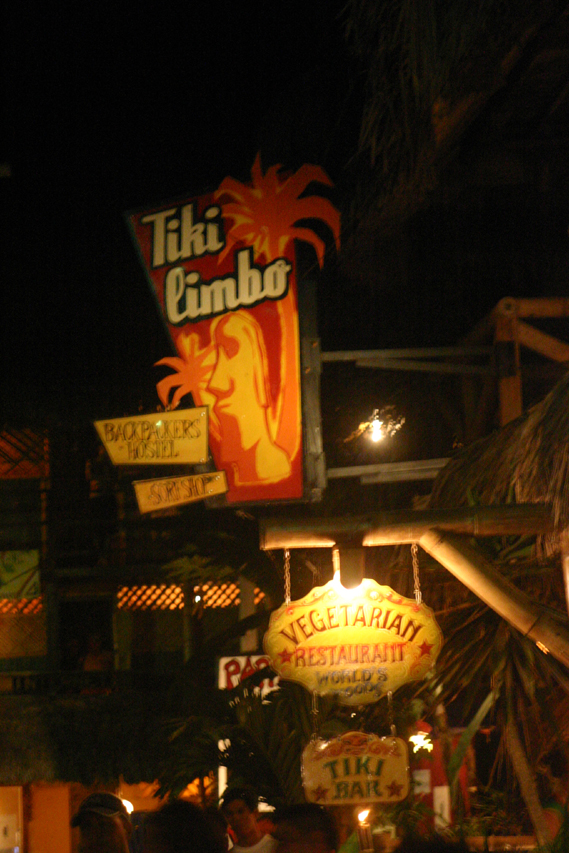
International and vegetarian/vegan cooking$$$$$US$ 7–16 a dish. Italian, Mexican and Asian cooking, plus vegetarian and vegan options and healthy bowls much sought after by the surf community; e.g. Tiki Limbo, Hola Ola
Cocktail bars and higher-end restaurants$$$$$Cocktails US$ 3–6; dishes US$ 12–28 at better restaurants facing the sea. The Calle de los Cócteles and the bars in the center are the heart of the nightlife; e.g. Lost Beach Club, Hola Ola
Advertisements

📖 History of Montañita

Origins, formation and what the sources say.

A fishing village on the coast of Santa Elena

Long before the surf world put it on the map, Montañita was a small, quiet fishing community on the Pacific coast, on the stretch of Ecuadorian shoreline that today belongs to Santa Elena province. Life revolved around the sea: artisanal fishing, boats heading out at dawn, the sale of fresh fish and the unhurried rhythm of a coastal hamlet far from the big cities. It was one more cove among the many dotting this coast of long seafaring tradition.

The region also has deep roots. This whole coast has been inhabited since pre-Hispanic times by coastal peoples tied to the sea and to trade, in an area associated with the culture of the Spondylus, the spiny red and purple shell that held enormous sacred and commercial value among the old Andean and coastal societies. That legacy is so strong that it gave its name to the modern Ruta del Spondylus, the tourist road that today runs along the shoreline and beside which Montañita sits.

The village's own name, 'Montañita' —a diminutive of 'montaña', mountain— refers to the small rise or hillock of the place, in contrast with the coastal plain. Popular tradition has woven various stories around that name, some linking it to the geography and others to local figures who looked after the travelers passing through. Whatever its exact origin, the name stuck and stayed with the village through its astonishing later transformation.

The origin of the name 'Montañita'
The most widely told explanation links the name 'Montañita' (a diminutive of 'montaña') to a small rise or hillock in the terrain in contrast with the coastal plain. Alongside it circulates a well-known local legend attributing the name to a woman who, from that little hill, sold water, food or refreshments to the travelers and muleteers passing through, so that saying 'let's go to the montañita' became a habit. The version with the woman is best taken as oral tradition rather than documented historical fact.
Source: https://es.wikipedia.org/wiki/Monta%C3%B1ita_(Ecuador)
The legacy of the Spondylus culture
The coast of Santa Elena and today's Ruta del Spondylus take their name from the Spondylus shell, of great ritual and commercial value among the pre-Columbian cultures of the South American Pacific coast. Although Montañita itself is known above all for its recent surf history, it belongs to a shoreline with deep pre-Hispanic and seafaring roots.
Source: https://es.wikipedia.org/wiki/Ruta_del_Spondylus

The arrival of the surfers and the discovery of the waves (1960s-1970s)

The great turning point in Montañita's history came between the 1960s and 1970s, when the first surfers —Ecuadorians and also foreigners traveling the Pacific coast in search of good waves— discovered the potential of this corner. What drew them was, above all, the La Punta break: a right-hand point break that, when the right swell comes in, forms a long, orderly and powerful wave, considered one of the best in the country.

In those years Montañita was still a fishing village with no tourist infrastructure, and the surfers who arrived found an untouched place with excellent waves and a simple atmosphere. Word of mouth ran through the surf community: there was a wave here worth the trip. Little by little, what had been a cove ignored by tourism turned into a place of pilgrimage for board lovers.

That arrival of the surfers planted the seed of everything that followed. The profile of the visitor —young, traveling, after nature, waves and a relaxed way of life— shaped the place's identity from the start. Montañita did not grow as a traditional resort but as a surf and alternative destination, and that DNA would hold through the following decades, even once the village became world famous.

The La Punta wave as the trigger
Sources agree that Montañita's initial appeal for tourism was its quality as a surf destination, in particular the right-hand wave of La Punta, which began attracting surfers from around the 1960s-1970s. The precise dates and the names of the first surfers vary from account to account, so they are best taken as approximations.
Source: https://es.wikipedia.org/wiki/Monta%C3%B1ita_(Ecuador)

The boom in international backpacker tourism (1980s and 1990s)

From the 1980s and 1990s, Montañita stopped being a surfers' secret and became one of the most popular stops on the international backpacker circuit in South America. The fame of its waves, together with the relaxed atmosphere and affordable prices, drew a growing stream of travelers from all over the world: surfers, backpackers, artists and people after an alternative way of life mingled in its sandy streets.

That flow of visitors transformed the village's economy and its look. Where there had been fishermen's houses, hostels, restaurants, bars, surf shops and craft stalls appeared to serve the new arrivals. Many foreigners who came passing through ended up staying and opening businesses, which reinforced the cosmopolitan character of the place. Montañita filled with accents, languages and cultures, without losing its barefoot, bohemian essence.

It was in those years that the identity defining Montañita to this day took hold: a small, loosely structured village with an intense social life, open to the world and organized around the sea, surfing and the meeting of travelers. That reputation as a backpacker mecca, earned in the 80s and 90s, made it one of the unmissable destinations on the Ecuadorian coast and on the route of many travelers crossing the continent.

From fishing cove to backpacker mecca
Tourism historiography describes Montañita as a case of rapid transformation: from a fishing village to an international backpacker destination across the 1980s and 1990s, driven by surfing and by word of mouth among travelers. The exact figures for tourist growth in those decades are not always precisely documented.
Source: https://en.wikipedia.org/wiki/Monta%C3%B1ita

Ecuador's surf capital and the international championships

Over the decades, Montañita earned the title of Ecuador's surf capital. Its main beach, with waves friendly enough to learn on, and above all the demanding La Punta break, made it the epicenter of the country's surf culture. Surf schools, surf shops and a local community of surfers emerged, making the board a way of life. For many young Ecuadorians and foreigners, Montañita is where you learn to surf or where you come looking for the best wave.

That standing was reinforced by international-level surf championships and competitions held on the Santa Elena coast. The quality of the waves attracted organizers and athletes, and events tied to the competitive circuit —including world and Pan-American competitions associated with the international surfing federation (ISA)— took place on these shores, giving the destination global visibility. Those tournaments put Ecuador, and Montañita in particular, on the radar of world surfing.

Being the surf capital is not only a sporting matter: it is part of the village's brand and identity. Surfing runs through Montañita's look, its economy and its daily life, from the beginner lessons on offer to the admiration for those who master La Punta. It is, in large part, the original engine that explains everything else: the fame, the nightlife and the flow of travelers from all over the planet.

Montañita and international surf events
Montañita and the Santa Elena coast have hosted surf competitions with international reach, associated at various times with the world and Pan-American circuits and with the International Surfing Association (ISA). The specific years, categories and results of each event are best checked in specialist sources, since the information varies from season to season.
Source: https://es.wikipedia.org/wiki/Monta%C3%B1ita_(Ecuador)

The turn into a party destination and the nightlife

If surfing was the initial spark, the nightlife is what cemented Montañita's international fame. Over the years, the village developed an intense scene that made it one of the great party destinations on the Ecuadorian coast and in South America. The concentration of young travelers, the relaxed atmosphere and the informality of the place were the perfect breeding ground for a night that, in high season, seems never to end.

The symbol of that transformation is the Calle de los Cócteles, a little street in the center where every night the bartenders' stalls set up and mix drinks in plain sight, in a parade of lights, music and cocktails that has become the village's nighttime postcard. Around it grew bars, clubs and venues that keep the party going until dawn, drawing a multicultural crowd that moves from stall to stall and from bar to bar.

This festive side lives alongside Montañita's surf and backpacker soul, and sometimes pulls against it: the village is at once a refuge for surfers who get up early for the waves and a mecca for those after partying until sunrise. That double identity —beach and party, board and cocktail— is precisely part of what makes Montañita singular, able to offer very different experiences depending on what each traveler comes looking for.

The double identity: surf and partying
Descriptions of Montañita agree in pointing to its double character: on one hand, surf capital and backpacker destination; on the other, one of the great nightlife and party hubs of the Ecuadorian coast, symbolized by the Calle de los Cócteles. Both sides coexist and are part of its appeal.
Source: https://en.wikipedia.org/wiki/Monta%C3%B1ita

Santa Elena province (2007) and Montañita today

On the administrative side, a recent milestone marked this coast: in 2007, Ecuador created Santa Elena province, split off from the old province of Guayas to give the peninsula and its shoreline their own identity. Montañita, until then part of Guayas territory, became part of this new province, whose economy depends largely on beach tourism, surfing and the Ruta del Spondylus. The creation of Santa Elena gave a new institutional framework to a territory with a strong coastal, seafaring identity.

The Montañita of today is the result of all that accumulated history: the old fishing village, the surf discovery of the 60s and 70s, the backpacker boom of the 80s and 90s, its consolidation as surf capital with its championships and the explosion of the nightlife. All of it coexists in a handful of streets facing the Pacific, held together by the Ruta del Spondylus that connects it with Olón, Manglaralto, Santa Elena, La Libertad and Salinas.

Like any destination that grows fast, Montañita also faces the challenges of its own success: pressure on services, the coexistence of party tourism with local life, and the need to look after the natural setting that made it famous. Even so, it remains a magnet for travelers from all over the world in search of waves, sun, freedom and that barefoot, unmistakable atmosphere that turned a fishing cove into one of the traveling legends of the Ecuadorian coast.

The creation of Santa Elena province (2007)
Santa Elena province was created in 2007, splitting off from the province of Guayas. Montañita, as a parish of Santa Elena canton, became part of this new province. It is a recent administrative fact and well documented in official and encyclopedic sources.
Source: https://es.wikipedia.org/wiki/Santa_Elena_(provincia)

📚 Bibliography

  • Wikipedia (ES) — «Montañita (Ecuador)»: https://es.wikipedia.org/wiki/Monta%C3%B1ita_(Ecuador)
  • Wikipedia (EN) — «Montañita»: https://en.wikipedia.org/wiki/Monta%C3%B1ita
  • Wikipedia (ES) — «Santa Elena (provincia)»: https://es.wikipedia.org/wiki/Santa_Elena_(provincia)
  • Wikipedia (ES) — «Ruta del Spondylus»: https://es.wikipedia.org/wiki/Ruta_del_Spondylus
  • Wikipedia (ES) — «Olón»: https://es.wikipedia.org/wiki/Ol%C3%B3n
  • Wikipedia (ES) — «Manglaralto»: https://es.wikipedia.org/wiki/Manglaralto
  • International Surfing Association (ISA, oficial): https://isasurf.org/
  • Ecuador Travel (oficial) — Sitio de turismo de Ecuador: https://ecuador.travel/

❓ Frequently asked questions

Why is Montañita famous?+
Montañita is known as Ecuador's surf capital and as one of the country's great international backpacker destinations. It combines quality waves (especially the right-hand point break of La Punta), an intense nightlife with the famous Calle de los Cócteles, a bohemian barefoot atmosphere and beautiful beaches on the Ruta del Spondylus. It's a small village with a unique cosmopolitan energy, where travelers from all over the world mix.
When is the best time to visit Montañita?+
The weather is warm all year. The warm, wet season (December to May) brings more sun, clear skies and the best waves, along with the most intense scene: it's the favorite of surfers and party-goers. The cool season (June to November) is cloudier, with drizzle, but milder and with the great advantage of humpback whale watching between June and September. Choose according to whether you want surf and partying or whales and mild weather.
Can you learn to surf in Montañita?+
Yes, it's one of the best places in Ecuador to start. The main beach, in front of the village, has manageable waves and a sandy bottom, ideal for beginners, and there are many surf schools and surf shops offering lessons with an instructor and a board included. In a single lesson most people manage to stand up. The La Punta wave, by contrast, with its rock bottom, is for experienced surfers.
How do I get to Montañita?+
The most common way is from Guayaquil, whose international airport is the nearest, in about 3 to 3,5 hours by road (direct bus or via Santa Elena). You can also come from the Santa Elena peninsula (La Libertad, Salinas) taking a bus north along the Ruta del Spondylus, in roughly an hour. From Quito there are long-distance buses that usually go via Guayaquil.
Is Montañita only partying or are there quiet plans too?+
There's a bit of everything. Montañita has a party reputation because of its nightlife, but it also offers quiet plans: surfing and lessons on the beach, walking the village and its crafts, sunsets and, above all, neighboring Olón (long, serene and family-friendly) and Manglaralto (a peaceful fishing village), a few minutes away. Many travelers stay on those calmer beaches and come over to Montañita only when they want the scene.
Is it safe to travel to Montañita?+
Montañita is a very busy tourist destination, but as in any area with heavy crowds and nightlife it's worth taking basic precautions: carry little cash, look after your phone and belongings in the crowd, drink in moderation, don't leave things unattended on the beach and go back to your lodging with company if you're out late. With common sense, most travelers enjoy the village without problems. Ecuador uses the US dollar.
Where can I see whales near Montañita?+
Between June and September, humpback whales migrate to the Ecuadorian Pacific to breed, and boat trips to watch them are organized from Montañita and the villages on the Ruta del Spondylus. The most famous epicenter for whale watching is Puerto López, further north (Manabí province), but you can also do it from the Santa Elena area in season. Choose responsible operators that respect the animals.
Sources consulted (17)
Still planning?
Explore more destinations in Ecuador
See all destinations →
Advertisements
Image credits
Photos from Wikimedia Commons, each under its own licence (CC BY, CC BY-SA or public domain). Open each file to see its author and licence.
Hotelenmontaña