Viajá con Gus
HomeCosta RicaDominical
Dominical
🇨🇷 Costa Rica · South Pacific (Osa)

Dominical

Jump to what you need
📌Province
Province of Puntarenas (canton of Osa), on the Costa Ballena of Costa Rica's South Pacific. Dominical is a relaxed, bohemian surf village, the northern gateway to the Costa Ballena, on the shore of a long dark-sand beach, between the Costanera Sur highway and the jungle hills of the Fila Costeña
📌Service city
The village of Dominical itself has sodas, restaurants, surf shops, surf schools, lodgings and basic services. For bigger services there's Uvita (20-30 min south) and, above all, San Isidro de El General (Pérez Zeledón, ~40 min up in the mountains). Juan Santamaría International Airport (SJO) in San José is 3.5-4.5 hours away; there are also regional flights to Quepos/Palmar Sur
📌Best time to go
Dry season (December to April) for full sun; rainy season (May to November) with afternoon downpours, lush jungle and more water in the waterfalls. Surfing works almost all year thanks to the open Pacific swell. For humpback whales, the seasons are July-November and December-March
📌Suggested days
2 to 4 days. Two days cover the beach, a surf lesson and the Nauyaca waterfalls; with 3-4 you can add Uvita and Marino Ballena National Park (whales, the whale tail), trails, wildlife and wellness activities
📌Currency
Costa Rican colón (CRC); the US dollar (USD) is widely accepted on tours, in hotels and at many restaurants. It's worth carrying some cash in colones for sodas, buses and small purchases
💱 CRC exchange rate
Loading rate…
🌤️ Weather in Dominical
Loading weather…

Dominical is a laid-back surf village on the Costa Ballena, at the southern end of Costa Rica's Pacific, in the canton of Osa in the province of Puntarenas. It's one of the best-known surf spots in the country, with a long dark-sand beach and powerful waves that draw surfers of every level, ringed by jungle and waterfalls and with a bohemian, easygoing atmosphere that has kept its village character despite its fame.

Far from the luxury of the big resorts, Dominical keeps an alternative, quiet air, with dirt streets, sodas, surf shops, yoga and a mix of local fishermen, surfers and long-stay travelers. Its natural setting is spectacular: nearby are the Nauyaca waterfall (one of the most beautiful in the country), Marino Ballena National Park, the mangroves and the jungle hills of the Fila Costeña, which makes it a perfect base for combining surf, beach and nature.

This guide runs through the essentials of Dominical with a practical eye: its beach and the surf, the Nauyaca waterfalls, the surroundings of the Costa Ballena, where to sleep and eat, and how to get there and get around. A destination for anyone after the surf and nature spirit of southern Costa Rica, unpretentious and very beautiful.

📖 History of Dominical

Dominical was for a long time a small community of fishermen and farmers on Costa Rica's southern Pacific, isolated until the Costanera Sur highway was improved. In the late 20th century it became famous among surfers for its waves, and grew into a surf village with a bohemian, alternative feel, drawing travelers, instructors and foreign residents, above all Americans, without losing its rustic character. The paving of the Costanera Sur in the early 21st century connected the area with Quepos and the rest of the country and drove the tourist development of the Costa Ballena (Dominical, Uvita, Ojochal), always with a more natural and alternative profile than the big resorts of the Central Pacific. The full story is on our history page.

Read the full history ↓

🏛️ Dominical is in Puntarenas

The country's longest coastal province, from the Central Pacific to the deep south: from the historic coffee port of Puntarenas to the cloud forests of Monteverde, from the beaches of Manuel Antonio to the wild jewel of the Osa Peninsula and Corcovado, 'the most biologically intense place on Earth'.

Read the history of Puntarenas →

🗺️ What to see

1
Playa Dominical and the surf
A long dark-sand beach with powerful waves, the surf mecca of southern Costa Rica.
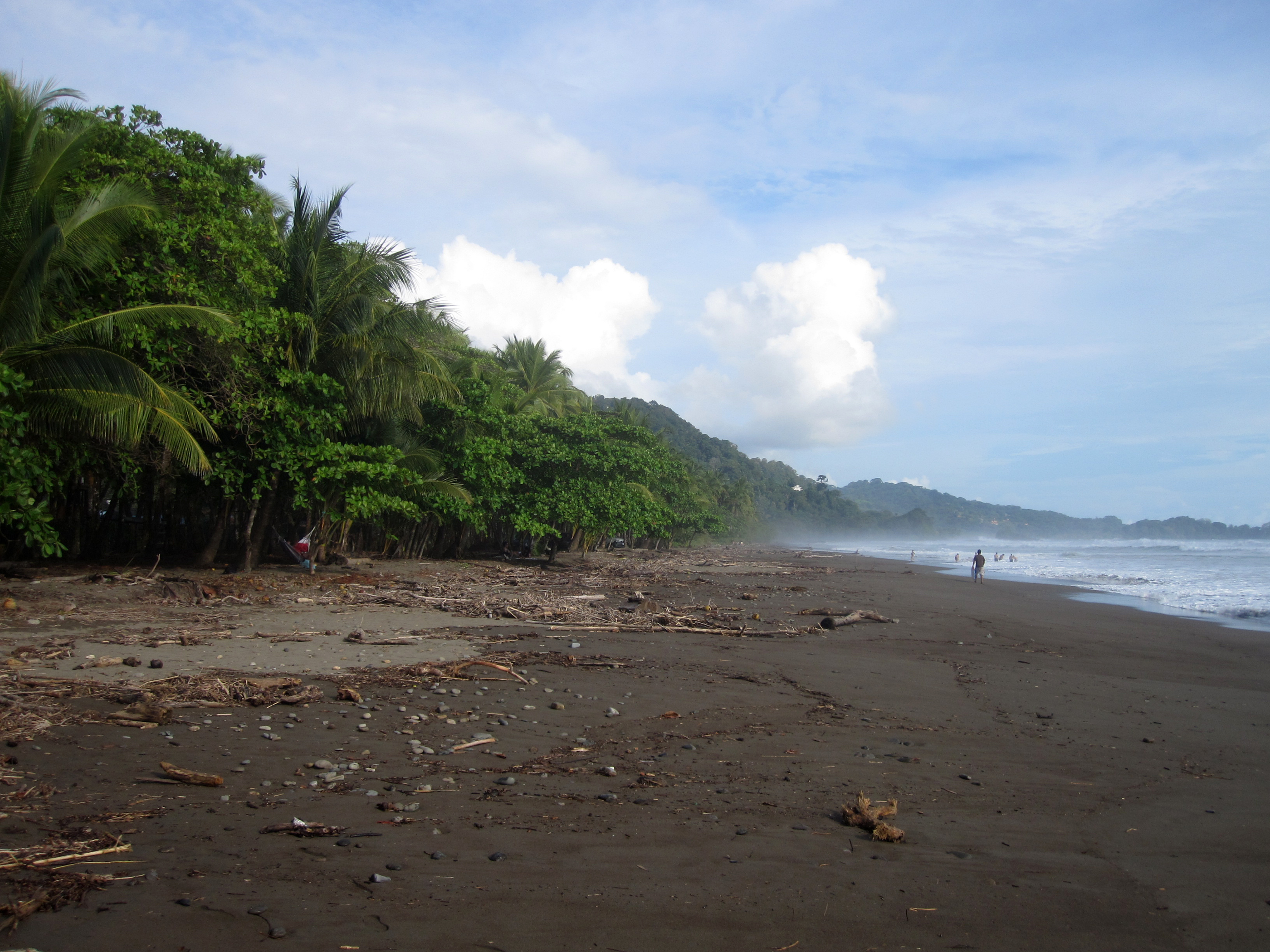
Playa Dominical is the heart of the village: a long beach of dark sand and heavy surf, famous for the consistent waves that have made it one of the best-known surf destinations in Costa Rica. The waves, generated by the open Pacific swell, are powerful and draw both experienced surfers and beginners taking lessons at the village's many schools. Because of that force, the sea at Dominical has strong rip currents, so swimming takes care; there are lifeguards in season and it's worth following their directions. Beyond the surf, the long, palm-lined beach is perfect for walking, watching spectacular sunsets and enjoying the relaxed atmosphere. Getting there: the village sits right by the beach, on foot. Best time: surf almost all year; dry season for full sun. Tips: respect the flags and the lifeguards, don't underestimate the currents, and if you don't surf, the local schools run beginner lessons.
ℹ️ Distance: Right by the village of Dominical (on foot) · Best time to go: Surf almost all year; dry season for sun · Entry: Free access to the beach. Group surf lesson US$ 50–70 / private US$ 80–100 per person (verified July 2026); board rental US$ 10–20/day · Duration: Half a day or more
2
Nauyaca Waterfalls
One of the most beautiful waterfalls in Costa Rica, with two drops and pools for swimming.
A few kilometers from Dominical, up in the mountains, are the Nauyaca waterfalls, reckoned among the most beautiful in the country. They're a double fall: a first drop and then a tall main cascade landing in a deep pool where you can swim, surrounded by lush jungle. The setting is spectacular and very photogenic. Access is across private property and there are two entrances with different rates. Through the original entrance (Don Lulo's) you can walk in (about 3.2 km each way, an easy-to-moderate walk of close to 1 hour) or ride in a 4x4 truck; through the Nauyaca Waterfall Nature Park you go up in a 'trolley' (a tractor-type vehicle), with the option of walking down and riding the trolley back up. The visit usually takes half a day. Note (2026): some raised platforms near the falls and the access to the upper drop from the Don Lulo's side were closed by the municipality; it's worth confirming the state of the access when you book. Getting there: on the road toward San Isidro, with a signposted turnoff; it's best to book access with the authorized operators. Best time: year-round; the flow is stronger in the rainy season. Tips: bring a swimsuit, walking shoes, water and repellent; check the hours and the way in (on foot, by 4x4 or by trolley) and the entry fee.
ℹ️ Distance: About 10-12 km from Dominical, toward the mountains (signposted turnoff) · Best time to go: Year-round; more water in the rainy season · Entry: Don Lulo's: on foot US$ 10 + US$ 5 parking; by 4x4 truck round trip US$ 32 (no longer offers horseback rides as of 2026). Nauyaca Waterfall Nature Park: trolley round trip US$ 38, or walk down and ride the trolley up US$ 33 (sources: official sites of Don Lulo's and Nauyaca Waterfall Nature Park, verified July 2026) · Duration: Half a day
3
Costa Ballena: Uvita and Marino Ballena National Park
Close to Uvita, the whale tail and whale watching.
Dominical is the northern gateway to the Costa Ballena and an excellent base for exploring the region. About 20-30 minutes south are Uvita and Marino Ballena National Park, famous for the sandbar shaped like a whale's tail, visible at low tide, and for humpback whale watching, with whales arriving in two seasons (July-November and December-March). From Dominical you can arrange whale and dolphin watching tours, snorkeling and visits to the park's various quiet beaches. The area also has mangroves, rivers and abundant nature. Getting there: south along the Costanera Sur highway. Best time: whale season for the watching; low tide for walking the whale tail. Tips: combine surfing in Dominical with a whale day in Uvita; book the tours with authorized operators.
ℹ️ Distance: Uvita and Marino Ballena National Park 20-30 min south (Costanera Sur) · Best time to go: Whale seasons (Jul-Nov, Dec-Mar); low tide for the whale tail · Entry: Marino Ballena National Park US$ 6.78 non-resident adults / ¢1,130 nationals and residents; children 2-12: US$ 5.65 / ¢565 (VAT included; source: SINAC — Marino Ballena National Park, verified 08/08/2026). Whale tour US$ 70–100 per person (includes the park entry; verified July 2026) · Duration: Half a day
4
Nature, wildlife and wellness
Trails, wildlife watching, yoga and waterfalls hidden in the jungle.
The country around Dominical is humid tropical jungle, rich in wildlife: monkeys (white-faced, howler, squirrel and, with luck, spider monkey), sloths, toucans, macaws and a huge variety of birds and insects. There are private reserves, gardens and trails in the hills of the Fila Costeña, as well as other more hidden waterfalls nearby. True to its alternative character, Dominical and the area offer a solid wellness scene: yoga classes, retreats, massages and healthy food. There are also adventure activities such as ziplining, horseback riding and kayaking in the mangroves. It's a place to combine the energy of surfing with the calm of nature. Getting there: various reserves and trails nearby, many reached through the hills. Best time: early morning for wildlife; year-round for wellness. Tips: hire local guides for wildlife watching, bring repellent and binoculars, and book classes or retreats ahead in high season.
ℹ️ Distance: Reserves, trails and studios in Dominical and the nearby hills · Best time to go: Early morning for wildlife; year-round for wellness · Entry: Zipline/horseback ride US$ 50–80 per person; yoga class US$ 12–20; private reserves with a trail US$ 10–25 (verified July 2026) · Duration: Variable (1 h to half a day)
5
Poza Azul and hidden waterfalls
Waterfalls and freshwater pools nearby, ideal for cooling off away from the crowds.
Besides the famous Nauyaca, the area around Dominical hides several lesser-known waterfalls and freshwater pools, perfect for a cooling dip in the jungle. The closest and most popular is Poza Azul, a small waterfall with a pool of clear water a short distance from the village, reached by a short trail and free or nearly free, much used by surfers and locals to cool off after the beach. In the hills around there are also other waterfalls on private properties and reserves, some reached by short trails and small fees. They're a quiet alternative to Nauyaca for anyone after fresh water without long walks or crowds. These corners capture the spirit of Dominical well: accessible nature, a relaxed atmosphere and the chance to go from Pacific waves to a jungle pool in a few minutes. Getting there: Poza Azul, by a short trail near the village (check the current access); other waterfalls, on reserves up in the hills. Best time: rainy season for more water; year-round for swimming. Tips: ask in the village about the access and the state of the trails, wear proper shoes and respect private property.
ℹ️ Distance: Poza Azul a short distance from the village; other waterfalls in the nearby hills · Best time to go: Rainy season for more water; year-round for swimming · Entry: Poza Azul: free or a token fee (US$ 0–5); other private waterfalls US$ 5–15 per person (verified July 2026) · Duration: 1 to 3 hours
6
The village of Dominical and its bohemian life
The surf, alternative and easygoing atmosphere of the village, with its shops, sodas and sunsets.
The village of Dominical is itself part of the draw. It's a small settlement of dirt streets and bohemian air, where local fishermen, surfers, instructors, artists and long-stay travelers live side by side. The pace is slow and barefoot, set by the tides, the surf lessons and the sunsets over the Pacific. Walking it means passing surf shops, craft stalls, healthy cafés, sodas with casados and shakes, and small bars with live music as the afternoon fades. The occasional fair or market, the yoga classes and the wellness scene round out the alternative atmosphere that sets Dominical apart from the more commercial destinations. Sunsets on the beach, with surfers silhouetted against a burning sky, are one of the classic images of the village and a good way to close the day. It's a place to slow down, be sociable and let yourself go with the relaxed spirit of the Costa Ballena. Getting there: the village is the center of everything; you cover it on foot. Best time: year-round; the sunsets are special in the dry season. Tips: try a healthy coffee and a casado at the sodas, stay on the beach for sunset, and carry cash (ATMs are limited).
ℹ️ Distance: It's the center of the destination; covered on foot · Best time to go: Year-round; sunsets in the dry season · Entry: Walking around the village is free; food, drinks and lessons separate · Duration: 1 to 2 hours (or a relaxed stay)
Advertisements
What nobody tells you

💵 Prices

Tickets

TypePrice
Access to Playa DominicalFree (public beach)
Nauyaca Waterfalls — Don Lulo's (on foot)US$ 10 per person + US$ 5 parking (source: Don Lulo's, verified July 2026)
Nauyaca Waterfalls — 4x4 truck (Don Lulo's) or trolley (Nature Park)4x4 round trip US$ 32 (Don Lulo's); Nature Park trolley round trip US$ 38, or walking down and riding the trolley up US$ 33 (sources: official sites, verified July 2026)
Marino Ballena National Park (Uvita)US$ 6.78 non-resident adults / ¢1,130 nationals and residents; children 2-12: US$ 5.65 / ¢565 (VAT included; source: SINAC — Marino Ballena National Park, verified 08/08/2026)
Surf lesson (group or private)Group US$ 50–70; private US$ 80–100 per person (verified July 2026)
Whale watching tour (from the area)US$ 70–100 per person (verified July 2026); usually includes the park entry
Poza Azul / hidden waterfallsFree or US$ 5–15 depending on the spot (verified July 2026)
🔄 updated monthlyOfficial / reference values · double-check when buying

Activities and tours

ActivityPriceDurationOperator
Surf lessons and sessionsGroup US$ 50–70; private US$ 80–100 per person (verified July 2026)1.5–2 h per lessonDominical surf schools (Sunset Surf, Dominical Surf School, Waverider and others)
Visit to the Nauyaca waterfallsOn foot US$ 10 + US$ 5 parking; 4x4 US$ 32; trolley US$ 38 (or walking down/trolley up US$ 33) (verified July 2026)Half a dayAuthorized operators (Don Lulo's, Nauyaca Waterfall Nature Park)
Whale and dolphin watchingUS$ 70–100 per person (verified July 2026), includes the park entry3-4 hCosta Ballena operators (Uvita)
Ziplining, horseback riding and kayaking in the mangrovesUS$ 50–80 per person (verified July 2026)Half a dayLocal adventure operators
Yoga and wellnessClass US$ 12–20; retreats from US$ 100+ a day (verified July 2026)VariableStudios and retreats in the area
🔄 updated monthlyOfficial / reference values · double-check when buying
Advertisements

🚌 How to get there and distances

Getting around

ModePriceDurationNotes
On footFreeVariableThe village of Dominical is small and covered on foot; the beach is right there
Rental carUS$ 45–80 a day (verified July 2026) + fuelVariableHandy for getting around the Costanera Sur, going to Nauyaca and to Uvita
TaxiLocal rides US$ 5–25 (verified July 2026); agree firstVariableFor transfers to the waterfalls, Uvita or the bus stop; agree on the fare beforehand
Local Costanera busUS$ 1–4 per leg (verified July 2026); cheapVariableBuses along the Costanera Sur connect Dominical with Uvita, Quepos and San Isidro
🔄 updated monthlyOfficial / reference values · double-check when buying

How to get there

RouteAirlines / operatorsAvg. priceDuration
San José → Dominical (via San Isidro de El General)Car, bus (Tracopa/Musoc to San Isidro + local bus) or shuttleBus approx. US$ 9–14; shuttle US$ 55–90 per person (verified July 2026)Approx. 3.5 to 4.5 h
Quepos / Manuel Antonio → Dominical (Costanera Sur)Car or busBus approx. US$ 3–5 (verified July 2026)Approx. 1 to 1.5 h
Uvita → DominicalCar, bus or taxiBus approx. US$ 1–2; taxi US$ 15–25 (verified July 2026)Approx. 20-30 min
San Isidro de El General → DominicalBus or carBus approx. US$ 2–4 (verified July 2026)Approx. 1 h
🔄 updated monthlyOfficial / reference values · double-check when buying

🏨 Where to stay

No exact prices: a scale from $ (budget) to $$$$$ (luxury), with 2-3 options per category.

CategoryPriceRecommended options
Hostels and budget cabinas$$$$$US$ 15–45 a night. Backpacker hostels and budget cabinas in the village, popular on the surf scene; e.g. Dominical Backpackers, Cool Vibes Beach Hostel, cabinas in the center
Mid-range hotels and cabinas$$$$$US$ 50–110 a night. Hotels and cabinas near the beach and the village, practical for surfers and families; e.g. Hotel DiuWak, Coconut Grove, Antorchas
Eco-lodges and boutique hotels up in the hills$$$$$US$ 110–250 a night. Lodges in the hills of the Fila Costeña with views of the sea and the jungle, some focused on wellness; e.g. Cascada Verde, Costa Paraíso, retreat lodges
Villas and rental houses / higher end$$$$$US$ 250–600+ a night. Private villas and luxury vacation houses in the hills and along the Costa Ballena, with a pool and panoramic views, ideal for groups or long stays

🍴 Where to eat

TypePriceOptions / signature dish
Sodas and typical food$$$$$US$ 5–9 for a casado. Sodas with casados, gallo pinto, fish and fruit shakes at affordable prices; the cheapest and most authentic food in the village
Healthy and international cooking$$$$$US$ 9–20 a dish. Cafés and restaurants with healthy and vegetarian cooking, smoothie bowls and international options typical of the surf scene; e.g. Café Mono Congo, Phat Noodle
Seafood places and fresh fish$$$$$US$ 10–25 a dish. Fresh fish, ceviche and rice with seafood, several of them facing the sea or in the beach area
Bars and pizzerias$$$$$US$ 8–18 per person. Beach bars, pizzerias and casual options for the village's nightlife; local beer US$ 3–5, cocktails US$ 6–9
Advertisements

📖 History of Dominical

Origins, formation and what the sources say.

From fishing hamlet to surf village

For most of its history Dominical was a small, isolated community of fishermen and farmers on Costa Rica's southern Pacific, in what is now the canton of Osa, province of Puntarenas. The area, humid tropical jungle and dark-sand coast, lived off the sea, off small-scale fishing and off farming, in a region that was long kept away from the country's main circuits by the lack of decent roads.

The relative isolation of Dominical and of the whole southern Pacific strip began to change with the improvement of the road network, in particular the Costanera Sur highway, which connected the area with Quepos to the north and with the rest of the Costa Ballena. That made it easier for visitors to arrive and opened the door to the tourist development of the last decades of the 20th century.

It was surfers who put Dominical on the map. The powerful, consistent waves of its beach, generated by the open Pacific swell, drew an international surfing community that found in this rustic village a surf paradise still free of big developments. So Dominical slowly turned from a fishing hamlet into a surf village, keeping the informal, bohemian character that sets it apart from the more luxurious destinations on the coast.

Dominical and the Costa Ballena

Dominical is part of the tourist region known as the Costa Ballena, which runs along the southern Pacific and also takes in Uvita and Ojochal. The region's name and much of its fame come from Marino Ballena National Park, created in 1990 as the country's first marine park, celebrated for its sandbar shaped like a whale's tail and for humpback whale watching.

Dominical acts as the northern gateway to this region. Its position, between the Fila Costeña mountains and the sea, connects it both with the coast to the south and with the highlands of San Isidro de El General inland. That location, together with its natural surroundings —waterfalls such as Nauyaca, rivers, mangroves and jungle rich in wildlife— established the village as a base for nature and adventure tourism.

As the Costa Ballena gained international recognition as a destination for ecotourism and whale watching, Dominical added a wellness offering (yoga, retreats), healthy food and lodgings ranging from backpacker hostels to boutique lodges up in the hills. Despite that growth, it has largely managed to keep its essence as a laid-back surf village, without the crowding of other spots along the coast.

Waterfalls, rivers and the natural wealth around it

A good part of Dominical's identity comes from its natural surroundings, at the point where the Fila Costeña range drops steeply toward the Pacific. This geography of mountain and sea produces powerful rivers, humid tropical jungle and, above all, spectacular waterfalls, among them the Nauyaca waterfalls, reckoned among the most beautiful in the country, with their double drop and their pools of clear water.

The name 'Nauyaca' refers to the fer-de-lance snake (the feared 'nauyaca' or barba amarilla), one of the reptiles of the Costa Rican jungle, and reflects the place's connection with its lush nature. Access to the waterfalls, across private farms that over time organized themselves for tourism, is an example of how local families and landowners turned their land into ecotourism attractions.

The region is also home to abundant wildlife —monkeys, sloths, toucans, macaws and a great variety of birds—, with private reserves, botanical gardens and trails in the hills. That natural wealth, added to the surf, made Dominical a destination where adventure, wildlife watching and contact with fresh and salt water sit minutes apart.

The origin of the name 'Nauyaca'
The waterfalls' place name is commonly associated with the 'nauyaca' or barba amarilla (Bothrops asper), a venomous snake common in the jungles of Costa Rica's Pacific, reflecting the wildlife of the area.
Source: Wikipedia (EN) — «Nauyaca Waterfalls»: https://en.wikipedia.org/wiki/Nauyaca_Waterfalls

The Costanera Sur and today's Dominical

A turning point in Dominical's recent history was the paving of the Costanera Sur highway in the early 21st century. Until then the coastal road was dirt, difficult and often impassable in the rainy season, which kept the region relatively cut off. The new paved route connected the Costa Ballena smoothly with Quepos, the Central Pacific and, through the Inter-American Highway, with San José and the rest of the country.

That road improvement sped up the tourist development of the whole area (Dominical, Uvita, Ojochal), making it easier for visitors to arrive, for money to go into hotels and restaurants, and for an international community of residents to settle, above all Americans and Europeans, drawn by the climate, the nature and the relaxed way of life.

Dominical managed to grow while keeping a profile different from the big resorts: it held on to its dirt streets, its surf and bohemian scene, and an offering of wellness, healthy food and ecotourism. Today it's one of the main reference points for nature and surf tourism in the South Pacific, a village that combines waves, waterfalls, wildlife and an alternative atmosphere that sets it apart from the rest of the Costa Rican coast.

Surf, expats and the bohemian soul of Dominical

What sets Dominical apart from almost any other beach village in Costa Rica is the way surfing shaped its character. From the 1980s and 1990s, when the southern coast was still hard to reach, a handful of surfers —many of them American and European— began arriving, drawn by word of a beach with powerful waves and no people. Dominical's dark-sand beach, fully exposed to the open Pacific swell, offered consistent, challenging beach breaks that quickly earned it a name in the regional surfing community.

Those first visitors found a tiny village of wooden houses, dirt streets and a fishing economy, with barely a hotel or a shop. Some stayed: they opened the first surf schools, cabinas and sodas, and laid the foundations of an international community that over the years mixed with the local families. That crossing between the Costa Rican country rhythm and the imported surf-alternative culture ended up defining the bohemian, easygoing identity Dominical keeps to this day: yoga, healthy cafés, live music at dusk and a barefoot way of life set by the tides.

Unlike destinations such as Tamarindo or Jacó, where surfing opened the door to big developments, Dominical largely resisted the crowds. The village kept its unpaved streets and a human scale, and the community —both Costa Rican and foreign— guarded that intimate character jealously. The result is a rare balance: a village well known enough to have an established scene of surfing, wellness and food, but small and natural enough to still feel authentic. That tension between growing and holding on to its essence is, to a large extent, the living history of Dominical.

📚 Bibliography

  • Wikipedia (EN) — «Dominical, Costa Rica»: https://en.wikipedia.org/wiki/Dominical,_Costa_Rica
  • Wikipedia (ES) — «Dominical (Costa Rica)»: https://es.wikipedia.org/wiki/Dominical_(Costa_Rica)
  • Wikipedia (EN) — «Nauyaca Waterfalls»: https://en.wikipedia.org/wiki/Nauyaca_Waterfalls
  • Wikipedia (EN) — «Ballena Marine National Park»: https://en.wikipedia.org/wiki/Ballena_Marine_National_Park
  • Wikipedia (EN) — «Costanera Sur (Costa Rica)»: https://en.wikipedia.org/wiki/Route_34_(Costa_Rica)
  • Nauyaca Waterfall Nature Park — sitio oficial: https://www.nauyacawaterfall.com/
  • SINAC — Parque Nacional Marino Ballena: https://www.sinac.go.cr/EN-US/ac/acosa/pnmb/Pages/default.aspx
  • Instituto Costarricense de Turismo (ICT) — Visit Costa Rica: https://www.visitcostarica.com/

❓ Frequently asked questions

How much do the Nauyaca waterfalls cost and how do you get in?+
There are two entrances, both across private property. Through Don Lulo's you can walk in (US$ 10 per person + US$ 5 parking) or take the 4x4 truck round trip (US$ 32); as of 2026 they no longer offer horseback rides. Through the Nauyaca Waterfall Nature Park you go up in a 'trolley' (US$ 38 round trip, or US$ 33 walking down and riding the trolley up). These prices were verified in July 2026; the visit takes half a day and includes pools for swimming. It's worth confirming hours, rates and the state of the access when you book, since in 2026 some platforms near the falls were closed.
Is Dominical good for learning to surf, and how much does a lesson cost?+
Yes, it's one of Costa Rica's great surf destinations, with schools and waves for every level. A group lesson runs US$ 50–70 and a private one US$ 80–100 per person (verified July 2026), board included. That said, the sea is powerful and has strong currents, so it's worth taking lessons with instructors and listening to the lifeguards.
Can you see whales from Dominical?+
Dominical is the northern gateway to the Costa Ballena. Humpback whale watching is done above all from Uvita and Marino Ballena National Park, 20-30 minutes south, in two seasons (July-November and December-March). Tours cost around US$ 70–100 per person and include the park entry (US$ 6.78 for non-resident adults, VAT included).
Is it an expensive destination?+
Dominical has a more bohemian, cheaper profile than the luxury destinations of the Central Pacific or Guanacaste. There are options for every budget: hostels from US$ 15, mid-range hotels at US$ 50–110 and boutique lodges from US$ 110 up, plus sodas with casados from US$ 5.
What's the best time to go?+
The dry season (December to April) brings more sun; the rainy one (May to November) brings afternoon downpours, lush jungle, more water in the waterfalls and lower rates. Surfing works almost all year. For whales, it's worth timing your trip with the watching seasons.
How do you get there from San José?+
By car, bus or shuttle. The classic route goes over the mountains via San Isidro de El General and then down to the coast, in about 3.5 to 4.5 hours. By bus it's some US$ 9–14; by door-to-door shuttle US$ 55–90. You can also come along the Costanera Sur from Quepos. It's the northern end of the Costa Ballena.
Sources consulted (9)
Still planning?
Explore more destinations in Costa Rica
See all destinations →
Advertisements
Image credits
Photos from Wikimedia Commons, each under its own licence (CC BY, CC BY-SA or public domain). Open each file to see its author and licence.
Dominical