Viajá con Gus
HomeColombiaCapurganá
Capurganá
🇨🇴 Colombia · Caribbean

Capurganá

Jump to what you need
📌Department
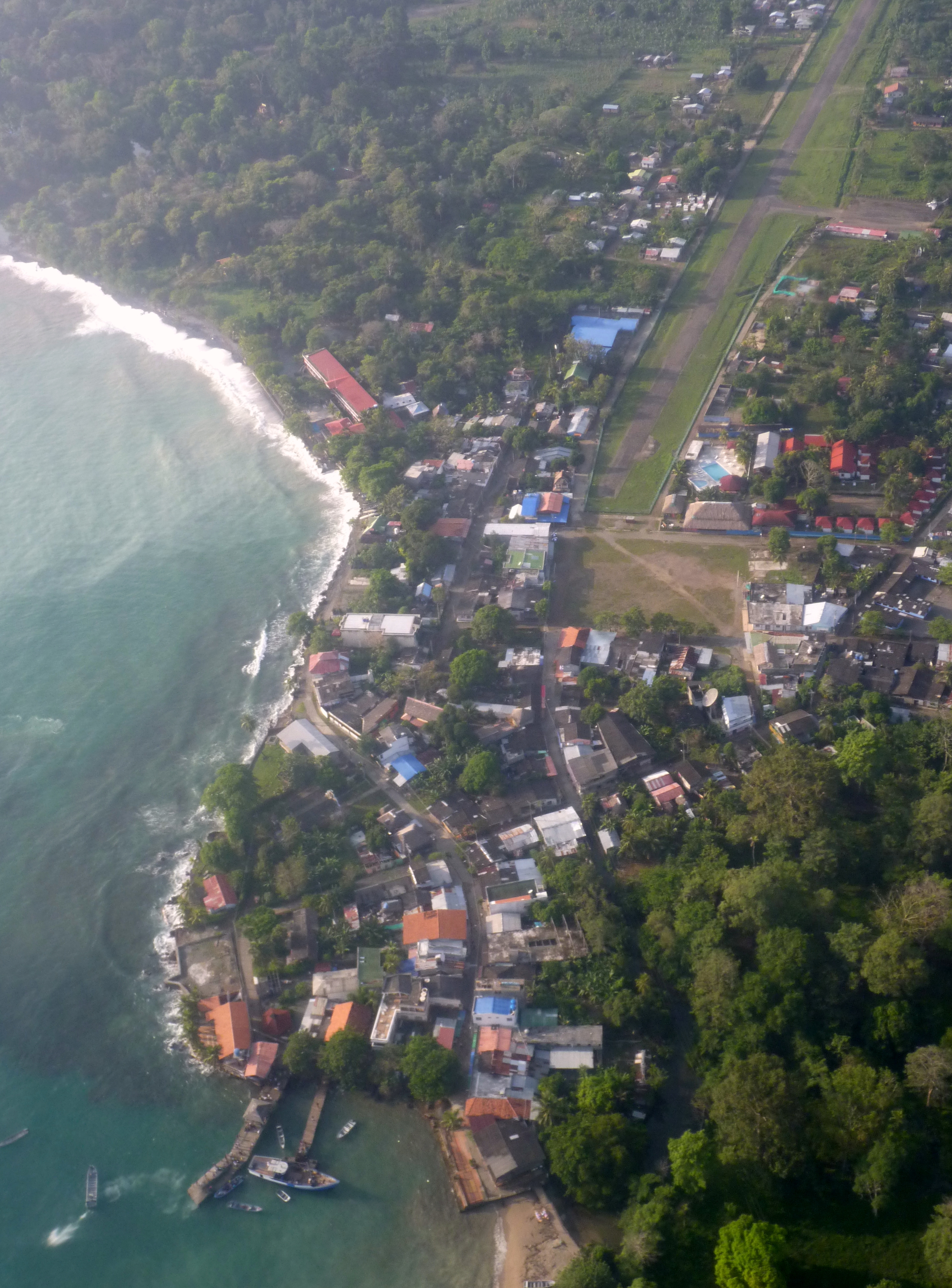
Chocó (Colombia), in the Darién region, on the Caribbean coast of the Gulf of Urabá, very close to the border with Panama. Capurganá is a village within the municipality of Acandí, a coastal settlement ringed by tropical rainforest, with no road access and no cars: there are no streets for vehicles here, only paths, and you get around on foot, by boat or on horseback. It's one of the most remote and unspoiled corners of the Colombian Caribbean, famous for its coral reefs, its calm beaches and its jungle setting.
📌Service city
Capurganá has no road connection to the rest of the country: you arrive by sea or by air. The main gateway is Necoclí (in Antioquia, on the Gulf of Urabá), from where fast boats leave for Capurganá; there are also boat connections with Acandí and with Puerto Obaldía (Panama). By air, there are small-plane flights to the Capurganá or Acandí airstrips from Medellín, depending on operators and season. The reference city for services and connections is Medellín (airport), and the key embarkation points are Necoclí and Turbo, in Urabá. Always confirm schedules, availability and boat conditions, which depend on the weather and the swell.
📌Best time to go
The climate is warm and humid year-round, typical of Chocó. The driest spell with the calmest seas runs roughly from December to April, the best time for the boat crossing and for diving and snorkeling, when the water tends to be clearer. The rainy season (around May to November) brings choppier seas, which can affect the boat crossings (sometimes rough in the swell). It's best to avoid traveling when there's a heavy swell. The area is also a sea turtle nesting route on its beaches at certain times of year; check the dates locally.
📌Suggested days
Since getting there takes time and effort, it's worth staying at least 3 or 4 days to make the crossing worthwhile. With that time you can enjoy Capurganá's beaches, snorkel or dive on the reefs, walk to nearby Aguacate and to El Cielo (a waterfall in the jungle), and cross to Sapzurro and La Miel (already in Panama). With 5 to 7 days you can fully settle into the village's slow rhythm, adding more jungle walks, fishing or diving trips and excursions to more remote beaches. It's a destination for genuinely switching off.
💱 COP exchange rate
Loading rate…
🌤️ Weather in Capurganá
Loading weather…

At the most remote edge of the Colombian Caribbean, where the Darién rainforest runs down to the sea and the road simply stops existing, lies Capurganá: a village with no cars, no roads and barely any phone signal, reachable only by sea or light aircraft. That remoteness is precisely its greatest charm. Capurganá is one of those places where time runs differently, where the streets are dirt paths, transport goes by boat or on horseback, and the murmur of sea and jungle replaces the noise of engines.

Surrounded by lush nature, Capurganá is a paradise for divers and snorkelers: its waters hold coral reefs teeming with life, considered among the finest in the Colombian Caribbean. But there's much more: jungle walks to hidden waterfalls, calm beaches, the neighboring village of Sapzurro and, just across the border, the small Panamanian beach of La Miel. All in the setting of a relaxed coastal village, with people of the Caribbean and of Pacific Chocó, moving at their own cadence.

This guide covers the essentials of Capurganá with a practical and honest eye: how to reach this isolated corner of the Darién, what to do once you're there, where to dive, how to get around without cars, and what to bear in mind regarding logistics and safety in a border and jungle region. Capurganá isn't a destination for anyone seeking instant comfort or large resorts: it's for anyone who wants to genuinely switch off, in one of the most unspoiled and special places in Colombia.

📖 History of Capurganá

Capurganá is a village within the municipality of Acandí, in the department of Chocó, in the Darién region, on the Gulf of Urabá and very close to the border with Panama. The area forms part of the Darién, one of the densest and most biodiverse tropical rainforest regions on the continent, historically inhabited by indigenous peoples such as the Kuna (Guna) and, later, settled also by Afro-descendant and mixed-race communities. The name 'Capurganá' itself has indigenous roots in the local language and is usually associated with expressions relating to the 'land of chili' or the abundance of that crop, according to local tradition. For a long time, the Darién was a region of difficult passage and imprecise borders between what are today Colombia and Panama; Panama's separation from Colombia in 1903 left Capurganá in a sensitive border zone. Isolated by the thickness of the rainforest and the absence of roads, the region developed with its back to the rest of the country, connected mainly by sea. In time, Capurganá and neighboring Sapzurro became ecotourism and diving destinations, valued precisely for their unspoiled and remote character, though the Darién region has also been the setting for complex border and migration dynamics. The full history is on our history page.

Read the full history ↓

🏛️ Capurganá is in Chocó

The department of the Pacific and the Darién: one of the rainiest and most biodiverse regions on the planet, mostly Afro-Colombian and home to the Emberá and Wounaan peoples, of humpback whales, the rainforests of Nuquí and Bahía Solano and the car-free village of Capurganá.

Read the history of Chocó →

🗺️ What to see

1
Coral reefs and diving in Capurganá
Some of the finest coral seabeds in the Colombian Caribbean, ideal for diving and snorkeling among colorful fish and living reefs.
Capurganá's great underwater treasure is its coral reefs, considered among the best preserved in the Colombian Caribbean thanks to the area's isolation. The waters around the village and neighboring Sapzurro hide coral formations teeming with life, with colorful fish, sponges, sea fans and, with luck, turtles, rays and other marine species. It's a destination highly valued by divers and snorkeling enthusiasts. There are options for every level. Those with experience can do guided dives at various points on the reef; those who have never dived can do a discover dive or a certification course with the local schools. For anyone who prefers to stay at the surface, snorkeling lets you enjoy the corals and fish in shallow areas, sometimes just meters from the shore. Water visibility and calm seas tend to be best in the drier season (roughly December to April). Diving here, far from the crowds and in such an unspoiled setting, is a different experience from other, busier Caribbean destinations. Getting there: diving and snorkeling trips are arranged from Capurganá itself and from Sapzurro, by boat out to the reef sites. Best time: dry season for better visibility and calm seas. Tips: choose reputable schools and operators, with good equipment and certified guides; use reef-safe sunscreen and don't touch or lean on the reef. 2025 prices: a guided dive for certified divers about COP 170,000; a 2-dive package (1 day) about COP 280,000; a snorkeling trip about COP 60,000 per person. Check with the dive center.
ℹ️ Distance: Reefs off Capurganá and Sapzurro (boat trip from the village) · Best time: Dry season (roughly December to April), better visibility and calm seas · Admission: Guided snorkeling about COP 60,000; one dive (certified) COP 170,000; 2-dive package (1 day) COP 280,000; 4 dives (2 days) COP 500,000 (source: Dive and Green, verified July 2026). Check with the dive center · Duration: Half a day (a diving or snorkeling trip)
2
Sapzurro and La Miel (Panama)
The idyllic neighboring village of Sapzurro and the Panamanian beach of La Miel, a short border crossing away by trail or boat.
A few minutes by boat from Capurganá (or along a jungle trail) lies Sapzurro, an even smaller and quieter village, tucked into a sheltered horseshoe bay. It's an idyllic corner, without cars, with calm, transparent water ideal for swimming and snorkeling near the shore, and an atmosphere even more relaxed and bohemian than Capurganá's. Many travelers choose Sapzurro as their base for its stillness. From Sapzurro you can cross the border with Panama on foot along a trail that climbs and drops over a jungle ridge, reaching La Miel in about 20-30 minutes — a small and beautiful Panamanian beach of white sand and turquoise water, with a border post where your passage is stamped. It's one of the most popular outings in the area: walking from one country to another and taking a dip on a postcard beach. La Miel is perfect for spending the day: it has simple eateries, you can snorkel and enjoy a calm Caribbean atmosphere. Bring ID for the border crossing and check the current requirements. Getting there: to Sapzurro, by boat from Capurganá or on foot along the jungle trail; to La Miel, crossing the border on foot from Sapzurro. Best time: days with good weather and calm seas. Tips: bring ID for the border, water and comfortable shoes for the trail; check the current immigration requirements before crossing. Bring cash (at La Miel a different currency is partly used).
ℹ️ Distance: Sapzurro minutes away by boat or along a trail; La Miel by crossing the border on foot · Best time: Days with good weather and calm seas · Admission: Free (public beaches); border crossing requires ID (check requirements) · Duration: Half a day to a full day
3
El Cielo waterfall and jungle hike
A walk through the tropical rainforest to a hidden waterfall where you can cool off, surrounded by lush nature.
One of Capurganá's best-loved walks leads to El Cielo, a waterfall hidden deep in the tropical rainforest of the Darién. The trail sets off from the village and pushes into the thick of it, partly following a stream, among enormous trees, dense vegetation and the sound of birds and insects. It's a fine way of getting to know the lush jungle setting that surrounds Capurganá. The reward at the end is the waterfall, where you can cool off in its natural pools after the walk. Depending on the stretch and the season, the path can be muddy and slippery, so suitable footwear is essential. Many people go with a local guide, which also helps you understand the area's flora and fauna and avoid getting lost in the jungle. The walk, of moderate difficulty, pairs well with a quiet day in the village and is one of the most accessible nature experiences in Capurganá, complementing the beach and diving plans. Getting there: the trail starts from Capurganá; it's best done with a local guide. Best time: on days without heavy rain, so the trail is less slippery. Tips: bring footwear with good grip, repellent, water, swimwear for the waterfall and, if possible, a local guide. Avoid doing it alone if you don't know the area.
ℹ️ Distance: Trail from Capurganá into the interior of the jungle · Best time: Days without heavy rain (less slippery trail) · Admission: Guided walk to El Cielo about COP 20,000-40,000 per person (reference July 2026); there may be a small community charge on the property. Check when visiting · Duration: Half a day (there, back and a swim)
4
Aguacate beach
A small, quiet beach nearby, ideal for swimming and snorkeling, reached by trail or boat.
Aguacate beach is one of the loveliest corners around Capurganá: a small cove of calm, transparent water, ringed by vegetation, perfect for spending the day swimming, snorkeling and resting away from the (already scarce) bustle of the village. Its tucked-away, natural character makes it very special. You get there on foot from Capurganá along a coastal jungle trail — a journey that is itself part of the appeal for the sea views and the nature — or on a short boat ride. Thanks to its sheltered setting, the water is usually calm and clear, ideal for spotting fish and corals close to the surface. There's usually a simple eatery on the beach for a lunch of fresh fish or other local dishes. It's a relaxed and highly recommended plan for combining a walk, a swim and snorkeling in a single day. Getting there: on foot along the coastal trail from Capurganá, or by boat. Best time: days with good weather and calm seas. Tips: bring water, your own snorkel gear if you have it, reef-safe sun protection and some cash for the eatery; the trail is lovely but comfortable shoes help, and it's worth checking its condition.
ℹ️ Distance: Near Capurganá (coastal trail on foot or by boat) · Best time: Days with good weather and calm seas · Admission: Free (public beach); boat from Capurganá about COP 15,000-30,000 return; fish lunch at the eatery COP 25,000-45,000 (reference July 2026). Check when visiting · Duration: Half a day
5
The village of Capurganá and life without cars
A Caribbean Chocó coastal village with no vehicles, where everything moves on foot, by boat or on horseback.
Capurganá is, in itself, an experience. It's a Caribbean Chocó coastal village with no road access and no cars: there are no streets for vehicles here, only dirt paths along which people move on foot, by bicycle, on horseback or in horse-drawn carts carrying luggage and goods. That absence of engines gives it a calm and an air of another era that wins people over. The village has its jetty, where the boats that connect it to the rest of the world arrive and depart, a main beach, squares, shops, lodgings and eateries. Life goes by quietly, shaped by the sea, fishing and nature tourism. It's normal to see people chatting, horses resting and the slow rhythm characteristic of an isolated place. Walking Capurganá, meeting its people —Afro-descendant, mixed-race and indigenous communities of the Darién region— and eating fresh fish facing the sea is an essential part of the visit. The village is the ideal base for all the area's excursions: diving, walks, Sapzurro, La Miel and the nearby beaches. Getting there: the village is covered entirely on foot. Best time: any moment of your stay. Tips: bring plenty of cash, because ATMs may be scarce or not always working; charge your devices well (electricity can be limited) and enjoy the slow rhythm without hurrying.
ℹ️ Distance: The village itself (everything on foot) · Best time: Throughout your stay · Admission: Free (walking the village) · Duration: Ongoing throughout the visit
6
Turtle watching and the nature of the Darién
The biodiversity of the Darién, with sea turtle nesting beaches and a unique jungle setting.
The Darién region, where Capurganá lies, is one of the most biodiverse areas on the continent, a meeting point between the forests of Central and South America. That natural wealth is evident both in the sea (reefs, fish, turtles) and in the jungle surrounding the village, with a great variety of birds, frogs, insects and mammals. One of the area's most special natural spectacles is the nesting of sea turtles on some beaches of the Acandí region, which come ashore to lay their eggs at certain times of year. There are community conservation projects around these turtles, and depending on the season you can visit them (always with guides and strictly respecting the protection rules so as not to disturb the animals). Beyond the turtles, the setting invites birdwatching, jungle walks and the enjoyment of an ecosystem still very well preserved. Capurganá is a nature destination in its purest state, where responsible tourism is key to preserving what makes it so special. Getting there: nature activities are arranged with local guides from Capurganá and the Acandí area. Best time: depends on the activity; check locally for turtle nesting dates and the best wildlife viewing periods. Tips: always hire local guides and respect the conservation rules; never interfere with the turtles or their nests. Bring repellent, water and clothing suited to the jungle.
ℹ️ Distance: Beaches and jungle of the Capurganá and Acandí region · Best time: Depends on the activity; check turtle nesting dates locally · Admission: Guided nature/turtle watching outings COP 40,000-120,000 per person (reference July 2026), with a contribution to community conservation. Check dates and rates locally · Duration: Varies with the activity
Advertisements
What nobody tells you

💵 Prices

Tickets

TypePrice
Beaches of Capurganá, Aguacate, Sapzurro and La MielFree (public beaches); crossing to La Miel requires ID
Walking the village of CapurganáFree
Guided dive (certified divers)One dive COP 170,000; 2-dive package (1 day) COP 280,000; 4 dives (2 days) COP 500,000; 8 dives (4 days) COP 800,000 (source: Dive and Green, verified July 2026)
Diving course / discover diveMini course (Discover Scuba) half a day about COP 200,000-280,000; PADI Open Water (several days) about COP 1,650,000 (source: Sapzurro Caribe, verified July 2026)
Guided snorkeling tripAbout COP 60,000 per person (reference July 2026)
Guided walk to the El Cielo waterfallAbout COP 20,000-40,000 per person (reference July 2026)
Turtle watching / nature activitiesCOP 40,000-120,000 per person depending on the outing (reference July 2026)
🔄 updated monthlyOfficial / reference values · double-check when buying

Activities and tours

ActivityPriceDurationOperator
Guided reef diving (certified divers)One dive COP 170,000; 2 dives COP 280,000 (source: Dive and Green, verified July 2026)Half a dayLocal dive centers (Dive and Green, Sapzurro Caribe)
Discover dive or certification courseMini course about COP 200,000-280,000; PADI Open Water about COP 1,650,000 (verified July 2026)Half a day to several daysCapurganá/Sapzurro dive schools
Snorkeling on the reefs and beachesAbout COP 60,000 per person (reference July 2026)Half a dayLocal operators and boatmen
Excursion to Sapzurro and La Miel (Panama)About COP 50,000 per person by boat (lunch not included, reference July 2026)Half a day to a full dayLocal boatmen and guides
Walk to the El Cielo waterfallAbout COP 20,000-40,000 per person with a guide (reference July 2026)Half a dayLocal hiking guides
Artisanal fishing tripCOP 80,000-200,000 per boat depending on length and group size (reference July 2026)Half a dayLocal fishermen and boatmen
🔄 updated monthlyOfficial / reference values · double-check when buying
Advertisements

🚌 How to get there and distances

Getting around

ModePriceDurationNotes
WalkingFreeVariableCapurganá has no cars: the whole village and many beaches and trails are covered on foot. It's the basic way of getting around
Horses and cartsMoving luggage or people about COP 10,000-30,000 depending on the trip (reference July 2026)VariableHorses and horse-drawn carts are used to carry luggage and goods and, sometimes, people, in place of vehicles
BoatShort trips (Sapzurro, Aguacate, La Miel) COP 15,000-50,000 return (reference July 2026)VariableThe key means of transport in the area: it connects Capurganá with Sapzurro, Aguacate, other beaches, Acandí, Necoclí and the dive sites. Depends on sea conditions
BicycleRental about COP 10,000-25,000 per hour or half day (reference July 2026)VariableSome locals and lodgings use bicycles to get around the village's paths
🔄 updated monthlyOfficial / reference values · double-check when buying

How to get there

RouteAirlines / operatorsAvg. priceDuration
Necoclí → Capurganá (fast boat)Boat companies at the Necoclí jetty (Caribe SAS and others)COP 75,000-120,000 per person (one way), plus a port fee of about COP 5,000; more in high season. Extra luggage is charged separately (source: boat operators and travel guides, verified July 2026)About 1.5 to 2.5 hours depending on the sea
Turbo → Capurganá (boat)Boats from the Turbo jetty (El Waffe and others)COP 80,000-130,000 per person (one way, reference July 2026)About 2.5 to 3.5 hours depending on the sea
Medellín → Necoclí / Turbo (bus) + boatSotraurabá, Gómez Hernández + boatsBus COP 70,000-110,000 to Urabá + boat COP 70,000-120,000 (reference July 2026)Several hours by bus to Urabá + the boat crossing
Medellín → Capurganá / Acandí (light aircraft)Regional airlines flying small planes (San Germán and others)About US$ 90-150 each way (reference July 2026), depending on operator and seasonShort flight by light aircraft (depending on operator and season)
Acandí → Capurganá (boat)Local Darién boatsCOP 30,000-50,000 per person (reference July 2026)Short boat ride
🔄 updated monthlyOfficial / reference values · double-check when buying

🏨 Where to stay

No exact prices: a scale from $ (budget) to $$$$$ (luxury), with 2-3 options per category.

CategoryPriceRecommended options
Charming guesthouses and ecolodges$$$$$COP 180,000-400,000 per night (reference July 2026); e.g. Bahía Lodge, Tacarcuna Lodge, ecolodges built into the natural setting in Capurganá and the bay of Sapzurro, with responsible tourism. The most special option for connecting with the surroundings
Mid-range hotels and lodgings$$$$$COP 100,000-200,000 per night (reference July 2026): mid-range lodgings in the village, comfortable and close to the jetty and the beach. Confirm the water and electricity supply, which can be limited by the isolation
Hostels and budget options$$$$$COP 40,000-90,000 per person per night (reference July 2026): hostels, cabins and simple lodgings for backpackers, both in Capurganá and in Sapzurro. Relaxed atmosphere and close contact with nature
Quiet Sapzurro$$$$$COP 80,000-220,000 per night (reference July 2026): cabins and guesthouses facing the sheltered bay of Sapzurro, even smaller and quieter than Capurganá; ideal for maximum calm

🍴 Where to eat

TypePriceOptions / signature dish
Fresh Caribbean fish and seafood$$$$$COP 30,000-60,000 per dish (reference July 2026): fresh fish (fried or in local preparations), shrimp and, the priciest, lobster, with coconut rice, patacón and salad, at seafront eateries
Pacific and Caribbean Chocó cooking$$$$$COP 25,000-50,000 per dish (reference July 2026): dishes blending Afro-Caribbean and Chocoan traditions, with coconut, plantain and river and sea fish, a reflection of the local culture
Beach eateries (Aguacate, La Miel)$$$$$COP 25,000-45,000 for lunch (reference July 2026): simple eateries on the nearby beaches, where you can eat fresh fish with a sea view after a walk or a day of snorkeling
Cheap eats and local breakfasts$$$$$COP 10,000-22,000 (reference July 2026): fondas and stalls in the village with typical breakfasts, arepas, fried snacks and inexpensive home cooking
Advertisements

📖 History of Capurganá

Origins, formation and what the sources say.

The Darién and its original peoples

The history of Capurganá can't be understood without that of the Darién, the vast and dense region of tropical rainforest stretching between today's Colombian Chocó and eastern Panama. It's one of the most biodiverse areas on the planet and, for centuries, one of the most impenetrable: a green wall of rainforest, marshes and rivers separating South America from Central America, which even today interrupts the Pan-American Highway (the so-called Darién Gap).

Long before the Europeans arrived, the Darién was inhabited by indigenous peoples, among them the Kuna (or Guna) and, in various areas and periods, the Emberá. These communities lived in close relationship with the rainforest and the sea, in a territory they knew intimately and moved through by rivers and trails. The Caribbean part of the Darién, where Capurganá lies, formed part of that indigenous world.

The name 'Capurganá' itself has roots in the region's indigenous languages and, according to local tradition, is associated with expressions relating to chili peppers (sometimes translated as 'land of chili'), a reminder of that original heritage. The indigenous presence, together with the later arrival of Afro-descendant and mixed-race communities, shaped the cultural identity of the whole region.

The meaning of the name 'Capurganá'
Local tradition usually links the name 'Capurganá' to the area's indigenous languages, with a translation frequently associated with chili peppers (for example, 'land of chili'). As with many place names of indigenous origin, translations vary between sources and should be taken as approximations.
Source: https://es.wikipedia.org/wiki/Capurgan%C3%A1

The Spanish conquest and the colonial Darién

The Darién holds an early and singular place in the history of the Spanish conquest of the Americas. It was in this region, at the beginning of the 16th century, that Europeans founded one of their first stable settlements on the American mainland, and it was from here that Vasco Núñez de Balboa set out west in 1513 to 'discover' the Pacific Ocean (the 'South Sea'), one of the milestones of the age of exploration.

The Darién's brutal geography, however —its impenetrable rainforest, its diseases, its climate— meant the region was never easy to colonize or control. Unlike other areas that were settled and integrated into the colonial routes, the Caribbean Darién remained largely on the margins, a frontier territory, hard to reach and thinly populated, where the indigenous peoples retained much of their autonomy.

For centuries, this Caribbean coastal strip of the Darién was a land of passage, of fishermen, of small communities and, at times, of activities beyond the authorities' reach. The region developed with its back to the great centers of power, connected above all by sea, a characteristic that persists today and largely explains the isolation of places like Capurganá.

The Darién in the early conquest
The sources highlight the Darién's role in the early Spanish conquest, with the first mainland settlements and Balboa's 1513 expedition to the Pacific. Even so, the difficulty of the terrain prevented dense colonization of the region, which remained a frontier zone.
Source: https://es.wikipedia.org/wiki/Dari%C3%A9n

The separation of Panama (1903) and the border

One event of enormous geopolitical weight marked the Capurganá region forever: the separation of Panama from Colombia in 1903. Until that year, Panama was a department of Colombia, and the whole isthmus, including the Darién, belonged to a single country. After Panamanian independence —driven by the context of the construction of the Panama Canal and backed by the United States— the Darién was split by a new international border.

Capurganá and neighboring Sapzurro were thus left at the far northwestern tip of Colombia, right on the boundary with Panama, a very short distance from Panamanian settlements such as La Miel and Puerto Obaldía. That proximity explains why crossing the border on foot from Sapzurro to the Panamanian beach of La Miel is so common and popular today: what was once a single territory was divided by a border line that, deep in the rainforest, is more symbolic than tangible.

Being a border zone in an isolated jungle region turned the Darién into a sensitive area, with porous frontiers that are hard to control. This influenced its later history and the particular dynamics the region has lived through on both sides of the line.

The impact of 1903 on the Darién
The separation of Panama from Colombia in 1903 established the international border that divides the Darién today. Capurganá and Sapzurro were left at Colombia's border edge, which explains the proximity and the routine crossings with Panamanian settlements such as La Miel. The context of the Panama Canal and US intervention are part of the historical debate about that process.
Source: https://es.wikipedia.org/wiki/Separaci%C3%B3n_de_Panam%C3%A1_de_Colombia

Isolation, fishing and the settlement of the village

For much of the 20th century, Capurganá remained a remote and thinly populated point of the Chocó Caribbean, apart from the country's great transformations. The absence of roads —a direct consequence of the Darién Gap, that strip of rainforest where the Pan-American Highway stops— kept the region connected almost exclusively by sea, with the Gulf of Urabá as the great route toward Necoclí, Turbo and, beyond them, Antioquia.

Life in Capurganá revolved around fishing and a subsistence economy, in a village of Afro-descendant, mixed-race and indigenous communities sharing the territory of the Caribbean Darién. Being a village without cars —where transport was and still is on foot, by boat and on horseback— was never a tourism decision but the natural consequence of its geography and isolation.

Administratively, Capurganá became a village within the municipality of Acandí, in the department of Chocó. Over the decades, the settlement grew slowly around its jetty and its bay, always keeping that character of a remote and peaceful place, quite unlike the mass tourist centers of the Colombian Caribbean.

The Darién Gap and isolation
The Darién Gap —the break in the Pan-American Highway through the rainforest between Colombia and Panama— is the main reason Capurganá has no road access and depends on the sea. This structural isolation shaped its fishing economy and its character as a village without cars.
Source: https://es.wikipedia.org/wiki/Tap%C3%B3n_del_Dari%C3%A9n

The birth of ecotourism, diving and conservation

As the decades passed, what had been a brake —isolation and lack of development— became Capurganá's main attraction. The region preserved coral reefs in very good condition, untouched beaches, lush rainforest and a calm hard to find in more accessible destinations. From the end of the 20th century, Capurganá and neighboring Sapzurro began to establish themselves as destinations for ecotourism, diving and nature.

Diving became one of the great draws: the area's coral seabeds, protected precisely by their remoteness, attracted enthusiasts and dive schools. Added to that were jungle walks to waterfalls such as El Cielo, snorkeling, fishing trips, the crossing to La Miel in Panama and the simple pleasure of a village without cars. Guesthouses, ecolodges and community tourism and conservation initiatives emerged, including those devoted to protecting the sea turtles that nest on the beaches of the Acandí region.

This new chapter coexists, however, with the complex reality of the Darién as a border zone, the setting for migration dynamics and security challenges typical of a frontier jungle region. For the traveler, Capurganá today offers an experience of nature in an almost pure state, in which responsible tourism is key to preserving the balance that makes this corner of the Colombian Caribbean so special.

Isolation as a tourism asset
It's considered that the very isolation that historically held Capurganá back is what preserved its reefs, beaches and rainforest, making it an ecotourism and diving destination valued for its unspoiled character. Tourism development is relatively recent and small in scale.
Source: https://colombia.travel/es
The Darién as a complex border region
The sources agree that the Darién is a border region with complex migration and security dynamics, which coexist with its tourism development. The extent and intensity of these phenomena vary over time, so it's worth consulting up-to-date information.
Source: https://es.wikipedia.org/wiki/Tap%C3%B3n_del_Dari%C3%A9n

📚 Bibliography

  • Wikipedia (ES) — «Capurganá»: https://es.wikipedia.org/wiki/Capurgan%C3%A1
  • Wikipedia (ES) — «Sapzurro»: https://es.wikipedia.org/wiki/Sapzurro
  • Wikipedia (ES) — «Acandí»: https://es.wikipedia.org/wiki/Acand%C3%AD
  • Wikipedia (ES) — «Darién (región)»: https://es.wikipedia.org/wiki/Dari%C3%A9n
  • Wikipedia (ES) — «Tapón del Darién»: https://es.wikipedia.org/wiki/Tap%C3%B3n_del_Dari%C3%A9n
  • Wikipedia (ES) — «Separación de Panamá de Colombia»: https://es.wikipedia.org/wiki/Separaci%C3%B3n_de_Panam%C3%A1_de_Colombia
  • Wikipedia (ES) — «Frontera entre Colombia y Panamá»: https://es.wikipedia.org/wiki/Frontera_entre_Colombia_y_Panam%C3%A1
  • Colombia Travel (official) — Portal de turismo de Colombia: https://colombia.travel/es

❓ Frequently asked questions

How do you get to Capurganá?+
There's no road access: you arrive by sea or by air. The most common route is to travel to Necoclí (or Turbo), on the Gulf of Urabá, and take a fast boat to Capurganá (between 1.5 and 3.5 hours depending on the departure point and the sea). There are also small planes from Medellín to Capurganá or Acandí. Confirm schedules, availability and sea conditions, since the swell can affect the crossings.
Do I need to be able to dive to enjoy Capurganá?+
No. Although it's a great diving destination, there are plans for everyone: snorkeling near the shore, walks to waterfalls and beaches, the excursion to Sapzurro and La Miel, and simply enjoying the village. And if you want to start diving, the local schools offer discover dives and courses. Diving is an attraction, not a requirement.
How much does it cost to go to Capurganá?+
The big expense is getting there. The boat from Necoclí costs around COP 75,000-120,000 each way (plus about COP 5,000 in port fees), and before that you have to reach Necoclí or Turbo by bus from Medellín (COP 70,000-110,000). Flying by light aircraft from Medellín runs around USD 90-150 each way. Once in the village, accommodation ranges from COP 40,000 per person in a hostel to COP 180,000-400,000 per night in an ecolodge; a plate of fresh fish costs COP 30,000-60,000; and the activities are affordable (snorkeling about COP 60,000, one dive COP 170,000, the walk to El Cielo COP 20,000-40,000). Bring plenty of cash, because ATMs are scarce and unreliable.
How many days should I stay?+
Since getting there takes time and effort, it's best to stay at least 3 or 4 days to make it worthwhile. With that time you can enjoy the beaches, diving or snorkeling, a walk or two and the excursion to Sapzurro and La Miel. With 5 to 7 days you can fully settle into the slow rhythm of the place.
Do I need documents to go to La Miel (Panama)?+
Yes. La Miel is on the Panamanian side of the border, so to cross (on foot from Sapzurro) you should bring your ID or passport and check the current immigration requirements at the border post. It's a very common crossing among travelers, but it's always worth checking beforehand.
Are there ATMs and phone signal?+
Services are limited by the isolation. ATMs may be scarce or not always working, so bring enough cash from the mainland. Phone and internet signal can be intermittent and electricity limited at some lodgings. It's part of the charm of a remote destination: come prepared.
Is it safe to travel to Capurganá?+
Capurganá is a nature tourism destination with a calm atmosphere, but it sits in the Darién region, a border and jungle area with complex dynamics. It's best to stick to the usual routes and trails, hire recognized local guides and boatmen, avoid venturing alone into the jungle or remote areas, and check up-to-date advice before traveling. Within the tourist circuit, travelers usually enjoy it without trouble.
Sources consulted (15)
Still planning?
Explore more destinations in Colombia
See all destinations →
Advertisements
Image credits
Photos from Wikimedia Commons, each under its own licence (CC BY, CC BY-SA or public domain). Open each file to see its author and licence.
Capurganá toma aerea