Viajá con Gus
HomeColombiaArmenia
Armenia
🇨🇴 Colombia · Andean

Armenia

Jump to what you need
📌Department
Quindío (Colombia), Andean region, right in the heart of the Coffee Belt and the Coffee Cultural Landscape, declared a UNESCO World Heritage Site in 2011. Armenia is the capital of Quindío, a mid-sized city (around 300,000 inhabitants) at some 1,480 meters of altitude, with a mild, pleasant climate. Known as the 'Miracle City' for its rapid growth, it's the perfect base for exploring the coffee farms, the Parque del Café, the coffee towns and the Cocora Valley.
📌Service city
Armenia is Quindío's own service city: it has El Edén International Airport (AXM) a few kilometers away, with domestic and some international connections; a bus terminal with services across the country; hospitals, universities, shopping malls, banks and a wide range of hotels. From Armenia you can easily reach the department's main attractions: Salento and the Cocora Valley, Filandia, the Parque del Café (in Montenegro), the Parque Nacional del Café and the many coffee farms. It's one of the corners of the 'coffee triangle' along with Pereira (Risaralda) and Manizales (Caldas).
📌Best time to go
Thanks to its altitude, Armenia and Quindío enjoy a mild, spring-like climate year-round, with no marked seasons, so you can visit at any time. The drier spells (roughly December to February and July to August) tend to bring clearer skies, ideal for touring farms, the Cocora Valley and the lookouts, though they coincide with heavier tourist traffic (school holidays). The rest of the year brings a greater chance of rain (typical of the Andean coffee region), which keeps the landscape lush and green. For outdoor activities, make the most of the mornings, which are clearer.
📌Suggested days
With 1 or 2 days you can see Armenia (its center, museums, the Botanical Garden) and visit a coffee farm or the Parque del Café. But the point of Armenia is to use it as a base for the Coffee Belt: with 3 to 5 days you can combine the city with the Parque del Café, the Cocora Valley and Salento, Filandia, a farm with a full coffee experience and the towns of Quindío. With a week you can take in the whole region at leisure, adding hot springs, theme parks and more towns of the Coffee Cultural Landscape.
💱 COP exchange rate
Loading rate…
🌤️ Weather in Armenia
Loading weather…

In the heart of Colombia's Coffee Belt, ringed by green mountains, coffee groves and stands of guadua bamboo, sits Armenia, the capital of Quindío and one of the best gateways to the celebrated Coffee Cultural Landscape — that mosaic of farms, brightly painted towns and slopes planted with coffee that UNESCO declared a World Heritage Site. Armenia may not be a city of great colonial monuments, but it is comfortable, modern and, above all, the ideal base for exploring one of the most beautiful and best-loved regions in Colombia.

Known as the 'Miracle City' for the speed with which it grew in the 20th century, Armenia offers travelers a mild, spring-like climate, an easygoing pace, good food and attractions such as its Botanical Garden, its museums devoted to pre-Columbian goldwork (the Quimbaya) and to coffee, and a coffee-growing atmosphere everywhere you turn. But its greatest value lies in what surrounds it: the famous Parque del Café, the Cocora Valley with its giant wax palms, the picturesque towns of Salento and Filandia, and dozens of farms where you can follow coffee from seed to cup.

This guide covers the essentials of Armenia and its surroundings with a practical, warm eye: what to see in the city, how to use it as a base for the Coffee Belt, which farms and parks to visit, how to get around Quindío and how to make the most of this region that produces some of the finest coffee in the world. Armenia is comfort, coffee and nature in the middle of the Colombian Andes.

📖 History of Armenia

Armenia was founded in 1889 (in the late 19th century), during the so-called 'Antioquian colonization', the great migratory movement in which settlers from Antioquia and other regions pushed south, clearing mountainsides, founding towns and planting coffee on the slopes of the Andes. That colonization shaped the whole Coffee Belt region and its characteristic 'paisa' coffee culture, with its farms, its architecture of bahareque and timber, its balconies and its coffee-centered economy. Armenia grew rapidly on the back of the 20th-century coffee boom, which earned it the nickname 'Miracle City' for its swift development, and in 1966 it became the capital of the newly created department of Quindío (previously part of Caldas). In 1999, the city and the whole region suffered a devastating earthquake (the 'Coffee Belt' quake), which caused enormous damage and many deaths, after which Armenia rebuilt itself. In 2011, Colombia's Coffee Cultural Landscape —covering parts of Quindío, Risaralda, Caldas and northern Valle del Cauca— was declared a UNESCO World Heritage Site, recognizing the exceptional relationship between coffee culture, the community and this mountain landscape. Today Armenia is a modern city and Quindío's tourist base. The full history is on our history page.

Read the full history ↓

🏛️ Armenia is in Quindío

The small giant of Colombian coffee: heart of the UNESCO-listed Coffee Cultural Landscape, land of the Quimbaya and of the Antioquian colonisation, of the wax palms of the Cocora Valley — the national tree — of colourful towns such as Salento and Filandia, and of an Armenia that rose again from the 1999 earthquake.

Read the history of Quindío →

🗺️ What to see

1
Parque del Café (Montenegro)
Colombia's great coffee theme park, combining fairground rides with coffee culture, near Armenia.
The Parque del Café is one of Quindío's biggest draws and one of the most famous theme parks in Colombia. Located in the municipality of Montenegro, very close to Armenia, it uniquely blends coffee culture with an amusement park: it has mechanical rides (roller coasters, a drop tower, a cable car) alongside spaces devoted to teaching the history, cultivation and processing of coffee, all set among coffee groves and guadua stands. Among its sections, the highlights include the coffee trail (with plantations and explanations of the process from bean to cup), a coffee museum, cultural shows and performances, a recreation of a typical coffee town and a cable car that delivers panoramic views over the landscape. It's an outing that combines entertainment, culture and nature, ideal for families and for travelers of every stripe. The park is very popular, especially during school holidays, so it's best to arrive early and plan your day well to make the most of the rides and the cultural circuits. It generally works with an admission ticket plus passes/wristbands that include the attractions. Getting there: in Montenegro, a short distance from Armenia; reached by local transport, taxi or car. Best time: any day (weekdays are better for avoiding crowds); holiday periods are the busiest. Tips: buy the ticket/pass that best suits what you want to do, bring sun protection, water and comfortable shoes; check opening hours and which attractions are running before you go.
ℹ️ Distance: Montenegro, near Armenia (local transport, taxi or car) · Best time: Any day (weekdays better, fewer people) · Admission: Multiple pass (all attractions) approx. $90,000–99,000 COP for adults; reduced rates for children and seniors; under 90 cm free. Sold online only, with about 10% off if you buy the day before (source: official Parque del Café site, verified July 2026). Check when visiting · Duration: A full day
2
Coffee farms and the coffee experience
Visits to traditional farms where you follow coffee from seed to cup, right in the Coffee Cultural Landscape.
Being in Armenia means being in the heart of the Coffee Cultural Landscape, so visiting a coffee farm is an essential experience. The estates and farms in the surrounding area, many of them with long family traditions, offer guided tours that show the whole process: from planting and picking the beans (sometimes you can 'pick coffee' with a basket at your waist) through pulping, drying, hulling, roasting and the final preparation of a good cup. These tours, usually rounded off with a tasting, help you understand why high-altitude Colombian coffee is so prized around the world, get to know the 'paisa' coffee culture and enjoy the lovely setting of coffee groves, guadua stands and mountains. Some farms also offer accommodation, letting you spend several days immersed in coffee-growing life. There are options for every taste: from short two-hour experiences to full days, and from more touristy farms to more authentic, family-run ones. It's one of the activities that best defines the region's identity. Getting there: farms are spread across Quindío, near Armenia and the towns; reached by tour, taxi or car. Best time: during the day; mornings tend to be ideal. Tips: book the tour in advance, bring comfortable shoes and protection from sun and rain; buying coffee directly at the farm makes a great souvenir and supports the grower.
ℹ️ Distance: Farms across Quindío, near Armenia (tour, taxi or car) · Best time: During the day (mornings ideal) · Admission: Coffee tour with tasting approx. $35,000–80,000 COP per person depending on farm and length (market ranges, 2026). Check when visiting · Duration: From 2 hours to a day
3
Cocora Valley (day trip)
The iconic valley of the world's tallest wax palms, a day trip from Armenia via Salento.
Although it belongs to the Salento area, the Cocora Valley is one of the unmissable excursions from Armenia. It's one of Colombia's most emblematic landscapes: a green mountain valley dominated by Quindío wax palms, Colombia's national tree and the tallest palm in the world, which can exceed 60 meters and rises slender between the mist and the hillsides. The sight of these giant palms silhouetted against the sky and the mountains, often wrapped in fog, is quite simply magical. The valley is explored on walks of varying difficulty: from the short, easy trail to the palm viewpoints, to the long hike that pushes into the cloud forest, crosses rivers on suspension bridges and reaches higher ground (with the option of a hummingbird reserve). It's a paradise for hikers and nature lovers. The Cocora Valley forms part of Los Nevados National Natural Park and is a fragile ecosystem that deserves care. It's usually combined with a visit to the nearby town of Salento. Getting there: from Armenia, transport to Salento and from there the classic Willys jeeps up to the valley. Best time: early in the morning, on a clear day (fog and rain often roll in during the afternoon). Tips: bring hiking shoes, rain gear, water and sun protection; mornings offer the best views. Stick to the trails and don't damage the palms or the vegetation.
ℹ️ Distance: Via Salento, a day trip from Armenia (transport + Willys jeep) · Best time: Early in the morning, on clear days · Admission: Willys jeep Salento-Cocora return approx. $10,000 COP per person; access to the palm trails (private land) approx. $5,000–20,000 COP depending on the route (market ranges, 2026). Check when visiting · Duration: A day (with the hike)
4
Quimbaya Gold Museum
One of the country's finest museums, devoted to the pre-Columbian goldwork of the Quimbaya culture, in Armenia.
The Quimbaya Gold Museum is one of Armenia's great cultural treasures and one of the best museums in Colombia. It belongs to the Banco de la República museum network and is devoted to the Quimbaya culture, the pre-Columbian people who inhabited this Andean region and reached an extraordinary level of mastery in goldwork. The collection brings together gold and ceramic pieces of great refinement, showing the skill of the Quimbaya goldsmiths: human figures, vessels, poporos (ceremonial containers) and ritual objects, of astonishing technical and artistic quality. The museum is also celebrated for its architecture, the work of the renowned architect Rogelio Salmona, integrated into its setting with brick and water, which makes the visit an aesthetic experience in its own right. It's an essential cultural stop for understanding the region's pre-Columbian past, long before the Antioquian colonization and coffee, and for appreciating the value of Quindío's indigenous legacy. Getting there: it's in Armenia; reached on foot (depending on where you are), by taxi or local transport. Best time: during the day, within museum hours (it usually closes one day a week, worth checking). Tips: check the opening hours and whether there's free admission on any given day; take your time to appreciate both the collection and the architecture. It's an ideal plan for a cloudy day or a break from outdoor activities.
ℹ️ Distance: In the city of Armenia (on foot, by taxi or local transport) · Best time: Daytime, within museum hours (check the closing day) · Admission: Free (open access; Banco de la República Gold Museum, 2025) · Duration: 1 to 2 hours
5
Quindío Botanical Garden and Butterfly House
A botanical garden with forest, guadua stands and a famous butterfly-shaped butterfly house, just outside Armenia.
The Quindío Botanical Garden, in Calarcá (very close to Armenia), is one of the most enjoyable and educational natural spaces in the region. It gathers a wide sample of Andean and coffee-country flora, with trails crossing forest, guadua stands (the typical groves of guadua, the Colombian bamboo), plant and palm collections, and a lookout tower from which you can see the forest canopy and the landscape. Its most celebrated attraction is the Butterfly House, a large enclosure —famous for its butterfly shape seen from the air— where hundreds of colorful butterflies fly freely in a tropical setting. Walking through it, surrounded by these butterflies, is a lovely experience, especially for families and nature lovers. The garden usually also has exhibits on insects, birds and the region's biodiversity. It's a calm and instructive outing, ideal for combining nature, photography and learning about Quindío's ecosystems, a step away from Armenia. Getting there: in Calarcá, near Armenia; reached by local transport, taxi or car. Best time: in the morning, with good light and the butterflies active; sunny days encourage their activity. Tips: bring comfortable shoes, sun protection, repellent and a camera; respect the butterfly house rules (don't touch the butterflies).
ℹ️ Distance: Calarcá, near Armenia (local transport, taxi or car) · Best time: Sunny morning (butterflies most active) · Admission: Adults approx. $75,000 COP (includes the butterfly house and all circuits); children $35,000 COP; under 3 free (source: official Quindío Botanical Garden site, verified July 2026). Check when visiting · Duration: Half a day
6
Downtown Armenia and urban coffee life
The center of the 'Miracle City', with its square, its modern cathedral and the coffee-country buzz of Quindío's capital.
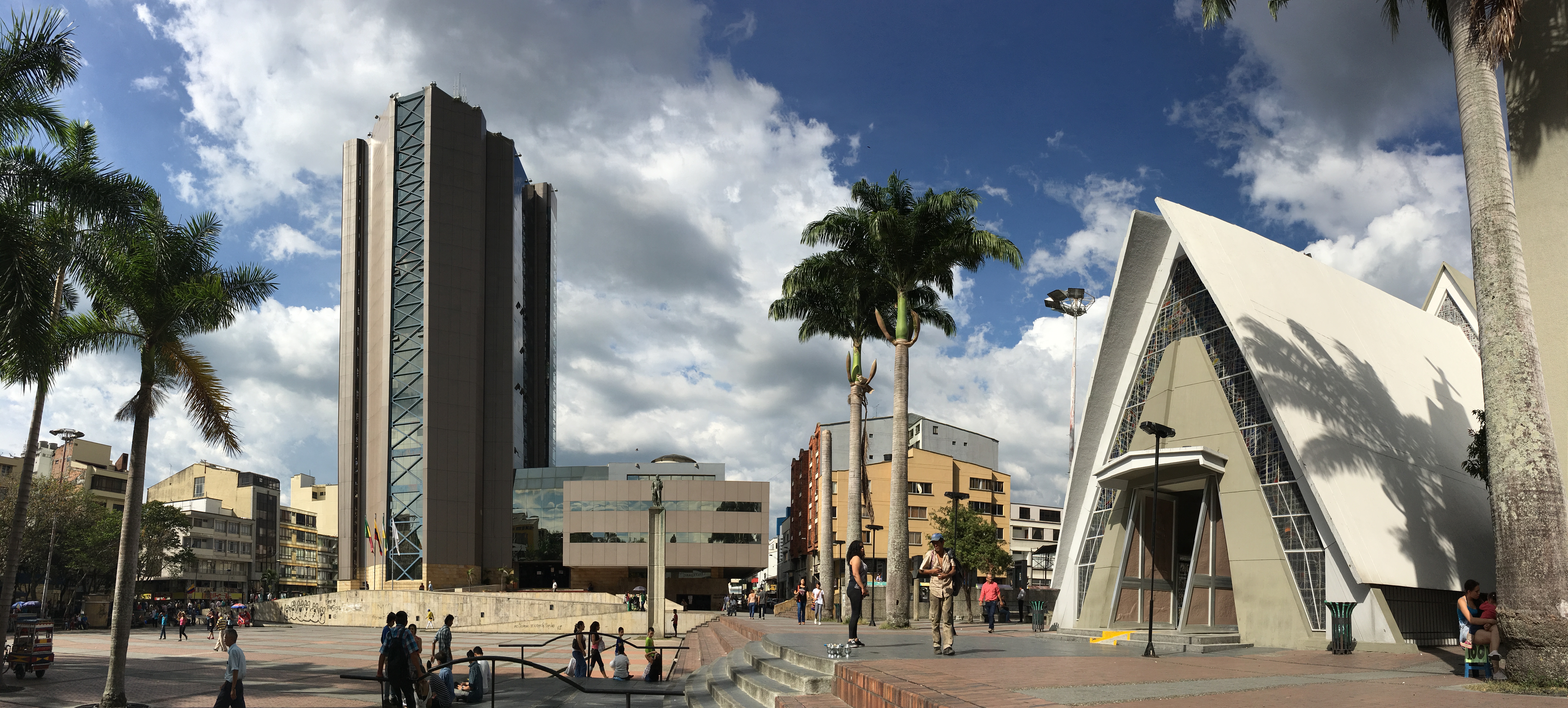
Downtown Armenia is the urban heart of the 'Miracle City' and a good place to take the pulse of coffee life in Quindío's capital. Its focal point is the Plaza de Bolívar, with its monument, surrounded by the bustle of the city and presided over by the Cathedral of the Immaculate Conception, modern in style with geometric lines, rebuilt after earthquake damage. Although Armenia doesn't preserve great colonial ensembles (it's a recently founded city and was heavily rebuilt after the 1999 earthquake), the center has a character of its own: lively commerce, cafés where you can try the local coffee, restaurants serving typical Quindío cooking, and a warm paisa atmosphere. It's the best area for getting a feel for the city's everyday life. Walking the center, having a good coffee, sampling the regional food and taking the chance to visit museums or the nearby park/cultural center rounds out the urban experience before or after the excursions into coffee country. Armenia works, above all, as a comfortable and pleasant base. Getting there: the center is easily walked; reachable from anywhere in the city. Best time: daytime, when the center is at its liveliest. Tips: as in any city center, look after your belongings and use common sense; take the chance to drink regional coffee and eat typical dishes such as bandeja paisa or patacón. Ask locals for the best coffee shops.
ℹ️ Distance: Downtown Armenia (on foot) · Best time: Daytime, when the center is lively · Admission: Free (walking the center and the square) · Duration: Half a day
Advertisements
What nobody tells you

💵 Prices

Tickets

TypePrice
Downtown Armenia, Plaza de Bolívar and cathedralFree (public spaces)
Quimbaya Gold MuseumFree (open access; Banco de la República, 2025)
Quindío Botanical Garden and Butterfly House (Calarcá)Adults approx. $75,000 COP (includes butterfly house and circuits); children $35,000 COP; under 3 free (source: official site, verified July 2026)
Parque del Café (Montenegro)Multiple pass approx. $90,000–99,000 COP for adults; reduced rates for children/seniors; sold online only (source: official Parque del Café site, verified July 2026)
Coffee farm tour with tastingApprox. $35,000–80,000 COP per person depending on farm and length (market ranges, 2026)
Cocora Valley (Willys jeep and trail access)Salento-Cocora jeep return approx. $10,000 COP; access to the palm trails $5,000–20,000 COP (market ranges, 2026)
🔄 updated monthlyOfficial / reference values · double-check when buying

Activities and tours

ActivityPriceDurationOperator
Visit to the Parque del CaféMultiple pass approx. $90,000–99,000 COP per adult (sold online with an early-purchase discount) (verified July 2026)A dayParque del Café (Montenegro)
Coffee farm tour (from seed to cup)Approx. $35,000–80,000 COP per person (market ranges, 2026)2 h to a dayQuindío coffee farms
Excursion to the Cocora Valley and SalentoGuided jeep tour approx. $180,000–250,000 COP per person (small groups); independently with a Willys jeep from $10,000 COP (market ranges, 2026)A dayLocal operators and Salento's Willys jeeps
Visit to the Botanical Garden and Butterfly HouseApprox. $75,000 COP per adult; $35,000 COP children (verified July 2026)Half a dayQuindío Botanical Garden (Calarcá)
Tour of the coffee towns (Filandia, Salento)Independently by minibus approx. $7,000–12,000 COP each way; guided tour $80,000–180,000 COP per person (market ranges, 2026)A dayLocal agencies and guides
Visit to the theme parks (Panaca, Parque del Café)Panaca pass approx. $90,000–115,000 COP; Parque del Café $90,000–99,000 COP (verified July 2026)A dayQuindío theme parks
🔄 updated monthlyOfficial / reference values · double-check when buying
Advertisements

🚌 How to get there and distances

Getting around

ModePriceDurationNotes
TaxiMinimum city fare approx. $7,000–9,000 COP; average trip across town $10,000–18,000 COP (market ranges, 2026)VariablePlentiful in Armenia, handy for getting around the city and for short trips to nearby municipalities. Agree the fare or use the meter/apps depending on availability
City busesFare approx. $2,500–3,000 COP (market ranges, 2026)VariableA network of city buses covering the whole town. Cheap for distances within Armenia
Intercity buses and minibusesApprox. $7,000–14,000 COP to Salento, Filandia, Montenegro or Calarcá (market ranges, 2026)VariableMinibuses leave the bus terminal for Salento, Filandia, Montenegro, Calarcá and the other municipalities of Quindío. The budget way to explore the region
Willys jeepSalento-Cocora Valley return approx. $10,000 COP per person (market ranges, 2026)VariableThe iconic Willys jeeps, a symbol of the Coffee Belt, connect the towns with attractions such as the Cocora Valley (from Salento) and are a cultural experience in themselves
Car hire / private tourRental car approx. $130,000–250,000 COP per day; private tour per day $250,000–450,000 COP depending on group size (market ranges, 2026)VariableConvenient for touring Quindío's scattered farms and attractions at your own pace, especially for groups or families
🔄 updated monthlyOfficial / reference values · double-check when buying

How to get there

RouteAirlines / operatorsAvg. priceDuration
Flights to Armenia (El Edén airport, AXM)Avianca, LATAM, Wingo, JetSmart and others (domestic routes and some international)Varies with how far ahead you book; domestic flights from approx. $120,000–350,000 COP each way (market ranges, 2026)Depends on origin (a few km from the city)
Bogotá → Armenia (bus)Expreso Bolivariano, Flota Magdalena and othersApprox. $65,000–128,000 COP depending on the service (market ranges, 2026)About 7 to 8 hours
Medellín → Armenia (bus)Flota Occidental, Expreso Bolivariano and othersApprox. $75,000–90,000 COP (market ranges, 2026)About 5 to 6 hours
Cali → Armenia (bus)Expreso Palmira, Coomotor and othersApprox. $36,000–50,000 COP (market ranges, 2026)About 3 to 4 hours
Pereira / Manizales → Armenia (bus)Coffee Belt minibusesApprox. $10,000–20,000 COP (market ranges, 2026)About 1 to 2 hours (the coffee triangle)
🔄 updated monthlyOfficial / reference values · double-check when buying

🏨 Where to stay

No exact prices: a scale from $ (budget) to $$$$$ (luxury), with 2-3 options per category.

CategoryPriceRecommended options
Coffee farms and estates (rural tourism)$$$$$Staying on restored coffee farms and estates, surrounded by coffee groves, with a pool and a coffee experience: approx. US$ 70–180 per night (e.g. Hacienda Bambusa, farms around Montenegro and Quimbaya). The most quintessential Quindío experience
Upmarket hotels$$$$$Good-quality hotels and countryside resorts in Quindío with views over the coffee landscape: approx. US$ 90–200 per night (e.g. Decameron hotels and countryside resorts). For those who want more services
Hotels in the city of Armenia$$$$$Mid-range and chain hotels in town, a comfortable base for excursions: approx. US$ 35–80 per night (e.g. Mocawa, Armenia Hotel, chains near the center and the shopping malls)
Hostels and budget options$$$$$Hostels and budget guesthouses in Armenia and the nearby towns: approx. US$ 12–35 per night (dorm bed from $35,000–60,000 COP). For backpackers, with a social atmosphere

🍴 Where to eat

TypePriceOptions / signature dish
Quindío coffee$$$$$High-altitude regional coffee in specialty cafés and on farms, with tastings and filter methods: a cup of specialty coffee approx. $5,000–14,000 COP (US$ 1–4); guided tasting $20,000–50,000 COP. Essential
Paisa and typical Quindío cooking$$$$$Bandeja paisa, beans, chicharrón, arepa, patacón, sancocho and trout (typical of Salento and Cocora): a dish approx. $18,000–40,000 COP (US$ 5–10). Hearty and full of flavor
Countryside restaurants on farms$$$$$Regional cooking with views over the coffee landscape at farms and estates: lunch approx. $30,000–70,000 COP per person (US$ 8–18). For a charming meal out in nature
Cheap eats and markets$$$$$Simple fondas and restaurants with a set lunch of the day (corrientazo), arepas and fried snacks: approx. $12,000–22,000 COP (US$ 3–6). Budget-friendly in Armenia and the towns
Advertisements

📖 History of Armenia

Origins, formation and what the sources say.

The Quimbaya: Quindío's refined pre-Columbian past

Long before the coffee settlers arrived, the region where Armenia stands today was inhabited by the Quimbaya culture, one of the most remarkable pre-Columbian peoples of present-day Colombia, celebrated above all for its extraordinary goldwork. The Quimbaya occupied the middle Cauca river valley and the slopes of the cordillera, in what are now Quindío and neighboring departments.

The mastery of the Quimbaya goldsmiths reached an astonishing technical and artistic level: they worked gold and tumbaga (an alloy of gold and copper) to create human figures, poporos (ceremonial containers for the lime used with coca), vessels and ritual objects of great beauty and sophistication. These pieces are admired today in museums such as the Quimbaya Gold Museum in Armenia and the Gold Museum in Bogotá.

The Quimbaya lived from farming, hunting and trade, in an organized society with complex religious practices. With the arrival of the Spanish in the 16th century, the region's indigenous population went into sharp decline. Even so, the Quimbaya legacy —its gold, its ceramics and its cultural imprint— remains a fundamental part of Quindío's identity and an essential chapter of its history, centuries older than coffee.

Quimbaya goldwork
The sources agree in singling out the Quimbaya culture for its exceptional work in gold and tumbaga, considered one of the peaks of Colombian pre-Columbian art. The exact chronological and territorial boundaries of the culture, and the distinction between 'early' and 'late' Quimbaya, remain the subject of archaeological study.
Source: https://es.wikipedia.org/wiki/Cultura_quimbaya

The Antioquian colonization and the founding of Armenia (1889)

Modern Armenia was born out of one of the most decisive processes in Colombian history: the Antioquian colonization. During the 19th century, waves of settlers from Antioquia and neighboring regions pushed south, forcing a way through the mountains, felling forest, founding towns and establishing farms on the slopes of the Central cordillera. This movement populated and transformed the whole region we know today as the Coffee Belt.

Within that framework, Armenia was founded in 1889. Like many settlements of the colonization, it emerged from the efforts of settlers who saw in this fertile, temperate land an opportunity to put down roots and prosper. The crop that would come to define the region —coffee— found ideal conditions on these high slopes, and it soon became the economic and cultural engine of the entire area.

The Antioquian colonization did not merely populate the territory: it forged an entire culture, the 'paisa' coffee culture, with its architecture of bahareque, timber and brightly painted balconies, its work ethic, its cooking and its way of life bound to the farm and to coffee. Armenia was born and grew as part of that coffee world which, more than a century later, would be recognized as a World Heritage Site.

The founding of Armenia in 1889
The sources place the founding of Armenia in 1889, within the Antioquian colonization that populated the Coffee Belt. Details about the founders and the precise circumstances vary between local chronicles, as happens with many foundations of the period.
Source: https://es.wikipedia.org/wiki/Armenia_(Quind%C3%ADo)

The 'Miracle City' and the 20th-century coffee boom

Over the course of the 20th century, Armenia grew so quickly and so strikingly that it earned the nickname 'Miracle City'. In a few decades, what had been a settlement of the colonization was transformed into a thriving city, driven by the coffee boom that made coffee Colombia's great export product and the foundation of the regional economy.

Coffee prosperity brought development, commerce, infrastructure and people. The coffee of Quindío and of the whole Coffee Belt, grown on thousands of family farms across the Andean slopes, achieved worldwide fame for its quality, and the region consolidated as one of the hearts of Colombian coffee growing. Armenia, as the urban center of that activity, flourished to the rhythm of the bean.

Political recognition came in 1966, when the department of Quindío was created —split off from the older and larger department of Caldas— and Armenia was named its capital. That milestone confirmed the city as the administrative, economic and cultural center of the new department, a role it still holds today at the heart of the Coffee Belt.

The 'Miracle City' nickname
Armenia is known as the 'Miracle City' for its rapid growth and development during the 20th century, tied to the coffee boom. The term is a popular and historical way of describing its dynamism rather than an official designation.
Source: https://es.wikipedia.org/wiki/Armenia_(Quind%C3%ADo)
The creation of Quindío in 1966
The sources agree that the department of Quindío was created in 1966 when it was split off from the department of Caldas, with Armenia as its capital. This consolidated the city's administrative role.
Source: https://es.wikipedia.org/wiki/Quind%C3%ADo

The 1999 earthquake and the rebuilding

On 25 January 1999, Armenia and the whole Coffee Belt region lived through one of the greatest tragedies in their history: a powerful earthquake, known as the 'Coffee Belt earthquake' or 'Armenia earthquake', shook the area and caused enormous destruction. The city of Armenia, at the epicenter of the damage, was among the hardest hit, with thousands of deaths, many injured and a large part of its buildings destroyed or severely damaged.

The quake left the city and the region in a critical state, with entire neighborhoods collapsed, infrastructure in ruins and a population in shock. Rebuilding was a long and complex process, involving the reconstruction of homes, public buildings, churches and services, as well as the economic and social recovery of the whole affected area.

That origin explains much of Armenia's present-day appearance: a modern, rebuilt city with relatively few old buildings still standing. The Cathedral of the Immaculate Conception, with its contemporary lines, and many of its buildings reflect that period of rebirth after the disaster. The 1999 earthquake is a painful but central chapter in the city's recent memory and in its capacity for resilience.

The 1999 Coffee Belt earthquake
The sources agree that the earthquake of 25 January 1999 caused great devastation in Armenia and the Coffee Belt, with thousands of casualties and enormous material damage, followed by an extensive rebuilding process. The exact figures for casualties and damage vary between sources.
Source: https://es.wikipedia.org/wiki/Terremoto_del_Eje_Cafetero_de_1999

The Coffee Cultural Landscape, a World Heritage Site (UNESCO, 2011)

The great recognition of the identity of Armenia and its whole region came in 2011, when UNESCO inscribed Colombia's Coffee Cultural Landscape on its World Heritage list. The designation covers areas of several departments —Quindío, Risaralda, Caldas and northern Valle del Cauca— and recognizes the exceptional value of the relationship between the coffee-growing communities, their culture and the mountain landscape they have shaped over more than a century.

UNESCO valued how coffee growing, born of the Antioquian colonization, gave rise to a unique landscape: steep slopes planted with coffee on small and medium family farms, dotted with brightly painted towns, traditional bahareque architecture and a living coffee culture, with its practices, its cooking and its way of life. It is a 'cultural landscape', that is, the fruit of the interaction between people and nature over time.

This recognition boosted the region's tourism and consolidated Armenia and Quindío as one of Colombia's great destinations, where travelers can follow coffee from seed to cup, tour farms and towns, and enjoy a mountain landscape recognized for its universal value. Armenia, capital of Quindío and 'Miracle City', is today the modern gateway to that coffee heritage.

What the Coffee Cultural Landscape recognizes (2011)
The 2011 inscription recognizes the Coffee Cultural Landscape as a 'cultural landscape' covering areas of Quindío, Risaralda, Caldas and northern Valle del Cauca, valuing the relationship between coffee culture, the community and the mountain landscape. It is not an isolated monument but a living ensemble of farms, towns and traditions.
Source: https://whc.unesco.org/es/list/1121/

📚 Bibliography

  • Wikipedia (ES) — «Armenia (Quindío)»: https://es.wikipedia.org/wiki/Armenia_(Quind%C3%ADo)
  • Wikipedia (ES) — «Quindío»: https://es.wikipedia.org/wiki/Quind%C3%ADo
  • Wikipedia (ES) — «Colonización antioqueña»: https://es.wikipedia.org/wiki/Colonizaci%C3%B3n_antioque%C3%B1a
  • Wikipedia (ES) — «Cultura quimbaya»: https://es.wikipedia.org/wiki/Cultura_quimbaya
  • Wikipedia (ES) — «Terremoto del Eje Cafetero de 1999»: https://es.wikipedia.org/wiki/Terremoto_del_Eje_Cafetero_de_1999
  • Wikipedia (ES) — «Paisaje Cultural Cafetero de Colombia»: https://es.wikipedia.org/wiki/Paisaje_Cultural_Cafetero_de_Colombia
  • Unesco — «Paisaje Cultural Cafetero de Colombia» (2011): https://whc.unesco.org/es/list/1121/
  • Banco de la República — «Museo del Oro Quimbaya»: https://www.banrepcultural.org/armenia/museo-del-oro-quimbaya

❓ Frequently asked questions

Why use Armenia as a base for the Coffee Belt?+
Armenia is the capital of Quindío and sits at the center of the Coffee Cultural Landscape, with an airport, a bus terminal and good infrastructure. From there you can easily reach the Parque del Café, the Cocora Valley, Salento, Filandia and dozens of coffee farms. It's comfortable and well connected, ideal for combining urban convenience with excursions into coffee country.
What shouldn't I miss in Armenia and Quindío?+
The essentials: a coffee experience on a farm (from seed to cup), the Parque del Café in Montenegro, the Cocora Valley with its giant wax palms (via Salento), the picturesque towns of Salento and Filandia, the Quimbaya Gold Museum and the Botanical Garden with its butterfly house. The region has enough for several days of very varied plans.
How many days should I stay?+
With 1 or 2 days you'll see the city and either a farm or the Parque del Café. But 3 to 5 days is ideal for combining Armenia with the Cocora Valley, Salento, Filandia, a full coffee experience and the theme parks. With a week you can cover all of Quindío and the Coffee Belt at a relaxed pace.
How do I get around the region?+
Within Armenia there are taxis and city buses. For the towns and attractions of Quindío, intercity minibuses leave from the terminal (to Salento, Filandia, Montenegro, Calarcá, etc.). The iconic Willys jeeps connect Salento with the Cocora Valley. For greater comfort, especially in a group, it's worth renting a car or booking tours.
What's the weather like in Armenia?+
Armenia has a mild, spring-like climate year-round thanks to its altitude (about 1,480 m), with no marked seasons. It's very pleasant, though you should expect the rain typical of the Andean region, especially in the afternoons. Bring comfortable clothing, a light layer for warmth and rain protection, and use the mornings for outdoor activities.
What was the 1999 earthquake?+
In 1999, Armenia and the whole Coffee Belt region suffered a powerful earthquake that caused serious damage and many deaths. The city was rebuilt after the disaster, which is why it looks modern today and retains few old buildings. It's part of the city's recent history and explains why Armenia has no great colonial ensembles.
Sources consulted (12)
Still planning?
Explore more destinations in Colombia
See all destinations →
Advertisements
Image credits
Photos from Wikimedia Commons, each under its own licence (CC BY, CC BY-SA or public domain). Open each file to see its author and licence.
Armenia, Quindio, Colombia - panoramio - Jimmy Gómez N (15