Viajá con Gus
HomeChileJuan Fernández Islands
Juan Fernández Islands
🇨🇱 Chile · Easter Island and Pacific islands

Juan Fernández Islands

Jump to what you need
📌Province/State
Valparaíso Region, province of Valparaíso (Juan Fernández commune); Pacific islands some 670 km off the coast of mainland Chile. The only permanently inhabited settlement is San Juan Bautista, on Robinson Crusoe island, beside Cumberland Bay
📌Best time to go
Southern spring and summer (October to March) for the best weather, warmer water for diving and steadier air and sea connections. In winter the connections are further apart and the weather less settled
📌Suggested days
4 to 7 days. Air and sea connections don't run daily and depend on the weather, so a stay of several days gives you a margin against delays and time to enjoy the trails, the diving and the history
📌Currency
Chilean peso (CLP). Bring cash: banking services and connectivity on the island are very limited and not everywhere takes cards
💱 CLP exchange rate
Loading rate…
🌤️ Weather in Juan Fernández Islands
Loading weather…

The Juan Fernández Islands are a group of volcanic islands in the Pacific Ocean, some 670 kilometers off the coast of mainland Chile, opposite the Valparaíso Region. The archipelago is a national park and a UNESCO Biosphere Reserve, celebrated for its extraordinary endemic biodiversity — with plant and bird species found nowhere else on Earth — and for its link to the story of Robinson Crusoe.

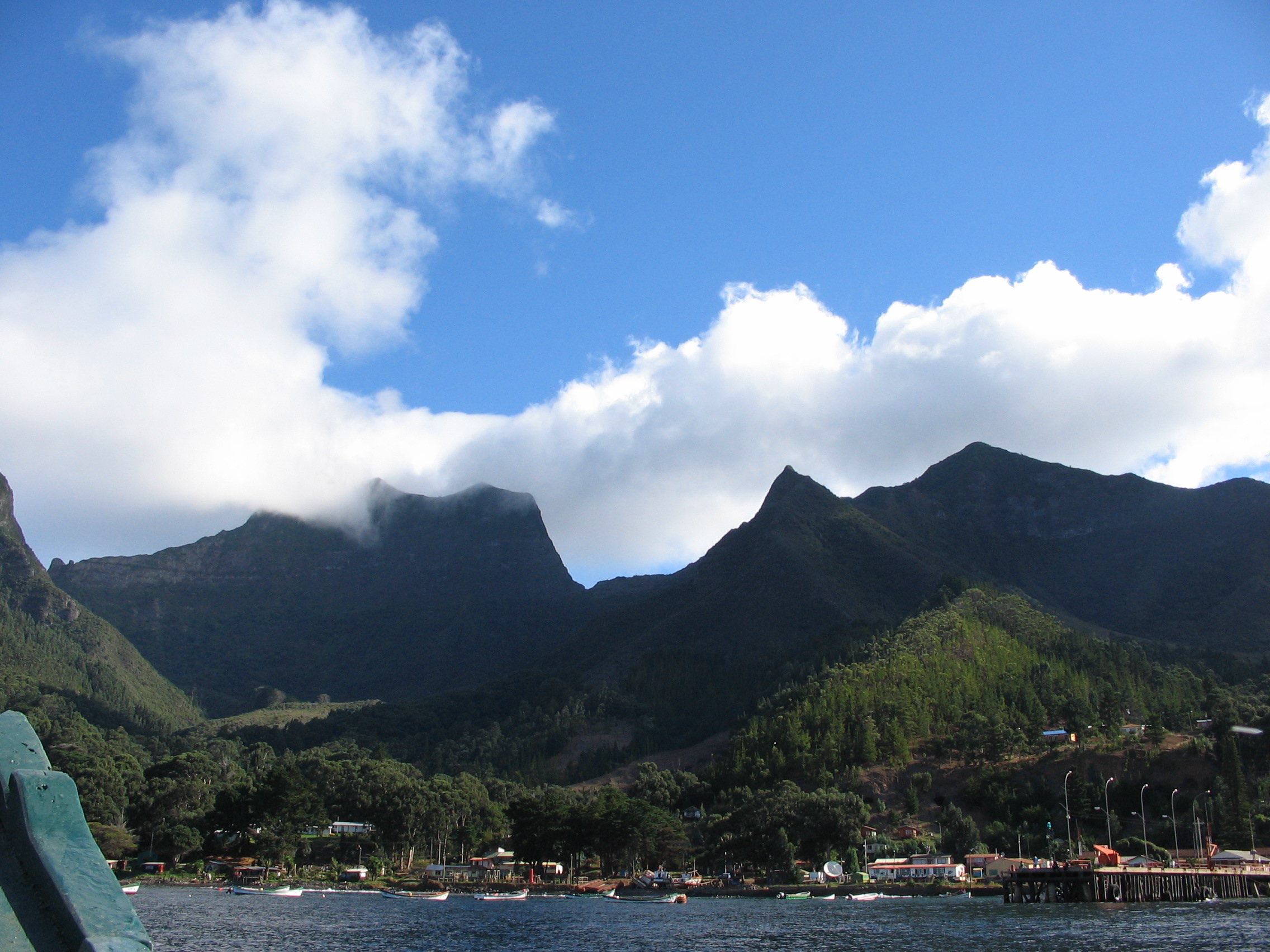
The main and only permanently inhabited island is Robinson Crusoe, home to the village of San Juan Bautista, beside Cumberland Bay. The archipelago is completed by Santa Clara island and the distant Alejandro Selkirk island. The name 'Robinson Crusoe' pays tribute to Daniel Defoe's famous novel, inspired by the real story of the sailor Alexander Selkirk, who survived as a castaway on these islands in the early 18th century.

Juan Fernández is a destination for lovers of nature, diving, hiking and history: endemic forests, the Juan Fernández fur seal, crystalline water with unique marine life, and historic traces such as forts and caves. Getting there takes planning — small aircraft and a sea crossing, both at the mercy of the weather — but it rewards you with one of the most singular and pristine corners of Chile. This guide covers what to see, how to get there and what to bear in mind.

📖 History of Juan Fernández Islands

The Juan Fernández archipelago was discovered in 1574 by the Spanish navigator Juan Fernández, from whom it takes its name. For centuries it was a refuge for sailors, pirates and privateers, and the setting for the true story that inspired 'Robinson Crusoe': the Scottish sailor Alexander Selkirk lived as a castaway on the largest island between 1704 and 1709. Later it was a penal colony and, in 1915, the scene of the scuttling of the German cruiser Dresden in Cumberland Bay during the First World War. In 1935 it was declared a national park, and it has been a UNESCO Biosphere Reserve since 1977. In 1966 the Chilean state officially renamed the largest island Robinson Crusoe and the distant 'Más Afuera' Alejandro Selkirk. The full story is on our history page.

Read the full history ↓

🏛️ Juan Fernández Islands is in Valparaíso Region

Chile's great port and its coastal playground: the hills and funiculars of Valparaíso, a World Heritage Site; Viña del Mar, the 'Garden City'; Neruda's houses; the vineyards of Casablanca; and the remote islands of Juan Fernández and Rapa Nui.

Read the history of Valparaíso Region →

🗺️ What to see

1
The national park and the trails of Robinson Crusoe
Endemic forests, viewpoints and treks through the archipelago's unique nature.
Archipiélago de Juan Fernández National Park protects the astonishing biodiversity of these islands, among the most endemic-rich on the planet relative to their size: much of their flora — tree ferns, the chonta palm, the luma — and of their fauna exists nowhere else. Robinson Crusoe island offers trails climbing its volcanic slopes through native forest to viewpoints with spectacular views of the ocean, the bays and the hills. One of the classic landmarks is the Selkirk Lookout (Mirador de Alejandro Selkirk), the point where, by tradition, the Scottish castaway scanned the horizon waiting for a ship to rescue him; the trail runs through endemic forest and rewards you with a superb view. Exploring the park, ideally with local guides and respecting the conservation rules, is the best way to get to know the unique nature of Juan Fernández. How to get there: trails start from San Juan Bautista. Best time: spring-summer. Tips: bring hiking boots, water and warm layers; the weather changes fast. The park ticket is bought at the CONAF office on the square in San Juan Bautista and is valid for 7 days.
ℹ️ Location: Trails from San Juan Bautista, Robinson Crusoe island · Best time: Spring-summer (October to March) · Admission: National park ticket (CONAF): Chilean adult CLP 4,000 / foreigner CLP 8,000; teenagers (12-17) CLP 2,000/4,000; children and over-60s free. Valid 7 days (2025). Check when visiting · Duration: Selkirk Lookout, half a day; other trails half a day to a full day
2
San Juan Bautista and Cumberland Bay
The archipelago's only village, on the bay, with its history and its island life.
San Juan Bautista, on the shore of Cumberland Bay, is the archipelago's only permanent settlement and the heart of life on Robinson Crusoe. It's a small fishing village — famous for catching the Juan Fernández lobster, its most prized product — with an unhurried rhythm and a setting of wooded hills dropping to the sea. Walking the village, its seafront and its square, and talking with the islanders, is part of the charm. The bay holds history: traces survive of colonial fortifications (such as Fuerte Santa Bárbara) built to defend the islands from pirates and privateers, the so-called Cuevas de los Patriotas (where founding figures of Chilean independence were confined after being deported to the island), and the memory of the German cruiser Dresden, sunk in these waters in 1915. How to get there: the village is covered on foot. Best time: year-round; the best connections are in spring-summer. Tips: try the local lobster; respect the protected surroundings.
ℹ️ Location: The archipelago's only village, beside Cumberland Bay · Best time: Year-round; best connections in spring-summer · Admission: Free access to the village. Historic sites (Fuerte Santa Bárbara, Cuevas de los Patriotas): free/open access. Check when visiting · Duration: Half a day (village and historic remains)
3
Diving and endemic marine life
Crystalline water with unique species, fur seals and an exceptional seabed.
The waters of Juan Fernández are a paradise for diving and snorkeling, with remarkable clarity and a rich, largely endemic marine life. This is home to the Juan Fernández fur seal, a species that was pushed to the brink of extinction by hunting and is now recovering and can be watched at its coastal colonies. The seabed holds fish, crustaceans and unique volcanic formations, in a protected environment. The archipelago is famous for its lobster (the Juan Fernández lobster), the backbone of the local fishing economy and a much-prized delicacy. Dive trips and coastal sailings let you appreciate the marine wildlife and the volcanic cliffs. How to get there: trips leave from San Juan Bautista, with local operators. Best time: spring-summer for the weather and the water. Tips: book with local operators; respect the protected areas and species.
ℹ️ Location: Trips from San Juan Bautista (local operators) · Best time: Spring-summer (better water and weather) · Admission: Dive trips from around CLP 40,000–80,000 per dive depending on operator and gear; sailings to spot the fur seal from around CLP 25,000–50,000 per person (2025). Check when booking · Duration: Half a day
4
The story of Robinson Crusoe and Alexander Selkirk
The sites tied to the real story that inspired the celebrated novel.
Juan Fernández is inseparable from the myth of Robinson Crusoe. Daniel Defoe's novel (1719) was inspired by the real story of Alexander Selkirk, a Scottish sailor who, after a dispute, was left on the archipelago's then-uninhabited main island, where he survived alone between 1704 and 1709 until he was rescued. In 1966 the Chilean state officially renamed the main island 'Robinson Crusoe' (and the distant 'Más Afuera' island 'Alejandro Selkirk') to reinforce that link and attract tourism. Visiting the island lets you walk the places associated with the story, such as the Selkirk Lookout, where a plaque placed by British sailors in 1868 commemorates the castaway, and soak up the tale that gave rise to one of the most universal literary myths. Stories of pirates, privateers and castaways permeate the whole archipelago. How to get there: the sites are on Robinson Crusoe island (the Selkirk Lookout, by trail from the village). Best time: year-round. Tips: pair the visit with some reading on Selkirk's story to appreciate it more.
ℹ️ Location: Selkirk Lookout and other sites, Robinson Crusoe island · Best time: Year-round (the trail is better in good weather) · Admission: Included in the national park ticket (Chilean adult CLP 4,000 / foreigner CLP 8,000, 2025). Check when visiting · Duration: Half a day (trail to the lookout)
5
Plazoleta El Yunque and the endemic forest
A pocket of humid forest below Cerro El Yunque, the heart of the island's endemic flora.
Plazoleta El Yunque is one of the loveliest and most representative corners of Robinson Crusoe's nature: a pocket of humid endemic forest, a short walk from San Juan Bautista, at the foot of the imposing Cerro El Yunque (the island's highest summit, over 900 meters). It's an ideal place to immerse yourself in the archipelago's unique flora. Here grow giant tree ferns, the chonta (an endemic palm), the luma and other species found nowhere else in the world, in a cool, shaded environment of dense vegetation. The trail, accessible and well marked, lets you see examples of the original vegetation and understand why Juan Fernández is one of the most endemic-rich places on the planet. The area also preserves traces linked to the story of the Dresden survivors who lived here for a time. It's an excellent introduction to the island's nature, suited to anyone not up for the tougher walks. How to get there: a short walk from San Juan Bautista. Best time: year-round; the forest is humid and green whatever the season. Tips: bring suitable footwear (it can be muddy), repellent, and respect the protected flora strictly.
ℹ️ Location: At the foot of Cerro El Yunque, near San Juan Bautista (on foot) · Best time: Year-round (humid forest, always green) · Admission: Inside the national park; included in the ticket (Chilean adult CLP 4,000 / foreigner CLP 8,000, 2025). Check when visiting · Duration: 1 to 2 hours (there and back)
6
Food: the Juan Fernández lobster
The archipelago's star product, the base of its economy and an unmissable delicacy.
The Juan Fernández lobster is the archipelago's culinary and economic emblem: a cold-water, clawless lobster with firm, highly prized flesh, exported to demanding markets (it fetches very high prices in markets such as China) and the livelihood of the island's fishermen. Trying it where it comes from is one of the great experiences of the trip. On the island, bought straight from the fishermen, lobster costs far less than on the mainland or abroad; prepared at a restaurant or local eatery, in dishes such as 'perol' (a lobster broth or stew) or simply boiled, it's a delicacy that justifies the journey. The fishery is regulated by seasons and quotas to keep it sustainable, so availability varies with the time of year. Beyond lobster, island cooking offers fresh fish, shellfish and home-style dishes, in a simple, warm setting. Eating while looking out over Cumberland Bay, with produce straight from the sea, is an essential part of the Juan Fernández experience. How to get there: restaurants and eateries in San Juan Bautista. Best time: the lobster season (usually October to May, check). Tips: ask about availability given the fishing season; buying direct from the fishermen works out cheaper than a prepared dish.
ℹ️ Location: Restaurants and eateries in San Juan Bautista · Best time: Lobster season (roughly October to May; check) · Admission: Lobster from around CLP 9,000 bought from fishermen on the island; a prepared dish in a restaurant CLP 25,000–75,000 depending on size (2025). Check when visiting · Duration: One meal
Advertisements
What nobody tells you

💵 Prices

Tickets

TypePrice
Archipiélago Juan Fernández National Park ticket (CONAF) — Chilean adultCLP 4,000 per person; teenagers (12-17) CLP 2,000; children up to 11 and over-60s free. Valid 7 days (source: CONAF / Pases Parques, verified July 2026). Bought at the CONAF office in San Juan Bautista. Check when visiting
National park ticket — foreign adultCLP 8,000 per person; teenagers (12-17) CLP 4,000; children up to 11 and over-60s free. Valid 7 days (source: CONAF / Pases Parques, verified July 2026). Check when visiting
Dive trips / sailings with local operatorsDiving from around CLP 40,000–80,000 per dive; sailing/fur seal watching from around CLP 25,000–50,000 per person (2025). Check when booking
Juan Fernández lobster (food)From around CLP 9,000 bought from fishermen on the island; a prepared dish in a restaurant CLP 25,000–75,000 depending on size (2025). Check when visiting
Local guides for the park trailsGuided outings from around CLP 25,000–60,000 per person depending on the route (2025). Check when booking
🔄 updated monthlyOfficial / reference values · double-check when buying

Activities and tours

ActivityPriceDurationOperator
Trek to the Selkirk Lookout and the park trailsOn your own, just the park ticket (CLP 4,000–8,000); guided CLP 25,000–60,000 per person (2025)Half a day to a full dayLocal guides / CONAF
Diving and snorkelingDiving from around CLP 40,000–80,000 per dive; snorkeling from around CLP 20,000–35,000 (2025)Half a dayDive operators in San Juan Bautista
Watching the Juan Fernández fur seal (by boat)Roughly CLP 25,000–50,000 per person (2025)Half a dayLocal boats and sailings
Historical tour (forts, Cuevas de los Patriotas, the memory of the Dresden)Free on your own; guided from around CLP 20,000–40,000 per person (2025)Half a dayLocal guides
🔄 updated monthlyOfficial / reference values · double-check when buying
Advertisements

🚌 How to get there and distances

Getting around

ModePriceDurationNotes
On footFreeVariableSan Juan Bautista and many nearby trails are covered on foot
Launch / boatCoastal trips from around CLP 20,000–50,000 per person depending on the route (2025); negotiate with fishermen/operatorsVariableFor reaching stretches of coast, diving and wildlife watching; with local operators and fishermen
Airfield-to-village transfer (boat)Usually included in the flight/operator package; booked separately, from around CLP 25,000–40,000 per person (2025)About 1.5 to 2 h by seaThe airfield is at the western end of the island, far from the village; the transfer is completed by boat along the coast (subject to sea conditions)
🔄 updated monthlyOfficial / reference values · double-check when buying

How to get there

RouteAirlines / operatorsAvg. priceDuration
Santiago → Robinson Crusoe (plane, Tobalaba airfield or similar)Aerolíneas ATA (seasonal), Aerolassa (year-round) and other small operators (light aircraft)Return from around CLP 550,000–700,000 (roughly US$ 480–650) per person (reference verified July 2026; varies a great deal by season, availability and operator). Check current fares with the airlineAbout 1 h 50 min flying + boat transfer to the village
Valparaíso / San Antonio → Juan Fernández (by ship)Cargo/passenger shipping lines (sporadic services, check)Varies by service; far cheaper than flying but slow and irregular (2025)About 30 to 40 h at sea
Island airfield → San Juan BautistaBoat transfer along the coastUsually included in the flight package; separately from around CLP 25,000–40,000 per person (2025)About 1.5 to 2 h
🔄 updated monthlyOfficial / reference values · double-check when buying

🏨 Where to stay

No exact prices: a scale from $ (budget) to $$$$$ (luxury), with 2-3 options per category.

CategoryPriceRecommended options
Lodges and cabins with bay views$$$$$CLP 70,000–140,000 a night; lodges, cabins and inns in San Juan Bautista, several overlooking Cumberland Bay. Supply is limited: book far in advance
Family guesthouses and residenciales$$$$$CLP 35,000–70,000 a night; family-run guesthouses and residenciales, with the warmth of island life and often home cooking included
Budget options and camping$$$$$Basic guesthouses from around CLP 20,000–35,000 per person; authorized camping subject to availability and park rules (from around CLP 8,000–15,000 per person). Check when booking

🍴 Where to eat

TypePriceOptions / signature dish
Seafood cooking and lobster$$$$$A lobster dish CLP 25,000–75,000 depending on size; 'perol' (lobster broth), fresh fish and shellfish. The archipelago's culinary star, eaten looking out over the bay
Fish and shellfish restaurants$$$$$CLP 10,000–20,000 for a dish of the day's catch (yellowtail, breca), shellfish and shellfish empanadas, at the village's eateries and restaurants
Island home cooking and family eateries$$$$$CLP 6,000–12,000 per dish; eateries and guesthouses serving home cooking and produce from the sea, in a simple and welcoming setting
Advertisements

📖 History of Juan Fernández Islands

Origins, formation and what the sources say.

Discovery, pirates and privateers

The Juan Fernández archipelago was discovered in 1574 by the Spanish navigator and pilot Juan Fernández, who put in at these volcanic islands lost in the Pacific, some 670 kilometers off the Chilean coast. The islands took his name and, over the following centuries, became a landmark and a port of call for ships crossing the South Pacific, thanks to their fresh water, their timber and their abundant marine life.

Permanently uninhabited for a long time, the islands became a refuge and a hideout for pirates, privateers and buccaneers preying on the Spanish Pacific coast. For many sailors, Juan Fernández was a place to rest, resupply and lie low. That strategic role later led the Spanish Crown to fortify the archipelago, building defenses such as Fuerte Santa Bárbara to protect the islands from attack and from rival powers.

The archipelago's wildlife suffered from those visits: the Juan Fernández fur seal, endemic to the islands, was hunted intensively for its pelt and its fat, and came close to extinction. The introduction of foreign species by sailors also disrupted the fragile island ecosystem. The early history of Juan Fernández was thus shaped by seafaring, piracy and the exploitation of its resources.

Alexander Selkirk and the myth of Robinson Crusoe

The most celebrated episode in the history of Juan Fernández is the one that inspired one of the most universal literary myths. In the early 18th century the Scottish sailor Alexander Selkirk, after a dispute with his captain over the poor state of their ship, asked to be left on the archipelago's largest island, then uninhabited. He remained alone there between 1704 and 1709 — more than four years — surviving on hunted goats, fishing, wild fruit and his own ingenuity, until a passing ship finally rescued him.

Selkirk's story spread across Europe and reached the English writer Daniel Defoe, who took it as the inspiration for his novel 'Robinson Crusoe', published in 1719 and destined to become a classic of world literature. Although Defoe set his tale in the Caribbean and added a great deal of fiction, the core of the solitary castaway surviving on a remote island comes from the real experience lived on Juan Fernández.

In recognition of that link, and with an eye on boosting tourism, the Chilean state officially renamed the archipelago's main island 'Isla Robinson Crusoe' in 1966, and the more distant one, previously called 'Más Afuera', 'Isla Alejandro Selkirk'. Today the myth permeates the islands' whole tourist identity, and places such as the Selkirk Lookout — from which the castaway is said to have scanned the horizon — are part of every visitor's itinerary.

Penal colony, the Dresden and the national park

Across its history, Juan Fernández served Chile in various ways. During the colonial and republican periods the islands were used as a place of confinement and imprisonment: among others, founding figures of Chilean independence were exiled to its caves and redoubts, an episode recalled by the so-called Cuevas de los Patriotas on Cumberland Bay. The isolation that made the archipelago a refuge also made it a perfect natural prison.

One of the most remembered episodes came in 1915, during the First World War: the German cruiser SMS Dresden, pursued by the British navy after the naval battle of the Falkland Islands, took shelter in Cumberland Bay off Robinson Crusoe. Cornered by British warships in neutral Chilean waters, the German commander ordered his own ship scuttled to avoid capture. The Dresden's remains lie in the bay and form part of the island's historical memory — and of its appeal for divers.

In 1935, recognizing the exceptional value of its nature, Chile declared the archipelago a national park, and UNESCO later designated it a Biosphere Reserve. These designations aim to protect its astonishing endemic biodiversity, threatened by introduced species and human activity. Today Juan Fernández combines its rich history of sailors, castaways, prisoners and battles with its role as a natural sanctuary, a unique corner in the middle of the Chilean Pacific.

A laboratory of evolution: endemism and conservation

Beyond its human history, Juan Fernández is famous for being one of the most endemic-rich places on the planet relative to its size, a genuine natural laboratory of evolution. Its volcanic origin — the islands rose from the ocean with no connection to the continent — and its extreme isolation allowed the few species that managed to colonize them (carried by wind, currents or birds) to evolve in unique ways, producing plants and animals found nowhere else in the world.

Its flora includes giant tree ferns, the chonta palm, the luma and dozens of endemic species; many are now critically endangered. In the fauna, the emblem is the Juan Fernández fur seal, hunted en masse between the 18th and 19th centuries until it was presumed extinct, and rediscovered in the 1960s in small colonies that have since recovered remarkably. The Juan Fernández firecrown, an endemic hummingbird at serious risk, is another standout.

The main threat to this natural heritage has been species introduced by humans — goats, rabbits, rats, blackberry and other invasive plants — which displace the natives and degrade the endemic forest. That is why the designation as a national park (1935) and as a UNESCO Biosphere Reserve (1977) seeks to protect and restore these fragile ecosystems, a task in which CONAF, scientists and the island community itself all take part.

The island community and the 2010 tsunami

Today the archipelago has a small permanent population of a little over nine hundred people, almost all of them in the village of San Juan Bautista on Robinson Crusoe island. Community life revolves around fishing for the Juan Fernández lobster, a very high-value product exported to demanding markets and the backbone of the local economy, supplemented by nature tourism and public services.

On 27 February 2010, the great earthquake that shook south-central Chile generated a tsunami that struck Cumberland Bay hard before dawn. The waves swept much of the low-lying part of San Juan Bautista, destroying homes, boats and infrastructure and killing people in the small community. The tragedy, which caught the islanders without an adequate warning system, left a deep mark on the village's memory.

In the years that followed, San Juan Bautista was rebuilt with greater safety against future tsunamis in mind, reorganizing the coastal strip and reinforcing warning and evacuation systems. The community, resilient and proud of its island identity, keeps the memory of that episode alive while continuing to care for its sea, its lobster and its unique natural heritage, in one of the most remote and singular corners of Chile.

📚 Bibliography

  • Wikipedia (ES) — «Archipiélago Juan Fernández»: https://es.wikipedia.org/wiki/Archipi%C3%A9lago_Juan_Fern%C3%A1ndez
  • Wikipedia (ES) — «Isla Robinson Crusoe»: https://es.wikipedia.org/wiki/Isla_Robinson_Crusoe
  • Wikipedia (ES) — «Juan Fernández (navegante)»: https://es.wikipedia.org/wiki/Juan_Fern%C3%A1ndez_(navegante)
  • Wikipedia (ES) — «Alexander Selkirk»: https://es.wikipedia.org/wiki/Alexander_Selkirk
  • Wikipedia (ES) — «SMS Dresden (1907)»: https://es.wikipedia.org/wiki/SMS_Dresden_(1907)
  • Wikipedia (ES) — «Lobo fino de Juan Fernández»: https://es.wikipedia.org/wiki/Arctocephalus_philippii
  • Wikipedia (ES) — «Terremoto de Chile de 2010»: https://es.wikipedia.org/wiki/Terremoto_de_Chile_de_2010
  • Wikipedia (ES) — «San Juan Bautista (Chile)»: https://es.wikipedia.org/wiki/San_Juan_Bautista_(Chile)
  • CONAF — Parque Nacional Archipiélago de Juan Fernández: https://www.conaf.cl/parque_nacionales/parque-nacional-archipielago-juan-fernandez/
  • UNESCO — Juan Fernández Archipelago Biosphere Reserve: https://en.unesco.org/biosphere/lac/juan-fernandez
  • Discover Juan Fernández — sitio oficial de turismo: https://discoverjuanfernandez.com/
  • Daniel Defoe — «Robinson Crusoe» (1719), novela inspirada en Selkirk

❓ Frequently asked questions

How much does the national park ticket cost?+
In 2026, a Chilean adult pays CLP 4,000 and a foreigner CLP 8,000; teenagers aged 12 to 17 pay CLP 2,000 (Chilean) or CLP 4,000 (foreign); children up to 11 and over-60s get in free. The ticket is bought at the CONAF office on the square in San Juan Bautista (or at pasesparques.cl) and is valid for 7 days. Check the rate when you visit (verified July 2026).
Where are the Juan Fernández Islands?+
They're a group of volcanic islands in the Pacific Ocean, some 670 km off the coast of mainland Chile, opposite the Valparaíso Region, to which they belong administratively. The main and only permanently inhabited island is Robinson Crusoe, home to the village of San Juan Bautista.
How do you get there and how much is the flight?+
By air, on small aircraft from the Santiago area (airlines such as ATA and Aerolassa), on a flight of around 1 hour 50 minutes, after which you complete the journey to the village by boat (1.5 to 2 hours), since the airfield is at the western end of the island. A return ticket runs around CLP 550,000–700,000 per person, depending on season and operator. You can also arrive by ship from the coast, far cheaper but a crossing of more than a day. Connections depend heavily on the weather.
What's the connection with Robinson Crusoe?+
Daniel Defoe's novel 'Robinson Crusoe' was inspired by the real story of the Scottish sailor Alexander Selkirk, who lived as a castaway on the archipelago's largest island between 1704 and 1709. In 1966 Chile officially renamed the main island 'Robinson Crusoe' in tribute to that literary link.
Why is its nature so special?+
For its extremely high endemism: a great part of its flora and fauna exists nowhere else in the world, a product of its volcanic origin and oceanic isolation. It's a national park and a UNESCO Biosphere Reserve. Standouts include the Juan Fernández fur seal and forests of unique species such as tree ferns and the chonta palm.
How many days should I stay?+
At least 4 to 7 days. Air and sea connections don't run daily and depend on the weather, so plan a stay of several days that gives you a margin against delays and time to enjoy the trails, the diving and the island's history.
What should I know before going?+
It's a remote, protected destination: book transport and accommodation ahead (supply is limited), bring cash (banking services are scarce), allow margin for the weather and strictly respect the conservation rules of the national park and the marine reserve. The local lobster is the unmissable delicacy, though its availability depends on the fishing season.
Sources consulted (9)
Still planning?
Explore more destinations in Chile
See all destinations →
Advertisements
Image credits
Photos from Wikimedia Commons, each under its own licence (CC BY, CC BY-SA or public domain). Open each file to see its author and licence.
Archpielago Juan Fernandez (Vista hacia Robinson Crusoe)