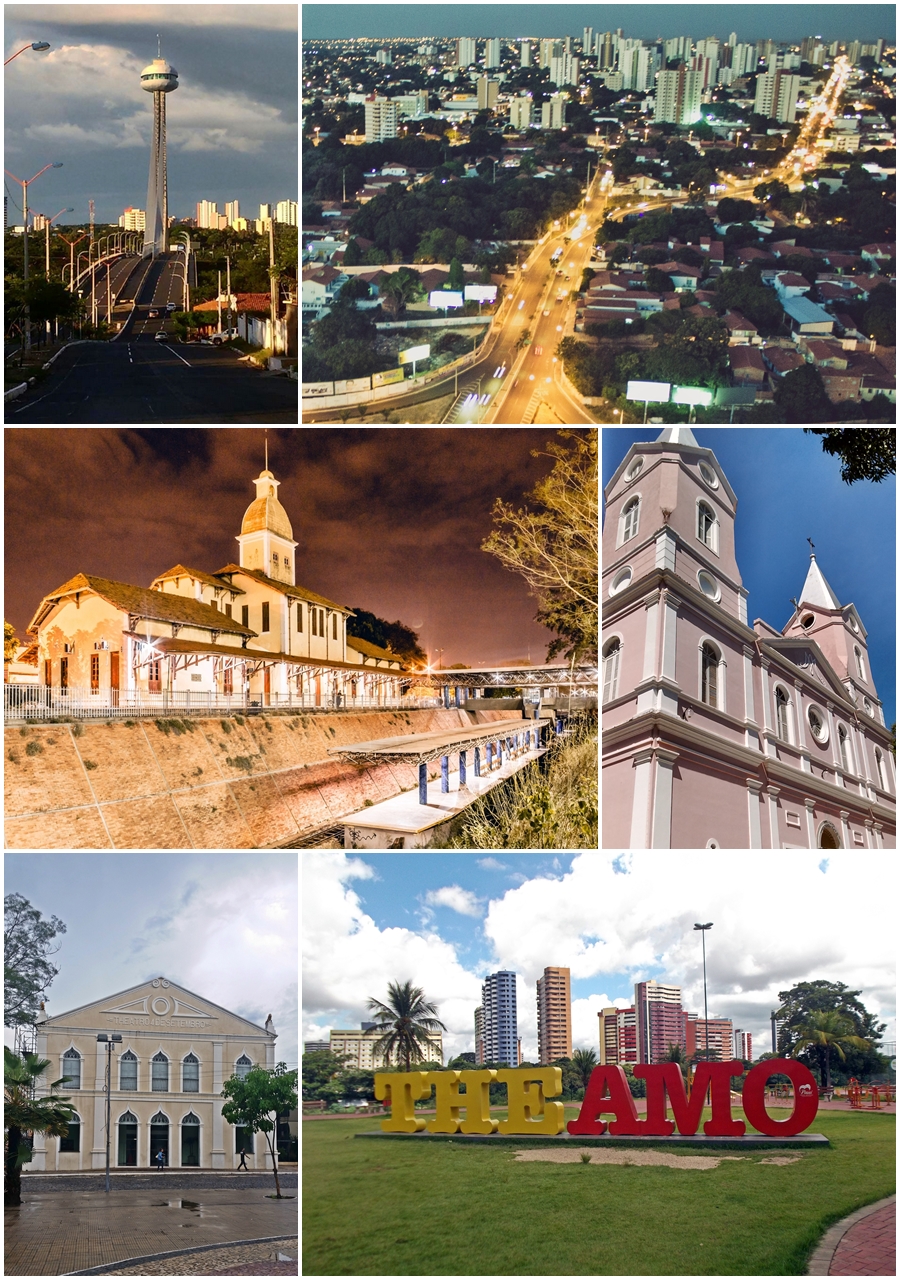
Teresina is the capital of Piauí and one of the most unusual cities in the Northeast: it was the region's only capital planned and built inland, far from the coast, on the banks of the Parnaíba and Poti rivers. Known for its hot climate —it's nicknamed "Chapada do Corisco" for its electrical storms and ranks among the hottest capitals in the country— it's a city with a strong regional identity, markets, folk culture and busy university life.
Although it isn't a mass tourism destination, Teresina works as a gateway and logistical base for some of Piauí's great attractions: Parque Nacional Serra da Capivara, with its exceptional millennia-old rock art, and the Delta do Parnaíba, on the coast. In the city itself you can visit the meeting of the rivers, the traditional markets and the historic centre, and enjoy the tasty cooking of Piauí.
This guide covers the essentials of Teresina with a practical eye: the meeting of the rivers and the Parque Encontro dos Rios, the markets and the centre, how to use the city as a base for Serra da Capivara and the delta, how to get there and get around, and where to eat and sleep.
Teresina was founded in 1852 as the new capital of Piauí, replacing the old capital Oeiras, and was named after the empress Teresa Cristina, wife of Pedro II. It was the first Brazilian city planned on a grid layout, built strategically beside the Parnaíba river to favour river trade. Over time it grew into the state's main urban centre and a base for tourism in Piauí.
Read the full history ↓The state of the sertão and of American prehistory: settled backwards, from the interior out to the coast, by cowhands who followed the Parnaíba river. Home to the Serra da Capivara, with the largest body of rock art in the Americas, to old Oeiras and to the only open-sea delta on the continent.
Read the history of Piauí →Some places make no sense on your own; with someone explaining them, they change completely. We look ours up on Civitatis: guided in Spanish and booked online with no fuss. They have 8 activities in Teresina. And there are free tours here: you book without paying and tip the guide whatever you think at the end, so trying one costs you nothing. Have a look below: tap any of them to see them all.
If you book from here we earn a commission and you pay no more. Prices and availability come from Civitatis.
No exact prices: a scale from $ (budget) to $$$$$ (luxury), with 2-3 options per category.
Origins, formation and what the sources say.
Most Brazilian cities grew on their own, house by house, around a chapel, a port or a crossroads. Not Teresina. Teresina was drawn on a plan before a single house existed: it was the first city in Brazil conceived and planned to be a capital, laid out like a chessboard in the middle of the sertão. When you walk its historic centre today, among straight streets crossing at right angles, you're walking through a 19th-century drawing-board project made real.
Until the mid-19th century, the capital of the province of Piauí was Oeiras, a colonial town in the interior whose location made trade and communication with the rest of the country difficult. The provincial authorities then decided on something bold: to move the capital to a more strategic point, beside the Parnaíba river, which offered a natural route for navigation and trade towards the coast. The new city was raised to capital status on 16 August 1852, during the Empire, driven by the province's president at the time, José Antônio Saraiva.
It was named Teresina in honour of the empress Teresa Cristina of Bourbon-Two Sicilies, wife of the emperor Pedro II. Its first settlement had been founded shortly before as Vila Nova do Poti, on the banks of the Poti river, and its first master builder, João Isidoro França, left his name on the city for good: the modern Ponte Estaiada that is today Teresina's postcard bears his name. Unlike the spontaneous growth of almost every other Brazilian city, Teresina was built following a planned grid, with straight streets and regular blocks, a feature still perfectly visible in its old quarter.
The site beside the Parnaíba was no accident: river navigation was the key to connecting the poor, isolated interior of Piauí with the coast and other states. The new capital was meant to favour that trade, and so a city was born that combined the modernity of deliberate planning with a very concrete economic role: to organise the whole of Piauí around its great river.
Teresina sits between two rivers: the Parnaíba, which separates it from the neighbouring state of Maranhão, and the Poti, which cuts through it and flows into the Parnaíba at the famous Encontro dos Rios, where waters of different colours join without quite mixing. Being a river city shaped its development, its commerce and its identity deeply. The Parnaíba was for a long time the main route for moving goods —among them carnaúba wax, the Northeast's brown gold, and other products of the interior— towards the coast.
At that point where the two rivers embrace lives the city's most famous legend: the Cabeça de Cuia. Tradition tells of a poor fisherman named Crispim who, blind with hunger and rage, killed his own mother with a blow from a cow bone when she had no food to give him. Before dying, his mother cursed him: Crispim would turn into a monster with a huge, deformed head shaped like a cuia (a gourd bowl), condemned to wander the waters of the Parnaíba forever. He would be saved only on the day he devoured seven virgins named Maria. Today a large statue of the Cabeça de Cuia greets visitors at the Encontro dos Rios, and the legend —as chilling as it is beloved— is part of the Teresina soul.
Through the 19th and 20th centuries, the city grew and established itself as the main urban, administrative and commercial centre of Piauí. The arrival of bridges, roads, the railway and, later, the airport gradually reduced the dependence on river transport, but reinforced Teresina's role as the state's transport hub. The capital also developed a profile as a major centre for education and health services, a reference point not only for Piauí but also for southern Maranhão.
The relationship with the rivers, the bustling markets, the crafts —leatherwork, basketry and opala, the milky semi-precious stone that is Piauí's pride— and a cuisine of its own shaped the identity of a capital with a strong regional flavour, very different from the beach postcards of the coastal Northeast.
The birth of Teresina involved something rare in Brazilian history: the deliberate relocation of an entire province's capital. Oeiras, capital of Piauí since colonial times, lay inland, far from the main trade routes and in clear economic decline. The decision to move the seat of government to a point beside the Parnaíba river answered a project of modernisation and integration of the state, and turned Teresina into a capital designed from scratch, its streets drawn with ruler and set square.
The first settlement was initially called Vila Nova do Poti, before establishing itself as Teresina when it took on capital status in 1852. From then on, the city drew officials, merchants, professionals and families from the interior, and gradually acquired government institutions, churches, schools and theatres. The historic Teatro 4 de Setembro, one of the oldest in the Northeast, became the heart of local stage life. Despite the harsh climate —Teresina is among the hottest capitals in Brazil, with thermometers brushing 40 degrees Celsius— and the difficulties of a poor region, the city developed a surprisingly active cultural life.
Through the 20th century, the capital gave Brazilian literature, music and the arts some notable names. Writers, poets and humourists came out of Teresina and Piauí and carried the flavour of the sertão across the country. That cultural tradition, together with a strong folk culture —Bumba meu boi, the colourful festas juninas in June, the legend of the Cabeça de Cuia—, its crafts and its cooking, makes up a particular Teresina identity in which the modernity of a planned capital lives alongside the deep flavour of the inland Northeast.
That cooking is, on its own, a reason to visit the city: carne de sol with baião de dois, maria-isabel (rice with dried beef), capote (a stewed guinea fowl), river fish from the Parnaíba and cajá and cashew sweets sum up centuries of sertão cooking, made to keep in an unforgiving climate.
Over the past few decades, Teresina has established itself as a modern, populous, dynamic capital, a hub of services, education, health and commerce for Piauí and southern Maranhão. Its climate, among the hottest in the country, earned it popular nicknames such as Chapada do Corisco —for its spectacular electrical storms— and is inseparable from its character. Meanwhile, the city has been developing public spaces, riverside walkways and leisure complexes such as the Potycabana, on the banks of the Poti, where Teresina families go looking for cool air at the weekend.
In 2010 the Ponte Estaiada Mestre João Isidoro França opened, a cable-stayed bridge with a mast-viewpoint almost 100 metres high (opened to the public in 2011) that immediately became the city's modern symbol. By day it gives a 360-degree view over the grid layout and the two rivers; by night, lit up, it's the most photographed image of the capital. It's proof that the city drawn on a plan in 1852 never stopped looking at itself from above.
Although Teresina isn't in itself a major mass tourism destination, it took on a strategic role as a base and gateway for the state's two greatest treasures: Parque Nacional Serra da Capivara —a UNESCO World Heritage Site for its exceptional millennia-old rock art, with paintings more than 10,000 years old— and the Delta do Parnaíba, one of the few open-sea deltas in the world, a maze of islands, mangroves and dunes. With its airport and its road connections, the capital works as the logistical hub from which these trips are organised.
So the history of Teresina brings together its origin as a planned 19th-century capital, its identity as a river city of legends and its contemporary role as an urban centre and the key to tourism in Piauí. Visitors find a capital whose personality is marked by its rivers, its heat, its folk culture and its food, and by its key position for reaching the immensely rich natural and archaeological heritage of a state still waiting to be discovered.