Viajá con Gus
HomeBrazilParaty
Paraty
🇧🇷 Brazil · Southeast

Paraty

Jump to what you need
📌State
Rio de Janeiro (Southeast), on the Costa Verde, on the Bay of Paraty. The municipality borders the state of São Paulo and is part of the mixed (cultural and natural) site Paraty e Ilha Grande, a UNESCO World Heritage Site since 2019. It's ringed by Atlantic Forest, the mountains of the Serra da Bocaina and a bay dotted with islands and beaches.
📌Service city
Paraty (historic centre). It sits almost halfway between the two capitals: about 240 km from the city of Rio de Janeiro and about 270 km from São Paulo. The Paraty rodoviária is a few blocks from the historic centre (about 10 minutes on foot). The reference airport for long-haul flights is Galeão (GIG) or Santos Dumont in Rio; you can also come via Guarulhos (GRU) from São Paulo and then take a bus or transfer.
📌Best time to go
April, May, September and October are the most balanced months: good weather, less rain and moderate crowds. The wettest stretch runs from November to March (January can pile up a huge amount of water). Winter (June to August) is the driest, though the sea is cooler. Watch out for two dates that fill the town: the FLIP (literary festival; in 2026 it runs from 22 to 26 July, though the dates change every year) and the Festa do Divino (50 days after Easter, in May).
📌Suggested days
Between 3 and 5 days. Three days cover the historic centre, a schooner trip around the islands and a day of waterfalls and cachaça distilleries. With 4 or 5 you can add Trindade, Saco do Mamanguá and a more distant beach such as Paraty-Mirim or Jabaquara, without rushing.
💱 BRL exchange rate
Loading rate…
🌤️ Weather in Paraty
Loading weather…

Paraty is one of those places where time seems to have stopped on purpose. It's a colonial town of streets paved with irregular stones (the famous pé de moleque), white houses with doors and windows painted in strong colours, 18th-century churches and a fully pedestrian historic centre on the edge of the bay. It's on the Costa Verde of Rio de Janeiro state, almost halfway between Rio and São Paulo, embraced by the Atlantic Forest and the Serra da Bocaina on one side and by a sea of islands and quiet beaches on the other. Since 2019 it has been part of the mixed site Paraty e Ilha Grande, the first UNESCO World Heritage Site in Brazil recognised at once for its culture and its biodiversity.

What makes Paraty unique is that almost everything good is within reach and on different scales. In a single stay you can lose yourself walking among the colonial houses and churches of the centre, take a schooner around islands, transparent lagoons and idyllic beaches in the bay, head into the Atlantic Forest to find waterfalls such as the Tobogã and taste artisanal cachaça at distilleries that have been running for centuries, or go further out to Trindade and its natural pool, or to the Saco do Mamanguá, the only tropical fjord in Brazil. And all of that alongside a powerful cultural calendar, with the FLIP (one of the most important literary festivals in Latin America) and the Festa do Divino as the big landmarks.

This guide pulls together the practical side of planning a trip to Paraty: what to see (historic centre, churches, beaches, schooners, waterfalls, Trindade, Saco do Mamanguá, Caminho do Ouro, distilleries and festivals), how to get around, how to get there from Rio or São Paulo, when to go and where to eat and sleep. The full colonial history, from the Indigenous origin of the name to the Gold Cycle and the 20th-century rediscovery, is set out separately on our history page.

📖 History of Paraty

Long before the Portuguese, the region was home to the Guaianás people, who called the whole area Paraty (in the Tupi language, something like river of fish) and who opened the trails that would later become colonial routes. The town was formally founded by Portuguese settlers around 1667 and raised to vila status a few years later, receiving in 1677 the official name Vila de Nossa Senhora dos Remédios de Paraty. During the Gold Cycle of the 17th and 18th centuries, Paraty was the port through which the gold of Minas Gerais left for Europe along the Caminho do Ouro, which turned it into one of the richest towns in the colony. When the gold ran out and new routes opened, Paraty was left isolated and entered a long economic decline that, paradoxically, froze its colonial architecture almost intact. That isolation preserved it until, in the 20th century, it was rediscovered, declared national heritage and, finally, recognised by UNESCO in 2019. The full story is on our history page.

Read the full history ↓

🏛️ Paraty is in Rio de Janeiro

The Cidade Maravilhosa and its state: from Villegagnon's França Antártica to the founding by Estácio de Sá in 1565, from the gold of Minas to the Portuguese court of 1808, capital of the Empire and of the Republic for almost two centuries. Land of Christ the Redeemer and Sugarloaf, of carnival and bossa nova, and of a coastline running from Búzios to colonial Paraty.

Read the history of Rio de Janeiro →

🗺️ What to see

1
Colonial historic centre
The pedestrian colonial ensemble of cobbled streets and colourful houses, the heart of Paraty.
The historic centre is the soul of Paraty and almost an open-air museum. It's a grid of fewer than twenty blocks laid out like a chessboard on the edge of the bay, all pedestrian, with roadways of irregular stones (the pé de moleque) and white 17th- and 18th-century houses with doors and windows painted blue, red, yellow and green. This is where the Vila de Nossa Senhora dos Remédios de Paraty was born and where the life of the town is concentrated today: restaurants, studios, craft shops, guesthouses and bars. It's a UNESCO World Heritage Site and the main stage of the FLIP. The best way to see it is on foot and without hurrying. You can walk the whole thing in an afternoon, but it's worth coming back at night, when the warm lighting comes on and the empty streets look like another era. One curiosity worth looking for: some streets in the centre flood at the high tides of the full moon (the marés de lua), a phenomenon locals welcome because it cleans the paving. Wear comfortable, sturdy shoes: the stones are gorgeous but treacherous, especially when damp. Inside the ensemble are the Porto (the old harbour), the colonial churches, the Casa da Cultura, the Sobrado dos Bonecos and, across the river, the Forte Defensor Perpétuo. Many local guides run low-cost walking tours that add a great deal by explaining the history of the Gold Trail, freemasonry and the churches by caste. Getting there: it's about 10 minutes on foot from the rodoviária and entirely pedestrian, so you walk it. If you come by car, leave it in a car park on the edge, because no vehicles circulate inside the historic ensemble. Best time and tips: any time of year works, but avoid the strong midday sun in summer. Sunset and night are magical. If you coincide with the FLIP or the Festa do Divino you'll find it in full swing, beautiful but packed.
ℹ️ Type: Pedestrian colonial ensemble, UNESCO World Heritage · Route: On foot, fewer than 20 blocks · Admission: Free
2
Igreja de Santa Rita and the Sacred Art Museum
The oldest church in Paraty (1722), Jesuit in style, today a sacred art museum.
The Igreja de Santa Rita de Cássia is the oldest religious building in Paraty: construction began around 1722. Sober in line and elegantly colonial (Jesuit-inspired), it stands facing the sea and is probably the most photographed image of the town, its white façade cut against the bay and the boats. Historically it was the church of the pardos libertos, that is, of the freed black and mixed-race population, at a time when each social caste had its own church. Today it works as the Sacred Art Museum of Paraty and holds images, carvings and religious objects from the colonial centuries. It's worth going in both for the collection and for the building itself, and staying a while in the little square and the pier opposite, one of the best places to watch the sunset over the bay. Getting there: it's inside the historic centre, on the water's edge, a few steps from the Porto. You walk there as you do everywhere in the old town. Best time and tips: check the museum's visiting hours, as it's usually closed one day a week. The best moment for an exterior photo is late afternoon, in the golden light. Combine it with a walk around the other churches in the centre.
ℹ️ Year: Begun around 1722, the oldest in town · Today: Sacred Art Museum of Paraty · Admission: Token admission of approx. R$ 5–10 per person (verified July 2026); check hours and the weekly closing day when visiting
3
Colonial churches (Matriz, Rosário, Dores)
The caste churches of the centre: Nossa Senhora dos Remédios, do Rosário and das Dores.
One of the most fascinating things about Paraty is that in colonial times each social group had its own church, and several still stand. The Igreja Matriz de Nossa Senhora dos Remédios, dedicated to the town's patron saint, is the largest and dominates the central square; it was the church of the whites and the one most used for celebrations. The Igreja de Nossa Senhora do Rosário e São Benedito was the church of the enslaved and the black population, smaller but loaded with history and with a gilded interior. The Igreja de Nossa Senhora das Dores, by the sea, was the church of the elite, the most intimate and elegant, frequented by the local aristocracy. Visiting them together, ideally with a guide, shows the rigid social structure of colonial Paraty: whites, enslaved black people, freed pardos and the elite, each with their own church. It's a history lesson on foot. Getting there: all three are inside the historic centre, a few blocks apart. You cover them on foot in a single walk. Best time and tips: opening hours vary and sometimes they only open for mass or in narrow slots; check on the day. Dress with a degree of respect if you want to go in. It's one of the routes that gains most from a local guide's explanation.
ℹ️ Matriz: Nossa Senhora dos Remédios (the whites) · Rosário: Church of the enslaved and black population · Dores: Church of the elite, facing the sea
4
Forte Defensor Perpétuo and Jabaquara beach
The colonial fort on the Morro da Vila Velha and the urban beach closest to the centre.
Across the Perequê-Açu river, on a rocky headland called Morro da Vila Velha that separates the Pontal and Jabaquara beaches, stands the Forte Defensor Perpétuo. Completed in 1703 and remodelled in 1822, it took that name in tribute to the first Emperor of Brazil. Three sections survive: the Casa do Comandante, the Troop Barracks with cells and the junior officers' barracks. Today it houses a small museum and, above all, offers one of the best panoramic views of the bay and the historic centre of Paraty. The walk or short ride up to the fort pairs very well with the Praia do Jabaquara, an urban beach with calm, shallow water, ideal for children, very close to the centre: about 20 minutes on foot, 10 by car. It isn't the most spectacular beach in the area, but it's the most practical for a dip without leaving town and it has kiosks for spending the afternoon. Getting there: the fort is on the other side of the river, up on the headland; you reach it by car, taxi or on foot (climb included). Jabaquara is at its foot, steps from the centre. Best time and tips: go up to the fort near sunset for the view. For Jabaquara, any sunny day; it's a good option for families thanks to its calm sea. Bring cash for the museum and the kiosks.
ℹ️ Fort: Completed in 1703, remodelled in 1822 · View: Panorama of the bay and the centre · Jabaquara: Calm urban beach, 20 min on foot
5
Schooner trip around the islands and beaches of the bay
The classic boat trip around islands, transparent lagoons and beaches in the Bay of Paraty.
The schooner trip is, along with the historic centre, the unmissable Paraty experience. The bay is scattered with islands, lagoons and beaches of green, transparent water reachable only by sea, and the schooners (roomy, steady boats) run trips of about 5 hours with several stops for swimming, snorkelling and resting. The classic route usually takes in places such as Lagoa Azul (a natural pool ringed by rock and forest), Praia da Lula, Praia Vermelha, Ilha Comprida and Ilha dos Cocos, the last with some of the clearest water in the bay. The schooner generally makes four stops of half an hour each. The boats have a bar, toilets and sometimes food service on board, so it's a very comfortable plan. For anyone wanting something more tailored or faster, there are also private launches that build a custom itinerary and let you dodge the crowds. Bring sunscreen, a swimsuit and, if you have one, your own snorkelling gear (it's usually available for hire on board). Getting there: the schooners leave from the Cais de Paraty, right in the historic centre, steps from the Igreja de Santa Rita. You book at the quay, at agencies in the centre or online. Best time and tips: sunny days with a calm sea are ideal; in high season it's worth booking ahead. Choose schooners with fewer passengers if you want quiet, or a private launch if you're in a group. Bring cash for the on-board bar and for stops at island kiosks.
ℹ️ Duration: Around 5 hours, about 4 stops · Departure: Cais de Paraty, historic centre · Price: Approx. R$ 60–120 per person on a shared schooner (verified July 2026); food and drink on board on top; check when booking
6
Saco do Mamanguá
The only tropical fjord in Brazil: an arm of sea between mountains, ideal for kayaking and trekking.
The Saco do Mamanguá is one of the natural wonders of Paraty and is known as the only tropical fjord in Brazil. It's a long, narrow arm of sea (about 8 km long by 2 wide) pushing in between mountains covered in Atlantic Forest, with water as still as a mirror. It sits within the Reserva Ecológica da Juatinga and the Cairuçu Environmental Protection Area, holds some 33 beaches and several caiçara communities, and has no roads: inside, you move only on foot, by boat or by kayak. It's a paradise for anyone after nature and silence. The star activities are kayaking on the calm waters of the fjord and the climb to the Pico do Pão de Açúcar (also called Pico do Cairuçu or Mamanguá), a short but very steep trail (about 1.5 km gaining more than 400 metres of height) that rewards you with a spectacular aerial view of the whole fjord. The walk there and back takes about 3 hours and is best done with a guide. There are also options to stay the night in rustic pousadas or campsites run by the caiçara communities. Getting there: you first head to Paraty-Mirim (about 15 km south of Paraty, partly on a dirt road) and from the village pier take a boat or launch into the fjord. Many visitors do it as an organised full-day excursion from Paraty. Best time and tips: the dry months (April to October) are the best for trekking and kayaking. Hire a guide for the peak, bring water, trekking shoes and sun protection, and start the climb early to avoid the heat. It's a more demanding, adventurous plan than the rest.
ℹ️ What it is: Tropical fjord, an 8 km arm of sea between mountains · Activities: Kayaking, trekking to the Pico do Pão de Açúcar · Access: By boat from Paraty-Mirim (15 km away)
7
Cachoeira do Tobogã and Poço do Tarzan
The natural slide of smooth rock and the waterfall to jump from, on the road to Cunha.
The Cachoeira do Tobogã (also called da Penha) is one of the most fun and popular attractions in Paraty. It's a natural ramp of smooth rock down which the water runs and down which the boldest slide as if on a chute into the pool below. Right beside it is the Poço do Tarzan, a taller waterfall from which locals dare to jump into the water. It's a refreshing, free plan with plenty of atmosphere, especially at weekends, when it fills up. The walk from the car park to the slide is extremely short (a couple of minutes), so it's very accessible. That said: the rocks are extremely slippery and sliding or jumping carries risk; it's best to watch first, take care and, if it's your first time, let someone experienced (there are sometimes local kids who do it for a few coins) show the way. The area also has rustic bars where you can have a drink and the picturesque Igreja da Penha nearby. Getting there: it's in the Penha neighbourhood, on the Paraty-Cunha road, about 7 to 10 km from the centre. Easy to reach by car; there are also city buses on the Penha line leaving from the rodoviária. Right opposite is the Engenho D'Ouro distillery, so the two combine perfectly. Best time and tips: go on days with good weather and, if you can, on a weekday to avoid the crowds. Bring shoes with good grip, a swimsuit and take care on the wet rocks. Parking is paid and usually cheap. It combines with neighbouring waterfalls and distilleries in a single outing.
ℹ️ What it is: Natural rock slide + waterfall to jump from · Walk: Very short from the car park · Admission: Free (paid parking)
8
Trindade and the Piscina Natural do Cachadaço
The fishing village with idyllic beaches and a natural pool of crystal-clear water.
Trindade is a fishing village south of Paraty that has become one of the best loved beach destinations on the Costa Verde. It has a more rustic, backpacker feel than the historic centre, with beautiful beaches such as do Meio, Cepilho, Cachadaço and Praia Brava, and clear water framed by Atlantic Forest and mountains. The star is the Piscina Natural do Cachadaço: a pool of transparent water formed between large rocks, shallow (less than a metre in much of it), where you can float and watch fish as in a natural aquarium. The typical plan is to spend the day: reach the village, walk the beaches and take the trail to the Cachadaço. The trail to the natural pool starts at Praia do Meio, crosses the coastal forest and Praia do Cachadaço, and takes about 20 minutes. You can also come by boat straight to the pool to skip the walk. Getting there: Trindade is about 25 km south of Paraty, on the Rio-Santos (BR-101). There are city buses run by Colitur leaving the Paraty rodoviária to the village entrance, plus cars, transfers and tours. Inside the village you get around on foot. Best time and tips: days with a calm sea are the best for enjoying the natural pool. Go early, above all in high season and at weekends, because it fills up. Bring cash (there aren't always ATMs), shoes for the trail and snorkelling gear. You can do it as a day trip, but it's also worth sleeping a night in the village to experience it more calmly.
ℹ️ What it is: Fishing village with beaches and a natural pool · Distance: About 25 km south of Paraty (BR-101) · Trail to the Cachadaço: About 20 minutes from Praia do Meio
9
Cachaça distilleries (Engenho D'Ouro, Maria Izabel, Coqueiro)
The artisanal cachaça distilleries, a tradition of more than three centuries in Paraty.
Paraty is historically one of the cachaça capitals of Brazil, to the point that in some periods the drink was simply called parati. The cachaça tradition goes back more than three centuries and there are still several artisanal distilleries you can visit today, with a guided tour of the distilling process, a tasting and a shop. It's a delightful outing that combines history, nature and flavour, and it fits very well with the waterfalls because several are on the same Paraty-Cunha road. Among the best known is the Engenho D'Ouro, an artisanal distillery on the Estrada Paraty-Cunha (km 8), right opposite the entrance to the Cachoeira do Tobogã, with award-winning cachaças, a caiçara restaurant and a shop. The Maria Izabel cachaça, produced since 1996 at the Sítio Santo Antônio, is famous for its artisanal quality and for the views of the bay from the property. And the Alambique Coqueiro, founded in 1803 by the Mello family, follows a traditional recipe and produces one of the most awarded cachaças in the country. Many agencies put together tours combining four waterfalls and two distilleries. Getting there: most are on the Estrada Paraty-Cunha, between 8 and 12 km from the centre; you go by car or on an organised tour. Maria Izabel is somewhat further off the beaten track (book the visit in advance). Best time and tips: any time of year. If you're going to taste, appoint a driver or join a tour with transport, for obvious reasons. Bring cash to buy bottles. Book ahead at the distilleries that require it, such as Maria Izabel.
ℹ️ Tradition: More than 300 years of artisanal cachaça · Classics: Engenho D'Ouro, Maria Izabel, Coqueiro · Visit: Tour + tasting: token entry approx. R$ 3–10 per person (refundable against purchases), guided tour free or cheap; bottles of cachaça from R$ 40–120 (verified July 2026)
10
Caminho do Ouro (historic trail)
The cobbled trail along which the gold of Minas travelled down to the port of Paraty.
The Caminho do Ouro (part of the old Estrada Real) is the historic trail that connected the gold mines of Minas Gerais with the port of Paraty, from where the gold shipped out to Portugal during the 17th and 18th centuries. Built by enslaved Africans on top of old Guaianás Indigenous paths, it keeps original stretches of paving identical to that of the historic centre, lost deep in the Atlantic Forest of the Serra da Bocaina. Walking it is literally treading on Brazil's colonial history. The most accessible tourist stretch is walked with a guide on a half-day hike that climbs the range through lush vegetation, with stops at viewpoints, the ruins of old posts and, sometimes, pools and waterfalls to cool off in. The guide explains Paraty's role as the gold port, the slave labour that built the road and the decline that came when the gold ran out. It's a plan that combines nature, moderate physical effort and history. Getting there: the Caminho do Ouro visitor centre is on the Paraty-Cunha road, about 10 km from the historic centre (the same axis as the waterfalls and the distilleries). You get there by car or on a tour; it's worth booking the trail with a local guide. Best time and tips: the dry months make the trail less slippery. Bring trekking shoes, water, insect repellent and rain protection. It pairs perfectly with the Cachoeira do Tobogã and a distillery for a day themed on gold and cachaça.
ℹ️ What it is: Cobbled colonial trail of the Gold Cycle · Route: Half-day guided walk through the Serra da Bocaina · Access: Visitor centre on the Estrada Paraty-Cunha
11
Paraty-Mirim
A quiet cove with a beach, colonial ruins and the gateway to the Mamanguá.
Paraty-Mirim (little Paraty) is a peaceful cove south of the town that combines a calm beach, colonial history and nature. Its beach of still water is ideal for children and for a relaxed day, and in the village the ruins of old colonial houses survive along with the Igreja de Nossa Senhora da Conceição, an 18th-century chapel (built around 1720 and rebuilt in stone and mortar in 1746) that recalls the days when the area was a settled centre. It's far less crowded than Trindade or the centre. Besides the beach and the ruins, Paraty-Mirim is the gateway to the Saco do Mamanguá: the boats to the fjord leave from its pier. Many travellers use it precisely as a base for that excursion, but it's also worth it in its own right for a more intimate, cheaper beach day, with simple kiosks and a calm sea. Getting there: it's about 14 to 17 km from the centre of Paraty; you reach it on the Rio-Santos and then a stretch of dirt road. There are city buses, cars and transfers. The boats to the Mamanguá leave from the pier. Best time and tips: sunny days with a calm sea to enjoy the beach. Bring cash, food and water, because the facilities are basic. Combine it with the excursion to the Saco do Mamanguá to make the most of the trip.
ℹ️ What it is: Cove with a calm beach and colonial ruins · Church: N. Sra. da Conceição (1720, rebuilt in 1746) · Role: Gateway to the Saco do Mamanguá
12
FLIP - Festa Literária Internacional de Paraty
One of the most important literary festivals in Latin America, held every year in the historic centre.
The FLIP (Festa Literária Internacional de Paraty) is the town's most famous cultural event and one of the most important literary festivals in Latin America. It was born in 2003 out of the vision of Liz Calder, an English publisher in love with Paraty, who brought the concept of an international literary festival to Brazil. Since then it has been held every year in the historic centre, bringing together writers, thinkers, publishers and readers from all over the world for panel discussions, readings and events. The 24th edition will take place from 22 to 26 July 2026, with the Tenda dos Autores set up in front of the Igreja Matriz. Each edition revolves around a featured author or a theme (in 2026, «A Energia da Língua Portuguesa»), which also turns the festival into a celebration of the Portuguese language and the country's literature. During those days the colonial streets fill with book stalls, talks, presentations and a passionate public; the whole town breathes literature. It's a unique experience for book lovers, but be aware that it's also when Paraty is at its fullest and most expensive. Getting there: the festival takes place in the historic centre, with venues and stalls spread through the old town. You experience it walking between the different events. Best time and tips: the FLIP is usually held between late June and early July (the dates change every year, so check them). If you want to go, book accommodation and panel tickets far in advance, because they sell out. If you're after quiet and low prices, avoid those days.
ℹ️ What it is: International literary festival, since 2003 · When: In 2026, from 22 to 26 July (the dates change every year, check) · Admission: Many street events are free; the main panels (Tenda dos Autores) cost approx. R$ 30–60 a session (verified July 2026); ticket sales for 2026 opened on 26 June. Check the programme for each edition
13
Festa do Divino Espírito Santo
The most traditional religious and popular festival in Paraty, of Portuguese origin, alive since the 18th century.
The Festa do Divino Espírito Santo is the most traditional religious and cultural celebration in Paraty, a festival of Portuguese origin that reached the town in the 18th century and that in 2013 was registered as Brazilian Cultural Heritage by IPHAN. It's held around Pentecost (50 days after Easter) and blends the sacred with the popular: novenas, processions, music, communal meals, a maypole, fireworks and plenty of red and white, the colours of the Divino. Two elements make it especially vivid: the Folia do Divino, a group of singers who travel the municipality raising funds to pay for the festival, and the Bandeira do Divino, which is carried from house to house asking for donations and standing for popular devotion. The processional float carries a resplendor do Divino, an 18th-century gilded wooden piece in the shape of a monstrance, a genuine heritage jewel. Unlike the FLIP, the festival draws a lot of people but doesn't saturate the town. Getting there: the celebrations are concentrated in the historic centre, around the Igreja Matriz and the squares. You experience it walking between the religious acts and the festivities. Best time and tips: it happens in May (50 days after Easter; the dates change every year, so check them). It's a superb chance to see the most authentic and devout Paraty. Respect the religious moments and make the most of the traditional food and music that go with them.
ℹ️ What it is: Popular religious festival of Portuguese origin · When: May, 50 days after Easter (check) · Heritage: Registered by IPHAN in 2013
Advertisements
What nobody tells you

💵 Prices

Tickets

TypePrice
Historic centre (walking route)Free
Colonial churches / Sacred Art Museum (Santa Rita)Token admission approx. R$ 5–10 per person; some churches free or open only for mass (verified July 2026). Check when visiting
Forte Defensor Perpétuo (museum)Free or token admission (approx. R$ 3); open Tuesday to Sunday, 9 to 17 h (verified July 2026). Check when visiting
Cachoeira do Tobogã / Poço do TarzanFree (paid parking on top)
Cachoeira do Tobogã car parkApprox. R$ 10–20 per vehicle (verified July 2026). Check when visiting
Piscina Natural do Cachadaço (Trindade)Free (access by trail or boat on top)
Distillery visit with tastingToken entry approx. R$ 3–10 (refundable against purchases); tour and tasting free or cheap (verified July 2026)
FLIP (panels / events)Street events free; main panels approx. R$ 30–60 a session (verified July 2026). Check the programme for each edition
🔄 updated monthlyOfficial / reference values · double-check when buying

Activities and tours

ActivityPriceDurationOperator
Schooner trip around the islands and beaches of the bayApprox. R$ 60–120 per person (food/drink on board on top), verified July 2026Around 5 to 6 hours, 4 to 6 stopsLocal operators at the Cais de Paraty (schooners and agencies in the centre)
Private launch around the bay (custom itinerary)R$ 600–1,500 for the launch (up to 8–10 people) depending on hours and vessel (verified July 2026)Half a day or a full dayLocal boatmen and nautical agencies
Waterfall and distillery tour (4 waterfalls + 2 distilleries)Approx. R$ 120–250 per person with transport and guide (verified July 2026)Half a day to a full dayParaty travel agencies
Guided walk along the Caminho do OuroApprox. R$ 80–150 per person with a guide (verified July 2026)Half a dayLocal Caminho do Ouro guides / agencies
Excursion to the Saco do Mamanguá (boat + trekking/kayak)Approx. R$ 200–400 per person on a day excursion (verified July 2026)Full dayEcotourism operators from Paraty-Mirim
Historic walking city tour of the colonial centreFree walking tour on a tip basis, or private tour R$ 80–150 per person (verified July 2026)1 to 2 hoursGuides in the historic centre
Charrete (horse-drawn carriage) ride around the centreApprox. R$ 50–100 a ride (verified July 2026)About 40 minutesCharrete drivers, stand in the Praça da Matriz
Day trip to Trindade and the natural poolCity bus R$ 8–15 each way; tour with an agency R$ 100–200 per person (verified July 2026)Full dayAgencies / Colitur city bus
🔄 updated monthlyOfficial / reference values · double-check when buying
Advertisements

🚌 How to get there and distances

Getting around

ModePriceDurationNotes
On foot (historic centre)FreeThe old town can be walked in an afternoonThe historic centre is fully pedestrian; the roadway is irregular stone, so wear sturdy shoes.
City bus (Colitur / local lines)Approx. R$ 8–15 each way depending on the destination (verified July 2026)Varies by destination (Trindade, Penha, Paraty-Mirim)Leaves from the Paraty rodoviária; connects with Trindade, the Penha neighbourhood (waterfalls) and Paraty-Mirim.
Taxi / UberShort rides in town R$ 15–35; to the fort or the waterfalls R$ 30–60 (verified July 2026)A few minutes within townUseful for reaching the fort, the waterfalls or the neighbourhoods across the river.
Boat / local launchTransfers to islands/beaches from R$ 50–150 per person; private launch R$ 600–1,500 a day (verified July 2026)Depends on the routeFor reaching islands, bay beaches, Saco do Mamanguá and the Cachadaço pool without walking.
Private car / rentalRental from R$ 120–250 a day + parking R$ 15–30 a day (verified July 2026)FreeHandy for waterfalls, distilleries and Trindade; leave it in a car park on the edge, since the centre is pedestrian.
BicycleRental approx. R$ 30–60 a day (verified July 2026)FreeGood for moving between the centre and nearby neighbourhoods such as Caboré, Pontal or Jabaquara.
🔄 updated monthlyOfficial / reference values · double-check when buying

How to get there

RouteAirlines / operatorsAvg. priceDuration
City of Rio de Janeiro → Paraty (bus)Viação Costa VerdeApprox. R$ 70–130 each way depending on the time and how far ahead you book (verified July 2026)Around 5 hours (about 240 km), on the Rio-Santos (BR-101)
São Paulo → Paraty (bus)Reunidas Paulista, Primar Turismo (and FlixBus)Approx. R$ 80–160 each way (verified July 2026)Around 6 hours (about 270 km)
City of Rio or São Paulo → Paraty (by car)Own or rental vehicleFuel and tolls approx. R$ 120–220 each way depending on the origin (verified July 2026)Rio about 4-5 h; São Paulo about 5 h, on the Rio-Santos (BR-101)
Airport (GIG/SDU Rio or GRU/CGH São Paulo) → ParatyPrivate / shared transfer or bus from the rodoviáriaShared transfer R$ 150–300 per person; private R$ 600–1,200 (verified July 2026)Depends on the origin; add the bus or car leg into town
🔄 updated monthlyOfficial / reference values · double-check when buying

🏨 Where to stay

No exact prices: a scale from $ (budget) to $$$$$ (luxury), with 2-3 options per category.

CategoryPriceRecommended options
Boutique guesthouses in the historic centre$$$$$R$ 700–1,800 a night in season: exclusive pousadas and boutique hotels inside the colonial quarter (verified July 2026). Pousada Literária, from the OCanto group, with its own Quintal das Letras restaurant, pool bar and breakfast at any hour — https://www.pousadaliteraria.com.br/ . Casa Turquesa, a maison d'hôtes of suites in the historic centre — https://www.casaturquesa.com.br/ . WATCH THE NAME: the old Pousada do Sandi is now called SANDI HOTEL and its site pousadadosandi.com.br redirects to https://sandihotel.com.br/ . It's still at Largo do Rosário 1, with more than 30 years in Paraty, two fine-dining restaurants, an Asian spa with more than 20 treatments, a climate-controlled cellar with more than 100 labels and a gym; reception +55 24 3371-2100, reservations +55 11 2503-0195. None of the three publishes an open rate: the price comes from the booking engine (consulted on 08/08/2026)
Guesthouses in the centre and the surrounding streets$$$$$R$ 400–800 a night a few steps from the historic centre (verified July 2026). Important notice, verified on 08/08/2026: the Pousada Pardieiro —which we had been recommending— is CLOSED for refurbishment. Its own site says so ('Nesse momento estamos fechados para renovação') and still advertises the 2023/2024 season, so there's no reopening date; enquiries to reservas@pousadapardieiro.com.br or +55 21 3030-7198 — https://www.pousadapardieiro.com.br/ . And the domain arteurquijo.com, of the Pousada Arte Urquijo, no longer resolves. Until there's confirmation, treat this band as a category and not as a named recommendation: no establishment identified
Caboré neighbourhood (Beira-Rio)$$$$$R$ 350–700 a night: a quiet neighbourhood beside the Perequê-Açu river, 800-1,000 m from the centre, with some of the most comfortable guesthouses (pool, parking) away from the noise (verified July 2026)
Pontal neighbourhood / Praia do Pontal$$$$$R$ 250–450 a night: more modest, quieter pousadas near the beach, good for couples and for anyone who wants calm without going far from the centre (verified July 2026)
Budget / backpacker (Pontal, Jabaquara, Trindade)$$$$$R$ 80–200 per person in a hostel or R$ 150–300 in a simple pousada: options across the river or in Trindade, with affordable prices and a more relaxed feel (verified July 2026)

🍴 Where to eat

TypePriceOptions / signature dish
Fine dining and chef-led restaurants in the centre$$$$$R$ 90–200 a main course at the leading restaurants of the historic centre, with contemporary cooking rooted in caiçara tradition and a cachaça list (verified July 2026). Banana da Terra, run by chef Ana Bueno, turned 30 and is still open in a colonial mansion at Rua Dr. Samuel Costa 220, right in the historic centre: fish and seafood from the bay, a wine list and its own bar, and you have to book. Tel. +55 24 99328-2688 — https://restaurantebananadaterra.com.br/ . Careful with the domain: bananadaterra.com.br no longer resolves; the current site is restaurantebananadaterra.com.br. Quintal das Letras is the restaurant of the Pousada Literária and its own site (quintaldasletras.com.br) now redirects to the guesthouse page — https://pousadaliteraria.com.br/gastronomia-no-quintal-das-letras-paraty-rj . Neither of the two publishes a menu with prices online (consulted on 08/08/2026)
Caiçara cooking and seafood$$$$$R$ 60–140 a main course; moquecas for two R$ 120–220: fresh fish and seafood from the bay, with traditional caiçara dishes; several distilleries also have a restaurant (verified July 2026)
Bars and bistros of the historic centre$$$$$R$ 35–80 a main course or a sharing board: bars, bistros and music venues in the colonial quarter, ideal for a late dinner and for trying artisanal cachaça (verified July 2026)
Beach kiosks and simple food$$$$$R$ 25–60 for a portion of fried fish, porções and drinks: kiosks on the beaches and islands (Jabaquara, Trindade, Paraty-Mirim), at popular prices (verified July 2026)
Advertisements

📖 History of Paraty

Origins, formation and what the sources say.

The Indigenous origin of the name: the Guaianás and the 'river of fish'

Long before the Portuguese settlers arrived, the region where Paraty stands today was home to the Guaianás people, who ranged the strip between the mountains and the sea on what is now the Costa Verde. It was they who named the place: 'Paraty' is a word of Tupi origin usually translated as 'river of fish' or 'place of many fish', in reference to a fish species (the mullet or tainha) abundant in the rivers and the bay. The name reflects, from its root, the region's intimate relationship with water.

The Guaianás didn't only name the area: they also opened the paths that, centuries later, would become colonial routes. The tracks climbing the Serra do Mar and connecting the coast with the interior were pre-existing Indigenous trails, which the Portuguese would take over and pave to bring the gold out of Minas Gerais. In this way, the human geography of Paraty is rooted in the knowledge of the land held by its first inhabitants.

The encounter between the Indigenous peoples and the Europeans followed in Paraty the general pattern of colonial Brazil: shifting alliances, conflict, diseases brought by the newcomers and, over time, the displacement and mixing of the Indigenous population. What remained of that original presence is the town's name, the network of paths and a cultural inheritance that would blend with Portuguese and African contributions to give rise to caiçara culture, typical of the coastal communities.

That caiçara culture —that of the fishers and smallholders of the coast, a mix of Indigenous, Portuguese and African roots— is still alive today in the communities of the bay, the islands and places such as the Saco do Mamanguá. Knowing the Indigenous origin of Paraty's name is, for that reason, the first step towards understanding a town whose history is one of a permanent crossing of worlds by the sea.

'Paraty', river of fish in Tupi
The name Paraty comes from the Tupi language and is usually read as 'river of fish' or 'place of many fish', referring to a fish abundant in the region (the mullet or tainha). The name was inherited from the Guaianás people, the first inhabitants of the area.
Source: https://en.wikipedia.org/wiki/Paraty
Indigenous trails turned into gold routes
The paths connecting the Paraty coast with the interior, later paved as the Caminho do Ouro, made use of tracks opened earlier by Indigenous peoples. The network of colonial routes was thus built on the Guaianás' knowledge of the territory.
Source: https://paraty.com.br/caminho-do-ouro/

The colonial founding: Vila de Nossa Senhora dos Remédios (1667)

Portuguese colonisation of Paraty took hold through the 17th century, as settlers coming above all from the São Vicente and São Paulo region moved into this point on the coast, sheltered by the bay and protected by the mountains. The settlement grew around devotion to Nossa Senhora dos Remédios, who would become the town's patron saint, and it benefited from its strategic position as a natural port at the foot of the Serra do Mar.

The formal founding of the town is usually placed around 1667, and a few years later, in 1677, the settlement was officially raised to vila status under the name Vila de Nossa Senhora dos Remédios de Paraty. That rank gave it administrative autonomy, with its town council, its pelourinho and its institutions, and made it the head of a growing territory. Paraty stopped being a mere hamlet and became a town with an identity of its own.

The layout of the colonial town is the one visitors still admire today: a grid of straight streets on the edge of the bay, designed with intent. The streets were laid out so that high tides could come in and clean the paving, an ingenious natural sanitation system that still works during the 'marés de lua', when seawater floods some streets in the centre at full moon. The houses, white and single-storey, were lined up with their doors and windows painted in bright colours.

From the start, Paraty was a port town facing both the sea and the mountains: goods came in and went out by sea, and the roads to the interior climbed the range. That double vocation —maritime and overland— was about to turn it into one of the most prosperous towns in the whole colony, thanks to a metal that would change the history of Brazil: gold.

1667-1677: founding and elevation to vila
The sources place the formal founding of Paraty around 1667 and its official elevation to vila in 1677, under the name Vila de Nossa Senhora dos Remédios de Paraty, in honour of the local patron saint. From then on it had administrative autonomy of its own.
Source: https://en.wikipedia.org/wiki/Paraty
A layout designed for the tides
The colonial grid of Paraty was designed so that high tides (the full-moon 'marés de lua') would come in through the streets and clean the paving, a natural sanitation system still visible today. It is one of the town's most singular urban features.
Source: https://guia.melhoresdestinos.com.br/centro-historico-de-paraty-192-5343-l.html

The Gold Cycle and the Caminho do Ouro: the richest port in the colony

Paraty's great moment came at the end of the 17th century and through the 18th, with the discovery of enormous gold deposits in the Minas Gerais region. That find set off the Gold Cycle, which reorganised the economy of the whole of Portuguese America and drew crowds of prospectors inland. The problem was how to get that gold out to Portugal, and for decades the answer ran through Paraty.

From the mines of the interior, the gold came down a cobbled trail crossing the Serra da Bocaina and the Serra do Mar: the Caminho do Ouro, part of the so-called Estrada Real. That route, built by enslaved Africans on top of old Guaianás Indigenous paths, ended at the port of Paraty, from where the precious metal was shipped towards Rio de Janeiro and from there to Europe. The town thus became one of the exit gates for the most coveted wealth in the colony, and it prospered enormously on the traffic in gold, goods and people.

That prosperity left marks still visible today. With the gold came the churches, the mansions and the institutions of the town, and Paraty also developed another activity that would make it famous: making cachaça. The mills around it distilled a sugar cane spirit of such quality and in such quantity that for a long time the drink itself was simply called 'parati' across much of Brazil. Gold in transit and cachaça of its own made the town a bustling, wealthy place.

Colonial society in Paraty, like all of Brazil at the time, was deeply slave-based and hierarchical. That structure was even inscribed in its churches: the town came to have separate churches by social caste: the Igreja Matriz for whites, the Rosário for the black and enslaved population, the Dores for the elite, and Santa Rita for the freed pardos. Walking today among those churches means reading the social order of gold-era Paraty in stone.

The Caminho do Ouro and the Estrada Real
During the 17th and 18th centuries, the gold of Minas Gerais left for Europe along the Caminho do Ouro, a cobbled trail forming part of the Estrada Real that crossed the Serra da Bocaina down to the port of Paraty. It was built by enslaved labour on old Indigenous tracks and turned Paraty into one of the richest towns in the colony.
Source: https://paraty.com.br/caminho-do-ouro/
The cachaça that was called 'parati'
Paraty was a major producer of artisanal cachaça, so famous that in many parts of Brazil the drink itself was called 'parati'. The cachaça tradition, more than three centuries old, coexisted with the gold trade and is still alive today in the region's historic distilleries.
Source: https://mapadacachaca.com.br/artigos/5-atracoes-gastronomicas-em-paraty-que-todo-amante-de-cachaca-precisa-conhecer/

Decline and isolation: a town frozen in time

Paraty's splendour was tied entirely to gold, and so its decline was as fast as its rise had been. Towards the end of the 18th century, gold output in Minas Gerais began to run out, and at the same time new routes opened connecting the mines directly with Rio de Janeiro without the difficult crossing of the range towards Paraty. The port that had been the great outlet for gold suddenly lost its commercial reason for being.

Through the 19th century, Paraty had a brief revival tied to coffee, which for a time also came down to its port from the Paraíba valley. But that cycle was short-lived: the building of railways that took the coffee straight to other ports left Paraty once again outside the main economic routes. Without gold, without coffee and without modern roads, the town was isolated, shut in between the mountains and the sea, practically forgotten by the rest of the country.

That isolation sank Paraty into a long economic decline that lasted more than a century. The population fell, activity withered and the town seemed to stop in time. For a long while, getting to Paraty was hard: with no decent road, access depended on the sea or on rough tracks, which kept it apart from the modernisation transforming other regions.

What was an economic misfortune at the time turned out, over the decades, to be a heritage blessing. With no money and no pressure to demolish the old and build the new, the colonial centre of Paraty was left frozen almost intact: the cobbled streets, the white houses with their colours, the caste churches, the port. The town that gold had built and decline had forgotten was preserving, without knowing it, one of the most authentic colonial ensembles in all the Americas.

The end of gold and the new routes
The exhaustion of the Minas Gerais gold and the opening of new routes to Rio de Janeiro, avoiding the crossing of the range towards Paraty, caused a deep economic decline at the end of the 18th century and through the 19th. The later coffee railway boom finished the job of leaving the town on the margins.
Source: https://en.wikipedia.org/wiki/Paraty
Isolation as preservation
Specialists agree that Paraty's long economic isolation, with no pressure to modernise or demolish, was precisely what allowed its colonial ensemble to reach the 20th century almost intact, the basis of its later heritage recognition.
Source: https://pt.wikipedia.org/wiki/Paraty

The 20th-century rediscovery, the FLIP and a living culture

Paraty's long slumber began to break in the 20th century. In 1958, the historic ensemble was declared a National Monument, and shortly afterwards, in the 1960s and 1970s, it was protected and recognised as heritage by IPHAN (the Brazilian federal heritage body). The opening of the Rio-Santos road (BR-101) in the seventies finally lifted the town out of its physical isolation and put it within reach of the big cities, opening the way to tourism.

That 'rediscovery' drew artists, intellectuals and travellers charmed by a town that seemed stopped in the 18th century. Paraty reinvented itself as a first-rank cultural and tourist destination, looking after its heritage with care: the historic centre stayed pedestrian, with no visible cables and no car traffic, keeping its colonial atmosphere. The town that gold had made rich and decline had preserved was now turning into a living treasure.

A landmark of that new cultural life was the creation, in 2003, of the FLIP (Festa Literária Internacional de Paraty), driven by the English publisher Liz Calder. The FLIP quickly became one of the most important literary festivals in Latin America, bringing writers, publishers and readers from all over the world into the colonial streets every year. Alongside it stands a much older and deeply local tradition: the Festa do Divino Espírito Santo, a festival of Portuguese origin alive since the 18th century and registered as Brazilian Cultural Heritage by IPHAN in 2013.

So 21st-century Paraty combines heritage in stone with a living, beating culture: the literature of the FLIP, the devotion of the Festa do Divino, the cachaça of the century-old distilleries, the caiçara culture of the bay. The town the world had forgotten for a century became one of the tourist and cultural jewels of Brazil, faithful to its past and, at the same time, fully alive.

Heritage protection and the end of isolation
Paraty was declared a National Monument in 1958 and protected by IPHAN in the following decades. The opening of the Rio-Santos road (BR-101) in the seventies ended its isolation and opened the era of cultural tourism, keeping the historic centre pedestrian and preserved.
Source: https://pt.wikipedia.org/wiki/Paraty
The FLIP and the Festa do Divino
The FLIP, an international literary festival born in 2003 on the initiative of Liz Calder, turned Paraty into a cultural capital. It coexists with the Festa do Divino Espírito Santo, of Portuguese origin and alive since the 18th century, registered by IPHAN as Brazilian Cultural Heritage in 2013.
Source: https://flip.org.br/sobre/

UNESCO World Heritage: Brazil's first mixed site (2019)

Paraty's definitive recognition came in 2019, when UNESCO inscribed the site 'Paraty e Ilha Grande – Culture and Biodiversity' on the World Heritage List. It was a historic acknowledgement, because it was Brazil's first mixed site, that is, the first recognised at once for its cultural and its natural value. The property covers not only the historic centre of Paraty but also neighbouring Ilha Grande, areas of the Serra da Bocaina and stretches of Atlantic Forest.

On the cultural side, UNESCO valued the historic centre of Paraty as one of the best preserved colonial urban ensembles in Brazil, an exceptional record of the port town of the Gold Cycle and of the social and urban organisation of the colony. The grid on the edge of the bay, the caste churches, the Caminho do Ouro and the civil architecture make up a coherent, authentic heritage, a direct product of the history of gold and cachaça.

On the natural side, the site protects one of the most biodiverse enclaves on the planet: the Atlantic Forest of the Serra da Bocaina, with its threatened flora and fauna, and the marine and coastal ecosystems of the bay, the islands and unique places such as the Saco do Mamanguá, considered the only tropical fjord in Brazil. The combination of that mountainous, forested landscape with a sea of islands and beaches makes the whole an exceptional case of culture and nature woven together.

In this way, the history of Paraty closes a remarkable circle: the town born of the Indigenous name 'river of fish', enriched by gold, forgotten in decline and rediscovered in the 20th century, was finally recognised by humanity as a whole both for the stones raised by colonial labour and for the extraordinary nature around it. Anyone walking its cobbled streets or sailing its bay today isn't visiting a simple tourist destination but a World Heritage Site where history and biodiversity embrace.

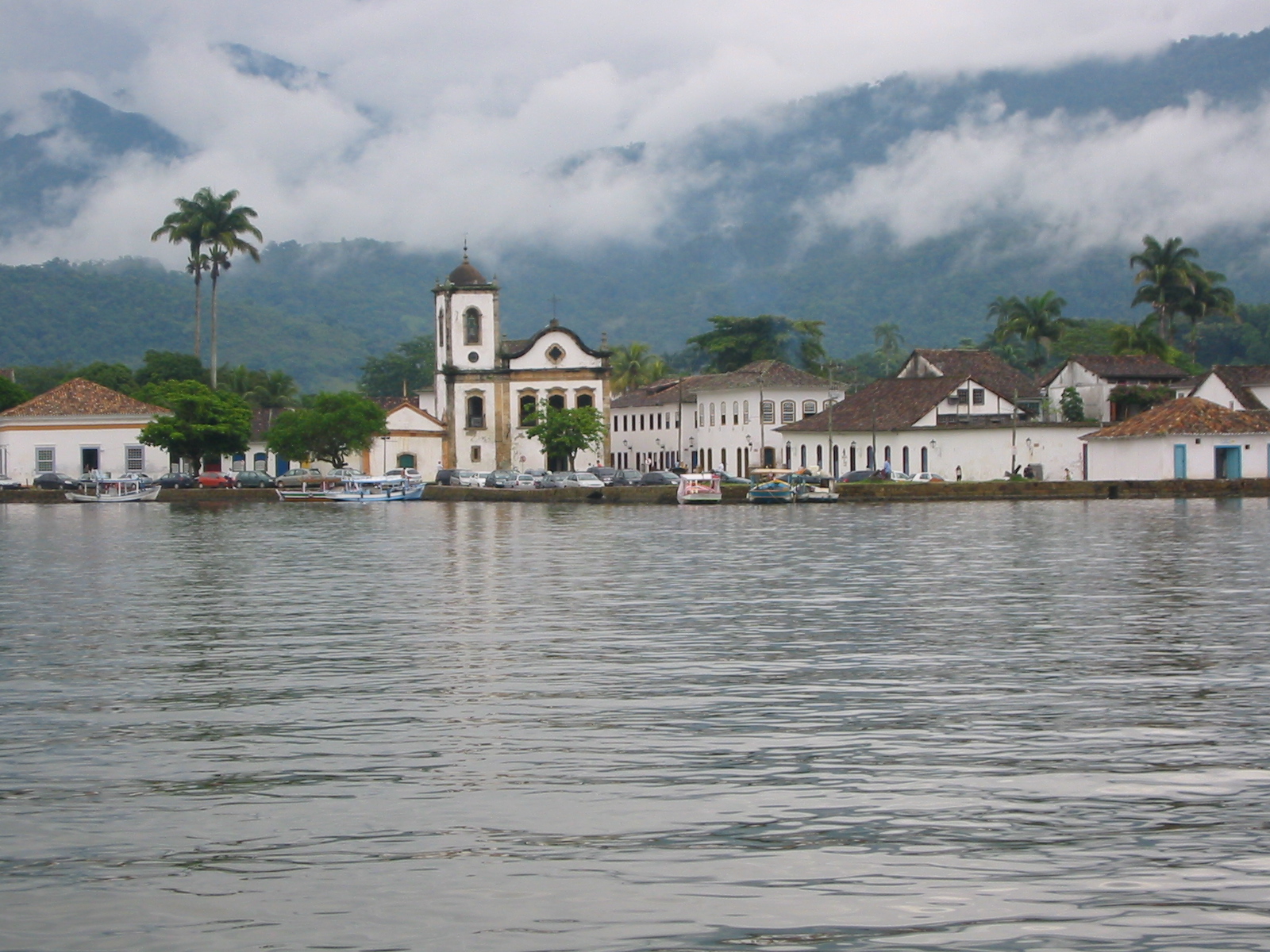
What UNESCO recognises in Paraty (2019)
The 2019 inscription corresponds to the mixed property 'Paraty and Ilha Grande – Culture and Biodiversity', Brazil's first mixed site. It recognises at once the cultural value of the colonial centre tied to the Gold Cycle and the natural value of the Atlantic Forest of the Serra da Bocaina and the marine ecosystems of the bay and Ilha Grande.
Source: https://whc.unesco.org/en/list/1308/

📚 Bibliography

  • Wikipedia (EN) — «Paraty»: https://en.wikipedia.org/wiki/Paraty
  • Wikipedia (PT) — «Paraty»: https://pt.wikipedia.org/wiki/Paraty
  • UNESCO — «Paraty and Ilha Grande – Culture and Biodiversity» (2019): https://whc.unesco.org/en/list/1308/
  • Paraty.com.br — «Caminho do Ouro»: https://paraty.com.br/caminho-do-ouro/
  • Paraty.com.br — «Festa do Divino Espírito Santo»: https://paraty.com.br/festa-do-divino-espirito-santo/
  • FLIP — «Sobre»: https://flip.org.br/sobre/
  • Mapa da Cachaça — «5 atrações gastronômicas em Paraty»: https://mapadacachaca.com.br/artigos/5-atracoes-gastronomicas-em-paraty-que-todo-amante-de-cachaca-precisa-conhecer/
  • Melhores Destinos — «Centro Histórico de Paraty»: https://guia.melhoresdestinos.com.br/centro-historico-de-paraty-192-5343-l.html
  • Viaje na Viagem — «Paraty»: https://www.viajenaviagem.com/destino/paraty/

❓ Frequently asked questions

How many days should you stay in Paraty?+
Between 3 and 5 days. Three cover the historic centre, a schooner around the islands and a day of waterfalls and distilleries. With 4 or 5 you can add Trindade, the Saco do Mamanguá and a more distant beach without rushing.
When is the best time to visit Paraty?+
April, May, September and October give the best balance of good weather, little rain and moderate crowds. From November to March it rains a lot (January is the peak). Bear in mind that the FLIP (in 2026, from 22 to 26 July; the dates change every year) and the Festa do Divino (May) fill the town and push prices up.
How do you get to Paraty from Rio or São Paulo?+
From the city of Rio it's about 5 hours by bus (about 240 km) on the Rio-Santos, with Viação Costa Verde. From São Paulo it's about 6 hours (about 270 km), with Reunidas Paulista, Primar Turismo or FlixBus. By car the times are similar on the BR-101. The rodoviária is 10 minutes on foot from the centre.
Do you need to rent a car in Paraty?+
It isn't essential. The centre is pedestrian and many outings (schooner, city tour, FLIP) are done on foot or by boat. A car is handy for waterfalls, distilleries and Trindade, but all of that can also be sorted with city buses, taxis/Uber and organised tours.
What is the Saco do Mamanguá and is it worth it?+
It's the only tropical fjord in Brazil: an arm of sea about 8 km long between mountains of Atlantic Forest, ideal for kayaking, trekking (the climb to the Pico do Pão de Açúcar) and total disconnection. Well worth it if you're after nature and adventure; you reach it by boat from Paraty-Mirim, about 15 km from Paraty.
Why is Paraty a World Heritage Site?+
Because in 2019 UNESCO inscribed the mixed site Paraty e Ilha Grande, recognising at once its cultural value (one of the best preserved colonial centres in Brazil, tied to the Gold Cycle) and its biodiversity (protected areas of Atlantic Forest and the Serra da Bocaina). It was the country's first mixed site.
Where should you stay in Paraty?+
The historic centre is the most charming and the most central, but also the most expensive. Caboré (by the river) has good, comfortable guesthouses 800-1,000 m from the centre and more quiet; Pontal and Jabaquara, across the river, have cheaper options. Trindade is ideal if you want a more rustic beach base.
Sources consulted (37)
Still planning?
Explore more destinations in Brazil
See all destinations →
Advertisements
Image credits
Photos from Wikimedia Commons, each under its own licence (CC BY, CC BY-SA or public domain). Open each file to see its author and licence.
Paraty