Viajá con Gus
Home › Azerbaijan › Naftalan
Naftalan
🇦🇿 Azerbaijan · The centre: Ganja, Shamakhi and Naftalan

Naftalan

🪪 What do I need to enter Azerbaijan?Pick your citizenship and we tell you the visa, the days and the paperwork, with the official source.

By leaving your email and citizenship you agree to receive the documents you asked for and weekly travel news. You can unsubscribe whenever you want. How we handle your data.
Jump to what you need
📍Region
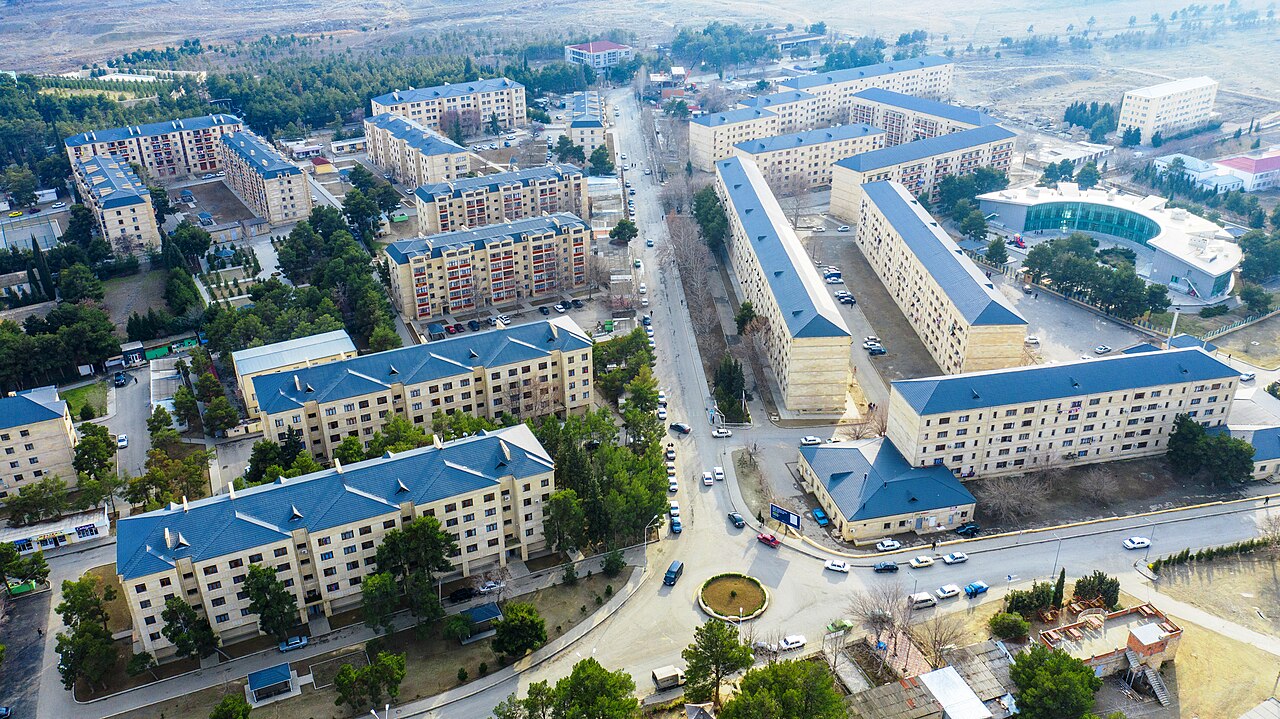
Naftalan is a small spa town in west-central Azerbaijan, between Ganja and Barda, famous around the world for one unique oddity: its baths of therapeutic crude oil. Here the oil isn't extracted to make fuel. Instead, a special type of oil called naftalan is used to treat skin, joint and nervous system conditions, in warm baths under medical supervision. The town revolves around its sanatoriums and spa hotels, which welcome patients and curious visitors from Azerbaijan, the former Soviet Union and the Arab countries, plus a growing number of travellers from all over the world. It's a destination for health, curiosity and relaxation, with nothing quite like it anywhere else on the planet.
📌Best time to go
You can visit Naftalan all year round, because its main draw (the baths and treatments) is indoors and doesn't depend on the weather. Spring (April-June) and autumn (September-October) are the most pleasant times for walking around and combining your stay with trips to Ganja or the nearby countryside. Summer is hot and dry, with peaks of 35 °C, although the sanatoriums have air conditioning and pools. Winter is cold but mild, and it's when many people come to treat joint problems. For a cure lasting several days, any season works; to add some sightseeing in the area, go in spring or autumn.
📌Suggested days
It depends on your goal. If you just want to try it out of curiosity, one oil bath, a visit to the museum and one night are enough. But Naftalan is designed for health cures: serious medical treatments run in courses of 7 to 14 days or more, with daily baths, physiotherapy and medical follow-up, which is how sanatoriums in the Soviet tradition work. As a sightseeing base, 1 or 2 nights let you combine the experience with Ganja (about 50 km away), the Nizami mausoleum and the west of the country.
📌Getting there
Naftalan is about 320 km from Baku and about 50 km from Ganja, the nearest large city. The most practical option is to get to Ganja first (by train from Baku, about 4 hours, or by plane to Ganja airport) and take a taxi or transfer to Naftalan from there (about 45 minutes-1 hour). Many sanatoriums and hotels, such as the Chinar, offer free or paid transfers from Ganja. There are also regional minibuses, and you can drive a rental car or take a taxi straight from Baku (about 4-4.5 hours). There is no direct train to Naftalan.
📌Getting around
Naftalan is a very small town, and most visitors stay in a sanatorium or spa hotel where they spend almost all their time, since that's where the baths, treatments, pools, restaurants and relaxation areas are. To get around town (the museum, the park, the odd shop) you walk or take a local taxi. For trips to Ganja or the surrounding area, the practical choice is a taxi that waits for you or the hotel transfer. There's no public transport network worth mentioning; almost everything revolves around the health complexes.
📌Language and currency
Azerbaijani is spoken, and Russian is very useful here, because many of the sanatorium patients are Russian speakers; medical and hotel staff usually speak it, and the big hotels also have some English. The currency is the Azerbaijani manat (AZN, ₼). As of July 2026, 1 USD is around 1.70 AZN (a rate that has been practically fixed since 2017) and 1 EUR around 1.90-1.97 AZN (approximate). You can pay by card at sanatoriums and hotels; it's a good idea to carry some cash for taxis, tips and extras. Many health packages are booked and paid for in advance.
💱 AZN exchange rate
Loading rate…
🌤️ Weather in Naftalan
Loading weather…

Without exaggeration, Naftalan is one of the strangest places in the world: an entire town devoted to bathing in crude oil. Not the oil that runs cars, but a special and rare type of crude, naftalan, dense and dark in colour, which has been used for medicinal purposes for over a century. In the town's sanatoriums, patients soak in tubs of this warm oil under medical supervision, seeking relief from skin diseases, joint pain and other conditions. There is no other spa like it on the planet.

The healing reputation of Naftalan's oil goes back a long way: the story goes that Silk Road caravans already used it to treat people and animals, and that Marco Polo mentioned an oil from the region that was used as a remedy. In Soviet times, Naftalan became a major health centre that drew patients from all over the USSR, with enormous sanatoriums; many left their crutches and walking sticks behind as a thank-you, and today a museum displays them. After years of decline, the town was reborn with modern spa hotels.

This guide helps you understand and enjoy Naftalan: what exactly the oil bath involves, what it's for and what precautions it calls for, what the sanatoriums and spa hotels are like, how much the treatments cost, how to get there from Ganja and Baku, and how to combine the experience with the rest of the west of the country. Whether for your health or out of sheer curiosity, soaking in oil in Naftalan is one of the most unusual experiences Azerbaijan has to offer.

📖 History of Naftalan

The name Naftalan comes from the word for oil ('neft'), and the town's history is the story of the medicinal use of a unique crude. For centuries, people in the region used this thick oil to treat wounds, skin diseases and aches; medieval travellers, Marco Polo himself according to legend, mentioned a healing oil from these lands. In the late 19th century, a German entrepreneur set up the first production and exported naftalan ointments to Europe. In Soviet times, Naftalan became a large spa centre, with sanatoriums that received hundreds of thousands of patients from all over the USSR. After the Soviet collapse and the Nagorno-Karabakh war, which filled the sanatoriums with refugees, the town declined, and in the 21st century it was reborn with modern spa complexes such as the Chinar. The story of the oil that heals is told on our history page.

Read the full history ↓

🏛️ Naftalan is in the centre: Ganja, Shamakhi and Naftalan

Azerbaijan's historic heartland: Ganja, city of the poet Nizami; Shamakhi, capital of the old kingdom of Shirvan, with one of the oldest mosques in the Caucasus; and unusual Naftalan, where the signature treatment is a bath in crude oil.

Read the history of The centre: Ganja, Shamakhi and Naftalan →

🗺️ What to see

1
The crude oil bath (naftalan)
The star experience, unique in the world: soaking in warm crude oil for therapeutic purposes, under medical supervision, in a sanatorium.
Leer más ↓
Naftalan's whole reason for being is its oil bath. The treatment involves soaking for a few minutes (usually 8 to 10) in an individual tub filled with naftalan, a special crude oil heated to about 37-38 °C, dense and dark brown. Afterwards, staff scrape off the excess oil with spatulas and the patient showers. Everything is done under medical supervision, after a prior consultation, because it isn't suitable for everyone. Naftalan has been used for over a century to treat skin conditions (such as psoriasis and some types of eczema), joint and rheumatic complaints, and circulation and nervous system problems, among others. It's worth stressing that this is a medical treatment, not a spa indulgence: it has indications and contraindications (it isn't recommended, for example, during pregnancy or with certain illnesses or heart problems), which is why it should always be done after an assessment by one of the centre's doctors. The sensation is strange and unforgettable: floating in warm, sticky oil. For many patients it's a much sought-after cure; for curious travellers, a once-in-a-lifetime experience. It's offered at the town's sanatoriums and spa hotels, as part of a package or on its own, always with a prior medical consultation.
ℹ️ Distance: At the town's sanatoriums and spa hotels · Best time to go: All year round (indoor treatment) · Admission: Single bath from ~15-40 AZN depending on the centre; included in health packages; requires a prior medical consultation (verified July 2026) · Duration: The bath, ~8-10 min; the full session, ~45 min
2
The Museum of Crutches
A moving museum displaying the crutches and walking sticks that cured patients left behind as a thank-you, a testament to the spa's fame.
Leer más ↓
One of the most unusual and touching places in Naftalan is its small museum, popularly known as the Museum of Crutches. In Soviet times, when the spa received hundreds of thousands of patients from all over the USSR, many who arrived on crutches, with walking sticks or in wheelchairs because of joint problems walked away after their cure, leaving their walking aids behind as a sign of gratitude. The museum gathered these crutches and sticks into a striking exhibition. Besides the crutches, the museum tells the story of Naftalan's healing oil: its uses over the centuries, the science behind the treatment, the spa's Soviet golden age and the products made from it (ointments, creams). It's the best way to understand why this small town became famous across half the world and what naftalan means to the region's folk medicine. It's a short but highly recommended visit that puts the whole Naftalan experience in context. It's usually in the town centre or linked to one of the sanatoriums; check opening hours and location at your hotel. A modest place, but full of human stories.
ℹ️ Distance: In the town centre; on foot or a short taxi ride from the hotels · Best time to go: All year round; check opening hours · Admission: Free or a token fee of ~2-5 AZN (verified July 2026) · Duration: 30 to 45 minutes
3
The sanatoriums and spa hotels
The large health complexes that define the town, from the modern Chinar to Soviet-style sanatoriums, with baths, physiotherapy and pools.
Leer más ↓
Naftalan is essentially a town of sanatoriums, and visiting and staying in them is part of the experience. Two worlds coexist: on one side, modern four- and five-star complexes such as the Chinar Hotel & Spa, with comfortable rooms, pools, a hammam, a gym, restaurants and a full medical centre; on the other, sanatoriums in the Soviet tradition, more austere and affordable, which keep the feel of the spa's golden age and offer treatments at lower prices. The approach is similar in all of them: accommodation is combined with a medical programme that includes a consultation, oil or iodine-bromine baths, physiotherapy (laser, magnetotherapy, ultrasound), and sometimes a diet and other cures, in courses lasting several days. Many packages are full board and include the treatments, following the classic model of Eastern spas. For travellers, choosing where to stay shapes the experience: the Chinar and similar places for comfort and relaxation with a medical touch; the classic sanatoriums for a more authentic (and cheaper) immersion in the world of the Soviet spa. Either way, the prior medical consultation is your way into the treatments.
ℹ️ Distance: Spread around town; the Chinar and the main ones are in the centre · Best time to go: All year round · Admission: Health packages from ~1.000 AZN for 2 weeks with full board and treatments (Chinar); classic sanatoriums are cheaper (verified July 2026) · Duration: From 1 night to 1-2 week cures
4
The park and the spa-town atmosphere
The central park and green areas where patients stroll, with the calm, slightly retro feel of a spa town.
Leer más ↓
Outside the sanatoriums, Naftalan has the unhurried, slightly retro atmosphere of a spa town devoted entirely to health. Its central park and green areas are where patients stroll between treatments, sit and get some fresh air and socialise, many of them Russian speakers who come back year after year. It's a good place to soak up the spirit of the town and relax. The town is small and has no major monuments beyond its spa world, but that very health-resort feel, somewhere between Soviet and modern, has its own charm. There are a few cafés, shops selling naftalan products (creams, soaps, ointments you can buy as a healing souvenir) and the quiet bustle of a town that lives off caring for bodies. Strolling through the park, buying a naftalan product and watching the patients go about their day rounds off the visit. It's a relaxed plan, ideal to combine with the baths and the museum, and it helps you see that Naftalan isn't just a treatment but a whole way of life built around the oil that heals.
ℹ️ Distance: In the town centre; on foot · Best time to go: Spring and autumn, for walking outdoors · Admission: Free; naftalan products at shop prices (verified July 2026) · Duration: 1 hour
5
The country's second city, about 50 km away, with its old town, the mausoleum of the poet Nizami and Lake Goygol, ideal to combine with Naftalan.
Leer más ↓
The nearest large city to Naftalan is Ganja, about 50 km away (45 minutes-1 hour by car), and it's the natural day trip to add to your spa visit. Ganja is Azerbaijan's second city, old and leafy, and the birthplace of the great Persian poet Nizami Ganjavi, whose mausoleum stands on the outskirts. It has a pleasant old town with the Juma Mosque from 1606, the Javad Khan pedestrian street, the tiled Imamzadeh complex and the quirky Bottle House. From Ganja you can also head up to the beautiful Lake Goygol, a turquoise lake among the mountains of the Lesser Caucasus and one of the loveliest landscapes in the country. Combining Naftalan's oil baths with the history and nature around Ganja turns a simple health visit into a full getaway through western Azerbaijan. You can get there by taxi with waiting time, by hotel transfer or by rental car. For anyone spending several days in the west of the country, Naftalan and Ganja make a logical pair, and you can add other places in the centre such as Shamakhi or Barda. It's a way to give context and variety to the spa experience.
ℹ️ Distance: Ganja ~50 km away (45 min-1 h); Lake Goygol, another ~40 km from Ganja · Best time to go: Spring and autumn for Ganja and Goygol · Admission: Exploring Ganja is free; museums and national park have token fees (verified July 2026) · Duration: Half a day to a full day
6
Naftalan products and cosmetics
Creams, soaps and ointments made with the healing oil, which you can try and buy as a unique therapeutic souvenir.
Leer más ↓
Naftalan's oil isn't only used for baths: a whole range of products with supposed therapeutic and cosmetic properties is made from it, sold in the town, at the sanatoriums and in shops around the country. Skin creams and ointments (used for psoriasis, eczema and aches), soaps, shampoos and balms made from refined naftalan are an original souvenir that is very typical of the area. These products let you take 'a piece' of the Naftalan experience home, and many patients use them to continue at home the care they started at the spa. It's interesting to see how something as unexpected as oil becomes cosmetics and folk pharmacy. That said, for medical use, always get advice from a professional. Buying a naftalan soap or cream is a fun, cheap way to remember your visit and surprise your family with the oddest souvenir imaginable: cosmetics made with oil. They're easy to find in town and in the spa hotel shops, at shop prices.
ℹ️ Distance: In shops around town and at the sanatoriums · Best time to go: All year round · Admission: Products from a few manats (soaps, creams) depending on the item (verified July 2026) · Duration: As long as your shopping takes
📶I have never landed without internet. I arrive and my phone connects to the strongest network in the country I am visiting: I can say I landed, sort out transport, book tours and keep posting, at a seriously good price. I always use the Maya eSIM — check their plans by clicking the banner.See plans →Maya Mobile eSIM — download, install, go
What nobody tells you

💵 Prices

Tickets

TypePrice
Baño de petróleo individual (con consulta médica)From ~15-40 AZN depending on the centre; included in health packages, 2026
Museo de las MuletasFree or a token fee of ~2-5 AZN, 2026
Paquete de salud (2 semanas, pensión completa + tratamientos, Chinar)From ~1.000 AZN per person, 2026
Parque y zonas verdesFree, 2026
Productos de naftalán (cremas, jabones)From a few manats depending on the item, 2026
🔄 updated monthlyOfficial / reference values · double-check when buying

Activities and tours

ActivityPriceDurationOperator
Full sanatorium cure (baths + physiotherapy + board)From ~1.000 AZN for 2 weeks (Chinar); classic sanatoriums are cheaper, 20267 to 14 days or moreChinar Hotel & Spa and Naftalan sanatoriums
Single oil bath (experience)From ~15-40 AZN + medical consultation, 2026~45 min per sessionSanatoriums and spa hotels
Visit to the Museum of CrutchesFree or ~2-5 AZN, 202630-45 minNaftalan Museum
Day trip to Ganja and Lake GoygolTaxi with waiting time from ~60-120 AZN per car; tours separate, 2026Half a day to a full dayTaxis and agencies / hotel transfer
Transfer from Ganja to your Naftalan hotelFree or paid depending on the hotel (~20-40 AZN), 2026~45 min-1 hSpa hotels (Chinar and others)
🔄 updated monthlyOfficial / reference values · double-check when buying

🚌 How to get there and distances

Getting around

On foot around town
Free
DurationVariable
Notes
Naftalan is very small: the museum, the park and the shops are close together. Most of your time is spent inside the sanatorium or hotel
Local taxi
Short rides ~3-8 AZN, 2026
DurationVariable
Notes
For getting around town or reaching a specific sanatorium. Agree the fare with the driver; Bolt doesn't cover small towns well
Hotel transfer from Ganja
PriceFree or ~20-40 AZN depending on the hotel, 2026
Duration~45 min-1 h
Notes
Many spa hotels, such as the Chinar, offer transfers from Ganja (airport or city), the most comfortable way to get there
Taxi with waiting time for excursions
PriceTo Ganja/Goygol from ~60-120 AZN per car, 2026
DurationHalf day
Notes
For trips to Ganja, Lake Goygol or the west. Hired by the half day or full day, with the price agreed in advance
🔄 updated monthlyOfficial / reference values · double-check when buying

How to get there

RouteAirlines / operatorsAvg. priceDuration
Baku → Ganja → NaftalanADY train Baku-Ganja + taxi/transfer to NaftalanTrain from ~10-25 AZN + taxi ~20-40 AZN, 2026Train ~4 h + ~45 min-1 h by taxi
Baku → Naftalan directTaxi/hire car; regional minibusesPrivate taxi expensive; minibus cheaper, 2026~4-4,5 h (320 km)
Ganja → NaftalanTaxi, regional minibus or hotel transferTaxi ~20-40 AZN; minibus cheaper, 2026~45 min-1 h (50 km)
🔄 updated monthlyOfficial / reference values · double-check when buying

🏨 Where to stay

No exact prices: a scale from $ (budget) to $$$$$ (luxury), with 2-3 options per category.

Luxury spa hotels (4-5 stars)
Price$$$$$
Recommended options
~130-350 AZN per night or health packages (≈ 80-205 USD), 2026. The benchmark is the Chinar Hotel & Spa Naftalan, a modern five-star complex with a full medical centre, pools, hammam and restaurants; 2-week treatment packages with full board and treatments start at around 1.000 AZN
Sanatoriums and mid-range hotels
Price$$$$$
Recommended options
~60-160 AZN per night with treatments (≈ 35-95 USD), 2026. More traditionally run sanatoriums and mid-sized hotels offering the same oil baths and physiotherapy at a better price, with a more Soviet but functional feel
Budget sanatoriums
Price$$$$$
Recommended options
~40-90 AZN per night with half board (≈ 25-55 USD), 2026. Simple, austere and cheap sanatoriums, inherited from the Soviet era, for those looking for the treatment or the experience at the lowest possible cost

🍴 Where to eat

Restaurantes de los sanatorios
Price$$$$$
Options / signature dish
Included in your board; set menus ~15-40 AZN separately (≈ 9-24 USD), 2026. Most patients eat at the restaurant of their sanatorium or hotel, often on a diet designed around the treatment. At the Chinar and similar places, good-quality Azerbaijani and international cuisine
Cocina azerbaiyana local
Price$$$$$
Options / signature dish
Dishes ~8-20 AZN (≈ 5-12 USD), 2026. A few restaurants and eateries in town serving classic Azerbaijani food: kebabs, stews, soups and tandir bread, at provincial prices
Cafés y casas de té
Price$$$$$
Options / signature dish
Tea and sweets ~2-8 AZN (≈ 1-5 USD), 2026. Cafés and çayxana where patients have tea with sweets between treatments and pass the time; the calm atmosphere of a spa town

📖 History of Naftalan

Origins, formation and what the sources say.

The city that heals with oil

There are spas built around hot springs, mud and salt. Naftalan is the only spa in the world whose signature treatment is a bath in crude oil. In this small city in west-central Azerbaijan, between Ganja and Barda, thousands of people each year sink into bathtubs of thick, dark crude warmed to body temperature, looking for relief for their skin, their joints and other ailments. The scene is so unusual it seems to belong on another planet, but there are centuries of history behind it.

The secret lies in the substance itself: Naftalan oil is no ordinary crude. It is a rare type, low in the light fractions used for fuel and rich in compounds called naphthenes, which are credited with medicinal properties. Because of this, instead of being refined into petrol, this oil was used as a remedy, first in folk medicine and later in official medicine, especially in the Soviet era.

The history of Naftalan is therefore the history of a unique relationship between a community and a substance. In Azerbaijan, 'the land of fire' and of oil, crude is everything: it drives the economy, it shaped the cities, it set the course of the country. But in Naftalan oil does something different: instead of burning or powering engines, it heals. That is what makes the place unique and charming.

A remedy from the Silk Road

The healing use of Naftalan oil goes back a long way. For centuries, people in the region knew this thick crude that seeped out of the ground, and they applied it to wounds, burns, skin diseases and aches, on both people and animals. Caravans crossing the area on the trade routes between East and West stocked up on it as a remedy for the road.

A widely repeated tradition credits the Venetian traveller Marco Polo, who passed through the Caucasus in the 13th century, with mentioning an oil from these lands that was no good for eating but was good for curing skin complaints and for rubbing on camels. Whether it is accurate or legendary, the story shows that the region's healing oil was already famous in the Middle Ages, long before any industry existed.

For centuries, then, naftalan was a folk remedy, a healing oil gathered by hand and applied according to traditional knowledge. The city of Naftalan did not exist yet: there were wells and natural seeps of this special crude, and a reputation that spread by word of mouth along the trade routes of the Caucasus. The leap into modern medicine would come at the end of the 19th century.

From well to ointment: the naftalan industry

The move from folk remedy to modern production came at the end of the 19th century, at the height of Azerbaijan's oil boom. While Baku was becoming the world's oil capital, a German entrepreneur in the Naftalan area, drawn by the properties of the local oil, set up a business to exploit it not as fuel but as a medicinal product. The first naftalan ointments and creams came out of it, and they were exported to Europe and sold in pharmacies.

Naftalan thus earned a place in the medicine of the time: creams and ointments made from this refined crude were used to treat skin conditions, rheumatic pain and other ailments, and they were sold in several countries. The substance moved from the folk medicine of the Caucasus to the modern pharmacy, and its name became almost a brand. That recognition laid the groundwork for what came next.

The big development, however, came with the Soviet Union. The Soviet health system put great faith in spas and sanatoriums ('kurorts') as part of workers' health care, and it saw Naftalan as a unique resource. By the mid-20th century, the small cluster of healing wells began turning into something much bigger: a planned spa town devoted entirely to the oil that heals.

The Soviet golden age

In the second half of the 20th century, Naftalan lived through its golden age. The Soviet Union built large sanatoriums there and turned the town into a leading health destination, drawing patients from every Soviet republic, from the Baltic to Central Asia. They came by the thousands every year, referred by doctors or sent by their employers and trade unions, for cures lasting several weeks based on oil baths and physiotherapy.

Naftalan's fame soared, above all because of its results with joint and skin conditions. Many patients who arrived on crutches, with canes or in wheelchairs because of rheumatic problems said they walked out after the cure, and they left their walking aids behind as a sign of gratitude. Those donated crutches and canes became the town's moving 'Crutch Museum', one of its most unusual sights and the best symbol of that era.

Naftalan was then a prosperous, lively town, with huge sanatoriums, gardens, treatment rooms and a steady stream of visitors. The oil that heals was its reason for being and its economic engine. Like so many Soviet 'kurorts', it had that half-medical, half-holiday feel, with patients combining treatments with rest, walks in the park and the social life of the spa. Nothing hinted at the crisis that lay ahead.

Crisis, war and revival

The collapse of the Soviet Union in the early 1990s hit Naftalan hard. Almost overnight, the flow of patients from across the USSR stopped, and the system that kept the big sanatoriums running fell apart. On top of that crisis, Azerbaijan faced the Nagorno-Karabakh war with Armenia, which displaced hundreds of thousands of people inside the country. Many of those refugees were housed in Naftalan's empty sanatoriums, which for years stopped working as spas and became shelters.

It was a long, hard period. The facilities fell into disrepair, the town lost people and activity, and for a while the oil that heals seemed like a memory from the past. Only once the country stabilised and the situation of the displaced people was gradually resolved, well into the 21st century, could Naftalan begin to recover its original calling as a health town.

The revival came with investment and new resorts. The best known is the Chinar Hotel & Spa, a modern five-star spa hotel that put Naftalan back on the health-tourism map, now aimed not only at patients from the former USSR but also at visitors from Arab countries and the rest of the world. Alongside the modern resorts, Soviet-style sanatoriums are still running, plainer and cheaper, so today the town offers both faces of the spa.

Naftalan today: between medicine and curiosity

Today Naftalan once again lives off its healing oil, in an interesting mix of tradition and modernity. On one hand, it is still a serious health centre: the sanatoriums and spa hotels offer medical cures with naftalan baths and physiotherapy, supervised by doctors, to treat psoriasis, eczema, joint and rheumatic conditions and other ailments, following the model of the spas of the East. Many patients come back year after year.

On the other hand, in recent decades Naftalan has also become a first-rate tourist curiosity. The idea of bathing in oil draws travellers from all over the world who want a one-of-a-kind experience, even if they are perfectly healthy. The town has made the most of that interest, promoting its oddity as one of Azerbaijan's great unusual attractions, alongside the eternal fire of Yanar Dag and the mud volcanoes of Gobustan.

For travellers, Naftalan is a fascinating stop: a place where the resource that made all of Azerbaijan rich and famous, oil, is used to heal instead of to burn. Sinking into the warm crude, visiting the Crutch Museum and understanding this centuries-old story is a glimpse of an unexpected side of the country. In 'the land of fire', Naftalan shows that oil can also heal, and nowhere else in the world has anything quite like it.

📚 Bibliography

  • Wikipedia (EN) — «Naftalan, Azerbaijan» — https://en.wikipedia.org/wiki/Naftalan,_Azerbaijan
  • Wikipedia (EN) — «Naftalan oil» — https://en.wikipedia.org/wiki/Naftalan_oil
  • Advantour — «Naftalan Travel» — https://www.advantour.com/azerbaijan/naftalan.htm
  • LuxLine — «Naftalan Azerbaijan: World's Only Medicinal Oil Bath Guide» — https://luxline.az/en/blog/naftalan-azerbaijan-medicinal-oil-bath-guide
  • The Fabryk — «Naftalan Oil Bath: What It's Like & How to Plan the Trip» — https://thefabryk.com/blog/naftalan-oil-bath
  • You're Not From Around Here — «Salt and Crude Oil: The Alternative Health Spas of Azerbaijan» — https://yourenotfromaroundhere.com/salt-oil-health-spa-azerbaijan/
  • Azerbaijan Immigration — «Naftalan Azerbaijan: Guide to Healing Oil Resorts» — https://www.azerbaijanimmigration.com/news/naftalan-azerbaijan
  • Sanatoriums.com — «Chinar Hotel & SPA Naftalan» — https://www.sanatoriums.com/en/naftalan/spa-hotel-chinar-hotel-and-spa-4051
  • Azerbaijan Travel (official) — Naftalan — https://azerbaijan.travel/

❓ Frequently asked questions

What exactly is the Naftalan oil bath?+
It is a medical treatment found nowhere else in the world: soaking for about 8-10 minutes in an individual bathtub filled with naftalan, a special crude oil heated to around 37-38 °C, thick and dark. Afterwards the excess is scraped off with spatulas and the patient showers. It has been used for more than a century to treat skin conditions (psoriasis, eczema), joint and rheumatic complaints, and circulation and nervous system problems. It is always done under medical supervision and after a prior consultation, because it has indications and contraindications. It is not a spa indulgence, but a therapy with a history.
Is the oil bath safe? Who shouldn't do it?+
Done properly, with a prior medical assessment and following the centre's timings and guidelines, it is considered safe for the right indications. But it is not suitable for everyone: it is generally advised against during pregnancy, with certain heart, kidney or liver conditions, in some cancer cases and in other conditions. That is why every sanatorium requires a medical consultation before the bath. You should never do it on your own or skip that assessment. If you have doubts or any illness, check with the centre's doctor and with your own before you travel.
How do I get to Naftalan?+
Naftalan is about 320 km from Baku and about 50 km from Ganja. The most practical option is to get to Ganja first (by train from Baku, about 4 hours, or by plane) and from there take a taxi or transfer to Naftalan (45 minutes-1 hour). Many spa hotels, such as the Chinar, offer transfers from Ganja. There are also regional minibuses, and you can get there by hire car or by direct taxi from Baku (about 4-4,5 hours). There is no direct train to Naftalan, so Ganja is the usual gateway.
How much does a stay in Naftalan cost?+
It depends a lot on the type of accommodation and treatment. At the Chinar Hotel & Spa, the leading five-star complex, a 2-week treatment package with full board, consultation and treatments (baths and physiotherapy) starts at around 1.000 AZN per person; single nights cost around 130 AZN or more. The more traditional, Soviet-style sanatoriums and hotels offer the same experience for quite a bit less. A single oil bath just to try it costs from about 15-40 AZN plus the consultation. It is a destination with options for different budgets.
Is it worth going just out of curiosity, without being ill?+
Yes, many travellers go to Naftalan simply for the one-of-a-kind experience of bathing in oil and seeing a place that is unique in the world. You can book a single bath (with the prior medical consultation) and visit the moving Crutch Museum, which tells the story of the spa. Even so, bear in mind that it is a medical treatment: if you are healthy and just want to try it, a one-off bath is fine, but the long treatment courses are designed for people with specific conditions. As a curiosity and an experience, it is one of the most memorable things in Azerbaijan.
What can I combine with a visit to Naftalan?+
The natural day trip is Ganja, the country's second city, about 50 km away: its old town, the Juma Mosque, the mausoleum of the poet Nizami, the Bottle House and the Imamzadeh complex. From Ganja you can also head up to the beautiful Lake Goygol, in the mountains. For anyone spending several days in the west and centre of the country, Naftalan and Ganja make a logical pair, to which you can add Shamakhi (history and wine) or Barda. That way, the health experience becomes a complete getaway through western Azerbaijan.

More places in Azerbaijan

QubaShahdagShamakhiShekiZaqatalaPenínsula de Absheron
See every place in Azerbaijan →The history of Azerbaijan →
Sources consulted (11)
Still planning?
Explore more destinations in Azerbaijan
See all destinations →
Image credits
Photos from Wikimedia Commons, each under its own licence (CC BY, CC BY-SA or public domain). Open each file to see its author and licence.
Naftalan, Azerbaijan