Viajá con Gus
Home › Australia › Lady Elliot Island
Lady Elliot Island
🇦🇺 Australia · Queensland

Lady Elliot Island

🪪 What do I need to enter Australia?Pick your citizenship and we tell you the visa, the days and the paperwork, with the official source.

By leaving your email and citizenship you agree to receive the documents you asked for and weekly travel news. You can unsubscribe whenever you want. How we handle your data.
Jump to what you need
📌State
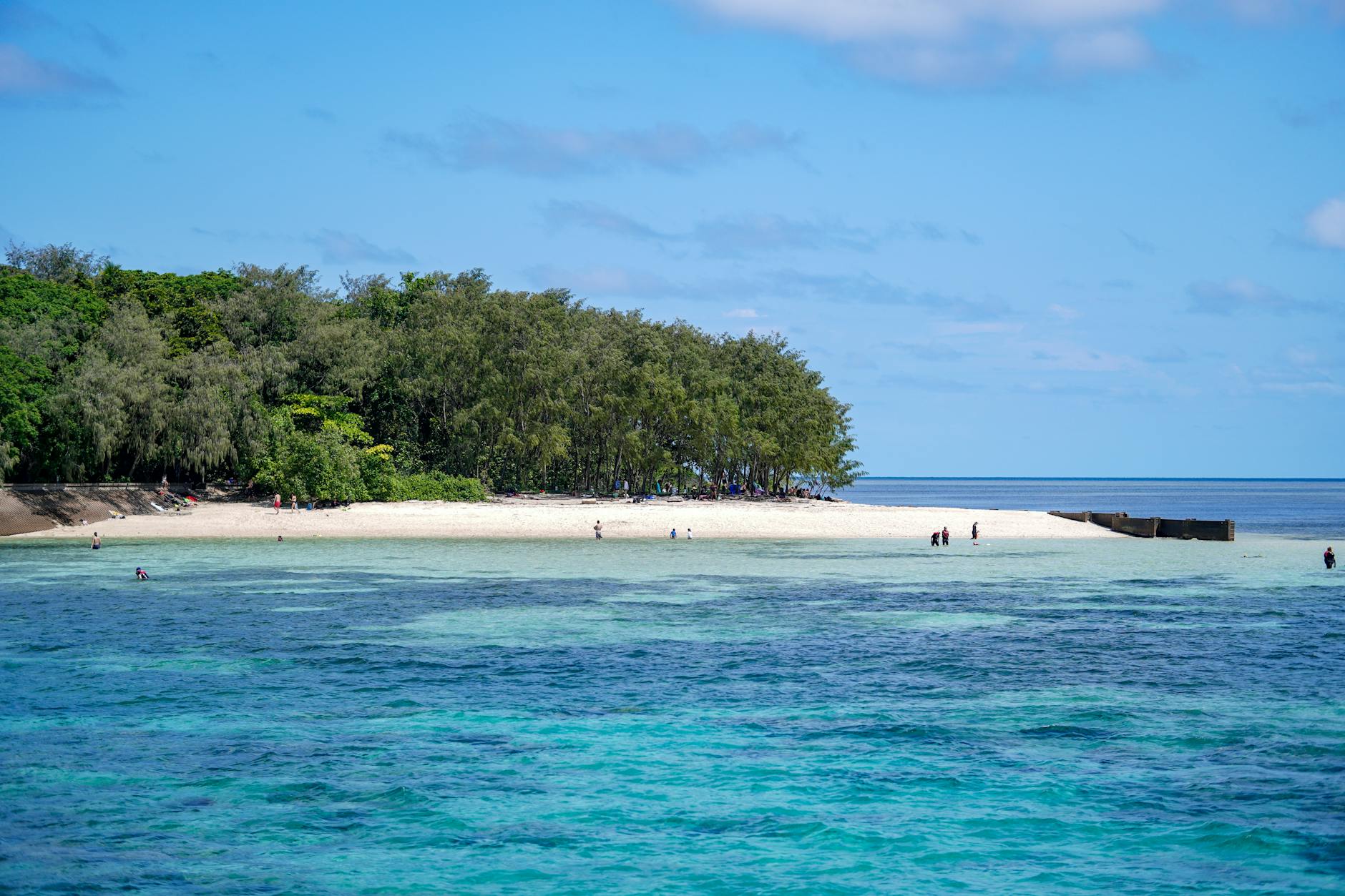
Lady Elliot Island is the southernmost coral cay on the Great Barrier Reef, a tiny patch of sand and coral of about 45 hectares some 85 km northeast of Bundaberg, in Queensland. It sits within the "Green Zone" of the Great Barrier Reef Marine Park, the highest level of protection, and has only a small eco-resort and an airstrip. It is a world-famous sanctuary for manta rays and turtles.
📌Best time to visit
You can visit all year round, with different stars of the show. May to August is the best manta ray season, when they gather around the cay. November to March is sea turtle nesting and hatching season. Humpback whales pass by from June to October. Water visibility is excellent almost all year because the island lies far from the coast.
📌Suggested days
You can go on a day trip (scenic flight + snorkelling + lunch) from Bundaberg, Hervey Bay, Brisbane or the Gold Coast. To really experience the island (the sunrise, the starry sky, several dives) it's worth staying 2 or 3 nights at the eco-resort. It's a nature destination, not a nightlife one.
📌Getting there
The only way in is by light aircraft. Scenic flights in small planes take off daily from Bundaberg (~30 min), Hervey Bay (~40 min), Brisbane, the Gold Coast and Redcliffe to the island's grass and sand airstrip. There is no ferry or boat access for the general public. The flight itself, over the reef, is already part of the experience.
📌Getting around
On foot: you can walk around the whole island in about 20 minutes. There are no cars, roads or transport. Everything (the resort, the restaurant, the dive centre, the snorkelling lagoon) is just a few steps away. It's a place deliberately free of excessive luxury and traffic, designed around nature.
📌Language and currency
English; Australian dollar (AUD, A$). Cards are accepted at the resort. As a remote eco island, it has basic services, solar power and a total focus on low environmental impact; don't expect ATMs or shops.
💱 AUD exchange rate
Loading rate…
🌤️ Weather in Lady Elliot Island
Loading weather…

Lady Elliot Island is one of those places that seem too good to be true: a tiny coral cay at the southern tip of the Great Barrier Reef, surrounded by a ring of reef so rich it has been nicknamed "the Home of the Manta Ray". Here, just a few metres from the shore, you can swim with giant manta rays, green turtles, harmless reef sharks and more than 1,200 marine species, in water of extraordinary clarity.

Unlike crowded tourist islands, Lady Elliot is a sanctuary. It lies within the Marine Park's Green Zone, the highest level of protection possible, and is home only to a small eco-resort and a sand airstrip. There are no cars, no crowds and no nightlife: there is coral, stars and silence. The island, stripped bare by guano mining 150 years ago, is today a global example of environmental restoration, with thousands of trees replanted and an ecosystem reborn.

This guide covers the essentials of Lady Elliot with a practical eye: how to get there by light aircraft (the only way), what you can see underwater depending on the season (mantas, turtles, whales), how a day trip or a stay at the eco-resort works, and why this cay is one of the best places on the planet for snorkelling and diving straight from the beach. A paradise for lovers of the sea and nature.

📖 History of Lady Elliot Island

Lady Elliot Island, the southernmost coral cay on the Great Barrier Reef, has a history of destruction and rebirth. Formed over millennia by the build-up of coral and sand, it was sighted and named by European navigators in the early 19th century. Between 1863 and 1873 it was ravaged by guano mining (bird droppings used as fertiliser), carried out by Chinese and Malay workers who removed almost all the trees and up to a metre of soil, leaving the island bare. In 1866 one of the first lighthouses on the Great Barrier Reef was built there. Only in 1966 did a revegetation programme begin which, together with the creation of the eco-resort and the island's inclusion in the marine park's Green Zone, transformed the cay into the manta ray and turtle sanctuary it is today. The full story is on our history page.

Read the full history ↓

🏛️ Lady Elliot Island is in Queensland

The state of sunshine and the tropics: land of dozens of Aboriginal nations, born as the Moreton Bay penal settlement in 1824, separated from New South Wales in 1859 and shaped by sugar cane, wool and mining. It is home to the Great Barrier Reef and the Daintree Rainforest, two World Heritage Sites.

Read the history of Queensland →

🗺️ What to see

1
Snorkelling with manta rays in the lagoon
The star experience: swimming among giant manta rays just metres from the shore.
Leer más ↓
Lady Elliot is known worldwide as one of the best places on the planet to swim with manta rays, and for good reason: it has a resident population of around 40 manta rays that frequent the cay's waters all year round, peaking between May and August. These majestic creatures, which can exceed three metres in wingspan, come to the reef's "cleaning stations", where small fish clean them, and there you can float above them and watch them glide with hypnotic elegance. The amazing thing is that you don't need a boat or scuba gear: much of the snorkelling is done straight from the beach, in the lagoon sheltered by the ring of coral. The water is crystal clear, warm and shallow, ideal for first-time snorkellers too. Besides mantas, you'll see green turtles, (harmless) reef sharks, fish in every colour imaginable, eagle rays and living coral. Resort guides lead groups and explain where and how to see the wildlife without disturbing it. Getting there: the snorkelling lagoon is in front of the resort, reached on foot; there are also guided boat trips. Best time: mantas all year, peaking May to August; visibility excellent almost always. Tips: follow the guides' instructions, never touch or chase the mantas or turtles, wear a lycra suit or wetsuit, and respect the reef (don't step on the coral).
ℹ️ Distance: Lagoon in front of the resort, on foot; guided boat trips too · Best time: Mantas all year, peak May-August; high visibility almost always · Admission: Included in the day trip (RRP A$ 545 adult) or in your stay; snorkel gear included (source: Lady Elliot Island Eco Resort, verified July 2026) · Duration: Several hours
2
Scuba diving on the reef
World-class dives in coral gardens, with mantas, turtles and big fish.
Leer más ↓
For divers, Lady Elliot is a dream destination. Sitting on the outer edge of the Great Barrier Reef, far from the coast and river sediment, it has underwater visibility that often exceeds 20 metres, and reefs in excellent condition under the highest level of marine protection. There are dive sites for every level, many of them accessible from the shore or a short boat ride away. The famous spots, such as Lighthouse Bommie, the Blowhole or Coral Gardens, offer encounters with manta rays, green turtles, leopard and reef sharks, eagle rays and moray eels, and in season the song of humpback whales in the background. The island's dive centre offers guided dives, introductory courses (Discover Scuba Diving) and certifications. It's a place where many divers make their first dive and others return year after year. Getting there: the dive centre is on the island; dives leave from the shore or by short boat ride. Best time: all year; mantas May to August, whales June to October. Tips: book your dives in advance (spaces are limited), bring your certification if you have one, and if you've never dived, try a Discover Scuba Diving with an instructor.
ℹ️ Distance: Dive centre on the island; sites from the shore or short boat ride · Best time: All year; mantas May-August, whales June-October · Admission: Guided dive from ~A$ 90-140; courses extra (source: Lady Elliot Island Eco Resort, verified July 2026) · Duration: Half a day per trip
3
Sea turtles: nesting and hatching
Watch green and loggerhead turtles nest on the beach and hatchlings race to the sea, in season.
Leer más ↓
Lady Elliot is an important nesting site for sea turtles, mainly green turtles and, to a lesser extent, loggerheads. During the southern summer, between November and March, the females come up the beach at night to dig their nests and lay eggs; weeks later, the tiny hatchlings emerge from the sand and dash towards the sea in a dramatic race for survival. Witnessing either scene, accompanied by resort guides, is an unforgettable experience. What's more, all year round it's common to see adult green turtles swimming in the lagoon and resting on the reef while you snorkel, as the island has a large resident population. The island's environmental restoration helped bring back the beaches and vegetation the turtles need for nesting. Getting there: on the island's beaches, on foot; night viewing outings are organised by the resort in season. Best time: nesting and hatching November to March; turtles in the water all year. Tips: on night outings follow the rules strictly (no lights or flashes towards the turtles), don't touch them or block their path to the sea, and keep your distance.
ℹ️ Distance: Island beaches, on foot; night viewing guided by the resort · Best time: Nesting and hatching November-March; turtles in the water all year · Admission: Guided activities included for guests; no extra cost to see turtles while snorkelling (source: Lady Elliot Island Eco Resort, verified July 2026) · Duration: 1 to 2 hours (night viewing)
4
The historic lighthouse and the island trail
The 1873 cast-iron lighthouse and a walk that circles the whole cay.
Leer más ↓
In the centre of the island stands the historic Lady Elliot lighthouse, built in 1873 (replacing an earlier one from 1866). It was one of the first lighthouses on the Great Barrier Reef and the first built offshore on the reef. It's a unique structure: a timber frame clad in cast-iron plates prefabricated in England and shipped to the island in pieces for assembly. Today it is on the National Heritage List and can be visited on a short walk, along with the graves of former lighthouse keepers, a testament to the hard life on the cay. A trail lets you walk around the entire island (the loop takes about 20-30 minutes), passing the lighthouse, the beaches, the replanted vegetation and the lookouts from which, in season, you can spot whales on the horizon. Walking the island is also a lesson in environmental restoration: here, where 150 years ago only bare sand remained after guano mining, there is now pisonia forest, seabirds nesting by the thousands and an ecosystem reborn. Getting there: everything on foot from the resort. Best time: any; sunset and sunrise are magical on a cay with no artificial lights. Tips: bring comfortable shoes and water, respect the bird nesting areas (watch out for droppings from the thousands of birds), and stay for the starry sky (no light pollution).
ℹ️ Distance: All on foot; the whole island loop takes 20-30 min · Best time: All year; spectacular sunrise, sunset and starry sky · Admission: Free (included in the visit); heritage lighthouse open to visit (source: Lighthouses of Australia, verified July 2026) · Duration: 30 min to 1 hour
5
Scenic flight over the reef
The light-aircraft transfer itself, with aerial views of the reefs and turquoise sea.
Leer más ↓
Getting to Lady Elliot is an attraction in itself. Since the only way in is by light aircraft, the transfer becomes a spectacular scenic flight over the southern Great Barrier Reef. The small planes take off from Bundaberg, Hervey Bay, Brisbane, Redcliffe or the Gold Coast and fly over a mosaic of reefs, cays and turquoise water and, with luck depending on the season, whales, mantas and turtles visible from the air. Landing on the island's short sand airstrip, surrounded by sea on every side, is a thrilling experience. For many visitors, the flight (with its aerial view of the island's own coral ring and the neighbouring reefs) is one of the strongest memories of the trip. The flight is part of the day trip or stay package. Getting there: flights leave from several airports in southeast Queensland; book with the package. Best time: clear days for the best views; whales visible from the air June to October. Tips: ask for a window seat, bring a camera, and bear in mind the luggage limit on small aircraft (usually quite low).
ℹ️ Distance: Flight from Bundaberg (~30 min), Hervey Bay (~40 min), Brisbane or Gold Coast · Best time: Clear days; whales visible from the air June-October · Admission: Included in the day trip or stay package; fuel surcharge of A$ 30/person applies (from Apr-2026) (source: Lady Elliot Island Eco Resort, verified July 2026) · Duration: 30-45 min each way
6
Glass bottom boat and whale watching
A glass-bottom boat ride to see the reef without getting wet, plus whales in season.
Leer más ↓
For those who'd rather not get in the water, or want to complement their snorkelling, the glass bottom boat ride is a great way to peek into Lady Elliot's underwater world without getting wet. From the boat you can watch the coral gardens, turtles, rays and fish through the transparent hull, with commentary from the guide. It's usually part of the day trip package, combined with the guided snorkelling outing. Between June and October, the island also becomes a prime viewpoint for watching humpback whales, which pass close to the cay on their annual migration. You can sometimes see them breaching from the shore, from the boat or even from the plane, and their song can be heard underwater while diving. It's one of the most thrilling natural spectacles in the southern Great Barrier Reef. Getting there: the boat leaves from the lagoon in front of the resort. Best time: whales June to October; reef all year. Tips: bring a cap and sunscreen for the boat, a zoom camera for the whales, and combine the glass bottom boat with the guided snorkel on the same day.
ℹ️ Distance: Leaves from the lagoon in front of the resort · Best time: Whales June-October; reef all year · Admission: Glass bottom boat included in the day trip; included for guests (source: Lady Elliot Island Eco Resort, verified July 2026) · Duration: 45 min to 1 hour
📶I have never landed without internet. I arrive and my phone connects to the strongest network in the country I am visiting: I can say I landed, sort out transport, book tours and keep posting, at a seriously good price. I always use the Maya eSIM — check their plans by clicking the banner.See plans →Maya Mobile eSIM — download, install, go
What nobody tells you

💵 Prices

Tickets

TypePrice
Excursión de día (ex Hervey Bay o Bundaberg): vuelo + snorkel + almuerzo, adultoA$ 545 (RRP) per adult (source: Lady Elliot Island Eco Resort, verified July 2026)
Excursión de día, niñoA$ 399 per child (source: Lady Elliot Island Eco Resort, verified July 2026)
Recargo por combustible (return, desde 1 abril 2026)A$ 30 per person (source: Lady Elliot Island Eco Resort, verified July 2026)
🔄 updated monthlyOfficial / reference values · double-check when buying

Activities and tours

ActivityPriceDurationOperator
Full day trip (flight, guided snorkelling, glass bottom boat, buffet lunch)A$ 545 adult / A$ 399 child + A$ 30 fuel surcharge (verified July 2026)
Guided scuba dive (for guests)from approx. A$ 90 to 140 per dive (verified July 2026)
Introductory dive course (Discover Scuba Diving)from approx. A$ 150 (verified July 2026)
Stay at the eco-resort (per night, with flights and meals depending on package)packages from A$ 300-500+ per person/night depending on season (verified July 2026)
🔄 updated monthlyOfficial / reference values · double-check when buying

🚌 How to get there and distances

Getting around

ModePriceDurationNotes
On foot (the only way to get around the island)Free
Light aircraft (the only access, no ferry)Included in the day/stay package; fuel surcharge A$ 30/person
Glass bottom boat and snorkel/dive boatsIncluded in the day package or for guests
🔄 updated monthlyOfficial / reference values · double-check when buying

How to get there

RouteAirlines / operatorsAvg. priceDuration
Brisbane / Sydney → Bundaberg or Hervey Bay (plane or car)Qantas, Virgin (to Bundaberg/Hervey Bay); your own carFlight from A$ 120-200; car from Brisbane ~4-4.5 hFlight ~1 h; car 4-5 h
Bundaberg → Lady Elliot Island (light aircraft)Lady Elliot Island Eco Resort (flights)Included in the day package (A$ 545 adult) + A$ 30 surcharge (verified July 2026)~30 min flight
Hervey Bay / Brisbane / Gold Coast → Lady Elliot Island (light aircraft)Lady Elliot Island Eco Resort (flights)Included in the day/stay package (verified July 2026)~40 min from Hervey Bay; longer from Brisbane/Gold Coast
🔄 updated monthlyOfficial / reference values · double-check when buying

🏨 Where to stay

No exact prices: a scale from $ (budget) to $$$$$ (luxury), with 2-3 options per category.

Mid-range
Price$$$$$
Recommended options
Lady Elliot Island Eco Resort — Reef rooms and Island Suites (the best, with sea views), from ~A$ 300-500+/person/night depending on package and season
Budget
Price$$$$$
Recommended options
Lady Elliot Island Eco Resort — more basic Garden rooms and Eco Tent/Cabin, the most affordable option at the island's only accommodation
Mainland base
Price$$$$$
Recommended options
For day-trippers: hotels in Bundaberg or Hervey Bay (from ~A$ 100-180/night) before or after the flight

🍴 Where to eat

Restaurante del eco-resort (único de la isla)
Price$$$$$
Options / signature dish
The resort restaurant offers a buffet breakfast, lunch and dinner; the day trip includes a hot and cold buffet lunch
Bar / café del resort
Price$$$$$
Options / signature dish
Sea-view bar for drinks and snacks; there are no other shops or restaurants on the island
Gastronomía en el continente (Bundaberg / Hervey Bay)
Price$$$$$
Options / signature dish
For before/after the flight: restaurants and cafés in Bundaberg (home of Bundaberg rum) and Hervey Bay

📖 History of Lady Elliot Island

Origins, formation and what the sources say.

A cay born from coral on the edge of the Great Barrier Reef

Lady Elliot Island isn't an island in the usual sense: it's a coral cay, a patch of land built by the reef itself over thousands of years. At the southern tip of the Great Barrier Reef, on a flat reef, waves and storms piled up fragments of dead coral, shells and sand until a platform rose out of the sea. Over time, seabirds dropped seeds and guano, and vegetation took root on that base of crushed coral. That's how this tiny piece of land, just 45 hectares, slowly came to be: the southernmost cay in the entire Great Barrier Reef system.

This origin explains the island's extraordinary marine life. Sitting on the outer edge of the reef, far from the mainland coast and the sediment carried by rivers, its waters are exceptionally clear and home to enormous biodiversity: more than 1,200 marine species, including its famous resident manta rays, green turtles, reef sharks and an astonishing variety of corals and fish. The island is, in essence, the visible tip of an underwater ecosystem that has been growing for thousands of years.

Unlike the continental islands of northern Queensland (such as Magnetic Island or K'gari), Lady Elliot never had a permanent resident Aboriginal population, given its distance from the coast (about 85 km from Bundaberg) and its small size. Its human history therefore starts later and in a very different way: not with peoples who lived there, but with European sailors who spotted it, and with an industry that came close to destroying it completely.

en.wikipedia.org · Lady Elliot Islandladyelliot.com.au · Island history

A ship's name and the first navigators

The island's name doesn't come from any particular lady, but from a ship. Lady Elliot Island was named after the Lady Elliot, a vessel that sailed these waters in the early 19th century, when European navigators were carefully charting the treacherous reefs of the Great Barrier Reef. For sailors of the time, this low, lonely cay, barely visible above the horizon and surrounded by reefs, was more a hazard than a destination: a deadly obstacle in one of the most difficult stretches of water in the world.

The Great Barrier Reef, with its thousands of kilometres of reefs lying just below the surface, was a true ships' graveyard throughout the 19th century. Cays like Lady Elliot, hard to see until you were almost on top of them, caused numerous shipwrecks. That danger is precisely why the island would eventually get a lighthouse, one of the first on the reef.

During those early decades, however, the island remained practically untouched: a cay covered in dense pisonia forest, home to tens of thousands of nesting seabirds, and surrounded by a reef teeming with life. No one could have imagined then that this fragile ecosystem, so remote and seemingly insignificant, was about to be almost wiped off the map by one of the most sought-after raw materials of the 19th century: guano.

en.wikipedia.org · Lady Elliot Islandlighthouses.org.au · Lady elliot island lighthouse

The guano rush: the near destruction of the island

In the 19th century, guano (the accumulated droppings of seabirds) was such a valuable fertiliser and source of nitrates that it was called "white gold". Islands and cays all over the world were literally scraped down to the bedrock to extract it, and Lady Elliot, with decades of guano built up by tens of thousands of birds, was a tempting deposit. In 1863, a certain J. Askunas obtained a lease from the Queensland government to mine the island for 300 pounds a year over ten years. The lease then passed to William Crowther of Hobart, who worked the island until late 1873.

Guano mining was devastating. The work was done by Chinese and Malay labourers in extremely harsh conditions, and the extracted material was shipped to mainland Australia and New Zealand as fertiliser. But the impact on the island was catastrophic: during that period practically every tree was removed, along with up to almost a metre (three feet) of soil and guano. The dense pisonia forest that had sustained life on the island disappeared, and with it the birds' habitat. The cay was reduced to a bare coral platform baking in the sun, with no trees and no soil: a desert in the middle of the Coral Sea.

Amid all this exploitation, the dangerous waters led to the construction of navigation infrastructure. In 1866 the island's first lighthouse went up (one of the first on the Great Barrier Reef), and in 1873 the permanent lighthouse was erected: the Lady Elliot Island Light, a timber-framed structure clad in cast-iron plates, prefabricated in England and shipped in pieces for assembly. It was the first lighthouse built offshore on the reef. Lighthouse keepers and their families lived around it in extreme isolation; some of their graves are still preserved on the island, a testament to how hard life was on that ravaged cay.

en.wikipedia.org · Lady Elliot Islandladyelliot.com.au · Island history

The rebirth: from coral desert to sanctuary

For almost a century after guano mining ended, the island remained a wasteland. The bare sand, with no soil or vegetation to hold it in place, was swept by wind and sea, and the marine life, though resilient, had lost much of the land ecosystem that went with it. It wasn't until 1966 that lighthouse staff started a revegetation programme, planting trees and shrubs in an attempt to give the island back the plant cover it had lost a century earlier. It was the first step in one of the most remarkable environmental restoration stories in Australia.

The big push came with the creation of a small eco-resort and, above all, with a restoration philosophy sustained over time. Over the following decades, tens of thousands of native trees and plants were planted, the soil recovered, and the seabirds (which need vegetation to nest) came back in huge numbers. Today the island is once again covered in pisonia forest and other species, it is home again to huge seabird colonies nesting by the thousands, and its restored beaches welcome the turtles that come ashore to lay their eggs. Where there was once a coral desert, there's a thriving ecosystem again.

This revival on land also strengthened life in the sea. Lady Elliot was included in the "Green Zone" of the Great Barrier Reef Marine Park, the highest level of protection available, which bans fishing and any kind of extraction. Under that protection the reef flourished, the manta rays made the cay their home and biodiversity soared. The island became a case studied around the world of how a place ravaged by human greed can, with decades of patient care, come back to life.

ladyelliot.com.au · Island historynpaq.org.au · Lady elliot island an example of effective…

Ecotourism and Lady Elliot today

Today's Lady Elliot Island is a model of what nature tourism can look like when it's done right. The island's eco-resort runs on strict low-impact principles: solar power, careful management of water and waste, limits on visitor numbers, and a strong commitment to environmental education and citizen science. Guests don't just enjoy the reef: they take part in manta ray and turtle monitoring programmes, and their visit helps fund the cay's conservation. The island has become a centre for marine research and a symbol of the protection of the Great Barrier Reef.

Its international fame comes mainly from the manta rays. With a resident population of around 40 mantas that can be seen almost all year round just metres from the shore, Lady Elliot has earned the nickname "Home of the Manta Ray" and ranks among the best places on the planet to swim with these graceful giants. Add to that the green turtles that nest in summer, the humpback whales that pass by in winter, harmless reef sharks and a coral garden whose health, in an age of bleaching and climate crisis, has become especially precious.

So the island that was scraped down to the bedrock by the 19th-century guano rush is now one of Australia's best-loved marine sanctuaries. Its story, from near annihilation to rebirth, is a perfect parable about the fragility of ecosystems and nature's ability to recover when it's protected. Anyone swimming among Lady Elliot's mantas today, over a reef bursting with life, is floating above one of the great triumphs of Australian conservation.

ladyelliot.com.aubarrierreef.org · Reefchat restoring lady elliot island

📚 Bibliography

  • Wikipedia (EN) — «Lady Elliot Island»: https://en.wikipedia.org/wiki/Lady_Elliot_Island
  • Wikipedia (EN) — «Lady Elliot Island Light»: https://en.wikipedia.org/wiki/Lady_Elliot_Island_Light
  • Lady Elliot Island Eco Resort — «Island History»: https://ladyelliot.com.au/island-history/
  • Lady Elliot Island Eco Resort — «Celebrating 150 years of history, navigation and innovation»: https://ladyelliot.com.au/blog/celebrating-150-years-of-history-navigation-and-innovation/
  • Lighthouses of Australia Inc. — «Lady Elliot Island Lighthouse»: https://lighthouses.org.au/qld/lady-elliot-island-lighthouse/
  • National Parks Association of Queensland — «Lady Elliot Island: An Example of Effective Habitat Restoration»: https://npaq.org.au/lady-elliot-island-an-example-of-effective-habitat-restoration/
  • Great Barrier Reef Foundation — «ReefChat: Restoring Lady Elliot Island»: https://barrierreef.org/news/blog/reefchat-restoring-lady-elliot-island
  • Australian Geographic Travel — «Manta Rays of Lady Elliot Island»: https://australiangeographictravel.com/tours/manta-rays-on-lady-elliot-island-an-australian-geographic-citizen-science-expedition

❓ Frequently asked questions

How do you get to Lady Elliot Island?+
Only by light aircraft. Scenic flights in small planes take off daily from Bundaberg (~30 min), Hervey Bay (~40 min), Brisbane, Redcliffe and the Gold Coast, landing on the island's sand airstrip. There's no ferry or public boat access. The flight is included in the day-trip or stay package.
How much does a day trip cost?+
The reference price for the day trip ex Hervey Bay or Bundaberg is A$ 545 per adult and A$ 399 per child, including the flight, guided snorkelling, a glass bottom boat tour and buffet lunch; since April 2026 there's an added fuel surcharge of A$ 30 per person (verified July 2026).
When is the best time to see manta rays, turtles or whales?+
It depends on what you want to see: manta rays are around all year, peaking from May to August; turtles nest and hatch from November to March (and there are turtles in the water all year round); humpback whales pass by from June to October. Water visibility is almost always excellent because the island is far from the coast.
Is it better to go for the day or stay overnight?+
The day trip lets you see the essentials (flight, snorkelling and lunch). But to really experience the island — the sunrise, a starry sky with no light pollution, several dives and night-time turtle watching in season — it's worth staying 2 or 3 nights at the eco-resort, the only accommodation on the island.
Do you need to know how to dive to enjoy Lady Elliot?+
Not at all. Much of the magic can be seen snorkelling from the beach in the sheltered lagoon, where mantas, turtles and colourful fish already appear; there's also a glass bottom boat if you'd rather stay dry. Divers get world-class dives, and beginners can try an introductory course with an instructor.

More places in Australia

Isla MagnéticaIsla RottnestIslas WhitsundayKalbarriKata TjutaKatherine (Nitmiluk)
See every place in Australia →The history of Australia →
Sources consulted (5)
Still planning?
Explore more destinations in Australia
See all destinations →