📌Province
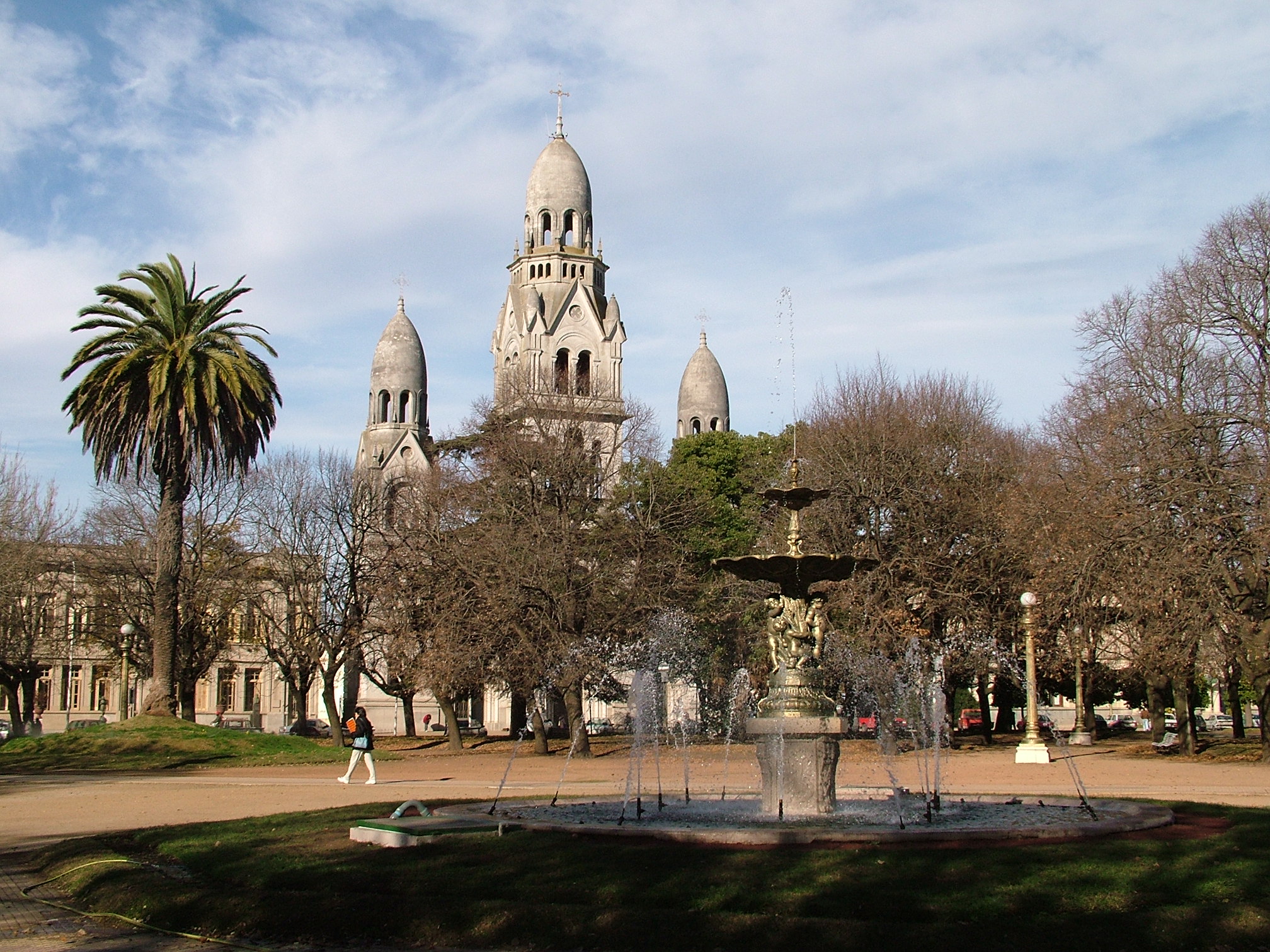
Buenos Aires. Tandil is the seat of the district of the same name, in the southeast of the province, some 350 km from the City of Buenos Aires, set among the hills of the Tandilia range, one of the oldest hill systems on the planet. It is one of the country's great hill destinations, famous for its hills, its religious tourism and its artisanal cheeses and salami
📌Service town
The city of Tandil holds every service: the bus terminal, the tourist office, hotels, cabins, cheese dairies and cured meat producers, restaurants, hill sharing boards, ATMs and shops. It is the base for climbing the hills (Calvario, Centinela, La Movediza), taking in the Lago del Fuerte and Parque Independencia, and heading out into the surrounding hills
📌Best time to go
It is a year-round destination, but the peak moment is Holy Week, when thousands of pilgrims arrive for the religious tourism and the Stations of the Cross up Monte Calvario. Spring and autumn bring green or golden hills and pleasant weather; summer is ideal for outdoor activities and winter adds cold landscapes and hill-country magic, with strong occupancy during the winter school break. Long weekends are the busiest
📌Suggested days
A weekend (2 days) covers the essentials: Cerro El Centinela with its chairlift, the Lago del Fuerte and Parque Independencia, a hill sharing board and the cheese and salami circuit. With 3 days you can add Monte Calvario, the Sierra del Tigre Nature Reserve, the La Movediza hill and square, and excursions into the hills for trekking, horseback riding or the zip line
📌Currency
Argentine peso (ARS). Most shops, restaurants and hotels take cards and bank transfers; bring some cash for markets, country cheese dairies and car services. With inflation, peso prices change often (the figures in this guide were verified in July 2026 and are indicative)
💱 ARS exchange rate
Loading rate…
🌤️ Weather in Tandil
Loading weather…
Some 350 km from Buenos Aires, in the south of the province, Tandil breaks with the flat image of the pampa: here the plain buckles into gentle, very ancient hills, those of the Tandilia range, a chain of rock more than 2,000 million years old. Among granite hills, lakes and woods, the city earned a reputation as the hill getaway par excellence: clean air, landscapes that invite you to walk, and a food tradition of cheeses, salami and sharing boards that is a religion of its own.
The urban centre is easy and walkable, with its square, its church and the rhythm of a mid-sized city, but the real pull is in the hills around it. Cerro El Centinela, with its chairlift and its rock balanced like a sentinel, is the classic postcard; Monte Calvario, crowned by a monumental Christ, is the heart of the religious tourism that bursts into life every Holy Week with the Stations of the Cross; and the La Movediza hill holds the memory of the legendary rock that teetered on the edge of the drop until it fell in 1912.
Tandil is nature and adventure —trekking, horseback riding, mountain biking, zip lining, rappelling— but it is also the table and the long conversation after it: the famous cheese and salami circuit, the hill sharing boards, the country stores and the restaurants that celebrate local produce. Add the Lago del Fuerte for paddling or cycling, Parque Independencia with its Moorish castle, the Sierra del Tigre Reserve with its native wildlife, and you have a complete getaway: hills, faith, flavours and history a few hours from Buenos Aires.
📖 History of Tandil
Tandil began as a frontier fort: on 4 April 1823, the governor of Buenos Aires, Martín Rodríguez, founded Fuerte Independencia at a hill site known as 'Tandil', as a forward bastion against raids in the south of the province. The expedition, of some 2,500 men with carts and artillery, put up a fort covering several blocks that would be the seed of the town. The place name 'Tandil' is thought to have Indigenous language roots —it is popularly linked to the idea of a 'stone that beats' or 'that moves', in reference to the celebrated Piedra Movediza that rocked on the hilltop. A settlement formed around the fort and grew with the arrival of immigrants, above all Italians, Spaniards, Danes and Basques, who brought fruit growing, livestock, granite quarrying from the hills and, above all, the craft of cheeses and cured meats that are the city's trademark today. In the early 20th century, with the railway, Tandil consolidated as a productive centre and began to shape its tourist side: the fame of the Piedra Movediza —which collapsed in 1912— and, above all, the growth of religious tourism around Monte Calvario, with its Stations of the Cross and its monumental Christ unveiled in 1943, made the place a destination for pilgrimage and for hill-country rest. The full story is on our history page.
Read the full history ↓🏛️ Tandil is in Buenos Aires Province
The agro-export heart of Argentina: the endless pampa that was the land of the Querandí and the Pampa peoples, the domain of governor Rosas, the engine of cattle and wheat with La Plata as its purpose-built capital, cradle of the gaucho and of the Atlantic Coast where the whole country spends its summer.
Read the history of Buenos Aires Province →🗺️ What to see
Tours you can book
If you only have one day, take a guided tour on the first one: it sets up the rest of your trip and saves you a lot of walking. We look ours up on Civitatis: guided in Spanish and booked online with no fuss. They have 4 activities in Tandil. And there are free tours here: you book without paying and tip the guide whatever you think at the end, so trying one costs you nothing. Have a look below: tap any of them to see them all.
If you book from here we earn a commission and you pay no more. Prices and availability come from Civitatis.
1
Cerro El Centinela and its chairlift
Tandil's most classic outing, some 5-6 km from the centre: a granite rock balanced like a sentinel, with a chairlift and a tourist complex.
Leer más ↓
Tandil's symbol is this granite rock of some 7 metres that holds itself up astonishingly on a minimal base, like a sentinel watching over the city. The complex at its foot runs a chairlift with 48 double seats (a 630-metre run, an 8-9 minute ride, there and back) over pine woods and old quarries up to a viewpoint with panoramic views, plus hill-country food, crafts and adventure activities (horseback riding, zip line, rappelling, mountain biking).
ℹ️ Entry to the complex is free (food, drink and activities extra); chairlift approx. $10,000–12,000 ARS per person over 7, there and back (approx. US$ 8–10; source: visitor reviews on Facebook and TripAdvisor, verified July 2026). It runs Saturdays, Sundays and public holidays from 11 to 17, and every day in high season.
2
Monte Calvario and the Christ
The epicentre of religious tourism in Tandil: a monumental Christ and Stations of the Cross with sculptures, one of the most important calvaries in South America.
Leer más ↓
On the summit of Monte Calvario stands a monumental figure of Christ crucified, put up in 1943 by Italian and Spanish immigrants alongside Argentine residents. Down the slope, the fourteen Stations of the Cross, with life-size sculptures, recreate the Passion among eucalyptus and pine woods. Every Holy Week thousands of pilgrims climb in procession, in one of the great events on the Tandil calendar.
ℹ️ Free access. You can walk up along the Stations of the Cross or drive. Wear comfortable shoes and bring water.
3
The Piedra Movediza and the La Movediza hill
The founding myth: a rock of hundreds of tonnes that rocked without falling until it collapsed in 1912; today there is a replica.
Leer más ↓
On this hill an enormous rock of hundreds of tonnes rocked for centuries, always seeming about to fall and never doing so, until it collapsed in 1912 and broke into pieces. It became Tandil's great symbol and gave rise to legends about who pushed it. Today a replica stands on the original site, alongside a square with panoramic views of the city and the hills.
ℹ️ Free access to the hill and the square. Ideal at dusk; it is usually windy at the top.
4
Lago and Dique del Fuerte
A sheet of water of some 19 hectares in the very heart of the city, ringed by greenery, for walking, paddling or cycling.
Leer más ↓
An artificial reservoir of some 19 hectares ringed by green space, trees and rest areas, right in the centre of Tandil. It is ideal for walking, cycling, kayaking, picnicking or simply relaxing by the water with the hills behind. One of the places the people of Tandil most love for a family day out.
ℹ️ Free access. Kayak and bike hire from operators along the lakeside (about $5,000–10,000 ARS an hour, approx. US$ 4–8, range according to local operators, verified July 2026).
5
Parque Independencia
The great hill park on a granite outcrop, with a granite gateway and the celebrated Moorish castle, both donated in 1923 for the centenary.
Leer más ↓
Tandil's most emblematic urban park, on a granite hill, with a monumental gateway in Romantic style and a distinctive Moorish castle that works as a tearoom and viewpoint, both donated in 1923 for the city's centenary. Crossing the woods you reach balconies with views of the Lago del Fuerte and the whole city. A classic for walking among rocks, trees and panoramas.
ℹ️ Free access to the park; anything you order at the Moorish castle tearoom is extra. You can reach it on foot, by car or up a stairway from the centre.
6
Sierra del Tigre Nature Reserve
A 140-hectare reserve some 6 km from the centre, with hill trails and a native wildlife area; ideal with family.
Leer más ↓
A nature reserve of some 140 hectares in the Tandilia hills, with trails among granite outcrops and a wildlife area where you can see guanacos, rheas, foxes, wild boar and native birds, plus exotic tree species. Its viewpoints give some of the best views of the Tandilia range. A good option for combining a walk, nature and wildlife spotting.
ℹ️ Admission for families $5,000 ARS per person (under-10s and people with disabilities do not pay); institutional and agency groups $3,000 ARS; pensioners $3,000 ARS; residents of the Tandil district and district schools, free (source: the official Sierra del Tigre site — sierradeltigretandil.org.ar, verified July 2026). Winter hours (1 May-30 Sep) 9:30 to 17:30; summer (1 Oct-30 Apr) 9 to 19.
7
The cheese and salami circuit (hill sharing boards)
Tandil's culinary hallmark: cheese dairies, cured meat producers and country stores for tasting and buying.
Leer más ↓
More than an attraction, an experience. Tandil is famous across the country for its artisanal cheeses and salami, an inheritance from Italian, Basque and Danish immigrants. At the tourist office you can put together a circuit of cheese dairies, cured meat producers and country stores to visit, taste and buy. The hill sharing board —platters of local cured meats and cheeses— is the unmissable food stop.
ℹ️ Ask for the cheese and salami circuit map at the tourist office. Many producers offer a free or low-cost tasting.
8
Historic centre, the square and the fort
The urban centre keeps the memory of Fuerte Independencia, the origin of the city in 1823, with its square, church and museums.
Leer más ↓
The centre of Tandil holds the memory of the old Fuerte Independencia, founded in 1823 and the origin of the city. Plaza Independencia, the church, the Museo Tradicionalista and the historic buildings make for a quiet walk to grasp the local history before heading out to the hills. A good starting point for getting your bearings and taking the pulse of this hill city.
ℹ️ Free access to the square and the streets of the centre; the museums have affordable admission (check opening hours).
💵 Prices
Tickets
| Type | Price |
|---|
| Sierra del Tigre Nature Reserve — general admission (families) | $7,500 per person. Under-10s and people with disabilities do not pay (official rate sheet published by the Asociación Cooperadora Reserva Natural Sierra del Tigre, which runs it together with a joint committee with the municipality; the reserve is owned by the Municipality of Tandil) |
| Sierra del Tigre Nature Reserve — pensioners and groups | $4,000 per person for pensioners, and $4,000 per person of any age for groups from institutions and travel agencies. Residents of the Tandil district and the district's primary and secondary schools, state and private, do not pay admission (official rate sheet) |
| Sierra del Tigre Nature Reserve — opening and rules | Open all year except 24 and 25 December, 31 December, 1 January and rainy days. You can go round on foot, by car, by minibus or on horseback: bicycles and motorbikes are not allowed because the road is gravel and cut into the hillside. Pets are allowed, always on a lead. The Cristo de las Sierras is reached through the reserve only on long weekends |
| Cerro El Centinela chairlift | The complex does not publish its current rate: the only rate sheet it has online is for the 2020-2021 season and is out of date. Ask for the day's price by phone or at the ticket office. What is confirmed is the operating schedule: Saturdays, Sundays and public holidays from 11:00 to 17:00, and every day in high season. The run is 630 metres and takes between 8 and 9 minutes each way |
| Lago and Dique del Fuerte, Parque Independencia, Monte Calvario, the La Movediza hill and the historic centre | Free access. These are public municipal spaces; food, drink and activities are paid separately |
| Moorish castle tearoom (Parque Independencia) | Entry to the park is free. Prices at the tearoom are set by the concession holder and there is no official menu published |
| The cheese and salami circuit | These are private producers and shops: each sets its own prices and visits. There is no official rate |
🔄 updated monthlyOfficial / reference values · double-check when buying
Activities and tours
Chairlift and a visit to Cerro El Centinela
Price$10,000–12,000 ARS per person, there and back (approx. US$ 8–10; source: visitor reviews, verified July 2026); adventure activities extra
Stations of the Cross and the climb up Monte Calvario
Free (open access)
Cheese, salami and hill sharing board circuit
PriceTastings from free to US$ 5–10; a board US$ 12–25 per person, range according to local restaurants and cheese dairies (verified July 2026)
Kayaking, cycling or walking at the Lago del Fuerte
PriceWalking free; kayak/bike hire approx. US$ 4–8 an hour, range according to lakeside operators (verified July 2026)
Trekking and horseback riding in the hills
PriceUS$ 20–45 per person depending on the route, range according to adventure travel operators (verified July 2026)
Zip line, rappelling and mountain biking
PriceUS$ 15–40 per person depending on the activity, range according to adventure complexes (verified July 2026)
Visit to the Sierra del Tigre Nature Reserve
Price$5,000 ARS general / $3,000 ARS pensioners (source: the official Sierra del Tigre site, verified July 2026)
Visit to La Movediza and its square
Free
🔄 updated monthlyOfficial / reference values · double-check when buying
🚌 How to get there and distances
Getting around
On foot (the centre and the built-up area)
Free
NotesThe centre of Tandil, the square, the shops and several cheese dairies are all walkable. For the hills and the reserves, a car, a taxi, a car service or an excursion is better.
PriceFuel + parking; rental US$ 40–60 a day, range according to local agencies (verified July 2026)
NotesIt is the most convenient way to get around the hills (Centinela, Calvario, La Movediza), the Sierra del Tigre Reserve and the cheese circuit, which are scattered through the hills around the city.
Taxis and remises (car services)
PriceFlag fall and short trips US$ 3–6; to the Centinela or the Sierra del Tigre US$ 6–12, range according to local car services (verified July 2026)
NotesHandy for reaching the nearby hills and getting around at night; agree the price or call a radio taxi, especially in high season.
Excursions and tourist transfers
PriceHill circuits from US$ 25–50 per person with transfer, range according to local agencies (verified July 2026)
NotesLocal agencies offer circuits through the hills, the peaks and the cheese dairies with transfer included, ideal for anyone arriving without a car.
PriceA city fare with a SUBE card, approx. $700–1,200 ARS, range according to municipal fares (verified July 2026)
NotesCity routes connect the centre with some neighbourhoods and points of interest; check routes and frequencies, since not every hill attraction has a direct service.
🔄 updated monthlyOfficial / reference values · double-check when buying
How to get there
Buenos Aires → Tandil (bus)
Airlines / operatorsCóndor Estrella, Plusmar, El Rápido, Vía Bariloche and other long-distance lines, with several departures a day from Retiro
Avg. priceUS$ 19–44 per leg depending on the company and how far ahead you book (source: Busbud and CheckMyBus, verified July 2026)
Buenos Aires → Tandil (car)
Fuel + tolls (varies)
Airlines / operatorsOwn car, usually on Autovía 2 to near the area and then provincial routes toward Tandil
Mar del Plata / the Atlantic coast → Tandil (bus or car)
Airlines / operatorsMedium and long-distance lines connect Tandil with Mar del Plata and other cities in the region
Avg. priceApprox. $15,000–28,000 ARS by coach, range according to regional companies (verified July 2026)
Buenos Aires → Tandil (plane, depending on the season)
Avg. priceUS$ 50–120 per leg depending on how far ahead you book, range according to airlines (verified July 2026, check availability)
🔄 updated monthlyOfficial / reference values · double-check when buying
🏨 Where to stay
No exact prices: a scale from $ (budget) to $$$$$ (luxury), with 2-3 options per category.
Boutique hotels, estancias and premium cabins
Recommended optionsUS$ 100–220 a night, range according to
Booking.com and travel blogs (verified July 2026). Tandil has first-rate hill lodging: boutique hotels, estancias and cabin complexes with a spa, a pool and views of the hills, designed for couples and weekend breaks. Book well ahead for Holy Week, long weekends and school holidays.
Mid-range cabins and inns
Recommended optionsUS$ 50–100 a night, range according to
Booking.com and Despegar (verified July 2026). A wide choice of cabins, inns and aparthotels in the city and in the hills, good value, ideal for families and groups who want to be close to the hills. Book in high season.
Hostels, guesthouses and camping
Recommended optionsUS$ 15–40 a night, range according to Hostelworld and
Booking.com (verified July 2026). Budget options for backpackers and tight budgets: hostels and guesthouses in the centre and campsites in the hills, useful for short stays and adventure travel. Book on public holidays and in high season.
🍴 Where to eat
Hill sharing boards, cheese dairies and country stores
Options / signature dishUS$ 12–25 per person, range according to TripAdvisor reviews and food blogs (verified July 2026). Tandil's culinary hallmark: boards of artisanal cheeses and salami, regional cured meats and hill sharing plates in country stores, cheese dairies and themed restaurants. The city's unmissable food experience.
Grill houses and regional cooking
Options / signature dishUS$ 15–30 per person, range according to diner reviews (verified July 2026). Grill houses with asado and Argentine cuts, country cooking and regional dishes that celebrate local produce. A good base for a substantial lunch or dinner after a day in the hills.
Chef-led restaurants and international cooking
Options / signature dishUS$ 20–40 per person, range according to reviews of leading restaurants (verified July 2026). In recent years Tandil has added chef-led and international cooking, with restaurants combining hill produce and modern technique. A more sophisticated side of the destination, ideal for a special dinner.
Tearooms, cafés and hill-top eating
Options / signature dishUS$ 6–15 per person, range according to local reviews (verified July 2026). Tearooms and cafés in the centre and eateries up in the hills (such as at Cerro El Centinela and Parque Independencia), with baking, homemade jams, artisanal liqueurs and views. Perfect for afternoon tea with a landscape.
📖 History of Tandil
Origins, formation and what the sources say.
The ancient hills and the first inhabitants
Before human history, Tandil is ruled by geology. The city sits on the Tandilia range, a chain of hills among the oldest on the planet: its rocks formed roughly 2,000 million years ago, in the Precambrian, and make up the oldest crystalline basement in Argentina, part of what is called the Buenos Aires Complex and of the Río de la Plata craton. They are often advertised as 'the oldest hills in the world'; strictly they are the oldest in the country and among the oldest on the continent, though there are older formations elsewhere in South America. Either way, walking these hills of granite and gneiss means treading one of the most ancient surfaces there is.
Those gentle hills, with their lagoons, grassland and rock outcrops, were for millennia the territory of Indigenous peoples. Hunter-gatherer communities ranged across the pampas plain and the hill country, which offered water, stone, shelter and game. Over the centuries the region fell within the sphere of the Pampa peoples and, later, of the Mapuche-Tehuelche culture that dominated the southern frontier. For those peoples the hills were a landmark in the immensity of the pampa.
The word 'Tandil' has its roots in Indigenous languages and is popularly linked to the idea of a 'stone that beats' or 'that moves', in clear reference to the celebrated Piedra Movediza that rocked on the hilltop for centuries without falling. So, from the name itself, the city's identity was tied to its prodigious geology: the hills and the rock that seemed to defy gravity.
The oldest hills in the world?
Locally, the hills of Tandil are often promoted as 'the oldest in the world'. Geological studies qualify that claim: the Tandilia range is on the order of 2,000 to 2,200 million years old, which makes it the oldest in Argentina and one of the oldest in South America, but there are older formations elsewhere on the planet (for instance, hills in Brazil estimated at more than 3,000 million years). The phrase, then, is more a tourist slogan than an exact geological fact, though the real age is astonishing all the same.
Source: https://es.wikipedia.org/wiki/Sistema_de_Tandilia
Fuerte Independencia and the founding of 1823
Tandil was born as a frontier fort. In the first decades of the 19th century, the south of Buenos Aires province was a zone of permanent tension between the expanding criollo settlements and the Indigenous peoples, who raided the estancias. Tired of peace treaties that did not hold, the governor of Buenos Aires, General Martín Rodríguez, decided to push the frontier line forward and establish forts in the south.
In early 1823 he organised a large expedition —some 2,500 men, 250 carts and several pieces of artillery— that set out from the San Miguel del Monte area, south of the Salado river. The campaign's adviser recommended putting up two hill forts: one in the Volcán hills (near what is now Balcarce) and another in the Tandil hills. So, on 4 April 1823, at a site known as 'Tandil', the expedition began building Fuerte Independencia, covering some six blocks, intended to defend the frontier and to serve as a launching point for further advances.
That fort was the seed of the town. Soldiers, traders and settlers set up around its walls, and little by little a cluster of houses grew that would become the city. The date of 4 April 1823 was enshrined as Tandil's founding, and in 2023 the city marked its bicentenary. From that military origin the city kept a name loaded with history and the imprint of the fort at the core of its urban centre.
The Piedra Movediza: the myth and the fall of 1912
For more than a century, Tandil was known across the country for a natural marvel: the Piedra Movediza, the rocking stone. It was an enormous granite rock of hundreds of tonnes resting on the edge of a hill, in a balance so precarious that it swayed with barely a gust of wind or a push, and always seemed about to plunge into the void. Yet for centuries it did not fall. That impossible image —a giant mass rocking without falling— made the stone the city's great symbol and a magnet for the curious, for scientists and for tourists.
On 29 February 1912 the legend came to an end: the Piedra Movediza toppled over the cliff and broke into several pieces, which still lie at the foot of the hill today. The fall shook the city and immediately produced a mystery and a debate that has lasted to this day: why did it fall just then, after rocking for centuries? Explanations of every kind appeared, from natural causes to suspicions of human intervention, and the rock went from marvel to myth.
In 2007, to recover the lost symbol, a replica of the stone was placed on the original site, and today the La Movediza hill, with its square and its views, is one of the obligatory stops for visitors to Tandil. The stone's story —its impossible balance, its fall and the legends around it— remains central to the city's identity, to the point that many link the name 'Tandil' itself with the idea of a 'stone that moves'.
Who brought down the Piedra Movediza?
The exact cause of the fall on 29 February 1912 was never fully established, and over the years several hypotheses have circulated. Some put the collapse down to purely natural causes —erosion, wind, cracks and the rock's own weight after centuries of swaying. Other versions, more heavily laden with legend, hold that the stone was pushed or forced by human action (attempts to make it move with ropes or levers, for instance). The episode remained a popular mystery and gave rise to countless stories about 'who brought the stone down'.
Source: https://www.lanacion.com.ar/sociedad/un-icono-por-el-acantilado-quien-tiro-la-piedra-movediza-de-tandil-nid17052021/
The name 'Tandil' and the 'stone that beats'
There is a very widespread popular interpretation linking the place name 'Tandil' to Indigenous languages and to the idea of a 'stone that beats' or 'that moves', in clear reference to the Piedra Movediza. Although the exact linguistic origin of the name is disputed among specialists, the association between the city's name and its emblematic rock is part of the local identity story and reinforces the central place the stone holds in Tandil's history.
Source: https://www.comercialtandil.com.ar/paseos/historico/leyendas.htm
Immigration, cheese and Monte Calvario
As the frontier settled down and the city grew, Tandil filled with European immigrants —Italians, Spaniards, Danes, Basques and others— who transformed its economy and its culture. They brought livestock, fruit growing, granite quarrying from the hills and, above all, the craft of making cheese and cured meats. In time, Tandil's artisanal salami and cheeses became famous across the country, giving rise to the tradition of the hill sharing board and to today's food circuit, one of the city's great attractions. The arrival of the railway in the late 19th century consolidated Tandil as a regional productive centre.
Alongside that, the city developed its most singular side: religious tourism around Monte Calvario. In 1943, on the summit of that hill at the gates of the city, a monumental figure of Christ crucified was erected, put up by Italian and Spanish immigrants alongside Argentine residents. Down the slope, the fourteen Stations of the Cross were installed, with life-size sculptures by sculptors of the day, recreating the Passion among eucalyptus and pine woods. The ensemble is considered one of the most important calvaries in South America.
Ever since, every Holy Week thousands of pilgrims come to Tandil to climb Monte Calvario and walk the Stations of the Cross, making the city one of the country's great religious tourism destinations. So contemporary Tandil combines several layers of identity: the ancient geology of its hills, the military origin of Fuerte Independencia, the legend of the Piedra Movediza, the food tradition of the immigrants and the faith that draws crowds to the foot of the Christ each year. Nature, history, flavours and devotion come together in the hill getaway par excellence of the south of Buenos Aires province.
📚 Bibliography
- Wikipedia — «Fuerte Independencia»: https://es.wikipedia.org/wiki/Fuerte_Independencia
- El Arcón de la Historia Argentina — «La ciudad de Tandil. Sus orígenes (04/04/1823)»: https://elarcondelahistoria.com/origen-de-la-ciudad-de-tandil-04041823/
- Wikipedia — «Sistema de Tandilia»: https://es.wikipedia.org/wiki/Sistema_de_Tandilia
- Red Tandilia — «El Sistema de Tandilia»: https://redtandilia.com.ar/el-sistema-de-tandilia/
- La Nación — «Un ícono por el acantilado: quién tiró la piedra movediza de Tandil»: https://www.lanacion.com.ar/sociedad/un-icono-por-el-acantilado-quien-tiro-la-piedra-movediza-de-tandil-nid17052021/
- La Nación — «Del misterio de su piedra movediza al imperdible Monte Calvario»: https://www.lanacion.com.ar/sociedad/del-misterio-de-su-piedra-movediza-al-imperdible-monte-calvario-cuatro-motivos-para-visitar-tandil-nid28032023/
- Infobrisas — «La historia del Calvario más importante de Sudamérica»: https://www.infobrisas.com/noticias/2025/04/18/80388-la-historia-del-calvario-mas-importante-de-sudamerica
- LU22 — «Bicentenario de Tandil: los orígenes del Fuerte Independencia»: https://www.lu22.com.ar/2023/04/02/bicentenario-de-tandil-los-origenes-del-fuerte-independencia
❓ Frequently asked questions
How do I get to Tandil from Buenos Aires?+
The most common way is the long-distance bus from Retiro, with companies such as Cóndor Estrella, Plusmar or El Rápido; the ticket runs between US$ 19 and US$ 44 depending on the company and how far ahead you book, and the journey takes between 3 hours 50 minutes and 5 hours (some 350 km), with several departures a day (source: Busbud and CheckMyBus, verified July 2026). By car you get there on Autovía 2 and provincial routes in a similar time. Tandil also has an airport, though commercial flights are variable and seasonal: check availability.
When is the best time to visit Tandil?+
It is a year-round destination. The peak moment is Holy Week, for the religious tourism and the Stations of the Cross up Monte Calvario, when the city fills with pilgrims. Spring and autumn offer green or golden hills and pleasant weather; summer is ideal for outdoor activities and winter adds cold hill landscapes and strong occupancy during the school holidays. Long weekends are the busiest: book in good time.
Why is Tandil famous for cheese and salami?+
Thanks to its immigrant tradition —Italian, Basque, Danish, Spanish— and the conditions of the hill country, Tandil developed a strong artisanal production of cheeses and cured meats (salami, cold cuts) from the late 19th century on. Today it is the city's trademark: there is a genuine circuit of cheese dairies, producers and stores, and the hill sharing board is all but compulsory. At the tourist office you can ask for a map of the cheese and salami circuit.
What happened to the Piedra Movediza?+
The Piedra Movediza was an enormous rock of hundreds of tonnes that for centuries rocked on the edge of the hill without ever falling, and it became Tandil's great symbol. It collapsed in 1912 and broke into several pieces. Today, on the original site, there is a replica placed where it stood and a square with views. The episode gave rise to legends about who or what brought the rock down, and it is part of the destination's founding story.
What can I do in Tandil with children?+
Tandil is very family-friendly. The Cerro El Centinela chairlift tends to delight children, the Lago del Fuerte is good for cycling, paddling and picnicking, the Sierra del Tigre Nature Reserve combines a walk with native wildlife spotting, and Parque Independencia with its Moorish castle makes a good outing. Just bring warm clothes depending on the season, comfortable shoes for the hills, and check the opening hours of the chairlift and the reserves.
How many days should I stay in Tandil?+
A weekend (2 days) covers the essentials: Cerro El Centinela, the Lago del Fuerte, Parque Independencia and a hill sharing board with the cheese and salami circuit. With 3 days you can add Monte Calvario and the Stations of the Cross, the Sierra del Tigre Reserve, the La Movediza hill and adventure excursions in the hills (trekking, horseback riding, zip lining). For Holy Week, allow extra margin for the crowds.
Do I need a car to get around Tandil?+
The centre is walkable, but the big attractions —the Centinela, Calvario and La Movediza hills, the Sierra del Tigre Reserve and many cheese dairies— are scattered through the hills around the city. Having a car (your own or rented) is the most convenient. Without one, you can use taxis, car services or the excursions and tourist transfers local agencies offer, which usually include circuits through the hills and the cheese dairies.
Sources consulted (11)
- Dirección de Turismo de la Municipalidad de Tandil — sitio oficial de turismo (turismo.tandil.gov.ar redirige acá), fichas de los atractivos: https://www.tandil.tur.ar/atractivos.php
- Turismo Tandil (oficial) — ficha del cerro El Centinela: https://www.tandil.tur.ar/atractivo-cerro-el-centinela-7
- Turismo Tandil (oficial) — ficha del cerro La Movediza y la historia de la Piedra Movediza: https://www.tandil.tur.ar/atractivo-cerro-la-movediza-30
- Turismo Tandil (oficial) — ficha del Monte Calvario: https://www.tandil.tur.ar/atractivo-monte-calvario-32
- Turismo Tandil (oficial) — ficha del Parque Independencia: https://www.tandil.tur.ar/atractivo-parque-independencia-31
- Reserva Natural Sierra del Tigre — preguntas frecuentes oficiales con el tarifario vigente, el régimen de apertura y las reglas de visita: https://sierradeltigretandil.org.ar/preguntas-frecuentes/
- Complejo Cerro El Centinela — sitio oficial, funcionamiento y características de la aerosilla: https://www.cerroelcentinela.com.ar/aerosillas-del-tandil/
- Municipalidad de Tandil — portal oficial: https://www.tandil.gov.ar/
- Wikipedia — Fuerte Independencia: https://es.wikipedia.org/wiki/Fuerte_Independencia
- Wikipedia — Sistema de Tandilia: https://es.wikipedia.org/wiki/Sistema_de_Tandilia
- The rates and rules for the Sierra del Tigre Nature Reserve are the ones published by the association that runs it under an agreement with the municipality. The rest of the sites are public and free, according to the official Tandil tourism site. The price of the Centinela chairlift is not stated here because the complex does not publish an up-to-date rate sheet: the one it has online is from the 2020-2021 season.