Viajá con Gus
HomeArgentinaPerito Moreno National Park
Perito Moreno National Park
🇦🇷 Argentina · Patagonia

Perito Moreno National Park

Jump to what you need
📌Province/State
Santa Cruz (northwest of the province, up on the mountain range). The nearest service town is Gobernador Gregores, about 220 km away.
📌Best time
Summer (December to March), when the roads and trails are open and the weather is kinder. Outside the season, access can close because of snow and extreme cold.
📌Suggested days
2 to 4 days, with your own logistics and complete self-sufficiency.
📌Currency
Argentine peso (ARS). There are no services or ATMs inside the park or along the way: bring cash and everything you need.
📌Opening hours
The park is usually only open in the summer season (roughly November to April), during daylight. It's worth confirming that it's open with the park headquarters before you travel.
📌Language
Spanish.
📌Getting there
Along National Route 40 and gravel turnoffs (Provincial Route 37). There's no public transport: you get there with your own vehicle, preferably high-clearance or 4x4, with enough fuel, since the distances are enormous and lonely.
💱 ARS exchange rate
Loading rate…
🌤️ Weather in Perito Moreno National Park
Loading weather…

Perito Moreno National Park is one of the most remote, rugged and least visited parks in Argentina, in the northwest of Santa Cruz province, deep in the southern Patagonian range and steppe. Don't confuse it with the famous Perito Moreno glacier (which is in Los Glaciares National Park, much further south): this park protects a different landscape, of turquoise glacial lakes, mountain chains, steppe, forest and remarkable Patagonian wildlife, in near-absolute solitude.

It's a destination for independent travelers, lovers of wild nature and isolation, since there are almost no tourist services inside the park: you have to arrive with your own vehicle, fuel, food and gear, and be self-sufficient. In return it offers an experience of pristine nature rarely matched: lakes such as the Belgrano, the Burmeister and the Azara, mountains, hanging glaciers, guanacos, condors, huemul deer (endangered) and an overwhelming silence. It also holds rock art sites and the Estancia La Oriental, inside the park itself.

This guide covers the essentials of Perito Moreno National Park with a practical eye: its lakes and landscapes, the treks and wildlife watching, the logistics you can't do without, the free access, how to get there along Route 40 and what precautions to take. It's a destination only for those after the most authentic and solitary Patagonia, far from any mass circuit, in one of the country's most untouched corners.

📖 History of Perito Moreno National Park

Perito Moreno National Park was created in 1937, one of the first national parks in Patagonia, to protect a representative stretch of the range and steppe of northwestern Santa Cruz, with its glacial lakes, its flora and its wildlife. It carries the name of Francisco Pascasio Moreno, the 'Perito Moreno', explorer and forerunner of Argentina's national parks. The full story is on our history page.

Read the full history ↓

🏛️ Perito Moreno National Park is in Santa Cruz

The immense province of southern Patagonia: Tehuelche land of the Cueva de las Manos, of the endless steppe and the sheep, of the tragic Patagonia Rebelde, of the glaciers of Perito Moreno and Fitz Roy, with El Calafate and El Chaltén as the gateways to a world of ice.

Read the history of Santa Cruz →

🗺️ What to see

1
Lagos Belgrano, Burmeister and Azara
Turquoise glacial lakes, the heart of the park.
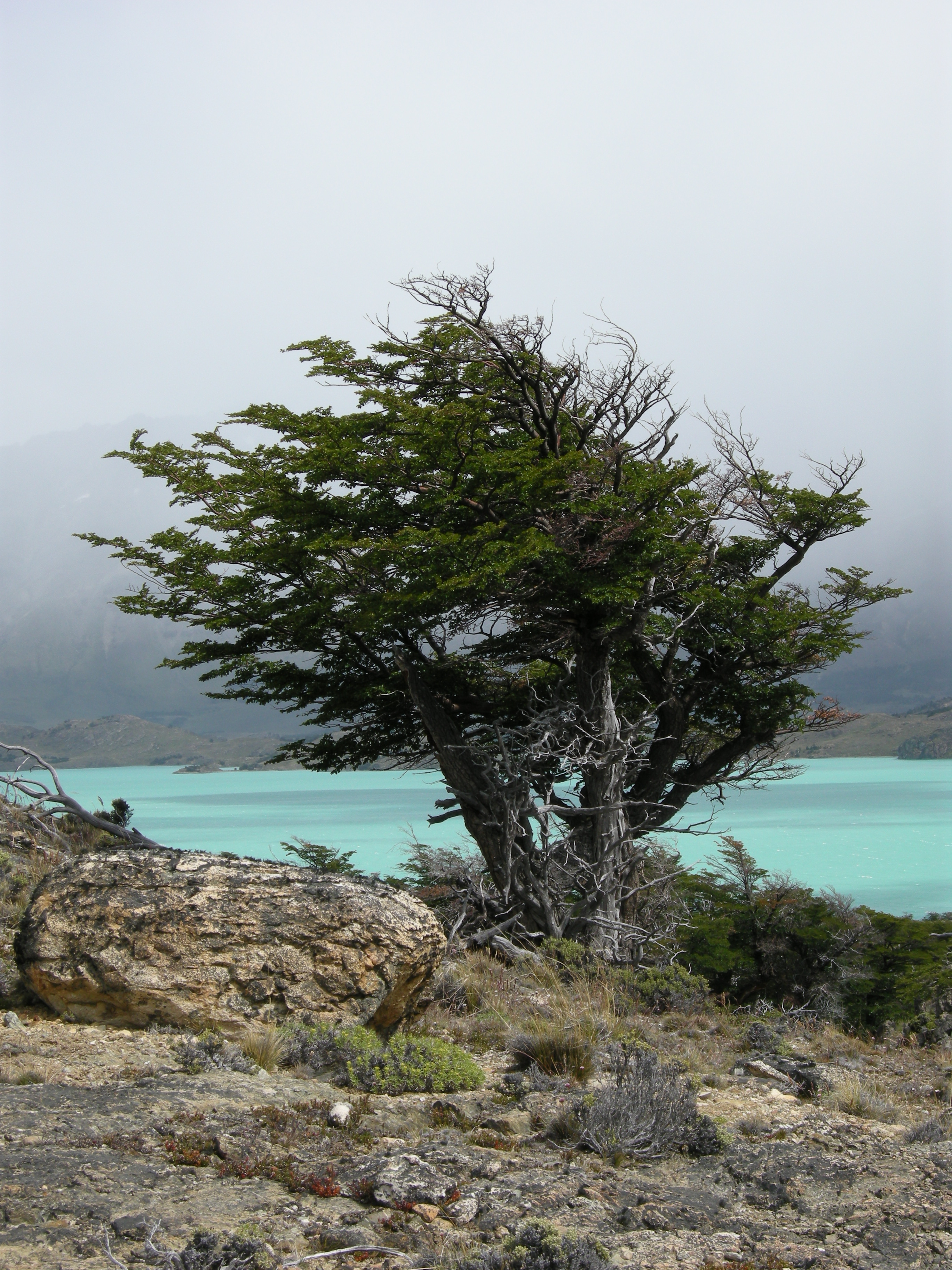
The park protects a set of beautiful glacial lakes, with water running from turquoise to intense blue depending on the light. Lago Belgrano, with its characteristic colour and the peninsula that splits it, is one of the most photographed; Lago Burmeister, ringed by forest, and Lago Azara complete the lake landscape. These mirrors of water, framed by mountain chains, hanging glaciers and steppe, are the scenic centre of the park and the starting point for the walks.
ℹ️ Access along the park's trails and internal roads; there are no services. Bring everything you need.
2
Cerro León and mountain lookouts
Snowy ranges, hanging glaciers and panoramic views.
The imposing Cerro León and other mountain chains dominate the park's landscape, with hanging glaciers, rock walls and lookouts that give wide views over the lakes and the steppe. To the northwest, on clear days, you can make out Monte San Lorenzo (3,706 m), the second-highest summit in southern Patagonia, a snowy giant that crowns the park's horizon. From several points you can take in the transition between the snowy range and the immensity of the Patagonian plateau, a contrast that defines the park's character. These are ideal settings for photography and quiet contemplation in complete solitude.
ℹ️ Check which lookouts and trails are open with the rangers.
3
Treks and trails
Walks through the steppe, the forests and the mountain lookouts.
The park has several trekking trails of varying difficulty, crossing the steppe, the lenga and ñire forests, the lake shores and the mountain lookouts, with views of the snowy ranges and the hanging glaciers. These are walks in an utterly solitary setting, where it's normal not to run into anyone. It's worth getting information at the ranger station about which routes are open, the state of the trails and the weather, always changeable and harsh.
ℹ️ Register with the rangers; check trails, weather and conditions before you walk.
4
Patagonian wildlife (huemul, condor, guanaco)
One of the best areas for seeing wild Patagonian wildlife.
The solitude and the good state of conservation of the park make it an excellent place for watching Patagonian wildlife. You can see guanacos, Andean condors gliding over the mountains, choiques (rheas), foxes, pumas (elusive) and lake and steppe birds. The park is also one of the refuges of the huemul, the Andean-Patagonian deer that is endangered and a symbol of the country's wildlife, though seeing one takes a great deal of luck.
ℹ️ Watch wildlife from a distance and don't disturb it; the huemul is endangered and very elusive.
5
Rock art and Casa de Piedra
Sites with rock paintings left by the Indigenous peoples.
In the park area and its surroundings there are sites with rock art left by the Indigenous peoples who lived in the region for millennia, with paintings on overhangs and rock walls, such as hand stencils, guanacos and geometric motifs. They're testimony to the long human occupation of Patagonia, in a setting that remains practically intact. The nearby Cueva de las Manos, outside the park, is the most famous example of this Santa Cruz rock art tradition.
ℹ️ Check access to the rock art sites and their state of conservation with the rangers.
6
Estancia La Oriental
A Patagonian estancia inside the park, the logistics and services base.
Set inside the park itself, near Lago Belgrano, the Estancia La Oriental (16,000 hectares) is the main service base in the area. It offers accommodation in the main house, dorm rooms and a camping area, plus home-style regional cooking and horse rides. Given the almost total absence of infrastructure inside the park, it's the most comfortable option for spending the night and combining wild nature with the experience of a traditional Patagonian estancia.
ℹ️ Access along Provincial Route 37, about 8 km from the park headquarters. Book in advance; it opens in the summer season.
Advertisements
What nobody tells you

💵 Prices

Tickets

TypePrice
Entry to Perito Moreno National Park$12,000 ARS per person (rate approved by the APN for 2026; actual collection will only start once the access control infrastructure is completed, so in practice entry remains free; source: argentina.gob.ar/parquesnacionales, verified July 2026)
Registration with the rangersFree and compulsory: you have to register on entry for safety reasons (source: APN, verified July 2026)
🔄 updated monthlyOfficial / reference values · double-check when buying

Activities and tours

ActivityPriceDurationOperator
Trekking and hikingIncluded in park entry (currently not actually charged; source: APN, verified July 2026)Half a day or a full dayOn your own; register with the rangers
Wildlife watching and photographyIncluded in park entryVariableOn your own
Horse rides and excursions from the Estancia La Oriental$30,000–70,000 ARS per person per activity (indicative range; ask the estancia directly, verified July 2026)VariableEstancia La Oriental
Visit to the rock art sitesIncluded in park entry; the Cueva de las Manos (outside the park) charges its own entry feeVariableOn your own / local guides
🔄 updated monthlyOfficial / reference values · double-check when buying
Advertisements

🚌 How to get there and distances

Getting around

ModePriceDurationNotes
Your own vehicle (preferably high-clearance or 4x4)Fuel onlyVariableEssential: there's no public transport and no fuel inside the park. Gravel roads; fill up in Gobernador Gregores or Bajo Caracoles
On foot along the internal trailsFreeVariableRoutes inside the park are walked, and you need to be self-sufficient
Estancia La Oriental's "Punto a Punto" transportA paid service; ask the estancia directly for the rate (source: laorientalpatagonia.com, verified July 2026)VariableIt makes reaching the park and the trails easier if you don't have your own vehicle
🔄 updated monthlyOfficial / reference values · double-check when buying

How to get there

RouteAirlines / operatorsAvg. priceDuration
Gobernador Gregores → Perito Moreno National Park (Provincial Routes 25 / 37)Your own vehicle (there's no public transport)Fuel only (about 220 km of gravel)Approx. 3 to 4 h
National Route 40 (junction, Bajo Caracoles area) → Perito Moreno National Park (Provincial Route 37)Your own vehicleFuel only (about 90 km of gravel)Approx. 1.5 to 2 h
El Calafate / El Chaltén → Gobernador Gregores (provincial roads) → the parkYour own or a rental vehicleCar rental $60,000–100,000 ARS a day (range based on rental aggregators, verified July 2026) plus fuelA full day of driving; plan fuel and timings
🔄 updated monthlyOfficial / reference values · double-check when buying

🏨 Where to stay

No exact prices: a scale from $ (budget) to $$$$$ (luxury), with 2-3 options per category.

CategoryPriceRecommended options
Camping and rustic refuges (inside the park)$$$$$The park's camping areas, domes and basic refuges: free (no services; complete self-sufficiency required; source: APN, verified July 2026)
Estancia La Oriental (the park's base)$$$$$$70,000–130,000 ARS per person per night depending on the type of accommodation (indicative range based on trekkingpnpm.com and booking sites, verified July 2026; meals included, book in advance). Accommodation in the main house, dorm rooms and camping inside the park, on the shore of Lago Belgrano
Accommodation in Gobernador Gregores$$$$$$40,000–90,000 ARS a night (range based on Booking.com and the properties' own sites, verified July 2026). Hotels and lodgings in the nearest town with services; a useful base before or after the park

🍴 Where to eat

TypePriceOptions / signature dish
Self-catering inside the park$$$$$There are no restaurants or shops in the park: you have to bring all your food and water. Planning your meals is essential
Meals at the Estancia La Oriental$$$$$$15,000–35,000 ARS a meal (indicative range; book directly with the estancia, verified July 2026). Home-style regional Patagonian cooking, subject to availability
Eating in Gobernador Gregores$$$$$$8,000–20,000 ARS per person (indicative range based on the town's eateries, verified July 2026). Restaurants, diners and shops in the service town
Advertisements

📖 History of Perito Moreno National Park

Origins, formation and what the sources say.

Millennia of human occupation on the steppe

There are places in Patagonia where the silence is so complete you can hear your own pulse. Northwestern Santa Cruz, where Perito Moreno National Park now lies, is one of them: a territory of turquoise lakes, snowy ranges and endless steppe that receives fewer visitors in a year than the glacier of the same name does in a single day. And yet this 'end of the world' was inhabited for thousands of years: hunter-gatherer peoples moved across the steppe and the mountains following the guanaco herds, and left their mark on overhangs and rock walls in the form of rock art: hand stencils, guanaco figures and geometric motifs painted in ochre.

These rock art sites, spread across the whole region, are testimony to one of the longest human occupations in Patagonia. The most famous and oldest example is the Cueva de las Manos, in the Río Pinturas canyon, not far from the park, declared a UNESCO World Heritage Site, with paintings up to 9,000 years old. Inside and around Perito Moreno National Park there are other, less known sites from the same tradition, such as the overhangs around Lago Burmeister, which the rangers point out to interested visitors.

The Tehuelche (Aónikenk) were the last heirs of that very long history. The arrival of the Argentine state and of the ranchers in the late 19th and early 20th centuries transformed the region deeply: the establishment of large sheep estancias and the advance of the frontier marked the end of the traditional Tehuelche way of life, in a process that came at an enormous cost to the Indigenous peoples of southern Patagonia.

A pioneering park in southern Patagonia (1937)

Perito Moreno National Park was created in 1937, in the founding years of the Argentine national park system — the same batch as Los Glaciares and Lanín — which makes it one of the oldest parks in Patagonia. Its creation answered the double impulse of the era: protecting representative areas of Patagonian nature and, at the same time, asserting the state's presence in remote border regions of the country's south, following the vision Francisco P. Moreno had sown with his 1903 donation.

The park protects a stretch of northwestern Santa Cruz province where the Andes meet the Patagonian steppe: a mosaic of glacial lakes — the Belgrano, with its emblematic peninsula; the Burmeister; the Azara and several more — mountain chains, hanging glaciers, lenga and ñire forests, and vast stretches of steppe. It's a transition environment of great ecological and scenic value, home to emblematic wildlife such as the huemul, the condor and the guanaco. A hydrographic curiosity sets it apart: its lakes drain to both sides, some to the Atlantic and others to the Pacific, because the continental divide runs through the park.

Unlike other Patagonian parks that developed into large tourist centres, Perito Moreno has kept a remote, rugged and little-visited character to this day, with no significant tourist infrastructure inside its boundaries. That condition, far from being a shortcoming, is part of its value: it offers an experience of pristine nature and near-absolute solitude, a wild Patagonia that is ever harder to find.

The name Perito Moreno and the confusion with the glacier

The park carries the name of Francisco Pascasio Moreno (1852-1919), known as the 'Perito Moreno', one of the great Argentine explorers and naturalists, a central figure in the knowledge, exploration and defence of Argentine sovereignty in Patagonia. Moreno travelled and studied vast regions of the south, acted as the expert surveyor in the boundary question with Chile and was the forerunner of the national park idea: the land he donated in 1903 gave rise, in time, to the country's first national park (Nahuel Huapi). Because of that founding role, several Patagonian sites carry his name.

Hence a very common confusion: Perito Moreno National Park is not where the famous Perito Moreno glacier is. The glacier — one of Argentina's tourist icons — is in Los Glaciares National Park, some 400 kilometres further south, near El Calafate. Perito Moreno National Park, by contrast, is in northwestern Santa Cruz and protects a landscape of lakes, mountains and steppe, with no emblematic glacier as its central draw. Adding to the confusion, there's also the town of Perito Moreno, a settlement in Santa Cruz on Route 40, near the Cueva de las Manos, which has no glacier either.

That shared name means many travelers reach the park expecting to see the glacier and find a completely different destination: more remote, more rugged and without services, but with a wild beauty of its own. Knowing the difference is key to planning the visit properly. The shared name is a tribute to the same great explorer, spread across very different corners of Patagonia.

Perito Moreno: park vs. glacier vs. town
Perito Moreno National Park (northwestern Santa Cruz), the Perito Moreno glacier (in Los Glaciares National Park, southern Santa Cruz) and the town of Perito Moreno (northern Santa Cruz, near the Cueva de las Manos) are three different places that share the name of the explorer Francisco P. Moreno. The confusion is very common among travelers.
Source: https://es.wikipedia.org/wiki/Parque_nacional_Perito_Moreno

The San Lorenzo giant and Tompkins's gift

To the northwest of the park rises Monte San Lorenzo, at 3,706 metres: the second-highest summit in southern Patagonia after San Valentín, a colossus of ice and granite straddling the Argentine-Chilean border. Its first ascent is one of the great stories of American mountaineering: it was achieved in December 1943 by the Salesian priest and explorer Alberto María De Agostini — the same man who had revealed Fitz Roy to the world — who reached the summit at 60 alongside the guides Alex Hemmi and Heriberto Schmoll. San Lorenzo's walls still draw expedition climbers, and its views crown the park's horizon on clear days.

Right at the foot of San Lorenzo lay the El Rincón estancia, 15,175 hectares of valleys and steppe that the American businessman and conservationist Douglas Tompkins — founder of The North Face and creator of parks in Chile and Argentina — bought and donated to the Argentine state in 2013 to enlarge Perito Moreno National Park. Decree 641/2016 brought it in as the El Rincón Wild Nature Reserve, in a process of full integration into the park. It was one of the many Tompkins family donations that transformed conservation in Patagonia.

With that enlargement, the protected area exceeds 126,800 hectares. The story repeats itself with curious symmetry: a park born of the vision of an Argentine naturalist who donated his land in 1903 grew, a century later, thanks to a foreign philanthropist who did exactly the same thing.

The park today: science, conservation and solitude

At some 126,830 hectares (counting the El Rincón reserve area), Perito Moreno National Park protects one of the best-preserved environments in southern Patagonia. Its isolation and its low visitor numbers — it receives just a few thousand tourists a year, against the hundreds of thousands of other Patagonian parks — make it a key refuge for threatened species, especially the huemul, the endangered Andean deer whose world population is estimated at little more than a thousand individuals and which finds here one of its last sanctuaries.

The park is also a site of great scientific interest. Important palaeontological and archaeological finds have been made in the area that help reconstruct the natural and human history of Patagonia, and the transition between range and steppe, its lakes and its wetlands are the subject of studies on climate, glaciology and biodiversity. The annual huemul censuses the rangers have carried out for decades are among the most valuable records of the species.

Today, the park's main challenges are conserving it against pressure from livestock on neighbouring estancias, invasive species and climate change, as well as the delicate balance between keeping its pristine character and allowing responsible, low-impact nature tourism. The Estancia La Oriental, integrated into the park as a service base, and the work of the rangers make it possible to visit one of the most untouched and silent corners in all of Argentina in an orderly way.

📚 Bibliography

  • Administración de Parques Nacionales — «Parque Nacional Perito Moreno»: https://www.argentina.gob.ar/parquesnacionales/peritomoreno
  • APN — Alojamiento PN Perito Moreno: https://www.argentina.gob.ar/parquesnacionales/patagonia-austral/parque-nacional-perito-moreno/alojamiento
  • Wikipedia (ES) — «Parque nacional Perito Moreno»: https://es.wikipedia.org/wiki/Parque_nacional_Perito_Moreno
  • Wikipedia (ES) — «Francisco Pascasio Moreno»: https://es.wikipedia.org/wiki/Francisco_Pascasio_Moreno
  • Wikipedia (ES) — «Huemul»: https://es.wikipedia.org/wiki/Hippocamelus_bisulcus
  • Wikipedia (ES) — «Monte San Lorenzo»: https://es.wikipedia.org/wiki/Monte_San_Lorenzo
  • Wikipedia (ES) — «Reserva natural silvestre El Rincón»: https://es.wikipedia.org/wiki/Reserva_natural_silvestre_El_Rinc%C3%B3n
  • Argentina.gob.ar — «Estancia El Rincón: hacia la ampliación del Parque Nacional Perito Moreno»: https://www.argentina.gob.ar/noticias/estancia-el-rincon-hacia-la-ampliacion-del-parque-nacional-perito-moreno
  • Unesco — «Cueva de las Manos, Río Pinturas»: https://whc.unesco.org/es/list/936/
  • Turismo Santa Cruz — PN Perito Moreno: https://www.santacruzpatagonia.gob.ar/parques-nacionales/parque-nacional-perito-moreno
  • Turismo Ruta 40 — PN Perito Moreno: https://www.turismoruta40.com.ar/pnperitomoreno.html

❓ Frequently asked questions

Is this the park with the famous Perito Moreno glacier?+
No. The Perito Moreno glacier is in Los Glaciares National Park, much further south, near El Calafate. Perito Moreno National Park is a different park, in northwestern Santa Cruz, remote and little visited, protecting glacial lakes, mountains and steppe. Both carry the name of the explorer Francisco 'Perito' Moreno, which tends to cause confusion.
How much does it cost to enter the park?+
The APN approved a rate of $12,000 ARS per person for 2026, but actual collection will only start once the access control infrastructure at the park is completed, so in practice entry remains free (source: argentina.gob.ar/parquesnacionales, verified July 2026; it's worth confirming the situation when you travel). There's also no charge for using the park's refuges, domes or camping areas. You do have to register with the rangers on entry, for safety reasons. The Estancia La Oriental's services (accommodation, meals, horse rides) are paid separately.
What do you need to visit it?+
Complete self-sufficiency. The park has almost no services: you have to arrive with your own vehicle (preferably high-clearance or 4x4), enough fuel, food, water and gear. It's worth registering with the rangers, checking the weather and the trails, and having experience or a great deal of caution when moving through a remote, rugged setting.
What wildlife can you see?+
Guanacos, Andean condors, choiques (rheas), foxes and, with a lot of luck, the huemul (the endangered Andean-Patagonian deer) and the puma. It's one of the best areas for watching Patagonian wildlife in the wild, in a setting with almost no human presence.
When should you go and how do you get there?+
In summer (December to March), when the roads and trails are open and the weather, though always harsh, is kinder. You get there along National Route 40 and gravel turnoffs (Provincial Route 37), in northwestern Santa Cruz. The reference towns are Gobernador Gregores (about 220 km away) and Bajo Caracoles. You need to plan fuel and timings very carefully.
Can you sleep inside Perito Moreno National Park?+
Yes, there are two options. The free one: the park's camping areas, domes and rustic refuges, with no services and requiring complete self-sufficiency (register with the rangers beforehand). The comfortable one: the Estancia La Oriental, inside the park itself on the shore of Lago Belgrano, with accommodation in the main house, dorm rooms, camping and home-cooked meals ($70,000–130,000 ARS per person per night depending on the type of accommodation; indicative range, verified July 2026; book in advance, it opens in the summer season). The alternative is staying in Gobernador Gregores, about 220 km away.
Sources consulted (10)
Still planning?
Explore more destinations in Argentina
See all destinations →
Advertisements
Image credits
Photos from Wikimedia Commons, each under its own licence (CC BY, CC BY-SA or public domain). Open each file to see its author and licence.
Nothofagus pumilio-general view 01