📌Province
Buenos Aires. Mar del Plata is the seat of the General Pueyrredón district, on the Atlantic coast, some 400-410 km from the City of Buenos Aires along Autovía 2. It is Argentina's leading beach city, known as 'La Feliz' and as the national capital of the summer holiday
📌Service city
Mar del Plata itself is a big city with every service: airport (Ástor Piazzolla), bus and train terminal (the Ferroautomotora), hospitals, banks, a huge hotel and restaurant scene and tourist offices. It is a comfortable base for exploring the Buenos Aires Atlantic coast (Miramar, Santa Clara del Mar, Chapadmalal, Sierra de los Padres)
📌Best time to go
Summer (December to March) is the classic high season for the beach, with the city in full swing; January and February are the busiest months. Spring and autumn bring good weather, fewer people and better prices; winter has a packed cultural calendar (theater, film festival), though the sea is cold. If you want beach without crowds, aim for December or March
📌Suggested days
3 to 5 days to combine beaches, the port and the sea lion reserve, downtown and the Casino promenade, museums and viewpoints, without rushing. In high season allow extra time for distances and traffic; if you use it as a base for touring the coast, a week works very well
📌Currency
Argentine peso (ARS). Because of inflation prices shift through the year; cards and payment apps are accepted almost everywhere, but bring some cash for beach clubs, markets and tips. Check rates when you book
💱 ARS exchange rate
Loading rate…
🌤️ Weather in Mar del Plata
Loading weather…
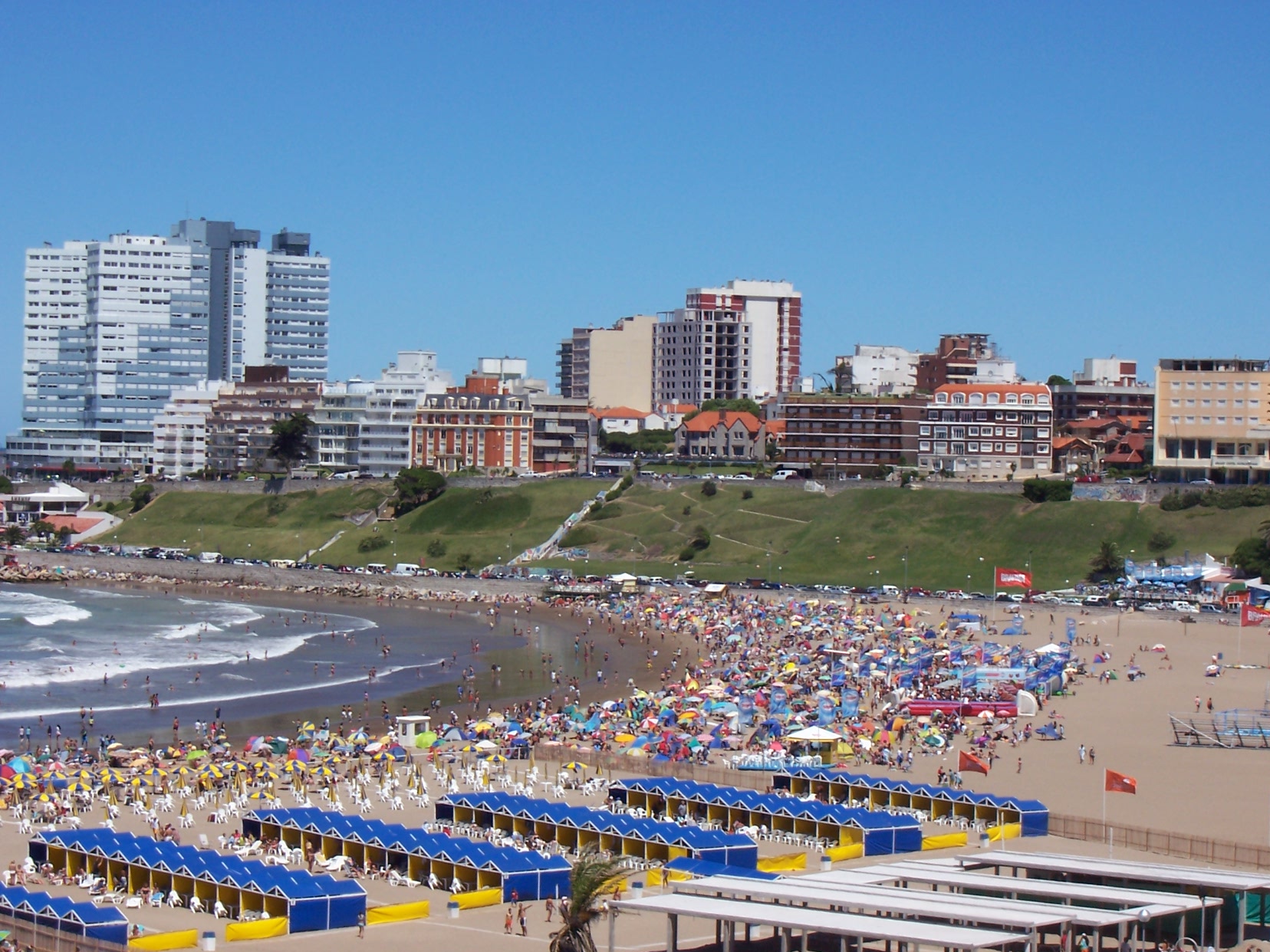
For several generations of Argentines, Mar del Plata is a synonym for the holidays. 'La Feliz', the national capital of the summer break, lays out kilometers of beaches on the Atlantic, a postcard promenade, sea lions in the sun and an unmistakable smell of sea, churros and fried fish. It is a big city, alive all year, that multiplies its population in summer and fills with beach umbrellas, but that also holds its own identity as a fishing port, a place of stone chalets and balconies over the ocean.
The tourist heart beats on the Rambla, facing the imposing ensemble of the Casino Central and the Gran Hotel Provincial, the work of architect Alejandro Bustillo, guarded by the famous stone sea lions sculpted by José Fioravanti. The beaches unfold from there: the historic Bristol right downtown, Punta Iglesia, the elegant Playa Grande to the south and the classic Torreón del Monje. Beyond that, the port holds one of the most authentic experiences in the city, with its fishing wharf of orange boats, its seafood restaurants and the sea lion reserve out on the Escollera Sur breakwater.
But Mar del Plata is much more than beach. It is Villa Victoria Ocampo, the wooden house where the writer hosted the intellectual world of her day; it is the Torre Tanque and its panoramic views; it is one of the birthplaces of surfing in Argentina; and it is a cultural calendar that fills the theaters and cinemas in winter. History, sea, food and nightlife: all together, about five hours from Buenos Aires.
📖 History of Mar del Plata
Mar del Plata was born of industry before tourism. Around 1857 the Portuguese Coelho de Meyrelles set up a saladero (meat-salting plant) at the mouth of a stream, on land that is now the city, and a small settlement formed around it, known as the Puerto de la Laguna de los Padres. As the saladero declined, part of that land passed to Patricio Peralta Ramos, who petitioned the province to recognize the town: on February 10, 1874, governor Mariano Acosta signed the founding decree and, at Peralta Ramos's request, the place was named Mar del Plata. In 1877 Pedro Luro arrived and gave the area new momentum with the saladero, a mill and a jetty, and in 1886 the Ferrocarril del Sud reached it for the first time, bringing the city closer to Buenos Aires and opening the tourism era. From the end of the 19th century, the Buenos Aires aristocracy began summering in Mar del Plata, building promenades, hotels and chalets; over time, and above all in the mid-20th century, the summer holiday was democratized and the city became Argentina's great popular beach resort. The Casino and Hotel Provincial ensemble, from the late 1930s and the 1940s, set the monumental image of 'La Feliz' for good. The full story is on our history page.
Read the full history ↓🏛️ Mar del Plata is in Buenos Aires Province
The agro-export heart of Argentina: the endless pampa that was the land of the Querandí and the Pampa peoples, the domain of governor Rosas, the engine of cattle and wheat with La Plata as its purpose-built capital, cradle of the gaucho and of the Atlantic Coast where the whole country spends its summer.
Read the history of Buenos Aires Province →🗺️ What to see
Tours you can book
A local guide tells you in half an hour what no sign at the site will ever explain. We look ours up on Civitatis: guided in Spanish and booked online with no fuss. They have 4 activities in Mar Del Plata. And there are free tours here: you book without paying and tip the guide whatever you think at the end, so trying one costs you nothing. Have a look below: tap any of them to see them all.
If you book from here we earn a commission and you pay no more. Prices and availability come from Civitatis.
1
Rambla, Casino Central and Gran Hotel Provincial
The city's most emblematic monumental ensemble, designed by Alejandro Bustillo and built between the late 1930s and the mid-1940s (the Casino opened in 1939 and the Hotel Provincial in 1950). Two great twin buildings in eclectic French style, faced in Mar del Plata stone, opening to the sea with a broad stairway flanked by José Fioravanti's celebrated stone sea lions, the city's absolute postcard.
Leer más ↓
The Casino Central and Gran Hotel Provincial ensemble is the most recognizable image of Mar del Plata. Designed by Alejandro Bustillo — the same architect behind the Hotel Llao Llao in Bariloche — it went up between the late 1930s and 1950 in a monumental eclectic style with French roots, faced in Mar del Plata stone. The broad stairway running down to the Rambla and the sea, guarded by Fioravanti's two stone sea lions, is the city's most classic photo spot.
The Casino still operates and you can walk through its main hall; around it, the Rambla concentrates the promenade, the shops and the buzz of downtown facing Bristol beach.
Getting there: right downtown, facing Bristol beach; on foot. Best time: all year. Tips: combine it with a walk along the San Martín pedestrian street and Bristol beach.
ℹ️ Free access to the Casino hall; gambling is for over-18s only. The Rambla and the stairway are free and open.
2
Port, fishing wharf and Escollera Sur
One of the most authentic experiences here: the wharf with its orange boats, the fish and seafood restaurants, the image of the Virgin who protects the fishermen and, out on the Escollera Sur, the path that leads to the sea lion reserve and to a panoramic viewpoint at the end of the breakwater.
Leer más ↓
The port is the working soul of Mar del Plata. The fishing wharf, with its distinctive yellow and orange boats, is a spectacle in itself, and around it sits the city's best fish and seafood offering (the Centolla area). It is an unmissable stop for rabas (fried calamari), seafood casseroles and fresh fish.
From the port you can walk out onto the Escollera Sur, a long breakwater that leads to the sea lion reserve and ends at a viewpoint over the open sea.
Getting there: south of downtown; by bus, taxi or car. Best time: all year; at midday for seafood. Tips: wear comfortable shoes for walking the breakwater.
ℹ️ Free open access; food and drink extra (a fish or seafood dish about US$ 13–30, verified July 2026).
3
Sea Lion Wildlife Reserve
Out on the port's Escollera Sur, about a kilometer's walk away, lives a colony of hundreds of South American sea lions (Otaria flavescens), unusual in being made up almost entirely of males. You see them sunbathing, playing and squabbling at very close range.
Leer más ↓
One of the most fascinating free attractions in the city. Out on the port's Escollera Sur, about a kilometer's walk away, there is a stable colony of hundreds of South American sea lions (Otaria flavescens), remarkable in being made up almost entirely of males. You watch them from very close as they sunbathe on the rocks, play, swim and squabble.
It is a wildlife experience you rarely get in a big city, and it works for all ages.
Getting there: walking out along the Escollera Sur from the port (about 15-20 min). Best time: all year. Tips: keep your distance from the animals; do not feed them; wear comfortable shoes.
ℹ️ Free open access; open all year.
4
Playa Grande and Torreón del Monje
South of downtown, Playa Grande is the most elegant and traditional area, tied to sport and surfing; the Torreón del Monje, a medieval-inspired building on the shore, is one of the classic viewpoints and meeting points, with a café and sea views.
Leer más ↓
Playa Grande is the most elegant and sporty beach in Mar del Plata, historically associated with the clubs, golf and surfing. Its beach clubs, its promenade and its closeness to the Güemes dining area make it very popular. The Torreón del Monje, a medieval-inspired building perched over the shore between downtown and Playa Grande, is a classic viewpoint and meeting place, with a café and splendid sea views.
Getting there: south of downtown; on foot along the seafront, by bus or taxi. Best time: summer for the beach; all year for the walk and the Torreón. Tips: combine it with the food and bar scene of Güemes and Alem.
ℹ️ Public beaches with free access; tent/umbrella at a beach club about US$ 20–50 a day in season (verified July 2026).
5
Torre Tanque
A historic water-company viewpoint in the Stella Maris neighborhood, shaped like a Tudor-style tower. You climb a spiral staircase of nearly 200 steps or take the lift up to the viewing gallery, which gives one of the best panoramas of the city and the sea.
Leer más ↓
The Torre Tanque is a historic water tank belonging to Obras Sanitarias, opened on January 30, 1943 at the highest point of the Stella Maris hill, shaped like an English Tudor tower designed by architect Cornelio Lange. You climb a spiral staircase of 194 steps (or take the lift) to the viewing gallery: the tower is 40.75 meters tall at street level and its top sits more than 88 meters above sea level, so it gives one of the best panoramas of the city and the ocean, with views to all four points of the compass.
Free guided visits are usually offered, above all in the summer season.
Getting there: Stella Maris neighborhood, near downtown; on foot or by taxi. Best time: clear days for the view. Tips: check visiting hours by season; access is usually free.
ℹ️ Free access with a guided visit (check seasonal hours with Obras Sanitarias / Turismo MGP).
6
The English-style wooden house where the writer and patron Victoria Ocampo hosted much of the 20th century's intellectual world. Today it is a cultural center, set in a mature park, with visits, exhibitions and events.
Leer más ↓
Villa Victoria is a prefabricated English-style wooden house, brought from England in the early 20th century, where the writer and patron Victoria Ocampo spent long stretches and hosted figures such as Rabindranath Tagore, Igor Stravinsky and many other intellectuals of her time. Today it is a municipal cultural center, set in a mature park, offering visits, exhibitions, concerts and events.
It is a different kind of stop for getting to know the belle époque Mar del Plata and its cultural side.
Getting there: Divino Rostro / Stella Maris neighborhood; by taxi or bus. Best time: all year; a packed cultural calendar in summer and winter. Tips: check the program of exhibitions and concerts.
ℹ️ Low-cost entry (about US$ 2–5, verified July 2026) or free on certain days; check hours and program.
7
Punta Iglesia and Playa Varese
More sheltered downtown beaches, in the Stella Maris and Cabo Corrientes area, with a quieter, more neighborhood feel. Marine wildlife often shows up in their waters and around the rocks, and they make a good coastal walk between downtown and Playa Grande.
Leer más ↓
Between downtown and Playa Grande, the beaches of Punta Iglesia and Varese (in the Cabo Corrientes and Stella Maris area) are more sheltered and have a neighborhood feel, tucked between rock shelves. They are ideal for a coastal walk, for spotting the marine wildlife that comes close to the rocks and for enjoying a more intimate Mar del Plata. Varese is also one of the favorite beaches of local surfers.
Getting there: along the seafront between downtown and Playa Grande; on foot. Best time: all year. Tips: a beautiful walk at sunset.
ℹ️ Public beaches with free access.
8
Surfing in Mar del Plata
Mar del Plata is one of the birthplaces of Argentine surfing. Beaches such as Playa Grande, Varese, Waikiki and the southern ones offer waves for every level, with schools and board and wetsuit rental.
Leer más ↓
Mar del Plata is the cradle of surfing in Argentina: the sport started here in this country and today the city has the largest number of surfers and schools. Beaches such as Playa Grande, Varese, Cabo Corrientes, Waikiki and several to the south offer waves for every level. The schools give lessons for beginners (board and wetsuit included) and rent gear to those who already know how.
It is an iconic city experience, possible even outside the peak of summer thanks to wetsuits.
Getting there: to the beaches of Cabo Corrientes, Varese and Playa Grande; on foot or by bus. Best time: all year with a wetsuit; summer for beginners. Tips: book your lesson ahead in season.
ℹ️ Lesson with gear about US$ 28–35 (90 min); board rental from US$ 15 for 2 h (verified July 2026).
9
Playa Bristol and downtown
The most famous and historic beach in Mar del Plata, right downtown, facing the Rambla. The heart of the city's beach culture since the early 20th century, ideal for walking, sunbathing and feeling the city's summer pulse.
Leer más ↓
Bristol beach, facing the Rambla and the Casino, is the most historic and emblematic in the city: this is where Mar del Plata's beach culture began in the early 20th century. In summer it is a swarm of umbrellas, churro sellers and hawkers, with a lively, popular atmosphere that is the very essence of 'La Feliz'. It is surrounded by the San Martín pedestrian street, churro shops and the commercial heart of downtown.
Getting there: right downtown; on foot. Best time: summer for the classic beach atmosphere. Tips: try the churros facing the sea; keep an eye on your belongings given the crowds.
ℹ️ Free access; beach club sectors with tent/umbrella charged in season.
10
From Mar del Plata it is easy to reach the small-farm and cliff country of Chapadmalal, the greenery of Sierra de los Padres and Laguna de los Padres, and the neighboring beach town of Miramar.
Leer más ↓
Mar del Plata is an excellent base for touring the coast and the nearby hills. To the south, Chapadmalal offers cliffs, wide beaches, estancias and a landscape of small farms; Sierra de los Padres and Laguna de los Padres bring greenery, hills and outdoor activities a few kilometers away; and neighboring Miramar, 'the children's town', rounds out the family beach offering.
Getting there: by car, regional bus or agency tours. Best time: spring and summer. Tips: for Sierra and Laguna de los Padres your own car is best.
ℹ️ Free access to the towns; guided trips about US$ 25–50 per person (verified July 2026).
💵 Prices
Tickets
| Type | Price |
|---|
| Public beaches, promenade and seafront | Free open access (beach clubs and tents/umbrellas are charged separately; source: Turismo Mar del Plata, verified July 2026) |
| Sea Lion Reserve (Escollera Sur) | Free open access (source: mardelplata.com, verified July 2026) |
| Port and fishing wharf | Free open access (food and drink extra; verified July 2026) |
| Torre Tanque (viewpoint) | Free with a guided visit; check seasonal hours (source: OSSE, verified July 2026) |
| Villa Victoria Ocampo (cultural center) | About US$ 2–5; free on certain days (range from the cultural center's site, verified July 2026) |
| Casino Central | Free access to the hall; gambling is for over-18s and subject to casino rules |
| Beach club service (tent, umbrella, sun mat) | About US$ 20–50 a day depending on the beach and category in season (range from local beach clubs, verified July 2026) |
| Surf lesson (with gear, 90 min) | About US$ 28–35 per person (range from Mar del Plata surf schools, verified July 2026) |
🔄 updated monthlyOfficial / reference values · double-check when buying
Activities and tours
Beach day at Bristol, Playa Grande or the south
PriceFree on the public beach; beach club about US$ 20–50 a day (range from local beach clubs, verified July 2026)
Walk around the port and the sea lion reserve
Free access (food and drink extra)
Visit to the Casino and Hotel Provincial ensemble and the Rambla
Free access
Climbing the Torre Tanque
PriceFree with a guided visit; check hours (source: OSSE, verified July 2026)
Surf lesson or gear rental
PriceLesson with gear about US$ 28–35 (90 min); board rental from about US$ 15 for 2 h (range from surf schools at Playa Grande and Varese, verified July 2026)
Cultural circuit (Villa Victoria, museums, theaters)
PriceDepends on the museum; several are free or cheap, about US$ 2–5 (range from local cultural centers, verified July 2026)
Trip along the coast (Chapadmalal, Miramar, Sierra de los Padres)
PriceAbout US$ 25–50 per person on a guided trip (range from local agencies, verified July 2026)
🔄 updated monthlyOfficial / reference values · double-check when buying
🚌 How to get there and distances
Getting around
On foot (downtown, promenade and seafront)
Free
NotesDowntown, the pedestrian street, the Rambla and the central beaches are comfortable to cover on foot. For the port, Playa Grande or the south you will want transport.
PriceUrban ticket $1,922 ARS flat fare since June 1, 2026, up to $3,049 ARS on legs out to the outer neighborhoods (source: 0223 and Mi8, verified July 2026)
NotesA wide network of lines linking downtown with the port, the southern beaches and the neighborhoods. Paid with a SUBE card; it is the cheapest option. Fares are set by the General Pueyrredón municipality and subject to adjustment
PriceAbout US$ 1–2 to start the meter; an average downtown-port ride about US$ 4–8 (range from local remís companies, verified July 2026)
NotesPlentiful and useful for the port, late-night trips or when you have luggage. In high season there can be delays.
PriceFuel at the pump price current when you travel + metered parking (verified July 2026)
NotesHandy for touring the coast and the south, but downtown gets congested in summer and metered parking is expensive and limited.
PriceRental about US$ 8–15 per day (range from local rental shops, verified July 2026)
NotesThe seafront and several stretches have bike lanes; a pleasant way to cover the coastal strip on good-weather days.
🔄 updated monthlyOfficial / reference values · double-check when buying
How to get there
Buenos Aires → Mar del Plata (car)
Airlines / operatorsOwn car along Autovía 2 (RP 2) via Dolores and Maipú; tolls on the way
Avg. priceTolls totaling about $18,400 ARS at peak times (Dock Sud, Hudson, Samborombón and Maipú; each Ruta 2 toll runs around $7,000 ARS), plus fuel at the current pump price (source: El Cronista and AUBASA, verified July 2026)
Buenos Aires → Mar del Plata (bus)
Airlines / operatorsLong-distance coaches from Retiro to the 'Eva Perón' Ferroautomotora (Plusmar, Flecha Bus, Vía Bariloche, Costera Criolla and others)
Avg. priceAverage price $63,000 ARS per leg (as low as $25,000–45,000 ARS booked ahead, up to more than $90,000 ARS in an executive sleeper); source: La Nación survey and CheckMyBus, verified July 2026
Buenos Aires → Mar del Plata (train)
Airlines / operatorsLong-distance train from Constitución to the Ferroautomotora (Trenes Argentinos, limited frequencies)
Avg. priceEconomy ticket about US$ 15–30 depending on the service; book ahead (range from Trenes Argentinos, verified July 2026)
Buenos Aires → Mar del Plata (plane)
Airlines / operatorsFlights to Ástor Piazzolla airport from Aeroparque/Ezeiza, with Aerolíneas Argentinas the only direct operator
Avg. priceFrom $57,559 ARS return in low-demand months (May) up to $370,000–430,000 ARS return in high season (January-February); source: momondo and Kayak, verified July 2026
🔄 updated monthlyOfficial / reference values · double-check when buying
🏨 Where to stay
No exact prices: a scale from $ (budget) to $$$$$ (luxury), with 2-3 options per category.
Hostels, budget lodging and camping
Recommended optionsAbout US$ 12–25 for a hostel bed; simple lodging from US$ 30 a night; hostels downtown and campsites towards the south, Punta Mogotes and Chapadmalal (range from Hostelworld and
Booking.com, verified July 2026). Book ahead in summer and on long weekends
3-star hotels, aparts and mid-range cabins
Recommended optionsAbout US$ 55–110 a night with breakfast; a huge choice of family hotels, apart-hotels and short-term rentals downtown, in La Perla and around Playa Grande (range from
Booking.com, verified July 2026). This is the most plentiful category
Recommended optionsAbout US$ 115–220 a night in season; upper-tier hotels along the coast and downtown, with spa or pool, e.g. the Playa Grande area and the promenade (range from
Booking.com, verified July 2026)
5-star hotels and luxury resorts
Recommended optionsAbout US$ 230–450 a night in high season; the top-category hotels with sea views and full services (range from
Booking.com and Tripadvisor, verified July 2026). Book well ahead in summer
Specific establishments (verified names)
Recommended optionsMar del Plata's municipal tourism board (EMTUR) keeps an official accommodation search by category and area at
https://www.turismomardelplata.gob.ar/ASP/SP/hoteles-amarlaweb.asp. The registered five-star hotels are Costa Galana (
https://www.hotelcostagalana.com), Hermitage, NH Gran Hotel Provincial, Sheraton Mar del Plata and UTHGRA Sasso. Four-star: Astor (
https://hotelastor.com.ar), Dos Reyes (
https://dosreyes.com.ar), Elegance (
https://www.elegancehotel.com.ar), Gran Hotel Dorá (
https://hoteldora.com.ar), Iruña, Las Rocas (
https://hotellasrocas.com.ar), NH Hotel Casino and Primacy (
https://primacy.com.ar). Boutique: Casa Daupi (
https://www.casadaupi.com), Sainte Jeanne (
https://hotelsaintejeanne.com) and Villa Nuccia (
https://villanuccia.com.ar). The register also includes dozens of trade-union hotels, several of them members-only, and the search tool says so on each listing.
🍴 Where to eat
Churro shops, cafés and Mar del Plata alfajores
Options / signature dishAbout US$ 3–9 for afternoon tea or a dozen churros; churros with hot chocolate facing the sea, historic cafés and the famous Mar del Plata alfajores, Havanna and artisanal (range from local reviews, verified July 2026). Ideal for a mid-afternoon break or to take home
Parrillas and Argentine cooking
Options / signature dishAbout US$ 10–21 per person; parrillas (grill houses), bodegones and Argentine restaurants all over downtown and the neighborhoods (range from Tripadvisor reviews, verified July 2026). Very family-friendly
Fish and seafood from the port
Options / signature dishAbout US$ 13–30 per dish; the city's culinary signature, restaurants at the port and in the Centolla area, with rabas (fried calamari), seafood casseroles, fresh fish and paellas (range from visitor reviews, verified July 2026). Unmissable
Contemporary cooking, breweries and bars
Options / signature dishAbout US$ 13–28 per person; a chef-led scene, craft breweries and cocktail bars in Güemes, Alem and Playa Grande; a pint of craft beer about US$ 4–6 (range from local reviews, verified July 2026)
Specific venues (verified names)
Options / signature dishThe same EMTUR publishes a restaurant search at
https://www.turismomardelplata.gob.ar/ASP/SP/restaurantes-amarlaweb.asp, with a filter for gluten-free options. Among those registered: 5 de Copas Asador Criollo; Altamar; Amigos del Mar; Almacén de Carnes; Ají Club; Angkor; Amadeo; Amalfi Focaccería; Antares Bar de Fábrica, the Mar del Plata brewery, with several branches; and Adorado Bar, at Florida Premium Outlet and at Punta Mogotes. the establishment does not publish its menu online: the municipal search tool lists category, address and contact details, not prices.
📖 History of Mar del Plata
Origins, formation and what the sources say.
From meat-salting plant to town: origins and founding (1857-1874)
The city that today takes in millions of tourists a season was not born smelling of sunscreen but of salted meat and tanned hides. Where the Rambla, the Casino and the umbrellas of Bristol beach now spread out, a little over a century and a half ago there was only a saladero (meat-salting plant) beside the mouth of a stream, a few carts and a handful of laborers. Around 1857, the Portuguese-born merchant Coelho de Meyrelles, acting for a Brazilian-Portuguese consortium, bought land at the mouth of a stream — in what is now the Punta Iglesia area — and set up a saladero there, an industry that processed meat and hides. A small settlement grew up around that activity, and the place came to be known as the 'Puerto de la Laguna de los Padres'.
As the years passed and Meyrelles died, the salting business declined and part of that land was bought by Patricio Peralta Ramos, a landowner who saw the potential of the site. In 1873 he began petitioning the government of Buenos Aires province to officially recognize the existence of a town on land he owned. The petition succeeded: on February 10, 1874, governor Mariano Acosta signed the decree recognizing the new town within what was then the Balcarce district.
The name was chosen by Peralta Ramos himself, who asked that it be called Mar del Plata, joining the idea of the sea with that of the Río de la Plata. So what had started as an industrial operation by the coast formally became a town, laying the foundations of what would in time become Argentina's great beach city.
Pedro Luro, the railway and the takeoff (1877-1900)
The young town needed an economic push, and it came from a Basque-French entrepreneur: Pedro Luro. In 1877, Luro took over the saladero and the tallow works, set up a flour mill and built a new jetty, giving fresh air to the region's farming and industrial activity. His initiative turned Mar del Plata into a productive hub on the Buenos Aires coast.
The decisive leap, though, was the arrival of the train. On September 26, 1886, locomotive No. 46 of the Ferrocarril del Sud pulled into the town for the first time, connecting it with Buenos Aires and drastically shortening the distance. The railway changed the town's fate for good: what had been a long, laborious overland journey became an accessible getaway for Buenos Aires society.
That is when the tourist Mar del Plata began to take shape. The Buenos Aires aristocracy discovered in its beaches a distinguished place to spend the summer, in the style of the European resorts. The first wooden promenades, hotels and large residences went up, and the town began to live that double pulse — a working town through the year, an elegant resort in summer — that would define its identity for decades. It even received illustrious visitors, at a time when summering 'in Mar del Plata' was a status symbol.
The Casino, the Hotel Provincial and Bustillo's stamp
The monumental image of modern Mar del Plata was forged between the late 1930s and the mid-1940s, with the construction of the Casino Central and Gran Hotel Provincial ensemble. The project was commissioned from architect Alejandro Bustillo — one of the most influential in Argentina, also responsible for the Hotel Llao Llao in Bariloche — and was carried out under the conservative governor Manuel Fresco.
The Casino building went up between 1938 and 1939 and opened on December 22, 1939. The Gran Hotel Provincial, by contrast, took far longer: it only opened on February 18, 1950, by then during Juan Domingo Perón's first presidency. The two form an ensemble of large twin buildings in an eclectic style with French neoclassical echoes, faced in Mar del Plata stone, exposed brick and slate mansard roofs. The central plaza opens to the sea with a broad stairway, in what is now known as the Rambla.
It was there that the two sculptures which became the city's absolute symbol were installed: the stone sea lions, carved by the sculptor José Fioravanti — the same artist who had decorated the entrance hall of the Casa Rosada. With their serene bearing guarding the stairway, those sea lions became the postcard image of Mar del Plata. The Casino-Hotel Provincial ensemble is today recognized heritage and one of the country's architectural icons.
From aristocratic resort to popular capital of the summer holiday
Through the first decades of the 20th century, Mar del Plata was above all the resort of the elite. The great Buenos Aires families built chalets and stylish villas, stayed in luxury hotels and strolled the promenade in a season that was almost a social event in itself. The city cultivated that sophisticated image, reflected in residences such as Villa Victoria Ocampo, where the writer gathered the intellectual world of her time.
By the mid-20th century, that exclusive character began to change. With the expansion of labor rights, paid holidays and the social tourism promoted under the Peronist governments of the 1940s and 1950s — with the Eva Perón Foundation organizing holiday camps for workers and their families — the Mar del Plata beaches opened up to working-class visitors and to the middle class from all over the country. Mar del Plata stopped being the summer of a few and became the destination of millions: Argentina's great popular beach resort, the 'national capital of the summer holiday'. The growth of the hotel trade, the high-rise apartment blocks that replaced much of the original stone chalets, and the explosion of restaurants — parrillas, pizzerias, seafood houses — went with that shift towards the masses, which in the 1960s and 1970s brought the city several million tourists a season.
That is how 'La Feliz' as we know it today was born: a city that multiplies its population in summer, with beaches for every taste, a living fishing port, a sea lion reserve, museums, theaters and a cultural calendar that does not go quiet even in winter — with its prestigious film festival and an intense theater season. From a meat-salting plant by the sea to a tourist metropolis, Mar del Plata managed to blend its history of work and of holidays into an identity all its own, unmistakable, that keeps drawing generation after generation of Argentines.
📚 Bibliography
- Legislatura de la Ciudad de Buenos Aires (Asuntos Culturales) — «10 de febrero de 1874: Patricio Peralta Ramos fundó la ciudad de Mar del Plata»: https://cultura.legislatura.gob.ar/cultura_posts/patricio-peralta-ramos-fundo-la-ciudad-de-mar-del-plata625.html
- Ministerio de Cultura de la Nación — «A 146 años de la fundación de Mar del Plata»: https://www.cultura.gob.ar/a-146-anos-de-la-fundacion-de-mar-del-plata-10112/
- Infobae — «Los orígenes de Mar del Plata: de los sueños de Peralta Ramos y Pedro Luro a la primera rambla»: https://www.infobae.com/sociedad/2026/02/10/los-origenes-de-mar-del-plata-de-los-suenos-de-peralta-ramos-y-pedro-luro-a-la-primera-rambla-y-la-visita-de-un-futuro-zar/
- Wikipedia — «Casino de Mar del Plata»: https://es.wikipedia.org/wiki/Casino_de_Mar_del_Plata
- Argentina.gob.ar (Monumentos) — «Conjunto Casino y Hotel Provincial»: https://www.argentina.gob.ar/capital-humano/cultura/monumentos/conjunto-casino-y-hotel-provincial
- elDiarioAR — «La historia del Hotel Provincial de Mar del Plata»: https://www.eldiarioar.com/sociedad/historia-hotel-provincial-mar-plata-sueno-colosal-caida-resurreccion_130_7073238.html
- El Economista — «Mar del Plata cumple 150 años y esta es su historia»: https://eleconomista.com.ar/actualidad/mar-plata-cumple-150-anos-esta-su-historia-n70690
- Citecus — «Estancieros, interés económico y el negocio de la urbanización: la verdadera historia de la fundación de Mar del Plata»: https://www.citecus.com/estancieros-interes-economico-y-el-negocio-de-la-urbanizacion-la-verdadera-historia-de-la-fundacion-de-mar-del-plata/
- MardelPlata.com — «Historia de Mar del Plata»: https://www.mardelplata.com/informacion-general/historia-2/
- Welcome Argentina — «Villa Victoria Ocampo, centro cultural»: https://www.welcomeargentina.com/mardelplata/ocampo-cultural-center.html
❓ Frequently asked questions
Why is Mar del Plata called 'La Feliz' and the 'summer holiday capital'?+
For more than a century Mar del Plata has been Argentina's beach resort par excellence: the destination where millions of people spend their summer holidays. The nickname 'La Feliz' (the happy one) attached itself to that spirit of rest, beach and fun, and 'national capital of the summer holiday' reflects that it is the country's most important and most visited seaside city, with beaches, a promenade, a casino and an intense cultural life.
How much does it cost to get there from Buenos Aires?+
By coach, the average price is around $63,000 ARS per leg (from $25,000–45,000 ARS booked ahead up to more than $90,000 ARS in an executive sleeper), with a journey of about 5 to 6 hours (verified July 2026). By train from Constitución it is cheaper (about US$ 15–30) but slower and with few departures. By plane, the only direct operator is Aerolíneas Argentinas, with return fares from $57,559 ARS in low season up to $370,000–430,000 ARS in January-February. By car it is some 400-410 km along Autovía 2 (about 5 hours), with tolls adding up to about $18,400 ARS at peak times, plus fuel.
When is the best time to go?+
For the beach, summer (December to March) is the classic season, with January and February the busiest months. If you prefer fewer people and better prices, December and March are ideal. Spring and autumn have good weather for exploring the city, and winter offers a very strong cultural calendar (theater and the International Film Festival), though the sea is too cold for swimming.
Where can I see the sea lions?+
The best spot is the Sea Lion Wildlife Reserve, out on the port's Escollera Sur: a walk of about a kilometer takes you to a colony of hundreds of males sunbathing very close to visitors. Access is free. You can also often see them in the port waters, at Playa Varese and at Punta Iglesia. And then there are Fioravanti's two stone sea lions guarding the Casino promenade.
Can I visit the Aquarium?+
Aquarium Mar del Plata, the classic marine park on the southern coast (Punta Mogotes), closed permanently on March 31, 2026, so it is no longer operating. For plans with children there are still the sea lion reserve, the museums, the viewpoints and the beaches. Always check what is currently open when planning your trip.
Can you surf in Mar del Plata?+
Yes, it is one of the birthplaces of surfing in Argentina. Beaches such as Playa Grande, Varese, Cabo Corrientes, Waikiki and several to the south offer waves for different levels, with schools giving lessons (about US$ 28–35 for a 90-minute lesson with gear, verified July 2026) and renting boards and wetsuits. It is a good option even outside the peak of summer.
How many days do I need for Mar del Plata?+
Three to five days cover the essentials without rushing: a beach day (Bristol, Playa Grande or the south), half a day for the port with the fishing wharf and the sea lion reserve, another for downtown with the Rambla, the Casino and the Torre Tanque, and time for Villa Victoria Ocampo, the Güemes scene and a run out to Chapadmalal or Sierra de los Padres. If you are only there for a weekend, prioritize port + sea lions, the Rambla and a good seafood meal.
Sources consulted (23)
- https://cultura.legislatura.gob.ar/cultura_posts/patricio-peralta-ramos-fundo-la-ciudad-de-mar-del-plata625.html
- https://www.cultura.gob.ar/a-146-anos-de-la-fundacion-de-mar-del-plata-10112/
- https://es.wikipedia.org/wiki/Casino_de_Mar_del_Plata
- https://www.argentina.gob.ar/capital-humano/cultura/monumentos/conjunto-casino-y-hotel-provincial
- https://www.mardelplata.com/reserva-faunistica-de-lobos-marinos/
- https://www.osmgp.gov.ar/osse/en-verano-la-torre-tanque-propone-visitas-guiadas-y-recorridos-por-la-tarde/
- https://www.welcomeargentina.com/mardelplata/ocampo-cultural-center.html
- https://escueladesurfmdp.com.ar/clases/
- https://www.turismomardelplata.gob.ar/ASP/SP/como-llegar.htm
- https://www.plataforma10.com.ar/pasajes-en-micro/buenos-aires/mar-del-plata
- https://www.rome2rio.com/es/s/Buenos-Aires/Mar-del-Plata
- La Nación — Precios de pasajes, verano 2026: https://www.lanacion.com.ar/economia/precios-de-pasajes-cuanto-sale-viajar-a-mar-del-plata-este-verano-2026-nid09012026/
- Diario La Capital MDP — Costo micro, tren y auto con peajes, verano 2026: https://www.lacapitalmdp.com/cuanto-cuesta-viajar-a-mar-del-plata-en-el-verano-2026-micro-tren-y-auto-con-peajes/
- El Cronista — Costo total de peajes 2026: https://www.cronista.com/informacion-gral/viajar-a-mar-del-plata-en-auto-cual-es-el-costo-total-de-los-peajes-en-2026/
- 0223 — Aumento del boleto de colectivo, junio 2026: https://www.0223.com.ar/nota/2026-5-15-17-12-0-neme-firmo-el-aumento-del-boleto-a-cuanto-se-va-y-desde-cuando-rige
- Mi8 — Tarifas de colectivo actualizadas: https://mi8.com.ar/el-boleto-de-colectivo-sube-a-1-922-desde-este-lunes-en-mar-del-plata-cuales-son-todas-las-tarifas/
- https://escueladesurfmdp.com.ar/rental/
- https://www.mardelplataturismo.com.ar/playas.html
- Infobae — Quiebra y cierre definitivo del Aquarium (abril 2026): https://www.infobae.com/sociedad/2026/04/03/quiebra-del-aquarium-las-fotos-del-cierre-y-las-gestiones-para-mudar-a-los-66-pinguinos-y-lobos-marinos/
- OSSE — Torre Tanque (altura, escalones y visitas): https://www.osmgp.gov.ar/osse/torre-tanque/
- Nota de método: en Argentina no hay registro nacional de alojamiento (lo nacional cubre solo agencias de viajes). Lo que sí existe es un padrón por municipio o por provincia, y el patrón <municipio>.tur.ar resuelve la mayoría: gualeguaychu.tur.ar, parana.tur.ar, federacion.tur.ar, necochea.tur.ar, pinamar.tur.ar, miramar.tur.ar, elcalafate.tur.ar, elchalten.tur.ar y corrientes.tur.ar están todos vivos.
- El padrón prueba que el establecimiento está inscripto y dónde, no que siga abierto hoy ni su calidad. Qué elegir es una recomendación de blogs, foros y guías de viaje; los precios, cuando figuran, salen del tarifario del organismo o de la web del propio establecimiento.
- Dominios comprobados el 08/08/2026, en apex y en www por separado, y los dudosos abiertos en navegador.