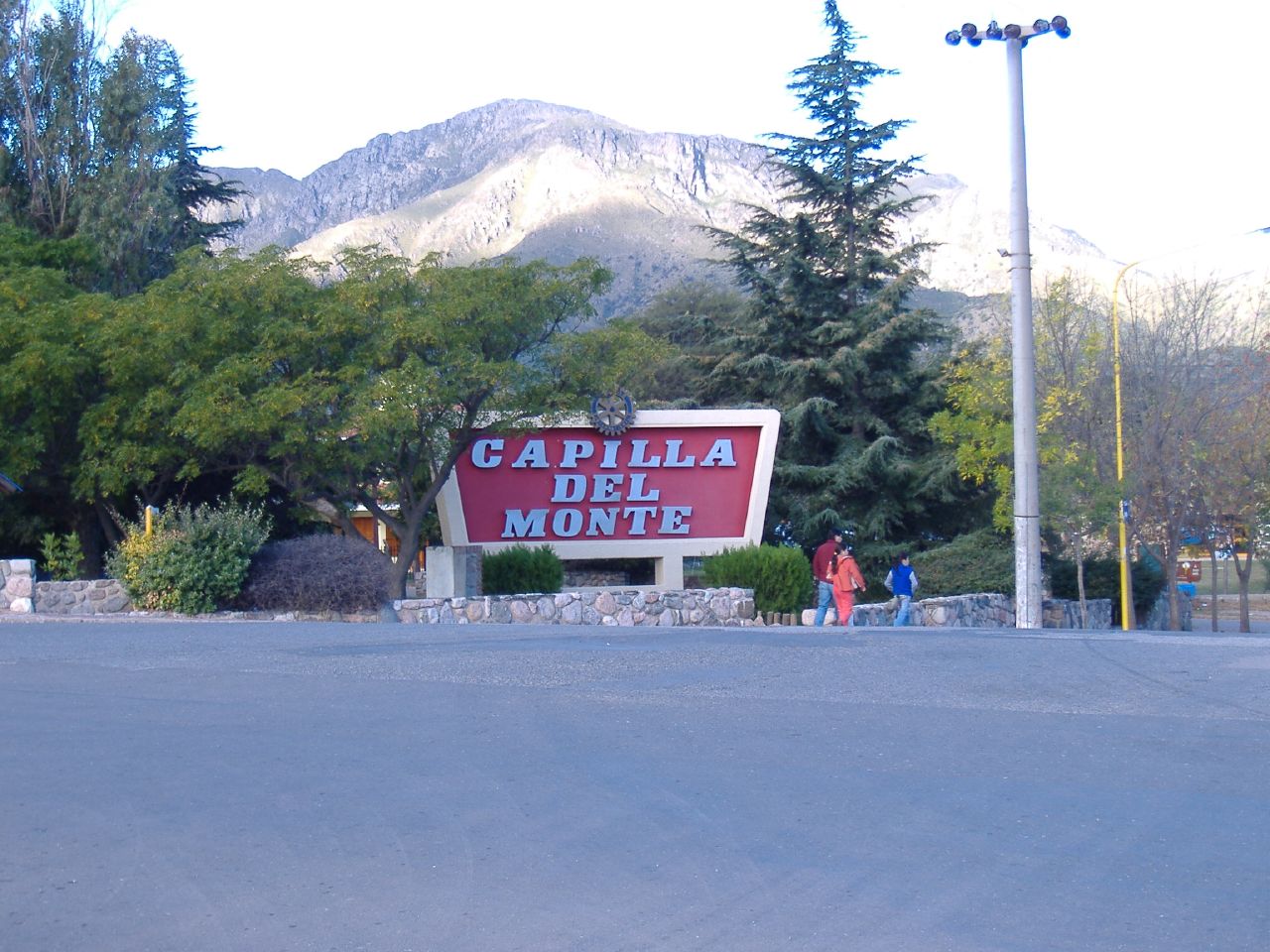
Capilla del Monte is a sierra town at the northern end of the Punilla Valley, in Córdoba, famous across the country for two things: the imposing Mount Uritorco, the highest summit of the Sierras Chicas, and its reputation as a mystic, esoteric and UFO epicenter, fed by decades of accounts of UFO sightings and special energies. That mix of nature and mystery gives it a character all its own.
But beyond the legends, Capilla del Monte is a destination of spectacular nature: the climb up the Uritorco, the crystal-clear river swimming spots, the astonishing rock formations of Los Terrones and the Ongamira valley, with its history of native peoples, make the area a paradise for trekking, resting and connecting with the sierra landscape. The town, with its relaxed, alternative feel, rounds out the experience.
This guide covers the essentials of Capilla del Monte with a practical eye: Mount Uritorco and the climb, the rivers and swimming spots, the rock formations and valleys around it, the town and its mystic atmosphere, and how to get around this corner of northern Punilla, one of the most singular in the sierras of Córdoba.
The Capilla del Monte area was inhabited by the Comechingones, the native people of the sierras of Córdoba, who left their mark in carvings, rock paintings and archaeological sites such as those in the Ongamira valley. The town's name comes from an old chapel built on the sierra woodland in colonial times. With the arrival of the railway and the boom in sierra tourism in the early 20th century, Capilla del Monte grew as a holiday town. In the second half of the 20th century it gained fame as a mystic and UFO center, above all from accounts of UFO sightings around Mount Uritorco. The full history is on our history page.
Read the full history ↓The landlocked province of sierras and rivers: Comechingón land founded by Cabrera in 1573, seat of the oldest university in the country and of the great Jesuit legacy, cradle of the University Reform and of the Cordobazo, capital of sierra tourism and of cuarteto.
Read the history of Córdoba →They depart from Villa Carlos Paz, 63 km away. If you book from this link we earn a commission and you pay no more.
No exact prices: a scale from $ (budget) to $$$$$ (luxury), with 2-3 options per category.
Origins, formation and what the sources say.
Before the UFOs, before the energy seekers and the stories of underground cities, the Uritorco was already a sacred mountain. Those who first revered it did not arrive on tour buses: they lived in these sierras for millennia. They were the Comechingones, one of the most singular native peoples of central Argentina, famous for something that astonished the Spanish chroniclers themselves: they were bearded highlanders —a very rare trait among American peoples— who lived in semi-underground dwellings dug into the earth to keep out the mountain cold. They farmed, hunted and gathered, and left a rich cultural mark in the form of rock paintings, carvings and sacred sites scattered through the sierras. The hill's own name recalls that root: 'Uritorco' comes from the region's native languages, and the mountain was a place of ceremony long before anyone spoke of cosmic energies.
In the surroundings of present-day Capilla del Monte, the Ongamira valley holds part of that legacy. Its rock walls and caves preserve traces of Comechingón presence and were, during the Spanish conquest, the scene of episodes of indigenous resistance. Ongamira is today a place loaded with history and a particular atmosphere, where the landscape of rock formations meets the memory of native peoples.
That Comechingón inheritance is a deep part of the area's identity. Place names, legends and archaeological sites recall that these sierras were, for centuries, the territory of a people who lived in them and held them sacred, long before the colonial chapels arrived and, later still, the mystic tales of the 20th century.
The origin of the name and of the town itself goes back to the mid-17th century, when the governor of the City of Córdoba granted land, as a royal land grant, to the Spanish settler Bartolomé Jaimes. On that land Jaimes founded a ranch and built an oratory on it, which he named Estancia de San Antonio de la Capilla del Monte: since the small religious building stood on a hill, over time local speech reduced the place to simply 'la capilla del monte' (the chapel on the hill). In 1695, captain Antonio de Cevallos raised an adobe chapel on that same plot, on the site where the Parish of San Antonio de Padua stands today, giving physical continuity to that first colonial oratory.
For almost two centuries, however, Capilla del Monte was no more than an isolated hamlet of scattered farmsteads, far from any significant circuit of the colony and later of newly independent Argentina. The real turning point came only in the late 19th century, through a decisive figure: Adolfo Doering, a naturalist of German origin who, after traveling and studying the area, actively promoted its development as a summer retreat for the Córdoba elite. In 1892 Doering created and chaired the first Comisión Vecinal (neighborhood commission), the institutional seed of the future municipality, which would take official shape under the name Capilla del Monte in 1897. In other words: the town we now associate with mystery and the esoteric has, in its documented origins, a thoroughly earthly history of royal land grants, adobe oratories and late-19th-century neighborhood commissions.
The next great push, as across the whole Punilla Valley, came with the extension of the railway in the early 20th century. The train connected the region with the city of Córdoba and with the rest of the country, and opened the sierras to tourism for good. It was that era that established Punilla as a destination for rest and health, thanks to its dry, temperate climate, with hotels and summer houses flourishing across the area. Capilla del Monte, at the northern end of the valley and at the foot of the imposing Mount Uritorco, developed as a sierra resort town, with its river swimming spots, its landscapes and its calm. For much of the 20th century it was, above all, a peaceful summer town in the sierras, before a new phenomenon transformed its fame entirely.
In the second half of the 20th century, Capilla del Monte acquired a very particular notoriety that sets it apart from any other sierra town in the country: its fame as a mystic, esoteric and UFO epicenter. The protagonist of that fame is Mount Uritorco, the highest summit of the Sierras Chicas, around which accounts of sightings of unidentified flying objects, strange lights and supposed special energies multiplied.
Various episodes and testimonies over the decades —spread by the press, by books and by word of mouth— gradually built the image of Capilla del Monte as a meeting point between the earthly and the unknown. The town became a destination for ufologists, mystics, seekers of spiritual experience and the curious of every kind, drawn by the promise of inexplicable phenomena and of a particular energy on the hill.
Whatever the truth of those accounts —which belong to the realm of belief and legend rather than science— this fame profoundly transformed Capilla del Monte's identity as a destination. Today the town combines its natural appeal (the Uritorco climb, the river swimming spots, the rock formations, the Ongamira valley) with an alternative, mystic atmosphere of markets, therapies and esoteric shops that makes it unique in the sierras of Córdoba.
If one episode crystallized Capilla del Monte's UFO fame, it was that of January 9, 1986. That night, townspeople claimed to have seen strange lights over the slopes of the Uritorco and, the next morning, a scorched mark or 'footprint' appeared in the vegetation on the hill, elongated and several meters across. The event had enormous repercussions in the national media and drew investigators, the curious and journalists from all over the country, cementing the hill as a symbol of the UFO phenomenon in Argentina.
But the mythology of the Uritorco was not born in 1986: the first testimonies about the supposed underground city of Erks date from the 1940s, when groups of locals began telling stories of travelers who claimed to have reached this secret city beneath the hill. The term ERKS —an acronym popularized as 'Encuentro de Remanentes Cósmicos Siderales' (Meeting of Sidereal Cosmic Remnants)— was coined only decades later by the guru Ángel Cristo Acoglanis, who claimed to have received revelations about this inner-earth city from a supposed extraterrestrial master named Saaruma. According to the mystic account that spread from the 1980s on, Erks would be a luminous, advanced metropolis inhabited by spiritually superior beings from beyond our world, who settled beneath the Uritorco to 'forge the human seed'. No physical evidence backs these claims, but the legend is still alive and is, along with the 1986 mark, the other great pillar of the hill's mystic imagery.
Out of those accounts came further stories and beliefs about the Uritorco, feeding a local culture that the town chose to fold into its tourist offering rather than resist. Although there is no scientific evidence for these phenomena —they belong to the realm of belief and contemporary folklore— they are a legitimate part of Capilla del Monte's cultural identity, as much as the geology of the hill or the Comechingón heritage of the valley.
Since then, Capilla del Monte has combined two souls that coexist without conflict: that of a sierra nature destination, with its trekking, its river swimming spots and its rock formations, and that of a mystic, alternative hub, with esoteric markets, holistic therapies, ufology gatherings and an annual festival devoted to the UFO phenomenon that fills the town every summer. That duality, far from making it less serious, gives it an unmistakable identity on the Argentine tourist map and makes it one of the most singular destinations in the sierras of Córdoba: a place where you can climb a real mountain of almost 2,000 meters in the morning and, in the afternoon, hear stories about a city from another dimension that supposedly exists beneath that same mountain.