Viajá con Gus
HomeArgentinaCafayate
Cafayate
🇦🇷 Argentina · The North (NOA)

Cafayate

Jump to what you need
📍Region / Province
The North (NOA) — Salta, Calchaquí Valleys
📌Service city
Salta city (~185-190 km on RN68, about 3 h)
📌Best time to go
March-April (grape harvest) and September-November; dry, sunny weather almost all year round
📌Suggested days
2 to 3 days (one just for the Quebrada, another for the wineries and the town)
💱 ARS exchange rate
Loading rate…
🌤️ Weather in Cafayate
Loading weather…

Cafayate is the high-altitude wine capital of northern Argentina: a quiet town in the Calchaquí Valleys of Salta, surrounded by vineyards at almost 1,700 meters above sea level, where the fierce sun and the swing between day and night temperatures give the grapes a concentration all their own. Its flagship variety is Torrontés, an aromatic, floral white that many consider the most Argentine grape of all, and that here finds its best expression.

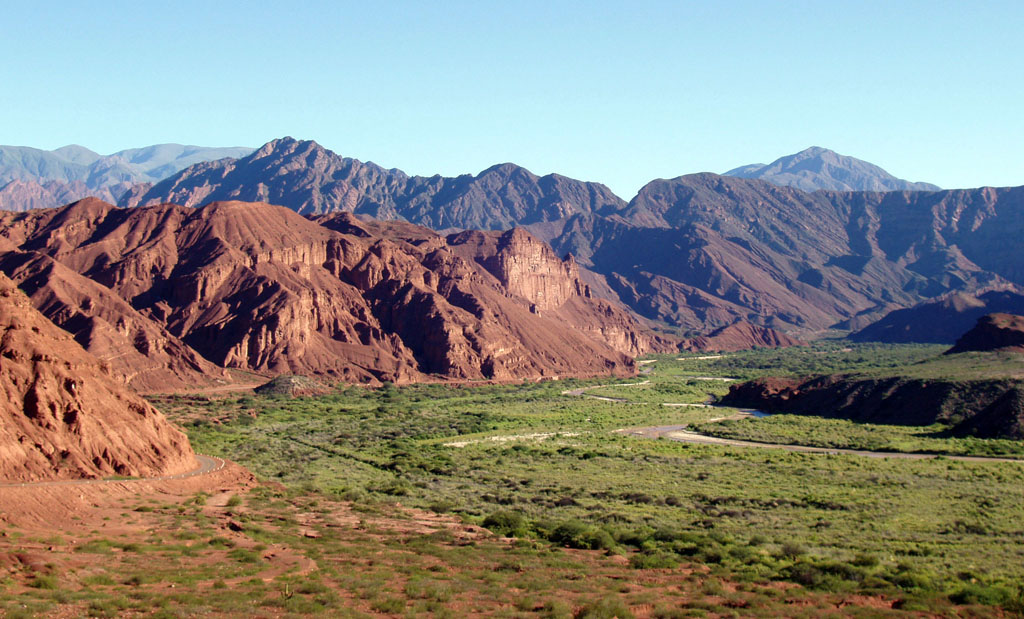
Getting there is part of the trip. From the city of Salta you come down National Route 68 through the Quebrada de las Conchas (also called Quebrada de Cafayate), a canyon of red sandstone carved by wind and water where the formations have names of their own: the Devil's Throat, the Amphitheater, Los Castillos, El Sapo, El Obelisco and El Fraile. It's one of the most spectacular scenic drives in the country.

The classic plan combines tastings at wineries (several a few minutes from the center, others right in town), a walk around Plaza 20 de Febrero with its cathedral and the obligatory wine ice cream —torrontés and cabernet—, a visit to the Museum of the Vine and Wine, and the adventure of the Quebrada. A well-rounded destination for anyone who enjoys good food, good drink and big landscapes.

📖 History of Cafayate

Before the Spanish arrived, the Calchaquí Valleys were inhabited by Diaguita-Calchaquí peoples, who held out for almost a century in what became known as the Calchaquí wars. The vine came with the missionaries in colonial times and the town was formally laid out in 1840; from those roots grew the high-altitude wine that defines Cafayate today. The full story, with the different versions of where the name comes from, is on our history page.

Read the full history ↓

🏛️ Cafayate is in Salta

Salta la Linda: the colonial jewel of the northwest, Diaguita land of the Calchaquí Valleys, setting of Güemes and his gaucho war, of the high-altitude wines of Cafayate and of the legendary Tren a las Nubes.

Read the history of Salta →

🗺️ What to see

1
Quebrada de las Conchas (RN68)
A scenic canyon of red sandstone running some 50 km along Route 68. You drive it stopping at its most famous rock formations; it's the one thing you can't miss in the area.
The Quebrada de las Conchas —also called Quebrada de Cafayate— is, without exaggerating, one of the most striking scenic drives in Argentina and the reason many travelers choose to make this trip by road instead of flying. It's a canyon of red, ocher and purplish sandstone that the wind and the water of the Conchas river have been carving for millions of years, leaving walls, gorges and rock formations that the imagination baptized with names of their own. Since 1995 it has been protected as a managed nature reserve, and it also holds an important Cretaceous paleontological site. The nice part is that the Quebrada isn't a place you arrive at but a road you go through: National Route 68 crosses it end to end, so you take it in on the way to or from Cafayate. You start entering the heart of the reserve about 12 km from town, and from there the famous stops come one after another: around kilometer 20 you get Los Castillos, towards km 31 La Yesera, El Fraile near km 34, El Sapo around km 40 and, almost at the end, the Amphitheater and the Devil's Throat, barely a few meters apart. Each stop has its own parking area and short trails. You have three ways to do it. With your own or a rented car you go at your own pace, which is ideal for stopping at every viewpoint and making the most of the light. On an organized excursion from Salta or from Cafayate they take you with a guide and set stops, convenient if you don't drive. And some people add a bike for the stretches close to town. Access along the road is open and free; at some of the formations there are local guides who offer explanations in exchange for a voluntary contribution. The best light for photos is early morning or late afternoon, when the reds of the rock catch fire; at midday the sun falls flat and flattens the color with it. If you're coming from Salta, think about leaving early so you have time to stop without rushing. And one piece of advice that holds for the whole area: the sun in the valley is brutal and there's very little shade, so bring plenty of water, a hat and sunscreen, and wear comfortable shoes for the short dirt-and-stone trails.
ℹ️ Scenic stretch: ~50 km along RN68 · Start of the reserve: About 12 km from Cafayate · The drive: Open along the road; half a day to a full day with stops
2
The Devil's Throat
A narrow canyon of towering reddish walls inside the Quebrada, one of the star stops on RN68. You walk in a short way.
The Devil's Throat is, along with the Amphitheater, the most famous stop in the Quebrada de las Conchas and almost always the last one you visit coming from Cafayate. It's a narrow canyon dug out of the red sandstone, with towering walls that close in over you and leave barely a strip of sky above. The force of the water over the centuries carved this kind of stone corridor, and its scale takes you by surprise: once you're inside, the red walls wrap around you and it feels like another planet. It's not a demanding walk. From the parking area on the road you go in on foot for a short stretch, following the dry streambed between the rocks. There's a section or two where you'll want to scramble up using your hands, but nothing technical or long: with a bit of care it works for almost any age. There are usually local guides at the entrance who, for tips or a voluntary contribution, explain the geology of the place and point out the best angles for photos. It sits practically next to the Amphitheater —just a few hundred meters further along RN68—, so the natural thing is to visit both at the same stop. Coming from Cafayate they fall at the end of the run through the Quebrada (around km 48 of the road), and from Salta they'd be among the first big formations to appear before you reach the town. Mid-morning light usually gets into the canyon better and brings out the reds of the rock. As everywhere in the valley, the sun is strong and there's little air moving inside, so bring water and a hat. Closed shoes with good grip help on the rocky sections, above all if it rained recently and left slippery patches.
ℹ️ Location: Inside the Quebrada, ~km 48 of RN68 · Access: A short walk in from the road
3
The Amphitheater
A natural enclosure with walls over 20 meters high and perfect acoustics; you'll often find musicians playing quena or guitar. Not to be missed for the echo.
The Amphitheater is one of those stops you feel more than you see. It's an almost circular natural enclosure, closed in by high red sandstone walls more than twenty meters tall, open to the sky, with acoustics so particular they seem designed on purpose. The curve of the walls bounces and amplifies sound in a way that surprises everyone: even a badly sung note sounds good in there, which is why you'll often find local musicians playing quena, charango or guitar so you can hear how the place gives their melody back. The best thing you can do is exactly that: go quiet for a moment and listen. If a musician is playing, let the sound fill the space; if not, try your own voice or clap and pay attention to the echo. It's one of those corners where landscape and sound come together and leave an impression that's hard to shake. It's photogenic too, with the light slipping in through the opening above and drawing contrasts on the red stone. It's on RN68, practically next to the Devil's Throat (a few hundred meters away), towards the end of the Quebrada coming from Cafayate, around km 48 of the road. You get there on a very short walk from the parking area, along a little trail between the rocks; it's one of the most accessible stops on the whole route. There are usually guides and craftspeople at the entrance. To enjoy it in peace, avoid midday in high season, when several groups arrive at once and the place fills up. Early in the morning or mid-afternoon you'll have more silence and better acoustics. As always in the valley: water, a hat and sunscreen, because the sun hits straight in and there's no shade.
ℹ️ Height of the walls: More than 20 meters · Location: RN68, next to the Devil's Throat
4
Los Castillos, El Sapo, El Obelisco and El Fraile
Rock formations by the roadside that the imagination named for their resemblance to fortresses, animals and figures. Good for photos and quick stops.
All along the Quebrada de las Conchas, erosion shaped dozens of rock formations that people named for whatever they look like, and this group gathers the best loved of them. Los Castillos are sandstone massifs that bring to mind medieval fortresses or walls, with towers and battlements drawn by the wind. El Sapo, El Obelisco and El Fraile are isolated rocks whose silhouettes evoke, respectively, a crouching toad, a vertical needle and the hooded figure of a monk. None of them has the drama of a canyon, but together they give the road that air of a gallery of natural sculpture. The charm of these stops is that they're quick and very photogenic. You can see them practically from the road, with room to pull over, take photos and move on. It's worth getting out, walking a few meters and looking at them from different angles, because the resemblance that gave them their name appears and disappears depending on where you stand. They're perfect for breaking up the drive and stretching your legs between the big stars, the Devil's Throat and the Amphitheater. They're all on RN68, spread out at different points of the Quebrada: Los Castillos usually turn up around km 20 coming from Salta, El Fraile near km 34 and El Sapo towards km 40. If you're coming from Cafayate, you meet them in reverse order as you climb towards the city of Salta. With your own car you can enjoy them at your leisure; on an excursion, the guide points each one out. The low light of morning or late afternoon brings out the relief and makes the shapes easier to pick out; at midday they lose definition. Since these are stops in open sun, we'll repeat the valley mantra: water, hat and sunscreen. And take care when you pull over and rejoin the road, which is a mountain road and narrow in several stretches.
ℹ️ Location: Spread out along RN68 in the Quebrada · Type of stop: Short, photographic, right by the road
5
Museum of the Vine and Wine
A modern, very well put together museum about Calchaquí wine culture; it runs from the vine as a plant to the soul of the wine. Admission usually includes a tasting at the end.
The Museum of the Vine and Wine is one of the most rewarding cultural visits in Cafayate and a pleasant surprise for anyone expecting a dusty museum: it's modern, interactive and very well scripted. It tells the culture of Calchaquí wine in two large halls joined by a walkway. The first, 'Memoria de la Vid' (memory of the vine), is a dark space with audiovisual projections about the cycle of the plant and the work in the vineyard; the second, 'Memoria del Vino' (memory of the wine), is devoted to the soul of the drink, how it's made and its place in the region's identity. The visit moves along and works at any age. Give it about an hour to take it slowly, reading and stopping at the projections. It also has a wine bar and wine shop where you can try wines from the valley, and many guided visits close with a tasting of high-altitude wines, the perfect finish for understanding on the palate what the museum told you in images. It makes an excellent first stop of the trip, because it gives you the context to better appreciate the wineries you visit afterwards. It's right in the center of town, at avenida Güemes Sur and Fermín Perdiguero, a few blocks from Plaza 20 de Febrero, so you can walk there from almost any accommodation. You don't need a car or an excursion: it's part of the walk around the town center. If you're coming from Salta, it fits easily with the rest of the center on the same day. It usually opens Tuesday to Sunday, straight through during the day (worth checking current hours before you go, above all in low season or on public holidays). Prices in pesos change with inflation and there are usually different rates for foreigners, Argentine nationals, Salta residents, students and seniors, with free admission for children and people with disabilities; the sensible thing is to ask the current price at the ticket desk. It's an indoor activity, ideal for the hottest hours or for a windy day.
ℹ️ Address: Av. Güemes Sur and Fermín Perdiguero, town center · Suggested time: ~1 hour (more if you add the tasting) · Hours: Tuesday to Sunday, daytime hours (check)
6
Plaza 20 de Febrero and the cathedral
The heart of the town, with the Nuestra Señora del Rosario cathedral (late 19th century, it still has its five naves), bars, craft fairs and the Mercado Artesanal around it.
Plaza 20 de Febrero is the heart of Cafayate and the place where the life of the town beats. It's a leafy square, quiet during the day and lively at dusk, ringed by bars, cafés, wine shops, craft stalls and the Mercado Artesanal, where you'll find weavings, ceramics, silverwork and regional products. Much of what you'll want to do in town is concentrated around it, so sooner or later you'll pass through here several times. Presiding over the square is the Nuestra Señora del Rosario cathedral, from the late 19th century, recognizable by its façade and by something uncommon: it keeps five naves instead of the usual three. It's worth stepping in for a moment and then, while you're at it, sitting on a bench in the square to watch the town go by: kids playing, craftspeople setting up their stalls, tourists with a cone of wine ice cream. It's the classic plan of doing nothing, which in Cafayate is especially enjoyable. Getting there is no mystery: it's the geographic center of town and the whole place is walkable, so you're a few blocks away from wherever you're staying. Facing the square or very close by you'll find the ice cream shop with the famous wine ice cream, regional restaurants, cafés and several wineries in the center like Nanni or Domingo Hermanos. It's the point to build the rest of your walk around. The best time to experience it is late afternoon, when the sun drops, the air cools and the square fills with locals and travelers. The craft fairs are usually busiest then and in high season. During the day, remember that the Cafayate sun is strong even in the square; look for the shade of the trees and keep your water bottle handy.
ℹ️ What's around: Cathedral, Mercado Artesanal, bars and ice cream shops · Best time: Late afternoon, when the square comes alive
7
Wine ice cream
The local specialty: artisan ice cream made with torrontés, cabernet and malbec, sold facing the square. An obligatory stop and about as Cafayate as it gets.
Wine ice cream is probably the most typical and best loved bite in Cafayate, and there's a concrete story behind it. It was created by the artist Ricardo Miranda, who after a lot of trial and error managed in 1996 to make an artisan ice cream with the wines of the area; he presented it during the Serenata a Cafayate, the town's big festival, and since then it has become an emblem that shows up in travel guides all over the world. The classic flavors are Torrontés —fresh, aromatic, perfect for the heat— and Cabernet Sauvignon, more intense and fruity; many ice cream shops add Malbec as well. Trying it is a must, almost a rite of passage for everyone who gets here. The good part is that you really can taste the wine behind each flavor: it isn't a generic grape ice cream, it keeps the character of the variety. Order the two star flavors in the same cone to compare the aromatic white with the red, and enjoy it walking around the square. It's a cheap, very photogenic pleasure, ideal for the sunniest hours. The ice cream shops are right in the center, along avenida Güemes and around Plaza 20 de Febrero, meters from the cathedral. The most famous is Heladería Miranda, which bills itself directly as the 'creator of wine ice cream', but today several places offer it. You don't need a car or any planning: it's the perfect stop to slip in between one visit and the next on your walk around town. A couple of useful notes: since it's made with real wine, keep that in mind if a child or someone who doesn't drink alcohol is going to eat it, though the amount per serving is low; if in doubt, ask at the shop. Prices in pesos change often with inflation, so it's better to ask for the day's price. And if you travel in high season, don't be surprised by a line at dusk outside the best-known shops.
ℹ️ Typical flavors: Torrontés, Cabernet and Malbec · Where: Av. Güemes and around Plaza 20 de Febrero
8
Wineries and vineyards
El Esteco, Piattelli, Domingo Hermanos, El Porvenir de Cafayate and Nanni, among others. Several offer a guided tour of the winery plus a tasting; some have a restaurant.
Touring wineries is, along with the Quebrada, the big reason to come to Cafayate. This is one of the highest wine regions in the world, with vineyards that start close to 1,600 meters and climb much higher in the Calchaquí Valleys; that altitude, the fierce sun and the huge swing in temperature between day and night concentrate aroma and color in the grape in a way that can't be repeated. The star is Torrontés, a floral, perfumed white considered the most Argentine variety, but the reds shine too, above all high-altitude Malbec and Cabernet. There's variety for every taste. In the center of town itself, within walking distance of the square, there are historic family wineries like Nanni (organic) and Domingo Hermanos, ideal for a quick visit without a car. A few minutes away on the nearby roads you'll find bigger, more tourist-oriented operations like El Esteco —next to the Patios de Cafayate hotel, with a beautiful late 19th century house— and Piattelli Vineyards, with modern facilities, views over the vineyards and the option of a paired lunch. El Porvenir de Cafayate, with its premium Laborum line, is another highly rated stop. Most offer a guided tour of the winery followed by a tasting of several wines. For the wineries in the center, walking is enough; for the ones outside town you'll want a car, a remis or an organized excursion, and a rental bike is a popular, fun option because the terrain is fairly flat. Several wineries take walk-ins, but the busiest ones, like Piattelli, recommend booking a time slot by email or phone in advance, above all in high season and if you want to add lunch. Each one runs visits staggered through the day. Harvest time (March-April) is magic for living the wine atmosphere, with the picking in full swing; spring (September-November) brings good weather and vineyards turning green again. Tasting prices vary a lot depending on the winery and the line of wines —some have free or very cheap tastings and others charge, with different levels according to the wines you'll try—; since they change with inflation, it's best to ask and book directly with each winery. One piece of common sense: if you're going to drive back, go easy on the tasting or take turns at the wheel, and always carry water.
ℹ️ Flagship variety: Torrontés (also high-altitude Malbec and Cabernet) · Walkable in the center: Nanni, Domingo Hermanos · Bookings: Worth booking the busiest ones (e.g. Piattelli)
9
Río Colorado waterfalls
A trekking circuit among hills and cardones, some 6 km from town, with a run of waterfalls and pools to cool off in. Normally done with a local guide.
The Río Colorado waterfalls are Cafayate's adventure plan par excellence and a perfect contrast to the wine and the town: here you swap the glass for hiking shoes. It's a canyon where the Colorado river comes down forming a succession of falls and pools of crystal-clear water, up to seven waterfalls in all on the longest version, surrounded by hills, cardones and rock walls. It's a beautiful outing and, on hot days, the chance to drop into a pool to cool off makes it doubly tempting. You do the route working your way up the river, with stretches of trail, others walking over stones and, on the upper circuit, passages where you have to scramble a bit and go through rock tunnels. Most people aim for the third waterfall, the most impressive of the early ones, with a drop of about twenty meters into a pool that's ideal for a dip. The lower circuit is more accessible; the upper one is more demanding and technical. The full walk can run 4 to 4.5 hours with breaks. The access is very close to town: the trailhead is by the Camping del Divisadero, about 5 km from Cafayate, which you can cover by car, remis, bike or with the excursion itself. Important: today it's compulsory to do the trek with a guide hired at the parking area where it starts. This was put in place for safety, after some accidents, and the guides are usually from the local Diaguita community, who know the terrain perfectly; the cost is low and well worth it, besides being a way to support the community. The best time to enjoy it fully is spring through autumn, when it's hot and the water is welcome; be careful in the rainy season (summer) because the river can rise suddenly and it's the guide who decides whether it's safe to go on. Start early to avoid the midday sun, bring shoes that can get wet or a spare pair, a swimsuit, plenty of water, snacks, a hat and sunscreen. This isn't an outing to rush or to do without a guide: plan for half a day.
ℹ️ Distance from town: ~5-6 km (start at Camping del Divisadero) · Duration: Half a day (long circuit ~4 to 4.5 h) · Guide: Compulsory, hired at the access point
10
Los Médanos
A deposit of fine calcareous sand some 7 km from Cafayate, near the end of the Quebrada; a small dune desert inside the valley.
Los Médanos are a charming geological surprise: a small sea of pale sand dunes in the middle of the valley, a short distance from Cafayate and very close to the end of the Quebrada de las Conchas. The curious part is where they came from. The sand, a very light gray to whitish tone with calcareous mica in it, comes from the collapse of cerro El Zorrito some 30,000 years ago, after a large earthquake that formed a natural dam and held back the water; over time, the wind shaped these dunes into rounded, aerodynamic forms. Their pale color reflects a lot of sunlight, which gives them that particular shine. It's a short stop but very photogenic and unlike anything else you'll see in the area. There's time to walk a while over the dunes, feel the fine sand underfoot, take photos playing with the lines and, if you catch the sunset, watch the light color the sand. It isn't an immense desert or a half-day destination —some travelers find it modest if they were expecting giant dunes—, but as a quick stop within the run through the Quebrada it adds a unique landscape. It's on RN68, some 6 or 7 km from Cafayate heading towards the Quebrada, so it fits perfectly at the start or the end of the drive, depending on whether you're going or coming back. You get there by car, remis or as part of the Quebrada excursion; it's practically at the edge of the road. Being so close, many people combine it with the sunset before heading back to town. The best hour, precisely, is the end of the day: the low light draws the dunes better and the heat eases off a little. At midday the glare off the pale sand is intense, so sunglasses, a hat and sunscreen are all but essential; the ground and the air get very hot. Bring water and closed shoes so the sand doesn't get in, and be careful not to leave rubbish behind: it's a fragile place worth preserving.
ℹ️ Distance: ~6-7 km from Cafayate on RN68 · Type of stop: Short; ideal at sunset
Advertisements
What nobody tells you

💵 Prices

Tickets

TypePrice
Quebrada de las Conchas (drive and viewpoints)Free, open access along the road (source: La Ruta Natural / public route RN68, verified July 2026); at some stops there are local guides working for a voluntary contribution
Museum of the Vine and Wine — general admissionForeigners $ 10,500 ARS / Argentine nationals $ 6,000 / Salta residents $ 4,000 / students and seniors $ 2,500 (source: official site museodelavidyelvino.gov.ar, verified July 2026)
Museum of the Vine and Wine — under-12s and people with disabilitiesFree, no charge, show proof at the ticket desk (source: official site museodelavidyelvino.gov.ar, verified July 2026)
Río Colorado waterfalls — compulsory guideUS$ 10–17 per person for the local guide depending on the short or long circuit (range according to travel blogs and operators such as Viator, verified July 2026), compulsory and hired at the access point
Winery tastingUS$ 5–15 per person depending on the winery and the line of wines (range according to cafayate.com and specialist blogs, verified July 2026); it varies a lot with peso inflation, some family wineries in the center have free or very cheap tastings
🔄 updated monthlyOfficial / reference values · double-check when buying

Activities and tours

ActivityPriceDurationOperator
Guided visit + tasting at Bodega El EstecoUS$ 8–16 per person depending on the experience (range according to specialist blogs and Tripadvisor, verified July 2026); paired lunch separate~1 to 1.5 hBodega El Esteco (next to the Hotel Patios de Cafayate, RN40)
Visit + tasting at Piattelli VineyardsUS$ 8–15 for the tasting depending on the line (Reserva or Icones); paired lunch separate (range according to guest reviews and the site piattellivineyards.com, verified July 2026 — Piattelli does not publish a fixed rate online, better to book and confirm the price directly)~1 to 2 h (more if you add lunch)Bodega Piattelli Vineyards
Tour and tasting at Bodega Nanni (organic, in the center)Guided visit free; tasting of 3 to 5 wines at a low cost, US$ 3–8 approx. (range according to Tripadvisor reviews and the site cafayate.com, verified July 2026; the peso figures published in previous years are out of date because of inflation)~45 min to 1 hBodega Nanni
Visit + tasting at Domingo HermanosUS$ 3–7 per person approx. (range according to travel blogs and Cafayate forums, verified July 2026)~45 min to 1 hBodega Domingo Hermanos (center of Cafayate)
Excursion to the Quebrada de las Conchas from Cafayate or SaltaUS$ 25–45 from Cafayate; from Salta, a full day US$ 45–80 (range according to local agencies and aggregators like Civitatis/Viator, verified July 2026)Half a day to a full dayTravel agencies and tour operators in Salta and Cafayate
Trek to the Río Colorado waterfallsCompulsory guide, US$ 10–17 per person depending on the short or long circuit (range according to Viator and travel blogs, verified July 2026)Half a day (depending on which waterfall you reach)Local guides at the entrance to the circuit
Wine ice cream tasting on the squareUS$ 2.50–5 a cone approx. (range according to Tripadvisor reviews of Heladería Miranda and Il Cavallino, verified July 2026)As long as you likeIce cream shops in the center (facing Plaza 20 de Febrero)
🔄 updated monthlyOfficial / reference values · double-check when buying
Advertisements

🚌 How to get there and distances

Getting around

ModePriceDurationNotes
On foot around the centerFree (source: our own visit, verified July 2026)Cafayate is small: the square, the cathedral, the museum, several wineries, restaurants and ice cream shops are all within walking distance.
Bicycle (rental)US$ 6–13 a day approx. (range according to a Tripadvisor forum on bike rental in Cafayate and Rural Bike RN40, verified July 2026)By the hour or by the dayA very popular option for getting around the nearby wineries and vineyards; the terrain is mostly flat.
Remis / local taxiShort trips in town US$ 3–7; to the outlying wineries or the start of the waterfalls trek US$ 8–16 (range according to travel blogs and local forums, verified July 2026)Useful for reaching wineries a bit further out or the start of the waterfalls trek.
Own or rented carUS$ 35–65 a day for a compact from Salta + fuel (range according to aggregators like Rentcars/Kayak, verified July 2026)The most comfortable way to do the Quebrada at your own pace and combine it with wineries. Fill up in Cafayate or Salta.
Organized excursionUS$ 25–45 per person, the Quebrada or a winery circuit (range according to agencies in Salta and Cafayate, verified July 2026)Half a day / full dayAgencies put together winery and Quebrada circuits with transport and a guide.
🔄 updated monthlyOfficial / reference values · double-check when buying

How to get there

RouteAirlines / operatorsAvg. priceDuration
Salta city → Cafayate on RN68 (Quebrada de las Conchas)Long- and medium-distance bus companies from the Salta bus terminal (Flecha Bus and others; check availability)US$ 10–22 a ticket depending on the day, the service and how far ahead you buy (source: Busbud and CheckMyBus, verified July 2026)~3 to 4 h (depending on the service and the stops)
Salta city → Cafayate by car on RN68Own or rented vehicleFuel only, there are no significant tolls on this stretch; US$ 15–25 of fuel round trip (estimated range based on fuel prices in Argentina, verified July 2026)~3 h (185-190 km), plus the time you spend stopping in the Quebrada
Cafayate → Cachi / Molinos (the Wine Route and RN40)Medium-distance services and excursions; the connection is less frequent, better with a car or a tourUS$ 6–16 per leg approx. (range according to ticket aggregators and travel forums, verified July 2026)Variable (mountain road on RN40, slow)
Cafayate → Tucumán (via Santa María / RN40 and RN307)Regional long-distance services (check current frequencies)US$ 10–20 a ticket approx. (range according to long-distance ticket aggregators, verified July 2026)Variable, several hours
🔄 updated monthlyOfficial / reference values · double-check when buying

🏨 Where to stay

No exact prices: a scale from $ (budget) to $$$$$ (luxury), with 2-3 options per category.

CategoryPriceRecommended options
Luxury / wine hotels and resorts$$$$$US$ 200–450 a night (range according to Booking/Expedia/Tripadvisor, verified July 2026 — 5-star hotels in Cafayate average ~US$ 214 according to Kayak/Expedia). Patios de Cafayate Wine Hotel & Restaurant (an 1892 house next to Bodega El Esteco, with a pool and the La Rosa restaurant); Piattelli Wine Resort and Grace Cafayate (resorts with vineyards, pools and views of the mountains).
Mid-range (boutique hotels and inns)$$$$$US$ 70–150 a night (range according to Booking.com, the 3-4 star average in Cafayate ~US$ 80–120, verified July 2026). Villa Vicuña Hotel Boutique (steps from the square); Hotel Killa Cafayate (central, with a garden and a pool); several boutique hotels and inns with colonial charm.
Budget / backpacker$$$$$US$ 20–55 a night (range according to Tripadvisor and Kayak, which list rooms from ~US$ 23-26 in low season, verified July 2026). Hostels and family guesthouses in the center and around the square, cabins and rental houses. Check availability in season.

🍴 Where to eat

TypePriceOptions / signature dish
Wine bar / food and wine experience$$$$$US$ 18–40 per person (range according to Tripadvisor and Google Maps reviews, verified July 2026). Bad Brothers Wine Experience — a wine bar and restaurant with Argentine and international cooking, focused on its own high-altitude wines (osobuco, kid goat, goat's cheese provoleta, empanadas), with a garden.
Winery restaurant$$$$$US$ 30–60 per person for a paired lunch (range according to the wineries' own sites and guest reviews, verified July 2026). The La Rosa restaurant at Patios de Cafayate and the dining offerings of wineries like Piattelli, with views over the vineyards.
Northern regional cooking$$$$$US$ 8–18 per person (range according to Tripadvisor and travel blogs on Cafayate food, verified July 2026). La Casa de las Empanadas (empanadas salteñas, humita en chala, locro, tamales, paired with torrontés and local reds) and several grills and peñas serving Calchaquí food.
Café, ice cream and dessert$$$$$US$ 2.50–6 per person (range according to Tripadvisor reviews of Heladería Miranda, verified July 2026). Ice cream shops facing the square with the famous wine ice cream (torrontés, cabernet, malbec); cafés and pastry shops around Plaza 20 de Febrero.
Advertisements

📖 History of Cafayate

Origins, formation and what the sources say.

The Calchaquí Valleys and the Diaguita-Calchaquí peoples

Before a single vine grew in Cafayate, before the town even had a name, this valley was already feeding thousands of people thanks to a system of terraces and irrigation channels that still surprises the agronomists who study it. The question many travelers ask themselves when they arrive —how does a valley this dry sustain that much grape production?— has an answer that begins long before wine got here: with the Indigenous peoples who learned to tame the scarce water of the puna.

This system of fertile valleys boxed in between hills, running through what are now the provinces of Salta, Tucumán and Catamarca, was settled in pre-Hispanic times by various Indigenous groups usually gathered under the generic name of Diaguita. They were Kakán-speaking peoples, farmers and potters, who grew their crops with irrigation systems and terraces, making the most of every drop of water in a dry region at high altitude. The Calchaquí ceramics on display today in the museums of the area —with their painted funerary urns and their zoomorphic jars— bear witness to a society with a complex symbolic and artistic life, not to the primitive people that colonial accounts long tried to present.

Among those groups were the Calchaquí, who ended up giving their name to the whole valley. When Inca rule arrived, around the middle of the 15th century, adding to the local population people brought from different corners of the Tahuantinsuyo under the mitimaes system (forced transfers of populations to consolidate control of the territory), the region was folded into the great Andean road, the Qhapaq Ñan. These were organized societies, with fortified sites —the so-called pucará, set high up for defense— and a rich farming and craft production based on maize, beans, quinoa and, by colonial times, the vine. That Indigenous root is still present today in the place names of every hill and every gorge, in the Calchaquí ceramics sold as craftwork on the square, and in a good part of the identity of the area.

es.wikipedia.org · Valles Calchaquíeses.wikipedia.org · Calchaqui

The Calchaquí wars and the conquest

The arrival of the Spanish in the valleys was neither a peaceful nor a quick process. The Calchaquí peoples led one of the longest Indigenous resistances in what is now Argentine territory: the Calchaquí wars, which stretched over close to a century. The fighting began in the middle of the 16th century —around 1562— under the leadership of the chief Juan Calchaquí, and flared up again in different stages over the decades that followed.

The third and last great Calchaquí war was the harshest. It broke out at the end of the 1650s and dragged on for several years until the defeat of the Quilmes lordship, one of the most combative groups. After that defeat, the Spanish imposed the 'desnaturalización': the forced uprooting of entire communities, moved far from their lands. The best-known case is that of the Quilmes, deported thousands of kilometers to the pampas region, near Buenos Aires, where they ended up disappearing as a people. With the resistance broken, the valleys were left open to Spanish colonization and to a new order based on encomiendas, haciendas and, in time, vineyards.

es.wikipedia.org · Guerras calchaquíeses.wikipedia.org · Calchaqui

The origin of the name Cafayate

The origin of the name Cafayate isn't entirely certain and several explanations circulate, many of them tied to the Indigenous languages of the region. What is clear is that the word has its roots in the valley's Indigenous past, long before the town was founded. Here are the most widespread versions.

A word of Quechua origin that would mean something like 'box of water' or 'great lake', in reference to the watercourses that cross the valley.
A name derived from a Diaguita group, the 'cafayates', who according to this version lived further south (in the Catamarca area) and are said to have migrated to the valley fleeing mistreatment by the Spanish encomenderos, taken in by the Quilmes.
Other readings link it to roots in local languages with meanings associated with water or with geographic features of the valley; the different spellings and translations over time make it hard to settle on a single meaning.
turismoruta40.com.ar · Cafayatequieroviajarsola.com · Que hacer en cafayate

The arrival of the vine and the founding of the town

The vine reached the Calchaquí Valleys in colonial times, brought by the missionaries who spread it through much of the northwest. According to the most repeated tradition, the first vines were brought by religious orders —the Jesuits are mentioned— from the Canary Islands in the 17th century, and found in these high, dry, sunny lands an ideal environment to thrive. The altitude, the enormous swing in temperature between day and night and the intense solar radiation turned out to be an exceptional combination for the grape, long before anyone was yet talking about 'high-altitude wine' as a category.

The town of Cafayate as we know it only took shape in the 19th century, and its founding story carries a woman's name: doña Josefa Antonia Frías de Aramburú, a landowner of the Calchaquí Valleys. On 4 November 1828 the government of Salta accepted her donation of land to raise a town and its church, in honor of the Virgen del Rosario. Doña Josefa died shortly afterwards, in her eighties, without seeing the layout carried out: it was her son, don Manuel Fernando de Aramburú y Frías, who charged his cousin, don Rosendo de Frías, with the task of officially marking out the town. That survey was completed on 26 October 1840, the date Cafayate celebrates today as its founding anniversary —2026 marks 186 years since that layout—.

On that base, through the 19th and 20th centuries, families and wineries settled in and turned winemaking into the economic and cultural heart of the area. Wineries like Nanni, founded in 1897 and today one of the oldest in the country, or Domingo Hermanos, shaped that first century of Calchaquí wine identity, laying the foundations of what is now known as high-altitude wine.

turismoruta40.com.ar · Cafayateedisalta.ar · Cafayatetodowebsalta.com.ar · El vino torrontes de cafayate

The Serenata a Cafayate: the festival that sets the town's calendar

If there's one date every Cafayateño has marked on the calendar, it's the Serenata a Cafayate, the most important folk festival in the province of Salta and one of the best loved in the country. It's held in mid-February and in 2026 it reached its 52nd edition, a figure that by itself tells the story of a town that has spent more than half a century turning the grape harvest into a popular celebration.

The festival was born in 1974 on the initiative of Arnaldo Etchart (the father), an enthusiastic promoter of Cafayate social life, replacing earlier festivities that had not taken hold. The original idea was simple and lovely: to pay homage to the vine growers, to the people who worked the land and the vine, and to accompany the tourism growth that was starting to appear in the region. As the chronicles of the time tell it, that first Serenata was an almost homemade gift —free, with empanadas and vino patero shared among neighbors—, a long way from the large-scale production it is today.

Since 1976 the festival has found its natural home in the grounds of an old winery known today, fittingly, as 'La Bodega Encantada', an open-air amphitheater ringed by hills where folk music, zamba, chacarera and even the newer fusions with electronic music —like the more recent Wineex Cafayate— share the same festive calendar. Every February the town multiplies its population with visitors from all over Argentina and from abroad, who come as much for the lineup of artists as for the perfect excuse to raise a glass of Torrontés under the stars of the valley.

Beyond the line-up of each edition, the Serenata is also a picture of identity: it's the moment of the year when Cafayate stops being only a tourist destination and becomes, for a few days, the cultural center of the whole Calchaquí Valley, with music as the excuse to celebrate the harvest, the year's work and belonging to a place that still lives, above all, off the wine and the land.

es.wikipedia.org · Serenata a Cafayatequepasasalta.com.ar · Serenata a cafayate primeros festivales…culturasalta.gov.ar · Cafayate se prepara para vivir la 52a…

Torrontés and Cafayate today

If one grape sums up the identity of Cafayate, it's Torrontés. It's a white variety born of a spontaneous cross between Muscat of Alexandria and a criolla American grape, and it's considered one of the most Argentine varieties there is, because it isn't found —at least with this profile— in any other wine country in the world with the same relevance. In the extreme conditions of the Calchaquí Valleys, with vineyards climbing to altitudes among the highest on the planet (many above 1,700 meters, some over 3,000), Torrontés gives very aromatic, perfumed white wines that are at the same time fresh on the palate, thanks to the paradox that makes Cafayate great: by day the sun beats down and concentrates sugars and aromas in the grape, but at night the temperature falls several degrees and that swing preserves the acidity and the freshness of the wine. That combination made the region famous as the cradle par excellence of Torrontés.

Today Cafayate is the high-altitude wine capital of northern Argentina and a first-rank tourist destination that receives visitors from all over the world twelve months a year. Great historic wineries —like Nanni, more than a century old, or Domingo Hermanos— sit alongside boutique and organic projects and others backed by international capital that arrived drawn by the unique potential of the Calchaquí terroir, such as Piattelli or El Esteco. Many open their doors to guided visits and tastings, and the wine culture is rounded out by things as local as the wine ice cream sold on the square since 1996, or the annual Serenata a Cafayate every February, which turns the whole town into a living tribute to the work of the vine growers.

The Museum of the Vine and Wine tells that story with a modern, interactive script, while the monumental landscape of the Quebrada de las Conchas —also called Quebrada de Cafayate—, which you have to cross to get here from the city of Salta on National Route 68, gives it the perfect frame: 50 kilometers of red sandstone carved by the wind that prepare the traveler, formation after formation, for the arrival in this oasis of vineyards in the middle of the puna. Wine, thousand-year-old Calchaquí history and spectacular geology come together in one place, and it's exactly that combination that explains why Cafayate, small town that it is, earned such a large place in the imagination of those who travel through northern Argentina.

todowebsalta.com.ar · El vino torrontes de cafayatecafayate.tur.ar · Museo de la vid y el vino

📚 Bibliography

  • Wikipedia en español — «Valles Calchaquíes»: https://es.wikipedia.org/wiki/Valles_Calchaqu%C3%ADes
  • Wikipedia en español — «Guerras calchaquíes»: https://es.wikipedia.org/wiki/Guerras_calchaqu%C3%ADes
  • Wikipedia en español — «Calchaquíes»: https://es.wikipedia.org/wiki/Calchaqui
  • Turismo Ruta 40 — «Cafayate»: https://www.turismoruta40.com.ar/cafayate.html
  • Ediciones Salta / Edisalta — «Cafayate, fundación controvertida»: https://www.edisalta.ar/libros/cafayate.htm
  • Todoweb Salta — «El vino Torrontés de Cafayate»: https://todowebsalta.com.ar/el-vino-torrontes-de-cafayate
  • Sitio de turismo de Cafayate (cafayate.tur.ar) — Museo de la Vid y el Vino: https://www.cafayate.tur.ar/atractivo/casco-centrico/museo-de-la-vid-y-el-vino
  • Wikipedia en español — «Serenata a Cafayate»: https://es.wikipedia.org/wiki/Serenata_a_Cafayate
  • Qué Pasa Salta — «Así fue la primera Serenata a Cafayate»: https://www.quepasasalta.com.ar/salta/serenata-a-cafayate-primeros-festivales-historia/
  • Ministerio de Educación y Cultura de Salta — «Cafayate se prepara para la 52ª edición de la Serenata»: https://culturasalta.gov.ar/cafayate-se-prepara-para-vivir-la-52a-edicion-de-la-serenata-con-una-grilla-de-primer-nivel/

❓ Frequently asked questions

How do I get to Cafayate from Salta?+
On National Route 68 (through the Quebrada de las Conchas), some 185-190 km and around 3 hours by car, plus however long you take at the stops. There are also buses from the Salta bus terminal (a 3 to 4 hour trip). To enjoy the Quebrada, your own car or an excursion is ideal.
When is the best time to visit Cafayate?+
Cafayate has dry, sunny weather almost all year round. The grape harvest (March-April) is lovely for living the wine atmosphere; spring (September-November) brings good weather. In summer it can get very hot during the day and a storm may roll in; winter is dry, with mild days and cold nights.
What is Torrontés and why is it famous here?+
Torrontés is an aromatic, floral, fresh white wine, considered a very Argentine grape. In Cafayate, thanks to the altitude, the fierce sun and the temperature swing, it reaches a particularly perfumed expression that made the area famous as the cradle of Torrontés.
How much does a tasting at the wineries cost?+
It depends on the winery and the line of wines: some charge for visits (with different levels according to the wines you'll try) and others have free or very cheap options. Since prices in pesos change with inflation, it's best to ask each winery directly and book, above all in high season.
What do I absolutely have to see in the Quebrada de las Conchas?+
The classic stops are the Devil's Throat and the Amphitheater (for its natural acoustics), plus Los Castillos, El Sapo, El Obelisco, El Fraile, Las Ventanas and Los Médanos. Bring water, a hat and sunscreen: the sun is strong and there's little shade.
How many days should I stay?+
Two or three days is comfortable: one day for the Quebrada de las Conchas, another for the wineries and the town (square, museum, wine ice cream) and, if you like, an extra day for the Río Colorado waterfalls or to keep going along the Wine Route towards Cachi and Molinos.
Can you get around Cafayate without a car?+
Yes. The town is small and walkable; many wineries, the museum and the restaurants are in the center or very close by. For the wineries further out and the vineyards, a rental bike is very popular, and for the Quebrada the best option is an organized excursion.
Sources consulted (28)
Still planning?
Explore more destinations in Argentina
See all destinations →
Advertisements
Image credits
Photos from Wikimedia Commons, each under its own licence (CC BY, CC BY-SA or public domain). Open each file to see its author and licence.
Salta-VallesCalchaquies-P3140151