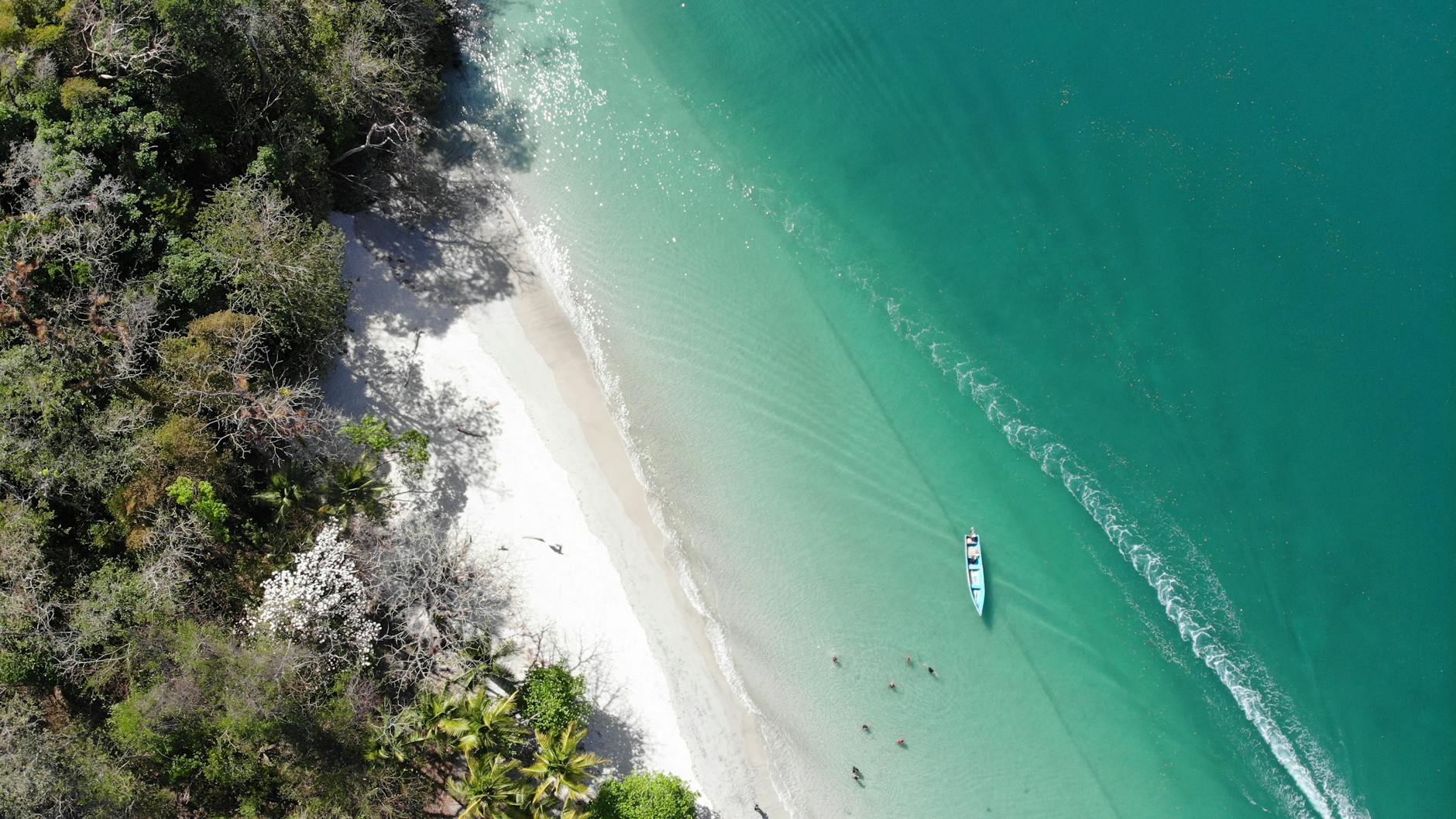
Off the western Pacific coast of Panama, where the Gulf of Chiriquí opens its warm waters toward the ocean, stretches a world of islands, islets and reefs protected as the Gulf of Chiriquí Marine National Park. It is a marine paradise still barely crowded: dozens of islands cloaked in tropical forest, pale-sand beaches, mangroves, coral bottoms and abundant marine life, all a short boat ride from the coastal village of Boca Chica.
The park protects a cluster of islands — among them the well-known Isla Boca Brava, Bolaños, Gámez and many more — and their surrounding waters, home to sea turtles, rays, reef sharks, tropical fish in a thousand colors and, at certain times of year, the humpback whales that come to the Panamanian Pacific to breed. It is a dream destination for snorkeling, diving, sport fishing, kayaking and, quite simply, for losing yourself on nearly untouched beaches far from the noise.
This guide covers the Gulf of Chiriquí Marine National Park with a practical eye: how to get there from David and Boca Chica, which islands and beaches to visit, where to snorkel and dive, when to try for whale watching and how to organize the boat trips. It is one of the great natural treasures of the Chiriquí Pacific, ideal to combine with Coiba and Santa Catalina.
The Gulf of Chiriquí, on Panama's western Pacific coast, was for centuries the fishing ground of the province's coastal communities, with fishing villages settled along the shore and on some of the islands. Its waters, rich in fish and marine life, and its islands cloaked in tropical forest stayed largely outside the major tourist boom, which helped preserve their ecosystems. To protect that natural heritage — coral reefs, mangroves, islands, turtle nesting beaches and remarkable marine biodiversity — the Panamanian state created the Gulf of Chiriquí Marine National Park, one of the marine and coastal protected areas of the Panamanian Pacific, run by the country's environmental authority. The park shelters dozens of islands and islets and their surrounding waters, and forms part of the Eastern Tropical Pacific marine corridor, alongside gems such as Coiba Island. Boca Chica, on the coast opposite the park, established itself as the gateway and the base for marine tourism, fishing and diving operators, while nearby Isla Boca Brava became a base for nature lodgings. Today the Gulf of Chiriquí combines the old life of small-scale fishing with a growing nature tourism focused on conservation. The full history of the region is on our history page.
Read the full history ↓The province of the western highlands, breadbasket and coffee country: from David to the highlands of Boquete and Volcán, with Volcán Barú — the roof of Panama — from which both oceans can be seen, and the islands of the Gulf of Chiriquí.
Read the history of Chiriquí →They depart from David, 45 km away. If you book from this link we earn a commission and you pay no more.
No exact prices: a scale from $ (budget) to $$$$$ (luxury), with 2-3 options per category.
Origins, formation and what the sources say.
Every year, between July and October, something extraordinary happens in these waters: humpback whales that have travelled thousands of kilometers, some from Antarctica, others from the northern hemisphere, converge in the Gulf of Chiriquí to breed. It is one of the few places on the planet where populations from both hemispheres meet, and it sums up why this still uncrowded corner of the Panamanian Pacific is a treasure of biodiversity well worth protecting.
The Gulf of Chiriquí is a wide inlet of the Pacific Ocean on Panama's western coast, in Chiriquí province, near the border with Costa Rica. It is a gulf of warm water dotted with dozens of islands and islets, ringed by mangroves, coral reefs and tropical forest, in one of the richest and best-preserved marine areas of the Panamanian Pacific.
Its geography combines the influence of the mountains, with rivers running down from the Chiriquí highlands into the gulf, and the richness of the open sea. That mix of freshwater inputs, coastal mangroves, jungle-covered islands and coral bottoms creates an enormous diversity of habitats, supporting exceptional marine life: tropical fish, turtles, rays, reef sharks and the large cetaceans that arrive seasonally.
The gulf forms part of the great marine system of the Eastern Tropical Pacific, an oceanic region known for its productivity and biodiversity, which also contains nearby Coiba Island, one of the continent's great marine sanctuaries. That geographical position explains both the natural wealth of the Gulf of Chiriquí and its importance for conservation.
Long before any protective designation, the Gulf of Chiriquí was above all fishing territory. The coastal communities of Chiriquí province depended for generations on the richness of these waters, with intense small-scale fishing that made the most of the gulf's abundance of fish and shellfish. Villages such as Boca Chica, on the coast facing the islands, grew up around that seafaring life.
The gulf's islands, most of them covered in tropical forest, were historically thinly populated. Some were used seasonally or for occasional activities, while many remained uninhabited, which helped preserve their ecosystems. That low human occupation, along with the relative distance from the country's main tourist centers, kept the Gulf of Chiriquí out of mass development for a long time.
That proved key to its future: when conserving marine and coastal ecosystems began to be valued, the Gulf of Chiriquí still had reefs, mangroves and turtle nesting beaches in good condition, which justified its protection. The old fishing vocation thus came to coexist with the more recent idea of protecting that natural heritage.
To protect the cluster of islands, reefs, mangroves and waters of the gulf, the Panamanian state established the Gulf of Chiriquí Marine National Park, one of the marine and coastal protected areas of the country's western Pacific. Marine national park status seeks to conserve both the terrestrial environments of the islands (tropical forest and its wildlife) and the marine ecosystems: coral reefs, seagrass beds, mangroves and the habitats of species such as sea turtles, reef fish and cetaceans.
The park shelters dozens of islands and islets, among them the well-known Isla Boca Brava and others such as Bolaños and Gámez, along with their surrounding waters. It is administered by Panama's environmental authority, which regulates activities inside the protected area, controls fishing, manages tourism and oversees the conservation of the ecosystems.
Protection of the Gulf of Chiriquí is part of a wider Panamanian effort to conserve its Pacific marine heritage, which also includes Coiba National Park (a Unesco World Heritage Site) and other areas of the Eastern Tropical Pacific marine corridor. Together, these protected areas make up one of the great systems of marine conservation in the region.
The value of the Gulf of Chiriquí Marine National Park lies above all in its biodiversity. Its waters hold coral reefs with tropical fish in a thousand colors, rays, moray eels and reef sharks; its beaches serve as nesting sites for sea turtles; and its mangroves work as a nursery and refuge for countless species. The tropical forest on the islands, in turn, shelters monkeys, birds and other land wildlife.
One of the gulf's most remarkable natural phenomena is the seasonal arrival of humpback whales, which come to the Panamanian Pacific to breed and calve in warm water. Panama's Pacific is a singular meeting point, receiving whales that migrate from the southern hemisphere and, in other periods, from the north, which makes the gulf a privileged setting for responsible whale watching.
Conserving this heritage faces the usual challenges of marine areas: fishing pressure, tourism, plastics and climate change, which affects the corals. Management of the park aims to balance protecting the ecosystems with low-impact nature tourism and with respect for the fishing communities that historically lived from the gulf. The goal is for the marine richness of the Gulf of Chiriquí to stay alive for the generations to come.
Over recent decades the Gulf of Chiriquí has shifted from being an almost exclusively fishing area to an emerging nature tourism destination. The village of Boca Chica, on the coast facing the park, established itself as the gateway and the base for marine tour, diving and sport fishing operators, while nearby Isla Boca Brava became home to eco-lodges and lodgings deep in nature.
That tourism rests on the park's great attractions: trips around nearly virgin islands and beaches, snorkeling and diving on the reefs, fishing, kayaking through the mangroves, birdwatching and, in season, humpback whale watching. Compared with other destinations on the Panamanian Pacific, the Gulf of Chiriquí remains relatively quiet and uncrowded, which is part of its charm.
The challenge ahead is to develop that tourism sustainably, so that it benefits local communities without endangering the ecosystems that make it possible. The Gulf of Chiriquí Marine National Park stands, in that sense, as an example of how conservation and nature tourism can go hand in hand in one of the most beautiful marine corners of Panama.