Viajá con Gus
Home › Guinea › Mount Nimba
Mount Nimba
🇬🇳 Guinea · Forest Guinea

Mount Nimba

🪪 What do I need to enter Guinea?Pick your citizenship and we tell you the visa, the days and the paperwork, with the official source.

By leaving your email and citizenship you agree to receive the documents you asked for and weekly travel news. You can unsubscribe whenever you want. How we handle your data.
Jump to what you need
📌Location
The Nimba Mountains rise in the far southeast of Guinea, where it meets Côte d'Ivoire and Liberia, in the Forest Guinea region. The main summit, Mont Richard-Molard, reaches 1.752 metres and is the highest point of both Guinea and Côte d'Ivoire. The Strict Nature Reserve lies a few dozen kilometres from Nzérékoré, and you reach it through the town of Lola.
📌What it is
The Réserve naturelle intégrale du Mont Nimba is one of the natural treasures of West Africa. It has been a UNESCO Biosphere Reserve and World Heritage Site since 1981-1982 and covers about 17.540 hectares in total (12.540 in Guinea and 5.000 in Côte d'Ivoire). It protects a unique mountain that combines high-altitude grasslands, dense forest on its slopes and an extraordinary number of endemic species.
📌Unique wildlife and plants
Nimba is famous for its biodiversity. It is home to species that live nowhere else, such as the tiny Nimba viviparous toad (Nimbaphrynoides occidentalis), which gives birth to live young instead of laying eggs and is critically endangered, and the Nimba otter shrew. There are also chimpanzees that use stones as tools, small mammals, birds and exceptional high-altitude plants. That is why it has been on the List of World Heritage in Danger since 1992.
📌Best time to go
The dry season, from November to March, is the best time to visit Nimba. The forest tracks are easier to drive, the mountain mist is thinner and hiking on the slopes is safer. The rainy season (April/May to October) turns the mountain a deep green, but it also leaves the access roads muddy, wraps the summits in cloud and makes the trails slippery.
📌Access and permits
Because it is a strict nature reserve and a World Heritage Site in Danger, access is regulated and much of its core area is strictly protected. Visits are arranged through the environmental authorities. The body in charge is CEGENS (Centre de Gestion de l'Environnement des Monts Nimba et Simandou). You need a guide and, depending on the area, a permit. It's best to organise your visit from Nzérékoré or Lola with someone who knows the current procedures. This is not a park you can just walk into.
💱 GNF exchange rate
Loading rate…
🌤️ Weather in Mount Nimba
Loading weather…

The Nimba Mountains are one of the great natural treasures of West Africa. They form a mountain island rising above the forest where Guinea, Côte d'Ivoire and Liberia meet, topped by Mont Richard-Molard (1.752 m). Their high grasslands, dense forests and mists shelter so many endemic species that UNESCO declared the area a Biosphere Reserve and a World Heritage Site.

This is home to the famous Nimba viviparous toad, a tiny amphibian found nowhere else in the world that gives birth to live young instead of laying eggs. It shares the mountain with chimpanzees that use stones as tools and dozens of species that exist nowhere else. All this wealth lives under a constant threat: the massif's huge iron ore reserves. They have turned Nimba into a battleground between conservation and mining and put it on the List of World Heritage in Danger.

This guide explains what the Nimba reserve is, why it matters so much and how to organise a respectful visit from Nzérékoré and Lola. It also covers what you can see and which precautions and permits you need in a strictly protected natural area. It's a destination for mindful travellers and nature lovers who want to get close to one of the continent's most fragile and fascinating ecosystems.

📖 History of Mount Nimba

The Nimba Mountains are an ancient range on the border between Guinea, Côte d'Ivoire and Liberia, famous for a century for their unique biodiversity. In the mid-20th century, scientists such as Maxime Lamotte studied remarkable endemic species here, such as the Nimba viviparous toad. This wealth led to the mountain being protected as a strict nature reserve, and UNESCO declared it a Biosphere Reserve and World Heritage Site in 1981-1982. But Nimba also holds gigantic iron ore deposits. The tug-of-war between mining and conservation, which led to its inscription on the List of World Heritage in Danger in 1992, has shaped its recent history. Our history page covers how the massif formed, its unique species and the conflict between mining and nature.

Read the full history ↓

🏛️ Mount Nimba is in Forest Guinea

The green southeast of the Toma, Kissi and Guerzé peoples, with sacred forests and masks, UNESCO-listed Mount Nimba and the chimpanzees of Bossou; this is where the 2014 Ebola outbreak began.

Read the history of Forest Guinea →

🗺️ What to see

1
Mont Richard-Molard (1.752 m)
The summit of the Nimba massif and the highest point in Guinea and Côte d'Ivoire, with huge views over the forest and the three borders (restricted access, only with a permit and a guide).
2
The high-altitude grasslands
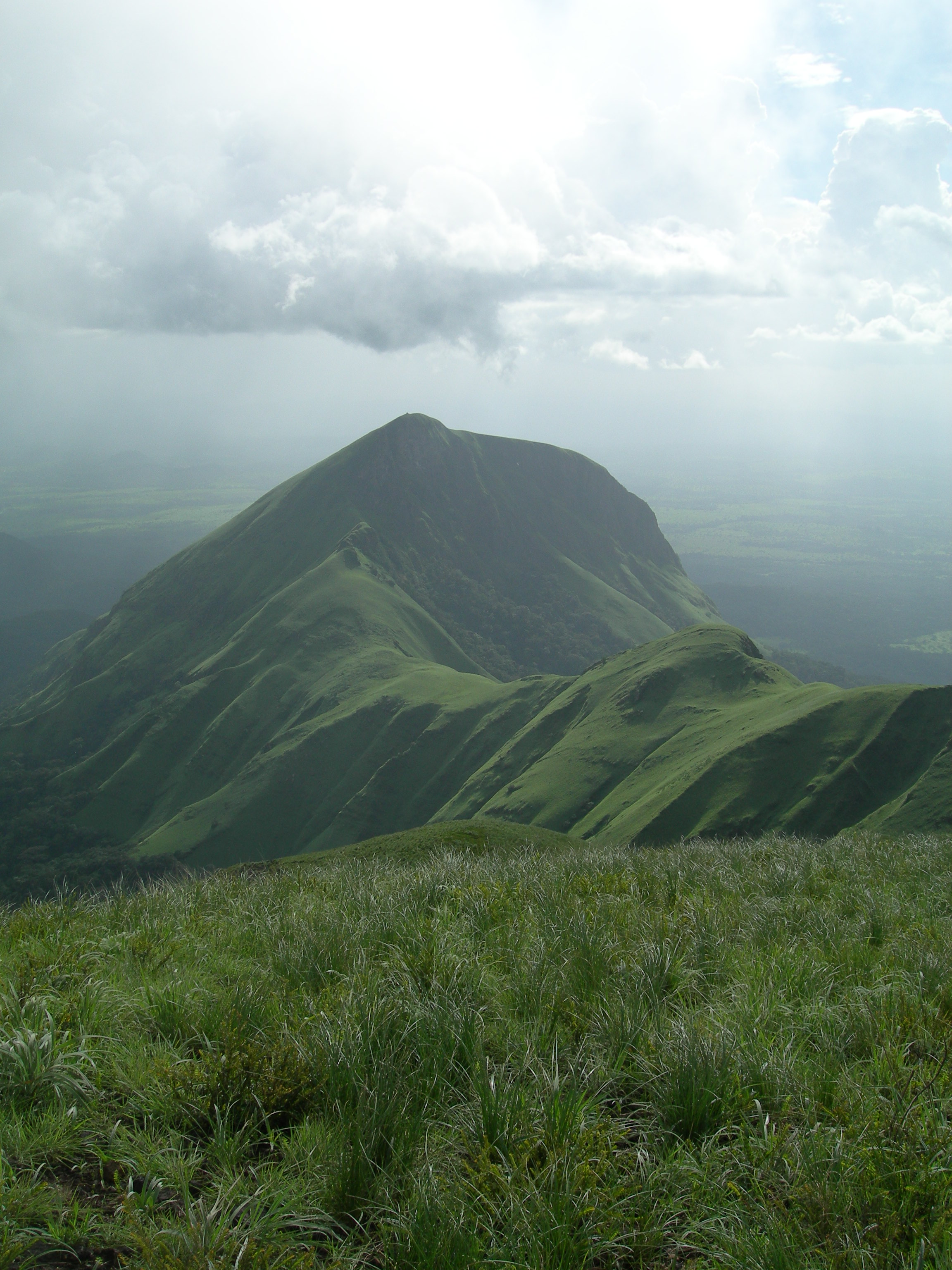
The mountain grasslands and savannahs that cover the Nimba summits are a rare habitat in the middle of the tropics. They are home to high-altitude endemic species such as the viviparous toad.
3
The dense forest on the slopes
The tropical rainforest covering the massif's slopes holds a huge variety of trees, plants, birds and insects, and is a refuge for the tool-using chimpanzees.
4
The Nimba viviparous toad
The reserve's flagship species (Nimbaphrynoides occidentalis) is a tiny amphibian found nowhere else in the world that gives birth to live young. You will almost certainly not see one, but it is the symbol of what makes Nimba so valuable.
5
The tool-using chimpanzees
Chimpanzee groups here use stones and branches as tools. This cultural behaviour links them to the famous chimpanzees of nearby Bossou, at the foot of the massif.
6
The village of Bossou, between the town and the reserve, is known worldwide for its chimpanzees and sacred forests. Visitors usually combine it with Nimba (see our Bossou guide).
7
The viewpoints and villages around Lola
The Lola area is the gateway to Nimba, with forest villages, farmland and views of the mountain. It is the logistics base for trips to the reserve.
📶I have never landed without internet. I arrive and my phone connects to the strongest network in the country I am visiting: I can say I landed, sort out transport, book tours and keep posting, at a seriously good price. I always use the Maya eSIM — check their plans by clicking the banner.See plans →Maya Mobile eSIM — turn travel mode on
What nobody tells you

💵 Prices

Tickets

TypePrice
Acceso a la reserva (regulado)This is not a park you can just walk into. Entry to the protected area is arranged with the environmental authorities (CEGENS) and requires permits, with restrictions in some areas. Fees/contributions to be confirmed locally (check when visiting, 2026)
Guía obligatorioNegotiable; tours must be done with authorised guides, roughly 150.000-400.000 GNF per day depending on the route (about USD 17-46) (2026 reference)
Autorización / trámitesAccording to current CEGENS and reserve regulations; best arranged in advance from Nzérékoré or Conakry (check when visiting, 2026)
🔄 updated monthlyOfficial / reference values · double-check when buying

Activities and tours

ActivityPriceDurationOperator
Guided hike on the slopes and grasslands (with permit)Depends on the guide + permits; budget for a full day (2026 reference)Full dayAuthorised guides / CEGENS / agencies
Spotting endemic wildlife and plantsIncluded in the guided tour (2026 reference)Depends on the routeSpecialist guides
Combined visit: Nimba + Bossou chimpanzeesDepends on transport + guides + admission (IREB in Bossou); see Bossou guide (2026 reference)1 to 2 daysLocal guides / IREB / agencies
Nature circuit through Forest GuineaDepends on the multi-day package based in Nzérékoré (2026 reference)3 to 5 daysAgencies in Conakry / Nzérékoré
🔄 updated monthlyOfficial / reference values · double-check when buying

🚌 How to get there and distances

Getting around

4x4 with driver (Nzérékoré/Lola → reserve)
DurationNzérékoré-Lola approx. 1,5-2,5 h plus tracks
Price
Negotiable per day, roughly 600.000-1.500.000 GNF (USD 69-172) depending on the route (2026 reference)
Notes
Essential for the red-dirt forest tracks; in the rainy season these can be hard going even in a 4x4
Motorbike taxi (short stretches and villages)
DurationVariable
Price
Rides from about 10.000-50.000 GNF (USD 1-6), negotiable (2026 reference)
Notes
Useful for getting around Lola and nearby villages, but no substitute for a 4x4 on the difficult access roads
On foot (inside the reserve)
Free (apart from the guide)
DurationVariable, depending on the authorised route
Notes
Mountain routes are done on foot with a guide over demanding terrain, with mist and steep slopes. Bring water, sturdy footwear and a light warm layer
🔄 updated monthlyOfficial / reference values · double-check when buying

How to get there

RouteAirlines / operatorsAvg. priceDuration
Conakry → Nzérékoré (by road or plane)Taxi-brousse; occasional domestic flightsTaxi-brousse approx. 350.000-550.000 GNF (USD 40-63); flight subject to availability (2026)By road 20-30 h (950-1.000 km); by plane approx. 1,5 h
Nzérékoré → Lola (gateway to Nimba)Taxi-brousse or 4x4Approx. 50.000-150.000 GNF per person shared (USD 6-17), 20261,5 to 2,5 h depending on road conditions
Lola → Nimba reserve4x4 + authorised guideNegotiable (see 'Local transport' and permits)Track + hike, depending on the authorised area
🔄 updated monthlyOfficial / reference values · double-check when buying

🏨 Where to stay

No exact prices: a scale from $ (budget) to $$$$$ (luxury), with 2-3 options per category.

Comfortable base in Nzérékoré
Price$$$$$
Recommended options
Approx. 300.000-700.000 GNF per night (USD 35-80). These are the best hotels in the region, with air conditioning and a restaurant, and ideal for organising trips to Nimba
Basic lodging in Lola
Price$$$$$
Recommended options
Approx. 100.000-250.000 GNF per night (USD 12-29). Small auberges and simple guesthouses in Lola, closer to the reserve but with few services
Community lodging / camp
Price$$$$$
Recommended options
Negotiable. Very rustic lodging in villages or camps linked to nature tours (2026 reference); bring the essentials

🍴 Where to eat

Comedores locales en Lola y Nzérékoré
Price$$$$$
Options / signature dish
Approx. 20.000-50.000 GNF per meal (USD 2,5-6); rice with leaf sauce, palm oil, meat or fish: simple Forest Guinea cooking
Restaurantes de hotel en Nzérékoré
Price$$$$$
Options / signature dish
Approx. 50.000-120.000 GNF per dish (USD 6-14); Guinean and international food at the hotels in town
Provisiones para la excursión
Price$$$$$
Options / signature dish
Plenty of water, bread, fruit and biscuits from the markets in Nzérékoré and Lola. Carry water and food for the mountain hikes

📖 History of Mount Nimba

Origins, formation and what the sources say.

An island mountain on a three-country border

The Nimba Mountains form a range of about forty kilometres along the border between Guinea, Côte d'Ivoire and Liberia, rising abruptly above the surrounding plains and forests. Its main summit, Mont Richard-Molard — named after a French geographer — reaches 1,752 metres and is the highest point in both Guinea and Côte d'Ivoire. Seen from below, the mountain looks like a green and blue island floating above a sea of forest.

Being an 'island' in the sky is the key to its natural value. Because it rises so far above its surroundings, Nimba creates its own climates and layered habitats: humid tropical rainforest on the lower slopes, montane forest higher up and, on the summits, unusual high-altitude grasslands and savannas swept by wind and mist — a landscape that feels more like a temperate meadow than the tropics all around it.

Geologically, the massif is made of very old, iron-rich rocks (ferruginous quartzites), which explains two things that would shape its fate. On one hand, an unusual terrain and soils that support a unique vegetation; on the other, extremely high-grade iron ore deposits that, a century later, would put the mountain at the centre of a dispute between nature and mining.

fr.wikipedia.org · Réserve naturelle intégrale du Mont Nimbawhc.unesco.org

A sanctuary of unique species

What makes Nimba exceptional is its biodiversity, and above all its very high level of endemism: species that live nowhere else in the world. The undisputed star is the Nimba viviparous toad (Nimbaphrynoides occidentalis, formerly classified as Nectophrynoides occidentalis), a tiny amphibian — it rarely grows beyond two and a half centimetres — with an astonishing biological quirk: instead of laying eggs and going through a tadpole stage in water, the female carries her young and gives birth to fully formed toadlets, something almost unheard of among toads. It lives only in the massif's high grasslands and is critically endangered because its range is so tiny.

But the toad is not alone. Nimba is home to other gems, such as the Nimba otter shrew (Micropotamogale lamottei), a rare, endemic small aquatic mammal, along with many species of small mammals, birds, insects and plants found only on the massif. Its slopes are also home to chimpanzees that, like those of nearby Bossou, use stones and branches as tools — a cultural behaviour of huge scientific interest.

This wealth was revealed to the scientific world mainly from the 1940s and 1950s onwards by French naturalists, among them the zoologist Maxime Lamotte, whose studies of the viviparous toad and Nimba's wildlife made the mountain famous. Thanks to that knowledge, it soon became clear that the massif was a biological treasure that had to be protected.

guineenews.org · Monts nimba voyage au coeur de la fascinante…fr.wikipedia.org · Réserve naturelle intégrale du Mont Nimba

From reserve to World Heritage Site

Recognition of Nimba's value soon led to protective measures. Reserves were already created in colonial times on the Guinean and Ivorian sides of the massif, and after independence both countries kept the status of strict nature reserve, the tightest category of protection, which in theory bans almost all human activity in the core area to keep the ecosystems intact.

In 1980, part of the massif was declared a UNESCO Biosphere Reserve under the 'Man and the Biosphere' programme, which combines conservation with research and sustainable development of the surrounding area. Shortly afterwards, in 1981-1982, the Mount Nimba Strict Nature Reserve (with its Guinean and Ivorian sections, about 17,540 hectares in total) was inscribed on the UNESCO World Heritage List for its outstanding universal natural value.

That international recognition placed Nimba among Africa's great natural sanctuaries, alongside places like the Serengeti or Kilimanjaro, and gave it worldwide visibility. But protection on paper soon ran into a more complicated reality: beneath those grasslands and forests lies one of the largest iron reserves in the region, and the appetite to exploit it has never stopped growing.

whc.unesco.orgfr.wikipedia.org · Réserve naturelle intégrale du Mont Nimba

Iron versus nature: World Heritage in Danger

In 1992, barely a decade after its inscription, UNESCO placed Nimba on the List of World Heritage in Danger. Two threats were converging: on one hand, the influx of refugees from Liberia's civil wars and the pressure they put on the massif's resources; on the other, and above all, plans to exploit its iron ore deposits, which would mean opening open-pit mines, roads and railways in the heart of a unique ecosystem.

Since then, Nimba's future has been decided in a tug of war between conservation and mining. Concessions, environmental impact studies and projects by various companies to extract iron from the Guinean side have followed one after another, and the gigantic Simandou project, a little further north, has also revived mining interest across the whole region. To try to manage this conflict, Guinea created a dedicated body, CEGENS (Centre for Environmental Management of Mounts Nimba and Simandou), responsible for protecting the reserve and monitoring mining projects.

The dilemma is enormous: iron mining promises income and jobs for a poor region, but it puts at risk an irreplaceable natural heritage, with species that would vanish forever if their high-altitude habitats were destroyed. Nimba has thus become a symbol of the great challenge facing Guinea and Africa: how to reconcile development with the conservation of a unique natural world.

smfg.com · Nimba iron ore projectagenceecofin.com · 2710 132674 le projet de fer nimba se…

Nimba today: a fragile treasure

Despite everything, the Nimba Mountains remain one of West Africa's great natural treasures and one of Guinea's few destinations for genuine nature tourism. The reserve is managed under strict protection, with regulated access, mandatory guides and permits; it is not a park open to mass tourism but a delicate place where every visit must be careful and low-impact.

At its foot, the village of Bossou offers one of the most remarkable examples of coexistence between people and nature: its community of tool-using chimpanzees, studied for decades and revered by the local people, is a natural complement to a visit to the massif and one of the most unusual experiences anywhere in Africa. Researchers from Guinea, Japan and other countries continue to work in the region to understand and protect its wildlife.

For travellers, approaching Nimba means looking at both a marvel and a dilemma. The marvel: an island mountain full of unique life, grasslands hanging above the forest, species that exist only here. The dilemma: the constant threat of mining and the fragility of the whole. Visiting with respect, with local guides and an awareness of its value, is the best way to help this sanctuary survive.

whc.unesco.orgguineenews.org · Monts nimba voyage au coeur de la fascinante…

📚 Bibliography

  • UNESCO — «Réserve naturelle intégrale du mont Nimba» (World Heritage no. 155): https://whc.unesco.org/en/list/155/
  • Wikipedia (FR) — «Réserve naturelle intégrale du Mont Nimba»: https://fr.wikipedia.org/wiki/R%C3%A9serve_naturelle_int%C3%A9grale_du_Mont_Nimba
  • Guineenews — «Monts Nimba: la fascinante vie des crapauds vivipares»: https://guineenews.org/2024/08/26/monts-nimba-voyage-au-coeur-de-la-fascinante-vie-des-crapauds-vivipares-uniques-au-monde/
  • PAPFor — Fiche Monts Nimba (habitats and biodiversity): https://papfor.org/IMG/pdf/fiche-papfor-nimba.pdf
  • SMFG — Projet d'exploitation du minerai de fer du Nimba: https://www.smfg.com/fr/business-operations/nimba-iron-ore-project/
  • Agence Ecofin — «Le projet de fer Nimba se poursuit en Guinée»: https://www.agenceecofin.com/actualites/2710-132674-le-projet-de-fer-nimba-se-poursuit-en-guinee-malgre-les-risques-pour-l-environnement
  • Wikipedia (EN) — «Mount Nimba Strict Nature Reserve»: https://en.wikipedia.org/wiki/Mount_Nimba_Strict_Nature_Reserve
  • Wikipedia (EN) — «Nimbaphrynoides occidentalis» (viviparous toad): https://en.wikipedia.org/wiki/Nimbaphrynoides_occidentalis
  • Club des Voyages — Réserve naturelle intégrale du mont Nimba: https://www.club-des-voyages.com/guinee/reserve-naturelle-integrale-du-mont-nimba.html

❓ Frequently asked questions

Can I climb Nimba on my own?+
No. It is a Strict Nature Reserve and a World Heritage Site in Danger, so access is regulated and much of its core area is strictly protected. Visits must be arranged with the environmental authorities (CEGENS manages the reserve) and done with authorised guides. Some areas also need permits in advance. This is not a park you can just walk into, so it's best to sort everything out from Nzérékoré, Lola or Conakry before you go.
What makes this place special?+
Its biodiversity. Nimba is home to species that live nowhere else on the planet, such as the Nimba viviparous toad (which gives birth to live young). It also has tool-using chimpanzees, rare small mammals and unique high-altitude plants, spread across a patchwork of summit grasslands and dense forest. That is why it has been a UNESCO Biosphere Reserve and World Heritage Site since 1981-1982.
Why is it on the List of World Heritage in Danger?+
The massif holds huge iron ore deposits, and plans to mine them threaten its ecosystems. Nimba has been on UNESCO's List of World Heritage in Danger since 1992 because of the risks from mining (and, at the time, the pressure from refugees fleeing wars in neighbouring countries). It has become a symbol of how hard it is to balance mining development and conservation in Guinea.
Will I see the viviparous toad or the chimpanzees?+
The viviparous toad, almost certainly not. It is tiny, lives in the high grasslands and spotting it is a job for specialists. Chimpanzees are not easy to see inside the reserve either. However, the nearby village of Bossou, at the foot of the massif, is world-famous for its tool-using chimpanzees, and visitors usually combine it with Nimba (see our Bossou guide).
How do I get there, and where do I organise the visit from?+
Your base is Nzérékoré, the capital of Forest Guinea. You get there from Conakry by road (20-30 hours) or on a domestic flight (more comfortable, when there is one). From Nzérékoré you go to Lola, the gateway to Nimba, and from there to the reserve by 4x4 with a guide. Contact the environmental authorities or an agency that knows the current permit rules well in advance.

More places in Guinea

NzérékoréPita y las cataratas de KinkonPlaya de Bel-AirBossouCataratas de KambadagaConakri
See every place in Guinea →The history of Guinea →
Sources consulted (6)
Still planning?
Explore more destinations in Guinea
See all destinations →
Image credits
Photos from Wikimedia Commons, each under its own licence (CC BY, CC BY-SA or public domain). Open each file to see its author and licence.
Mount Nimba Strict Nature Reserve-108445