Viajá con Gus
Home › Equatorial Guinea › Malabo
Malabo
🇬🇶 Equatorial Guinea · Bioko Island

Malabo

🪪 What do I need to enter Equatorial Guinea?Pick your citizenship and we tell you the visa, the days and the paperwork, with the official source.

By leaving your email and citizenship you agree to receive the documents you asked for and weekly travel news. You can unsubscribe whenever you want. How we handle your data.
Jump to what you need
📌Location
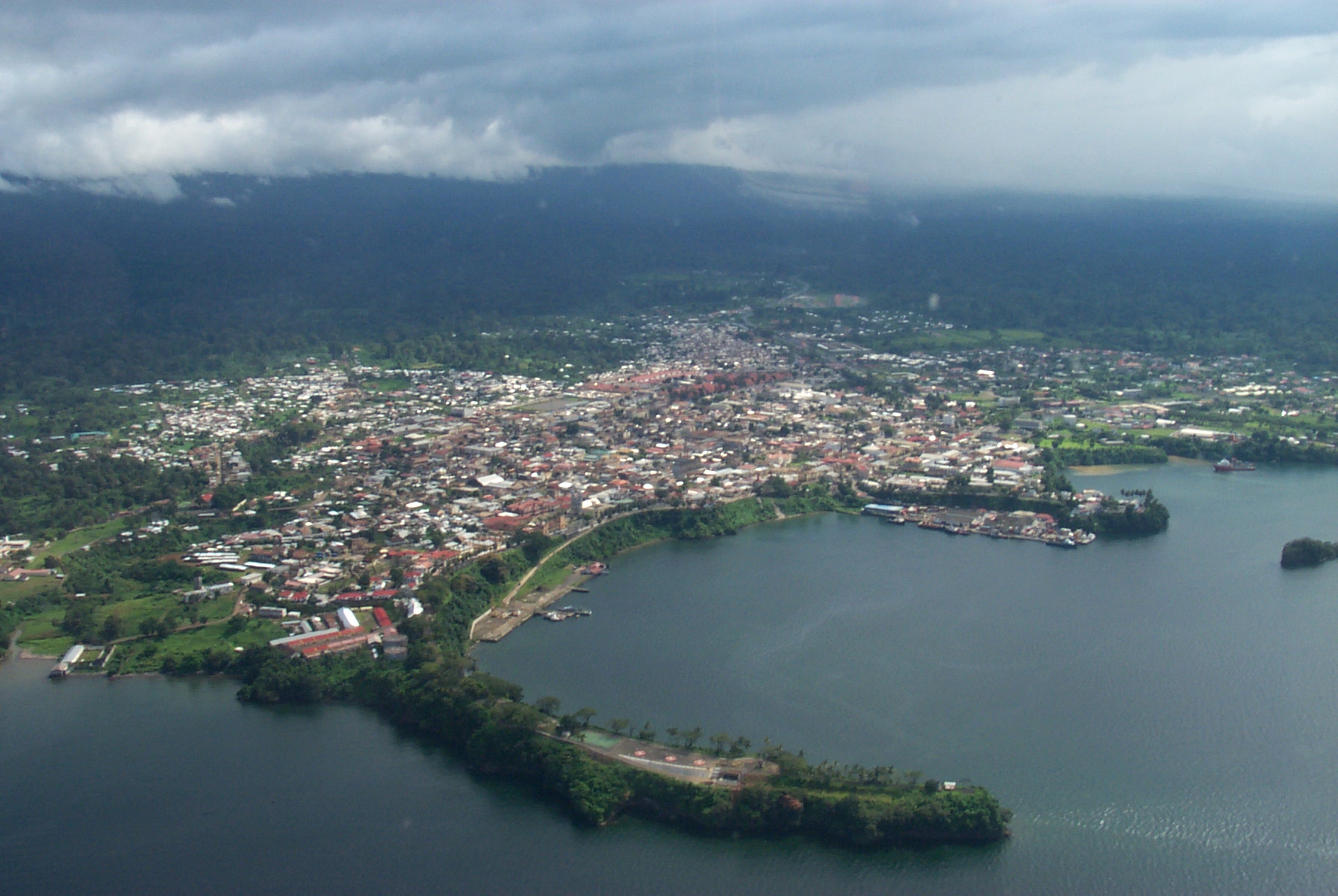
Malabo is the largest city in Equatorial Guinea and was among the most unusual capitals in Africa: until January 2026 it was the national capital, a role now officially held by Ciudad de la Paz (Djibloho), in the continental interior. It sits on the north coast of Bioko Island —the former Fernando Poo—, tucked into a natural harbour that occupies the flooded rim of an ancient volcanic crater, with Pico Basilé (3,011 m) rising behind it. Equatorial Guinea is the only Spanish-speaking country in Africa, and Malabo, with its colonial quarter, its neo-Gothic cathedral and its cosmopolitan feel, remains the historical, economic and diplomatic heart of the country.
📌Best time to visit
Bioko is a very rainy equatorial island, warm and humid all year round (25-30 °C). The driest and most comfortable season to visit Malabo runs from December to February, with less rain and better conditions for trips to Pico Basilé or the south of the island; it also coincides with the turtle nesting season on the southern beaches. From March to November it rains a lot, especially between June and September. Being almost on the equator, the day lasts about 12 hours all year.
📌Language
Spanish is an official language and the one in everyday use in government, schools and the media: Equatorial Guinea is the only Spanish-speaking country in Africa. French and Portuguese are also official, and local languages such as Bubi (native to Bioko), Fang and the Pichinglis creole are spoken. For Spanish-speaking travellers, being able to get around in Spanish is a huge advantage over almost any other African destination.
📌Currency
The currency is the Central African CFA franc (XAF or FCFA), shared with five other countries in the region (Cameroon, Gabon, Chad, Congo and the Central African Republic). It has a fixed peg to the euro: 1 EUR = 655.957 FCFA. Against the dollar it hovers around 575-600 FCFA per USD (July 2026, based on the euro rate). It is very much a cash country: cards are hardly accepted outside the odd large hotel, reliable ATMs are scarce, and it is best to bring euros in cash to exchange.
📌Getting there
Malabo International Airport (SSG), about 7 km from the centre, is the main gateway to the country. The national airline Ceiba Intercontinental and other carriers (such as various African airlines and seasonal flights to Madrid) link it with Europe and several African capitals; domestic flights to Bata and Annobón also leave from here. From the airport to the centre you go by taxi. Equatorial Guinea requires most travellers to obtain a visa in advance (with some exceptions), so you need to arrange it before you travel.
📌Suggested days
In 1 or 2 days you can cover Malabo's colonial quarter: Santa Isabel Cathedral, the Plaza de la Independencia, the seafront and the markets. The city is usually used as a base for full-day trips to Pico Basilé and the Moka valley, or two-to-three-day trips to the south of the island (Luba, Ureca, Caldera de Luba). To combine Bioko with the mainland (Bata, Monte Alén), allow a week or more.
📌Photography
Worth knowing from the start: Equatorial Guinea is a tightly controlled state that is sensitive about its public image. Photographing government buildings, the presidential palace, military installations, the airport, checkpoints and uniformed personnel is prohibited or frowned upon, and sometimes permits are requested for photography in general. The sensible thing is to ask first, avoid photographing people without their consent and stay discreet; many incidents involving tourists start with a photo in the wrong place.
💱 XAF exchange rate
Loading rate…
🌤️ Weather in Malabo
Loading weather…

Malabo is one of Africa's most unusual cities: the historic capital of the continent's only Spanish-speaking country, looking out over a natural harbour that is nothing other than the flooded rim of an old volcanic crater, on Bioko Island. Its streets preserve a Spanish colonial quarter of houses with wooden galleries, a twin-towered neo-Gothic cathedral facing the main square and a calm, tropical air that surprises anyone arriving in expectation of a big African metropolis.

Founded by the British in 1827 as Port Clarence and renamed Santa Isabel by Spain, Malabo was for almost two centuries —until January 2026— the country's capital, and it remains its economic, diplomatic and cultural heart. Oil from the Gulf of Guinea has transformed it over recent decades: modern towers, international hotels and growing traffic now sit alongside the colonial houses, while the imposing Pico Basilé watches over the city from its 3,011 metres.

This guide explores Malabo with a practical, honest eye: what to see in the old town, how to get around, where to eat and how to use the city as a base for exploring Bioko —Pico Basilé, the Moka valley, the southern beaches and its extraordinary primate wildlife—. It also covers how to travel with the discretion a country with strong state control calls for, so your visit is as rich as it is relaxed.

📖 History of Malabo

Malabo was born in 1827, when British captain William FitzWilliam Owen set up a post on the north coast of Fernando Poo to suppress the slave trade and named it Port Clarence. Spain took effective control from 1843 and renamed it Santa Isabel, in honour of Queen Isabella II; the city grew as a colonial capital and cocoa hub. With independence in 1968 it became the capital of the new Republic of Equatorial Guinea, and in 1973 the Macías Nguema regime gave it its current name, Malabo, in memory of a Bubi king. From slave port to oil capital, its history is told in detail on our history page.

Read the full history ↓

🏛️ Malabo is in Bioko Island

The volcanic island where the country was born: Bubi land, a crater turned into a harbour, a cocoa empire and, in the south, one of the last sanctuaries for primates and turtles in West Africa.

Read the history of Bioko Island →

🗺️ What to see

Tours you can book

If you book from here we earn a commission and you pay no more. Prices and availability come from Civitatis.

1
Santa Isabel Cathedral
The imposing twin-towered neo-Gothic cathedral facing the Plaza de la Independencia, a symbol of Malabo and the most important church in the country.
2
Plaza de la Independencia
The ceremonial heart of the city, surrounded by the cathedral, the presidential palace (People's Palace) and colonial buildings; a meeting point and the setting for official events.
3
Colonial quarter (old Malabo)
The network of streets with Spanish colonial houses with wooden galleries, old residences and administrative buildings that reflect the city's past; best explored slowly on foot.
4
Casa Verde / Casa de las Bolas
Emblematic colonial buildings with wooden frames; the so-called Casa de las Bolas was restored in 2022 as part of plans to recover the city's architectural heritage.
5
National Museum of Equatorial Guinea
The museum that brings together Fang masks and art, ethnographic pieces and objects from the colonial era, useful for understanding the country's history and cultures.
6
Central Market (Semu / Malabo market)
The bustling city market selling tropical fruit, fish, spices, fabrics and wood carvings; a window onto everyday life in the city.
7
Seafront and harbour
The waterfront over the crater bay, with views of the harbour and the Gulf of Guinea; pleasant for a walk at sunset, with the silhouette of Pico Basilé in the background.
8
Modern district and Malabo II
The contemporary face of the city, with towers, oil company offices, international hotels and government buildings built during the oil boom.
9
Coastal cathedral and colonial churches
Besides the main cathedral, the city preserves churches and religious institutions of colonial origin that show the country's strong Catholic imprint.
📶I have never landed without internet. I arrive and my phone connects to the strongest network in the country I am visiting: I can say I landed, sort out transport, book tours and keep posting, at a seriously good price. I always use the Maya eSIM — check their plans by clicking the banner.See plans →Maya Mobile eSIM — download, install, go
What nobody tells you

💵 Prices

Tickets

TypePrice
Catedral de Santa IsabelFree admission; an offering is appreciated. Respect service times and dress modestly (check when visiting, 2026)
Museo Nacional de Guinea EcuatorialLow-cost admission, around 1,000-3,000 FCFA (approx. USD 2-5); irregular hours, best to check (check when visiting, 2026)
Mercado Central y casco colonialFree (self-guided); haggle respectfully at the market (2026)
Excursión guiada por la ciudadDepends on the agency; usually included in an island tour (see Activities)
🔄 updated monthlyOfficial / reference values · double-check when buying

Activities and tours

City tour of the colonial quarter and the cathedral
DurationHalf day
OperatorLocal agencies / hotels
Price
From about 30,000-60,000 FCFA per person (approx. USD 50-100) on a private tour, depending on the agency (2026)
Full-day trip to Pico Basilé
DurationFull day
OperatorMalabo agencies (they handle the permit)
Price
From about 60,000-120,000 FCFA per person with vehicle, guide and permit (approx. USD 100-200), depending on group size (2026)
Trip to the Moka valley and crater lakes
DurationFull day
OperatorLocal agencies
Price
From about 60,000-120,000 FCFA per person (approx. USD 100-200), depending on group size (2026)
Transfer and stay in southern Bioko (Luba, Ureca, Caldera de Luba)
PriceDepends on the expedition; usually booked for several days (2026)
Duration2 to 4 days
OperatorSpecialist agencies / BBPP
Market outing and craft shopping
PriceFree admission; spend as you like, haggling (2026)
Duration1 to 2 h
OperatorOn your own
🔄 updated monthlyOfficial / reference values · double-check when buying

🚌 How to get there and distances

Getting around

Shared taxi (urban collective)
DurationVariable
Price
Short trips from about 500-1,000 FCFA per person (approx. USD 1-2, 2026)
Notes
Taxis (often blue) run along routes and are shared; for a private ride you need to agree a 'carrera cerrada'. Always agree the price before getting in
Private taxi (carrera cerrada)
Duration10-20 min to the centre
Price
From the airport to the centre about 3,000-6,000 FCFA (approx. USD 5-10); hourly rate negotiable (2026)
Notes
The most comfortable option for travellers; agree the fare in advance. There are no Uber-type apps that work reliably
Rental car with driver
DurationPer day
Price
Depends on the agency and the day; the usual choice for trips outside the city (2026)
Notes
Recommended for Pico Basilé, Moka or the south; many routes require a 4x4 and knowing the checkpoints
On foot around the colonial quarter
Free
DurationAt your own pace
Notes
The historic centre is compact and easy to explore on foot; avoid photographing government buildings and walking at night in poorly lit areas
🔄 updated monthlyOfficial / reference values · double-check when buying

How to get there

RouteAirlines / operatorsAvg. priceDuration
Malabo International Airport (SSG) → centrePrivate or shared taxiAbout 3,000-6,000 FCFA for a carrera cerrada (approx. USD 5-10, 2026)10 to 20 min (7 km)
International flights → Malabo (SSG)Ceiba Intercontinental and African airlines; seasonal connections with Madrid via CeibaDepends on origin and season (2026)From Madrid, a direct flight of about 6-7 h when it operates
Malabo ↔ Bata (mainland) by planeCeiba Intercontinental and other local airlinesDomestic flight, depending on fare (2026)About 40 min flight
Malabo ↔ Annobón by planeDomestic flights (limited frequency)Depending on fare; few seats (2026)Flight of approximately 2 h
Malabo → southern Bioko (Luba, Moka, Ureca) by roadHired taxi / 4x4 with driver / agenciesDepends on destination and vehicle (2026)Luba and Moka, 1 to 1.5 h; Ureca, half a day on dirt track
🔄 updated monthlyOfficial / reference values · double-check when buying

🏨 Where to stay

No exact prices: a scale from $ (budget) to $$$$$ (luxury), with 2-3 options per category.

Luxury and international
Price$$$$$
Recommended options
From about 120,000-250,000 FCFA per night (approx. USD 200-450); upscale and business hotels tied to the oil sector, such as the Sofitel Malabo Sipopo Le Golf (in the Sipopo complex) and large hotels in the centre and the new district
Mid-range and business
Price$$$$$
Recommended options
Approx. 55,000-110,000 FCFA per night (approx. USD 90-190); comfortable hotels in the centre and Malabo II, popular with business travellers; best to book ahead
Budget and guesthouses
Price$$$$$
Recommended options
From about 20,000-45,000 FCFA per night (approx. USD 35-80); hostels, guesthouses and simple hotels; the 'backpacker' offer is limited and the country is expensive for its region

🍴 Where to eat

Cocina guineana y del golfo de Guinea
Price$$$$$
Options / signature dish
From about 3,000-10,000 FCFA per person (approx. USD 5-17); fresh fish and seafood, chicken, 'pepe soup', plantain, malanga, cassava and sauces from Bioko's forests in popular eateries and beach shacks
Restaurantes de pescado y marisco
Price$$$$$
Options / signature dish
About 10,000-25,000 FCFA per person (approx. USD 17-45); lobster, prawns and grilled fish at seafront spots and in the coastal neighbourhoods
Cocina internacional y de hotel
Price$$$$$
Options / signature dish
From about 20,000-45,000 FCFA per person (approx. USD 35-80); Spanish, Lebanese, French and international restaurants in hotels and the new district, frequented by expats
Cafés, panaderías y bares
Price$$$$$
Options / signature dish
About 2,000-8,000 FCFA per person (approx. USD 3-14); a Spanish legacy of cafés and bakeries, plus bars with local beer and a good nightlife

📖 History of Malabo

Origins, formation and what the sources say.

The island of the Bubi and the Portuguese navigators

Long before Malabo existed, the island it sits on was already inhabited. Its first settlers were the Bubi, a Bantu people who arrived by sea from the mainland centuries ago and developed a culture of their own on the island, with kings, mountain villages and an economy based on farming, hunting and gathering. The Bubi had their own names for the island and lived relatively isolated on volcanic, fertile and rainy land, crowned by the great volcano we now know as Pico Basilé.

In 1472, according to tradition, the Portuguese navigator Fernão do Pó sighted the island while exploring the Gulf of Guinea for the Portuguese crown. Struck by its lush vegetation, he named it 'Formosa Flora', 'beautiful flower', though it soon came to be called Fernando Poo after its discoverer. Portugal claimed the island in name only and around 1507 tried to set up a sugar trading post near present-day Riaba, but Bubi resistance and tropical diseases put an end to that early colonisation.

For almost three centuries, Fernando Poo stayed outside any real European occupation. In 1778, under the Treaty of El Pardo, Portugal ceded the island and other Gulf of Guinea territories to Spain in exchange for concessions in South America. But Spain could not settle there either: the expedition of the Count of Argelejos (1778) ended in disaster because of fevers, and for decades the island remained Bubi land and an occasional port of call for ships, with no European town to hold it together.

es.wikipedia.org · Isla de Fernando Pooes.wikipedia.org · Malabo

Port Clarence: the British and the fight against slavery

The city as such was born in the 19th century and, curiously, not at the hands of Spain but of Britain. In 1827, with Spain unable to occupy the island, London got permission to set up a naval base there. That year, Captain William FitzWilliam Owen founded a settlement on the north coast, on a superb natural harbour set inside an old crater, and named it Port Clarence in honour of the Duke of Clarence, the future King William IV of England.

Port Clarence's purpose was to fight the Atlantic slave trade. After the slave trade was abolished in the British Empire, the Royal Navy patrolled the Gulf of Guinea to intercept slave ships, and it needed a base where it could resupply and land the Africans it freed. Many of those men and women rescued from the ships, known as 'krios' or Fernandinos, settled in the town alongside missionaries and traders, and formed an English-speaking Creole community that left a deep cultural mark on the island.

British rule over Fernando Poo was short-lived: between 1827 and 1843 the British ran Port Clarence and other posts, but they never got Spain to hand over the island for good, and on paper it had been Spanish territory since 1778. When London decided to move its anti-slavery base to Sierra Leone, it left behind a fully formed town, with a port, a church and a distinctive Creole population, ready to change hands.

es.wikipedia.org · Malaboes.wikipedia.org · Provincia de Fernando Poo

Santa Isabel: Spanish colonial capital

Spain moved to avoid losing the island. In March 1843, Brigadier Juan José de Lerena raised the Spanish flag at Port Clarence and took effective possession in the queen's name. The town was renamed Santa Isabel, in honour of Isabella II of Bourbon, and gradually became the capital of Spain's territories in the Gulf of Guinea. From the mid-19th century, with the arrival of governors, Claretian missionaries and settlers, Santa Isabel grew into an administrative, port and religious centre.

The island's economy was transformed by cocoa. Fernando Poo turned out to be ideal for growing cocoa, which in the late 19th and the 20th century made the colony a prosperous farming and export region. The cocoa estates drew in labour, including thousands of workers brought from Nigeria, and made a planter elite of Fernandinos and Spaniards from the mainland rich. Santa Isabel gained colonial buildings with wooden galleries, squares, the neo-Gothic Cathedral of Santa Isabel (built between the late 19th and early 20th centuries) and the feel of a small tropical Spanish capital.

In the 20th century, Spanish Guinea was organised administratively and, between 1959 and 1968, its territories were treated as Spanish provinces: Fernando Poo, with its capital at Santa Isabel, and Río Muni, on the mainland. The city then lived its colonial heyday, with tree-lined streets, shops, cinemas and a busy social life, always against the backdrop of an unequal colonial society split between the European minority and the African majority.

es.wikipedia.org · Provincia de Fernando Pooinclusion.gob.es · La huella colonial de espana en guinea…

Independence, dictatorship and the name Malabo

On 12 October 1968, Equatorial Guinea became independent from Spain and Santa Isabel became the capital of the new country. The first president, Francisco Macías Nguema, very quickly set up one of the most brutal dictatorships in post-colonial Africa: a one-party regime, a personality cult, persecution of opponents, clergy and intellectuals, and a mass exodus of Equatoguineans and Spanish staff. Those years of terror, sometimes compared with the worst regimes of the century, wrecked the cocoa economy and left the city neglected.

In 1973, as part of his policy of 'authenticity' and breaking with the colonial past, Macías changed the city's name: Santa Isabel became Malabo, in memory of Malabo (Möókáta), a Bubi king of the island. Many Spanish place names were Africanised in those years. But the new name brought no prosperity: under Macías, Malabo and the whole country suffered fierce repression and a material collapse that left deep scars.

In August 1979, Macías was overthrown in a coup led by his nephew, Lieutenant Colonel Teodoro Obiang Nguema Mbasogo, who had him tried and shot. Obiang took power and has held it ever since, becoming one of the longest-serving heads of state in the world. Malabo remained the capital, and from the 1990s its fate would be tied to a resource that would change everything: oil.

es.wikipedia.org · Malaboen.wikipedia.org · Republic of Equatorial Guinea (1968–1979)

Oil and the end of Malabo as capital

The discovery of major oil and gas fields in the waters of the Gulf of Guinea in the mid-1990s radically transformed Malabo and the whole country. Within a few years, Equatorial Guinea became one of the largest crude producers in sub-Saharan Africa and, in terms of income per person, one of the 'richest' countries on the continent on paper, though with huge inequalities. Malabo filled up with oil companies, expatriates, international hotels, building sites and modern towers that rose alongside the old colonial quarter.

The state invested in big prestige projects. Near the city, the luxury Sipopo complex was built to host international summits, with a luxury hotel, a golf course and a conference centre. Malabo hosted African Union summits and other events through which the country sought an international profile. At the same time, much of the population still saw no benefit from the oil wealth, and the country continued to face criticism over the lack of freedoms and the concentration of power.

The most recent turn came in January 2026: by presidential decree, the country's official capital was moved from Malabo to Ciudad de la Paz (Djibloho), a planned city built from scratch in the rainforest of the mainland interior. After almost two centuries as a capital, first colonial and then national, Malabo gave up its administrative status. But it is still the largest city on Bioko and the economic, diplomatic and cultural heart of the country: the city of the crater harbour, of cocoa and of oil, the historic capital of Africa's only Spanish-speaking country.

en.wikipedia.org · Ciudad de la Pazen.wikipedia.org · 2026 in Equatorial Guinea

📚 Bibliography

  • Wikipedia (ES) — «Malabo»: https://es.wikipedia.org/wiki/Malabo
  • Wikipedia (ES) — «Isla de Fernando Poo (Bioko)»: https://es.wikipedia.org/wiki/Isla_de_Fernando_Poo
  • Wikipedia (ES) — «Provincia de Fernando Poo»: https://es.wikipedia.org/wiki/Provincia_de_Fernando_Poo
  • Wikipedia (ES) — «Catedral de Santa Isabel (Malabo)»: https://es.wikipedia.org/wiki/Catedral_de_Santa_Isabel_(Malabo)
  • Wikipedia (EN) — «Ciudad de la Paz»: https://en.wikipedia.org/wiki/Ciudad_de_la_Paz
  • Wikipedia (EN) — «Republic of Equatorial Guinea (1968-1979)»: https://en.wikipedia.org/wiki/Republic_of_Equatorial_Guinea_(1968%E2%80%931979)
  • Wikipedia (EN) — «2026 in Equatorial Guinea»: https://en.wikipedia.org/wiki/2026_in_Equatorial_Guinea
  • Britannica — «History of Equatorial Guinea»: https://www.britannica.com/topic/history-of-Equatorial-Guinea
  • Ministerio de Inclusión (Spain) — «La huella colonial de España en Guinea Ecuatorial»: https://www.inclusion.gob.es/en/web/cartaespana/w/la-huella-colonial-de-espana-en-guinea-ecuatorial
  • El Debate — «La ciudad que España convirtió en capital de Guinea Ecuatorial deja de serlo casi dos siglos después» (2026): https://www.eldebate.com/historia/20260121/ciudad-espana-convirtio-capital-guinea-ecuatorial-deja-serlo-casi-dos-siglos-despues_376361.html

❓ Frequently asked questions

Is Malabo still the capital of Equatorial Guinea?+
Not exactly. Since early January 2026, the country's official capital has been Ciudad de la Paz (in the Djibloho district, in the continental interior), following a presidential decree. Malabo is no longer the capital it had been since independence in 1968, but it remains the largest city on Bioko Island and the main economic, diplomatic and services centre; almost all travellers still enter the country through its airport.
Do I need a visa to visit Equatorial Guinea?+
Most travellers need a visa arranged before travelling, with a passport valid for at least six months, a return ticket and, depending on the case, a letter of invitation or hotel booking; a yellow fever certificate is also usually required. There are a few specific exemptions, but check the current requirements with the relevant embassy or consulate before buying your tickets, because they change.
Is it an expensive destination? Can I pay by card?+
Yes, it is an expensive country for its region, heavily shaped by the oil economy: international-standard hotels and restaurants have high prices. It is also a cash economy: cards are hardly accepted outside the odd large hotel and ATMs are scarce and unreliable. The practical approach is to bring euros in cash (the CFA franc is pegged to the euro) and exchange them, keeping your card for large hotels only.
Can I take photos freely in Malabo?+
With caution. Equatorial Guinea is a tightly controlled state, and you should not photograph government buildings, the presidential palace, military installations, the airport, bridges, checkpoints or uniformed personnel; sometimes permits are even requested for photography. The sensible thing is to ask first, not photograph people without permission and be discreet. Many tourists' problems start with an ill-timed photo.
Is it safe to travel to Malabo?+
Malabo is generally calm and violent crime against tourists is rare, but there are plenty of police and military checkpoints on streets and roads where you may be asked for documents (carry a copy of your passport and visa). It is advisable to avoid photographing anything prohibited, not to discuss politics, to move about discreetly, not to walk at night in dark areas and to hire guides or agencies for trips outside the city.

More places in Equatorial Guinea

MongomoParque Nacional de Monte AlénPico BasiléUreca (San Antonio de Ureca)Valle de MokaBata
See every place in Equatorial Guinea →The history of Equatorial Guinea →
Sources consulted (7)
Still planning?
Explore more destinations in Equatorial Guinea
See all destinations →