Viajá con Gus
Home › Guinea-Bissau › Bissau
Bissau
🇬🇼 Guinea-Bissau · Bissau and surroundings

Bissau

🪪 What do I need to enter Guinea-Bissau?Pick your citizenship and we tell you the visa, the days and the paperwork, with the official source.

By leaving your email and citizenship you agree to receive the documents you asked for and weekly travel news. You can unsubscribe whenever you want. How we handle your data.
Jump to what you need
📍Region
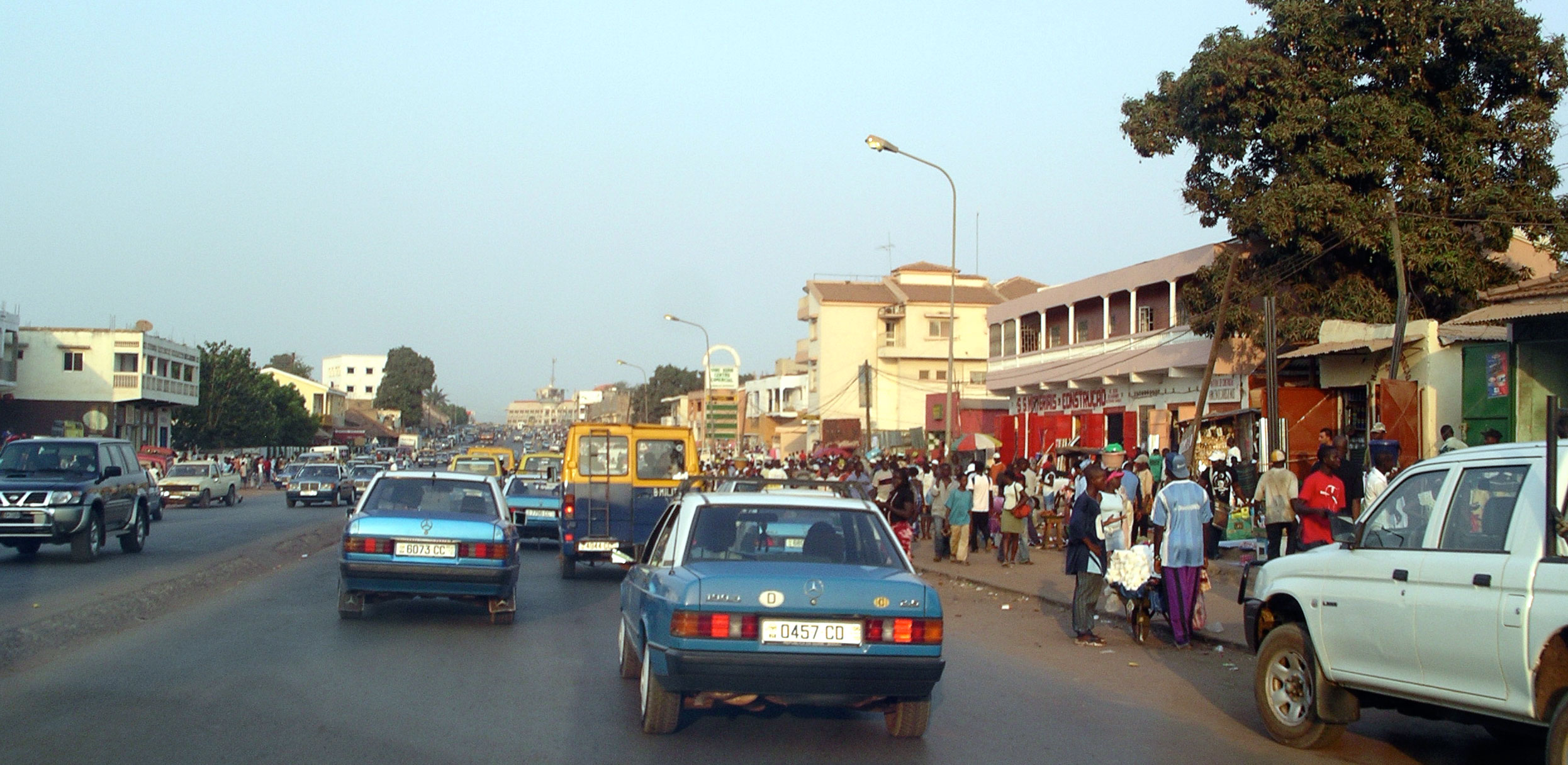
Bissau (Bisáu in Spanish) is the capital and largest city of Guinea-Bissau, with around half a million inhabitants. It sits on a low tongue of land on the north bank of the Geba River estuary, close to where the river flows into the Atlantic. It is the country's political, economic and cultural heart, its main port and practically its only point of entry by air. A Creole city, calm and a little weather-worn, it blends its Portuguese colonial heritage with the bustle of African markets and serves as the logistics base for almost all tourism in the country: boats to the Bijagós leave from here, as do the routes to the interior and the north.
📌Best time
The best season to visit Bissau is the dry season, from November to May, when it hardly rains and the heat is more bearable (the coolest months are December and January). From June to October comes the rainy season, with heavy downpours, high humidity and stifling heat; many roads in the interior and on the archipelago become difficult and several island lodges close. February is especially lively thanks to the Bissau Carnival, one of the most original in Africa, with masks and dances from the country's different ethnic groups.
📌Suggested days
With 1 or 2 days you can cover the essentials of the capital: the colonial old town of Bissau Velho, the Amura fortress with Amílcar Cabral's mausoleum, the Bandim Market, the port and a museum or two. Most travellers use Bissau as a base for one or two nights at the start and end of the trip, fitting in an excursion to the Bijagós (Bubaque, Orango, Rubane), Quinhámel or Bolama. It's best to book boats and transfers in Bissau before heading out to the islands.
📌Getting there
Osvaldo Vieira International Airport (code OXB), about 9 km from the centre, is the country's only air gateway; it mainly receives flights from Lisbon (TAP), Dakar, Abidjan and other West African capitals. A taxi from the airport to the centre takes 15-20 minutes. Overland, Bissau connects by road with Senegal (São Domingos border crossing, towards Ziguinchor and Casamance) and with Guinea-Conakry, by sept-place (shared taxis) and minibuses. There are no trains in the country.
📌Getting around
Within Bissau, the typical transport is the 'toca-toca' (shared minibuses and vans that run fixed routes and are dirt cheap) and the blue-and-white shared taxis, which you can also hire for yourself alone by agreeing the price. For travellers, the most comfortable option is to arrange a taxi per trip or per day. Distances in the centre are short and you can walk during the day. There are no established ride-hailing apps like Uber; it's best to carry cash in CFA francs.
📌Language and currency
The official language is Portuguese, but the lingua franca on the street is Crioulo (Guinean Portuguese-based Creole); in the interior, Fula, Mandinka, Balanta, Papel and other languages are also spoken. English is uncommon, so knowing some Portuguese or Spanish helps. The currency is the West African CFA franc (XOF), shared with other countries in the region and pegged to the euro (1 € = 655,96 XOF; in mid-2026, around 575 XOF to the dollar). There are a few ATMs in Bissau, but it's wise to carry cash, especially outside the capital.
💱 XOF exchange rate
Loading rate…
🌤️ Weather in Bissau
Loading weather…

Bissau is one of the calmest and most distinctive capitals in West Africa: a low-rise, leafy Creole city on the banks of the wide Geba River estuary, where the Portuguese colonial past blurs among peeling buildings, bougainvillea and the comings and goings of the markets. Far from the frantic pace of other capitals on the continent, it invites you to stroll unhurried, drink a strong coffee in the shade and let yourself be carried along by its mix of languages, music and flavours.

Founded by the Portuguese in 1687 as a fort and slave-trading post on the lands of the Papel people, Bissau was for centuries a secondary outpost until, in 1941, it took over from Bolama as capital of Portuguese Guinea. Much of the war of independence led by Amílcar Cabral and the PAIGC was waged from here, and the memory of that struggle, which turned this small country into a symbol of African decolonisation, still beats here.

This guide covers Bissau with a practical eye: what to see in the capital and its old town, how to organise trips from here to the Bijagós and the interior, how to get around and pay, where to sleep and eat good fish and rice, and how to make the most of the Carnival if you travel in February. With one or two days well spent, Bissau stops being a mere stopover and becomes the key to your whole trip through Guinea-Bissau.

📖 History of Bissau

Bissau was born in 1687 as a Portuguese fort and trading post on the island of Bissau, then a kingdom of the Papel people, and for centuries it was a minor outpost devoted mainly to trade, including the slave trade to the Americas. Only in 1941 did it become capital of Portuguese Guinea, replacing the declining Bolama. In the following decades it was a central stage in the war of independence that Amílcar Cabral and the PAIGC fought against Portugal, until the proclamation of the Republic of Guinea-Bissau in 1973 and its recognition in 1974. Its full history — from the Atlantic slave trade to independence and the turbulent years that followed — is told on our history page.

Read the full history ↓

🏛️ Bissau and surroundings

The Creole heart of the country, on the banks of the Geba River: a capital born from a slaving fort, its colonial old town where Amílcar Cabral lies, and old Bolama, frozen in time.

Read the history of Bissau and surroundings →

🗺️ What to see

1
The historic heart of the city: peeling streets, pastel-toned Portuguese colonial buildings and quiet courtyards by the port.
Leer más ↓
Bissau Velho is the capital's old town, the Portuguese colonial quarter that stretches near the port and the Geba River. It's a grid of narrow streets and Mediterranean-style buildings, many painted in pastel ochre, pink and blue, now peeling and partly in ruins, which give it a uniquely melancholic and photogenic feel. This is where the trading houses, administrative offices and warehouses of the Portuguese era stood. Walking through Bissau Velho is like touring an open-air museum of colonial Guinea: arcaded façades, iron balconies, worn azulejo tiles and huge trees that have taken over some of the courtyards. Neglect and everyday life coexist, with food stalls, workshops and families living in the old buildings. It's the most evocative part of Bissau to explore on foot by day, camera in hand. Getting there: it's in the centre, next to the port, within walking distance of most central hotels. Best time: dry season; during the day, in good light. Tips: walk with company, don't show off valuables and ask permission before photographing people.
ℹ️ Distance: Central Bissau, next to the port; explored on foot · Best time: Dry season (Nov-May); during the day · Admission: Free (open neighbourhood) · Duration: 1 to 2 hours' stroll
2
Fortaleza de São José da Amura and Amílcar Cabral's mausoleum
The old 18th-century Portuguese fortress, now a military barracks, which holds the mausoleum of independence hero Amílcar Cabral.
Leer más ↓
The Fortaleza de São José da Amura is the most important military building in Bissau. Its origins go back to the late 17th century, but the current fort, with its sturdy bastioned layout, was built around 1753 to defend the Portuguese position on the Geba estuary. For centuries it was the centre of colonial power in the city. Today the fortress is still an active military compound, and inside it lies the mausoleum of Amílcar Cabral, founder of the PAIGC and main leader of the struggle for the independence of Guinea-Bissau and Cape Verde, assassinated in 1973. The mausoleum, with its sober lines, is a place of national remembrance. As it's a military zone, a visit may require permission or a guide, and it isn't always open to the public. Getting there: in the centre, near Bissau Velho and the port. Best time: any day during daylight hours. Tips: since it's a military compound, check beforehand whether you can go in, and avoid photographing soldiers or installations without permission.
ℹ️ Distance: Central Bissau, next to Bissau Velho · Best time: All year, during daylight hours · Admission: Military compound; access to the mausoleum subject to permission (usually free, with a guide; check when visiting) · Duration: 30 to 45 minutes
3
Bandim Market
Bissau's biggest and busiest market, a maze of stalls where the city's daily life beats.
Leer más ↓
Bandim Market is Bissau's great popular market and one of the liveliest places in the capital. It's a labyrinth of alleys and stalls selling everything: fresh fish and seafood from the estuary, fruit and vegetables, rice, palm oil, fabrics, second-hand clothes, utensils, medicinal herbs and goods of every kind. It's the best place to take the city's pulse and see how its daily economy works. It's an authentic market, not a touristy one, full of movement, smells and colours. Ideal for buying fruit, trying street food or simply watching. As in any crowded market, keep an eye on your belongings, don't flash your camera or phone, and haggle good-naturedly if you buy something. Getting there: in the Bandim neighbourhood, a short distance from the centre; by taxi or toca-toca. Best time: in the morning, when there's more activity and fresh produce. Tips: keep little cash in sight, look after your things and go with company if you can.
ℹ️ Distance: Bandim neighbourhood, a few minutes from the centre · Best time: In the morning; all year · Admission: Free · Duration: 1 hour
4
Port of Bissau and the Geba waterfront
The port on the Geba River estuary, departure point for boats to the Bijagós and a window onto riverside life.
Leer más ↓
The port of Bissau, on the wide Geba River estuary, is the hub through which the city breathes towards the water. Cargo ships, pirogues and the Consulmar ferry linking the capital with the Bijagós islands (Bubaque) and with Bolama and Enxudé all dock here. Watching the loading and unloading, the fishermen's canoes and the coming and going of people is a show in itself. The port area and the Geba waterfront help you understand Bissau's relationship with the river and the sea, which explains everything in this estuary city. At sunset, the light on the brown water and the wooden boats makes for great photos. It's also the practical place to arrange and buy tickets for the boats to the islands. Getting there: in the centre, next to Bissau Velho. Best time: early morning (boat departures) or sunset. Tips: if you're heading to the Bijagós, ask at the port or at the Consulmar offices about timetables, which depend on the tides.
ℹ️ Distance: Central Bissau · Best time: Morning or sunset; all year · Admission: Free (port area) · Duration: 30 min to 1 hour
5
Pindjiguiti monument and memorial
The port and monument recalling the 1959 massacre of dockworkers, the spark of the struggle for independence.
Leer más ↓
The Pindjiguiti quay, in the port of Bissau, is a place loaded with historical meaning. There, on 3 August 1959, the crackdown on a strike by dockworkers demanding better wages ended in a massacre by the Portuguese colonial police: dozens of workers died. The 'Pindjiguiti massacre' became a turning point that radicalised Amílcar Cabral's PAIGC and pushed the struggle towards armed resistance. A monument — a large black hand or 'punho', depending on local versions — commemorates the victims and is today a site of national remembrance. Visiting it helps you understand why Guinea-Bissau's independence is so closely tied to the world of labour, the unions and the port, and gives context to the monuments and street names you'll come across around the city. Getting there: in the port area in the centre. Best time: any day, during daylight. Tips: combine it with a visit to the port and Bissau Velho for a historical walking tour.
ℹ️ Distance: Port of Bissau, centre · Best time: All year, during the day · Admission: Free · Duration: 20 to 30 minutes
6
Bissau Carnival
One of Africa's most original carnivals, with masks, costumes and dances from the country's different ethnic groups, in February.
Leer más ↓
The Bissau Carnival, held in February, is one of the country's great cultural events and one of the most distinctive carnivals on the continent. For several days, the capital's streets fill with troupes from different neighbourhoods and regions competing with costumes, floats, music and, above all, spectacular ritual masks of animist inspiration: figures of bulls, hippos, birds and spirits, hand-carved and decorated, especially by the peoples of the Bijagós. Unlike more commercial carnivals, Bissau's keeps a strong traditional and identity-driven character: it's a showcase of Guinea-Bissau's ethnic diversity and ancestral beliefs, blended with the street party. It's the best time to see dances, drums and costumes from the different communities gathered in one place. Getting there: it takes place in central Bissau, along the main avenues. Best time: February (dates vary each year). Tips: book accommodation well in advance, as it's high season; bring water, sun protection and patience with the crowds.
ℹ️ Distance: Central Bissau · Best time: February (dates vary each year) · Admission: Free (street festival) · Duration: Several days
📶I have never landed without internet. I arrive and my phone connects to the strongest network in the country I am visiting: I can say I landed, sort out transport, book tours and keep posting, at a seriously good price. I always use the Maya eSIM — check their plans by clicking the banner.See plans →Maya Mobile eSIM — turn travel mode on
What nobody tells you

💵 Prices

Tickets

TypePrice
Bissau Velho (casco antiguo)Free (open neighbourhood, 2026)
Fortaleza de Amura y mausoleo de Amílcar CabralMilitary compound; visit subject to permission, usually free with a guide (check when visiting, 2026)
Mercado de BandimFree (2026)
Monumento de PindjiguitiFree (2026)
🔄 updated monthlyOfficial / reference values · double-check when buying

Activities and tours

ActivityPriceDurationOperator
Walking city tour of Bissau Velho, the fortress, the port and the marketWith a local guide, around 15.000-30.000 XOF per group (approx. US$ 25-50, depending on length; check, 2026)Half dayLocal guides and agencies in Bissau
Day trip to Quinhámel (crafts, panaria weaving, mangroves and oysters)Depends on the agency; usually includes transport and lunch (check, 2026)Full dayBissau agencies
Arranging the crossing to the Bijagós (Bubaque, Orango, Rubane)Consulmar ferry from 16.500 XOF per trip for foreigners; speedboat up to 30.000 XOF (check, 2026)3,5 to 4 h one way by ferryConsulmar and Bissau agencies
Experiencing the Bissau Carnival (February)Free; book accommodation well in advance (2026)Several daysPublic event
🔄 updated monthlyOfficial / reference values · double-check when buying

🚌 How to get there and distances

Getting around

Shared taxi (blue and white)
DurationVariable
Price
Short city trips from around 500-1.000 XOF per person, shared (check, 2026)
Notes
Hail them on the street; they pick up passengers along their routes. To go direct, ask for a 'táxi contratado' (private hire) and agree the price beforehand
Toca-toca (shared minibus/van)
PriceFrom around 100-200 XOF per trip (check, 2026)
DurationVariable
Notes
The cheapest popular transport; they run fixed routes around the city and get very crowded. Cheap but uncomfortable if you don't know your way around
Taxi hired by the day
PriceNegotiable, roughly 15.000-30.000 XOF per day (check, 2026)
DurationFull day
Notes
Comfortable for getting around the city and surroundings (airport, Quinhámel); always agree the price in advance
On foot
Free
Notes
The historic centre is easily explored on foot by day; at night, better to take a taxi
🔄 updated monthlyOfficial / reference values · double-check when buying

How to get there

RouteAirlines / operatorsAvg. priceDuration
Osvaldo Vieira International Airport (OXB) → central BissauTaxi, hotel transferAround 3,000-6,000 XOF by taxi (approx. US$ 5-10; check, 2026)15 to 20 min (9 km)
Bissau ↔ Ziguinchor / São Domingos (Senegal) by roadSept-place (shared taxis) and minibusesDepends on the stretch; sept-place costs more and is faster than the minibus (check, 2026)Several hours, depending on the border and road conditions
Bissau ↔ Gabú / Bafatá (interior) by roadSept-place and minibuses from the Bissau stationRoughly from 3,000-5,000 XOF to Gabú (check, 2026)3 to 5 h depending on destination
Bissau ↔ Bubaque (Bijagós) by ferryConsulmarFrom 16,500 XOF per trip for foreigners; speedboat up to 30,000 XOF (check, 2026)3.5 to 4 h; departures depend on the tide (often outbound Friday, return Sunday)
🔄 updated monthlyOfficial / reference values · double-check when buying

🏨 Where to stay

No exact prices: a scale from $ (budget) to $$$$$ (luxury), with 2-3 options per category.

Upper mid-range (top hotels)
Price$$$$$
Recommended options
From around 45,000-90,000 XOF a night (approx. US$ 80-160); options such as the Hotel Ceiba (the best in the city, with a pool) and the Hotel Azalai / international chains, in central, well-located areas
Mid-range (city hotels)
Price$$$$$
Recommended options
Approx. 25,000-45,000 XOF a night (US$ 45-80); comfortable, practical hotels in the centre, with air conditioning and a generator, ideal for 1-2 nights before or after the islands
Budget (pensões and guesthouses)
Price$$$$$
Recommended options
From around 12,000-25,000 XOF a night (US$ 20-45); simple guesthouses in the centre, some with breakfast; very cheap options (under 12,000 XOF) are scarce in the capital

🍴 Where to eat

Cocina guineana (pescado y arroz)
Price$$$$$
Options / signature dish
From around 2,000-5,000 XOF per dish; rice with fish, caldo de mancarra (peanut sauce), djaghacida and estuary seafood in local tascas and 'barracas'
Restaurantes de pescado y marisco
Price$$$$$
Options / signature dish
Around 5,000-12,000 XOF per person; fresh grilled fish, prawns and oysters in restaurants in the centre and by the river
Cocina portuguesa e internacional
Price$$$$$
Options / signature dish
From around 8,000-20,000 XOF per person; Portuguese heritage (bacalhau, pratos do dia), pizzerias and more refined dining in the capital's hotels and restaurants
Cafés y comida callejera
Price$$$$$
Options / signature dish
From around 500-2,000 XOF; strong Portuguese-style coffee, bolos, empanadas and fast food in cafés and stalls in the centre and the markets

📖 History of Bissau

Origins, formation and what the sources say.

The Papel kingdom and the arrival of the Portuguese

Long before there was a city, the island of Bissau — a low tongue of land on the shore of the wide Geba River estuary — was inhabited and ruled by the Papel people, one of the ethnic groups of the coast of present-day Guinea-Bissau. The Papel lived from rice farming, fishing and trade, organised into kingdoms led by kings ('régulos') and bound to a very strong animist religious world, in which the land, the spirits and the ancestors governed everything.

Portuguese navigators had reached this part of the African coast as early as the 15th century, as part of their voyages of exploration across the Atlantic. The region known as the 'Rivers of Guinea of Cape Verde' soon became a key area of Portuguese trade: ivory, wax, gold, local goods and, above all, enslaved human beings. For centuries, Portuguese and mixed-race traders — the 'lançados' and 'grumetes' — settled along the coast and the estuaries, mixing with the local population and creating trade networks and a Creole culture.

In that context, the island of Bissau, with its well-placed natural harbour on the Geba estuary, was a strategic point. According to the chronicles, the Papel king of Bissau allowed the Portuguese to set up a trading post, but for a long time refused them permission to build a permanent fortress, jealous of his sovereignty. Bissau was thus a place of exchange and of tension between local African power and European colonial interests.

en.wikipedia.org · Bissaublackpast.org · Bissau guinea bissau 1687

The fortress, the trading post and the slave trade

The founding of Bissau as a Portuguese settlement is usually dated to 1687, when the Portuguese Crown strengthened its presence on the island with a garrison and a trading post. Around 1696, under the command of captain-general José Pinheiro, work began on a first fortress to protect the enclave. But the undertaking was difficult: local resistance, disease and the ups and downs of trade meant the Crown did not renew the operating contract, and in the early 18th century the enclave was abandoned and the fortress destroyed.

The fort that survives today, the Fortaleza de São José da Amura, was built from 1753 onwards, following the plan of Manuel de Vinhais Sarmento, and was remodelled in 1766. Its sturdy bastioned layout dominated the harbour and symbolised the return of Portuguese power to Bissau. Around the fortress a small urban core of merchant houses, warehouses and churches gradually grew up, and it would become the seed of the city.

During the 17th and 18th centuries, the economy of Bissau and of the whole region revolved to a large extent around the Atlantic slave trade. Tens of thousands of Africans were shipped from these estuaries to the plantations of the Americas, above all in Brazil and the Caribbean. That painful history left a deep mark on the entire Guinea coast and explains the formation of Creole society and the ties that bind Guinea-Bissau to Cape Verde and to the Portuguese-speaking Atlantic world.

en.wikipedia.org · Fortaleza de São José da Amuraen.wikipedia.org · Bissau

From secondary outpost to colonial capital

For much of the colonial period, Bissau was an important outpost but not the main one. When Portugal separated Guinea from the administration of Cape Verde in 1879 and created the colony of Portuguese Guinea, it chose as its first capital the island of Bolama, further south in the Bijagós archipelago. Bissau remained a military and commercial stronghold, while administrative power was concentrated in Bolama.

Bolama, however, had serious problems, above all a shortage of fresh water, that kept it from growing. Bissau, on the other hand, had a harbour better connected to the interior and to maritime traffic. So, on 6 December 1941, the colonial authorities moved the capital of Portuguese Guinea from Bolama to Bissau. From then on, Bissau became the real political, administrative and economic centre of the colony, and Bolama began a long decline that has left it the ghost town it is today.

As capital, Bissau went through a period of growth and building works: the harbour and administrative buildings were expanded, new streets were laid out and the pastel-toned colonial quarter we know today as Bissau Velho took shape. But, as in every colony, modernisation went hand in hand with a deeply unequal society, in which the African population was subordinated to Portuguese power and to the small group of settlers and merchants.

en.wikipedia.org · Bissauen.wikipedia.org · Bolama

Amílcar Cabral, Pindjiguiti and the war of independence

The 20th century saw the birth of a powerful anti-colonial movement in Bissau. In 1956, a group of nationalists led by Amílcar Cabral — a brilliant agronomist, born in Bafatá and of Cape Verdean descent — founded the PAIGC, the African Party for the Independence of Guinea and Cape Verde. Cabral would become one of the great thinkers and strategists of African decolonisation, admired far beyond his country's borders.

One episode set the course towards armed struggle. On 3 August 1959, at the Pindjiguiti quay in the port of Bissau, the colonial police brutally crushed a strike by dockworkers demanding better wages, leaving dozens dead. The Pindjiguiti massacre convinced Cabral and the PAIGC that the peaceful path was closed and that independence would only come through arms. In 1963 the war of liberation broke out, fought mainly in the countryside and forests of the interior and the south.

With international support, the PAIGC gradually took control of large rural areas and cornered the Portuguese army, in one of the most successful anti-colonial conflicts in Africa. Amílcar Cabral, however, would not see the victory: he was assassinated on 20 January 1973 in Conakry. Despite the blow, on 24 September 1973 the PAIGC unilaterally proclaimed the independence of the Republic of Guinea-Bissau, recognised by Portugal in 1974 after the Carnation Revolution. Bissau became the capital of the new country, and the Fortaleza de Amura the guardian of Cabral's mausoleum.

en.wikipedia.org · Amílcar Cabralen.wikipedia.org · Guinea Bissau War of Independence

An independent capital between hope and instability

Independent Guinea-Bissau got off to a start full of hope, embodied in the figure of Cabral and in the international prestige of the PAIGC. Bissau, its capital, became the centre of a young state that had to build almost everything after centuries of colonialism and a devastating war. But difficulties soon arrived: the economy, heavily dependent on agriculture and very poor, failed to take off, and political life became turbulent.

In 1980, a coup led by João Bernardo 'Nino' Vieira marked the start of a long period of instability. In the decades that followed, Guinea-Bissau went through successive coups, attempted coups, assassinations of leaders and a short but harsh civil war in 1998-1999, which left scars on Bissau and the whole country. In the 21st century, drug trafficking was added to this political fragility: the country came to be labelled a 'narco-state' because of the cocaine passing through between Latin America and Europe.

Despite everything, Bissau remains a city with a laid-back pace of life and welcoming people, proud of its history and its Creole culture. Its peeling colonial heritage, its harbour, its carnival and its role as the gateway to the Bijagós make it unique. An estuary city born of trade and the slave trade, the late-chosen capital of a colony, the cradle of one of the great feats of decolonisation and today the heart of a small, resilient country, Bissau sums up in its history much of the light and shadow of Atlantic Africa.

en.wikipedia.org · Guinea Bissauen.wikipedia.org · Bissau

📚 Bibliography

  • Wikipedia (ES) — «Bisáu»: https://es.wikipedia.org/wiki/Bis%C3%A1u
  • Wikipedia (EN) — «Bissau»: https://en.wikipedia.org/wiki/Bissau
  • Wikipedia (EN) — «Fortaleza de São José da Amura»: https://en.wikipedia.org/wiki/Fortaleza_de_S%C3%A3o_Jos%C3%A9_da_Amura
  • Wikipedia (EN) — «Amílcar Cabral»: https://en.wikipedia.org/wiki/Am%C3%ADlcar_Cabral
  • Wikipedia (EN) — «Guinea-Bissau War of Independence»: https://en.wikipedia.org/wiki/Guinea-Bissau_War_of_Independence
  • Wikipedia (EN) — «PAIGC»: https://en.wikipedia.org/wiki/PAIGC
  • Wikipedia (EN) — «Guinea-Bissau»: https://en.wikipedia.org/wiki/Guinea-Bissau
  • Wikipedia (ES) — «Guinea-Bisáu»: https://es.wikipedia.org/wiki/Guinea-Bis%C3%A1u
  • BlackPast — «Bissau, Guinea-Bissau (1687-)»: https://www.blackpast.org/global-african-history/bissau-guinea-bissau-1687/
  • Britannica — «Bissau»: https://www.britannica.com/place/Bissau
  • Guinea-Bissau tourist guide (EU/ACL 2018): https://www.eeas.europa.eu/sites/default/files/guia_turistico_guine-bissau_ue_acl2018_pt_web.pdf

❓ Frequently asked questions

Is Bissau safe for tourists?+
Bissau is generally calm and tourists are usually made welcome, but it's wise to take basic precautions: get around by taxi at night, don't show off valuables, your camera or your phone in the street or at the markets, keep little cash in sight and leave your documents at the hotel. The country has had political instability (coups and periods of tension), so check the situation before you travel and avoid demonstrations. Violent crime against tourists is rare.
What currency do I use, and are there ATMs?+
The currency is the West African CFA franc (XOF), pegged to the euro (1 € = 655,96 XOF). There are a few ATMs in Bissau (for example at banks in the centre), but they don't always work or accept every card, and outside the capital there are practically none. The safest plan is to arrive with euros in cash to exchange and to get CFA francs in Bissau before heading to the islands or the interior, where almost everything is paid in cash.
Do I need a visa to enter Guinea-Bissau?+
Most travellers need a visa. You can apply in advance at an embassy or consulate, or through the e-visa / online pre-registration (an entry visa that is then completed on arrival). You'll usually need a passport valid for at least six months, a photo, proof of accommodation and, very importantly, the yellow fever vaccination certificate, which is mandatory. Check the current requirements and cost with the embassy or the official portal before you travel, as they change often.
How do I get from Bissau to the Bijagós?+
Boats to the islands leave from the port of Bissau. The Consulmar ferry links Bissau with Bubaque (the main island) in about 3.5 to 4 hours, with departures that depend on the tides (often outbound Friday and return Sunday); for foreigners it costs from around 16,500 XOF per trip, and there's a speedboat option for more money. There are also cheaper but less safe pirogues ('canoas'), and occasional light-aircraft flights. Many island hotels offer their own boat transfer. It's best to arrange everything in Bissau in advance.
How many days should I spend in Bissau?+
With 1 or 2 full days you can see the essentials of the capital: Bissau Velho, the Amura fortress, the port and the Bandim Market. Most travellers use Bissau as a base for one or two nights at the start and end of the trip, spending most of their time in the Bijagós, Bolama, Quinhámel or the interior (Bafatá, Gabú). If you're travelling in February, add a few days for Carnival.

More places in Guinea-Bissau

Bissau VelhoBolamaBubaqueCacheuGabúIlha de Kere
See every place in Guinea-Bissau →The history of Guinea-Bissau →
Sources consulted (6)
Still planning?
Explore more destinations in Guinea-Bissau
See all destinations →
Image credits
Photos from Wikimedia Commons, each under its own licence (CC BY, CC BY-SA or public domain). Open each file to see its author and licence.
Bissau-Stroossenzeen--w