Viajá con Gus
HomeFranceLoire Valley
Loire Valley
🇫🇷 France · North and West

Loire Valley

Jump to what you need
📍Region
The Loire Valley (Vallée de la Loire) runs along the Loire, the longest river in France, in the centre of the country, covering mainly the departments of Indre-et-Loire, Loir-et-Cher, Loiret and Maine-et-Loire. The classic tourist stretch runs roughly from Sully-sur-Loire to Chalonnes-sur-Loire, and since the year 2000 it has been inscribed as a Unesco World Heritage Site under the name 'The Loire Valley between Sully-sur-Loire and Chalonnes'. It is famous worldwide for its impressive concentration of Renaissance castles (the 'châteaux'), its gardens and its vineyards. The reference towns are Tours, Orléans, Blois, Amboise and Saumur
📌Service city
There is no single city but several possible bases. Tours is the most practical and complete: it has its own airport (Tours Val de Loire, TUF), a TGV connection with Paris in a little over an hour (to Saint-Pierre-des-Corps station), a good choice of hotels and restaurants, and it is the departure point for many day trips. Other usual bases are Amboise (charming and central for the most famous châteaux), Blois (strategic for Chambord and Cheverny) and Orléans (the gateway from the north). From Paris you easily reach any of them by train. To tour the châteaux the ideal thing is to rent a car, although there are also organised trips and cycle routes (the 'Loire à Vélo')
📌Best time to go
Spring and summer (April to September) are the best time: the château gardens are at their finest, the days are long and there are night sound-and-light shows at several châteaux. May, June and September offer good weather with fewer people than July and August, the busiest months. Autumn (October) gives you the colours of the harvest and golden vineyards, ideal for wine lovers. Winter is quiet and cheaper, but many gardens lose their charm, the days are short and some châteaux cut their hours
📌Suggested days
Two to three days let you see the unmissable châteaux: Chambord, Chenonceau, Amboise and the Clos Lucé. Four to five days add Blois, Cheverny, Villandry (for its gardens), Chaumont-sur-Loire, Azay-le-Rideau and a wine tasting, plus time to explore villages and cycle among the vineyards. This is a region to take slowly: it is best not to try to see too many châteaux in a day (two a day is a good rhythm) so as not to end up saturated
💱 EUR exchange rate
Loading rate…
🌤️ Weather in Loire Valley
Loading weather…

The Loire Valley is one of those places that seem to come out of a fairy tale. Along the longest river in France, in the very heart of the country, more than a hundred castles are scattered —the famous 'châteaux de la Loire'— which during the Renaissance were the residences of kings, queens and nobles. Pointed towers, moats, double-helix staircases, geometric gardens and façades of white tuffeau stone shining in the sun make up a landscape of unmatched elegance. Not for nothing is the whole region, from Sully-sur-Loire to Chalonnes, a Unesco World Heritage Site as a living cultural landscape.

But the Loire is not only châteaux. It is also a land of vineyards —Vouvray, Chinon, Sancerre, Saumur— producing some of the finest wines in France; it is a wide, serene river you can follow by bike along the 'Loire à Vélo' route; and it is a mosaic of stone villages, markets, the cooking of the gentle 'Touraine' (which they call 'the garden of France') and a soft light that captivated artists and monarchs. Leonardo da Vinci spent his last years here, invited by King Francis I, and here he died, at the Clos Lucé in Amboise.

This guide covers the essentials of the Loire Valley with a practical, warm eye: which châteaux to choose (because seeing them all is impossible), how to get between them, where to stay, which wines to try and how to organise your days so you do not burn out. It is a region to enjoy slowly, alternating the grandeur of royal palaces with the simple pleasure of a glass of Vouvray by the river.

📖 History of Loire Valley

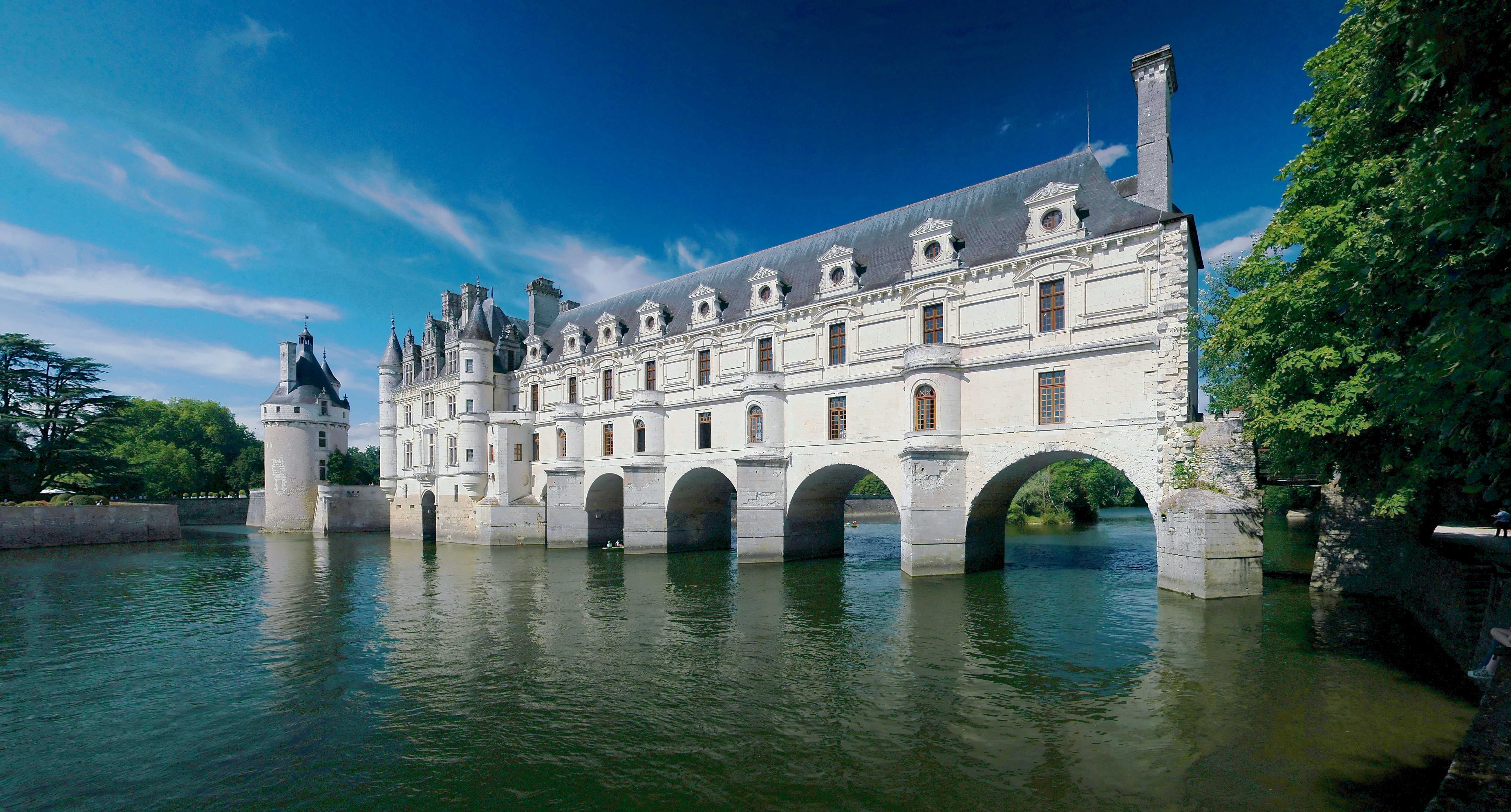
For centuries, the Loire Valley was the heart of power in France. In the Middle Ages, its strategic position on the river —a route for communication and trade— filled it with fortresses. During the Hundred Years' War against England, the region was a decisive setting: in 1429, Joan of Arc lifted the English siege of Orléans, a turning point in the conflict. But the Loire's great moment came in the 15th and 16th centuries, when the kings of France —Charles VII, Louis XI, Charles VIII, Louis XII and above all Francis I— chose the valley as their place of residence, away from the noise of Paris. The old medieval fortresses were then turned into pleasure palaces, and new châteaux were built mixing French tradition with the ideas of the Italian Renaissance the kings brought back from their campaigns in Italy. So jewels were born such as Chambord (whose double-helix staircase is attributed to the influence of Leonardo da Vinci), Chenonceau (the 'château of the ladies', spanning the river Cher), Amboise, Blois and Azay-le-Rideau. Leonardo himself spent his last three years in Amboise, invited by Francis I, and died there in 1519. When the court moved definitively to the Paris region (Versailles, in the 17th century), the valley lost political prominence but kept its treasures. Today those châteaux and their gardens, along with the vineyards and the river, make up the cultural landscape recognised by Unesco. The full story is on our history page.

Read the full history ↓

🏛️ Loire Valley is in North and West

The Atlantic west and its frontiers of memory: the abbey of Mont-Saint-Michel, the Renaissance châteaux of the Loire, the Viking duchy of Normandy and the D-Day beaches of 1944, on the edge of old Celtic Brittany.

Read the history of North and West →

🗺️ What to see

1
Château de Chambord
The largest and most spectacular château in the Loire, a symbol of the French Renaissance, with its famous double-helix staircase.
Chambord is, without argument, the most imposing and emblematic château in the whole Loire Valley, and one of the masterpieces of Renaissance architecture in the world. It was built on the orders of King Francis I from 1519 as a hunting lodge and a display of power, in the middle of an enormous walled forest estate —the largest enclosed park in Europe, comparable in area to the city of Paris— where deer and wild boar still live today. The building combines the structure of a medieval castle (with its central keep and its towers) with the decoration and proportions of the Italian Renaissance. Its most famous feature is the double-helix staircase at the centre of the keep: two spiral ramps rising intertwined without ever crossing, so that two people can go up and down at the same time without meeting. Tradition attributes its design to the influence of Leonardo da Vinci, who spent his last years nearby, in Amboise. From the staircase you reach the upper terraces, a forest of towers, domes, lanterns and carved chimneys that looks like a city in the sky, with views over the estate. Chambord has more than 400 rooms and 280 chimneys. Going round it takes several hours; see the royal apartments, the chapel and go up to the terraces. In the estate you can walk, cycle, take a boat along the canals or ride in a horse-drawn carriage. In summer there are equestrian shows and, depending on the calendar, evening events. Getting there: it is somewhat isolated, about 15 km from Blois; the most comfortable way is by car, although in season there are shuttle services from Blois. Best time and hours: spring and summer for the gardens and the estate; go early to avoid the crowds. Entry: paid, with various rates and possible combined tickets; check the official site (chambord.org). Tips: allow at least half a day, wear comfortable shoes and take the chance to explore the park too.
ℹ️ Distance: About 15 km from Blois and 50 km from Tours; best by car (shuttle in season from Blois) · Best time to go: Spring and summer for the estate; go early to avoid the crowds · Entry: €19 adult EU/EEA residents (2025); free for under-18s and EU 18-25s; at chambord.org · Duration: Half a day (château and estate)
2
Château de Chenonceau
The romantic 'château of the ladies', spanning the river Cher with its gallery of arches over the water.
Chenonceau is, for many people, the most beautiful and romantic château in the Loire, and the second most visited in France after Versailles. Its image is unmistakable: a two-storey gallery supported by arches crossing the river Cher from bank to bank, reflected in the water. That scene, between architecture and landscape, made it one of the most photographed castles in the world. It is known as 'the château of the ladies' because its history was shaped by powerful women. Diane de Poitiers, favourite of King Henry II, received the château and had the bridge over the Cher and the gardens built. When the king died, his widow Catherine de' Medici, regent of France, drove Diane out, took Chenonceau for herself and raised on that bridge the spectacular two-storey gallery that defines it today. Later, other women left their mark, and during the First World War the gallery served as a military hospital. The interior keeps period furniture, Flemish tapestries, a notable collection of paintings and the kitchens installed in the piers within the water. Outside, the French formal gardens of Diane de Poitiers and Catherine de' Medici, the maze and the flower and vegetable garden (which supplies the château's arrangements) deserve a good while. It is a château on a 'human' scale, very enjoyable. Getting there: it is in Chenonceaux, near Amboise and Tours; it has its own train station with services from Tours, and it is easily reached by car. Best time: spring and summer for the gardens in bloom. Entry: paid; check the official site (chenonceau.com), where an audio guide is usually included. Tips: it goes very well with Amboise and the Clos Lucé on the same day; go early because it fills up.
ℹ️ Distance: In Chenonceaux, near Amboise; train from Tours or by car · Best time to go: Spring and summer for the gardens; early to avoid the crowds · Entry: €18 adult, €23 with audio guide (2025); €16 student/senior; at chenonceau.com · Duration: 2 to 3 hours
3
Royal Château of Amboise
The royal residence above the Loire holding Leonardo da Vinci's tomb, with magnificent views over the river.
The Royal Château of Amboise stands on a promontory dominating the river Loire and the town of Amboise, and it was one of the favourite residences of the kings of France during the Renaissance. Monarchs such as Charles VIII —who was born and died in the château— and Francis I, who made Amboise a centre of court and artistic life, holding sumptuous parties and attracting Italian artists, spent part of their childhood or reign here. Of the original medieval and Renaissance castle a part survives today (much was demolished after the Revolution), but what is left is magnificent: the royal apartments with Gothic and Renaissance furniture, the terraces with panoramic views over the Loire and, above all, the small and exquisite Chapel of Saint-Hubert, a jewel of Flamboyant Gothic, where the remains of Leonardo da Vinci are kept. The Italian genius died at Amboise in 1519 and was buried at the château; his tomb is a place of pilgrimage today. From the terraces and gardens you get one of the best views in the valley: the wide river, the slate rooftops of the town and, opposite, the Loire landscape. The visit combines history, art and panoramas, and the town of Amboise at its feet, with its streets, cafés and the river, is one of the most charming places to stay. Getting there: right in Amboise, reached by train from Tours or Paris, or by car. Best time: spring and summer; in season there are evening shows. Entry: paid; check the official site (chateau-amboise.com). Tips: combine it with the Clos Lucé (Leonardo's house, a few minutes away on foot) for a full 'da Vinci' day.
ℹ️ Distance: In Amboise; train from Tours or Paris, or by car · Best time to go: Spring and summer; evening shows in season · Entry: €17,30 adult (2025-2026, includes the gardens and the Saint-Hubert chapel); at chateau-amboise.com · Duration: 2 hours
4
Clos Lucé (Leonardo da Vinci's house)
The manor where Leonardo lived his last three years, today a museum with models of his inventions and gardens.
The Château du Clos Lucé is an elegant red brick and white stone manor in Amboise, a few minutes on foot from the royal château, with a unique value: it was Leonardo da Vinci's last home. In 1516, King Francis I invited the Italian genius —by then old and famous— to settle in France, and offered him this house, connected according to tradition to the royal château by an underground passage. Leonardo arrived over the Alps on the back of a mule, bringing with him some of his paintings, among them the Mona Lisa. Here he lived, drew, invented and died, in 1519. Today the Clos Lucé is a museum devoted to him. You can visit his reconstructed rooms —including the bedroom where he died— his studio and the spaces where he worked for the king as engineer, architect and organiser of festivities. What many people find most fascinating are the scale models of his inventions: flying machines, the aerial screw (forerunner of the helicopter), gears, bridges, hydraulic and war machines, built from his drawings. The great garden-park surrounding the house, the 'Parc Leonardo da Vinci', is an open-air walk through the master's work, with giant reproductions of his machines, canvases of his paintings among the trees and water games, designed with children in mind too. It is an educational and very enjoyable visit. Getting there: a few minutes on foot from the centre and from the château of Amboise. Best time: spring and summer for the park. Entry: paid; check the official site (vinci-closluce.com). Tips: ideal for families; allow a couple of hours for the house and the park, and combine it with the royal château of Amboise.
ℹ️ Distance: In Amboise, minutes on foot from the royal château · Best time to go: Spring and summer for the park of inventions · Entry: €15,50 adult high season (Mar-Nov), €13,50 low season (2025); at vinci-closluce.com · Duration: 2 to 3 hours
5
Gardens and Château of Villandry
The château famous for its extraordinary geometric Renaissance gardens, among the most beautiful in France.
Villandry is famous less for its château —elegant and Renaissance, the last of the great châteaux built on the banks of the Loire in the 16th century— than for its gardens, considered among the most beautiful and best kept in the world. They are Renaissance gardens reconstructed at the beginning of the 20th century by the Spanish doctor Joachim Carvallo, who recovered the spirit of the geometric gardens of the period with astonishing care. The gardens unfold on several levels and themes. The most famous is the potager (ornamental kitchen garden), where vegetables are laid out in geometric coloured beds as though they were an edible tapestry, different in each season. There is also the ornamental garden with its love parterres (box hedges drawing hearts and symbols), the water garden with its pond, the maze, the sun garden and a medicinal herb garden. From the terrace and the château tower you take in the whole geometric splendour. The interior of the château can be visited and it keeps decorated rooms, a collection of Spanish painting and a notable Mudéjar ceiling brought from Spain. But the undisputed star is the walk through the gardens, which change with the seasons: spring and summer are spectacular for the flowering, and autumn for the ripe vegetables in the potager. Getting there: near Tours; the most comfortable option is by car, although there are bus or tour options. Best time: April to October for the gardens; summer for full flowering. Entry: paid, with a gardens-only or gardens-plus-château rate; check the official site (chateauvillandry.fr). Tips: give yourself time to walk all the levels of the garden and go up to the terrace for the overall view.
ℹ️ Distance: Near Tours; best by car (or on a tour) · Best time to go: April to October; summer for the flowering · Entry: Gardens only €8,50 adult; château + gardens €14 adult (2025); free for children under 8; at chateauvillandry.fr · Duration: 2 to 3 hours
6
Château de Cheverny
The classical château that inspired Marlinspike Hall in Tintin, with lavish interiors and its famous pack of hounds.
Cheverny is one of the most elegant and best preserved châteaux in the Loire, and it has the distinction of having belonged to the same family (the Huraults) for more than six centuries, which explains why its interiors are among the richest and most complete in the region. Classical in style, with a perfectly symmetrical 17th-century white stone façade, it was also the inspiration for the cartoonist Hergé's Marlinspike Hall (Moulinsart) in the adventures of Tintin: he removed the two side wings of the real château to draw Marlinspike, and today there is a permanent exhibition devoted to Tintin. The interior is dazzling: sumptuous rooms with period furniture, tapestries, coffered ceilings, a splendid staircase, the arms room, the dining room decorated with scenes from Don Quixote and apartments that preserve the luxury of the 17th and 18th centuries. It is a 'lived-in' château, warm, conveying the life of a French noble family across generations. One of Cheverny's great attractions is its hunting tradition: the château keeps a pack of about a hundred pedigree hounds (a cross of English foxhound and Poitevin), and the 'soupe des chiens' (the hounds' feeding time) is a curious and popular spectacle held daily in season. The gardens and the park, with walks on foot, by electric boat or by buggy, complete the visit. Getting there: near Blois and Chambord; the most comfortable option is by car, and it goes very well with Chambord on the same day. Best time: spring and summer for the gardens. Entry: paid; check the official site (chateau-cheverny.fr). Tips: check the time of the 'soupe des chiens' and, if you like Tintin, do not miss the exhibition.
ℹ️ Distance: Near Blois and Chambord; best by car · Best time to go: Spring and summer for the gardens; check the hounds' feeding time · Entry: €14 adult, €10 reduced (2025); additional guide €5; free for children under 7; at chateau-cheverny.fr · Duration: 2 hours
7
Château de Blois (Royal Château)
The château of four styles in the heart of the town, the residence of seven kings and a stage of French history.
The Royal Château of Blois stands in the heart of the town of the same name and is a genuine lesson in the history of French architecture: in a single courtyard four styles from four different periods sit side by side. There is a medieval part (the hall of the Estates General, from the 13th century), a Flamboyant Gothic wing of Louis XII, a splendid Renaissance wing of Francis I —with its famous openwork octagonal external staircase, one of the château's most recognisable images— and a 17th-century classical wing. Walking the courtyard is travelling through the evolution of French art. Blois was the residence of seven kings and ten queens of France, and the setting for decisive episodes. The most famous and bloody is the murder of the Duke of Guise in 1588, ordered by King Henry III in his own apartments, in the middle of the wars of religion: a political crime that changed the course of history. The royal apartments, with their painted ceilings, their secret cabinets (such as Catherine de' Medici's study with its hidden panels) and their furniture, recreate that atmosphere of court and intrigue. The château is also home to a fine arts museum and, in season, it puts on night sound-and-light shows on the courtyard façades telling its history. The town of Blois, with its steep streets, staircases and old houses, is pleasant to walk and a strategic base for visiting Chambord, Cheverny and Chaumont. Getting there: right in the centre of Blois, a town with a train station connected to Paris and Tours. Best time: spring and summer; evening show in season. Entry: paid; check the official site (chateaudeblois.fr). Tips: use Blois as a base for the nearby châteaux; take your time in the courtyard with its four styles.
ℹ️ Distance: In the centre of Blois; train station (Paris/Tours) · Best time to go: Spring and summer; evening show in season · Entry: Approx. €14,50 adult (2025); free for children under 6; at chateaudeblois.fr · Duration: 1 to 2 hours
8
Château d'Azay-le-Rideau
A Renaissance jewel in miniature, set on a mirror of water on the river Indre, surrounded by a romantic park.
Azay-le-Rideau is one of the most delicate and harmonious châteaux in the Loire, considered a masterpiece of the early French Renaissance. Built in 1518-1527 on an island in the river Indre, it seems to float on the water: its perfect reflection in the mirror of the river, framed by the trees of the park, is one of the most photogenic images in the whole region. It is a château of contained size, of white tuffeau stone, with turrets, finely carved windows and a famous Italian-style grand staircase. It was built for Gilles Berthelot, a rich treasurer of Francis I, and his wife Philippe Lesbahy, who supervised the works. But the treasurer's fortune drew the king's suspicion: accused of embezzlement, Berthelot had to flee and never got to live in his château, which was confiscated by the crown. That story of ambition and downfall is part of the charm of the place. The restored interior recreates life in a Renaissance château and in the centuries that followed, with furniture, tapestries and rich decoration. But much of the pleasure of the visit is outside: the English-style landscape park, created in the 19th century, invites you to walk round the château and discover different views over the water. In summer there is usually an evening illumination show. Getting there: in the village of Azay-le-Rideau, near Tours; there is a train station and you can also come by car. Best time: spring and summer; evening show in the summer season. Entry: paid; check the official site (azay-le-rideau.fr). Tips: walk the full loop of the park to see it reflected from every angle.
ℹ️ Distance: In Azay-le-Rideau, near Tours; train or car · Best time to go: Spring and summer; evening show in summer · Entry: €13 adult, €11 reduced (2025); free for under-18s and EU under-26s; at azay-le-rideau.fr · Duration: 1 to 2 hours
9
Château and gardens of Chaumont-sur-Loire
A medieval-Renaissance château with views over the Loire and a world-famous International Garden Festival.
Chaumont-sur-Loire occupies a spectacular position on a hill overlooking the river Loire, halfway between Blois and Amboise. It is a château with the air of a medieval fortress from outside —round towers, drawbridge, battlements— and of a Renaissance residence inside, which belonged, among others, to Catherine de' Medici and to Diane de Poitiers (whom Catherine forced to swap the sumptuous Chenonceau for this Chaumont, in one of the famous intrigues of the period). Beyond its history, Chaumont is today known worldwide for its International Garden Festival, held every year (usually from spring to autumn): landscape designers and artists from all over the world create ephemeral, experimental gardens around a theme, turning the estate into a great open-air exhibition of plant art. Added to that is an intense contemporary art programme, with installations across the château, the stables (among the most luxurious in Europe in their day) and the park. The visit thus combines the thrill of a historic château with magnificent views over the Loire and the surprise of contemporary art and gardens. The château's apartments, the stables and the extensive English-style park running down to the river can be explored unhurried over half a day. Getting there: near Onzain (train station) and between Blois and Amboise; the most comfortable option is a car. Best time: spring to autumn, during the Garden Festival. Entry: paid, with rates depending on whether the festival is included; check the official site (domaine-chaumont.fr). Tips: if you like gardens and contemporary art, it is unmissable; allow time for the park.
ℹ️ Distance: Between Blois and Amboise (Onzain); best by car · Best time to go: Spring to autumn (International Garden Festival) · Entry: High season (Apr-Nov, with the Garden Festival) €21 adult; low season €16 (2025); at domaine-chaumont.fr · Duration: Half a day
10
Tours and the old town (Vieux Tours)
The capital of the Touraine, with its historic centre of half-timbered houses, its Gothic cathedral and its food.
Tours is the most important city in the Loire Valley and the ideal base for exploring the region. Historic capital of the Touraine —the district they call 'the garden of France'— it combines heritage, student life and a well-regarded food scene. Its old town, the Vieux Tours, is organised around the charming Place Plumereau, a square ringed by medieval half-timbered houses (colombages) with leaning façades, today full of cafés and bars that come alive especially at night. Among its monuments, the Cathédrale Saint-Gatien stands out, an imposing Gothic work built over several centuries, with a richly carved Flamboyant façade and highly valuable medieval stained glass. Nearby is the Museum of Fine Arts, housed in the former archbishop's palace, with a beautiful garden and a centuries-old cedar. The city also keeps Roman and medieval remains, and the basilica of Saint-Martin, linked to one of the most venerated saints in France. Tours is also a food city: it is a good place to try the specialities of the Touraine —rillettes and rillons (pork preparations), goat cheeses such as Sainte-Maure-de-Touraine, wines from Vouvray and Chinon— in its bistros, markets and the lively old town. It has an active nightlife thanks to its university. Getting there: it has its own airport, a station with a TGV to Paris (a little over an hour) and excellent connections; it is the transport hub of the region. Best time: any time of year; spring and summer for the terraces. Entry: walking round the city and entering the cathedral are usually free; museums charge (check). Tips: use it as a base for the châteaux and set aside an evening to eat and go out in the Vieux Tours.
ℹ️ Distance: Centre of the region; TGV to Paris in a little over 1 h, its own airport · Best time to go: All year; spring and summer for the terraces · Entry: City and cathedral free; Museum of Fine Arts around €6-8 adult (2025, indicative) · Duration: Half a day to a day (longer as a base)
11
Wine route and tastings (Vouvray, Chinon, Saumur)
The vineyards of the Loire, with their Chenin whites, their Cabernet Franc reds and their cellars carved into the rock.
The Loire Valley is one of the great wine regions of France and, alongside the châteaux, one of the best reasons to visit it. Along the river a string of famous appellations follows: Vouvray and Montlouis (dry, off-dry or sparkling whites based on Chenin Blanc, near Tours), Chinon and Bourgueil (fine, aromatic Cabernet Franc reds), Saumur and Saumur-Champigny, the Saumur sparkling wines made by the traditional method, and further east the famous Sancerre and Pouilly-Fumé (from Sauvignon Blanc). It is a variety that surprises anyone who only knows southern wines. One fascinating feature of the region is the cellars carved into the tuffeau rock, the white limestone the châteaux were also built from. Quarrying the stone left galleries and caves (the 'caves') with a constant temperature, perfect for ageing and storing wine; many houses offer visits and tastings in those tunnels, and in some areas there are even troglodyte dwellings and restaurants inside the rock. Visiting wineries, doing a guided tasting and touring the vineyards —on foot, by car or by bike along the 'Loire à Vélo'— is an unmissable experience. Villages such as Vouvray, Chinon (with its medieval castle linked to Joan of Arc) or Saumur (with its white château above the river and its sparkling wine houses) are perfect bases for wine lovers. Getting there: by car you cover the different areas best; there are also tasting trips from Tours or Amboise. Best time: May to October; September-October for the harvest. Cost: tastings and winery visits are paid or come with a purchase (check with each house). Tips: if you are going to taste, nominate a driver or join an organised trip; book winery visits ahead in season.
ℹ️ Distance: Vineyards along the river (Vouvray, Chinon, Saumur, etc.); best by car or on a tour · Best time to go: May to October; harvest in September-October · Entry: Tastings from €5-15 per person, often deducted if you buy wine; guided winery visits €10-25 (2025, indicative) · Duration: Half a day to a day
12
La Loire à Vélo (the cycle route beside the river)
The famous cycling itinerary following the Loire between châteaux, vineyards and villages, almost all of it flat.
The 'Loire à Vélo' is one of the most famous and best-loved cycle-touring routes in Europe: a signposted itinerary of hundreds of kilometres following the course of the Loire (and part of EuroVelo 6, which links the Atlantic with the Black Sea). It runs through the valley past châteaux, vineyards, stone villages and natural riverbanks, mostly over flat ground and on lanes or paths protected from traffic, which makes it accessible to almost anyone, families included. You do not have to do the whole thing: you can choose day-long stretches between châteaux. Classic routes link, for example, Tours with Villandry or with Amboise, Blois with Chambord and Cheverny, or the vineyard areas of Vouvray and Chinon. Cycling beside the Loire, with its sandbanks, its birds and its soft light, is a wonderful way to feel the rhythm of the region, stopping at a winery, a château or a village for lunch. There are numerous bike hire points (including e-bikes) in the towns and villages of the valley, many with the 'Accueil Vélo' label that guarantees services for cyclists (hire, repairs, accommodation that takes bikes, luggage transfer). You can combine train and bike, since many regional trains take bicycles. Getting there: you start from any of the bases (Tours, Amboise, Blois, etc.) by hiring a bike. Best time: spring to autumn, with good weather and long days. Cost: bike hire paid by the day (check). Tips: choose a stretch that suits your fitness, bring water, sun cream and a helmet, and plan your stops at châteaux and wineries.
ℹ️ Distance: An itinerary along the river; sections from Tours, Amboise or Blois · Best time to go: Spring to autumn, with long days · Entry: Bike hire €17-26 a day (hybrid/mountain bike); e-bike around €25-40 a day (2025) · Duration: Half a day to several days depending on the stretch
Advertisements
What nobody tells you

💵 Prices

Tickets

TypePrice
Château de Chambord€19 adult EU/EEA residents (2025); free for under-18s and EU 18-25s; at chambord.org
Château de Chenonceau€18 adult, €23 with audio guide (2025); at chenonceau.com
Royal Château of Amboise€17,30 adult, includes the gardens and the Saint-Hubert chapel (2025-2026)
Clos Lucé (Leonardo da Vinci's house)€15,50 adult high season, €13,50 low season (2025)
Château and gardens of VillandryGardens only €8,50; château + gardens €14 (2025)
Château de Cheverny€14 adult, €10 reduced (2025)
Royal Château of BloisApprox. €14,50 adult (2025)
Château d'Azay-le-Rideau€13 adult, €11 reduced (2025)
Château and gardens of Chaumont-sur-Loire€21 adult high season (Apr-Nov), €16 low season (2025)
City of Tours and Saint-Gatien cathedralFree; Museum of Fine Arts around €6-8 adult (2025, indicative)
Tastings and winery visits (Vouvray, Chinon, Saumur)€5-15 per person for a tasting; guided visits €10-25 (2025, indicative)
Bike hire (Loire à Vélo)€17-26 a day (hybrid/mountain bike); e-bike €25-40 a day (2025)
🔄 updated monthlyOfficial / reference values · double-check when buying

Activities and tours

ActivityPriceDurationOperator
Day trip to the châteaux (Chambord + Chenonceau) from Tours/Amboise€90-140 per person with transport and tickets included (2025, indicative)Full dayLocal agencies and guides in Tours/Amboise
Wine tasting tour of the Vouvray or Chinon cellars€50-90 per person with transport and 2-3 tastings (2025, indicative)Half a dayLocal wine tourism operators
Bike ride along the Loire à Vélo (a stretch between châteaux)€17-26 a day for hire; €25-40 for an e-bike (2025)Half a day to a full day'Accueil Vélo' hire points (Détours de Loire and similar)
Night sound-and-light show at a château (Blois, Amboise, Azay)Included in the general ticket in season, or a supplement of around €10-16 depending on the château (2025, indicative)One eveningChâteaux in the summer season
Trip on a traditional boat on the Loire€10-18 per person, about 1 h (2025, indicative)1-2 hLocal river navigation operators
Hot-air balloon flight over the Loire châteaux€200-260 per person (2025, indicative)Half a day with transfersBalloon companies (France Montgolfières and similar)
Guided visit to the Chambord estate (on foot, by bike or by boat)Included in the general ticket; bike or electric boat hire in the estate from €10-20 (2025)Half a dayDomaine National de Chambord
🔄 updated monthlyOfficial / reference values · double-check when buying
Advertisements

🚌 How to get there and distances

Getting around

ModePriceDurationNotes
Rental carFrom €35-55 a day depending on the category (2025) + fuel and tollsVariesThe most practical way to tour the châteaux, which tend to be scattered and poorly connected to each other by public transport. It gives you total freedom over your timing
Regional train (TER) between townsFrom €5-15 for a short journey between towns in the valley (2025, indicative)VariesIt connects Tours, Amboise, Blois, Orléans and Saumur, and reaches some châteaux with their own station (Chenonceau, Azay-le-Rideau, Blois). Useful between towns; less so for the isolated châteaux
Organised trips (minibus) from Tours or Amboise€90-140 per person depending on the châteaux included (2025, indicative)Half a day or a full dayThey pick you up in town and take you to two or three châteaux in a day, with a guide. Ideal for anyone who does not drive
Bicycle (Loire à Vélo)€17-26 a day; e-bike €25-40 (2025)VariesExcellent for stretches between nearby châteaux and for experiencing the river landscape. There are e-bikes for longer distances
Seasonal shuttle / bus to ChambordApprox. €5-10 each way in high season (2025, indicative)VariesIn high season there are transport services from Blois to Chambord and to other nearby châteaux; check the calendar
TaxiApprox. €1,50-2 per km + flag fall €5-8 (2025, indicative)VariesHandy for specific transfers or châteaux with no station, though more expensive; agree a price or use metered taxis
🔄 updated monthlyOfficial / reference values · double-check when buying

How to get there

RouteAirlines / operatorsAvg. priceDuration
Paris → Tours (TGV)SNCF (TGV InOui, OUIGO)From €10 (OUIGO booked ahead) up to an average €35-65 (2025)A little over 1 h to Saint-Pierre-des-Corps / Tours
Paris → Blois or Orléans (regional/Intercités train)SNCF (TER / Intercités)From €15-35 each way depending on how far ahead you book (2025)Approx. 1 h to 1,5 h
Paris → Amboise (train)SNCF (TER, sometimes with a change at Tours/Saint-Pierre-des-Corps)From €20-40 each way depending on how far ahead you book (2025)Approx. 2 h with a change
Flight to Tours Val de Loire (TUF) from European citiesLow-cost airlines (limited routes, check they are still running)Varies with origin and seasonDepends on where you start
By car from Paris on the motorway (A10)Own or rental vehicle (tolls)Tolls approx. €18-22 (one way) + fuel (2025, indicative)Approx. 2 to 2,5 h to Tours
🔄 updated monthlyOfficial / reference values · double-check when buying

🏨 Where to stay

No exact prices: a scale from $ (budget) to $$$$$ (luxury), with 2-3 options per category.

CategoryPriceRecommended options
Château-hotels and luxury manors$$$$$US$ 200–450 a night; the Loire is famous for its châteaux turned into luxury hotels and its upmarket 'maisons d'hôtes' in historic manors surrounded by parkland and vineyards
Charming and boutique hotels in Amboise and Tours$$$$$US$ 130–220 a night; hotels with character in the historic centres of Amboise, Tours or Blois, in restored old buildings, close to the châteaux and to city life
Mid-range hotels and B&Bs in the valley towns$$$$$US$ 75–130 a night; a wide choice of mid-range hotels and guest houses (chambres d'hôtes) in Tours, Amboise, Blois, Saumur and villages in the valley, many in vineyard areas
Budget / campsites and gîtes by the river$$$$$US$ 40–75 a night; hostels, rural gîtes and campsites (some very well equipped, beside the Loire or near the châteaux), chosen by families, Loire à Vélo cyclists and travellers on a tight budget

🍴 Where to eat

TypePriceOptions / signature dish
Bistros and Touraine cooking$$$$$€18–32 per dish; regional restaurants with rillettes and rillons (pork), goat cheeses such as Sainte-Maure-de-Touraine, river fish and seasonal vegetables, washed down with a Vouvray or a Chinon
Troglodyte restaurants (in tuffeau caves)$$$$$€20–38 per dish or fouées menu; eating inside old galleries carved into the limestone, above all in the Saumur and Vouvray areas, with fouées (puffed breads) with fillings and regional dishes
Fine dining and château tables$$$$$From €70–150 per person (set menu); upmarket restaurants, some starred, in château-hotels and historic houses, combining the best of French cooking with the great wines of the Loire
Markets, cafés and simple food$$$$$€8–18 per dish or picnic; markets of local produce (cheeses, charcuterie, fruit, wine), bakeries, crêperies and village cafés, ideal for cycling days or for a route between châteaux
Advertisements

📖 History of Loire Valley

Origins, formation and what the sources say.

The river Loire: strategic route and cradle of medieval fortresses

The history of the Loire Valley is written by its river. The Loire, the longest in France (more than 1.000 kilometres), was for centuries a vital artery of communication and trade linking the interior of the country with the Atlantic. Goods, armies and pilgrims moved along its banks, and whoever controlled the river controlled the heart of France. That strategic importance explains why, from the early Middle Ages, the valley filled with fortresses, defensive castles and walled towns.

The first great buildings were military fortresses, austere and designed for war, not for pleasure. Powerful counts such as those of Anjou and Blois raised keeps (donjons) and castles to dominate the territory and fight over power. Places such as Loches, Chinon, Angers, Saumur and Blois began as strongholds controlling fords, bridges and river crossings. Many of the châteaux we admire today for their Renaissance beauty keep that medieval, warlike origin in their foundations or in one of their towers.

The region was also the setting for the great disputes of medieval France. For centuries, the counties and duchies of the valley (Anjou, Touraine, Blois, Orléans) changed hands between the French crown and powerful noble families, and later they were at the centre of the conflict with England. That long period of fortresses and struggle laid the foundations on which, centuries later, the pleasure châteaux of the Renaissance would rise: many were not built from scratch but transformed and embellished old medieval fortresses.

The Loire as border and axis of power
Historians stress that the Loire's position as a navigable waterway and as a boundary or axis between territories explains the density of medieval fortresses in the valley. Control of fords, bridges and riverside towns was key to political and military power in medieval France.
Source: https://es.wikipedia.org/wiki/Valle_del_Loira

Joan of Arc and the Hundred Years' War: the siege of Orléans (1429)

During the Hundred Years' War between France and England (1337-1453), the Loire Valley became a decisive frontier. At the beginning of the 15th century, the English and their Burgundian allies dominated much of northern France, and the Loire was the last great line of defence for the French king (the dauphin Charles, still uncrowned). If the English crossed the river, they could sweep through the south that was still holding out. That is why the English siege of the town of Orléans, on the banks of the Loire, begun in 1428, was one of the most critical moments of the whole war.

Into that context bursts one of the most extraordinary figures in French history: Joan of Arc. A young peasant woman from Lorraine who claimed to have received from God the mission of liberating France and crowning the dauphin, she convinced the court and took command of the troops. In May 1429, her arrival completely changed the morale of the besieged, and within a few days the French lifted the English siege of Orléans. It was a turning point: after Orléans, victories followed one another and Charles was able to be crowned king at Reims as Charles VII.

Several places in the valley keep the memory of Joan of Arc. Orléans honours her every year with major festivities; in Chinon, the castle recalls the episode in which Joan recognised the dauphin among the courtiers. That feat not only changed the course of the war —which would end with the expulsion of the English— but tied the name of the Loire forever to one of the great founding myths of French identity.

Orléans as the turning point of the war
The sources agree that the lifting of the siege of Orléans in 1429, with Joan of Arc at the head, marked a decisive turn in the Hundred Years' War in France's favour, halting the English advance on the Loire and opening the way to Charles VII's coronation at Reims.
Source: https://es.wikipedia.org/wiki/Sitio_de_Orle%C3%A1ns
Details about the figure of Joan of Arc
There is abundant historical debate about the details of Joan of Arc's life, her 'voices' and her exact military role, partly because of the mix of sources from her trial and the later construction of the myth. What is established is her central role in the lifting of the siege of Orléans in 1429.
Source: https://es.wikipedia.org/wiki/Juana_de_Arco

The valley, home of the kings and cradle of the French Renaissance (15th-16th centuries)

The Loire Valley's great moment came at the end of the 15th century and through the 16th, when the kings of France chose the region as their preferred place of residence, away from the noise and unhealthiness of Paris. Charles VII, Louis XI, Charles VIII, Louis XII and, above all, Francis I set their itinerant court in the valley, drawn by its mild climate, its hunting forests, its fertile land and the beauty of the river. The region became, in effect, the centre of power in France for several generations.

That move of court life transformed the architecture. The old medieval fortresses, less necessary in times of internal peace, were turned into pleasure palaces, and new châteaux were built designed for pleasure, display and culture. The Italian wars, in which the French kings fought and came to know the Italian Renaissance at first hand, were decisive: the monarchs returned dazzled by the art, the gardens and the architecture of Italy, and they brought back artists, ideas and a new taste. So the French Renaissance was born, and it flourished precisely in the Loire.

The great jewels of the valley date from that golden age. Francis I had Chambord built (1519) as a dazzling hunting lodge, with its famous double-helix staircase. Chenonceau spread out over the river Cher at the hands of powerful women such as Diane de Poitiers and Catherine de' Medici. Blois, Amboise, Azay-le-Rideau, Villandry, Chaumont and many others were raised or remodelled in those years, mixing French tradition with Italian elegance. The valley filled with white tuffeau stone façades, turrets, galleries and geometric gardens that still define it today.

The Italian wars and the importing of the Renaissance
The historiography links the flowering of the Renaissance in the Loire with the military campaigns of the French kings in Italy (late 15th and early 16th centuries), which brought the court into contact with Italian art and architecture and drove the arrival of Renaissance artists and ideas in France.
Source: https://es.wikipedia.org/wiki/Castillos_del_Loira

Leonardo da Vinci in Amboise: the genius's last years (1516-1519)

One of the most fascinating chapters in the history of the Loire is the presence of Leonardo da Vinci in his final years. In 1516, King Francis I, a great admirer of Italian art, invited the now elderly and famous Leonardo to settle in France. The Tuscan master crossed the Alps on the back of a mule and settled at the Château du Clos Lucé, a manor in Amboise very close to the royal château, connected to it according to tradition by an underground passage. He brought with him some of his most treasured paintings, among them the Mona Lisa, which is how it ended up in France.

Francis I gave Leonardo the title of 'first painter, engineer and architect to the king' and a pension, and treated him with enormous respect and admiration: the chronicles say the two held long conversations. At the Clos Lucé, Leonardo went on drawing, devising machines, studying hydraulics and designing projects for the king, such as urban plans and the staging of sumptuous festivities. His universal genius —painter, engineer, anatomist, inventor— found generous patronage at the Loire court for his last years.

Leonardo da Vinci died in Amboise on 2 May 1519. According to tradition, he expired in the arms of Francis I himself, although historians dispute that detail. He was buried at the château of Amboise, and today his remains rest in the Chapel of Saint-Hubert, within the grounds. Leonardo's mark turned Amboise and the Clos Lucé into places of cultural pilgrimage, and it symbolises the moment when the Italian and French Renaissances shook hands in the heart of the Loire.

Leonardo's death 'in the king's arms'
The image of Leonardo da Vinci dying in the arms of Francis I, popularised by Giorgio Vasari and by 19th-century painting, is probably a romantic legend: many historians point out that the king was not in Amboise on that date. What is documented is that Leonardo died in Amboise on 2 May 1519 and was buried at the château.
Source: https://en.wikipedia.org/wiki/Leonardo_da_Vinci

Court intrigue, wars of religion and the valley's decline (16th-17th centuries)

The courtly splendour of the Loire was not free of violence. The 16th century was also that of the terrible wars of religion pitting Catholics against Protestants (Huguenots) in France, and the valley was the setting for some of their most dramatic episodes. The château of Amboise saw the 'Amboise conspiracy' in 1560, a Protestant plot that ended in bloody repression. And at the château of Blois, in 1588, King Henry III ordered the murder of the powerful Duke of Guise, leader of the Catholic faction, in his own apartments: a political crime of enormous impact that hastened the end of the reign.

Great female figures also marked life in the valley with their intrigues. Catherine de' Medici, queen and later regent of France, pulled the strings of power for decades; her rivalry with Diane de Poitiers, the favourite of the late King Henry II, was symbolised in the château of Chenonceau, which Catherine took from Diane by forcing her to swap it for Chaumont. These stories of power, love and revenge are part of the legendary aura of the Loire châteaux.

The valley's political decline came in the 17th century, when the monarchy definitively concentrated court life in the Paris region, first at the Louvre and then, dazzlingly, at the palace of Versailles built by Louis XIV. The kings stopped living in the Loire, and its châteaux lost prominence, passing into the hands of nobles or falling into a degree of neglect. Later, the French Revolution damaged or destroyed part of the heritage (at Amboise, for example, large sections of the château were demolished). But the ensemble survived, and in time the valley would go from centre of power to a heritage treasure admired by the whole world.

The murder of the Duke of Guise at Blois (1588)
The historical sources agree that King Henry III had Duke Henry I of Guise murdered at the château of Blois in December 1588, in the context of the wars of religion and the struggle for power with the Catholic League. The episode is one of the most famous political crimes in French history.
Source: https://es.wikipedia.org/wiki/Enrique_I_de_Guisa

Unesco World Heritage (2000) and the Loire Valley today

After centuries of ups and downs, the Loire Valley recovered its prestige as one of the great heritage and tourist destinations in the world. Its châteaux were restored, opened to the public and surrounded by carefully recovered gardens, such as the famous Renaissance gardens of Villandry reconstructed at the beginning of the 20th century. The valley became a byword for elegance, history and good living, and a magnet for travellers from all over the planet.

Recognition came in the year 2000, when Unesco inscribed on its World Heritage list 'The Loire Valley between Sully-sur-Loire and Chalonnes', an extensive stretch of the river of some 280 kilometres. The listing does not protect an isolated monument but a living cultural landscape: the whole formed by the river, the historic towns, the villages, the vineyards, the farmland and, of course, the châteaux, reflecting centuries of interaction between people and their surroundings, and the spread of the ideals of the Renaissance and the Enlightenment in the architecture and landscape of Western Europe.

Today the Loire Valley combines that heritage with a living, dynamic region: it is one of the great wine areas of France (Vouvray, Chinon, Saumur, Sancerre), a destination for food and wine tourism, and a paradise for cycle touring thanks to the 'Loire à Vélo' route. The 'Touraine', already called 'the garden of France' in the Renaissance, still seduces with its soft light, its fairy-tale châteaux and the serene rhythm of its river, which for centuries was the very heart of the kingdom.

What Unesco recognises (2000)
The 2000 inscription covers 'The Loire Valley between Sully-sur-Loire and Chalonnes', classified as a cultural landscape. Unesco values the whole of the river landscape, the towns, the villages, the monuments and the châteaux as evidence of the exchange of human values and of the spread of the ideals of the Renaissance and the Enlightenment in Western Europe.
Source: https://whc.unesco.org/en/list/933/

📚 Bibliography

  • Wikipedia (ES) — «Valle del Loira»: https://es.wikipedia.org/wiki/Valle_del_Loira
  • Wikipedia (ES) — «Castillos del Loira»: https://es.wikipedia.org/wiki/Castillos_del_Loira
  • Wikipedia (EN) — «Châteaux of the Loire Valley»: https://en.wikipedia.org/wiki/Ch%C3%A2teaux_of_the_Loire_Valley
  • UNESCO — «The Loire Valley between Sully-sur-Loire and Chalonnes» (2000): https://whc.unesco.org/en/list/933/
  • Wikipedia (ES) — «Juana de Arco»: https://es.wikipedia.org/wiki/Juana_de_Arco
  • Wikipedia (ES) — «Sitio de Orleans»: https://es.wikipedia.org/wiki/Sitio_de_Orle%C3%A1ns
  • Wikipedia (ES) — «Leonardo da Vinci»: https://es.wikipedia.org/wiki/Leonardo_da_Vinci
  • Wikipedia (EN) — «Leonardo da Vinci»: https://en.wikipedia.org/wiki/Leonardo_da_Vinci
  • Wikipedia (ES) — «Francisco I de Francia»: https://es.wikipedia.org/wiki/Francisco_I_de_Francia
  • Wikipedia (ES) — «Catalina de Médici»: https://es.wikipedia.org/wiki/Catalina_de_M%C3%A9dici
  • France.fr — «El Valle del Loira»: https://www.france.fr/es/valle-del-loira

❓ Frequently asked questions

How many châteaux can I see in a day in the Loire Valley?+
Two châteaux a day is the recommendation, three at most, so as not to end up saturated. Each of the great châteaux (Chambord, Chenonceau, Villandry) deserves at least two hours, plus the travel between them. It works well to combine one 'big' château with a smaller one or with a winery, and to leave time to eat calmly and enjoy the landscape. Seeing everything is impossible: better to choose well and enjoy it.
Do I need to rent a car to tour the châteaux?+
It is the most comfortable and flexible option, because many châteaux are scattered and poorly connected to each other by public transport. Without a car it is still possible: some châteaux have a train station (Blois, Chenonceau, Azay-le-Rideau) and there are organised minibus trips from Tours or Amboise that take you to two or three a day. The bicycle (Loire à Vélo) is another excellent alternative for short stretches.
Which is the best base to stay in?+
Tours is the most practical and complete (transport, hotels, food, TGV to Paris). Amboise is charming and very central for the most famous châteaux. Blois is strategic for Chambord and Cheverny. The choice depends on your route: if you are driving, any of them works; if you depend on the train, Tours is the best connected.
Which are the unmissable châteaux?+
If you have to choose, Chambord (the most spectacular), Chenonceau (the most romantic, over the river) and, for the gardens, Villandry are the three great essentials. Close behind come Amboise with the Clos Lucé (Leonardo's house), Cheverny, Blois, Azay-le-Rideau and Chaumont. Two or three days cover the essentials.
When is the best time to visit the Loire Valley?+
April to September, when the gardens are at their finest and the days are long. May, June and September have good weather with fewer people than July and August. Autumn (October) is ideal for wine lovers because of the harvest. Winter is quiet and cheap, but the gardens lose their charm and some châteaux cut their hours.
Is a wine tasting worth it?+
Very much so. The Loire is one of the great wine regions of France, with whites from Vouvray, reds from Chinon and Bourgueil, and sparkling wines from Saumur, often aged in spectacular cellars carved into the rock. There are visits and tastings for every level. If you are going to taste and you are driving, nominate a driver or join an organised trip.
Can you tour the valley by bike?+
Yes, and it is one of the best ways to do it. The 'Loire à Vélo' is a signposted route, almost all flat and protected from traffic, following the river between châteaux, vineyards and villages. You do not have to do the whole thing: you pick day-long stretches. There is bike hire (including e-bikes) at every base and 'Accueil Vélo' services for cyclists.
Sources consulted (21)
Still planning?
Explore more destinations in France
See all destinations →
Advertisements
Image credits
Photos from Wikimedia Commons, each under its own licence (CC BY, CC BY-SA or public domain). Open each file to see its author and licence.
Chateau de Chenonceau 2008E