Viajá con Gus
Home › Fiji › Levuka
Levuka
🇫🇯 Fiji · Vanua Levu, Taveuni and the outer islands

Levuka

🪪 What do I need to enter Fiji?Pick your citizenship and we tell you the visa, the days and the paperwork, with the official source.

By leaving your email and citizenship you agree to receive the documents you asked for and weekly travel news. You can unsubscribe whenever you want. How we handle your data.
Jump to what you need
📌State
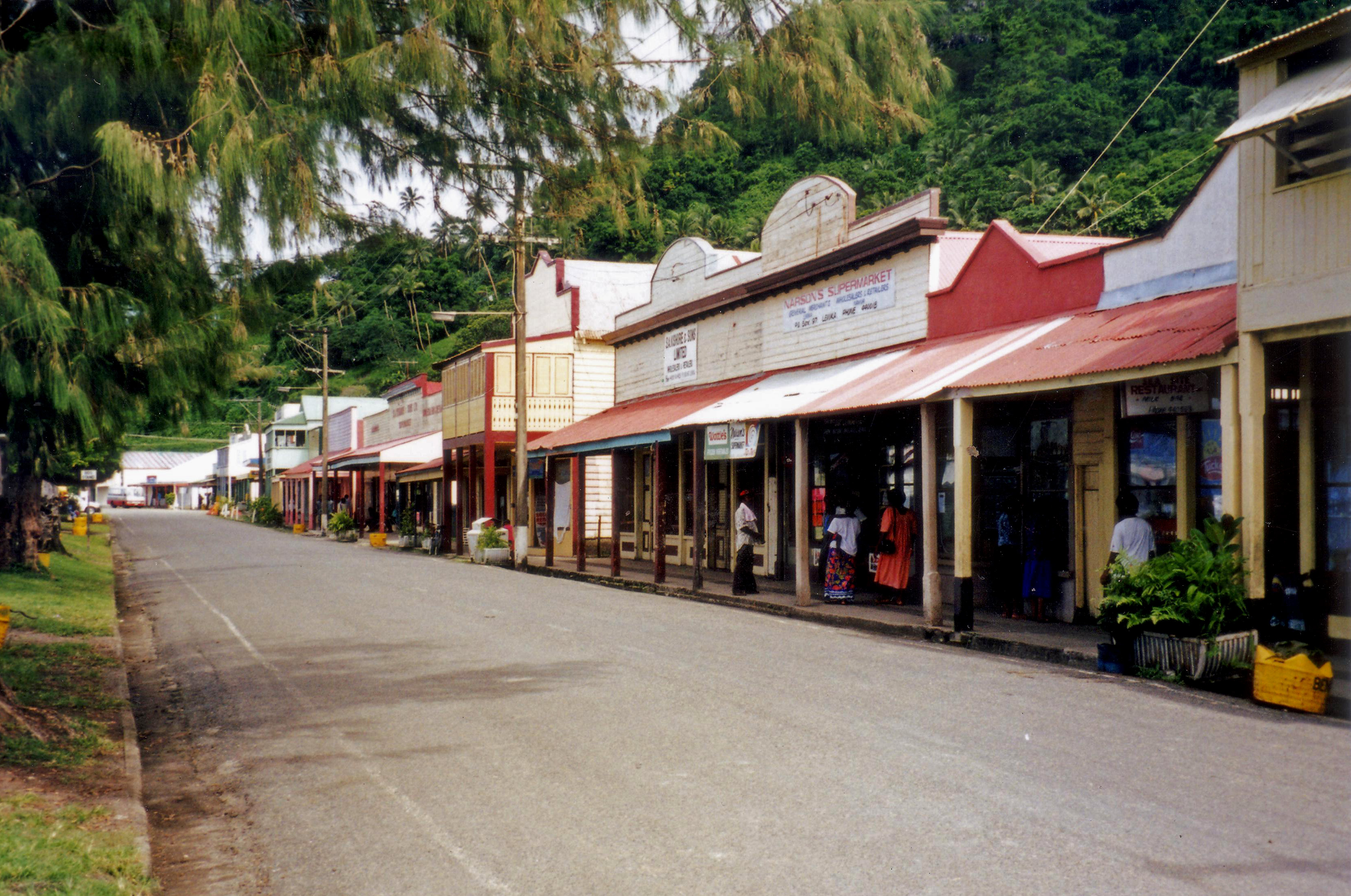
Levuka is a historic port town on the east coast of Ovalau island, in the Lomaiviti island group, about 60 km east of Suva by sea. It was Fiji's first colonial capital and today is the only site in the country inscribed on the UNESCO World Heritage List (2013). It's a small town of about 1,100 people, tucked between the sea and an amphitheatre of volcanic mountains, with a main street (Beach Street) of late 19th-century timber and corrugated-iron buildings. It belongs to Lomaiviti Province, Eastern Division.
📌Best time to go
The dry season of the southern winter, from May to October, is the best: less rain, less humidity and more comfortable weather for walking around town and climbing to the lookouts. The rainy and cyclone season runs from November to April, hotter and more humid, with the chance of rough seas that can affect the ferries. Levuka can be visited all year round, but for the heritage walks and the inland trails, dry weather is best.
📌Suggested days
1 or 2 nights is enough to explore the historic centre on foot, do the guided tour with the community centre, climb the 199 steps of Mission Hill and visit the Cession site at Nasova. With 3 nights you can add a hike into Ovalau's volcanic interior, a village visit (such as Lovoni, in the crater) and time to enjoy the town's slow pace. Many people combine it with more days in the Lomaiviti islands.
📌Getting there
Today you basically arrive by sea. The most practical option is the bus + barge combo: a bus leaves Suva (Western Bus Stand) at midday, takes about 2 hours to Natovi Landing, crosses by barge to Buresala wharf on the west of Ovalau (60 to 90 minutes) and from there another bus takes you to Levuka (about 30 minutes). Shipping companies such as Venu Shipping and Goundar Shipping operate depending on the day. Flights to the Bureta grass airstrip (Northern Air / Fiji Link from Nausori, Suva) have been suspended because of the condition of the runway: check their current status before counting on them (verified July 2026).
📌Getting around
Levuka's historic centre can be covered entirely on foot: it's practically a single street along the sea. To get to Nasova, the Ovalau villages or Buresala wharf there are local Ovalau buses and taxis; you can also arrange transfers through your accommodation. There's no urban transport app here and no eTransport card (that's only for Viti Levu buses): you pay in cash. To explore the inside of the Lovoni crater, it's best to go with a guide or on a tour.
📌Language and currency
Fijian (Bauan) and English. Currency: Fijian dollar (FJD, FJ$). There's a bank and an ATM in Levuka (Beach Street), but it's best to carry cash in small notes: in the villages, for the community tour, the buses and small purchases, almost everything is cash. Don't rely on the town's only ATM.
💱 FJD exchange rate
Loading rate…
🌤️ Weather in Levuka
Loading weather…

Levuka is the Fiji that the rest of the country left behind, and that's exactly why it has stayed intact. It was the first colonial capital, the port where in 1874 Fijian chiefs ceded the archipelago to Britain, and when the capital moved to Suva in 1882 the town was frozen in time. The result is a centre of timber and corrugated-iron buildings, mission churches, the oldest social club in the South Pacific and the oldest hotel still operating in the region, all squeezed between the Koro Sea and a wall of volcanic mountains. In 2013 UNESCO declared it a World Heritage Site: the only one in Fiji.

But Levuka isn't a museum: it's a living town of just over a thousand people, with its tuna cannery, its century-old schools still in use and the iTaukei villages around it. Walking down Beach Street means passing Fiji's 'first' post office, school, newspaper and bank, climbing the 199 steps of Mission Hill to see the town from above, and sitting at the Ovalau Club to hear stories of whalers, beachcombers and sandalwood and bêche-de-mer traders.

This guide covers Levuka with a practical eye: how to get there (the bus and barge combo from Suva, the changing status of flights), what to see in the historic centre and at Nasova, where the Cession was signed, where to stay at the legendary Royal Hotel or in a homestay, and how to head into the Lovoni crater. And it honours its huge history, that of an island inhabited since Lapita times that ended up being the door through which Fiji entered the modern world.

📖 History of Levuka

Levuka was born in the 1820s as Fiji's first permanent European settlement: beachcombers, whalers and sandalwood and bêche-de-mer traders settled under the protection of the local chief, the Tui Levuka. Over time it became the archipelago's most important port and, in the 1870s, the capital of Cakobau's kingdom. On 10 October 1874, in nearby Nasova, Ratu Seru Cakobau and other chiefs signed the Deed of Cession that handed Fiji to Britain, and in 1879 the ship Leonidas landed the first indentured labourers from India (girmitiyas) there. The narrow strip of land between the sea and the mountains ended up working against it: in 1882 the capital moved to the more spacious Suva and Levuka was left on the margins of progress, which paradoxically preserved its historic centre. In 2013 it was declared a World Heritage Site. The full story is on our history page.

Read the full history ↓

🏛️ Levuka is in Vanua Levu, Taveuni and the outer islands

The other Fiji, wilder and more remote. It takes in Vanua Levu, the second-largest island, with laid-back, bohemian Savusavu; lush Taveuni, the "garden island", which the 180th meridian crosses; the reefs of Kadavu; and Levuka, the old capital and the country's only World Heritage Site.

Read the history of Vanua Levu, Taveuni and the outer islands →

🗺️ What to see

Tours nearby, in Suva

They depart from Suva, 65 km away. If you book from this link we earn a commission and you pay no more.

1
Beach Street and the historic centre
The main waterfront street, with its late 19th-century timber and corrugated-iron façades.
Leer más ↓
Beach Street is the heart of Levuka and the reason for its heritage value: a row of timber and corrugated-iron commercial buildings running right along the sea, with boardwalks, awnings and signs from another era. It's one of the few remaining examples in the Pacific of a late colonial port whose development was shaped by the indigenous community, which always outnumbered the European settlers, blending local and foreign building traditions. That unique character is what earned it a place on the UNESCO World Heritage List in 2013. Walking along the street you come across Fiji's 'firsts': the first bank, the first post office, Morris Hedstrom (an old store now converted into a community centre and museum), and buildings such as the Queen Victoria Memorial Hall. You can see it all on foot in a couple of hours, stopping to look at façades and chat with people. The best way to understand it is to take the guided tour offered by the community centre, which puts together a walk through the historic landmarks with local context. Entry to the town is free; the tour has a modest cost that goes to the community. Getting there: on foot through central Levuka. Best time: May to October (drier). Tips: start early because of the heat; ask for the guided tour at the Levuka Community Centre; bring cash.
ℹ️ Distance: Right in central Levuka (on foot) · Best time to go: All year; May to October more comfortable · Admission: Free to walk around; community guided tour with a modest contribution (indicative, verified July 2026) · Duration: 2 to 3 hours
2
Cession site at Nasova
Where the Deed of Cession of Fiji to Britain was signed on 10 October 1874.
Leer más ↓
In the village of Nasova, just south of Levuka, is the place where one of Fiji's founding events took place: on 10 October 1874, Ratu Seru Cakobau and other chiefs signed the Deed of Cession that transferred sovereignty over the archipelago to Britain. The site is commemorated with three 'cession stones' and a flagpole, facing the sea, in a quiet and solemn setting. 10 October is a national holiday in Fiji (Fiji Day) precisely because of this date, and commemorative events are held in Nasova. Nearby are the Provincial Bure and the former colonial government compound. It's a short stop but full of meaning: this is where British Fiji formally began, lasting almost a century until independence in 1970. You can get there in a few minutes by taxi or local bus from Levuka, or by walking along the coast. It's usually visited together with Niukaube Hill, the hill where Cakobau had his parliament before the capital moved. Getting there: about 2 km south of Levuka, by taxi, local bus or on foot along the coast. Best time: all year. Tips: combine it with Niukaube Hill; respect the commemorative nature of the place; take photos discreetly if there are ceremonies.
ℹ️ Distance: Nasova, about 2 km south of Levuka · Best time to go: All year · Admission: Free access to the memorial site (verified July 2026) · Duration: 30 to 45 minutes
3
Sacred Heart Church
Catholic church of the Marist missionaries, with a clock tower that strikes the hour twice.
Leer más ↓
Sacred Heart Church is one of Levuka's best-loved buildings. It was built by the Marist missionaries and its origins go back to the mid-19th century (the parish dates from 1858), with stained glass, fine woodwork and a clock tower with a famous quirk: it strikes each hour twice, a minute apart, a custom that has stuck in the town's memory. It's a working church, plain on the outside and surprising inside, a witness to the strong missionary imprint on Levuka, where Marist Catholics and Methodists lived side by side (the nearby Navoka Methodist Church also dates from the 1860s). To understand 19th-century Levuka, with its mix of traders, sailors and missionaries, this church is a key stop. It's in the historic centre, a few steps from Beach Street, so you visit it as part of the walk. You can go in as long as you respect that it's an active place of worship: modest clothing and silence. Getting there: in Levuka's historic centre, on foot. Best time: all year. Tips: go in with modest clothing; look out for the clock tower; respect mass times.
ℹ️ Distance: In Levuka's historic centre (on foot) · Best time to go: All year · Admission: Free access; it's an active place of worship (verified July 2026) · Duration: 20 to 30 minutes
4
Mission Hill and the 199 steps
A climb up a historic staircase to a lookout over the town and the Koro Sea.
Leer más ↓
One of the nicest walks in Levuka is climbing the 199 steps of Mission Hill, the hill where the first mission school operated. The staircase starts in town and gains height among old houses, schools and significant buildings, up to a lookout where you can see all of Levuka, the red roofs of its buildings, the tuna cannery and the Koro Sea opening out towards the horizon. It's a short but steep climb, ideal at sunset or early in the morning, when the heat eases off. From the top you understand at a glance why the capital had to move: the town is literally boxed in between the water and the mountains, with no room to grow. It's free and one of the best views on the island. It pairs well with the historic centre walk and with the hike to the lighthouse for those who want more. Getting there: the staircase starts in Levuka's historic centre. Best time: all year; best at sunrise or sunset. Tips: bring water and shoes with good grip; climb in daylight; ideal for photos of the town.
ℹ️ Distance: Staircase from Levuka's historic centre · Best time to go: All year; sunrise or sunset · Admission: Free (verified July 2026) · Duration: 30 to 45 minutes return
5
Museum and community centre (old Morris Hedstrom)
Levuka's local museum, with photos, documents and objects from the first capital.
Leer más ↓
The Levuka Community Centre & Museum is housed in the old Morris Hedstrom store building (and there are also historical collections linked to the old Masonic Hall), and it's the best place to dig into the town's history before or after walking it. It displays period photographs, documents and objects from the time of the Cession and colonial life, and helps put what you see on the street into context. This is also where the guided walking tours of the historic centre are arranged, showing Fiji's 'firsts': the first government public school (Levuka Public School), the first social club in the South Pacific (Ovalau Club), the first Masonic lodge in the region and more. Your contribution supports the community's conservation work. It's a short stop but highly recommended, so you don't come away with just the façades but understand the life that went on (and goes on) behind them. Getting there: in Levuka's historic centre, on the waterfront. Best time: all year (check opening hours, it's usually closed at weekends). Tips: confirm opening hours; combine it with the guided tour; bring cash for the contribution.
ℹ️ Distance: In Levuka's historic centre (on foot) · Best time to go: All year; check opening days and hours · Admission: Modest contribution for the museum and community tour (indicative, verified July 2026) · Duration: 45 minutes to 1 hour
6
The Lovoni crater and the interior of Ovalau
A hike to the village of Lovoni, in the volcanic crater at the heart of the island.
Leer más ↓
Ovalau is a volcanic island and its interior hides one of the most striking landscapes in the Lomaiviti group: the Lovoni crater, an ancient volcanic cone with the village of Lovoni sitting at its bottom, surrounded by walls of rainforest. The people of Lovoni have a fierce history: they resisted the power of Cakobau and the Levuka Europeans for years, until they were subdued in the 19th century. There are guided hikes that leave from Levuka or the villages and climb through the forest to the crater, crossing rivers and with good views of the mountainous interior. They're done with a local guide, who also shares the history and culture of the place; some trips include a village visit with the proper presentation (sevusevu). It's a way to see the deep Ovalau, beyond the historic centre on the coast. The difficulty is moderate and the ground can be wet and muddy, so you'll want shoes with good grip, insect repellent and water. It's the best nature and culture adventure on the island. Getting there: into the interior of Ovalau, with a local guide or tour from Levuka. Best time: May to October (drier trails). Tips: hire a local guide; bring hiking shoes, water and repellent; respect village protocol.
ℹ️ Distance: Interior of Ovalau (Lovoni crater), on a tour from Levuka · Best time to go: May to October (dry season) · Admission: Guided hike with a local guide; contribution to the village (indicative, verified July 2026) · Duration: Half day to full day
📶I have never landed without internet. I arrive and my phone connects to the strongest network in the country I am visiting: I can say I landed, sort out transport, book tours and keep posting, at a seriously good price. I always use the Maya eSIM — check their plans by clicking the banner.See plans →Maya Mobile eSIM — download, install, go
What nobody tells you

💵 Prices

Tickets

TypePrice
Recorrido libre del casco históricoFree (verified July 2026)
Tour guiado a pie / museo del centro comunitarioModest contribution to the community (indicative, verified July 2026)
Sitio de la Cesión (Nasova) y Mission HillFree access (verified July 2026)
Caminata guiada al cráter de LovoniDepends on operator and local guide; contribution to the village (indicative, verified July 2026)
🔄 updated monthlyOfficial / reference values · double-check when buying

Activities and tours

ActivityPriceDurationOperator
Historic walking tour of Levuka's centreContribution to the community (indicative, verified July 2026)2 to 3 hoursLevuka Community Centre / local guides
Hike to the Lovoni crater and villageDepends on operator; contribution to the village (verified July 2026)Half day to full dayLocal Ovalau guides
Climb up Mission Hill (199 steps) and to the lighthouseFree (verified July 2026)1 to 2 hoursSelf-guided
Visit to Nasova and Niukaube HillFree access; taxi/local bus extra (verified July 2026)1 to 2 hoursSelf-guided or with a guide
🔄 updated monthlyOfficial / reference values · double-check when buying

🚌 How to get there and distances

Getting around

On foot through the historic centre
Free
DurationVariable
Notes
Levuka is practically a single street along the sea (Beach Street): the whole historic centre can be explored on foot. It's the best way to see it.
Local Ovalau buses
PriceLow fare, paid in cash (FJ$; verified July 2026)
DurationVariable
Notes
There are buses linking Levuka with the Ovalau villages and Buresala wharf. You pay in cash; the eTransport card doesn't apply here, as it's only for the urban buses on Viti Levu (Suva/Nadi).
Taxis
Indicative; paid in cash (FJ$)
DurationVariable
Notes
There are taxis in Levuka to get to Nasova, the Bureta airport/airstrip or points around Ovalau. Agree on the fare before getting in. There are no urban transport apps on the island.
Transport context in Fiji (eTransport)
Not applicable on Ovalau
Notes
The eTransport (eBus) card for paying urban bus fares only exists on Viti Levu (source: Fiji Ministry of Transport). It isn't used in Levuka or on Ovalau: bring cash in Fijian dollars.
🔄 updated monthlyOfficial / reference values · double-check when buying

How to get there

RouteAirlines / operatorsAvg. priceDuration
Suva → Levuka (bus + barge + bus)Suva bus + ferry company (Venu Shipping / Goundar Shipping) via Natovi–BuresalaBudget combined fare (FJ$; check with the ferry company, verified July 2026)Leaves Suva at midday; arrives mid-afternoon (approx. 4-5 hours in total)
Suva → Natovi Landing (bus)Scheduled buses from Suva's Western Bus StandBudget bus fare (FJ$)About 2 hours to Natovi
Natovi → Buresala (Ovalau) by bargeVenu Shipping / Goundar Shipping (depending on the day)Barge fare (FJ$; check)60 to 90 minute crossing
Nausori (Suva) → Bureta (Ovalau) by planeNorthern Air / Fiji Link (subject to the condition of the airstrip)Variable (FJ$)Short flight; CONFIRM the condition of the Bureta airstrip before booking (verified July 2026)
🔄 updated monthlyOfficial / reference values · double-check when buying

🏨 Where to stay

No exact prices: a scale from $ (budget) to $$$$$ (luxury), with 2-3 options per category.

Mid-range (historic and intimate)
Price$$$$$
Recommended options
Royal Hotel (the oldest operating hotel in the South Pacific, dating from the 1850s): colonial rooms from approx. FJ$35 single and FJ$58 double/twin, air-conditioned apartments up to approx. FJ$110 (Royal Hotel rate sheet, verified July 2026); Levuka Homestay: approx. FJ$170 for a double with cooked breakfast included (verified July 2026)
Budget (guesthouses and homestays)
Price$$$$$
Recommended options
Guesthouses and homestays in Levuka and Ovalau villages from approx. FJ$50-100 a night; basic options for budget travellers (verified July 2026)
Village / cultural immersion
Price$$$$$
Recommended options
Community stays in Ovalau villages (for example towards Lovoni), with meals and a cultural experience; arranged locally (for reference, verified July 2026)

🍴 Where to eat

Comedores y cafés del pueblo
Price$$$$$
Options / signature dish
Simple eateries and cafés along Beach Street serving Fijian food, Indo-Fijian curry and simple dishes; the Royal Hotel also serves meals (verified July 2026)
Cocina fiyiana e indofiyiana casera
Price$$$$$
Options / signature dish
In homestays and villages you get to try local food: fish in coconut milk, dalo (taro), cassava, kokoda and curries; sometimes lovo (earth oven) on special occasions (verified July 2026)
Provisiones y almacenes
Price$$$$$
Options / signature dish
Shops and stores on Beach Street for supplies; the choice is limited, so it's best to eat at your accommodation or at the town's eateries (verified July 2026)

📖 History of Levuka

Origins, formation and what the sources say.

The port where modern Fiji was born

Some towns grow towards the future, and some the future simply passes by. Levuka is one of the latter, and that is why it survived. On a strip of land just a few metres wide, squeezed between the Koro Sea and an amphitheatre of volcanic mountains on the east coast of the island of Ovalau, Fiji's first European town, its first international port and its first colonial capital rose over the course of the 19th century. It was here, in 1874, that the Fijian chiefs signed the archipelago over to Great Britain. It was here, in 1879, that the first indentured labourers from India came ashore, changing the make-up of the country forever. And it was here, above all, that two worlds met for the first time on a permanent basis: that of the iTaukei mataqali, who lived from the vanua and the sea, and that of the whalers, beachcombers and traders who arrived from the other side of the planet in pursuit of sandalwood, sea cucumber and fortune.

That narrow strip ended up being both its downfall and its salvation. When the capital moved to the more spacious Suva in 1882, Levuka was left out of progress: there was no money to demolish and rebuild, no building boom, no modernisation to wipe away the old. The town's wooden and corrugated-iron houses stayed as they were, ageing slowly by the sea. More than a century later, in 2013, UNESCO recognised this accident of history by inscribing Levuka Historical Port Town on the World Heritage List: the only Fijian site on that list. What makes Levuka unique today is precisely what left it behind.

Before the sails: Lapita, chiefdoms and the Koro Sea

The history of Ovalau doesn't begin with the Europeans; it begins thousands of years earlier. Fiji was settled around 1000 BC by seafarers of the Lapita culture, an Austronesian complex that had gradually moved from the area of Taiwan and the Philippines through Melanesia until it reached western Polynesia. Archaeologists place the first human settlement of the archipelago some 3,000 to 3,500 years ago, with the distinctive stamp-decorated Lapita pottery as its unmistakable signature. From those first seafarers descend the iTaukei, the Indigenous Fijians, who over the centuries developed a complex society organised into mataqali (clans), yavusa and confederations of chiefdoms, bound to the land and to their ancestors through the concept of vanua.

In the Koro Sea, the Lomaiviti archipelago held a central position, and Ovalau, with its sheltered bay, was a natural anchorage. When the first European ships arrived, they didn't find a void: they found a dense political fabric, with powerful chiefs, shifting alliances and wars between confederations. The minor local chief of the Levuka area, the Tui Levuka, would be a key figure: it was his decision to give shelter and land to the foreigners that allowed the town to be born. Nothing that happened in Levuka happened without the consent and calculation of the iTaukei chiefs, who saw the newcomers as a source of firearms, tools and goods with which to tip the balance of power in their favour.

Beachcombers, sandalwood and bêche-de-mer

The first wave of foreigners wasn't made up of settlers or missionaries, but of drifting adventurers. From the early 19th century, shipwreck survivors, deserters from whaling ships and convicts who had escaped from the Australian colonies began settling on Fiji's shores. They were known as beachcombers: Europeans who lived for long periods with Indigenous communities, adopted their language and customs, married local women and acted as go-betweens for the chiefs and the captains who came to trade. Some, like the notorious Charles Savage, became feared figures thanks to the power their muskets gave them.

The trade that brought them was, first, sandalwood: the fragrant timber that fetched a fortune in the markets of China. When the accessible sandalwood ran out, around the 1820s and 1830s, the business shifted to bêche-de-mer, the sea cucumber that, dried and smoked, was also sold to China as a delicacy. It was a hard and sometimes bloody trade: it took the labour of entire villages to gather and process the sea cucumber, and relations between traders and Fijians swung between cooperation and violence. In 1834, for example, Veidovi, brother of the king of Rewa, killed American bêche-de-mer traders on the island of Ono, an episode that had diplomatic consequences.

It was in this context that Levuka began to take shape. Its sheltered bay and the protection of the Tui Levuka made it the foreigners' favourite meeting point. By the middle of the century it was already the first permanent European settlement in the archipelago: a town of traders, taverns, missions and consulates that grew with its back to the rest of Fiji and its face to the Pacific.

Cakobau and the Cession of 1874

The figure who dominates this era is Ratu Seru Cakobau, the powerful chief of Bau, the tiny island off the east coast of Viti Levu that was Fiji's most influential political centre. Cakobau went as far as proclaiming himself Tui Viti, 'king of Fiji', although his real authority over the whole archipelago was always contested. Through the 1850s and 1860s he became entangled in wars, in alliances with the kingdom of Tonga and, above all, in debt: American claims for damage to his consul's property, which grew with interest to around 44,000 dollars of the time, a sum Cakobau had no way of paying.

The debt issue, combined with the growing chaos in Levuka —where European settlers kept multiplying their land claims and setting up makeshift governments—, pushed towards a solution that had been under discussion for years: annexation by a European power. There were attempts at local government, offers from companies such as the Polynesian Company of Melbourne (which offered to pay Cakobau's debt in exchange for land), and a tug-of-war between British, American and Australian interests. Finally, on 10 October 1874, at Nasova, next to Levuka, Ratu Seru Cakobau and other chiefs signed the Deed of Cession, the document by which Fiji became a colony of the British Crown.

Today the site is commemorated with three cession stones and a flagpole facing the sea, and 10 October is a public holiday (Fiji Day). The Cession opened almost a century of British rule that would only end with independence in 1970. And Levuka, as capital of the new regime, enjoyed for a few years its moment of greatest splendour: consulates, shops, churches, the first social club in the South Pacific, the first public school, the first newspaper, the first Masonic lodge in the region.

The Leonidas, the girmit and the move of the capital

Barely five years after the Cession, Levuka was the setting for another founding event. On 14 May 1879, the ship Leonidas docked from Calcutta with 463 Indian indentured labourers on board: the first of more than 60,000 who would arrive over 37 years, until 1916. They were the girmitiyas, a word that comes from girmit, a corruption of the English 'agreement', the contract they signed to work for five years on the plantations, mainly sugar cane. Most came from the eastern provinces of India (present-day Uttar Pradesh and Bihar) and from the south (Madras), and the conditions they found were often miserable: they were housed in barracks known as 'coolie lines' and the work was gruelling. From that forced migration the Indo-Fijian community was born, today a central part of Fiji's identity, economy and cuisine. The fact that it all began in the port of Levuka says a lot about the town's pivotal role.

But Levuka's splendour was short-lived. The very feature that had made it possible —that narrow strip between sea and mountain— made it unworkable as a capital: there was no room to grow, nor for the port that an expanding colonial government needed. In 1882, just eight years after the Cession, the British administration moved the capital to Suva, on the southeast coast of Viti Levu, with its wide bay and flat land. Levuka suddenly lost its political reason for being. The big businesses gradually moved away, activity slowly faded, and the town fell into a long siesta.

That decline was, paradoxically, its great stroke of luck. With no capital to fund demolitions and no growth to rewrite the town, Levuka stayed like a photograph of the 19th century. Beach Street kept its wooden and corrugated-iron façades; the churches, schools and clubs remained standing; the Royal Hotel kept opening its doors as the oldest operating hotel in the South Pacific. The tuna cannery (Pacific Fishing Company) gave the town a modern economy without altering its historic centre. When UNESCO declared it a World Heritage Site in 2013, it wasn't rewarding a flawless restoration, but a rare authenticity: a colonial town that survived precisely because progress left it behind.

Today Levuka is a quiet place of just over a thousand inhabitants where history isn't behind a glass case but out on the pavement: in the school where children still study, in the club where neighbours get together, in the stones at Nasova facing the sea. Walking through it means walking through the place where Fiji, for better and for worse, entered the modern world.

📚 Bibliography

  • UNESCO World Heritage Centre — Levuka Historical Port Town (List 1399) — https://whc.unesco.org/en/list/1399/
  • UNESCO — Nomination document 1399 (Levuka Historical Port Town) — https://whc.unesco.org/document/152570
  • Wikipedia (EN) — Ovalau (Fiji) — https://en.wikipedia.org/wiki/Ovalau_(Fiji)
  • Wikipedia (EN) — Indo-Fijians — https://en.wikipedia.org/wiki/Indo-Fijians
  • Wikipedia (EN) — Sacred Heart Church, Levuka — https://en.wikipedia.org/wiki/Sacred_Heart_Church,_Levuka
  • Levuka History and Timeline — October 1874: Chiefs sign Deed of Cession of Fiji to Great Britain — https://levuka.wordpress.com/2007/10/11/october-1874-chiefs-sign-deed-of-cession-of-fiji-to-great-britain/
  • Levuka History and Timeline — Sandalwood / beche-de-mer trade — https://levuka.wordpress.com/category/sandalwood/
  • National Trust of Fiji — Levuka — https://nationaltrust.org.fj/levuka/
  • National Library of Australia — Indian emigration passes to Fiji 1879–1916 — https://www.library.gov.au/research/family-history/family-history-research-guide/indian-emigration-passes-fiji-1879-1916
  • Tourism Fiji — Levuka, Fiji's First Capital — https://www.fiji.travel/places-to-go/outer-islandslomaiviti-lau/locations/levuka-fiji-s-first-capital
  • Captain Cook Cruises Fiji — The Ultimate Guide to Levuka — https://www.captaincookcruisesfiji.com/blog/the-ultimate-guide-to-levuka-fijis-first-world-heritage-site

❓ Frequently asked questions

How do you get to Levuka?+
Today you get there essentially by sea. The most practical option is the combined bus + barge from Suva: a bus leaves the Western Bus Stand at midday, takes about 2 hours to Natovi Landing, crosses by barge to Buresala (west of Ovalau, 60-90 minutes) and another bus takes you to Levuka (about 30 minutes). Ferry companies such as Venu Shipping and Goundar Shipping operate depending on the day. Flights to the Bureta grass airstrip (from Nausori, Suva) have been suspended because of the condition of the airstrip: confirm its current status before counting on them (verified July 2026).
How many days should you stay in Levuka?+
1 or 2 nights is enough to explore the historic centre on foot, do the guided tour, climb the 199 steps of Mission Hill and visit the Cession site at Nasova. With 3 nights you can add a hike to the Lovoni crater in the interior of Ovalau and settle into the town's slow pace. Many people combine it with more days in the Lomaiviti islands.
Why is Levuka a World Heritage Site?+
Because it is a rare, well-preserved example of a late colonial port town in the Pacific whose development was shaped by the indigenous community, which always outnumbered the settlers. It was Fiji's first colonial capital, where the Cession to Britain was signed in 1874, and its wood-and-corrugated-iron town centre was left intact when the capital moved to Suva in 1882. UNESCO inscribed it in 2013 as Levuka Historical Port Town, Fiji's only World Heritage Site.
When is the best time to visit Levuka?+
The dry season of the southern winter, from May to October: less rain and humidity, ideal for walking around town, climbing to the viewpoints and doing the hikes inland. The rainy and cyclone season (November to April) is hotter and more humid and can affect the ferries. You can visit all year round, but dry weather is better for the trails (verified July 2026).
Are there ATMs, and where can you pay by card in Levuka?+
There is a bank and an ATM on Beach Street, but it's best not to rely on it: bring cash in Fijian dollars (FJ$) in small notes for the community tour, local buses, village homestays and small purchases. Many small shops and the villages are cash only (verified July 2026).

More places in Fiji

Meridiano 180 (Taveuni)NadiNananu-i-RaPacific HarbourSavusavuSigatoka
See every place in Fiji →The history of Fiji →
Sources consulted (13)
Still planning?
Explore more destinations in Fiji
See all destinations →