Viajá con Gus
Home › Eritrea › Massawa
Massawa
🇪🇷 Eritrea · The Red Sea: Massawa and Dahlak

Massawa

🪪 What do I need to enter Eritrea?Pick your citizenship and we tell you the visa, the days and the paperwork, with the official source.

By leaving your email and citizenship you agree to receive the documents you asked for and weekly travel news. You can unsubscribe whenever you want. How we handle your data.
Jump to what you need
📍Region
Massawa (Mitsiwa) is Eritrea's main port on the Red Sea, about 115 km from Asmara at the bottom of the escarpment descent. It sits on two coral islands, Massawa (Batse) and Taulud, linked to the mainland by causeways. It is a historic, cosmopolitan city where Ottomans, Egyptians, Italians and Ethiopians all met, with an old town of coral buildings scarred by war. Its climate is hot and humid almost all year round, in sharp contrast with the cool highlands. It is the gateway to the Dahlak archipelago.
📌Best time to visit
Massawa is scorching: in summer (June to September) the heat and humidity are extreme, with temperatures well above 40 °C, and it ranks among the hottest inhabited places on the planet. The best time to visit is winter, from November to March, when the climate is more bearable (though always hot). Those months are also ideal for combining it with diving trips to Dahlak, when the sea is calmer. It's best to plan your visits for the early hours of the day.
📌Suggested days
1 or 2 days are enough to explore the old town on Massawa island, see the coral architecture, the historic palaces and mosques, the port and the traces of war. If you add an excursion to the Dahlak archipelago (a day trip or with a night on board), plan on 1 to 3 more days. Many travellers arrive from Asmara along the escarpment road, spend one or two nights and use Massawa as a base for the Red Sea.
📌Getting there
Massawa is connected to Asmara by a paved road of about 115 km that descends the escarpment in 3 to 4 hours, one of the most spectacular drives in Africa (the same route followed by the historic railway). Like any trip more than 25 km from Asmara, it requires the internal travel permit for foreigners. You can get there by car with a driver hired through an operator or by public transport (buses and shared taxis). The port is also the departure point for Dahlak.
📌Language and currency
Massawa speaks Tigrinya, Tigre, Arabic and other coastal languages, a reflection of its mix of peoples; English is used in tourism and Italian survives from the colonial era. The currency is the nakfa (ERN), at an official rate of 15 to the dollar; everything is paid in cash, with no ATMs or cards. It's a good idea to bring nakfa from Asmara. For Dahlak excursions, boat and diving costs are agreed and paid in cash with the operator.
💱 ERN exchange rate
Loading rate…
🌤️ Weather in Massawa
Loading weather…

Massawa is one of the most evocative cities on the Red Sea: an ancient port where Ottomans, Egyptians, Arabs, Italians and Ethiopians crossed paths, each leaving their mark on an old town of coral houses, mosques, palaces and carved wooden balconies. Built on coral islands joined by causeways, it has the melancholy charm of a city that was once rich and cosmopolitan and that today shows, alongside its beauty, the scars of war.

Its architecture is unique: the Ottomans built the old town with coral blocks taken from the sea and imported timber, with narrow streets laid out to catch the breeze. Egyptian and Italian buildings were added to that base, and today palaces such as the Governor's Palace (the winter residence of Emperor Haile Selassie, bombed in 1990) and centuries-old mosques stand alongside façades riddled by the fighting of the independence war.

This guide covers Massawa from a practical angle: what to see in its historic coral town, how to get there from Asmara via the escarpment with the right permit, how to organise a trip to the Dahlak archipelago and how to cope with its scorching climate. It is Eritrea's big date with the Red Sea, a place steeped in history, trade and encounters between cultures.

📖 History of Massawa

For centuries Massawa was one of the great ports of the Red Sea, controlled in turn by powers that left their mark. The Ottomans took it in the 16th century and built the coral old town in their characteristic Islamic style; it later came under Egyptian administration, and at the end of the 19th century it passed into Italian hands, which modernised it and linked it by rail to Asmara. It was the colony's first capital before the seat moved to Asmara. During the war of independence it suffered devastating fighting and bombing, such as the 1990 offensive. The full story is told on our history page.

Read the full history ↓

🏛️ Massawa is in the Red Sea: Massawa and Dahlak

A thousand years of Red Sea history: the port of Massawa with its Ottoman, Egyptian and Italian layers, the almost untouched Dahlak islands and the ruins of Adulis, Aksum's commercial gateway.

Read the history of The Red Sea: Massawa and Dahlak →

🗺️ What to see

1
The coral old town (Massawa island)
The maze of streets and houses built from coral blocks by the Ottomans, with wooden balconies and an air of another age.
Leer más ↓
The heart of Massawa is its old town, on Massawa island (Batse), a labyrinth of alleys and buildings raised with coral blocks taken from the sea and imported timber beams, in the typical Ottoman Islamic style. The narrow streets were laid out to catch any breeze and provide shade, and the houses feature carved wooden balconies (mashrabiyas), courtyards, arches and details that speak of the city's commercial refinement in its centuries of splendour. Many buildings are damaged or in ruins from the war, which adds a melancholy, photogenic feel. Wandering aimlessly through this neighbourhood is the best way to feel historic Massawa, with its mix of Ottoman, Egyptian, Arab and Italian influences. Getting there: on Massawa island, connected by causeways; explore it on foot. Best time: winter (November-March) and early in the morning, because of the heat. Tips: a local guide helps you identify the buildings and find your way around; bring water and sun protection, and ask permission before photographing people.
2
The Governor's Palace (Imperial Palace)
The former Ottoman-Egyptian palace of 1872, Haile Selassie's winter residence, now in ruins after the 1990 bombing.
Leer más ↓
The most imposing building in Massawa is the Governor's Palace, also called the Imperial Palace. Built in 1872 during the period of Ottoman-Egyptian rule, with its façade of arches, columns and galleries, it was the seat of power in the city and later the winter residence of Ethiopian Emperor Haile Selassie, who sought the warmth of the coast. Its story ended tragically: during the 1990 offensive, in the final phase of the war of independence, the palace was badly damaged by Ethiopian bombing and left in ruins. Today its majestic, bullet-riddled shell is both a testament to Massawa's imperial past and a symbol of the devastation of war. Getting there: in the old town on Massawa island. Best time: winter, in morning or late-afternoon light. Tips: it is mostly admired from outside, given its ruined state; check with your guide whether it's possible to get closer safely. It is one of the most photographed spots in the city.
3
Historic mosques (Sheikh Hanafi and the Great Mosque)
Massawa's old Muslim places of worship, including the Sheikh Hanafi mosque, witnesses to centuries of Islamic life in the port.
Leer más ↓
Massawa is a city with a strong Muslim character, and its mosques are among its most venerable monuments. The Sheikh Hanafi mosque, in the old town, is one of the oldest and most significant, with centuries of history and a central place in community life. Alongside it are other historic mosques and the city's great mosque, whose minarets stand out above the coral maze. There are also churches, a reflection of the coexistence of faiths in the port. These places of worship tell the long Islamic history of the Red Sea coast, tied to trade, pilgrimage and contact with Arabia and Egypt. Getting there: in the old town, a short distance from one another. Best time: outside prayer times if you want to see the interior. Tips: dress respectfully, take off your shoes to enter and ask permission; it is a living religious space, so behave discreetly.
4
The port and the waterfront
The historic Red Sea port, with its fishing and commercial activity, and the city's seafront promenade.
Leer más ↓
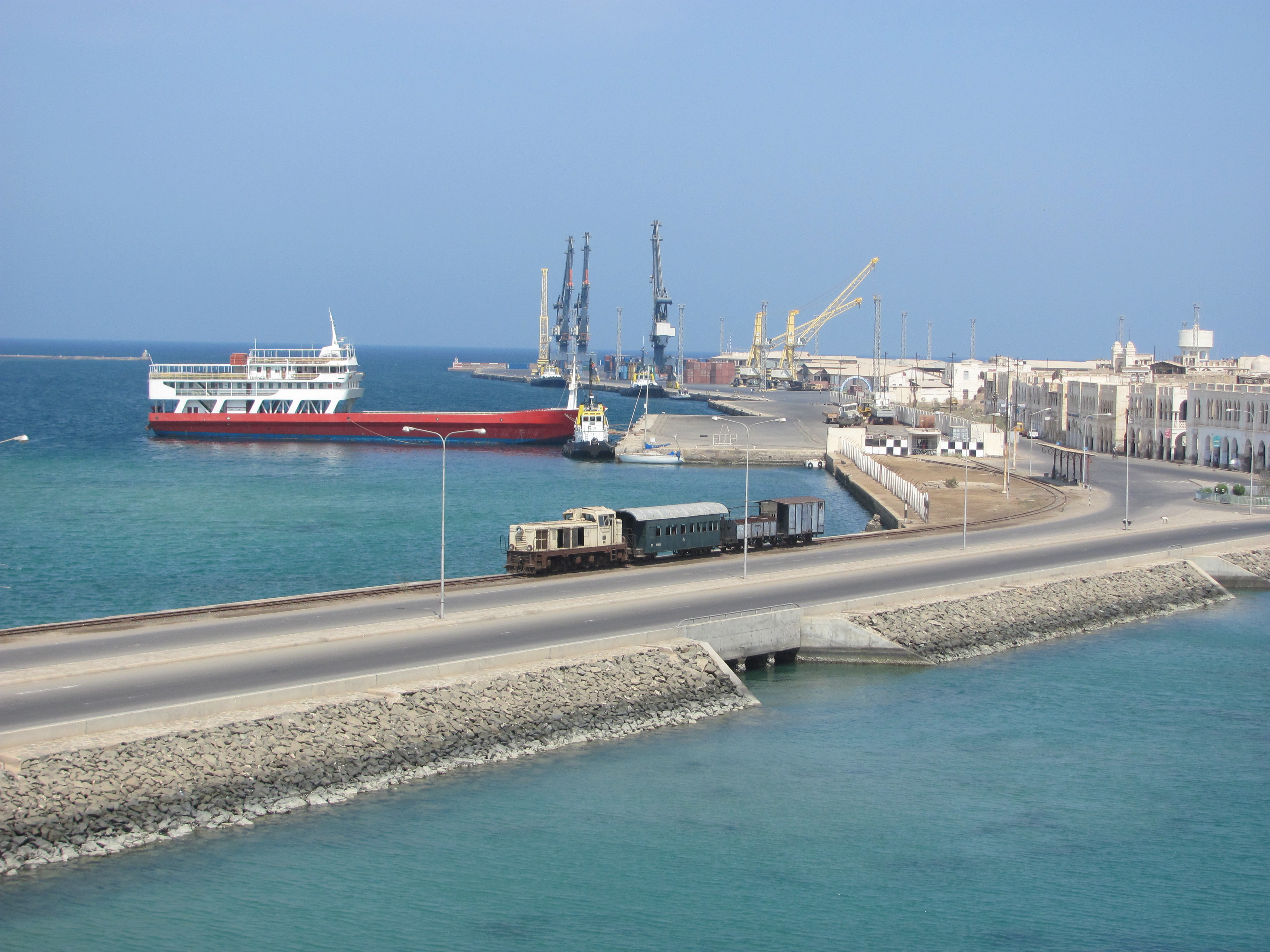
The port is Massawa's reason for being. For centuries it was one of the great ports of the Red Sea, shipping out salt, ivory, hides and slaves and bringing in goods from Arabia, Egypt and India. Today it is still Eritrea's main seaport, with fishing and commercial activity, cargo ships, dhows and the everyday life of a port city. The waterfront lets you watch the bustle of the port, feel the Red Sea breeze and see the departure point for the Dahlak islands. Exploring the port area gives context to Massawa's historic and strategic importance. Getting there: on the city's waterfront. Best time: winter; at sunset, when the heat eases. Tips: avoid photographing port or military installations, which are restricted; enjoy the atmosphere and the fresh fish in the seafront restaurants.
5
Italian and Art Deco architecture in Massawa
Italian colonial buildings, banks, hotels and the old market, which added a modern layer to the Ottoman town.
Leer más ↓
To Ottoman and Egyptian Massawa, the Italians added their own architectural layer from the late 19th century and, above all, in the 1920s and 1930s. They built banks, hotels, offices, a market and administrative buildings in colonial and even Art Deco and Rationalist styles, modernising the port and linking it by rail to Asmara. Some of these buildings, such as old banks and hotels, still survive (many damaged by the war) and stand alongside the coral buildings in a fascinating architectural blend. This mix of styles, from Ottoman to modern Italian, is one of Massawa's defining features. Getting there: spread across the islands of Massawa and Taulud. Best time: winter, in good light. Tips: take your time to catch the contrast between Ottoman coral and Italian concrete; a specialist guide adds depth to reading the buildings.
6
Taulud island and the causeways
The city's second island, with stately buildings and the causeways linking Massawa to the mainland.
Leer más ↓
Massawa spreads over two islands: Massawa (Batse), with the coral old town, and Taulud, joined to the former and to the mainland by causeways. Taulud has a somewhat more open and stately feel, with colonial-era buildings, old palaces and hotels, and good views of the sea and the port. The causeways linking the islands to the mainland are part of the city's unique look and offer panoramic views of the whole town on the water. Exploring Taulud and the causeways rounds out your understanding of Massawa's unusual urban geography, a city literally set on the Red Sea. Getting there: across the causeways from the mainland and between the islands. Best time: winter; at sunset the views are superb. Tips: a good spot for photographing the city on the water; combine Taulud with Massawa's old town for a complete tour.
📶I have never landed without internet. I arrive and my phone connects to the strongest network in the country I am visiting: I can say I landed, sort out transport, book tours and keep posting, at a seriously good price. I always use the Maya eSIM — check their plans by clicking the banner.See plans →Maya Mobile eSIM — turn travel mode on
What nobody tells you

💵 Prices

Tickets

TypePrice
Recorrido por el casco antiguo (calles y exteriores)Free; you only pay for the guide and transport (check when visiting, 2025)
Entrada a mezquitas/sitios (donación)Voluntary cash contribution (nakfa), where applicable (check when visiting, 2025)
Permiso de viaje interno (Massawa)Low-cost paperwork at the Asmara Tourism Office, in nakfa (check when visiting, 2025)
Guía local por díaDepends on the operator, in cash (check when booking, 2025)
🔄 updated monthlyOfficial / reference values · double-check when buying

Activities and tours

ActivityPriceDurationOperator
Walking tour of the historic coral townDepends on the guide, in cash (check when booking, 2025)2 to 3 hoursLocal guides and operators
Diving or snorkelling trip to DahlakDepends on the operator; boat and equipment are agreed in cash (check when booking, 2025)Full day or with a night on boardMassawa operators
Boat trip around the port and nearby islandsDepends on the operator, in cash (check when booking, 2025)Half dayLocal operators / fishermen
Red Sea fish and seafood dinnerModerate prices in seafront restaurants (check when visiting, 2025)As you likeMassawa restaurants
🔄 updated monthlyOfficial / reference values · double-check when buying

🚌 How to get there and distances

Getting around

ModePriceDurationNotes
On foot through the old townFreeThe old town is explored on footBest in the morning or at sunset, because of the heat; bring water
Local taxiCheap, in nakfa (check when visiting, 2025)VariableHandy for getting between the islands and the mainland in the heat
Car with driver (to/from Asmara)Depends on the operator, in cash (check when booking, 2025)3 to 4 h from AsmaraThe operator handles the permit; a comfortable option for the escarpment
Boat to DahlakDepends on the excursion, in cash (check when booking, 2025)From a few hours to a day depending on the islandBooked with an operator in Massawa; necessary for the archipelago
🔄 updated monthlyOfficial / reference values · double-check when buying

How to get there

RouteAirlines / operatorsAvg. priceDuration
Asmara → Massawa via the escarpment (with permit)Car with driver / bus / shared taxiDepends on the mode, in cash; requires a travel permit (check when booking, 2025)3 to 4 h (about 115 km)
Massawa → Dahlak archipelago (by boat)Massawa operators / boatsDepends on the excursion, in cash (check when booking, 2025)From a few hours to a day depending on the island
Massawa ↔ southern coast (Adulis / Gulf of Zula)Car with driver / operatorDepends on the operator; the permit must cover it (check when booking, 2025)1 to 2 h south (about 40-50 km to Adulis)
🔄 updated monthlyOfficial / reference values · double-check when buying

🏨 Where to stay

No exact prices: a scale from $ (budget) to $$$$$ (luxury), with 2-3 options per category.

Mid-range (the best in town)
Price$$$$$
Recommended options
Moderate prices: hotels such as the Dahlak Hotel or the Luna Hotel, the highest-category options in Massawa, with air conditioning that is essential in the heat
Budget and simple
Price$$$$$
Recommended options
Cheap: guesthouses and modest hotels in town, an option for independent travellers; make sure they have ventilation or air conditioning given the scorching climate
Base in Asmara (alternative)
Price$$$$$
Recommended options
Approx. US$ 60-150 per night; some travellers prefer to sleep in cool Asmara and visit Massawa as a day trip, although it's 3-4 h of driving each way

🍴 Where to eat

TypePriceOptions / signature dish
Pescado y marisco del mar Rojo$$$$$Moderate prices: fresh grilled fish, lobster and seafood in seafront restaurants; the best of Massawa's food
Cocina eritrea local$$$$$Cheap: injera with stews, tsebhi and dishes of the day in local eateries
Herencia italiana y árabe$$$$$Budget: Italian-rooted pasta and Arab-influenced dishes, a reflection of the port's cultural mix
Cafés y jugos$$$$$Very cheap: coffee, tea and fresh juices, very welcome in the coastal heat

📖 History of Massawa

Origins, formation and what the sources say.

An ancient Red Sea port

Massawa has one of the longest and most cosmopolitan histories on the entire African coast of the Red Sea. Its strategic location, on coral islands in a sheltered natural harbour, made it a key point of trade between the African interior, Arabia, Egypt, India and the Mediterranean from ancient times. Although the great port of antiquity on this coast was Adulis, further south, Massawa gained importance over the centuries until it became the region's great gateway to the sea.

Goods from the Abyssinian interior and the highlands left through its port (ivory, hides, gold, coffee, salt), while merchandise, ideas and religions came in. Islam reached this coast early through trade and the closeness of Arabia, and Massawa became a city with a strong Muslim character, with mosques and a culture tied to the world of the Red Sea and the Indian Ocean. Like so many ports of the time, it was also a hub of the slave trade.

Throughout its history, Massawa was fought over and ruled by one power after another, each seeking to control Red Sea trade. That succession of masters (Arabs, Ottomans, Egyptians, Italians, Ethiopians) left the city with layers of cultures, languages and architectural styles that make it unique. It also explains its mixed character and an old town shaped by so many influences.

shabait.com · Ancient port city of massawaen.wikipedia.org · Massawa

Ottomans, Egyptians and the coral city

The period that most shaped Massawa's appearance was Ottoman rule. In the 16th century, as it expanded across the Red Sea, the Ottoman Empire took Massawa and made it part of its province of Habesh, turning it into an important port within its domain. The Ottomans built much of the old town as we know it today. They used blocks of coral taken from the sea, bound with mortar and reinforced with imported timber beams, in the typical Ottoman Islamic style.

This kind of town planning was clever and suited to the scorching climate. Streets were laid out narrow and angled to catch any sea breeze and give shade, and houses had latticed wooden balconies, inner courtyards and galleries to let air through and keep them cool. The result was a beautiful and practical coral city, with mosques, homes and commercial buildings that reflected the port's wealth and its ties to the Islamic world of the Red Sea.

Later, in the 19th century, Massawa came under the Egypt of the Khedives, who ran it for decades and expanded its role in trade and administration. The Governor's Palace, built in 1872 and one of the city's grandest buildings, dates from this period. The Ottoman and Egyptian legacy, with its coral architecture, is still the soul of Massawa's historic centre.

en.wikipedia.org · Massawacuriousexpeditions.org · What are some of the unique aspects of the…

Italian Massawa and the railway

In the late 19th century, Italian colonial expansion changed Massawa's fate once again. In 1885, Italy landed at the port and pushed inland from there, a push that would lead to the creation of the colony of Eritrea in 1890. Massawa was in fact the first capital of the new colony, until the seat of government moved to cooler Asmara in 1897 to escape the stifling heat of the coast.

The Italians modernised the port and the city. They built docks, government buildings, banks, hotels and shops, adding a layer of colonial architecture to the coral town and, in the 20th century, even Art Deco and Rationalist buildings. The great project that finally bound Massawa to the interior was the railway: the narrow-gauge line that, around 1911, linked the port with Asmara by climbing the escarpment. It made Massawa the sea gateway for the whole colony and for the empire in East Africa.

For decades, Italian Massawa was a busy, cosmopolitan port, home to Italian, Arab and Indian communities and to Eritrea's various ethnic groups. After the Second World War it went, like the rest of Eritrea, through British administration and then federation with and annexation by Ethiopia. As the country's only major seaport it stayed strategic, which also put it at the centre of the conflicts to come.

en.wikipedia.org · Massawaen.wikipedia.org · Italian Eritrea

War, bombing and Massawa today

The 20th century ended tragically for Massawa. During the long war of independence (1961-1991), the city's strategic value as a port made it the scene of fierce fighting. The most devastating episode came in 1990, when the EPLF independence forces launched a daring offensive, known as 'Operation Fenkil', that took Massawa from the Ethiopian army. In retaliation, the Ethiopian air force bombed the city heavily, causing huge damage and destruction.

Many of the old town's historic buildings, including the majestic Governor's Palace, were badly damaged or left in ruins by those bombings. Even so, the capture of Massawa was a decisive military turning point. It cut off the Ethiopian army's supplies by sea and sped up the end of the war, which ended with the fall of Asmara and victory for the independence movement in 1991. Independence was confirmed in the 1993 referendum.

Today, Massawa lives with both its beauty and its scars. It is still Eritrea's main port and a place of great historical value, with its Ottoman coral town, its Italian buildings, its centuries-old mosques and the ruins that recall the war. The extreme heat and the wounds of the conflict sit alongside the charm of a seafaring city full of centuries of history, gateway to the Red Sea and the Dahlak Archipelago. For travellers, it is one of the most evocative and authentic places in the whole Horn of Africa.

en.wikipedia.org · Massawaen.wikipedia.org · Eritrean War of Independence

📚 Bibliography

  • Wikipedia (EN) — «Massawa»: https://en.wikipedia.org/wiki/Massawa
  • Wikipedia (ES) — «Massawa»: https://es.wikipedia.org/wiki/Massawa
  • Eritrean Ministry of Information (Shabait) — «Ancient port city of Massawa»: https://shabait.com/2012/12/14/ancient-port-city-of-massawa/
  • Curious Expeditions — «Massawa Old Town architecture»: https://curiousexpeditions.org/what-are-some-of-the-unique-aspects-of-the-architecture-in-massawa-old-town/
  • Wikipedia (EN) — «Italian Eritrea»: https://en.wikipedia.org/wiki/Italian_Eritrea
  • Wikipedia (EN) — «Eritrean War of Independence»: https://en.wikipedia.org/wiki/Eritrean_War_of_Independence
  • Wikipedia (EN) — «Operation Fenkil»: https://en.wikipedia.org/wiki/Operation_Fenkil
  • Take Your Backpack — «Massawa City Guide»: https://www.takeyourbackpack.com/backpacking-in-eritrea/visit-massawa/

❓ Frequently asked questions

What is the best time to visit Massawa?+
Winter, from November to March, when the heat is more bearable (although it's always hot). Summer, from June to September, is scorching and humid, with temperatures well above 40 °C: Massawa is among the hottest cities on the planet. Those winter months are also the best for combining the city with diving trips to Dahlak, when the sea is calmer. Either way, it's best to do your walking early in the morning or at sunset.
Do I need a permit to go to Massawa?+
Yes. Since it is 115 km from Asmara, you need the internal travel permit for foreigners, which you apply for at the Tourism Office in the capital before setting off. Massawa is a common tourist destination, so the permit is usually granted without problems; if you go with an operator, they handle it. Bring copies for the checkpoints on the escarpment road.
How do I organise a trip to the Dahlak islands?+
From Massawa, through a local operator. The Dahlak archipelago is visited by boat from the port: there are day trips to the nearest islands and options with a night on board to dive at several sites. Boat, equipment and guide costs are agreed and paid in cash. It's best to arrange it in advance and in the calm-sea season (winter). Check that your permits cover the sea trip.
Why are there ruined buildings in Massawa?+
Because of the war of independence. Massawa saw fighting and bombing, especially during the 1990 offensive in the final phase of the conflict, when the Ethiopian air force bombed the city. Many buildings in the old town, including the Governor's Palace, were damaged or left in ruins. Those scars sit alongside the beauty of the coral architecture and are, sadly, part of the city's character.
Can I combine Massawa with other coastal destinations?+
Yes. From Massawa you can head south to the Gulf of Zula and the ruins of Adulis, the ancient Aksumite port, about 40-50 km away. And out to sea, to the Dahlak islands. Many travellers put together a route that comes down from Asmara via the escarpment (stopping at Filfil or Nefasit), takes in Massawa and adds Dahlak or Adulis. Make sure your permit covers every leg.

More places in Eritrea

NakfaNefasit y el monasterio de Debre BizenQohaitoSegeneitiSenafe y MeteraAdi Keih
See every place in Eritrea →The history of Eritrea →
Sources consulted (7)
Still planning?
Explore more destinations in Eritrea
See all destinations →
Image credits
Photos from Wikimedia Commons, each under its own licence (CC BY, CC BY-SA or public domain). Open each file to see its author and licence.
Massawa harbour