Viajá con Gus
HomeCosta RicaSámara
Sámara
🇨🇷 Costa Rica · Guanacaste (North Pacific)

Sámara

Jump to what you need
📌Province
Sámara is a beach town in the canton of Nicoya, in the province of Guanacaste, on the Pacific side of the Nicoya Peninsula, in northwestern Costa Rica. Its big crescent-shaped bay, sheltered by a reef and two headlands, gives it calm, safe water, a rarity on this coast of heavy surf
📌Service city
The town of Sámara itself has the hotels, sodas, restaurants, surf schools and shops. The city of Nicoya (45 min to 1 h away) is the area's larger service center. The nearest international airport is Daniel Oduber in Liberia (LIR), some 2.5 to 3 hours away; there are also local flights (Sansa) to the Carrillo airstrip, next to Sámara
📌Best time to go
The dry season (December to April) has the best weather, with sunny days and a calm sea, ideal for the beach, beginner surfing and snorkeling. The rainy season (May to November) brings greenery and lower prices, with rain usually in the afternoon; September and October are the wettest months. The bay stays calm most of the year
📌Suggested days
Two to three days is enough to enjoy Sámara properly: a day of beach and surf in the bay, another of kayaking and snorkeling to Isla Chora, and time to explore neighboring beaches such as Carrillo and Buena Vista. Given the unhurried pace, many travelers end up staying longer than planned
📌Currency
Costa Rican colón (CRC); the US dollar (USD) is widely accepted in hotels, tours and restaurants. It's worth carrying some cash for sodas and small purchases; there are ATMs in town
📌Getting there
Across the Nicoya Peninsula. By car from San José it's about 5 hours crossing the Tempisque bridge; from Liberia, 2.5 to 3 hours. There are daily direct buses from San José (Empresa Alfaro / Transporte Inteligente de Guanacaste) and local flights to Carrillo/Sámara depending on the season
💱 CRC exchange rate
Loading rate…
🌤️ Weather in Sámara
Loading weather…

Sámara is a quiet, charming beach town on the coast of the Nicoya Peninsula, in Guanacaste, famous for having one of the safest, most family-friendly beaches in all of Costa Rica. Its big crescent-shaped bay is sheltered by a reef and by two headlands, which keeps the surf gentle and the water calm, ideal for swimming, learning to surf and enjoying the sea without any drama.

Unlike more party-driven destinations, Sámara keeps a relaxed feel, that of a genuine coastal village, with a balanced mix of local fishermen, foreign residents and travelers after peace and quiet. The town, compact and walkable, has sodas, restaurants, surf schools, kayak and bike rentals, and a long pale-sand beach dotted with palm trees. It is one of those places where the pace invites you to stay longer than planned.

This guide covers the essentials of Sámara with a practical eye: its sheltered beach and the water activities (beginner surfing, kayaking, snorkeling at Isla Chora), walks around town and to neighboring beaches such as Carrillo and Buena Vista, how to get there across the Nicoya Peninsula and what to keep in mind. Sámara is ideal for families, couples and travelers looking for a calm, genuine beach destination away from the noise.

📖 History of Sámara

Sámara is an old fishing village on the Nicoya Peninsula that, thanks to its exceptional bay sheltered by a reef, became one of the calmest and most family-friendly beach destinations in Guanacaste. Its tourism development, slower than that of other beaches in the region, preserved the character of a genuine coastal town. The Nicoya Peninsula is also one of the world's celebrated 'blue zones', for the longevity of its inhabitants. The full story is on our history page.

Read the full history ↓

🏛️ Sámara is in Guanacaste

The North Pacific province that in 1824 voted to be Costa Rican: land of the sabanero and of tropical dry forest, cradle of the national folklore, home to steaming volcanoes and founding battles, and to the great sun, surf and longevity beaches of the Nicoya Peninsula.

Read the history of Guanacaste →

🗺️ What to see

1
Sámara beach and its sheltered bay
A long pale-sand beach in a calm bay protected by a reef, ideal for swimming and for families.
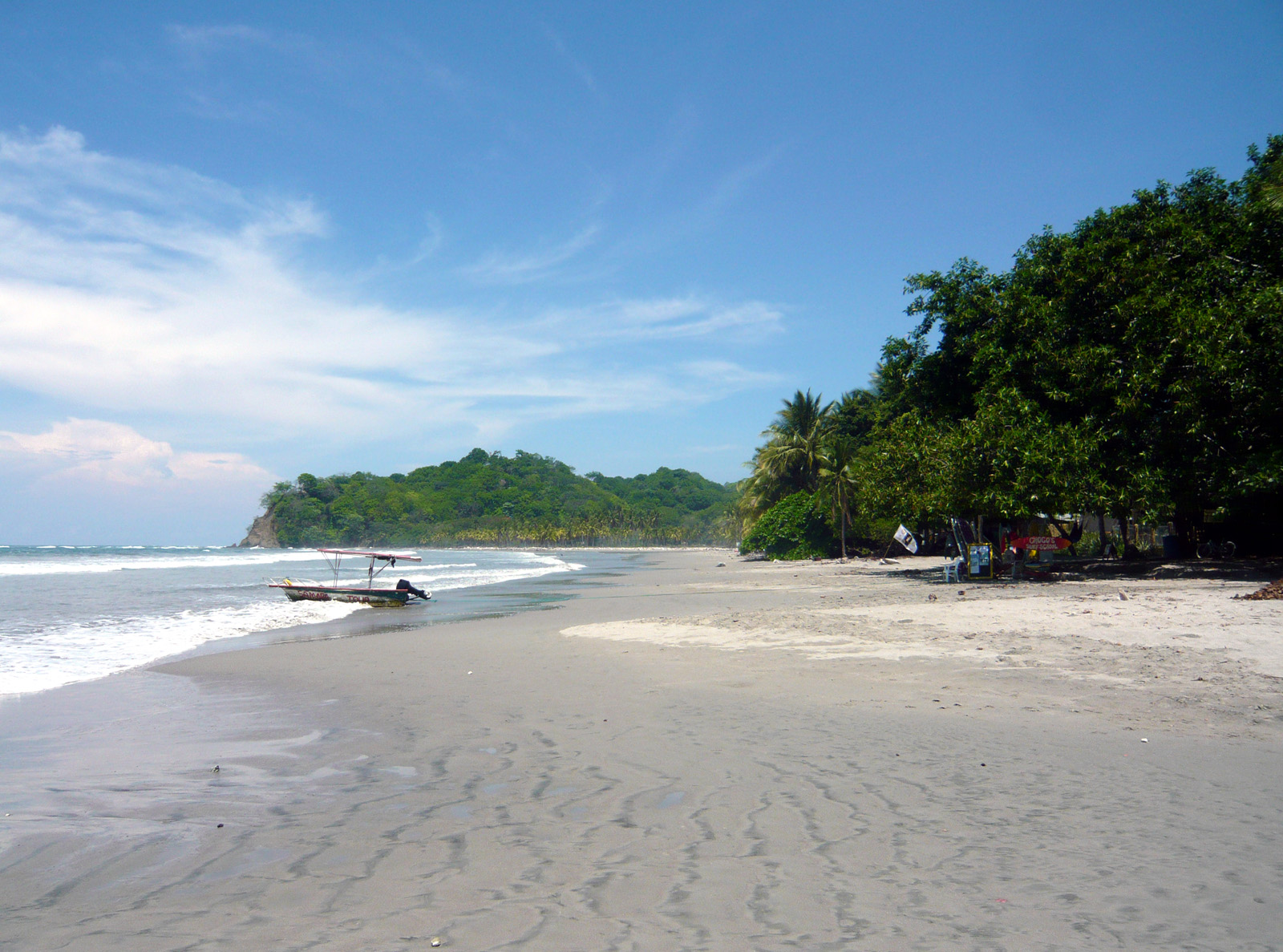
Sámara beach is the soul of the destination: a wide crescent of pale sand lined with palm trees, facing a remarkably sheltered bay. A reef offshore and the two headlands that close off the bay soften the surf, giving Sámara calm, safe water, a rarity on a coast where the waves are often strong. That is why it is considered one of the best beaches in Costa Rica for swimming with the family and for small children. The beach is perfect for walking, sunbathing, playing in the water and watching the sunsets. The atmosphere is relaxed and never crowded, with kiosks, sodas and restaurants facing the sand. It is the kind of beach where you can spend the whole day at ease. Getting there: the beach is right by the town, walkable from almost any place you stay. Best time: dry season for the best weather, though the sea is calm most of the year. Tips: bring sun protection, use low tide to walk out to the wider stretches, and enjoy the sunsets, among the best on this coast.
ℹ️ Distance: Right by the town; walkable from almost any lodging · Access: Free (public beach) · Best time: Dry season; the sea is calm most of the year · Tip: Use low tide for walking, and stay for the sunsets
2
Beginner surfing and surf schools
Gentle waves ideal for learning to surf, with several schools and classes for children.
Sámara's gentle waves, the result of its sheltered bay, make it one of the best places in Costa Rica to learn to surf. Several surf schools (Pato's, C&C, Ticos, Leo Tours, among others) offer classes for beginners and children, with surf that is more manageable and safer than at the more demanding surf beaches. It is common to see families and first-timers taking their first paddles in this calm water. Group classes run around US$ 60 per person and private ones about US$ 80 an hour (source: Pato's Surf School and Sámara surf schools, verified July 2026); many schools include the board, rash guard and insurance. Boards are also rented by the hour or by the day for those who already know how. The patience of Sámara's sea means almost everyone manages to stand up in their first lesson. Getting there: the schools are in town and on the beach. Best time: year-round; calmest sea in the dry season. Tips: book classes ahead in high season; ask whether gear is included; bring water-resistant sun protection.
ℹ️ Price: Group class ~US$ 60/person; private ~US$ 80/hour (source: Sámara surf schools, verified July 2026) · Duration: 1.5 to 2 h per class · Best time: Year-round; calmest sea in the dry season · Tip: Book ahead in high season
3
Kayaking and snorkeling at Isla Chora
A trip to the islet off the beach for kayaking, snorkeling and swimming in sheltered water.
Isla Chora is a small islet off Sámara bay and one of the destination's great outings. The classic trip combines kayaking or stand-up paddling out to the island with snorkeling in its sheltered water, where you can see reef fish and, with luck, turtles. It is suitable for beginners thanks to the calm sea, and very popular with families. Guided tours cost around US$ 52 per adult and US$ 42 per child (5 to 12 years) plus tax, and usually include hotel pickup, a bilingual guide, snorkeling gear, a life jacket, fruit and drinks, lasting about 3 hours. You can also rent a kayak on your own and paddle out to the island with the right tide. Getting there: departures are from Sámara beach, with pickup included in most tours. Best time: dry season for better underwater visibility. Tips: pick the right tide for snorkeling; bring biodegradable sunscreen and a waterproof camera.
ℹ️ Price: Kayak + snorkel tour ~US$ 52 adult / US$ 42 child + 13% tax (source: local operators, verified July 2026) · Duration: About 3 hours (half day) · Best time: Dry season (better visibility) · Tip: Ask about the ideal tide; biodegradable sunscreen
4
The town of Sámara and its atmosphere
A compact, relaxed coastal town with sodas, restaurants and genuine local life.
The town of Sámara keeps a charm that more developed destinations have lost: it is compact, walkable and still a real coastal community, where fishermen, local families, foreign residents and travelers live side by side. Its streets hold sodas serving typical food, international restaurants, bakeries, surf schools, bike and kayak rentals and small shops, with no big chains and none of the noise of other beach resorts. It is a place to explore on foot or by bike, to eat well without rushing, to chat with people and to let yourself be carried along by the unhurried rhythm of the Nicoya Pacific. The atmosphere is family-friendly and quiet by day, with a moderate nightlife of bars and live music. That authenticity and calm are exactly what wins over the people who come. Getting there: the town is walkable. Best time: year-round, best in the dry season. Tips: rent a bike to get around and to reach the neighboring beaches; try the local sodas; enjoy the slow pace without a tight schedule.
ℹ️ Distance: Walkable; rental bikes ~US$ 10–15/day · Access: Free; sodas and shops charge · Best time: Year-round, best in the dry season · Tip: Rent a bike to get around and try the local sodas
5
Neighboring beaches: Carrillo, Buena Vista and Barrigona
Quieter beaches nearby, from the postcard of Carrillo to hidden Barrigona.
Sámara is a good base for discovering beautiful, less busy beaches nearby. The most famous is Playa Carrillo, a few kilometers away, a postcard beach with pale sand, a row of palm trees and calm water, considered one of the prettiest in Costa Rica and still barely developed. It is perfect for a day of total quiet. In the other direction, Playa Buena Vista and other coves offer more solitary spots, and remote Playa Barrigona, harder to reach, is famous for its wild beauty and privacy. Touring these beaches by car, bike or tour lets you combine the comforts of the town of Sámara with the experience of almost untouched beaches. Getting there: Carrillo is a few minutes away by road (taxi ~US$ 10–15); Barrigona needs a better vehicle and a bit of adventure. Best time: dry season for the roads. Tips: take everything you need to the more solitary beaches (no services); check road conditions to Barrigona.
ℹ️ Distance: Carrillo 7 km away; Buena Vista and Barrigona more remote · Access: Free (public beaches); taxi to Carrillo ~US$ 10–15 · Best time: Dry season (better roads) · Tip: Bring water and food: the solitary beaches have no services
6
Nature tours: wildlife, mangroves and ultralight flights
Beyond the sea: kayaking through mangroves, wildlife watching and panoramic flights over the coast.
Sámara is also worth enjoying beyond the beach. In the nearby mangroves there are kayak tours to watch birds, crabs, monkeys and estuary vegetation, a calm and different experience, ideal at sunset. The rural area of Nicoya also has farm tours, horseback rides and walks through tropical dry forest in nearby reserves. One of the most unusual outings are the panoramic ultralight (trike) flights that take off from the Carrillo area, offering spectacular aerial views of the bay, the beaches and the Nicoya coast. They cost around US$ 90 to 150 per person depending on length (source: Carrillo operators, verified July 2026) and make an unforgettable memory for anyone after something different. At night, in season, some beaches in the region get nesting sea turtles, and there are responsible guided tours to watch them. Guanacaste's biodiversity makes Sámara a versatile base for combining sea and nature. Getting there: most tours include pickup in town or leave from Carrillo. Best time: dry season for flights and kayaking; ask about turtle season. Tips: book flights ahead; for the mangroves, sunset is the best time.
ℹ️ Price: Mangrove kayaking ~US$ 40–60; ultralight flight ~US$ 90–150 (source: local operators, verified July 2026) · Duration: 2 to 3 h depending on the activity · Best time: Dry season; sunset for the mangroves · Tip: Book ultralight flights ahead
Advertisements
What nobody tells you

💵 Prices

Tickets

TypePrice
Beach access (Sámara, Carrillo, Buena Vista)Free (public beaches) (verified July 2026)
Group surf class (beginners)Approx. US$ 60 per person, board and rash guard included (source: Sámara surf schools, verified July 2026)
Private surf classApprox. US$ 80 per hour (source: Sámara surf schools, verified July 2026)
Kayak + snorkel tour to Isla ChoraUS$ 52 adult / US$ 42 child (5–12 years) plus 13% tax (source: local operators, verified July 2026)
Kayak or stand-up paddle rentalApprox. US$ 15 to 25 per hour; US$ 35 to 50 per half day (source: beach rentals, verified July 2026)
Bike rentalApprox. US$ 10 to 15 per day (source: rentals in town, verified July 2026)
🔄 updated monthlyOfficial / reference values · double-check when buying

Activities and tours

ActivityPriceDurationOperator
Surf classes for beginnersUS$ 60 group / US$ 80 private per hour (source: Sámara surf schools, verified July 2026)1.5-2 hSámara surf schools (Pato's, C&C, Ticos, Leo Tours)
Kayaking and snorkeling at Isla ChoraUS$ 52 adult / US$ 42 child + 13% tax (source: local operators, verified July 2026)Half day (~3 h)Local beach operators (Leo Tours and others)
Stand-up paddle (rental or class)US$ 15-25 per hour (rental); class from US$ 40 (source: beach operators, verified July 2026)1-2 hOperators on Sámara beach
Mangrove kayak tour (birds and wildlife)US$ 40 to 60 per person (source: local operators, verified July 2026)2-3 hLocal operators (at sunset)
Panoramic ultralight (trike) flight from CarrilloUS$ 90 to 150 per person depending on length (source: Carrillo operators, verified July 2026)20-40 min of flightFlying Crocodile / Carrillo operators
Bike ride to neighboring beachesRental US$ 10-15/day (source: rentals in town, verified July 2026)VariableBike rentals in town
🔄 updated monthlyOfficial / reference values · double-check when buying
Advertisements

🚌 How to get there and distances

Getting around

ModePriceDurationNotes
On foot / by bikeFree on foot; bike US$ 10-15/day (source: rentals in town, verified July 2026)VariableThe town and the beach are covered on foot or by bike; the most practical option day to day
Own or rental vehicleUS$ 45 to 90 a day depending on category and insurance (source: national rental companies, verified July 2026)VariableUseful for reaching Carrillo, Barrigona and other neighboring beaches; some roads are dirt
Local taxiApprox. US$ 5-15 within the area; to Carrillo ~US$ 10-15 (source: local fares, verified July 2026)VariableFor rides to nearby beaches or to Nicoya; agree on the fare beforehand
ATV rentalApprox. US$ 50 to 90 per day (source: local rentals, verified July 2026)VariablePopular for exploring the beaches and rural roads of the area
Local bus to Carrillo, Estrada and Nicoya (Empresa Alfaro)~₡500-1,500 (US$ 1-3) for short legs; cash only, paid to the driver (source: Empresa Alfaro / local timetables, verified July 2026)15 min - 1 hEmpresa Alfaro local buses connect Sámara with Playa Carrillo (roughly hourly), Estrada and Nicoya (8-12 departures a day, 45 min-1 h). You pay in cash (colones, or dollars in small bills) to the driver; long-distance tickets to San José are bought at the Alfaro office in town (7:00 to 17:00) or through the MiBus online platform. Costa Rica has no single transport card like Argentina's SUBE.
App for checking bus timesFree (Moovit / Google Maps / MiBus)Moovit covers the Empresa Alfaro timetables and in Costa Rica is usually more accurate than Google or Apple Maps; for the direct bus to San José you can buy online through Alfaro's MiBus platform. Local buses within Nicoya are paid in cash to the driver: no app charges the local bus fare. There is no Uber operating steadily in Sámara.
🔄 updated monthlyOfficial / reference values · double-check when buying

How to get there

RouteAirlines / operatorsAvg. priceDuration
Nicoya → SámaraCar, Empresa Alfaro local bus or taxiBus ~US$ 2-3; taxi ~US$ 35-50 (source: Empresa Alfaro and local fares, verified July 2026)Approx. 45 min - 1 h
Liberia (LIR airport) → SámaraRental car, shuttle or private transferShared shuttle US$ 55-75 per person; private US$ 150-200 (source: shuttle operators, verified July 2026)Approx. 2.5 to 3 h
San José → Sámara (direct bus, via the Tempisque bridge)Empresa Alfaro / Transporte Inteligente de GuanacasteApprox. ₡4,625–4,760 (~US$ 9) per person (source: Empresa Alfaro, verified July 2026)Approx. 5 to 6 h
San José (SJO) → Sámara by tourist shuttleInterbus, Tropical Tours and othersUS$ 55 to 80 per person, door to door (source: shuttle operators, verified July 2026)Approx. 5 h
San José → Carrillo/Sámara by local flightSansa AirlinesFrom ~US$ 90 to 160 each way depending on the season (source: Sansa, verified July 2026)Flight ~50 min + transfer
🔄 updated monthlyOfficial / reference values · double-check when buying

🏨 Where to stay

No exact prices: a scale from $ (budget) to $$$$$ (luxury), with 2-3 options per category.

CategoryPriceRecommended options
Boutique hotels and high-end lodges$$$$$US$ 150 to 280 a night; e.g. Hotel Samara Pacific Lodge, Villas Kalimba and boutique lodges up in the hills, with a pool, gardens and sea views
Mid-range boutique hotels and B&Bs$$$$$US$ 90 to 150 a night; e.g. Samara Palm Lodge, Samara Chillout Lodge and family-run hotels steps from the beach, breakfast included
Budget hotels and cabinas$$$$$US$ 45 to 90 a night; cabinas, guesthouses and simple hotels in town, practical and well priced
Backpacker hostels$$$$$US$ 12 to 37 per bed/night; hostels with shared dorms and cheap private rooms in the center of town

🍴 Where to eat

TypePriceOptions / signature dish
Sodas and typical Costa Rican food$$$$$US$ 5 to 12 a dish; casados, gallo pinto, fish and fresh fruit drinks in family-run sodas around town
Fresh seafood and ceviche facing the beach$$$$$US$ 10 to 25 a dish; restaurants serving the catch of the day, ceviche and seafood with tables on the sand
International, Italian and bistro cooking$$$$$US$ 12 to 28 a dish; restaurants run by foreign residents, pizza, pasta and chef-driven cooking (e.g. Gusto Beach, Lo Que Hay)
Cafés, bakeries and ice cream shops$$$$$US$ 3 to 10; breakfasts, highland coffee, pastries and artisan ice cream to start or end the day
Advertisements

📖 History of Sámara

Origins, formation and what the sources say.

A fishing village on the Nicoya Peninsula

Some of the longest-living people on the planet live in Sámara and the countryside around it: the Nicoya Peninsula is one of the world's five 'blue zones', those rare places where reaching a hundred in good health is not a miraculous exception but something relatively common. That astonishing fact —studied worldwide as a puzzle of longevity— begins to make sense, in part, through the same calm the beach town breathes. But before it was famous for its centenarians or its gentle bay, Sámara was, quite simply, a fishing village.

Sámara was born as a small fishing village on the coast of the Nicoya Peninsula, one of the earliest settled regions in Costa Rica. The peninsula was the territory of the Chorotega peoples, whose Indigenous heritage, mixed with the colonial one, still shapes the culture of the area. The nearby city of Nicoya is one of the oldest in the country, with a history going back to pre-Columbian times and the earliest colonial period.

Sámara bay, sheltered and calm thanks to its reef, offered exceptional conditions for fishing and for settlement. For generations, life in the village revolved around the sea and around the farming and cattle raising of inland Nicoya, in a rural setting far from the country's main centers. The peninsula's relative isolation, poorly connected before modern roads and bridges were built, helped preserve Sámara's quiet character.

That fishing and farming root is still there. Unlike destinations that grew entirely out of tourism, Sámara held on to its status as a real community, with local families, fishermen and a village life that later tourism never erased. Understanding Sámara starts with recognizing that bedrock of a genuine coastal town of old Nicoya.

Tourism at a different pace

When beach tourism transformed the Guanacaste coast in the closing decades of the 20th century and the start of the 21st, Sámara followed a different path from destinations like Tamarindo or Playas del Coco. Its calm, safe bay, ideal for families, and its peaceful atmosphere drew a kind of traveler after quiet rather than partying, and foreign residents who settled there without entirely stripping the village of its character.

Development was slower and smaller in scale: instead of big resorts and intense nightlife, what grew in Sámara were small hotels, B&Bs, surf schools, sodas and restaurants often run by locals and by foreigners who had settled there. The town kept its human, walkable size and its mix of cultures, which earned it a reputation as a genuine, laid-back destination within Guanacaste.

The safety of its beach established it as one of the best destinations in the country for families with children and for learning to surf, a niche that set it apart from the heavy-surf beaches. Sámara thus represents a calmer, more community-based model of beach tourism, one that has managed to grow without losing its identity as a coastal village.

The Nicoya 'blue zone' and longevity

The Nicoya Peninsula, where Sámara sits, became famous worldwide when it was identified as one of the planet's so-called 'blue zones': a handful of regions where people reach very advanced ages in good health, with an unusual share of centenarians. The concept, popularized by research on longevity, put Nicoya on the international map for reasons very different from beach tourism.

Studies attribute that longevity to a combination of factors: a traditional diet based on corn, beans, rice, fruit and vegetables; a physically active life tied to farm work; strong family and community ties; a sense of purpose in life; and characteristics of the water and the environment. Nicoyan culture, with its calm, its sociability and its connection to the land and the sea, embodies many of those traits.

The term 'blue zone' was coined in the early 2000s by researchers Gianni Pes and Michel Poulain, who marked in blue, on a map, the areas with the highest concentration of long-lived people; the writer Dan Buettner later popularized it in National Geographic, including Nicoya alongside Sardinia (Italy), Okinawa (Japan), Ikaria (Greece) and Loma Linda (California). In Nicoya, researchers documented specific habits: older people keep a strong 'plan de vida' (a sense of purpose to get up for each morning), drink water naturally rich in calcium and magnesium, eat nixtamalized corn tortillas with beans and squash, and maintain close family and community ties into very old age.

That recognition added a cultural, almost philosophical dimension to the area's appeal. Visiting Sámara and Nicoya is not only about enjoying quiet beaches, but about glimpsing a way of life the world studies as an example of well-being and longevity. The calm the town of Sámara breathes is no accident: it is part of the culture of one of the regions where people live best and longest on the planet.

The causes of Nicoyan longevity
The exceptional longevity of the Nicoya Peninsula is attributed to a combination of traditional diet, an active life, strong social ties, a sense of purpose and factors of the environment and the water. The exact causes are the subject of demographic and health research, with no single settled explanation.
Source: https://es.wikipedia.org/wiki/Zona_azul

The sheltered bay, nature and the Bandera Azul Ecológica seal

Sámara's identity is inseparable from its geography. The bay traces a wide crescent closed off by two rocky headlands and shielded offshore by a reef that breaks the Pacific swell before it reaches the shore. That natural barrier explains why, on an open, heavy-surf coast like Guanacaste's, Sámara enjoys unusually calm, shallow water that is safe for swimming. Off the beach, the small islet of Isla Chora completes this set of natural defenses and adds a spot for snorkeling and kayaking.

The setting combines beach, tropical dry forest and estuary mangroves, habitats characteristic of the Pacific side of Nicoya. That diversity supports varied wildlife —birds, monkeys, iguanas, crabs— and makes the region a nature destination as well as a sun-and-sand one. Conserving these ecosystems, sensitive to the pressure of tourism development, became a growing concern for the community.

As part of that effort, Sámara beach has been awarded the Bandera Azul Ecológica in various seasons, the Costa Rican program that recognizes beaches meeting standards of water quality, cleanliness, safety and environmental management. That seal reflects the commitment of fishermen, residents and operators to keeping clean and healthy the bay that is the economic and social heart of the town. Looking after the reef, the mangroves and the sand is not only an ecological matter: it is preserving what makes Sámara the calm, safe place that visitors fall for.

📚 Bibliography

  • Wikipedia (EN) — «Sámara, Costa Rica»: https://en.wikipedia.org/wiki/S%C3%A1mara,_Costa_Rica
  • Wikipedia (ES) — «Península de Nicoya»: https://es.wikipedia.org/wiki/Pen%C3%ADnsula_de_Nicoya
  • Wikipedia (ES) — «Nicoya»: https://es.wikipedia.org/wiki/Nicoya_(cant%C3%B3n)
  • Wikipedia (ES) — «Zona azul»: https://es.wikipedia.org/wiki/Zona_azul
  • Wikipedia (ES) — «Chorotega»: https://es.wikipedia.org/wiki/Chorotega
  • Programa Bandera Azul Ecológica (Costa Rica): https://banderaazulecologica.org/
  • Instituto Costarricense de Turismo (ICT) — Visit Costa Rica: https://www.visitcostarica.com/
  • National Geographic — Blue Zones (Nicoya): https://www.nationalgeographic.com/

❓ Frequently asked questions

How much do water activities cost in Sámara?+
A group surf class runs around US$ 60 per person and a private one about US$ 80 an hour (prices verified in July 2026). The kayak and snorkel tour to Isla Chora costs around US$ 52 per adult and US$ 42 per child (5-12 years) plus tax. Renting a kayak or paddleboard costs about US$ 15-25 an hour, and a bike US$ 10-15 a day. Beach access is free.
Why do people say Sámara is ideal for families?+
Because its bay is sheltered by a reef and by two headlands that soften the surf, giving calm, safe water for swimming, which is rare on this coast. It is one of the best beaches in Costa Rica for children and for anyone after a quiet sea, and it is also a peaceful, walkable town.
Can you learn to surf in Sámara?+
Yes, it is one of the best places in the country for beginners. The bay's gentle waves and several surf schools (Pato's, C&C, Ticos, Leo Tours) make it ideal for learning, including classes for children. For more demanding surf, experienced surfers usually head to other beaches in the region.
Which beaches nearby are worth visiting?+
Nearby Playa Carrillo (7 km) is a postcard beach, with palm trees and calm water, considered one of the prettiest in the country. Further out and quieter are Playa Buena Vista and hidden Playa Barrigona. Sámara is a good base for touring them by car, bike or taxi (~US$ 10-15 to Carrillo).
How do you get to Sámara and how much does it cost?+
Across the Nicoya Peninsula. The direct bus from San José costs about ₡4,625-4,760 (~US$ 9) and takes 5-6 hours; a tourist shuttle is US$ 55-80 per person. From Liberia airport it is 2.5-3 hours. There are also local Sansa flights to Carrillo/Sámara from ~US$ 90 each way depending on the season.
How much does it cost to stay in Sámara?+
There is something for every budget: hostels from US$ 12-37 per bed, cabinas and budget hotels US$ 45-90, mid-range boutique hotels and B&Bs US$ 90-150 and high-end options US$ 150-280 a night (prices verified in July 2026). Book ahead in high season (December to April and Easter week).
What is the Nicoya 'blue zone'?+
The Nicoya Peninsula, where Sámara sits, is one of the world's so-called 'blue zones': regions where people live longer and in good health. It is attributed to diet, an active lifestyle, the water and community ties. It is part of the cultural appeal of this part of Guanacaste.
How do you pay for the bus in Sámara and which app is best?+
The local buses connecting Sámara with Playa Carrillo, Estrada and Nicoya (Empresa Alfaro) are paid IN CASH to the driver, in colones or dollars in small bills: no cards, QR or app are accepted, and Costa Rica has no single transport card like Argentina's SUBE. The direct long-distance bus to San José is bought at the Alfaro office in town (7:00 to 17:00) or through the MiBus online platform. For checking times, use Moovit (it covers the Alfaro lines) or Google Maps, which are for information only. Within town almost everything is done on foot or by bike (~US$ 10-15/day), and Carrillo can also be reached by taxi (~US$ 10-15).
Sources consulted (10)
Still planning?
Explore more destinations in Costa Rica
See all destinations →
Advertisements
Image credits
Photos from Wikimedia Commons, each under its own licence (CC BY, CC BY-SA or public domain). Open each file to see its author and licence.
Sámara