Viajá con Gus
Home › Congo › Ouésso
Ouésso
🇨🇬 Congo · The northern rainforest and the great parks

Ouésso

🪪 What do I need to enter Congo?Pick your citizenship and we tell you the visa, the days and the paperwork, with the official source.

By leaving your email and citizenship you agree to receive the documents you asked for and weekly travel news. You can unsubscribe whenever you want. How we handle your data.
Jump to what you need
📍Region
Ouésso is the main city of the Congo's forested north and the capital of the Sangha department. It sits on the banks of the great Sangha River, close to where it meets the Ngoko, deep in the Congo Basin and very near the borders with Cameroon and the Central African Republic. It is a river and forest town of around 30,000 people, a crossroads for trade, fishing and timber, and a meeting point between the Bantu peoples of the river and the Baka communities of the forest. Above all, it is the logistical gateway to the great parks of the north, especially Nouabalé-Ndoki.
📌Best time to go
The best time to pass through Ouésso is the same as for the northern parks: the dry season, especially December to February and June to August, when the tracks and rivers are easiest to travel. Being in the equatorial zone, it rains for much of the year and humidity is always high; bring light, quick-drying clothes and rain protection.
📌Getting there
Ouésso has an airport with flights from Brazzaville run by domestic airlines such as Trans Air Congo (approx. 1.5 h flight), the quickest way to get there. By land, the RN2 national road links Brazzaville with Ouésso over some 800 km, much of it now paved, in a long day's journey. From Ouésso, the Sangha River connects with Bomassa (the base for Nouabalé-Ndoki) and with riverside towns in the neighbouring countries.
📌Suggested days
Ouésso is usually a stopover of one or two nights on the way into or out of the northern parks. One day is enough to see the market, soak up the river atmosphere and get a feel for city life. If you have time, add a pirogue trip on the Sangha or a visit to nearby forest and river communities before heading on to Nouabalé-Ndoki.
📌Language and currency
The official language is French; in the Sangha people also speak Lingala, local Bantu languages and the languages of the Baka peoples. The currency is the Central African CFA franc (XAF), pegged to the euro (1 EUR = 655,957 XAF) and around 575 to 620 XAF to the dollar. Bring cash, because ATMs in the north are scarce or non-existent and cards are rarely accepted.
📌Getting around
In town you get around on foot, by motorbike taxi and in shared taxis; the river is travelled by pirogue and motorboat, the main means of transport in the north. For transfers to the parks and along the Sangha, the usual approach is to arrange things with the tour operator or with WCS, who organise the 4x4 vehicles and boats needed.
💱 XAF exchange rate
Loading rate…
🌤️ Weather in Ouésso
Loading weather…

Ouésso is the big city of the Congo's northern rainforest: a river and forest crossroads on the banks of the Sangha River, surrounded by the vast forest of the Congo Basin. Capital of the Sangha department, it is a place of lively markets, landing stages, fish and timber trading, and a mix of cultures, where the Bantu peoples of the river meet the Baka communities, who know the forest like no one else.

For travellers, Ouésso is above all a gateway: the point where the 'urban' journey ends and the adventure of the deep rainforest begins. This is where access is organised to Nouabalé-Ndoki National Park —'the last Eden'— and its famous gorilla and elephant bais, continuing by track and along the Sangha River to the base at Bomassa. It is the last town with services before heading into one of the most intact forests on the planet.

This guide takes a practical look at Ouésso: what to see in the city and on the river, how it works as a logistics base for the northern parks, how to get there by air from Brazzaville or along the RN2 road, and what life is like at this Sangha crossroads. More than a destination in itself, Ouésso is the gateway to one of Africa's great nature experiences.

📖 History of Ouésso

Ouésso grew up as a trading and administrative post on the banks of the Sangha River during the French colonial era, taking advantage of its strategic position on the great waterway linking the north of the Congo with Cameroon and the Central African Republic. A crossroads of river and forest peoples, and a centre of logging in the north, over time it became the capital of the Sangha department and the main city of the northern rainforest. Today it is best known as the gateway to Nouabalé-Ndoki National Park. Its history and context are covered on our history page.

Read the full history ↓

🏛️ Ouésso is in the northern rainforest and the great parks

The deep Congo: the immense equatorial rainforest of the Congo Basin, with Odzala-Kokoua and Nouabalé-Ndoki, 'the last Eden', where lowland gorillas and forest elephants gather in the swampy clearings known as bais.

Read the history of The northern rainforest and the great parks →

🗺️ What to see

1
The Sangha River and its port
The great river that gives the city life, with its landing stage, its pirogues and the comings and goings of fishermen and traders.
Leer más ↓
The Sangha River, one of the Congo's great tributaries, is the soul of Ouésso. The city faces the water: at its port and landing stages, fish, plantains, cassava and goods arriving from riverside towns and neighbouring countries are unloaded, and from here leave the pirogues and motorboats that are the main transport route in the north. Strolling along the bank, watching the fishermen cast their nets, following the river traffic and gazing at the forest reflected in the broad waters of the Sangha is the best way to catch Ouésso's pulse. A pirogue trip at sunset, with the rainforest as a backdrop, is a simple and memorable experience. The river is also the gateway to Bomassa and Nouabalé-Ndoki National Park. How to visit: along the riverbank and the port, or on a pirogue/motorboat trip arranged locally. Best time: dry season. Tip: get up early or go at sunset to see the river at its busiest and in the best light.
ℹ️ What it is: Major tributary of the Congo, the lifeline and transport artery of the north · Activity: Pirogue or motorboat trip; watching the port and the fishing · Connection: Access route to Bomassa and Nouabalé-Ndoki · Duration: 1-2 hours
2
Ouésso market
The commercial heart of the city, where you can see and taste everyday life in the forested north.
Leer más ↓
Ouésso market is the best place to dive into everyday life in the Sangha. Its stalls display everything the river and the forest provide: fresh and smoked fish, meat, plantain, cassava, yam, forest fruits, palm oil, spices and all sorts of goods. It is a bustling, colourful and very authentic place, where Bantu traders, river women and forest people all cross paths. Beyond shopping, the market is a social portrait of the city: here you see how a Congo rainforest community feeds and organises itself, what is grown and what is gathered, and how river trade works. It is a good spot to try local food, buy something or simply watch and chat. How to visit: on foot, respectfully, and asking permission before taking photos. Best time: in the morning, when it is busiest. Tip: bring cash in CFA francs; good-natured haggling is part of the game.
ℹ️ What it is: Central market for river and forest produce · What you'll see: Fish, cassava, plantain, forest fruits, spices · Best time: In the morning · Duration: 1 hour
3
Gateway to Nouabalé-Ndoki
Ouésso as the logistics base from which the expedition to the great gorilla and elephant park of the north sets off.
Leer más ↓
The main reason many travellers come to Ouésso is that it is the gateway to Nouabalé-Ndoki National Park, one of Africa's finest rainforest destinations. This is where the logistics are organised: paperwork is completed, supplies are stocked up and you take the route by track and along the Sangha River to the park's base at Bomassa, on the banks of the same river. Ouésso is therefore the last place with services —hotels, shops, communications— before heading into the deep rainforest. Understanding this helps with planning: arrive with time to spare, with the cash you need and with everything arranged with the operator or WCS, since once in the forest there is nowhere to restock. For travellers, passing through Ouésso means crossing the threshold between the city and one of the world's last great virgin rainforests. How it's organised: with the tour operator or WCS, who coordinate transfers, permits and river travel. Best time: dry season. Tip: allow a spare day in case weather or logistics delay the departure to the park.
ℹ️ Role: Logistics base and last place with services before the rainforest · Destination: Nouabalé-Ndoki National Park (via Bomassa) · How: Coordination with operator / WCS; track + Sangha River · Tip: Arrive with time to spare, cash and everything arranged
4
Cultures of the river and the forest
Where the Bantu peoples of the riverbank meet the Baka communities of the rainforest, shaping the identity of the Sangha.
Leer más ↓
Ouésso and its region are a meeting point of two worlds: that of the Bantu peoples, farmers, fishermen and traders tied to the river, and that of the Baka communities (often called 'Pygmies'), forest hunter-gatherers who have inherited an extraordinarily deep knowledge of the rainforest, its plants and its animals. This coexistence —not always free of tensions and inequalities— defines the cultural identity of the Sangha. Getting to know this diversity, through respectful community visits organised with local guides, lets you understand how the people of the Congo rainforest live: their fishing and hunting techniques, their music and dances, their traditional medicine, their relationship with the forest. It is a human dimension that enriches any trip to the northern parks and a reminder that the rainforest is not just nature, but also home to peoples with ancient cultures. How to experience it: through community visits with local guides, respectfully and without exoticising. Best time: all year round. Tip: always ask permission before taking photos and value the exchange, not the 'show'.
ℹ️ Peoples: Bantu river communities and Baka forest communities · What you learn about: Ways of life, fishing, hunting, music and forest knowledge · How: Respectful community visits with local guides · Duration: Half day
5
Sangha-Ngoko confluence and the rainforest frontier
The point where the rivers meet and three countries touch, in the heart of the great Congo forest.
Leer más ↓
Near Ouésso, the Sangha River is joined by the Ngoko, and the whole region lies just a stone's throw from the borders with Cameroon and the Central African Republic. It is a rainforest frontier in two senses: the boundary between countries and the boundary between the inhabited world and the great intact forest of the Congo. Here the rivers act as international highways along which trade, people and cultures flow. This position explains Ouésso's historical role as a trading crossroads and its strategic importance. For travellers, understanding this geography —the rivers that meet, the nearby borders, the vast forest stretching in every direction— helps you grasp where you are: in the heart of one of the largest rainforests on the planet, at the meeting point of three nations. How to appreciate it: from the river and on maps of the region; some itineraries combine parks in the neighbouring countries. Best time: dry season. Tip: any border crossing in the area requires paperwork; plan it well in advance.
ℹ️ Geography: Confluence of the Sangha and Ngoko rivers · Borders: Near Cameroon and the Central African Republic · Context: Heart of the great Congo Basin forest · Duration: Overview of the region
6
River food and the maquis of Ouésso
The flavours of the forested north: grilled river fish, cassava and forest dishes in the local maquis.
Leer más ↓
Trying the food in Ouésso is one of the best ways to get to know Sangha culture. Cooking in the north revolves around the river and the forest: fresh and smoked river fish (capitaine, catfish and other species), cassava in the form of foufou, plantain, yam, rice and sauces made with palm oil and leaves. In the 'maquis' —the popular eateries— you can eat grilled fish and chicken for a few dollars, in a lively and authentic atmosphere. The market and the streets also offer food on the go: skewers, fritters, forest fruits and smoked fish. Sitting down to eat at a maquis on the banks of the Sangha, watching the pirogues go by and chatting with people is a simple and memorable experience, and a good way to take the pulse of life at this rainforest crossroads before setting off for the parks. How to do it: in the city's maquis and market. Best time: all year round. Tip: grilled river fish is a must; bring cash in CFA francs.
ℹ️ What to try: Grilled river fish, cassava foufou, plantain, palm sauces · Where: Maquis (popular eateries) and Ouésso market · Price: Local meals for a few dollars · Duration: One meal
📶I have never landed without internet. I arrive and my phone connects to the strongest network in the country I am visiting: I can say I landed, sort out transport, book tours and keep posting, at a seriously good price. I always use the Maya eSIM — check their plans by clicking the banner.See plans →Maya Mobile eSIM — connect before you land
What nobody tells you

💵 Prices

Tickets

TypePrice
Acceso a la ciudad y al mercadoFree; you only pay for what you eat or buy
Paseo en piragua / lancha por el SanghaTo be agreed with local boatmen, depending on the route (cash in XAF)
Visita a comunidades del bosque/ríoContribution to the community and the guide, to be agreed; part of organised tours
🔄 updated monthlyOfficial / reference values · double-check when buying

Activities and tours

ActivityPriceDurationOperator
Pirogue trip on the Sangha RiverTo be agreed with local boatmen (cash in XAF)1-2 hoursLocal boatmen and guides
Tour of the market and the cityFree / tip for the guide if there is one1-2 hoursLocal guides
Cultural visit to forest communitiesContribution to be agreed; included in toursHalf dayGuides / tour operator
Coordination of the expedition to Nouabalé-NdokiAccording to the operator's / WCS programmeStarting pointTour operator / WCS
🔄 updated monthlyOfficial / reference values · double-check when buying

🚌 How to get there and distances

Getting around

ModePriceDurationNotes
Motorbike taxi and shared taxi in the cityCheap urban trips (cash in XAF)MinutesThe usual way to get around Ouésso; agree the price beforehand
Pirogues and motorboats on the riverDepending on the route, to be agreedVariableThe main means of transport in the north; essential for the river and access to the parks
Operator/WCS 4x4 vehicles to the parksIncluded in the programmeDepending on destinationFor transfers to Bomassa and the access areas for Nouabalé-Ndoki
🔄 updated monthlyOfficial / reference values · double-check when buying

How to get there

RouteAirlines / operatorsAvg. priceDuration
Brazzaville → Ouésso by airTrans Air Congo and other domestic airlinesAccording to current fares (2025)Approx. 1.5 h flight
Brazzaville → Ouésso via the RN2 (road)Buses and private vehiclesDepends on the serviceOne long day (about 800 km, mostly paved)
Ouésso ↔ Bomassa along the Sangha RiverBoats and logistics from WCS / the operatorIncluded in the programme or by arrangementSeveral hours on the river
Ouésso ↔ riverside and border townsPirogues and local boatsBy arrangementDepends on distance
🔄 updated monthlyOfficial / reference values · double-check when buying

🏨 Where to stay

No exact prices: a scale from $ (budget) to $$$$$ (luxury), with 2-3 options per category.

Mid-range hotels
Price$$$$$
Recommended options
Ouésso has a few simple but decent hotels (around US$ 50-90), with air-conditioned rooms and a generator, used by travellers, NGO staff and logging company staff
Guesthouses and budget lodgings
Price$$$$$
Recommended options
Basic lodgings (US$ 20-50) for tight budgets, with simple facilities; it's worth checking water and electricity, which depend on generators
Camp accommodation on the way to the parks
Price$$$$$
Recommended options
Beyond Ouésso, towards Bomassa and the parks, accommodation becomes camp-style and is included in organised programmes

🍴 Where to eat

Maquis y comedores locales
Price$$$$$
Options / signature dish
The 'maquis' (local eateries) serve grilled river fish, chicken, farmed bushmeat, cassava (foufou), plantain and rice (US$ 5-15 per person); it's the best way to eat local
Comida de mercado y calle
Price$$$$$
Options / signature dish
At the market and on the streets you'll find smoked fish, skewers, fritters, fruit and cheap dishes to eat on the go (US$ 2-6)
Restaurantes de hotel
Price$$$$$
Options / signature dish
Some hotels offer more elaborate meals and simple international options (US$ 10-25), handy for a more comfortable dinner

📖 History of Ouésso

Origins, formation and what the sources say.

A crossroads of rivers and peoples

Long before any city existed, the Ouésso region was already a crossroads. The Sangha River, one of the great tributaries of the Congo, and its tributary the Ngoko form a network of waterways here that, since time immemorial, have connected the peoples of the northern Congo Basin. People, food, tools and knowledge travelled along these rivers, and Bantu communities of fishers and farmers settled on their banks.

Around and within the immense forest lived (and still live) the Baka peoples, hunter-gatherers often called 'pygmies', who hold an extraordinary knowledge of the rainforest: its medicinal plants, its animals, its fruits and its secrets. The relationship between the river peoples and the forest peoples, with its exchanges and also its inequalities, is one of the keys to the historical identity of the Sangha.

This geographical position, in the heart of the great forest, at the meeting point of navigable rivers and close to what are now the borders of Cameroon and the Central African Republic, destined the Ouésso area to become a place of meeting and trade, a place where the river and the forest join hands.

en.wikipedia.org · Ouéssobritannica.com · Sangha River

The French colonial post

During the colonial era, when the territory became part of French Equatorial Africa, the French administration grasped the strategic value of Ouésso's position on the Sangha. The town grew as an administrative and trading post, using the river as the main route into the interior of the rainforest and as a link with the neighbouring territories.

River trade (ivory, forest products and later timber) and the colonial administration shaped the town. The Sangha was the region's motorway: boats travelled up and down it, linking the forested north with the rest of the colony and with the neighbouring countries. In this way Ouésso established itself as the main urban centre of a vast, sparsely populated forest territory.

As in so many places in the Congo Basin, the colonial legacy was mixed: it brought infrastructure, trade and administration, but also the exploitation of resources and of people. Even so, it cemented Ouésso's role as the de facto capital of the north, a role it would keep after independence.

en.wikipedia.org · Ouéssoopendestinations.org · Ouesso

Capital of the Sangha and timber town

After the Republic of the Congo became independent in 1960, Ouésso consolidated its position as capital of the Sangha department, the large forested territory in the north of the country. Its economy continued to revolve around the river and the forest: fishing, farming along the riverbanks and, above all, logging, which turned the north of the Congo into one of the major timber regions of Central Africa.

Logging brought jobs, roads and some development, but it also opened up the forest and raised sustainability dilemmas that persist today: how to make use of the timber without destroying the rainforest or encouraging the poaching that comes with it. Ouésso grew as the hub of that economy, with a diverse population of traders, civil servants, forestry workers and people of the river and the forest.

In recent decades, better connections (the airport with flights to Brazzaville and, above all, the gradual paving of the RN2 national road linking the capital with the north) brought Ouésso out of its historical isolation and tied it more closely to the rest of the country, without taking away its character as a frontier town on the edge of the rainforest.

en.wikipedia.org · Ouéssoopendestinations.org · Ouesso

Gateway to the great parks

The creation of Nouabalé-Ndoki National Park in 1993, in the rainforest north of the town, and its later inclusion in the Sangha Trinational (a UNESCO World Heritage Site since 2012) gave Ouésso a new role: gateway to one of Africa's great nature sanctuaries. Access to the gorilla and elephant bais and to the Mondika gorilla centre is organised from the town.

This shift towards conservation and ecotourism opened up an alternative to the traditional timber economy: placing value on the living forest, with its wildlife intact, rather than only on felled timber. Ouésso became a logistics base for researchers, rangers, NGOs such as the Wildlife Conservation Society, and the small but growing number of travellers seeking the deep rainforest of the Congo.

And so the old river crossroads adds one more role to its long history: the threshold between the inhabited world and 'the last Eden', the point where travellers leave the town behind and head into one of the last great virgin rainforests on the planet.

ndoki.orgwhc.unesco.org

Ouésso today: between the river, the forest and the world

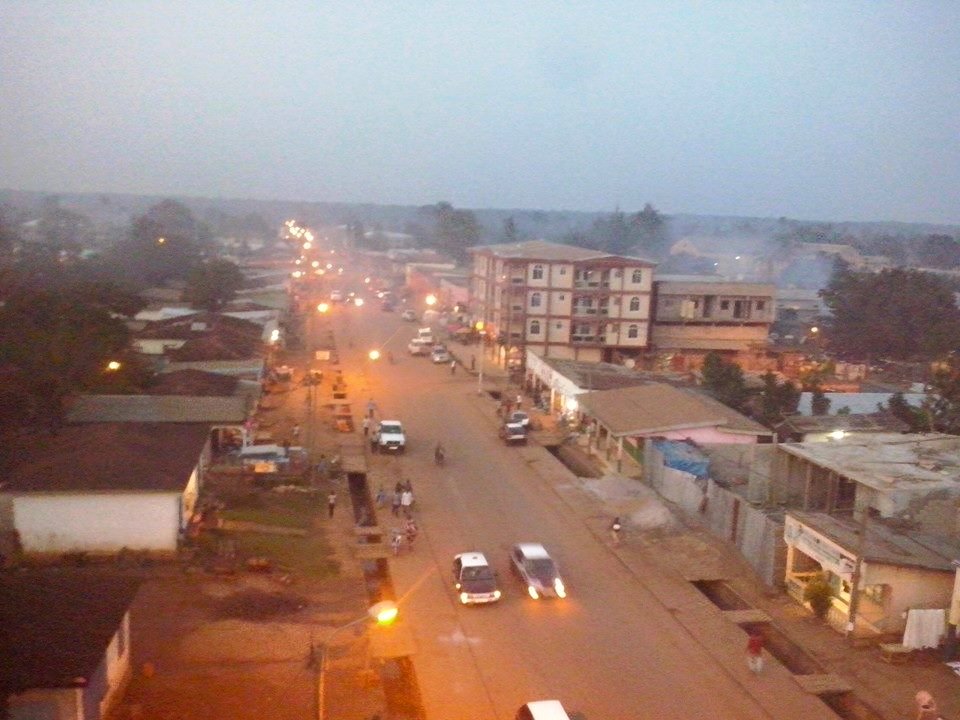
Today's Ouésso is a town of around thirty thousand people that looks towards the river, the forest and the rest of the world all at once. Its bustling market, its landing stages, its maquis serving grilled fish and its mix of river and forest peoples give it the unmistakable character of a rainforest capital. It's a place of passage and meeting, lively and authentic.

Its challenges are those of the whole north of the Congo: balancing development with the conservation of one of the most important rainforests on the planet, making sure local communities, both Bantu and Baka, benefit from timber and ecotourism alike, and improving services such as water, electricity and healthcare in a vast, sparsely populated region.

For travellers, Ouésso is the essential gateway to the great adventure of the north. Understanding its history, from river crossroads to colonial post and from timber capital to gateway to the parks, helps you better appreciate this corner of the Congo, where life follows the rhythm of the Sangha River and the horizon is always the same: the endless green sea of the rainforest.

opendestinations.org · Ouessoen.wikipedia.org · Ouésso

📚 Bibliography

  • Wikipedia (EN) — «Ouésso»: https://en.wikipedia.org/wiki/Ou%C3%A9sso
  • Open Destinations — Ouésso (Sangha): https://opendestinations.org/destination/congo-brazzaville/ouesso
  • Britannica — Sangha River: https://www.britannica.com/place/Sangha-River
  • Nouabalé-Ndoki (WCS) — official site: https://ndoki.org/
  • Unesco — Sangha Trinational (World Heritage Site): https://whc.unesco.org/en/list/1380/
  • Ramsar — Sangha-Nouabalé-Ndoki: https://rsis.ramsar.org/ris/1858
  • Wikipedia (EN) — «Sangha Department»: https://en.wikipedia.org/wiki/Sangha_Department
  • Wikipedia (EN) — «Sangha River»: https://en.wikipedia.org/wiki/Sangha_River_(Congo_River)
  • Trans Air Congo (domestic flights): https://en.wikipedia.org/wiki/Trans_Air_Congo
  • Encyclopædia Britannica — Republic of the Congo: https://www.britannica.com/place/Republic-of-the-Congo

❓ Frequently asked questions

Is it worth staying in Ouésso, or is it just a stopover?+
For most travellers, Ouésso is mainly a logistics stop of one or two nights on the way into or out of the northern parks, especially Nouabalé-Ndoki. That said, it has its charm: the Sangha River, the market, life on the river and the meeting of river and forest cultures make it worth spending at least a day to get a feel for the pulse of the northern Congo rainforest before heading into the forest.
How do you get to Ouésso?+
There are two ways. The fastest is by plane from Brazzaville, with domestic airlines such as Trans Air Congo, on a flight of around 1.5 hours. The other is by road, on the RN2, which links Brazzaville with Ouésso over about 800 km, mostly paved, in one long day's journey. From Ouésso, the Sangha River connects with Bomassa and the riverside towns of the region.
Is Ouésso the base for seeing gorillas?+
Ouésso is the logistics gateway, but the gorillas and the large bais aren't in the town; they're inside Nouabalé-Ndoki National Park, to the north. The expedition is organised from Ouésso: you continue by track and along the Sangha River to the Bomassa base, and from there to the Mondika sector (gorilla tracking) and the Mbeli and Wali bais. Everything is coordinated with the operator or WCS; it's best to book in advance.
Are there ATMs, and can you pay by card?+
Don't count on it. In northern Congo, ATMs are scarce or non-existent and card payments are almost unheard of outside a handful of hotels. The sensible thing is to arrive in Ouésso with enough cash in CFA francs (XAF), and bring euros or dollars to change in Brazzaville before heading north. Once in the rainforest, there's no way at all to get money.
What do people eat in Ouésso?+
Northern cooking revolves around the river and the forest: fresh and smoked river fish, cassava in the form of foufou, plantain, yam, rice and sauces made with palm oil. In the 'maquis' (local eateries) you can eat grilled fish and chicken for a few dollars. The market is full of rainforest fruit and street food. It's simple, tasty and very authentic food.
What health precautions should I take?+
As everywhere in Congo, a yellow fever certificate is required and malaria prophylaxis is essential, as the area is high-risk. It's best to drink bottled or treated water and carry strong repellent and a basic first-aid kit. Given how remote the region is, travel insurance that covers medical evacuation is highly recommended, especially if you're continuing on to the parks.

More places in Congo

Parque Nacional Conkouati-DouliParque Nacional Nouabalé-NdokiParque Nacional Odzala-KokouaPointe-NoireReserva de gorilas de Lésio-LounaReserva de la Léfini
See every place in Congo →The history of Congo →
Sources consulted (6)
Still planning?
Explore more destinations in Congo
See all destinations →
Image credits
Photos from Wikimedia Commons, each under its own licence (CC BY, CC BY-SA or public domain). Open each file to see its author and licence.
Ouesso