Viajá con Gus
Home › Comoros › Fomboni
Fomboni
🇰🇲 Comoros · Mohéli (Mwali)

Fomboni

🪪 What do I need to enter Comoros?Pick your citizenship and we tell you the visa, the days and the paperwork, with the official source.

By leaving your email and citizenship you agree to receive the documents you asked for and weekly travel news. You can unsubscribe whenever you want. How we handle your data.
Jump to what you need
📌Country
Union of the Comoros (Comores), an archipelago in the Indian Ocean between Madagascar and East Africa. Fomboni is the capital of Mohéli (Mwali), the smallest, wildest and least populated of the country's three islands, famous for its marine park, its turtles and its whales.
📌Population and character
Around 19,000–20,000 inhabitants; it holds about a third of Mohéli's population and is the fifth-largest town in the country. It's a quiet, slow-paced place with low houses, a market, a jetty and a sleepy feel: the opposite of hustle and bustle, and the gateway to the most natural island in the Comoros.
📌Best time to go
The cool dry season, from May to October (the southern winter), is the best: pleasant weather, calmer seas, and it coincides with the humpback whales (July to October). The rainy season (November to April) is hot and humid, with a risk of cyclones. Green turtles nest all year round, with seasonal peaks.
📌Getting there
You fly from Moroni (Grande Comore) to Bandar Es Eslam airport, in Djoezi, about 3 km from Fomboni; the flight takes less than half an hour. There are also inter-island sea crossings, which are slower and less comfortable. From the airport, a short taxi ride takes you to the town centre.
📌Language and currency
Languages: Comorian (Shimwali on Mohéli), French and Arabic. Currency: Comorian franc (KMF), pegged to the euro; in 2024 it was around 450 KMF per dollar and about 492 KMF per euro (check when you visit). Almost everything is paid in cash; there is a bank, a post office and the odd ATM in Fomboni, but it's best to bring francs with you.
📌Suggested length of stay
You can see Fomboni in a few hours, but it works as a base for exploring Mohéli over several days: the marine park, the Nioumachoua islets, Lake Boundouni and the Itsamia turtles. The usual approach is to sleep in town or at a lodge on the south coast and do day trips.
📌Services
Fomboni has the island's basic services: hospital, school, government offices, bank, post office, some accommodation and a market. Outside the capital, infrastructure is very limited, so stock up on cash and supplies here.
💱 KMF exchange rate
Loading rate…
🌤️ Weather in Fomboni
Loading weather…

Fomboni is the sleepiest capital you could imagine. With barely twenty thousand inhabitants, this small town of low houses, a morning market and an old jetty is the administrative centre of Mohéli, the smallest and wildest of the Comorian islands. It has neither the intensity of Moroni nor the urban layout of Mutsamudu: its charm lies precisely in its calm and in being the gateway to the country's most natural island.

Despite its sleepy air, Fomboni has real historical weight: the 2001 Fomboni Accords, which re-founded the country as the Union of the Comoros, were signed here, and the town still has palaces of Mohéli's former sultans and a curious colonial residence. But most travellers use it as a logistics base for what truly shines on Mohéli: the sea.

This guide tells you what to see in Fomboni and, above all, how to use it as a base camp for exploring the rest of the island: Mohéli Marine Park with its turtles and whales, the Nioumachoua islets, the crater lake of Boundouni and the nesting beaches of Itsamia. With practical tips on getting there, getting around, sleeping and eating on the quietest island in the archipelago.

📖 History of Fomboni

Fomboni, 'the town of seven villages', has been Mohéli's capital for centuries and played a central role in the history of the island's sultanate, which was even ruled by sultanas such as the famous Djoumbé Fatima in the 19th century. It preserves royal palaces and the residence of the French adventurer Joseph Lambert, and in 2001 it gave its name to the Fomboni Accords, which created today's Union of the Comoros. Its full story is told on the history page.

Read the full history ↓

🏛️ Fomboni is in Mohéli (Mwali)

The smallest, wildest and least populated island: birthplace of the accord that refounded the country and home to its first marine park, with green turtles, whales and living reefs.

Read the history of Mohéli (Mwali) →

🗺️ What to see

1
Fomboni market
The living heart of the town, liveliest in the morning: stalls of fish, fruit, spices and local produce. It's the best place to feel Mohéli's unhurried pulse and see everyday island life.
2
The old jetty
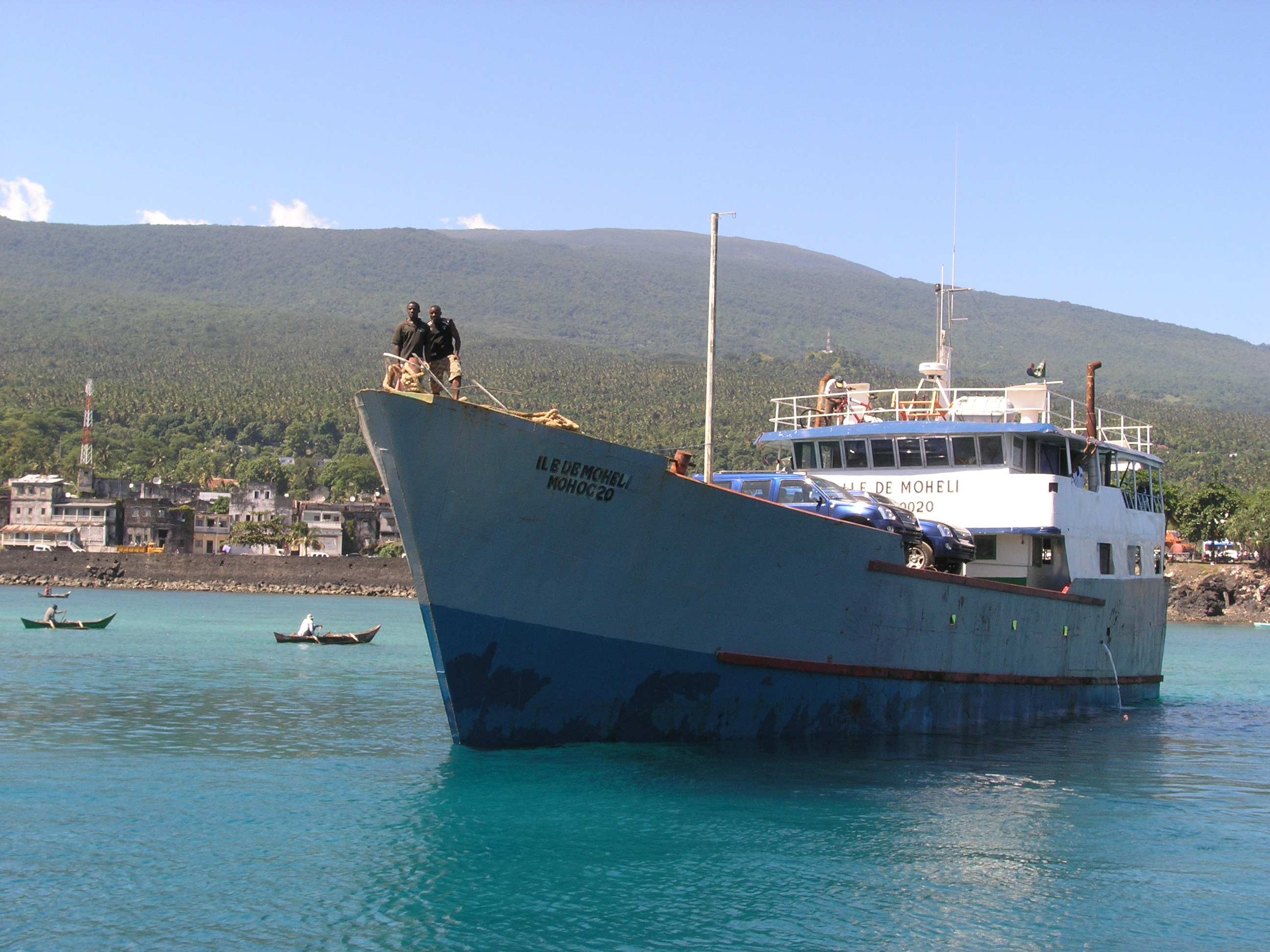
Fomboni's historic landing stage, a meeting point for fishermen and for the boats that link other points along the coast. A good spot to watch the catch come in and the comings and goings of the sea.
3
Djoumbé Fatima's royal palace
Remains linked to the famous sultana of Mohéli who ruled the island in the 19th century. A testament to Fomboni's past as a sultanate that came to be held by women sovereigns, something remarkable for the time.
4
Ramanateka's palace (Sultan Abderemane)
A palace linked to Ramanateka, a Malagasy prince who converted to Islam under the name Abderemane and founded a dynasty on Mohéli in the 19th century. Part of the town's historical legacy.
5
Lambert's colonial residence
A house linked to Joseph Lambert, a French adventurer and businessman who had major interests on Mohéli in the late 19th century. A rare example of colonial architecture on the island.
6
Fomboni's beach and waterfront
The coastline near town, with a beach and sunsets over the Mozambique Channel, ideal for a stroll at the end of the day before heading off on nature excursions.
7
Starting point for excursions on Mohéli
Trips to the Marine Park, the Nioumachoua islets, Lake Boundouni and the Itsamia turtles are organised from Fomboni. The town is the logistics hub for the whole island.
📶I have never landed without internet. I arrive and my phone connects to the strongest network in the country I am visiting: I can say I landed, sort out transport, book tours and keep posting, at a seriously good price. I always use the Maya eSIM — check their plans by clicking the banner.See plans →Maya Mobile eSIM — download, install, go
What nobody tells you

💵 Prices

Tickets

TypePrice
Recorrido por la ciudadFree; walking around Fomboni and its market costs nothing (2024)
Guía local para la ciudad o excursionesApprox. 5,000–20,000 KMF (US$ 11–45) per group depending on duration (2024 reference, check when you visit)
Tasa del Parque Marino de MohéliPaid when doing excursions inside the park; a conservation contribution (check the amount when you visit, see the Marine Park page)
🔄 updated monthlyOfficial / reference values · double-check when buying

Activities and tours

Walking tour of Fomboni (market, jetty, palaces)
Free or a tip for the guide (2024)
Duration2 to 3 hours
OperatorLocal guides
Boat trip to the Marine Park / Nioumachoua islets
DurationHalf day to full day
OperatorSouth-coast lodges and guides
Price
Depends on the lodge/operator; usually around 30,000–80,000 KMF (US$ 65–175) per boat/group, plus the park fee (2024, check when you visit)
Humpback whale watching (Jul–Oct)
DurationHalf day
OperatorLodges and local fishermen
Price
Boat trip depending on the operator; to be arranged on the island (2024, check when you visit)
Night-time turtle watching in Itsamia
DurationNight
OperatorItsamia association / guides
Price
Contribution to the Itsamia community association; to be arranged (2024, check when you visit)
🔄 updated monthlyOfficial / reference values · double-check when buying

🚌 How to get there and distances

Getting around

Taxi-brousse (shared)
DurationVariable
Price
Trips around the island from about 500–3,000 KMF (US$ 1–7) per person depending on distance (2024, check when you visit)
Notes
Popular transport; cheap but slow and it waits until it fills up. Links Fomboni with Nioumachoua, Itsamia and other villages
Private taxi / car with driver
DurationTo be agreed
Price
Half day or full day around the island from about 15,000–40,000 KMF (US$ 33–88), to be agreed (2024, check when you visit)
Notes
The most practical option for excursions; negotiate beforehand. Mohéli's road network is limited
Boat / pirogue for the sea
PriceDepends on the excursion and operator (see activities)
DurationVariable
Notes
Essential for the Marine Park and the islets; hired through lodges or fishermen
🔄 updated monthlyOfficial / reference values · double-check when buying

How to get there

RouteAirlines / operatorsAvg. priceDuration
Moroni (Grande Comore) → Mohéli (Bandar Es Eslam airport, Djoezi)AB Aviation and other Comorian domestic airlinesDomestic flight; depends on airline and date (check when you visit, 2024)About 20–30 minutes' flight
Djoezi airport → FomboniTaxiShort ride; to be agreed, a few thousand KMF (2024, check when you visit)About 10–15 minutes (3 km)
Other islands → Mohéli by seaInter-island boats (kwassa/vedette)Variable; slow, uncomfortable crossings, weather permitting (check when you visit)Several hours; flying is recommended
🔄 updated monthlyOfficial / reference values · double-check when buying

🏨 Where to stay

No exact prices: a scale from $ (budget) to $$$$$ (luxury), with 2-3 options per category.

Eco-tourism lodges on the south coast
Price$$$$$
Recommended options
Approx. US$ 80–170 per night; examples include Mohéli Laka Lodge, in Nioumachoua, inside the Marine Park, with seafront bungalows and organised excursions
Hotels and guesthouses in Fomboni
Price$$$$$
Recommended options
Approx. US$ 25–60 per night; simple accommodation in the capital, handy as a base for getting around the island
Community accommodation (e.g. Itsamia)
Price$$$$$
Recommended options
From about US$ 15–30; very basic community bungalows in villages such as Itsamia, ideal for turtle watching and for supporting the community

🍴 Where to eat

Gargotes y comedores populares
Price$$$$$
Options / signature dish
Approx. US$ 2–6 per person; rice with fish, mataba, skewers and fruit at the market and on the streets of Fomboni
Restaurantes de lodge
Price$$$$$
Options / signature dish
Approx. US$ 10–25 per person; fresh fish and seafood, langouste when available, and Comorian cooking at the south-coast lodges
Productos del mar y frutas locales
Price$$$$$
Options / signature dish
Very cheap; freshly caught fish, coconuts, mangoes and bananas at the market, the staples of the island diet

📖 History of Fomboni

Origins, formation and what the sources say.

The town of seven villages

According to local tradition, Fomboni grew out of the union of several coastal villages, which earned it the nickname of 'the town of seven villages'. It sits on the north coast of Mohéli, facing the Mozambique Channel, and early on became the main settlement of the smallest island of the Comoros. Like the rest of the archipelago, Mohéli was settled by the blend of peoples that defines Swahili-Comorian civilisation: African Bantu, seafarers who arrived by way of Madagascar, and Arab and Persian traders, all bound together by Islam and by life at sea.

Mohéli has always been the smallest and least populated of the country's three independent islands, and also the most rural and remote. Fomboni, its capital, reflected that character. It never had the grand buildings of Domoni or Mutsamudu on Anjouan, or the bustle of Moroni on Grande Comore. It stayed a large, quiet village of fishermen and farmers, with its market, its jetty and its mosques. That slow, almost sleepy air still defines it today.

Modest as it was, Fomboni was the political centre of its own sultanate, the Sultanate of Mohéli, which ruled the island independently for centuries. Power, the court and the religious life of Mwali were all concentrated in the town. From there the sultans governed a fertile land in a strategic spot on the routes of the western Indian Ocean, between Africa, Madagascar and the rest of the Comorian archipelago.

The Sultanate of Mohéli and Sultana Djoumbé Fatima

The story of the Sultanate of Mohéli in the 19th century is one of the most novel-like in the history of the Comoros. Early in that century a warrior prince of Malagasy origin, Ramanateka, arrived on the island. He converted to Islam, took the name Abderemane, founded a new ruling dynasty on Mohéli and set up his court in Fomboni. The royal palaces whose remains can still be seen in the town date from that period.

That dynasty produced an exceptional figure: Djoumbé Fatima, Sultana of Mohéli. She came to the throne as a child and ruled the island, with enormous difficulty, in the middle of the 19th century. A woman reigning as sovereign was remarkable for the time. Her reign was shaped by court intrigue, pressure from the European powers and tension with France, which was extending its influence over the archipelago. Djoumbé Fatima became a legendary figure in Comorian history, a symbol of a small island fighting to keep its sovereignty.

In the same century Mohéli also drew European adventurers and businessmen. The best known was the Frenchman Joseph Lambert, an ambitious businessman who obtained huge concessions on the island and built a residence in Fomboni whose remains can still be seen. With local sultanas, converted Malagasy princes and French adventurers all in the mix, little Mohéli became a surprisingly turbulent stage where the great colonial rivalries of the Indian Ocean played out in miniature.

From French colony to independence

Like the rest of the Comoros, Mohéli ended up under French rule. After a period as a protectorate in the 19th century, France made the island part of its colony along with Anjouan and Grande Comore, and for a long time governed it from Madagascar. The sultanate was abolished and Mohéli was reduced to a remote, underdeveloped territory within the colonial empire. Its economy depended on agriculture and its population was small and scattered.

In 1975 the Comoros declared independence from France after a referendum. Mohéli, the smallest of the islands, became part of the new Comorian state, but the decades that followed were very turbulent. Coups, interventions by foreign mercenaries and chronic political instability shook the young country. In the 1990s tensions between the islands peaked, with separatist crises on Anjouan and Mohéli, both demanding more autonomy from the central government on Grande Comore.

It was in Fomboni that the way out of that crisis was found. In 2001, after tough negotiations, the Fomboni Accords were signed in the town and laid the foundations for a new organisation of the country. They led, through a referendum, to today's Union of the Comoros, a system that gave each island wide autonomy and rotated the presidency among them. That put Mohéli's sleepy capital into the country's constitutional history: in a sense, the modern Comorian state was born in Fomboni.

Fomboni today: the quiet capital of the nature island

Today Fomboni is a small town of around twenty thousand people. It is the capital of the autonomous island of Mohéli and home to its government offices. It holds about a third of the island's population and the few services Mohéli has (hospital, bank, post office, schools), yet it still feels like a large, peaceful village: streets of low houses, a morning market and an old jetty where the fishermen come in. If you're after nightlife or big urban sights, you won't find them here. Fomboni's charm is its calm.

That calm also reflects Mohéli's identity as the most rural, wild and least populated of the Comoros, and the island that has best preserved its nature. Fomboni is the gateway to it. From the town you can arrange trips to Mohéli Marine Park, the country's first national park, to the Nioumachoua islets, to the crater lake of Boundouni and to the turtle nesting beaches at Itsamia. The town is the base camp for the greenest and most marine island in the archipelago.

For travellers, Fomboni is an honest, unpretentious stop. It's a place to feel Mohéli's slow pace, buy supplies, change money, see the palaces of the old sultans and Lambert's residence, and get ready for the natural wonders waiting outside town. Behind its modest look lies a big history of sultanas, adventurers and founding accords, and it is the key to one of the most authentic and least visited islands in the Indian Ocean.

📚 Bibliography

  • Wikipedia (EN) — «Fomboni»: https://en.wikipedia.org/wiki/Fomboni
  • Wikipedia (EN) — «Mohéli»: https://en.wikipedia.org/wiki/Moh%C3%A9li
  • Wikipedia (EN) — «Djoumbe Fatima»: https://en.wikipedia.org/wiki/Djoumbe_Fatima
  • Wikipedia (ES) — «Comoras»: https://es.wikipedia.org/wiki/Comoras
  • Muzdalifa House — «Fomboni, the town of seven villages»: https://muzdalifahouse.com/2022/09/09/fomboni-la-ville-aux-sept-villages/
  • Éric Trannois — «Mohéli: Fomboni, a micro-capital»: https://erictrannois.fr/wp/des-signes/recits/moheli-fomboni-une-micro-capitale/
  • Tourisme Comores — Mohéli: https://tourismecomores.com/iles/moheli
  • Britannica — «Comoros»: https://www.britannica.com/place/Comoros

❓ Frequently asked questions

Is it worth staying in Fomboni?+
Fomboni itself is a quiet town you can see in a few hours (market, jetty, historic palaces), but its real value is as Mohéli's logistics base. Most people use it as the starting point for nature excursions: the marine park, the Nioumachoua islets, Lake Boundouni and the Itsamia turtles. Many prefer to sleep at a lodge on the south coast.
How do I get around Mohéli from Fomboni?+
By shared taxi-brousse (cheap but slow), private taxi or car with driver at an agreed price, and boats for trips out to sea. The road network is limited, and many excursions are arranged directly with the lodges or local guides, with transport included.
When can I see whales and turtles?+
Humpback whales pass Mohéli between July and October, during their breeding migration, and you can go out by boat to see them. Green turtles nest all year round on the southern beaches, especially at Itsamia, with seasonal peaks; watching takes place at night, with community guides.
Are there banks and ATMs?+
Fomboni has the island's services: hospital, bank, post office and the odd ATM. Even so, cash availability can be limited and patchy, so it's best to arrive on Mohéli with enough Comorian francs in cash, since outside the capital there is almost nowhere to withdraw money.
What's special about Fomboni's history?+
It was the capital of the Mohéli sultanate, which was even ruled by sultanas such as Djoumbé Fatima in the 19th century, and it preserves palaces from that era and the residence of the French adventurer Joseph Lambert. In 2001 it also gave its name to the Fomboni Accords, which reorganised the country as today's Union of the Comoros.

More places in Comoros

IconiIslotes de NioumachouaItsandraLac Salé (Lago Salado)Lago Dziani BoundouniMont Ntringui
See every place in Comoros →The history of Comoros →
Sources consulted (5)
Still planning?
Explore more destinations in Comoros
See all destinations →
Image credits
Photos from Wikimedia Commons, each under its own licence (CC BY, CC BY-SA or public domain). Open each file to see its author and licence.
Fomboni-Ship