Viaja con Gus
Home › Burundi › Livingstone-Stanley Monument (Mugere)
Livingstone-Stanley Monument (Mugere)
🇧🇮 Burundi · Bujumbura and the shores of Lake Tanganyika

Livingstone-Stanley Monument (Mugere)

🪪 What do I need to enter Burundi?Pick your citizenship and we tell you the visa, the days and the paperwork, with the official source.

By leaving your email and citizenship you agree to receive the documents you asked for and weekly travel news. You can unsubscribe whenever you want. How we handle your data.
Jump to what you need
📍Region
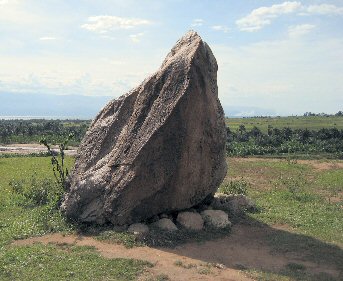
The Livingstone-Stanley Monument is in Mugere, about 12 km south of Bujumbura, on a hill overlooking Lake Tanganyika. It is a large engraved stone marking the two nights that the explorer and missionary David Livingstone and the journalist and explorer Henry Morton Stanley spent here in November 1871, while travelling along the lakeshore. It is the main historical site linked to the European exploration of Africa that you can visit in the country.
📌Best time
You can visit all year round. The dry season (June to September) makes the coastal road easier and brings clear skies with good views of the lake. Go in the morning, when the light over Tanganyika is clear and it's cooler for the short walk up to the stone.
📌Suggested days
It's a short trip: one to two hours at the site, or half a day including the ride from Bujumbura. It pairs very well with a stop at one of the southern beaches or with the road towards Rumonge and the south of the lake.
📌Getting there
From Bujumbura, take the southern coastal road (RN3) for about 12 km to Mugere; the monument is signposted, and you walk up a stretch of path to the stone at the top of a hill. The easiest option is a taxi or hired car, return trip with waiting time. Minibuses also run along the road, but it's less comfortable.
📌Getting around
From the parking area or wherever the taxi drops you, it's a short uphill walk along a path to the monument. There's usually a local guide or caretaker who opens the site and tells the story in exchange for a tip. Wear comfortable shoes for the climb.
📌Language and currency
The local guide speaks Kirundi and French. The currency is the Burundian franc (BIF): bring some cash for the token entry fee or the caretaker's tip. The official rate is around 2.970 BIF per dollar (2026), with a parallel market where the dollar is worth more. There are no card payment facilities at the site.
💱 BIF exchange rate
Loading rate…
🌤️ Weather in Livingstone-Stanley Monument (Mugere)
Loading weather…

On a hill in Mugere, south of Bujumbura, with Lake Tanganyika stretching out below, a carved stone holds one of the most famous stories in the exploration of Africa. This is the Livingstone-Stanley Monument, marking the two nights that the legendary Dr David Livingstone and the journalist Henry Morton Stanley spent here in November 1871.

The monument, with the inscription 'Livingstone-Stanley, 25-11-1871' carved into the rock, marks one of the stops on their joint journey along the shore of Tanganyika, shortly after their famous meeting. Although a local legend places the celebrated 'Dr Livingstone, I presume?' here, that meeting actually took place further south, in Ujiji (Tanzania); but that takes nothing away from this site, one of the few places in the world associated with both explorers.

This guide explains how to visit the monument, the story behind those two nights in Mugere and why, beyond the anecdote, this corner overlooking the lake helps you understand the moment European exploration reached the heart of Africa, with all its consequences.

📖 History of Livingstone-Stanley Monument (Mugere)

On 25-27 November 1871, David Livingstone and Henry Morton Stanley passed through Mugere, south of present-day Bujumbura, during their joint exploration of the northern end of Lake Tanganyika, shortly after meeting in Ujiji. In the 1950s, the Belgian colonial authorities put up a monument here — a large stone with the inscription and date carved into it — to commemorate that visit. Over time, a local tradition came to place the famous meeting between the two at this spot, although it actually happened further south. The full story is on our history page.

Read the full history ↓

🏛️ Livingstone-Stanley Monument (Mugere) is in Bujumbura and the shores of Lake Tanganyika

The gateway to Burundi: the economic capital on the shore of a lake so big it looks like a sea, with hippos, beaches and the memory of Livingstone and Stanley.

Read the history of Bujumbura and the shores of Lake Tanganyika →

🗺️ What to see

1
The engraved stone of Livingstone and Stanley
The large rock with the inscription 'Livingstone-Stanley, 25-11-1871' and the date scratched into the stone, surrounded by a circle of smaller stones.
Leer más ↓
The heart of the site is a large stone roughly engraved with 'Livingstone-Stanley' and the date '25-11-1871', surrounded by a circle of smaller stones. The mark commemorates the two nights both explorers spent in Mugere during their journey around northern Tanganyika. It's a simple, almost rustic monument, but full of history: few places in the world are associated with both Livingstone and Stanley. A local guide usually explains its meaning and the views. Getting there: walk up the path from where the taxi drops you. Best time: morning, with good light. Tips: ask the caretaker to tell you the story; a tip is expected.
ℹ️ Distance: At the top of Mugere hill, 12 km south of Bujumbura · Best time: Morning; dry season · Admission: Token entry fee or tip for the caretaker (2026; check when you visit) · Duration: 30-45 min at the site
2
The views of Lake Tanganyika from the hill
Panoramic view of the lake and the Congolese mountains from the hilltop where the monument stands.
Leer más ↓
The monument sits at the top of a hill, and one of the best reasons to climb up is the view: from the top, a wide panorama of Lake Tanganyika opens up, with the mountains of DR Congo outlined across the water and the Burundian shore stretching south. It's easy to see why 19th-century explorers marvelled at this landscape. A good spot for photos and for understanding the geography of the northern lake. Getting there: from the monument itself. Best time: morning, with clear skies. Tips: bring water and a hat; the sun is strong at the top.
ℹ️ Distance: At the monument site · Best time: Morning, clear skies · Admission: Included in the visit · Duration: During the visit
3
Mugere village and life by the lake
The rural fishing surroundings of Mugere, a snapshot of everyday life on the shores of Tanganyika.
Leer más ↓
The monument is tucked into a rural setting near the village of Mugere, a community of fishers and farmers on the southern shore. The visit lets you see everyday life on the Tanganyika coast up close: fishing canoes, banana and cassava fields, children coming out to say hello. It's a simple, authentic window onto rural Burundi, very different from the feel of the capital. Getting there: on the way up to and down from the monument. Best time: any day. Tips: ask permission before photographing people and be respectful of the community.
ℹ️ Distance: Around the monument, in Mugere · Best time: All year round · Admission: Free (respect the community) · Duration: As long as you like
4
The monument as a stop on the scenic road that runs along the lake towards the south of the country.
Leer más ↓
Mugere is on the southern coastal road (RN3) that runs along Lake Tanganyika towards Rumonge and the far south of Burundi. Many travellers make the monument a stop on a longer trip along this shore, one of the most scenic routes in the country, with the lake on one side and the mountains on the other. It's a good way to combine history and scenery in a single outing from Bujumbura. Getting there: it's a stop on the RN3 heading south. Best time: dry season, when the road is in better condition. Tips: if you continue to Rumonge, allow extra time for the state of the road and fuel shortages.
ℹ️ Distance: On the RN3, 12 km south of Bujumbura · Best time: Dry season · Admission: - · Duration: 1-2 h stop as part of a longer trip
📶I have never landed without internet. I arrive and my phone connects to the strongest network in the country I am visiting: I can say I landed, sort out transport, book tours and keep posting, at a seriously good price. I always use the Maya eSIM — check their plans by clicking the banner.See plans →Maya Mobile eSIM — download, install, go
What nobody tells you

💵 Prices

Tickets

TypePrice
Entrada al monumento / propina al cuidadorToken entry fee or tip, in the order of a few thousand BIF per person (2026; check when you visit)
Guía localVoluntary tip (2026; check when you visit)
🔄 updated monthlyOfficial / reference values · double-check when buying

Activities and tours

ActivityPriceDurationOperator
Guided visit to the monument with historical explanationTip for the local guide (2026)30-45 minCaretaker / local guide
Half-day trip from Bujumbura (monument + southern coast)Depends on the transport hired (2026)Half dayTaxi or local agency
Stop on the way to Rumonge / south of the lakeIncluded in the road trip (2026)1-2 hoursDriver or agency
🔄 updated monthlyOfficial / reference values · double-check when buying

🚌 How to get there and distances

Getting around

ModePriceDurationNotes
Taxi / hired car from BujumburaReturn trip with waiting time, negotiable (2026)20-30 min each wayThe most practical option; ask the driver to wait while you walk up to the monument
Minibus along the RN3Low, a few thousand BIF per trip (2026)20-30 minCheaper but uncomfortable; it drops you on the road and you have to walk to the site
🔄 updated monthlyOfficial / reference values · double-check when buying

How to get there

RouteAirlines / operatorsAvg. priceDuration
Bujumbura → Mugere (Livingstone-Stanley Monument)Taxi, hired car, minibusHired car with waiting time, negotiable (2026)20-30 min (12 km)
Mugere → Rumonge (following the southern coast)Minibuses and hired carsDepends on the company and road conditions (2026)1 to 2 h
🔄 updated monthlyOfficial / reference values · double-check when buying

🏨 Where to stay

No exact prices: a scale from $ (budget) to $$$$$ (luxury), with 2-3 options per category.

Stay in Bujumbura (usual base)
Price$$$$$
Recommended options
Your base is Bujumbura, 20-30 min away; mid-range hotels from around USD 50-110 a night. The monument is visited as a half-day trip
Upscale on the lakefront (Bujumbura)
Price$$$$$
Recommended options
From around USD 120-250 a night; Club du Lac Tanganyika or Roca Golf Hotel, good for combining with the trip to the monument
Budget
Price$$$$$
Recommended options
From around USD 20-45 a night; guesthouses and mission lodgings in Bujumbura

🍴 Where to eat

Comer en Buyumbura o en la costa
Price$$$$$
Options / signature dish
There are no proper restaurants at the site; eat in Bujumbura or at a local eatery on the southern coast. Lake fish from around 15.000-40.000 BIF per person
Comedores locales de Mugere / la ruta
Price$$$$$
Options / signature dish
A few thousand BIF; simple food (plantain, beans, fish) at roadside stalls and eateries
Llevar agua y snacks
Price$$$$$
Options / signature dishBring water and a snack, as there's very little on offer at the site

📖 History of Livingstone-Stanley Monument (Mugere)

Origins, formation and what the sources say.

Two explorers and an age of adventure

To understand the monument, you have to go back to the great era of European exploration of Africa in the 19th century. David Livingstone (1813-1873) was a Scottish doctor and missionary who spent his life travelling through the interior of the continent. He was driven partly by religious and scientific calling, and partly by an obsession with finding the sources of the Nile and exposing the slave trade that was devastating central and eastern Africa. His journeys made him a celebrity in Europe, but they also left him isolated and out of contact for years.

Henry Morton Stanley (1841-1904) was a Welsh-American journalist, a tough man with fierce ambition, who worked for the New York Herald. In 1869 the paper sent him on a sensational assignment: to find Livingstone, who had not been heard from in a long time and whom many believed dead somewhere in the heart of Africa. After a long and gruelling expedition from the Indian Ocean coast, Stanley finally found him.

The meeting took place on 10 November 1871 in Ujiji, on the shores of Lake Tanganyika, in what is now Tanzania. According to Stanley's account, as he approached the only white man in the place, he took off his hat and spoke the line that would become legendary: 'Dr Livingstone, I presume?' That greeting, full of British understatement in the middle of the African wilderness, went down in history for good.

en.wikipedia.org · Henry Morton Stanleyen.wikipedia.org · David Livingstone

The two nights in Mugere

After meeting in Ujiji, Livingstone and Stanley decided to explore the northern end of Lake Tanganyika together. They wanted to find out whether the Rusizi River, which meets the lake at its northern tip, flowed out of the lake or into it. This was a key question in the debate over the sources of the Nile: if water left the lake heading north, Tanganyika could be connected to the Nile system. In November 1871 they paddled by canoe along the northeastern shore of the lake, the part that now belongs to Burundi.

On that journey, from 25 to 27 November 1871, the two men stopped at Mugere, south of present-day Bujumbura. According to their own writings, the welcome they received here was one of the most hospitable of the whole trip. They also confirmed that the Rusizi flowed into the lake and not out of it, ruling out the direct link to the Nile that some had imagined. That finding was a real contribution to the geography of the region.

Those two nights in Mugere are what the monument commemorates. Nothing as famous as the Ujiji greeting happened here, but the passage of the two most famous explorers of the day through this particular spot on the Burundian shore was recorded and, decades later, was considered worth marking with a stone.

en.wikipedia.org · Livingstone–Stanley Monumentancient-origins.net · Livingstone stanley memorial 0012579

The monument and its legend

The monument as it stands today was put up by the Belgian colonial authorities in the 1950s to commemorate Livingstone and Stanley's stop at Mugere. It is a large stone roughly carved with the inscription 'Livingstone-Stanley' and the date '25-11-1871', surrounded by a ring of smaller stones, on top of a hill overlooking the lake.

Over time a mix-up arose that is still around today. Many Burundians and some tourist leaflets say that it was here, in Mugere, that the famous meeting and the 'Dr Livingstone, I presume?' greeting took place. In fact, as Stanley himself explains in his book 'How I Found Livingstone', that meeting happened further south, in Ujiji, two weeks earlier. The Mugere monument commemorates a later stop on their journey together, not their first meeting.

Mix-up aside, the site has real historical value. It is one of the few places in the world linked to both explorers at once, and it marks a moment when the European gaze reached the heart of this part of Africa, with everything that would follow: exploration, missions and, finally, German and Belgian colonisation.

en.wikipedia.org · Livingstone–Stanley Monumenttripadvisor.com · Attraction Review g293771 d3266825 Reviews…

An ambiguous symbol of a historic moment

Today these explorers are seen in conflicting ways. On the one hand, Livingstone was a firm opponent of the slave trade, and his campaigning helped bring about its abolition; his travels also greatly expanded geographical knowledge of central Africa. On the other hand, the 'opening up' of the continent that they led also opened the door to European colonial conquest. Stanley himself would later work for King Leopold II of Belgium in the brutal colonisation of the Congo.

For Burundi, the explorers' visit to its shore of the lake was the prelude to a harsh colonial history, first under Germany and then under Belgium, whose consequences shaped the country throughout the 20th century. That is why the monument is also a reminder of a turning point: the moment this corner of Africa stopped being unknown to Europe and, without yet knowing it, came into the sights of the colonial powers.

Today, for travellers, the Livingstone-Stanley Monument is a short but evocative stop. Standing by the carved stone, with Lake Tanganyika below, it is easy to picture those two 19th-century men resting in Mugere after weeks in a canoe, and to reflect on everything that came afterwards. A small site that sums up a big story.

en.wikipedia.org · David Livingstoneen.wikipedia.org · Henry Morton Stanley

📚 Bibliography

  • Wikipedia (EN) — «Livingstone–Stanley Monument»: https://en.wikipedia.org/wiki/Livingstone%E2%80%93Stanley_Monument
  • Wikipedia (EN) — «David Livingstone»: https://en.wikipedia.org/wiki/David_Livingstone
  • Wikipedia (EN) — «Henry Morton Stanley»: https://en.wikipedia.org/wiki/Henry_Morton_Stanley
  • Ancient Origins — The Livingstone-Stanley Monument: https://www.ancient-origins.net/ancient-places-africa/livingstone-stanley-memorial-0012579
  • Tripadvisor — Livingstone-Stanley Monument (Mugere): https://www.tripadvisor.com/Attraction_Review-g293771-d3266825-Reviews-Livingstone_Stanley_Monument-Bujumbura_Bujumbura_Mairie_Province.html
  • H. M. Stanley — «How I Found Livingstone» (1872): https://archive.org/details/howifoundlivings00stan
  • Britannica — «David Livingstone»: https://www.britannica.com/biography/David-Livingstone
  • Britannica — «Sir Henry Morton Stanley»: https://www.britannica.com/biography/Henry-Morton-Stanley

❓ Frequently asked questions

Is this where the famous 'Dr Livingstone, I presume?' happened?+
Not exactly. That famous greeting is attributed to the meeting between Stanley and Livingstone on 10 November 1871 in Ujiji, in present-day Tanzania, further south on the lake. The Mugere monument commemorates a later stop on their joint journey around northern Tanganyika, on 25-27 November 1871. A local tradition blended the two events, but the site is still worth it for its real link to both explorers.
Is it worth visiting?+
It depends on your interests. As a monument it's simple, almost rustic, and what really makes it special is the mix of history and scenery: it's not often you stand somewhere linked to both Livingstone and Stanley, with views of Lake Tanganyika on top of that. If you're in Bujumbura and interested in the history of African exploration, it's a short and highly recommended outing.
How much does it cost to get in?+
There's no real ticket office: there's usually a caretaker or local guide who opens the site, tells the story and expects a token entry fee or a tip (in the order of a few thousand Burundian francs in 2026). Bring cash in francs and a little extra to thank them for the explanation.
How do I get there from Bujumbura?+
It's about 12 km south, in Mugere, along the coastal road (RN3). The most comfortable option is a taxi or hired car, return trip with waiting time, 20-30 minutes each way. You have to walk up a short path to the stone. Minibuses also run along the road, but it's less practical. It combines well with the southern coast or a stretch towards Rumonge.
Can I combine it with other visits?+
Yes. The visit takes half a day and fits perfectly with a stop at one of the southern beaches, or as the first leg of a trip along the lake's southern coast towards Rumonge and the Kigwena and Vyanda reserves. It's also a good cultural complement to the days you spend in Bujumbura.

More places in Burundi

NgoziNyanza-LacParque Nacional de KibiraReserva Natural de BururiReserva Natural de la RusiziRumonge
See every place in Burundi →The history of Burundi →
Sources consulted (5)
Still planning?
Explore more destinations in Burundi
See all destinations →
Image credits
Photos from Wikimedia Commons, each under its own licence (CC BY, CC BY-SA or public domain). Open each file to see its author and licence.
Livingstone monument burundi