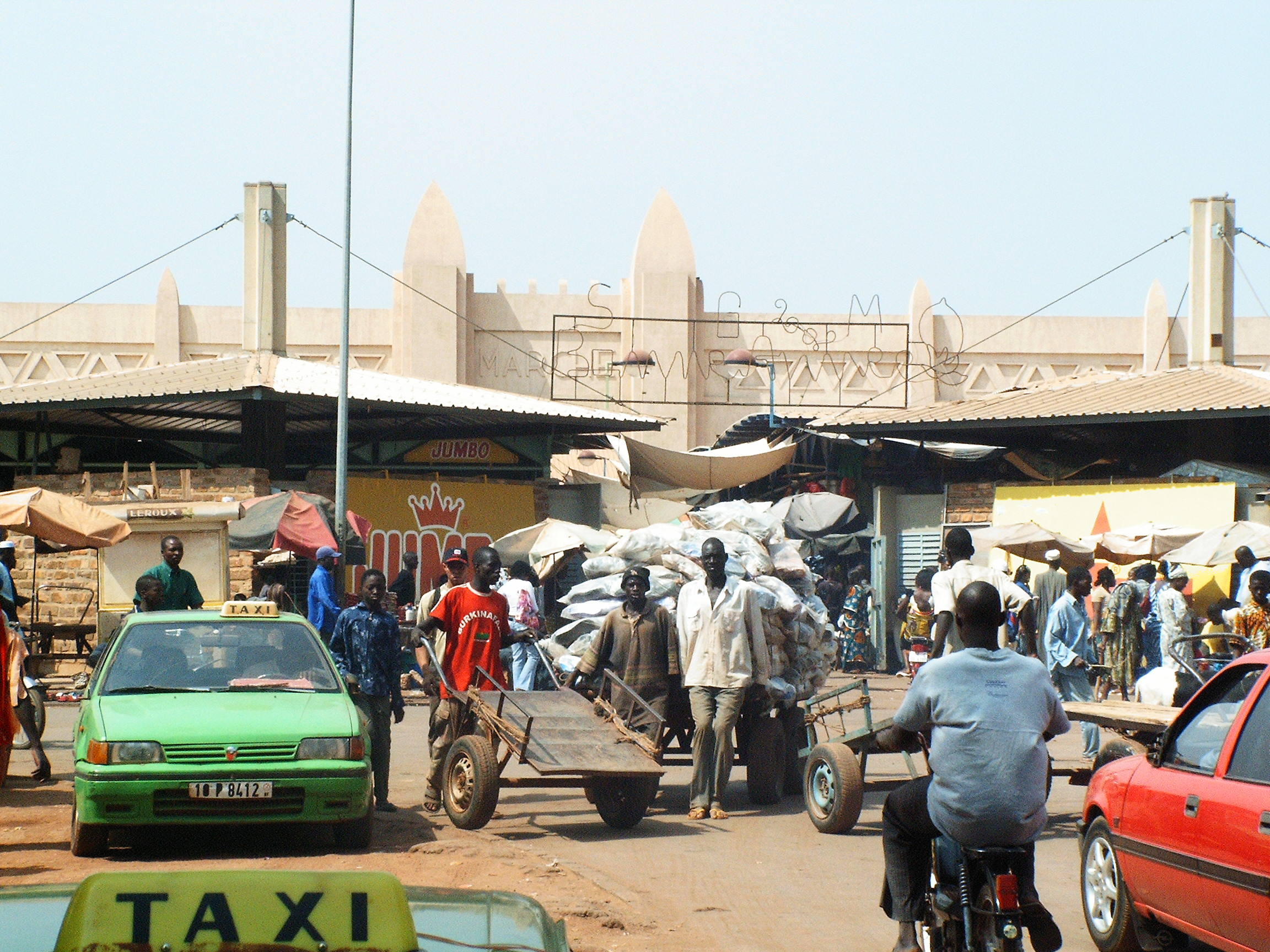
For many, Bobo-Dioulasso is Burkina Faso's most charming city: the country's second, but with an unhurried pace, tree-lined streets, colonial architecture and a strong musical identity that has made it the capital of Burkinabè sound. Its name means 'the home of the Bobo-Dioula', the two main groups who live here, and it sums up its character as the cultural melting pot of the southwest.
The city's great symbol is the Grand Mosque of Dioulassoba, a gem of Sudano-Sahelian mud architecture, its towers bristling with wooden beams, built around 1880. At its feet lies Kibidwe, the oldest quarter, beside the sacred river where protected catfish swim, a place steeped in history and founding legends. Around it, the main market, the beautiful neo-Sudanese railway station and the maquis where music plays complete the picture.
This guide takes a practical look at Bobo-Dioulasso: what to see in the city, how to visit the mosque and the old quarter respectfully, where to hear music, how to get around and how to use Bobo as a base for exploring the green southwest: Banfora, the Sindou Peaks, the Karfiguéla waterfalls and the hippo lake of Tengrela. We also include, plainly, the essential safety information for travelling to Burkina Faso today.
Bobo-Dioulasso grew up around Sya, the old Bobo village founded centuries ago beside a sacred river, which became an important savannah trading centre thanks to Dioula merchants, Muslims who linked the Sahel with the forests of the south. The mud Grand Mosque, from around 1880, is the symbol of that heritage. In the French colonial era, the arrival of the Abidjan-Niger railway in 1934 made Bobo the main city and economic capital of Upper Volta, a role it only later ceded to Ouagadougou. Today it is the country's second city and its cultural and musical capital. That story, from Sya to today's city of music, is told on our history page.
Read the full history ↓The green, commercial southwest: Bobo-Dioulasso, the second city, with its great mud mosque, and the Banfora region, with its waterfalls, sandstone peaks and sacred hippos.
Read the history of Bobo-Dioulasso and the southwest →No exact prices: a scale from $ (budget) to $$$$$ (luxury), with 2-3 options per category.
Origins, formation and what the sources say.
Bobo-Dioulasso began as Sya, an old village founded by the Bobo, one of the oldest peoples in the south-west of present-day Burkina Faso. According to tradition, Sya was founded centuries ago beside a sacred stream. The land there was more fertile and wooded than the dry central plateau. It lay in the heart of a region of savanna woodland and rivers flowing south.
The Bobo were above all farmers and keepers of complex spiritual traditions, with a rich world of masks, rites and cults linked to the land and the ancestors. The Kibidwe quarter, which still survives in the old town, is the direct descendant of that original Sya. It is a maze of mud houses, blacksmiths' and musicians' workshops, and lineages that keep the memory of the founding. The sacred river and its protected catfish appear in the origin legends and are still part of the city's identity.
Sya was well placed on the routes linking the Sahel with the forest regions to the south, which were rich in gold, kola nuts and other goods. In time, that location drew another group that would shape the city's history: the Dioula traders, whose arrival would turn the Bobo village into a major trading centre.
The Dioula (or Jula) were Muslim traders who spoke a Mande language. From the Middle Ages they built a vast trading network across West Africa, linking the Sahel with the forest zones to the south. Their arrival turned the village of Sya into a thriving trading centre. The city's name came from the Bobo and Dioula living side by side: Bobo-Dioulasso, 'the home of the Bobo-Dioula'.
Islam came with the Dioula and gradually took root among the town's traders. The most visible symbol of that heritage is the Great Mosque of Dioulassoba, built around 1880 in the distinctive Sudano-Sahelian mud style. It has conical towers, pointed minarets and wooden beams sticking out of the walls. The mosque became the city's great monument and one of the finest examples of this architecture in Burkina Faso.
So long before the Europeans arrived, Bobo-Dioulasso was already a lively, cosmopolitan city. It was a crossroads of peoples, religions and trade routes, with an identity shaped by the meeting of Bobo farmers and Dioula merchants. That mix explains the tolerant, musical and commercial character the city keeps to this day.
After the French conquest at the end of the 19th century, Bobo-Dioulasso became part of the colonial empire. Its strategic position in the south-west, closer to the coast than Ouagadougou, made it a key part of the colonial system. But what really shaped its future was the Abidjan-Niger railway, which ran from the port of Abidjan in Côte d'Ivoire into the interior of the Sahel.
The train reached Bobo-Dioulasso in 1934, and the city boomed. The magnificent neo-Sudanese station, opened that same year, is a reminder of those glory days. For decades Bobo was the leading city and economic capital of Upper Volta. It was the centre of trade, cotton, early industry and colonial administration, and carried even more weight than Ouagadougou.
Over time, especially after independence, that economic lead shifted towards the political capital, Ouagadougou. But the railway era left a lasting mark on Bobo. It shows in the elegant colonial architecture, the tree-lined streets, the character of a major trading city, and a cosmopolitan population drawn from every people of the south-west and the rest of the country.
After independence in 1960, Bobo-Dioulasso became firmly established as the second city of Upper Volta (later Burkina Faso), after Ouagadougou. It lost political weight and some of its economic lead to the capital, but it remained the great centre of the south-west. It kept its industry (cotton, food processing), its trade and a busy social life.
Over time Bobo also earned a name as the cultural and musical capital of Burkina Faso. The city is home to many musicians and to traditions such as the balafon, the gourd xylophone still made in Kibidwe. Its scene of maquis, concerts and drumming is famous across West Africa. Its unhurried pace, its trees and its tolerant character have made it a favourite with travellers and artists.
Today, like the rest of the country, Bobo-Dioulasso lives in the shadow of the serious security crisis that has affected Burkina Faso since the mid-2010s. Even so, the south-west is still the relatively safest region and the one most visited by the few travellers who come. Bobo has kept its essence. It was born from the meeting of the Bobo and the Dioula, grew great with the railway, and became the musical, welcoming heart of the country.