Madidi National Park is one of the most extraordinary places on the planet. Picture a single protected territory that begins on the snow-capped peaks of the Andes, above five thousand meters, and drops through cloud forest, valleys and yungas until it sinks into the hot, humid rainforests of the Amazon. That incredible gradient —from snow to jungle— is what makes Madidi a mosaic of ecosystems and a sanctuary of life rarely matched anywhere in the world.
That range of landscapes translates into astonishing biodiversity. Madidi holds a hard-to-believe share of the world's bird, mammal, amphibian, reptile, plant, fish and butterfly species, many of them rare, endemic or threatened. It's a place where science keeps discovering new species, and where the jaguar and the spectacled bear live alongside hundreds upon hundreds of birds in incredible colors. Conserving this treasure was the reason it was created, in 1995, as a national park managed by the Bolivian state.
For the traveler, Madidi is above all a deep-rainforest experience. You reach it from Rurrenabaque, heading upriver along the Beni and the Tuichi, and you live it by staying in lodges built into the jungle, many of them run by indigenous communities, like the famous Chalalán or San Miguel del Bala. Walks through primary forest alongside local guides, boat trips, birdwatching, the murmur of the jungle at night: this guide takes you, warmly and practically, to discover one of the green hearts of South America.
The Madidi territory has been inhabited and travelled since ancient times by Amazonian and Andean indigenous peoples, such as the Tacana, Quechua and other groups, who have known and used the forest, the rivers and the mountains for generations. The eastern frontier of the Inca empire came to brush against these lands, and in colonial times the region had a mission presence (the Apolobamba missions and those of the foothills). During the quinine and rubber booms, in the late 19th and early 20th centuries, the Amazon rivers —the Beni, the Tuichi, the Madre de Dios— were routes of trade and exploitation. The great modern milestone came in 1995, when Bolivia created the Madidi National Park and Integrated Management Natural Area, protecting a vast strip running from the Andes to the Amazon that soon proved to be one of the most biodiverse in the world. Together with neighboring areas such as Pilón Lajas and Apolobamba, the park forms a great conservation corridor. Alongside it, community ecotourism flourished, with pioneering projects such as Chalalán, run by the community of San José de Uchupiamonas, which showed that a standing forest is worth more than a felled one. The full story is on our history page.
Read the full history ↓The altiplano department and the seat of government: cradle of Tiwanaku and of Murillo's revolution, Aymara land beside Lake Titicaca, dominated by the Cordillera Real and its snowcapped Illimani, with the highest seat of government in the world and an Amazonian flank that drops all the way down to the Madidi.
Read the history of La Paz →They depart from Rurrenabaque, 106 km away. If you book from this link we earn a commission and you pay no more.
No exact prices: a scale from $ (budget) to $$$$$ (luxury), with 2-3 options per category.
Origins, formation and what the sources say.
In one and the same park you can have a condor gliding over glaciers at 6,000 meters and, a few hours' walk below, a jaguar stalking among the vines of the Amazon rainforest. That impossible leap —from snow to jungle within the boundaries of a single protected area— is what makes Madidi a unique case on Earth and, according to numerous studies, one of the most biodiverse parks on the planet. To understand it you have to start with its geography, because geography explains everything here. The park stretches across a strip of northwestern Bolivia covering one of the most impressive altitude gradients in the world: from the snow-capped peaks of the Andes, above 5,000 meters, down to the lowland tropical rainforests of the Amazon, just a few hundred meters above sea level.
On that descent, the landscape passes through a succession of environments: glaciers and high-altitude páramo, cloud forest and humid yungas on the slopes, valleys, and finally the Amazon forest plain, cut through by rivers such as the Tuichi and the Beni. Each of these ecological belts holds its own community of plants and animals, adapted to very different conditions of temperature, humidity and altitude.
That range of environments in a single protected territory is the key to Madidi's extraordinary biodiversity. Where other parks have a single type of ecosystem, Madidi has many, connected in a continuum that runs from snow to jungle. That is the deep reason why the park ranks among the most biodiverse in the world, and why conserving it has a value that goes well beyond Bolivia's borders.
Madidi is not uninhabited wilderness: it is a territory that has been home to indigenous peoples since ancient times. Amazonian and Andean peoples have lived, and still live, across its different ecological belts and along its rivers, among them the Tacana, the Quechua of the valleys and foothills, and other groups who have known the forest, the mountains and the rivers for countless generations.
These peoples developed a profound knowledge of their surroundings: medicinal and edible plants, animals and their behavior, the cycles of water and forest, hunting, fishing and farming techniques adapted to each environment. That ancestral knowledge is not a thing of the past: it lives on today in the communities of Madidi and, very concretely, in the indigenous guides who take travelers through the forest.
The eastern frontier of the Inca empire came close to these lands, in the Apolobamba and foothills area, and the region had contact with the Andean world and, later, the colonial one. But the deepest and most lasting mark on Madidi is that of its indigenous peoples, who are, in the truest sense, its ancestral inhabitants and today also its guardians. Recognizing that human presence is essential to understanding the park: the conservation of Madidi and the rights and wellbeing of its communities are deeply intertwined.
With the arrival of the Spanish, the foothills and northwestern Bolivian Amazon came into contact with the colonial world. As in other parts of the east, there was a mission presence: in the Apolobamba and foothills area, missions were established to evangelize and reorganize the indigenous peoples, leaving a mark on the geography and culture of the region.
After Bolivia's independence in 1825, this remote northwest remained a peripheral, hard-to-reach zone where the rivers were the great communication routes. The region gained economic prominence with the extractive booms of the late 19th and early 20th centuries: first quinine (the antimalarial bark) and then, above all, rubber. The Amazon rivers —the Beni, the Tuichi, the Madre de Dios— became transport routes for these riches.
The rubber boom in particular had a heavy impact across the Amazon, this territory included: it drove economies and settlement, but it also left a tragic legacy of exploitation of indigenous labor. When the boom faded, the region returned to relative quiet. Fortunately, that remoteness and isolation, together with its rugged geography, helped keep much of this territory largely pristine, preserving the extraordinary natural world that, decades later, would lead to its protection as a national park.
The fundamental milestone in Madidi's modern history came in 1995, when the Bolivian state declared it a National Park and Integrated Management Natural Area. That decision officially protected a vast stretch of territory covering the incredible gradient that runs from the Andes to the Amazon, safeguarding one of the most important biodiversity reservoirs on the planet.
The category of 'National Park and Integrated Management Natural Area' (ANMI) combines two aims: strict protection of the cores of greatest natural value and, at the same time, recognition that human communities live in the territory and that their traditional uses and development have to be made compatible with conservation. In other words, this is not an 'empty' park but an inhabited territory managed in an integrated way. The area is administered by SERNAP, Bolivia's National Protected Areas Service.
Madidi, moreover, does not stand alone: together with neighboring protected areas such as the Pilón Lajas Biosphere Reserve and the Apolobamba Integrated Management Natural Area, it forms an enormous conservation corridor in northwestern Bolivia, which in turn connects with protected areas on the Peruvian side. This corridor, continental in scale, is key to the survival of species that need large territories, such as the jaguar, and to maintaining large-scale ecological processes. The creation of the park put this region on the map of global conservation.
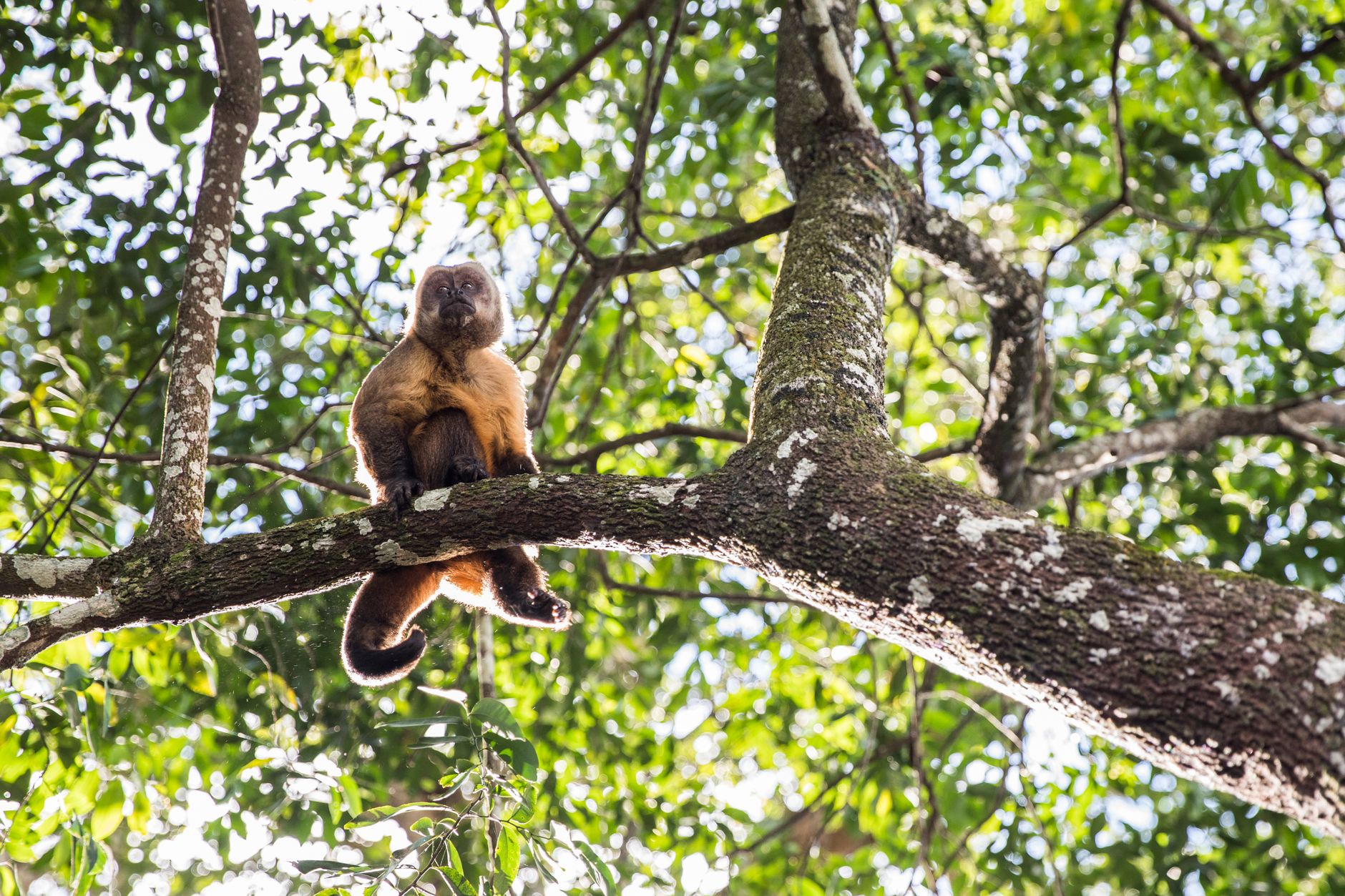
After it was created, Madidi revealed its wealth to the world, and the numbers turned out to be astonishing. Thanks to its altitude gradient and the variety of its ecosystems, the park holds an extraordinary share of global biodiversity: an enormous percentage of the planet's bird species, a great many mammals, amphibians, reptiles, fish, butterflies and plants, many of them rare, endemic or threatened. Its emblematic wildlife includes the jaguar, the spectacled bear (in the higher areas), monkeys of several species, peccaries, caimans and a spectacular birdlife.
This richness has been documented by numerous expeditions and scientific inventories, which periodically report species new to science, confirming that Madidi still has secrets to give up. Major biodiversity identification projects have worked across its different ecological belts, counting species and reinforcing its reputation as one of the most biodiverse parks —if not the most— in the world.
Beyond the exact figures, which keep being updated with each new study, what matters is the meaning of that richness: Madidi is a living laboratory of evolution and a refuge for countless forms of life. Its scientific and ecological value is global, and every new expedition that ventures into its forests and mountains only confirms that this is one of the great natural treasures of the planet.
Protecting Madidi raised a fundamental challenge: making conservation compatible with the wellbeing of the communities who live in the park. The great answer, to a large extent, was community ecotourism. The flagship project was born in the heart of the park: Chalalán Eco Lodge, driven by the community of San José de Uchupiamonas (of Tacana and Quechua origin), which showed that a standing forest, visited with respect, could generate more benefits than a felled one.
The Chalalán model inspired other initiatives, such as San Miguel del Bala and other ventures run by communities in the area, and turned the region —with Rurrenabaque as its base— into a benchmark for ecotourism in South America. In these projects, tourism funds conservation and improves the lives of indigenous peoples, who become the ones with the greatest stake in protecting their territory. It is perhaps the best story Madidi has to tell.
But the park's future is not free of threats. Pressure from extractive activities (mining, hydrocarbon or infrastructure projects), deforestation, illegal hunting and large-scale projects that could affect its rivers and ecosystems are real and recurring risks that have prompted debate and mobilization in defense of Madidi. The balance between development and conservation remains the great tension and the great task. For the traveler, visiting Madidi responsibly —choosing community operators and lodges, respecting the wildlife and the local culture— is a concrete way of contributing to the cause of keeping this sanctuary of life, from the Andes to the Amazon, alive for future generations.