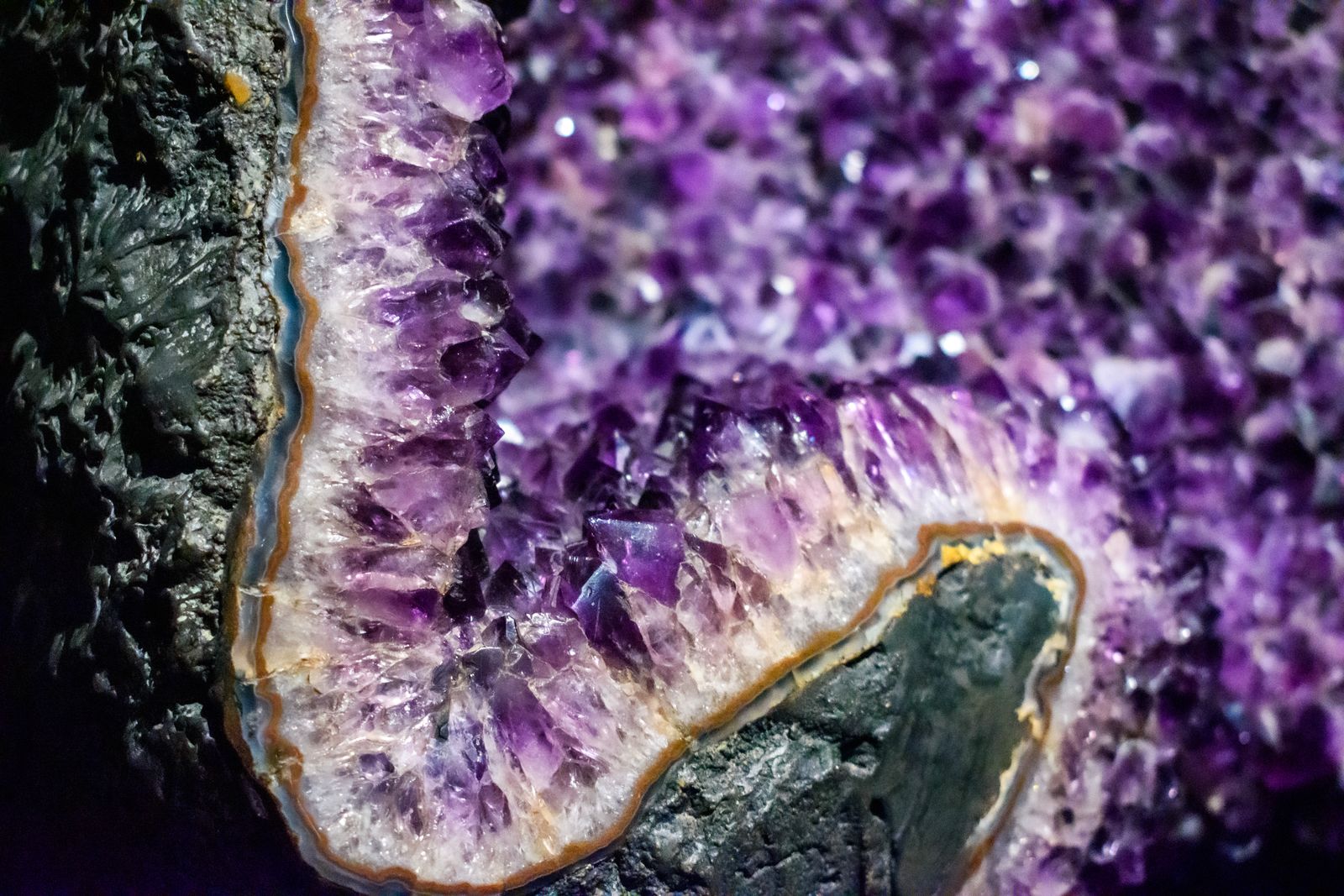
The Wanda mines are one of the most curious stops in northern Misiones: a town deep in the Paranaense rainforest, on Route 12 and just 50 km from Puerto Iguazú, famous for its deposits of semi-precious stones. Under the red earth of Misiones lie geodes and veins of amethyst, agate, quartz and topaz, discovered by chance in 1976, which today you can visit on guided tours of quarries and tunnels: an experience that especially fascinates kids and mineral lovers.
The name of the town has a touching story: it honours a legendary Polish princess, Wanda, in memory of the settlers from Poland and from central and eastern Europe who populated this part of Misiones in the early 20th century, drawn by the land and the promise of a future in the rainforest. That immigrant root is part of Wanda's identity, in a province that is a mosaic of communities.
This guide covers the essentials of Wanda in a practical, friendly way: what the visit to the mines is like, what you see on the tour, how to combine it with the Iguazú Falls and the rest of Misiones, and what to keep in mind. Wanda is a short but original outing, ideal to add to a trip to northern Misiones and discover the mineral treasures hidden in the rainforest.
I came in 2020, the first week travel inside Misiones reopened: we did the guided tour of the mines and tunnels, where they explain how the geodes formed, and visited a friend from Colonia Wanda.
Read my full story →Wanda was founded on August 15, 1936 by the Compañía Colonizadora del Norte S.A., which settled around 150 Polish farming families in the area; the name honours Princess Wanda, the legendary heroine of Kraków. Forty years later, in 1976, brothers Higinio and Héctor Enebelo discovered by chance the first vein of semi-precious stones (amethysts, agates, quartz, topaz), formed in ancient basalt flows more than 120 million years old. Extraction began in 1978 — open-pit until 1996, then by tunnel — and turned the mines into one of the classic tourist attractions of northern Misiones. The full story is on our history page.
Read the full history ↓The province of the Paraná rainforest and the red earth: home to the famous Jesuit-Guaraní missions, today a World Heritage Site, to the yerba mate that peopled its forests, and to the Iguazú Falls, one of the Seven Natural Wonders of the World.
Read the history of Misiones →Some places make no sense on your own; with someone explaining them, they change completely. We look ours up on Civitatis: guided in Spanish and booked online with no fuss. They have 17 activities in Cataratas Del Iguazu. Three are below so you get the idea: tap any of them and they all open.
They depart from Cataratas Del Iguazu, 33 km away. If you book from this link we earn a commission and you pay no more.
No exact prices: a scale from $ (budget) to $$$$$ (luxury), with 2-3 options per category.
Origins, formation and what the sources say.
In 1976, brothers Higinio and Héctor Enebelo were walking some land in northern Misiones that had been left free after a yerba mate company shut down. They were not looking for riches: they were exploring the ground, like so many settlers in the area. But among the red earth and the vegetation of the Paranaense rainforest they found something nobody expected: a vein of semi-precious stones, with violet amethyst crystals embedded in the rock. That same year they registered the find with the Directorate of Mines and Geology under a name as local as it is poetic: the Selva Irupé mine.
The discovery changed the fate of Wanda forever. Until then it was just another farming colony of the Alto Paraná, given over to yerba mate, tea and forestry. Two years later, in 1978, commercial extraction of the stones began: first in open-pit quarries, a system that lasted until 1996, and from then on through tunnels driven into the basalt rock following the mineral veins.
What makes the case extraordinary is the geographical oddity: deposits of amethyst, agate, quartz and topaz in the middle of the subtropical rainforest, 50 kilometers from the Iguazú Falls. The Argentine press called it "the Misiones treasure that was discovered by chance", and that is no exaggeration: if that yerba mate company had not closed and the Enebelos had not gone out to walk their land, the stones might still be sleeping under the red earth. Today that chance find sustains a mining industry, a tourist circuit and much of the identity of a town named after a Polish princess.
Forty years before the stones were found, this corner of the Misiones rainforest had already lived through its first founding adventure. In 1935, with Polish-Argentine capital, the Compañía Colonizadora del Norte S.A. was created, and it bought almost 60,000 hectares in the Alto Paraná with a clear aim: to sell plots to Polish farmers, both those already living in Argentina and those willing to cross the ocean from a Europe heading for war. On August 15, 1936 the colony of Wanda was officially founded, and around 150 Polish families settled there.
The colonizing company did not leave them to fend for themselves: it supplied seeds and seedlings, timber to build the first houses, animals, tools suited to the area, food and clothing at reasonable prices. Even so, life for the pioneers was brutally hard: they had to clear dense rainforest with axe and machete, live with the subtropical heat, the insects and the snakes, and wring the first harvests of yerba mate and tung out of the red earth. Faith went with them from the start: the town's patron is Our Lady of Częstochowa, the Black Madonna of Poland, whose feast is celebrated every August.
The name chosen for the colony sums up all that nostalgia: Wanda is the legendary princess of Kraków, daughter of King Krak, the mythical founder of the city. According to the legend, after her father's death Wanda ruled her people and was courted by a Germanic prince, Rytygier, who threatened to invade her lands if she refused him. Wanda refused, defeated his armies and then, to ward off future invasions — or, in other versions, so as not to give herself to a foreigner — threw herself into the waters of the Vistula. The settlers who founded a town on the banks of the Paraná, a river as mighty as the one in their distant homeland, could not have chosen a better symbol: a heroine who preferred the river to surrender.
To understand why there are gemstones under the Wanda rainforest you have to go back more than 120 million years, to the time when South America and Africa were still part of the supercontinent Gondwana and were beginning to split apart. That colossal rupture opened fissures through which rivers of lava poured out and covered a huge area of what is now southern Brazil, Paraguay, Uruguay and northeastern Argentina: these are the basalt flows of the Serra Geral formation, one of the largest volcanic episodes in the planet's history. The whole province of Misiones sits on those basalt flows, and from their slow breakdown came the famous red earth, stained by iron oxides.
Inside the cooling lava, bubbles of gas were trapped. Over millions of years those cavities filled up as groundwater loaded with silica and minerals circulated through them. That is how the geodes formed: shells of rock that, once opened, reveal an interior lined with crystals. Depending on the elements present and the oxygen entering through the cracks, the crystals took different shapes and colours: transparent quartz, banded agate, yellow citrine, topaz and the undisputed star of Wanda, the amethyst, whose deep violet comes from traces of iron in the quartz structure altered by the rock's natural radiation.
The same geological belt produces the famous amethysts of southern Brazil and of Artigas, in Uruguay: Wanda is the Argentine expression of that South American gem province. When the mine guide cracks open a geode in front of you and out comes that violet flash that nobody has seen in 120 million years, what you are looking at is, literally, a bubble from the lava that accompanied the separation of the continents.
Commercial extraction of the deposits began in 1978 and went through two clearly marked stages. For almost two decades, until 1996, the work was done in open-pit quarries: the surface rock was removed to expose the veins and take out the geodes. Since then, extraction has been done through tunnels that follow the veins inside the basalt, a more selective method that recovers the pieces with less damage and that, along the way, handed tourism one of its most appealing moments: walking through the galleries where the miners work the rock.
Two operations in Wanda combine mining and tourism: Compañía Minera Wanda and the Tierra Colorada mines, both on National Route 12, a few kilometers apart. Extraction is still largely done by hand: drills, hammers and chisels, and painstaking work to free the geodes without breaking the crystals. Then comes the sorting, cutting and polishing process, which produces everything from large ornamental geodes to stones cut for jewellery: rings, pendants and necklaces of amethyst, citrine, agate and topaz.
Mining never made Wanda a rich town — semi-precious stones are not oil — but it gave it an economic profile unique in Argentina and a second productive engine alongside farming and forestry. Above all, it gave it visibility: the label "capital of gemstones" put this town of some 15,000 inhabitants on the tourist maps, something unthinkable for the other farming colonies of the Alto Paraná.
With the Iguazú Falls barely 50 kilometers away on Route 12, it was only a matter of time before the Wanda mines joined the most visited tourist circuit in Argentina. From the 1980s and 1990s the mining companies opened their grounds to guided visits: the tour shows the historic quarries, the working tunnels, the veins and geodes in the living rock, and ends — as any good mine does — in the shop, where they sell everything from cheap pendants to amethyst geodes of monumental size. For thousands of families visiting Iguazú, the trip to Wanda is the surprise of the holiday: nobody expects to find violet stones beneath the rainforest.
The visit also adds a cultural layer older than all the rest: the Guaraní myths theme walk, a trail through the vegetation with sculptures of the figures from the mythology of the region's indigenous peoples: the Pombero, the Yasy Yateré, the Caá Yarí, the spirit owners of the forest. It is a nod to the oldest layer of this land, inhabited by the Guaraní for centuries before the Jesuits, the yerba mate companies and the Polish settlers arrived.
So, within a radius of a few kilometers, Wanda stacks up all its layers of history: the Gondwana lava that made the amethysts, the Guaraní forest with its legends, the epic of the Polish immigrants of 1936, the stroke of luck of the Enebelo brothers in 1976 and the tourism that keeps the town alive today. Few Argentine towns can tell so much in so little space: a princess who threw herself into the Vistula, a Black Madonna who crossed the ocean and a violet treasure that waited 120 million years for someone to find it.