Viajá con Gus
HomeArgentinaSanta María (Yokavil)
Santa María (Yokavil)
🇦🇷 Argentina · The North (NOA)

Santa María (Yokavil)

Jump to what you need
📌Province
Catamarca, Argentina. Santa María, also known by its old indigenous name Yokavil, is the seat of the department of the same name, in the far north of the province, in the heart of the Catamarca stretch of the Valles Calchaquíes, at about 1,900 meters above sea level. It's a town of Diaguita tradition, high-altitude vineyards, archaeology and crafts, sitting at the crossroads towards Cafayate (Salta), Tafí del Valle and the Tucumán Calchaquí valleys, and towards western Catamarca. It's one of the great centers of Calchaquí culture in the northwest
📌Service city
Santa María has the basics for travelers (guesthouses, dining rooms, shops, ATMs, a bus terminal, a hospital), and works as the small service town for northern Catamarca and the border area with Tucumán and Salta. The nearest larger cities are San Miguel de Tucumán (over the pass via Tafí del Valle) and Cafayate (Salta), and further off San Fernando del Valle de Catamarca, the provincial capital. You get there on Ruta 40 and connecting roads; most people arrive overland from Tucumán, Salta or Catamarca
📌Best time to go
The best time to visit Santa María is autumn, winter and spring (April to November), with sunny, dry, pleasant days and cool to cold nights. Summer (December to March) is the northwest's rainy season, hot by day with afternoon downpours that can complicate some dirt roads, though the landscape is greener. The grape harvest (summer-autumn) and the patron saint and popular festivals (such as those tied to the Virgin and to the Calchaquí carnival) are special times to visit
📌Suggested days
Santa María itself can be seen in a day: its square, the archaeological museum, the crafts and the nearby wineries. But it's worth using it as a base for 1 to 2 nights to explore around it: the archaeological sites (such as the Quilmes ruins, over in Tucumán, and other pucarás in the area), the high-altitude vineyards, the valley towns and the Calchaquí scenery. Within a Valles Calchaquíes circuit — combining Cafayate, Tafí del Valle, Amaicha del Valle and Quilmes — 3 to 5 days in the region is ideal
📌Currency
Argentine peso (ARS). With inflation, prices go out of date fast: confirm them when you travel. Bring cash, because the town has few ATMs and cards aren't always accepted
💱 ARS exchange rate
Loading rate…
🌤️ Weather in Santa María (Yokavil)
Loading weather…

Santa María, or Yokavil as the indigenous peoples called it, is one of the hearts of Calchaquí culture in northern Argentina. Set in the Catamarca stretch of the Valles Calchaquíes, at almost 1,900 meters, this town combines its Diaguita heritage — present in its archaeology, its crafts and its people — with high-altitude vineyards, multicolored hills and the calm of a valley town. It sits at a privileged crossroads, a short hop from Cafayate, Tafí del Valle and the famous Quilmes ruins, which makes it an ideal base for exploring the whole region.

Its greatest wealth is the depth of its human history: the Santa María valley was one of the centers of the Santa María culture, one of the great archaeological cultures of the northwest, famous for its decorated funerary urns, and later of the Diaguita-Calchaquí resistance against the Spanish conquistadors. That heritage is palpable in the town's archaeological museum, in the sites and pucarás around it, and in an indigenous identity still alive in the area's communities.

This guide covers the essentials of Santa María in a practical, warm way: its archaeological and cultural heritage, the high-altitude wineries, the crafts, and how to combine it with the big draws of the Valles Calchaquíes, such as Quilmes, Amaicha, Cafayate and Tafí del Valle. It's a quiet, authentic destination loaded with history, ideal for anyone who wants to see the deepest, least crowded face of the northwest.

📖 History of Santa María (Yokavil)

The Santa María valley (Yokavil) was one of the great centers of the Santa María culture, which flourished in northwestern Argentina roughly between the 10th and 15th centuries, famous for its richly decorated ceramic funerary urns, today an emblem of northwestern archaeology. The region was home to Diaguita peoples, who developed valley agriculture, villages and pucarás (hilltop fortresses) and a complex social and religious life. Towards the end of the pre-Hispanic era, the area came under the influence of the Inca Empire. With the arrival of the Spanish in the 16th century, the valley became the stage for the long Diaguita-Calchaquí resistance (the Calchaquí wars of the 17th century), one of the most stubborn of the conquest of the continent. After the subjugation of the indigenous peoples, many communities were uprooted (like the Quilmes, forcibly marched to Buenos Aires). The town of Santa María took shape as a Spanish-criollo settlement, keeping the indigenous substrate in its population and its culture. In the republican period, as part of Catamarca, it grew around valley agriculture — vines, fruit trees, peppers, walnuts — and livestock. In the 20th and 21st centuries, Santa María consolidated its profile as an archaeological, cultural and tourism center of the Valles Calchaquíes, with its museum and sites given new prominence and with high-altitude winemaking. The full story is on our history page.

Read the full history ↓

🏛️ Santa María (Yokavil) is in Catamarca

An Andean northwestern province of valleys, salt flats and high-altitude volcanoes: Diaguita land and cradle of the farming and pottery cultures of La Aguada, heart of the Calchaquí Wars, home of the Virgen del Valle, of vicuña weaving and of a new mining era of lithium and copper.

Read the history of Catamarca →

🗺️ What to see

1
Museo Arqueológico Eric Boman
The museum that holds the famous Santa María urns and the legacy of the valley's Diaguita culture.
The Museo Arqueológico Provincial Eric Boman is the main cultural visit in Santa María and one of the best ways to grasp the enormous historical depth of the Valles Calchaquíes. It carries the name of a distinguished researcher and holds a valuable collection of archaeological pieces found in the region, especially from the Santa María culture, which flourished in this valley roughly between the 10th and 15th centuries. The stars of the collection are the famous Santa María funerary urns: large ceramic vessels, richly decorated with geometric motifs, stylized human figures and symbolic representations, used in funerary rituals (often to bury children). These urns are one of the icons of northwestern Argentine archaeology and evidence of the refinement the Diaguita peoples reached. The museum also displays other ceramics, tools, textiles and objects that illustrate the daily life, beliefs and art of the valley cultures. The visit puts into context everything you'll see afterwards at the archaeological sites around town (such as Quilmes) and helps you understand the cultural continuity of the region's indigenous communities. Getting there: in the center of Santa María, on foot. Best time: year-round, during opening hours. Admission: free or a low-cost contribution (approx. ARS 0–2,000, range verified July 2026). Tips: start with the museum to get the context before visiting the sites; check the hours and the photography rules.
ℹ️ Distance: Center of Santa María (on foot) · Best time: Year-round, during opening hours · Admission: Free or a low-cost contribution (approx. ARS 0–2,000, range verified July 2026); check · Duration: 1 to 2 hours
2
Ruinas de Quilmes (excursion)
The largest pre-Hispanic settlement in the country, a Diaguita citadel at the foot of a hill, easily reached from Santa María.
The Quilmes ruins, although they belong to Tucumán province, are very easy to visit from Santa María (they're some 20-25 kilometers away), and they are one of the most impressive archaeological sites in Argentina. These are the remains of a great Diaguita citadel, the largest pre-Hispanic settlement in the country, which at its height housed thousands of people. Its stone walls climb the slope of a hill, with enclosures, farming terraces and defensive structures that speak of a complex and populous society. The Quilmes were one of the Diaguita peoples who resisted the Spanish conquest longest, during the Calchaquí wars of the 17th century. After their defeat, the community was broken up and much of its population force-marched on foot to near Buenos Aires, in one of the most tragic episodes of the conquest (that uprooting is where the name of today's Quilmes district in Buenos Aires comes from). Walking the site, climbing among its walls and taking in the immensity of the valley from above is a moving experience. The Quilmes ruins have their own page in this guide. Getting there: some 20-25 km from Santa María, on Ruta 40 heading north (by car or on a tour). Best time: year-round; avoid the hottest hours in summer and rainy days. Admission: ARS 7,000 Argentine tourists, ARS 5,000 pensioners, ARS 12,000 foreigners, free for under-12s and people with disabilities (source: ruinasdequilmes.com, verified July 2026; payment in cash or bank transfer only, no advance booking). Tips: bring water, a hat and sunscreen (there's little shade); comfortable shoes for the climb; stick to the paths and respect the structures.
ℹ️ Distance: Some 20-25 km from Santa María, on the RN 40 (Tucumán) · Best time: Year-round; avoid the midday heat and rainy days · Admission: ARS 7,000 Argentines, ARS 5,000 pensioners, ARS 12,000 foreigners, free for under-12s and people with disabilities (approx. US$ 5 / US$ 3.5 / US$ 8.4 at the current rate; source: ruinasdequilmes.com, verified July 2026) · Duration: Half day (with the drive)
3
High-altitude wineries of the valley
Vineyards and wineries of the Catamarca Calchaquí valleys, with high-altitude wines and the region's signature Torrontés.
Santa María and its surroundings are part of the great high-altitude wine region of the Valles Calchaquíes, which spreads across Catamarca, Tucumán and Salta (with Cafayate as its capital). The valley's vineyards, planted at almost 2,000 meters, make the most of the wide temperature swings, the intense sunlight and the water of the Calchaquí rivers to produce wines with strong character and a personality of their own. The region's signature grape is Torrontés, an aromatic, fresh white, but reds such as Malbec and Cabernet are made here too. Several wineries in the area offer guided visits and tastings, where you can walk the vineyards framed by the Calchaquí hills, see how the wine is made and taste it alongside local produce. It's an ideal plan to combine with the archaeology and the crafts, and to enjoy the wine and scenery side of the valley. High-altitude winemaking is one of the great economic activities and attractions of the Calchaquí region. Getting there: the wineries are in the valley, in and around Santa María (by car). Best time: year-round; the harvest (summer-autumn) has its own charm. Admission: visits with tasting approx. ARS 5,000–15,000 per person, US$ 3.5–10.5 (range based on local wineries, verified July 2026). Tips: book visits ahead; if you're going to taste, nominate a driver or arrange a transfer.
ℹ️ Distance: In the valley, in and around Santa María (by car) · Best time: Year-round; harvest in summer-autumn · Admission: Visits with tasting approx. ARS 5,000–15,000 per person, US$ 3.5–10.5 (verified July 2026); book ahead · Duration: Half day
4
The square, the church and the town center
The quiet heart of Santa María, with its square, its church and the craft stalls.
The center of Santa María, with its main square and its church, is the quiet social heart of the town. It's a pleasant place to stroll, sit in the shade of the trees, watch local life and buy crafts. The region has a strong Diaguita-rooted craft tradition: loom weaving, ceramics that reinterpret Santa María motifs, leatherwork and other handmade goods sold on the square and in the town's shops. Around the square are the public buildings, shops, dining rooms and guesthouses, in a town center with the air of a valley village, without great monuments but with the warmth of the genuine. Walking its quiet streets, talking with the artisans and enjoying the unhurried pace is part of the charm of Santa María. The town also works as a comfortable, well-stocked base for touring the whole Calchaquí region. Getting there: in the center of Santa María, all on foot. Best time: year-round; the popular and patron saint festivals have their own appeal. Admission: free to wander. Tips: bring cash for the crafts; take the chance to buy local products (wines, preserves, weavings); the pace is slow, enjoy it without rushing.
ℹ️ Distance: Town center (all on foot) · Best time: Year-round; popular and patron saint festivals · Admission: Free (open to wander) · Duration: 1 to 2 hours
5
Amaicha del Valle and the Pachamama (excursion)
A neighboring Diaguita town, famous for its national Pachamama festival and its indigenous community.
A few kilometers from Santa María, already in Tucumán province, the town of Amaicha del Valle is one of the great centers of living Diaguita identity in the northwest. It's home to one of the most organized indigenous communities in the country and is famous for its Fiesta Nacional de la Pachamama, a celebration that every February (around carnival) honors Mother Earth with music, dances, the election of the 'Pachamama' (an elder of the community) and rituals of ancestral origin. It's one of the most authentic and moving popular festivals in the northwest. Amaicha also has the Complejo Pachamama (Casa de Piedra), an open-air museum and cultural center built in stone that recreates the worldview and history of the valley's peoples, with murals and works by the artist Héctor Cruz. The town, dry and sunny almost all year, keeps the architecture and the feel of Calchaquí life. Given how close it is, Amaicha is an easy excursion from Santa María, ideally combined with the Quilmes ruins, which lie along the same stretch of Ruta 40. Getting there: a few km from Santa María, to the north (by car or on a tour). Best time: year-round; the Pachamama festival (February) is the big moment. Admission: the town is free; the Museo/Complejo Pachamama (Casa de Piedra) charges ARS 5,000 general admission, free for accompanied under-15s (source: amaichaturismo.com and Tucumán Turismo, verified July 2026; open Monday to Saturday 9 a.m.-6 p.m., Sundays 9 a.m.-1 p.m.). Tips: if you travel in February, check the festival dates and book accommodation well ahead; combine it with Quilmes.
ℹ️ Distance: A few km from Santa María, to the north (Tucumán) · Best time: Year-round; Pachamama festival in February · Admission: Town free; Complejo/Museo Pachamama ARS 5,000, approx. US$ 3.5 (source: amaichaturismo.com, verified July 2026) · Duration: Half day (can be combined with Quilmes)
6
Archaeological sites and pucarás of the valley
Pre-Hispanic fortresses and villages scattered across the hills of the Santa María valley.
Beyond the famous Quilmes ruins, the whole Santa María valley is dotted with archaeological sites that testify to the dense pre-Hispanic occupation of the region. There are remains of villages, pucarás (hilltop fortresses), farming terraces, communal mortars carved into the rock and other traces of the Santa María and Diaguita cultures. Many of these sites are around the town and in the hills of the valley. Visiting some of them, ideally with a local guide who can explain their meaning, lets you understand how the valley's peoples lived, defended themselves and organized before the conquest. Combining archaeology in the field with a visit to the town museum gives you a complete picture of the region's rich human history. Because they're sometimes in remote spots, and to protect them, it's best to visit these sites with a guide and follow instructions. Getting there: around Santa María and the valley (by car or on a guided tour). Best time: year-round; avoid the midday heat in summer. Admission: many are free to access; guided tour approx. ARS 15,000–35,000 per person, US$ 10.5–24.5 (range based on local guides, verified July 2026). Tips: go with a local guide, bring water and sun protection; don't touch or take remains; stick to the paths.
ℹ️ Distance: Around Santa María and the valley (with a guide) · Best time: Year-round; avoid the midday heat · Admission: Many free; guided tour approx. ARS 15,000–35,000 per person, US$ 10.5–24.5 (verified July 2026) · Duration: Half day
7
Calchaquí landscapes and Ruta 40
Multicolored hills, rivers and valley villages along the legendary Ruta 40.
Santa María sits on the line of the legendary Ruta Nacional 40 as it crosses the Valles Calchaquíes, one of the most beautiful and history-laden stretches of this road that runs the length of Argentina. The valley scenery is serene and luminous: hills in ochre, red and green tones, rivers coming down from the cordillera, vineyards, cardón cacti and little adobe villages scattered along the way. Driving the valley on Ruta 40 — north towards Quilmes, Amaicha and Cafayate, or south and west into Catamarca — is a pleasure in itself, stopping at viewpoints, villages, wineries and archaeological sites. The sharp northwestern light, the very clear skies and the sheer scale of the landscape turn every stretch into a postcard. It's an ideal drive to do by car, with time, enjoying the mix of nature, culture and wine that defines the Valles Calchaquíes. Getting there: on the RN 40 and connecting roads, by car (paved and gravel stretches depending on the section). Best time: year-round; spring and autumn have the best weather. Admission: free to drive. Tips: plan the distances and your fuel; check the state of the gravel sections; make the most of the viewpoints and the villages along the way.
ℹ️ Distance: On the RN 40 as it crosses the Valles Calchaquíes (by car) · Best time: Year-round; spring and autumn have the best weather · Admission: Free to drive · Duration: Varies (depending on the route)
Advertisements
What nobody tells you

💵 Prices

Tickets

TypePrice
Museo Arqueológico Eric BomanFree entry or a low-cost contribution, US$ 0-1.4 (range based on visitor reviews, verified July 2026)
Ruinas de Quilmes (excursion, Tucumán)ARS 7,000 Argentine tourists, ARS 5,000 pensioners, ARS 12,000 foreigners, free for under-12s (approx. US$ 5 / US$ 3.5 / US$ 8.4; source: ruinasdequilmes.com, verified July 2026)
High-altitude wineries (visit and tasting)US$ 3.5-10.5 per person (range based on local wineries, verified July 2026); book ahead
The square, the church and the town centerFree (open to wander)
Amaicha del Valle / Complejo Pachamama (excursion)Town free; Complejo Pachamama (Casa de Piedra) ARS 5,000, approx. US$ 3.5, free for accompanied under-15s (source: amaichaturismo.com, verified July 2026)
Archaeological sites of the valley (with a guide)Many free to access; guided tour US$ 10.5-24.5 per person (range based on local guides, verified July 2026)
Driving Ruta 40 and the valleyFree to drive
🔄 updated monthlyOfficial / reference values · double-check when buying

Activities and tours

ActivityPriceDurationOperator
Visit to the archaeological museum and a cultural city tourMuseum free or by contribution; guided city tour US$ 7-14 per person (range based on local guides, verified July 2026)Half dayThe museum and local guides
Trip to the Ruinas de QuilmesUS$ 17-31 per person with transport, admission not included (admission ARS 7,000/12,000 extra, source: ruinasdequilmes.com, verified July 2026)Half dayLocal agencies and guides
Winery tour with tastings of Torrontés and high-altitude redsUS$ 3.5-10.5 per winery (tasting); full tour US$ 14-28 (range based on local wineries and agencies, verified July 2026)Half dayWineries and local agencies
Trip to Amaicha del Valle and the Complejo PachamamaUS$ 14-28 per person with transport (range based on local guides, verified July 2026); admission to the complex extra (ARS 5,000, about US$ 3.5)Half dayLocal guides
Tour of the valley's archaeological sites and pucarásUS$ 10.5-24.5 per person with a guide (range based on local guides, verified July 2026)Half dayLocal guides
Valles Calchaquíes circuit (Cafayate, Tafí, Quilmes)US$ 28-63 per person per day with transport (range based on regional agencies, verified July 2026)One or several daysRegional agencies
Buying Diaguita crafts and regional productsWeavings from US$ 5.5; ceramics US$ 3.5-17.5; wines US$ 3.5-14 (range based on local artisans and shops, verified July 2026)A few hoursArtisans and shops in town
🔄 updated monthlyOfficial / reference values · double-check when buying
Advertisements

🚌 How to get there and distances

Getting around

ModePriceDurationNotes
Own or rental carFuel + rental, US$ 40–70 per day (range based on online rental agencies, verified July 2026); gravel on several stretchesVariesThe most practical way to cover Santa María and the Valles Calchaquíes (Quilmes, Amaicha, the wineries, the archaeological sites), on the RN 40 and connecting roads, with paved and gravel sections
On foot around townFreeVariesThe center of Santa María is small and easy to walk (square, museum, church, shops and crafts)
Tours and transfersUS$ 14–31 per person per outing (range based on local agencies and guides, verified July 2026)VariesLocal agencies and guides run trips to Quilmes, Amaicha, the wineries and the archaeological sites; handy if you're not driving
Regional scheduled coachUS$ 12–19 per leg depending on the destination (source: Busbud and Transporte Aconquija, verified July 2026)VariesServices connect Santa María with Tucumán (via Tafí del Valle), Cafayate and Catamarca; useful for getting there and moving around the region
🔄 updated monthlyOfficial / reference values · double-check when buying

How to get there

RouteAirlines / operatorsAvg. priceDuration
San Miguel de Tucumán → Santa María (via Tafí del Valle and the pass)Transporte Aconquija (4 services a day) and scheduled coaches, or by carUS$ 19-20 by coach (source: Busbud, verified July 2026)About 4 to 5 h (mountain road)
Cafayate (Salta) → Santa María (RN 40 through the valley)Coaches, minibuses or carUS$ 4-10.5 by coach/minibus (range based on online ticket sellers, verified July 2026)About 1.5 to 2 h
City of Catamarca → Santa María (via Belén or Andalgalá)Coaches (Robledo, Gutiérrez) or carUS$ 14-28 by coach (range based on online ticket sellers, verified July 2026)Several hours depending on the route
Flight to Tucumán or Catamarca + overland journeyAerolíneas Argentinas, JetSMART, Flybondi (domestic flights) + transferFlight US$ 45-140 one way (range based on Kayak and Turismocity, verified July 2026) + overland transfer US$ 4-17Flight + overland trip to the valley
🔄 updated monthlyOfficial / reference values · double-check when buying

🏨 Where to stay

No exact prices: a scale from $ (budget) to $$$$$ (luxury), with 2-3 options per category.

CategoryPriceRecommended options
Characterful hotels and hosterías of the valley$$$$$US$ 60–110 a night; good-quality hotels and hosterías in Santa María and around it, some linked to wineries or with views of the Calchaquí hills (range based on Tripadvisor, verified July 2026). For those who want comfort with regional character
Posadas and family guesthouses$$$$$US$ 35–60 a night; family-run posadas and guesthouses in town, simple and warm, steps from the square and the museum (e.g. La Casa de mi Tierra) (range based on Tripadvisor, verified July 2026). Good value for the location
Cabins and rural stays$$$$$US$ 40–80 a night; cabins and country houses in the valley, ideal for families or longer stays, among vineyards and open country (range based on booking aggregators, verified July 2026)
Hostels and camping$$$$$US$ 15–30 a night for a private room; camping from US$ 8–12 per tent (range based on Tripadvisor, verified July 2026). Worth confirming what's provided, given the cool to cold nights

🍴 Where to eat

TypePriceOptions / signature dish
Dining rooms serving Calchaquí regional cooking$$$$$US$ 4-10.5 per dish/person (range based on local reviews, verified July 2026). Places to try empanadas, locro, humita, kid goat, stews and valley dishes, with the local wines
Restaurants with valley produce and high-altitude wines$$$$$US$ 7-15.5 per person (range based on local reviews, verified July 2026). Places that pair regional dishes with Calchaquí wines (Torrontés, Malbec) and local produce such as walnuts, peppers and fruit
Home cooking and traditional food$$$$$US$ 3.5-8.5 per person (range based on local reviews, verified July 2026). Home cooking with northwestern flavors and valley produce; goat cheese, regional preserves and meat
Cafés, bakeries and cheap eats$$$$$US$ 1.4-4 (coffee/afternoon snack or food on the go) (range based on shops around the square, verified July 2026)
Advertisements

📖 History of Santa María (Yokavil)

Origins, formation and what the sources say.

Yokavil and the Santa María culture: the valley's pre-Hispanic golden age

A thousand years ago, the potters of this valley shaped funerary urns so extraordinary that museums around half the world now name them after this place: they're called 'santamarianas', and they are one of the icons of South American archaeology. Long before high-altitude wine and Ruta 40 put Santa María on the tourist map, the valley the indigenous peoples called Yokavil was already one of the great centers of development in northwestern Argentina: for centuries its fertile land, watered by rivers coming down from the mountains, supported farming societies with a complex life and a refined art. The valley in fact gave its name to one of the most important archaeological cultures in the region: the Santa María culture.

The Santa María culture flourished roughly between the 10th and 15th centuries AD, in the period known as the Late or Regional Developments period. It's famous above all for its ceramic funerary urns: large vessels lavishly decorated with geometric motifs, stylized human figures, snakes, toads and other symbols that reflect a rich spiritual life. These urns, usually used to bury children, are today one of the icons of northwestern archaeology and are displayed in the town museum and in collections across the country.

The valley's peoples, part of the great Diaguita cultural complex, lived in villages, farmed on terraces, built pucarás (fortresses) on the hilltops and maintained a complex social order. The density of archaeological sites across the Santa María valley shows how populated and developed the region was before the conquistadors arrived.

The Santa María culture and its urns
The Santa María culture, which gives the valley its name, flourished roughly between the 10th and 15th centuries. It is known mainly for its richly decorated ceramic funerary urns, one of the emblems of northwestern Argentine archaeology. Precise chronologies can vary between researchers.
Source: https://es.wikipedia.org/wiki/Cultura_santamariana

The Diaguita and Inca influence

The inhabitants of the Santa María valley were part of the Diaguita people, the great group of Kakán-speaking communities that occupied the valleys and gorges of northwestern Argentina. The Diaguita were farmers and herders, organized into chiefdoms or factions, with notable ceramic and textile production, stone and earth architecture, and a rich ceremonial life bound to the land, the water and the stars.

Towards the end of the pre-Hispanic era, around the 15th century, the Inca Empire expanded southwards and brought the region into its vast state, the Tawantinsuyu. The Inca presence showed in the road network (the Qhapaq Ñan), in administrative installations and in the reorganization of some aspects of local life, although the Diaguita communities kept much of their identity. Inca rule was relatively brief, since the Spanish would arrive soon afterwards.

The Diaguita legacy is the deep root of the identity of Santa María and of all the Valles Calchaquíes. Unlike other regions where the original population was almost entirely displaced, in the Santa María valley and around it the indigenous communities kept a remarkable continuity, which reaches the present day in the Diaguita-rooted towns of the area, such as the communities of Amaicha del Valle and of the Santa María region itself.

The Diaguita and Inca rule
The Diaguita (Kakán speakers) inhabited the northwestern valleys, including Santa María's. Around the 15th century the Inca Empire brought the region under its rule, leaving its mark on the roads and the organization of the territory, though for a relatively brief period before the Spanish conquest.
Source: https://es.wikipedia.org/wiki/Diaguitas

The conquest, the Calchaquí wars and the tragedy of the Quilmes

When the Spanish reached northwestern Argentina in the 16th century, they found in the Diaguita peoples one of the most stubborn and prolonged resistances of the entire conquest of the continent. The Santa María valley and the Valles Calchaquíes were a central stage for the so-called Calchaquí wars, a series of uprisings and confrontations that stretched, on and off, across more than a century (from the mid-16th century to the second half of the 17th).

The Diaguita-Calchaquí defended their valleys with enormous determination, using the mountainous terrain and their pucarás. Leaders such as Juan Calchaquí and, later, the chief Chelemín and the charismatic Pedro Bohórquez (a Spaniard who passed himself off as a descendant of the Incas) led major risings. In the end Spanish military power prevailed, and the repression was brutal: the communities were subjugated, scattered and, in many cases, uprooted from their land.

The most tragic and emblematic episode was that of the Quilmes. After their defeat, this Diaguita people — who lived in the citadel whose ruins can be visited today near Santa María — were broken up and their people force-marched on foot for hundreds of kilometers to an indigenous settlement near Buenos Aires. That uprooting is where the name of today's Quilmes district in greater Buenos Aires comes from. The memory of that tragedy, and of the heroic Calchaquí resistance, remains alive in the identity of the valley.

The Calchaquí wars
Historians recognize the Calchaquí wars as one of the longest processes of indigenous resistance to the Spanish conquest in the Americas, stretching across more than a century in the Valles Calchaquíes. They ended with the subjugation and dispersal of the Diaguita communities towards the second half of the 17th century.
Source: https://es.wikipedia.org/wiki/Guerras_calchaqu%C3%ADes
The uprooting of the Quilmes
After their defeat in the Calchaquí wars, the Quilmes people were forcibly moved from their citadel in the valley to an indigenous settlement near Buenos Aires, which is where the name of today's Quilmes district comes from. It's considered one of the most dramatic episodes of the conquest of the northwest.
Source: https://es.wikipedia.org/wiki/Ciudad_sagrada_de_Quilmes

Colonial and republican Santa María: the valley town

After the subjugation of the indigenous peoples, the Yokavil valley region was reorganized under Spanish rule. On the indigenous substrate a Spanish-criollo settlement took shape, named Santa María in honor of the Virgin, while keeping the old name Yokavil as a record of its roots. The population remained, to a large degree, of indigenous origin and descent, which explains the strong cultural continuity of the area.

Through the colonial and then the republican period, Santa María developed as a farming town of the valley, sustained by vines, fruit trees, walnuts, peppers for paprika and other crops, alongside livestock. The system of irrigation channels bringing river water to the fields, inherited from pre-Hispanic times, remained the basis of life in the oasis. The region became part of Catamarca province, as the seat of its department, in the far north of the province, at the crossroads with Tucumán and Salta.

Santa María's position, in the heart of the Valles Calchaquíes and on the line of what is now Ruta 40, kept it connected with the other valley towns and with the routes linking the northwestern provinces. For generations life ran to the rhythm of the fields and the mountains, preserving the traditions, the crafts and the Calchaquí identity that are, today, its hallmark.

Continuity of the indigenous population
Unlike other regions, in the Santa María valley and its surroundings the Diaguita-rooted population kept a remarkable continuity after the conquest, which explains the strong indigenous identity that persists in the area and in neighboring communities such as Amaicha del Valle.
Source: https://es.wikipedia.org/wiki/Amaicha_del_Valle

Santa María today: archaeology, high-altitude wine and Calchaquí tourism

In recent decades, Santa María has consolidated its profile as one of the archaeological, cultural and tourism centers of the Valles Calchaquíes. Giving new prominence to its pre-Hispanic heritage — with the Museo Arqueológico Eric Boman, which holds the famous Santa María urns, and the nearby, imposing Quilmes ruins — has made the town a key stop for anyone who wants to know the deep indigenous history of the northwest.

At the same time, the region joined the boom in high-altitude winemaking in the Valles Calchaquíes. The valley's vineyards, at almost 2,000 meters, produce wines of intense character, with Torrontés as the signature grape, adding to the appeal alongside the Diaguita-rooted crafts — weaving, ceramics — and the oasis's regional produce.

Living indigenous identity is another of the area's great assets. Neighboring Amaicha del Valle, with its Fiesta Nacional de la Pachamama and its organized community, keeps the flame of Diaguita-Calchaquí culture alight, in a region where the pre-Hispanic past is not only archaeology but a legacy present in the people. So Santa María offers itself today as an authentic, deep destination, where thousand-year-old history, valley landscapes, wine and living culture come together far from mass tourism.

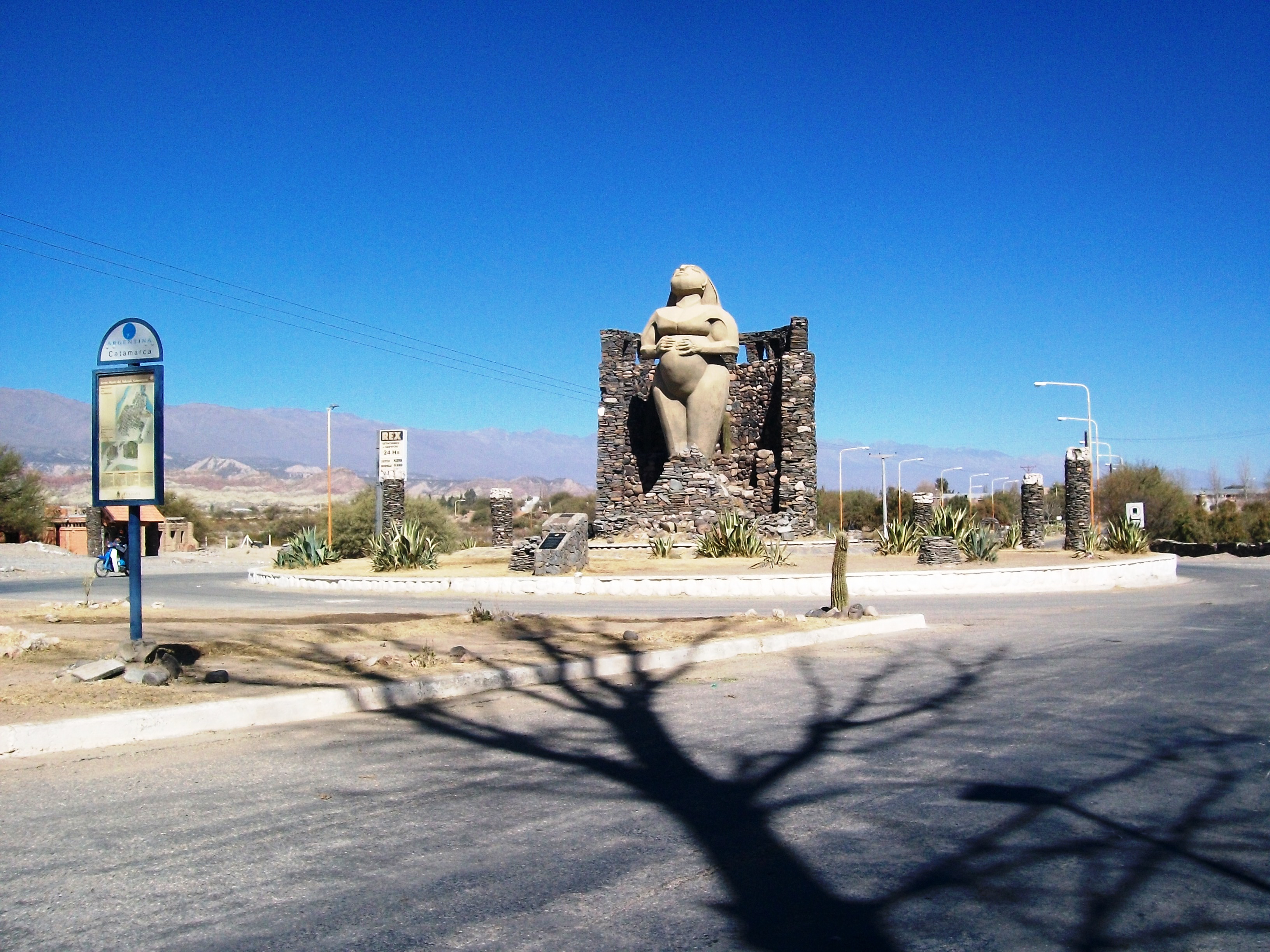
The museum and the case for the heritage
The Museo Arqueológico Eric Boman in Santa María holds part of the heritage of the Santa María culture, especially its funerary urns. Its existence, together with the nearby Quilmes ruins, established Santa María as a center of archaeological and cultural tourism in the Valles Calchaquíes.
Source: https://www.welcomeargentina.com/santamaria/

📚 Bibliography

  • Wikipedia (ES) — «Santa María (Catamarca)»: https://es.wikipedia.org/wiki/Santa_Mar%C3%ADa_(Catamarca)
  • Wikipedia (ES) — «Cultura santamariana»: https://es.wikipedia.org/wiki/Cultura_santamariana
  • Wikipedia (ES) — «Diaguitas»: https://es.wikipedia.org/wiki/Diaguitas
  • Wikipedia (ES) — «Guerras calchaquíes»: https://es.wikipedia.org/wiki/Guerras_calchaqu%C3%ADes
  • Wikipedia (ES) — «Pedro Bohórquez»: https://es.wikipedia.org/wiki/Pedro_Boh%C3%B3rquez
  • Wikipedia (ES) — «Ciudad sagrada de Quilmes»: https://es.wikipedia.org/wiki/Ciudad_sagrada_de_Quilmes
  • Wikipedia (ES) — «Amaicha del Valle»: https://es.wikipedia.org/wiki/Amaicha_del_Valle
  • Welcome Argentina — «Santa María»: https://www.welcomeargentina.com/santamaria/
  • Welcome Argentina — «Valles Calchaquíes»: https://www.welcomeargentina.com/valles-calchaquies/
  • Turismo Catamarca (oficial): https://turismo.catamarca.gob.ar/

❓ Frequently asked questions

Why is Santa María called Yokavil?+
Yokavil (also written Yocavil) is the indigenous name of the Santa María valley, linked to the Diaguita people and to the Santa María culture that flourished here before the conquest. 'Santa María' is the name the Spanish gave it, but the old name Yokavil is still used as a symbol of the region's indigenous identity and heritage.
What are the Santa María urns?+
They're large ceramic funerary vessels, richly decorated with geometric motifs and stylized figures, produced by the Santa María culture that inhabited this valley roughly between the 10th and 15th centuries. They were used in funerary rituals and are one of the icons of northwestern Argentine archaeology. You can see them at the Museo Arqueológico Eric Boman, in town.
Is it worth visiting Quilmes from Santa María, and how much does it cost?+
Yes. The Quilmes ruins are only some 20-25 km from Santa María (already in Tucumán) and are the largest pre-Hispanic settlement in Argentina, an imposing Diaguita citadel on a hillside. Admission is ARS 7,000 for Argentine tourists (pensioners ARS 5,000, foreigners ARS 12,000, free for under-12s), according to the rate verified in July 2026 at ruinasdequilmes.com; payment is in cash or bank transfer, with no advance booking. It's an unmissable visit, easy to combine with Amaicha del Valle. Bring water, a hat and sunscreen, as there's little shade.
When is the best time to visit Santa María?+
Autumn, winter and spring (April to November) are ideal: sunny, dry, pleasant days with cool to cold nights. Summer (December to March) is the northwest's rainy season, hot by day with afternoon downpours that can complicate dirt roads, though the valley is greener. The Pachamama festival at Amaicha (February) is a big cultural draw.
What wines are made here and how much does a tasting cost?+
Santa María is part of the high-altitude wine region of the Valles Calchaquíes. The signature grape is Torrontés, an aromatic, fresh white, but reds such as Malbec and Cabernet are made too. The vineyards, at almost 2,000 meters, use the wide temperature swings and strong sunlight to give wines of intense character. Several wineries offer visits with tastings for approx. ARS 5,000–15,000 per person, about US$ 3.5–10.5 (range verified July 2026); book ahead.
What crafts can I buy?+
The region has a strong Diaguita-rooted craft tradition: loom weaving (ponchos, blankets, sashes), ceramics that reinterpret Santa María motifs, leatherwork and other handmade goods. You'll find them on the square and in the town's shops. It's also worth taking home regional products such as wines, walnuts, preserves and peppers. Bring cash, because many stalls don't take cards.
How many days should you stay?+
The town itself can be seen in a day, but it's worth staying 1 or 2 nights to add Quilmes, Amaicha, the wineries and the archaeological sites. Within a Valles Calchaquíes circuit — combining Cafayate, Tafí del Valle and the valley villages — 3 to 5 days in the region is ideal, driving the legendary Ruta 40 at an easy pace.
Sources consulted (17)
Still planning?
Explore more destinations in Argentina
See all destinations →
Advertisements
Image credits
Photos from Wikimedia Commons, each under its own licence (CC BY, CC BY-SA or public domain). Open each file to see its author and licence.
Ingreso a Sta Ma Catamarca