Affiliate link: we earn a commission.
📌Department
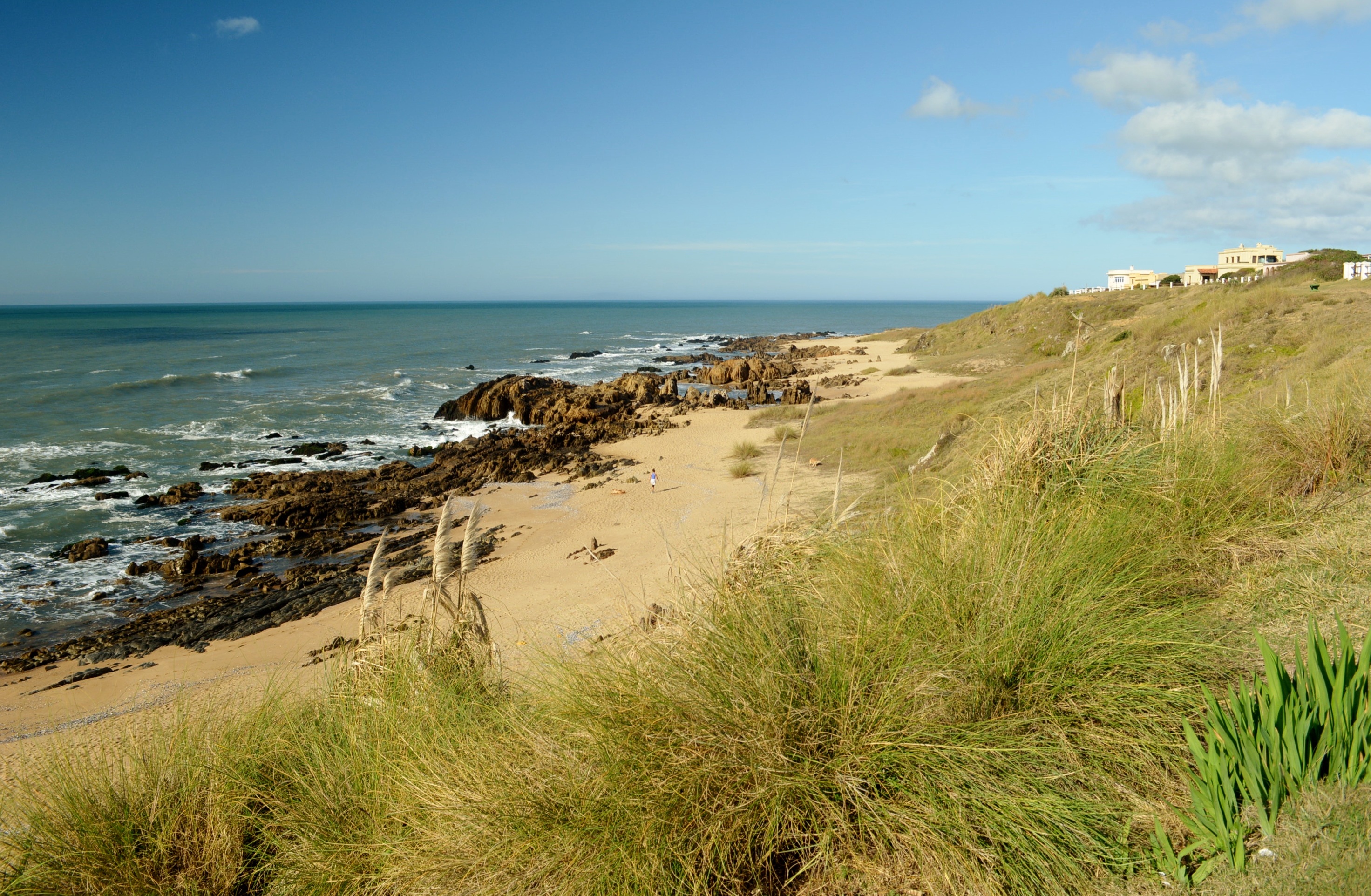
Rocha (Atlantic coast of Uruguay, between La Paloma and Cabo Polonio). La Pedrera is a small, bohemian resort of great natural beauty, famous for its beaches, its stone cliffs and its characteristic main street with artisans. It has a very small permanent population that multiplies in summer. It's one of the most stylish and characterful resorts on the Rocha coast
📌How to get there
It's on the Rocha coast, about 230 km from Montevideo (around 3 and a half hours by car or bus) and a few kilometers from La Paloma, the nearest service center. You get there via Route 10 (or Route 15 from Route 9). There are buses from Montevideo and from La Paloma; in summer the frequencies increase. Many visitors combine La Pedrera with other Rocha resorts on the same trip
📌Best time to visit
Summer (December to March) is high season, with its beaches, its famous New Year's Eve night and a young, bohemian atmosphere; January is the peak of people. Spring and autumn are ideal for enjoying the beaches, the cliffs and the surf in peace. Winter is very calm, with the resort almost deserted and an imposing sea, perfect for disconnecting, though with reduced services
📌Suggested days
With 2 or 3 days you can enjoy the two great beaches (El Barco and Desplayado), the main street, the sunsets and the atmosphere. With 4 to 7 days you can leisurely experience the rhythm of the place, combine beach and surf, walks along the cliffs of the Punta de La Pedrera, trips to La Paloma, Cabo Polonio or the Rocha lagoons, and get in tune with the relaxed and artistic life that characterizes the resort
💱 UYU exchange rate
Loading rate…
La Pedrera is one of those resorts that win you over with their human scale and their personality. Perched on stone cliffs on the Atlantic coast of Rocha, between La Paloma and Cabo Polonio, it's small, bohemian and of remarkable natural beauty. Its name comes precisely from the stone: the rocky point on which it sits and from which the ocean is dominated in both directions, with two great beaches opening on each side like two arms of sand.
The heart of the resort is its main street, a tree-lined avenue that descends toward the sea, full of low houses, shops, restaurants and, in summer, artisan markets that give it that artistic and relaxed air so characteristic. On one side of the point stretches El Barco beach, with waves and activity; on the other, the Desplayado, longer and more rugged. And above everything, the sunsets and the immensity of the Atlantic, which here is felt in its purest state.
La Pedrera is famous for combining the best of the Rocha coast: wild nature, surf, calm and a bohemian nightlife that in high season —and very especially at New Year— draws a young crowd from all over the country and the region. This guide explores the resort with a practical and warm eye: its beaches, its cliffs, what to do inside and outside the town, how to get there and get around, and how to make the most of both the vibrant summer and the deep calm of the low season.
📖 History of La Pedrera
La Pedrera is a relatively young resort on the Atlantic coast of Rocha, whose tourism development gradually consolidated over the course of the 20th century. Its name comes from the 'pedrera' (quarry), in reference to the rocky stone point on which it sits, a striking coastal feature that dominates the ocean and separates its two great beaches. Like much of the Rocha coast, the area was historically part of a frontier territory between the Spanish and Portuguese empires, tied to the nearby region of the Fortress of Santa Teresa, and later to the rural and fishing life of the department. Over time, La Pedrera transformed into a summer destination of a family character first and markedly bohemian later, drawing artists, surfers and a young crowd who found in its beaches, its cliffs and its relaxed atmosphere a unique place. Its famous New Year's Eve party made it a meeting point of the Rocha summer scene. Today it maintains a balance between its tourism growth and the conservation of its small scale and its natural setting. The history of the area, tied to the colonial frontier and the Rocha lagoons, is on our history page.
Read the full history ↓🏛️ La Pedrera is in Rocha Department
Uruguay's wild Atlantic coast: 180 kilometers of rugged beaches, dunes and lagoons at Cabo Polonio, La Paloma, Punta del Diablo and Valizas, with the fortresses of Santa Teresa and San Miguel and the border with Brazil at Chuy.
Read the history of Rocha Department →🗺️ What to see
Tours nearby, in Jose Ignacio
They depart from Jose Ignacio, 54 km away. Affiliate link: we earn a commission.
1
Punta de La Pedrera (the cliffs)
The rocky point that gives the resort its name, with cliffs, ocean views and the best sunsets.
Read more ↓
The Punta de La Pedrera is the geographical feature that gives the resort its name and character: a rocky stone point that juts into the Atlantic Ocean, with small cliffs from which the sea is dominated in both directions. It's the natural lookout of the place and one of its most photographed corners. From the top of the rocks you contemplate, on one side, El Barco beach, and on the other, the Desplayado, both stretching toward the horizon.
The point is a privileged spot to watch the sunsets —and, depending on the orientation, also spectacular sunrises over the Atlantic—, to sit and contemplate the surf breaking against the stones and to take the best photos of the resort. The rocky area invites you to walk carefully, watch the sea, fish or simply stay gazing at the immensity.
It's the scenic heart of La Pedrera and the point where you best understand why this resort is famous for being one of the most beautiful and characterful on the whole Rocha coast.
How to get there: at the end of the main street, on foot from any point in the town. Best time: sunset, unmissable; the early hours of the day for more calm. Tips: bring shoes with good grip for the rocks and be careful with the surf if you approach the edge.
ℹ️ Distance: Central rocky point of the resort, at the end of the main street (on foot) · Best time: Sunset (unmissable) and the early hours of the day · Admission: Free (open access) · Duration: 30 minutes to 1 hour
2
El Barco beach
The busiest beach in the resort, with waves, surf and the memory of the shipwrecked boat that gave it its name.
Read more ↓
El Barco beach ('the ship') is one of the two great beaches of La Pedrera and the busiest and liveliest in the resort. Its name evokes a ship that, according to local tradition, ran aground on its shores, leaving the place name forever. It's a beach open to the Atlantic, with good waves, very popular with surfers and with those seeking a lively sea. In summer it concentrates much of the resort's beach life, with people sunbathing, surfing, walking along the sand and enjoying the seasonal beach bars and services.
Its closeness to the center and the main street makes it very practical and popular. The surf, appealing for surfing, requires caution when swimming, so it pays to respect the lifeguards' guidance in season and swim in the marked areas.
Being oriented so that it gets the sun and the waves well, it's ideal for spending the day, and at sunset, with the Punta de La Pedrera to the side, it offers a beautiful light. It's, in many ways, the flagship beach of La Pedrera.
How to get there: beside the center of the resort, on one side of the Punta de La Pedrera (on foot). Best time: summer for beach and surf. Tips: if it's your first time surfing, there are surf schools in the resort that give you a board, wetsuit and lesson.
ℹ️ Distance: Beside the center of the resort, on one side of the Punta de La Pedrera (on foot) · Best time: Summer for beach and surf · Admission: Free (public beach) · Duration: Half a day or more
3
El Desplayado beach
A long, open and more rugged beach, ideal for long walks and for getting away from the bustle.
Read more ↓
On the other side of the Punta de La Pedrera stretches the Desplayado, a long, wide beach of a more rugged and quiet character than El Barco. Its name alludes precisely to its condition as an open, extensive beach, with great strips of sand that extend to the south. It's the ideal beach for those seeking long walks by the sea, space and a certain solitude even in peak season, since its breadth lets you find quiet corners far from the busiest sectors.
The landscape is more natural and wild, with dunes and coastal vegetation, and the surf, as on all this Atlantic coast, can be strong. It's an excellent spot for disconnecting, for running or walking at dawn or sunset, for watching the sea and the coastal birds and for feeling the nature of Rocha in its purest state.
The combination of El Barco —livelier— and the Desplayado —more serene— in the same resort is one of the great charms of La Pedrera, letting you choose the atmosphere depending on the day and the moment.
How to get there: on the other side of the Punta de La Pedrera, to the south (on foot from the center). Best time: summer for swimming; year-round for walks and calm. Tips: bring water and sun protection for the long walks, there's little shade.
ℹ️ Distance: On the other side of the Punta de La Pedrera, to the south (on foot) · Best time: Summer for swimming; year-round for walks and calm · Admission: Free (public beach) · Duration: Half a day
4
The main street and the artisan markets
The central avenue that descends to the sea, with trees, shops, restaurants and craft markets of great atmosphere.
Read more ↓
The main street of La Pedrera is the axis and the social soul of the resort: a tree-lined avenue that descends from the road toward the Punta de La Pedrera and the sea, along whose sides the houses, shops, restaurants, bars and businesses of the town are concentrated. In summer, this street becomes the setting for the artisan markets, a deeply rooted tradition that gives the resort its characteristic bohemian and artistic air.
The stalls offer crafts in leather, wood, silver, wool and materials from the sea, clothing, handmade objects, food and regional products; there's usually music, a festive atmosphere and a constant flow of people strolling, especially at dusk. Wandering the street, looking at the stalls, buying a handmade memento, having a drink at a bar and letting yourself be carried by the relaxed mood is an essential part of the La Pedrera experience.
It's also the gastronomic and nightlife center of the resort. Off-season, the street stays quiet and many places close, but it keeps its charm and its town scale. This market and bohemian life is one of the traits that set La Pedrera apart from other resorts on the coast.
How to get there: central avenue of the resort, toward the point (on foot). Best time: summer (markets, music and activity), especially at sunset. Tips: bring cash for the artisan stalls, many don't accept cards.
ℹ️ Distance: Central avenue of the resort, toward the point (on foot) · Best time: Summer (markets, music and activity), especially at sunset · Admission: Free (wandering is free; purchases have their price) · Duration: 1 to 2 hours or a night
5
The mythical village without electricity among the dunes, with its lighthouse and its sea lion colony, a short distance from La Pedrera.
Read more ↓
One of the unmissable excursions from La Pedrera is Cabo Polonio, one of the most singular and magical places in Uruguay, located a short distance along the coast. Cabo Polonio is a small, isolated village set among enormous sand dunes, with no connection to the power grid (it's lit with generators, solar panels and candles) and with restricted access: you get there by crossing the National Park in special 4x4 trucks from the terminal on Route 10, since you can't enter with a private car.
The place keeps an extremely rustic and bohemian atmosphere, with simple houses, without running water in many cases, and a totally disconnected pace of life. Its great attractions are the lighthouse, from which a spectacular landscape of dunes, sea and islands is dominated, and the important sea lion haul-out: one of the largest colonies of sea lions and southern fur seals on the Uruguayan coast, observed on the rocks beside the lighthouse.
The setting of dunes, virgin beaches and wild nature is of a unique beauty. Visiting Cabo Polonio from La Pedrera, whether for the day or staying overnight in its timeless atmosphere, is an experience that perfectly complements the stay in the area.
How to get there: by car to the truck terminal on Route 10 and from there by 4x4 truck (about 20 minutes across the dunes), or on an organized excursion from La Pedrera. Best time: year-round; summer for the beach, spring/autumn for wildlife and calm. Tips: bring cash, water and sunscreen; book the round-trip truck.
ℹ️ Distance: A short distance along the Rocha coast; 4x4 truck from the terminal on Route 10 · Best time: Year-round; summer for the beach, spring/autumn for wildlife and calm · Admission: 4x4 truck round trip UYU 470 per person (free up to 5 years; paid in cash, debit or transfer at the Route 10 terminal). Source: Turismo Rocha / 4x4 operators, verified July 2026. Organized full-day excursion US$ 60-100 from La Pedrera · Duration: Half a day to a day (or overnight)
6
The neighboring resort with a lighthouse and services, and the Rocha coastal lagoons rich in nature and birds.
Read more ↓
La Pedrera is very close to La Paloma, the main service center of the area, which makes it an ideal base for combining calm with comforts. La Paloma, a few kilometers away, is a larger and more consolidated resort, with its characteristic Cabo Santa María Lighthouse, its beaches for all tastes (from the calmest to those with the best surf), its port, its shops, supermarkets and nightlife. It's the place many La Pedrera visitors go to stock up or to add beaches and outings.
In addition, the whole Rocha region is famous for its coastal lagoons —such as Laguna de Rocha, Laguna Negra and others—, wetlands of enormous ecological value and protected areas that are home to a rich biodiversity and are a paradise for birdwatching. Touring these lagoons, walking or horseback riding along their shores, visiting tourist estancias and enjoying the wild nature of the Rocha interior is a perfect complement to the beach days.
The closeness of all these attractions makes La Pedrera an excellent starting point for exploring the best of the Uruguayan Atlantic coast.
How to get there: La Paloma about 15 km (car or local bus); Rocha lagoons in the surroundings, best to go by car. Best time: summer for beaches; spring for birds and nature. Tips: if you need a bank or a large supermarket, go to La Paloma; for the lagoons, hire a guide if you want to properly identify the bird species.
ℹ️ Distance: La Paloma about 15 km; Rocha lagoons in the surroundings (car recommended) · Best time: Summer for beaches; spring for birds and nature · Admission: Beaches and natural areas with free access; birdwatching tours US$ 25-45 per person (verified July 2026) · Duration: Half a day to a day
🛡️ Getting sick far from home shouldn't cost you thousands of USD
Abroad, getting sick is more than a bad day. In many destinations public healthcare depends on appointments, queues and availability, and private care is paid upfront. An emergency can cost thousands of USD, right when you are far from home and on a tight budget. That is why I recommend you never leave without travel assistance.
I recommend GO! Assistance because it covers what matters: medical care, emergencies, medication and hospitalization depending on the plan. It protects you 24 hours a day, anywhere in the world, with real-time solutions on the ground. GO! 365 ECO and GO! 365 give you USD 45,000 of global coverage: the first with a USD 100 deductible, the second with none.
If you quote from Argentina, in October GO! also offers 12 interest-free instalments on all its products.
An emergency abroad can cost thousands of dollars. Travel with assistance.
GO! Assistance has 50% off in October and, with our link, you get an extra 20%.
Pick origin, destination, dates and ages and see the price of your travel assistance in a minute.
📶 Internet from the moment you land
I have never been left without internet on a trip. I land and my phone connects to the strongest network in the country I am visiting: I can let people know I arrived, sort out transport, book tours and keep posting content at a super affordable price (really cheap!). I always use the Maya Mobile eSIM, check out its plans by clicking the banner. See Maya Mobile plans →
Affiliate link: we earn a commission.


💵 Prices
Tickets
| Type | Price |
|---|
| Beaches (El Barco, El Desplayado) | Free (public beaches) |
| Punta de La Pedrera (cliffs) | Free (open access) |
| Artisan markets of the main street | Free to wander (purchases have their price) |
| Excursion to Cabo Polonio (4x4 truck round trip) | UYU 470 per person (free up to 5 years; verified July 2026) |
| Rocha lagoons and natural areas | Free access; birdwatching tours US$ 25-45 per person |
| Surf lesson with equipment included | US$ 30-35 per lesson (season, verified July 2026); US$ 180-200 for the 6-lesson package |
🔄 updated monthlyOfficial / reference values · double-check when buying
Activities and tours
| Activity | Price | Duration | Operator |
|---|
| Surf lesson and board rental | US$ 30-35 per 1.5 h lesson (high season, verified July 2026); US$ 180-200 for a 6-lesson package | 1 to 2 h | Resort surf schools (e.g. Surfhouse Uruguay La Pedrera) |
| Excursion to Cabo Polonio (4x4 truck) | UYU 470 round trip per person (verified July 2026) | Half a day to a day | Official 4x4 transport from the terminal on Route 10 |
| Birdwatching and nature at the Rocha lagoons | US$ 25-45 per person on a guided excursion (verified July 2026); free on your own | Half a day | Local nature guides and estancias |
| Horseback rides along beaches and countryside | US$ 20-35 per hour approx. (verified July 2026) | 1 to 2 h | Local estancias and providers |
| Tour of the markets and bohemian life of the main street | Free to wander | 1 to 2 h | Resort artisan market (in season) |
🔄 updated monthlyOfficial / reference values · double-check when buying
🚌 How to get there and distances
Getting around
NotesThe resort is small and walkable. It's the natural way to get around La Pedrera
NotesPractical for exploring the resort and reaching the beaches and more distant areas
NotesRecommended for excursions to La Paloma, Cabo Polonio (to the truck terminal) and the Rocha lagoons
Short-distance bus (COT, Rutas del Sol, Cynsa)
PriceLa Paloma–La Pedrera UYU 60-90; Rocha–La Pedrera approx. UYU 160 (source: companies and terminal, verified July 2026)
NotesThey connect La Pedrera with La Paloma, the city of Rocha and other resorts. IMPORTANT: in Rocha and the interior the ticket is paid IN CASH on board or at the ticket office; the STM card is only for the Montevideo area and does not apply here. Frequencies are scarce off-season
Taxi / remís and transfer
PriceApprox. UYU 250-500 for short stretches (source: local car-hire firms, verified July 2026)
NotesFor transfers from the terminal/road and excursions; it pays to coordinate by phone, especially off-season
Schedule / how-to-get-there app
Free (the app)
NotesTo see schedules and connections of the Rocha buses, the most-used app in Uruguay is Moovit (it also covers the interior); Google Maps has the same schedules for the inter-departmental lines. Since the frequencies are spread out, confirm the schedule at the terminal or on the company's website before setting out. Source: Moovit Uruguay, verified July 2026
🔄 updated monthlyOfficial / reference values · double-check when buying
How to get there
Montevideo → La Pedrera (bus)
Airlines / operatorsRutas del Sol, COT, Cynsa (Tres Cruces Terminal). Ticket in cash or bought online
Avg. priceApprox. UYU 800-900 (source: COT / Rutas del Sol, verified July 2026; check at cot.com.uy or rutasdelsol.com.uy)
Montevideo → La Pedrera (car via Routes 9, 15 and 10)
La Paloma → La Pedrera (bus / local transport)
City of Rocha → La Pedrera (bus)
🔄 updated monthlyOfficial / reference values · double-check when buying
🏨 Where to stay
No exact prices: a scale from $ (budget) to $$$$$ (luxury), with 2-3 options per category.
Recommended optionsUS$ 90-180 per night approx. (indicative range from aggregators; no rate published in an official source; verified 07/08/2026); small charming inns and hotels that combine comfort with the bohemian spirit of the resort, some near the main street and the beaches. For those seeking services without losing the vibe of the place
Recommended optionsUS$ 60-130 per night approx. (depending on the season, verified July 2026); rental cabins and houses, many steps from the beach or with a sea view, ideal for several-day stays, as a family or in a group. The most typical option for experiencing the resort independently
Hostels for backpackers and surfers
Recommended optionsUS$ 15-30 per night per person approx. (verified July 2026); hostels with a young, relaxed atmosphere, very popular with backpackers, surfers and budget travelers, faithful to the bohemian spirit of La Pedrera
Camping and budget options
Recommended optionsUYU 300-700 per person/day approx. (verified July 2026); campgrounds and budget lodgings in the resort and its surroundings, an affordable and popular alternative in summer to be near the sea and nature
🍴 Where to eat
Options / signature dishUS$ 20-40 per person approx. (verified July 2026); restaurants and beach bars that make use of the closeness of the sea to offer fresh fish and seafood, many with a beach view or near the main street
Grills and Uruguayan cuisine
Options / signature dishUS$ 15-30 per person approx. (verified July 2026); asado, chivito and Uruguayan dishes at grills and restaurants in the resort. Uruguayan beef is never missing
Bars, cafés and alternative cuisine
Options / signature dishUS$ 8-20 per person approx. (verified July 2026); stylish bars, cafés, vegetarian options and casual cuisine on the main street, a reflection of the bohemian atmosphere of the place, especially in summer
General stores and takeaway
Options / signature dishCost variable depending on purchases; general stores, bakeries and shops to buy supplies and takeaway food, useful for those staying in cabins or camping
📖 History of La Pedrera
Origins, formation and what the sources say.
The origin of the name: the stone and the rocky point
On a coast where almost everything is sand, La Pedrera is the stone exception. While the neighboring Rocha resorts spread over dunes and endless beaches, this town clings to a rocky point that splits the sea in two and gives it a physiognomy that no other point on the Uruguayan Atlantic litoral has. That geological rarity not only explains its name: it explains why La Pedrera feels different the moment you arrive, with the ocean breaking against the rock instead of dissolving gently on the shore.
The name of La Pedrera is intimately tied to its geography. 'Pedrera' is the term that designates a quarry or a place of stone, and it alludes to the characteristic rocky point on which the resort sits, a rock coastal feature that juts into the Atlantic Ocean and constitutes the most distinctive feature of the local landscape. That stone point, with its small cliffs, separates the resort's two great beaches and gives it a unique physiognomy within the Rocha coast, where long sandy beaches and dunes predominate.
The Rocha coast, at the far east of Uruguay, is a strip of the Atlantic litoral of great natural beauty, characterized by long beaches, dunes, coastal lagoons, woodland and rock formations like that of La Pedrera. For centuries it was a sparsely populated area, tied to rural life, cattle-raising and, on the coast, to artisanal fishing and to watching over a shoreline that had been a disputed frontier in colonial times.
The rock formation that gave the place its name is not just a picturesque detail: the Punta de La Pedrera is today the scenic heart of the resort, the natural lookout from which the ocean and the sunsets are contemplated, and the reference point of its whole urban fabric, which is organized around it and around the two beaches that flank it. The name, simple and descriptive, was thus fixed and became synonymous with one of the most characterful resorts on the Uruguayan coast.
Pedrera as 'quarry' or place of stone
The most accepted explanation of the place name is that 'La Pedrera' derives from 'pedrera' (quarry or place of stone), in reference to the rocky point on which the resort sits. It's a descriptive name, common in places marked by a notable geographical feature.
Source: https://es.wikipedia.org/wiki/La_Pedrera_(Rocha)
The Rocha coast: a land of colonial frontier
To understand the history of La Pedrera and of its whole region, it's worth looking at the colonial past of the Rocha coast. During the 17th and 18th centuries, this strip of the Atlantic litoral, close to what is today the border with Brazil, was a territory disputed between the Spanish and Portuguese empires, which competed to assert control over the southern limits of their possessions in South America.
The most imposing testimony of that era is the nearby Fortress of Santa Teresa, a stone military structure begun by the Portuguese in the mid-18th century and later taken and finished by the Spanish, who integrated it into their frontier defense system. Together with the Fuerte de San Miguel, also in the area, it was part of the network of fortifications that watched over this strategic coastal pass. These structures remind us that the now peaceful Rocha coast was the scene of tensions between crowns.
Beyond the fortresses, the region was slowly populated with the rural and cattle-raising life of the interior and with the fishing activity of the coast. Only in the 20th century, with the development of beach tourism, did places like La Pedrera, La Paloma or Punta del Diablo begin to transform into resorts. That long prior history —of frontier, fortresses, countryside and fishing— is the substrate on which the identity of the Uruguayan Atlantic coast was built, and is part of the broader story in which the emergence of La Pedrera as a summer destination is inscribed.
The frontier fortresses (Santa Teresa and San Miguel)
The sources point out that the Rocha region was home to colonial fortifications such as the Fortress of Santa Teresa and the Fuerte de San Miguel, tied to the frontier dispute between Spain and Portugal in the 18th century. The chronologies and the detail of the changes of control between the two crowns may vary depending on the source.
Source: https://es.wikipedia.org/wiki/Fortaleza_de_Santa_Teresa
The birth of the resort and its bohemian soul (20th century)
The development of La Pedrera as a resort took place over the course of the 20th century, when the Atlantic coast of Rocha began to attract vacationers in search of beaches and nature. At first it was a destination of a more family and quiet character, with summer houses and a slow growth, faithful to the small scale it still keeps. The beauty of its beaches, its stone cliffs and its natural setting were, from the start, its main attractions.
As the decades passed, La Pedrera took on an increasingly bohemian and artistic character, drawing artists, surfers and a young crowd who found in its beaches, its wave-filled sea and its relaxed atmosphere a special place. The artisan markets on the main street became a hallmark, as did the summer nightlife and a carefree lifestyle in tune with nature. The resort thus earned a reputation for combining the calm of a small town with a cultural and festive scene of its own.
One of the milestones that most contributed to its fame was the New Year's Eve celebration, which over the years became a massive meeting point of the Rocha summer scene, drawing crowds of young people from all over the country and the region. That marked contrast —between the effervescence of summer, and very especially of year's end, and the absolute calm of the low season, when the resort almost empties out— is one of the traits that define the personality of La Pedrera and set it apart from other destinations on the coast.
From family resort to bohemian destination
The sources describe the evolution of La Pedrera from a quiet, family resort to a markedly bohemian destination popular among young people and surfers, especially in summer. Its New Year's Eve party is usually highlighted as a phenomenon that boosted its fame in the Rocha summer scene.
Source: https://es.wikipedia.org/wiki/La_Pedrera_(Rocha)
The natural setting and the challenge of conservation
The recent history of La Pedrera is also that of its natural setting, one of the great values of the Rocha coast. The region is part of a system of coastal lagoons, marshes, dunes, palm groves and woodland of very high ecological value, internationally recognized for its biodiversity and its importance for birds, many of them migratory. Lagoons such as Laguna de Rocha or Laguna Negra, and areas like the surroundings of Cabo Polonio, are part of reserves and protected areas that seek to safeguard these unique environments.
The closeness of La Pedrera to these natural spaces —and to the mythical Cabo Polonio, that village among the dunes without a power grid, with its lighthouse and its great sea lion haul-out— makes it a gateway to the wild nature of Rocha. Nature tourism, birdwatching, horseback rides and walks through dunes and lagoons add to beach and surf tourism as part of the area's offer.
That same natural value poses the great challenge of the present and the future: how to grow as a tourist destination without losing either the small scale of the resort or the health of the ecosystems that surround it. La Pedrera, like much of the Rocha coast, lives the tension between development and conservation, between the appeal that generates more visitors and the need to protect the beaches, the cliffs, the dunes and the lagoons that are, precisely, the reason for its charm. Maintaining that balance is key for the resort to preserve the identity that made it beloved by so many travelers.
Protected areas and biodiversity of Rocha
The sources agree on the high ecological value of the coastal lagoons, dunes and woodland of Rocha, part of protected areas and recognized for their biodiversity and their importance for birds. The delimitation and status of the various reserves may vary depending on the source and the period.
Source: https://es.wikipedia.org/wiki/Cabo_Polonio
❓ Frequently asked questions
What is La Pedrera like, what type of traveler is it for?+
La Pedrera is a small, bohemian resort with a lot of personality, ideal for those seeking beautiful beaches, nature, surf and a relaxed, artistic atmosphere. It especially draws a young crowd and surfers, above all in summer, but it's also enjoyable for families and for those who want calm off-season. It's not a luxury destination: its charm lies in the human scale and the vibe of the place.
Which beach do I choose, El Barco or the Desplayado?+
It depends on what you're looking for. El Barco beach, beside the center, is busier and livelier, with good waves and very popular with surfers. The Desplayado, on the other side of the point, is longer, more rugged and quiet, ideal for long walks and for getting away from the bustle. The best thing is to get to know both and choose depending on the day and the atmosphere you prefer.
Is it worth going at New Year?+
The New Year's Eve party in La Pedrera is famous and draws a huge amount of young people from all over the country and the region, with a very festive atmosphere. If you're looking for that energy, it's a classic; but you have to book well in advance, prices rise and the resort fills up. If you prefer calm, it pays to avoid those dates and choose other moments of the summer or the low season.
How much does a surf lesson cost in La Pedrera?+
The resort's surf schools charge between US$ 30 and 35 per one-and-a-half-hour lesson in high season (a bit less in low season), with a board, wetsuit and guide included. They also offer packages of 6 lessons for US$ 180-200. It's one of the activities most chosen by visitors, especially at El Barco beach.
What to visit in the surroundings?+
La Pedrera is an excellent base for exploring the Rocha coast. Nearby is La Paloma (about 15 km), with its lighthouse and all services; a short distance away, the mythical Cabo Polonio among the dunes, with its lighthouse and its sea lion colony (4x4 truck round trip UYU 470). And throughout the region, the Rocha lagoons and protected natural areas, ideal for birdwatching, walks and horseback rides. Punta del Diablo and Santa Teresa Park are also nearby.
Do I need a car?+
Not within the resort, since it's explored on foot or by bike. But to comfortably get around between La Paloma, Cabo Polonio (to the truck terminal), the lagoons and other Rocha resorts, a car makes it much easier. If you arrive by bus (from Montevideo, about UYU 800-900), you can combine local transport, a bike, taxi/remís and excursions, bearing in mind that the frequencies drop off-season (verified July 2026).
How do I pay for the bus in La Pedrera and the Rocha coast?+
In Rocha and the whole interior the ticket is paid IN CASH, on board the bus or at the terminal ticket office; the STM card is only for the Montevideo area and is no use here. The La Paloma–La Pedrera stretch costs about UYU 60-90 and Rocha–La Pedrera around UYU 160. To see schedules and connections, the most-used app in Uruguay is Moovit (it also works in the interior) or Google Maps. Since the frequencies are spread out, especially off-season, it pays to confirm the schedule before setting out (verified July 2026).
Is it safe and what's the sea like?+
La Pedrera is a quiet resort with a relaxed atmosphere. It pays to take basic precautions with your belongings on the beach and at the house, as at any busy destination in summer. The main care is with the sea: the Atlantic surf can be strong and there are currents, especially at the surf beaches, so respect the lifeguards and the flags, and swim in the marked areas.
Sources consulted (21)
- Wikipedia (ES) — «La Pedrera (Rocha)»: https://es.wikipedia.org/wiki/La_Pedrera_(Rocha)
- Ministerio de Turismo de Uruguay — «Rocha»: https://www.gub.uy/ministerio-turismo
- Intendencia de Rocha — Turismo: https://www.rocha.gub.uy/
- Ministerio de Turismo de Uruguay — «Rocha»: https://www.gub.uy/ministerio-turismo
- Wikipedia (ES) — «Cabo Polonio»: https://es.wikipedia.org/wiki/Cabo_Polonio
- Wikipedia (ES) — «La Paloma (Uruguay)»: https://es.wikipedia.org/wiki/La_Paloma_(Uruguay)
- Wikipedia (ES) — «La Pedrera (Rocha)»: https://es.wikipedia.org/wiki/La_Pedrera_(Rocha)
- Portal del Cabo — Ingreso a Cabo Polonio en camión 4x4: https://www.portaldelcabo.com.uy/en/servicios/transport/ingreso-a-cabo-polonio-transporte-4x4-camiones
- Surfhouse Uruguay La Pedrera — Escuela de surf (official): https://www.surfhouseuruguay.com/inicio-espanol/escuela-de-surf/
- Infonegocios — Cuánto cuesta aprender a surfear: https://infonegocios.biz/nota-principal-1/aprender-a-agarrar-una-ola-en-una-tabla-de-surf-cuesta-entre-los-us-130-y-los-us-150
- COT (buses, official fares): https://www.cot.com.uy/horarios-tarifas.php
- Rutas del Sol (buses, official fares): https://www.rutasdelsol.com.uy/tarifas
- Moovit — Planificador de transporte público Uruguay (real-time schedules): https://moovitapp.com/index/es/transporte_p%C3%BAblico-Uruguay
- Turismo Rocha — Costos y horarios de camiones a Cabo Polonio: https://turismorocha.gub.uy/horarios-cabo-polonio
- Ministerio de Turismo de Uruguay: https://www.gub.uy/ministerio-turismo/
- Ministerio de Turismo de Uruguay — «Rocha»: https://www.gub.uy/ministerio-turismo
- Intendencia de Rocha — Turismo: https://www.rocha.gub.uy/
- Hotel Boutique Brisas de La Pedrera — web oficial: ubicación, suites, servicios y condiciones de tarifa: https://www.hotelbrisas.uy/
- Turismo Rocha (official portal of the Intendencia de Rocha) — Posada del Barco: servicios, meses de apertura y contacto: https://turismorocha.gub.uy/destinos/la-pedrera/posadas/posada-del-barco
- Turismo Rocha (official portal) — Piedra Alta Hostel & Suites: servicios y meses de apertura: https://turismorocha.gub.uy/destinos/la-pedrera/hostels/piedra-alta
- no rate published in an official source — no accommodation in La Pedrera publishes its rate schedule on its own website; quoted on request (verified 07/08/2026)