📌Department
Colonia (southwestern Uruguay, on the Río de la Plata, facing Buenos Aires). It's the capital of the department of Colonia and one of the oldest cities in the country, founded by the Portuguese in 1680. Its jewel is the Historic Quarter, declared a UNESCO World Heritage Site in 1995 (site No. 747) for being an exceptional example of the fusion of Portuguese, Spanish and post-colonial urban styles. It has about 27,000 inhabitants and lives off tourism, the port and its status as a gateway from Argentina
📌How to get there
Colonia is the main passenger port connecting Uruguay with Buenos Aires: the ferries (Buquebus, Colonia Express, Seacat) cross the Río de la Plata in about 1 to 3 hours depending on the vessel. From Montevideo it's about 177 km on Route 1 (around 2 and a half hours by car or bus). It has a bus terminal with frequent services to the capital and the litoral. Its closeness to Buenos Aires makes it a classic day trip for porteños
📌Best time to visit
Summer (December to March) is high season, with long days, heat and a lot of activity; it's the best time to enjoy the river beaches and the sunsets. Spring (October-November) and autumn (March-May) are ideal for touring the Historic Quarter with a mild climate and fewer people. Winter is quiet and melancholic, perfect for those seeking calm, though with shorter and colder days. On weekends and long holidays it usually fills with Argentine tourists
📌Suggested days
In one day you can tour the essentials of the Historic Quarter: the Calle de los Suspiros, the lighthouse, the Ciudadela Gate, the Plaza Mayor and its museums. With 2 or 3 days you can enjoy it without rushing, adding sunsets over the river, walks on the beaches, a stroll along the rambla, a getaway to the outskirts (the Real de San Carlos Bullring, the area's wineries) and the quiet life of its restaurants and cafés
💱 Cambio de USD
Loading rate…
🌤️ Clima en Colonia del Sacramento
Loading weather…
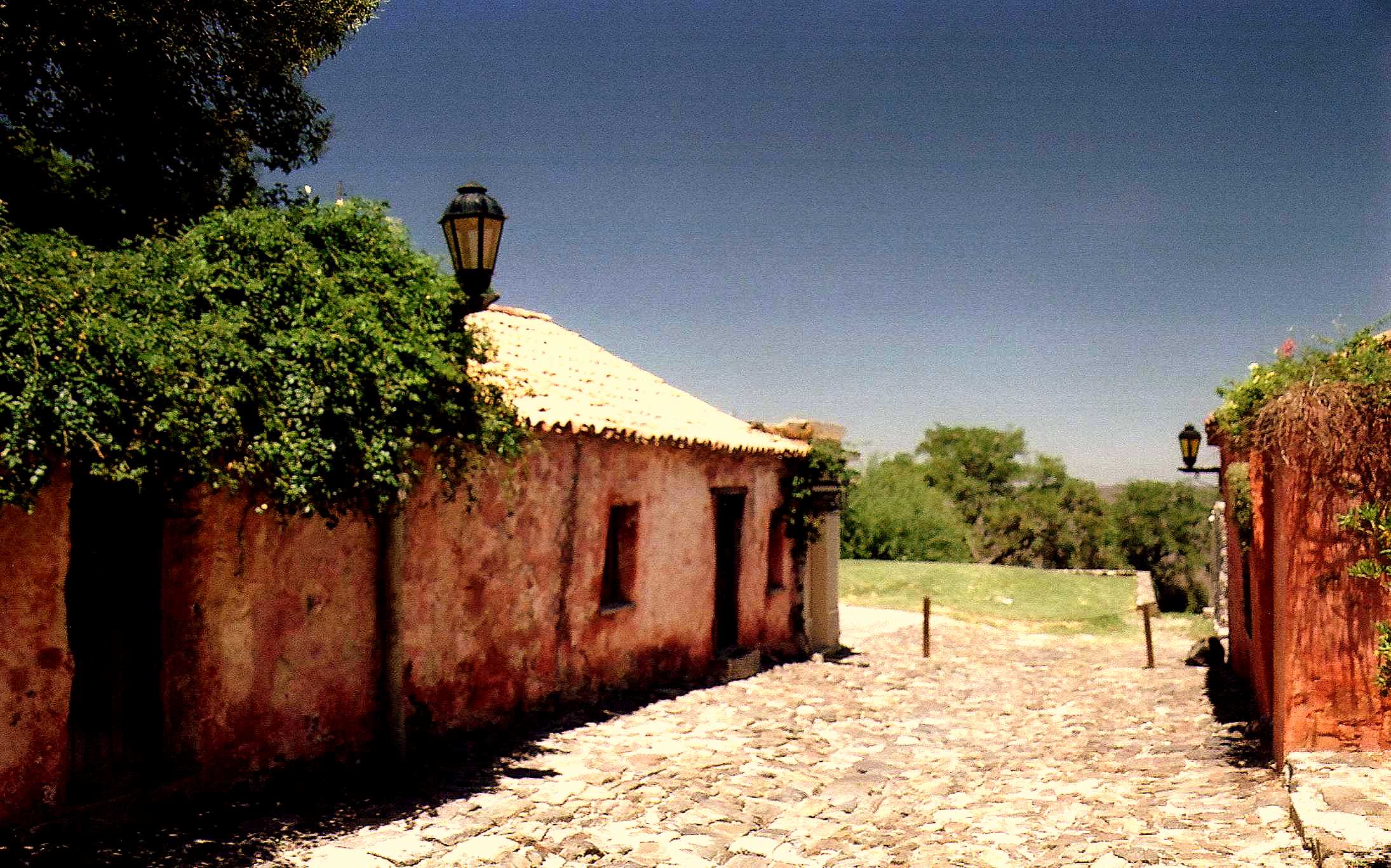
There are places that seem frozen in time, and Colonia del Sacramento is one of them. Walking through its Historic Quarter, with its cobbled streets of irregular stone, its low houses with colonial tiles, the old lanterns and the trees that shade the squares, is like going back three centuries. It's no coincidence: this urban ensemble, founded by the Portuguese in 1680 and disputed for more than a century between the crowns of Portugal and Spain, was declared a UNESCO World Heritage Site in 1995 for its exceptional value as a testimony of that fusion of cultures.
Colonia is a slow-paced destination, made for getting lost without a destination. The famous Calle de los Suspiros ('Street of Sighs'), cobbled and sloping toward the river, is the most photographed image of colonial Uruguay; the old lighthouse over the ruins of the Convent of San Francisco gives the best view of the rooftops and the Río de la Plata; and the Plaza Mayor 25 de Mayo, surrounded by museums, is the quiet heart of the old city. Everything is steps away: it's explored on foot, with comfortable shoes and time to sit at a café and watch the afternoon go by.
But Colonia is not just an open-air museum. It's also golden sunsets over the widest river in the world, urban beaches to cool off in summer, a culinary scene that grows year by year, wineries in its surroundings and the magical closeness to Buenos Aires, which has always made it a meeting place between the two shores. This guide takes you through the essentials of Colonia with a practical and warm eye: what to see, how to get there, where to sleep and eat, and how to make the most of one of the most charming cities in South America.
📖 History of Colonia del Sacramento
Colonia del Sacramento was founded in 1680 by the Portuguese Manuel Lobo, governor of Rio de Janeiro, as a strategic enclave facing Buenos Aires for smuggling and control of the Río de la Plata. Its position made it the center of a long dispute between the Portuguese and Spanish crowns, which snatched it from one another again and again: the city changed hands several times over almost a century, which left its mark on an urban fabric where the irregular Portuguese layout and the Spanish grid coexist. Only with the Treaty of San Ildefonso (1777) did it remain definitively in Spanish hands. Later it was integrated into the territory that would become Uruguay. That mix of influences —Portuguese, Spanish and post-colonial— is what UNESCO recognized in 1995 when it inscribed its Historic Quarter on the World Heritage List (site No. 747), valuing it as an exceptional example of a preserved colonial urban landscape. The full story, with its battles, treaties and legends, is on our history page.
Read the full history →
🗺️ What to see
1
Calle de los Suspiros
Colonia's most famous cobbled street, gently sloping toward the river, a symbol of the Historic Quarter.
The Calle de los Suspiros ('Street of Sighs') is, without question, the most iconic image of Colonia del Sacramento and one of the most photographed postcards of all Uruguay. It's a short little street, cobbled with irregular stones laid in a wedge shape that helped drain rainwater toward the center, and it descends in a gentle slope from the Plaza Mayor area toward the Río de la Plata. On both sides line up low colonial houses with whitewashed walls and tiles, with lanterns that at night give it the air of another era. Its name is surrounded by legends: some say it alluded to the sighs of the condemned who passed by on their way to execution, others that it recalled the women of an old brothel, and others that it simply evoked the sighs of lovers. Whatever the true story, walking it slowly, especially at sunset when the golden light falls on the cobblestones, is an unforgettable experience that sums up the timeless charm of the whole old city.
ℹ️ Location: Historic Quarter, descending toward the Río de la Plata · Best time: Sunset, for the golden light on the cobblestones · Admission: Free (open access) · Duration: 15 to 30 minutes
2
Lighthouse and ruins of the Convent of San Francisco
The old lighthouse over the convent ruins, with the best panoramic view of the rooftops and the river.
The Colonia lighthouse is one of the great attractions of the Historic Quarter and offers the best panoramic view of the old city. It stands over the ruins of the Convent of San Francisco Javier, founded by the Jesuits in the 17th century and later destroyed; the lighthouse, inaugurated in 1857, used the convent's old structures as a base. Climbing its steps —there are many and the staircase is narrow and steep— rewards you with a truly spectacular 360-degree view: on one side, the maze of red rooftops, cobbled streets and trees of the Historic Quarter; on the other, the brown immensity of the Río de la Plata, which on clear days looks like a sea. It's the perfect point to understand the layout of the colonial city and to take the best photos, especially at sunset. At the foot of the lighthouse remain the convent ruins, which can be explored. It opens Thursday to Sunday, from 10 a.m. to 1 p.m. and 2 p.m. to 5 p.m.; cards are not accepted, only cash in Uruguayan pesos.
ℹ️ Location: Historic Quarter, beside the Plaza Mayor · Best time: Sunset (best photos); avoid the hot midday · Admission: UYU 35-50 per person (verified July 2026; cash in Uruguayan pesos only) · Duration: 30 to 45 minutes
3
Ciudadela Gate (Portón de Campo)
The old walled entrance gate to the colonial city, with its wooden drawbridge.
The Portón de Campo, also called the Ciudadela Gate, is the symbolic and monumental entrance to Colonia's Historic Quarter, and one of the few remains of the city's old fortifications. Rebuilt from the original 18th-century plans, the ensemble includes the gate itself, a stretch of the stone wall and a drawbridge-type wooden bridge that crossed the defensive moat. In colonial times this was the only land entrance to the fortified town, closed at night to protect the population. Today it's the point where almost all visitors begin their tour, crossing that wooden bridge to enter the cobbled streets. Beside the gate, stretches of the bastion are preserved and you can climb the wall to see what the defensive system was like. It's a place laden with history that connects directly with the heart of the old city and with the coastal rambla.
ℹ️ Location: Entrance to the Historic Quarter, on Manuel Lobo street / rambla · Best time: Any moment; it's the natural start of the tour · Admission: Free (open access) · Duration: 15 to 20 minutes
4
Plaza Mayor 25 de Mayo and its museums
The heart of the Historic Quarter, tree-shaded and surrounded by colonial museums and old mansions.
The Plaza Mayor 25 de Mayo is the historical and social heart of colonial Colonia: a large, tree-shaded square, surrounded by old mansions, restaurants and the city's main museums. It's the point from which the most famous cobbled little streets branch off, among them the Calle de los Suspiros. Around the square and in its immediate surroundings is a group of municipal museums that let you understand local history: the Portuguese Museum, housed in a period house that preserves furniture, tiles and objects of the Portuguese rule; the Spanish Museum, dedicated to the period of Spanish control; the Municipal Museum (Casa Almirante Brown), with pieces of paleontology, archaeology, natural history and colonial objects; the Casa del Virrey and the Casa Nacarello, a typical restored 18th-century colonial dwelling. The municipal museums work with a cheap combined ticket (a single ticket gives access to several) and open in limited hours, with one weekly closing day (generally Tuesdays), so it pays to check on arrival. Touring the square and a couple of these museums gives a complete idea of Colonia's past and is one of the unmissable activities for hot or rainy days.
ℹ️ Location: Center of the Historic Quarter · Best time: Morning or mid-afternoon; ideal for rainy days · Admission: UYU 50 (combined ticket to the municipal museums, 2025; check when you visit) · Duration: Half a day (with several museums)
5
Calle de San Pedro and the colonial cobblestones
The group of cobbled streets of the Historic Quarter, ideal for getting lost on foot.
Beyond the specific landmarks, the true treasure of Colonia is its whole urban fabric: a group of streets cobbled with irregular stone, low houses with whitewashed or exposed-stone walls, colonial tiles, bougainvilleas spilling over the walls, old cars turned into planters and iron lanterns. The great particularity that UNESCO highlighted is the coexistence of two different urban logics: the irregular, organic layout of Portuguese origin, which adapts to the terrain, alongside the orthogonal grid of Spanish root. Strolling aimlessly through streets like San Pedro, del Comercio or Santa Rita, stopping at each corner, looking at the details of the doors, the cisterns and the patios that peek out, is the best way to experience Colonia. There's no need to rush: the old city is small and can be walked in full in a few hours, but its charm lies precisely in lingering, sitting on a doorstep or at a café, and letting time pass as if the clock didn't exist.
ℹ️ Location: The whole Historic Quarter · Best time: Sunset and the early hours of the morning · Admission: Free (open access) · Duration: 2 to 3 hours walking unhurriedly
6
Coastal rambla and sunsets over the Río de la Plata
The coastal walk beside the widest river in the world, with Colonia's most famous sunsets.
The Colonia rambla skirts the Río de la Plata and is one of the city's great pleasures, especially at sunset. From the Historic Quarter, the coastal walk lets you walk or cycle beside the water, with wide views of the river, which here is so broad it looks like a sea and, on the clearest days, reveals the distant silhouette of the Argentine coast. Colonia is famous for offering some of the most beautiful sunsets in the country: the sun sinks directly over the river, tinting the sky and the water with oranges, pinks and violets, and the piers, the rocks and the silhouette of the lighthouse stand out against the light. It's a classic to sit on the breakwaters or at a coastal bar with a drink to watch the sun set. The rambla connects the old town with the urban beaches and residential neighborhoods, and is ideal for a quiet walk at the end of the day. Bring your camera: the sunset light over the Río de la Plata is hard to forget.
ℹ️ Location: Waterfront, from the Historic Quarter toward the beaches · Best time: Sunset (unmissable); also good for a morning walk · Admission: Free (open access) · Duration: 1 to 2 hours
7
Real de San Carlos Bullring
An imposing early-20th-century bullring on the outskirts of Colonia, today in evocative ruins.
A few kilometers from the center, in the Real de San Carlos neighborhood, rises one of the most surprising and melancholic structures in Colonia: an enormous Neo-Mudéjar-style bullring, inaugurated in 1910. It was part of an ambitious tourism and entertainment complex promoted by the Argentine businessman Nicolás Mihanovich, which also included a hotel, a pelota court, a casino and a racetrack, designed to attract the porteño public who crossed the river. The bullring came to host bullfights with famous bullfighters, but its active life was very brief: within a few years, the ban on bullfighting in Uruguay (1912) left it unused. Today it stands as an imposing circular ruin, with its brick and arch architecture worn by time and the river wind, giving it an air between majestic and ghostly. For safety reasons it's not always possible to enter the structure, but seeing it from outside and learning its history is worthwhile. The Real de San Carlos area also has a beach and is a good complement to the Historic Quarter.
ℹ️ Location: Real de San Carlos neighborhood, a few km from the center (car, bike or local bus) · Best time: Sunset, for the light on the ruin · Admission: Free to see from outside; entry may be restricted for safety (check when you visit) · Duration: 30 to 45 minutes
8
Beaches and wineries of the surroundings
Urban beaches on the river and a growing wine route in the Colonia countryside.
Colonia is better known for its history than for its beaches, but in summer its shores on the Río de la Plata are a good place to cool off. Ferrando Beach, to the east, is among the most popular, with sand and services; there are also beaches in the Real de San Carlos area. The water is that of the river —brown and with gentle surf—, ideal for a quiet dip and for restful afternoons under the trees. But perhaps the greatest appeal of the surroundings is its growing wine scene: the department of Colonia is one of Uruguay's wine regions, and in the nearby countryside there are family wineries that offer guided visits, tastings of tannat (the country's flagship grape) and other varieties, and lunches among the vineyards. Touring a winery, learning about the process and tasting the wines with local products is a delicious plan that combines very well with the visit to the city. It pays to book the visits in advance and check availability according to the season.
ℹ️ Location: Urban beaches and wineries in the countryside of the department of Colonia · Best time: Summer for the beaches; year-round for the wineries (book ahead) · Admission: Beaches free; winery tasting US$ 15-30 per person (2025; with reservation; check when you visit) · Duration: Half a day (winery) or an afternoon (beach)
What nobody tells you💵 Prices
Tickets
| Type | Price |
|---|
| Touring the Historic Quarter (streets, squares, rambla) | Free (open access) |
| Colonia Lighthouse (climb) | UYU 35-50 per person (source: Colonia Museum System / visitor reviews, verified July 2026; cash in Uruguayan pesos only) |
| Municipal museums (Portuguese, Spanish, Municipal, Casa Nacarello and others) | UYU 50 (combined ticket to the Colonia Museum System, valid for several museums; source: Intendencia de Colonia / Museum System, verified July 2026) |
| Calle de los Suspiros and Portón de Campo | Free (open access) |
| Beaches (Ferrando, Real de San Carlos) | Free (public beaches) |
| Real de San Carlos Bullring (exterior view) | Free (open access; entry to the structure restricted) |
| Winery visit and tasting | US$ 15-30 per person (2025; with prior reservation; check when you visit) |
🔄 updated monthlyOfficial / reference values · double-check when buying
Activities and tours
| Activity | Price | Duration | Operator |
|---|
| Guided walking tour of the Historic Quarter | US$ 15-25 per person (group, 2025; check when you visit) | 2 to 3 h | Local guides and Colonia agencies |
| Bike, golf cart or scooter rental to tour the city | Bike US$ 3-5/hour; golf cart/scooter US$ 15-25/hour (2025) | Per hour or per day | Rental shops in the center and the port |
| Winery visit with wine tasting | US$ 15-30 per person (2025; with reservation) | Half a day | Wineries of the department of Colonia (Campo Tinto, Pueblo Tannat, Varela Zarranz) |
| Boat trip / sunset on the Río de la Plata | US$ 20-40 per person (2025; check when you visit) | 1 to 2 h | Local boating operators |
| Visit to the Historic Quarter museums (combined ticket) | UYU 50 (2025) | Half a day | Municipal museums of Colonia |
🔄 updated monthlyOfficial / reference values · double-check when buying
🚌 How to get there and distances
Getting around
| Mode | Price | Duration | Notes |
|---|
| On foot | Free | Variable | The Historic Quarter is small and explored entirely on foot. Bring comfortable shoes for the irregular cobblestones. It's the best way to get to know the old city |
| Rental bike / golf cart / scooter | Bike US$ 3-5/hour; golf cart/scooter US$ 15-25/hour (source: rental shops in the center and the port, market ranges verified July 2026) | Variable | Very popular for getting to the beaches, to Real de San Carlos and touring the surroundings. Rented in the center and near the port; it pays to compare prices between shops |
| Taxi and remís | UYU 150-300 for an urban trip (source: market ranges of local car-hire firms, verified July 2026) | Variable | Convenient for trips to the outskirts (wineries, Real de San Carlos) or at night. There are stands in the center and the port; can be booked by phone or at the stand |
| Urban and local bus | Urban ticket UYU 48-60 approx. (source: Colonia urban transport system / Intendencia de Colonia, verified July 2026) | Variable | The Colonia urban service (Ómnibus Colonia company, omnibuscolonia.com.uy) connects the center with Real de San Carlos, the port, the terminal and residential neighborhoods. Limited frequencies: it pays to check schedules before setting out |
| Route and bus location app | Free (the app) | — | To see routes, stops and plan trips on the urban bus, use Moovit (the most-used mobility app in Uruguay, with coverage of Colonia) and Google Maps. The official schedules of the urban and beach service are at omnibuscolonia.com.uy (source: Moovit / Ómnibus Colonia, verified July 2026) |
| Bus payment method | — | — | The bus is paid with the rechargeable STM card (Metropolitan Transport System) or in cash on board (cash costs a bit more than electronic payment). The STM is topped up at kiosks, agencies and affiliated shops; there's also postpay linked to bank cards. Urban transport fares were adjusted in January 2026 (source: STM system / Intendencia de Colonia, verified July 2026) |
🔄 updated monthlyOfficial / reference values · double-check when buying
How to get there
| Route | Airlines / operators | Avg. price | Duration |
|---|
| Buenos Aires → Colonia (ferry across the Río de la Plata) | Buquebus, Colonia Express, Seacat | US$ 35-65 (Colonia Express) to US$ 55-90 (Buquebus) one way (source: official sites buquebus.com and coloniaexpress.com + Direct Ferries aggregator, verified July 2026); varies a lot depending on advance booking, day and season | Approx. 1 h 15 min (fast boat) to 3 h (conventional) |
| Montevideo → Colonia (Route 1, by car) | Own or rental vehicle | Fuel + toll approx. UYU 200-300 (2025) | Approx. 2 h 30 min (about 177 km) |
| Montevideo → Colonia (bus) | COT, Turil, Agencia Central and others | UYU 520-600 (2025) | Approx. 2 h 45 min to 3 h |
| Litoral / interior → Colonia (bus) | National companies | UYU 300-600 depending on the origin (2025; check when you visit) | Depending on the origin (Carmelo, Mercedes, Fray Bentos, etc.) |
🔄 updated monthlyOfficial / reference values · double-check when buying
🏨 Where to stay
No exact prices: a scale from $ (budget) to $$$$$ (luxury), with 2-3 options per category.
| Category | Price | Recommended options |
|---|
| Boutique hotels in the Historic Quarter | $$$$$ | US$ 150-300 per night; small charming hotels and inns installed in restored colonial mansions, within or steps from the old town, with patios, period decor and lots of character. Ideal for experiencing Colonia from the inside |
| Mid-range hotels near the center and the port | $$$$$ | US$ 60-110 per night; a good offer of mid-range hotels in the center and near the terminal/port, practical for those arriving by ferry who want everything at hand |
| Charming inns and houses | $$$$$ | US$ 90-180 per night; family inns, B&Bs and stylish rental houses, many in quiet neighborhoods near the old town, ideal for several-day stays |
| Hostels and budget lodging | $$$$$ | US$ 15-35 per bed in a hostel; US$ 40-60 for a budget double room (2025). A good option for short stays and backpackers |
🍴 Where to eat
| Type | Price | Options / signature dish |
|---|
| Restaurants with river and sunset views | $$$$$ | US$ 20-40 per main course; spots on the waterfront and the Historic Quarter that make the most of the Río de la Plata view, ideal for dining or having a drink while watching the sunset. Uruguayan and international cuisine |
| Grills and Uruguayan cuisine | $$$$$ | US$ 12-25 per dish; asado, offal, chivito and pasta at traditional grills and restaurants in the center and the old town. Uruguayan beef is the star |
| Cafés and patisseries in historic mansions | $$$$$ | US$ 5-12 for coffee and dessert; charming cafés in colonial houses and patios of the Historic Quarter, perfect for a snack between tours |
| Fast food and budget options | $$$$$ | US$ 6-15 per dish; chivitos on a plate and in a roll, pizzas and empanadas near the port, the terminal and the center, to eat well without spending much |
❓ Frequently asked questions
Is it worth going just for a day from Buenos Aires?+
Yes, Colonia is a classic day trip from Buenos Aires: the ferry crosses the Río de la Plata in about 1 to 3 hours depending on the vessel, and in a day you can comfortably tour the whole Historic Quarter, climb the lighthouse and have lunch with a river view. If you can stay overnight, even better: the city at night and at dawn, without the daytime crowds, has a special magic.
How much time do I need to see Colonia?+
With a full day you can see the essentials of the Historic Quarter: the Calle de los Suspiros, the lighthouse, the Portón de Campo, the Plaza Mayor and a museum. With 2 or 3 days you enjoy it without rushing, adding sunsets over the river, the beaches, the Real de San Carlos with its bullring and a winery in the surroundings.
Why is Colonia a World Heritage Site?+
UNESCO inscribed the Historic Quarter of Colonia del Sacramento on the World Heritage List in 1995 (site No. 747) for being an exceptional example of a colonial urban landscape where Portuguese, Spanish and post-colonial styles blend. Its street fabric —partly irregular Portuguese, partly Spanish grid— reflects the century of disputes between the two crowns for control of the Río de la Plata.
Do you need a car to tour Colonia?+
Not for the Historic Quarter, which is explored entirely on foot. To get to the beaches, Real de San Carlos or the countryside wineries, it's handy to rent a bike, a golf cart or a scooter, very popular in the city, or take a taxi. If you arrive by ferry, the old town is steps from the port.
What's the best time to visit?+
Summer (December to March) is high season, ideal for beaches and sunsets but with more people. Spring and autumn offer a mild climate and fewer tourists, perfect for touring the old town. Winter is quiet and melancholic. On weekends and long holidays there are usually many Argentine visitors.
How much does the ferry between Buenos Aires and Colonia cost?+
Colonia Express is usually the cheapest option, with one-way tickets from about US$ 35 up to US$ 65 depending on advance booking and season. Buquebus, with larger boats and services like a duty-free shop, ranges between US$ 55 and US$ 90 one way. It pays to compare and book in advance, especially in high season and on long weekends (2025 prices, check at the time of purchase).
Is there anything to do if it rains?+
Yes. The Historic Quarter museums (Portuguese, Spanish, Municipal, Casa Nacarello) are an excellent option for rainy days, as are the cafés and restaurants installed in colonial mansions. You can also tour the old town in the drizzle, which gives it an even more romantic air, or book a winery visit in the surroundings.
How do I get around Colonia without a car and how do you pay for the bus?+
The Historic Quarter is explored entirely on foot. To get to the beaches, Real de San Carlos or the wineries, the most practical is to rent a bike, golf cart or scooter, or take a taxi. There's also an urban bus (Ómnibus Colonia company) that connects the center with Real de San Carlos, the port and the neighborhoods; the routes and the buses' location can be seen on the Moovit app or Google Maps, and the official schedules at omnibuscolonia.com.uy. The ticket is paid with the rechargeable STM card or in cash on board (a bit more expensive than electronic payment). Verified July 2026.
Sources consulted (17)
- Wikipedia (ES) — «Colonia del Sacramento»: https://es.wikipedia.org/wiki/Colonia_del_Sacramento
- Wikipedia (EN) — «Colonia del Sacramento»: https://en.wikipedia.org/wiki/Colonia_del_Sacramento
- UNESCO — «Barrio histórico de la ciudad de Colonia del Sacramento»: https://whc.unesco.org/es/list/747/
- Ministerio de Turismo de Uruguay — «Colonia»: https://www.gub.uy/ministerio-turismo/colonia
- Uruguay Travel — Faro de Colonia del Sacramento: https://uruguaytravel.org/colonia-del-sacramento/faro-de-colonia-del-sacramento/
- Wikipedia (ES) — «Plaza de toros Real de San Carlos»: https://es.wikipedia.org/wiki/Plaza_de_toros_Real_de_San_Carlos
- Colonia Turismo (Intendencia de Colonia): https://www.colonia.gub.uy/
- Buquebus (oficial): https://www.buquebus.com/
- Colonia Express (oficial): https://www.coloniaexpress.com/
- URUBUS — Precios y distancias de ómnibus en Uruguay: https://urubus.com.uy/blog/precios-y-distancias-de-omnibus-en-uruguay/
- COT (oficial): https://www.cot.com.uy/
- Ómnibus Colonia — Horarios del transporte urbano y de playa: https://www.omnibuscolonia.com.uy/
- Moovit — Transporte público en Colonia del Sacramento: https://moovitapp.com/
- Sistema de Transporte Metropolitano (STM) — Tarifas y recarga: https://montevideo.gub.uy/areas-tematicas/sistema-de-transporte-metropolitano
- Ministerio de Turismo de Uruguay — «Colonia»: https://www.gub.uy/ministerio-turismo/colonia
- Colonia Turismo (Intendencia de Colonia): https://www.colonia.gub.uy/
- Hikersbay — Precios en Colonia del Sacramento 2025: https://hikersbay.com/prices/uruguay/coloniadelsacramento?lang=es