📌Department
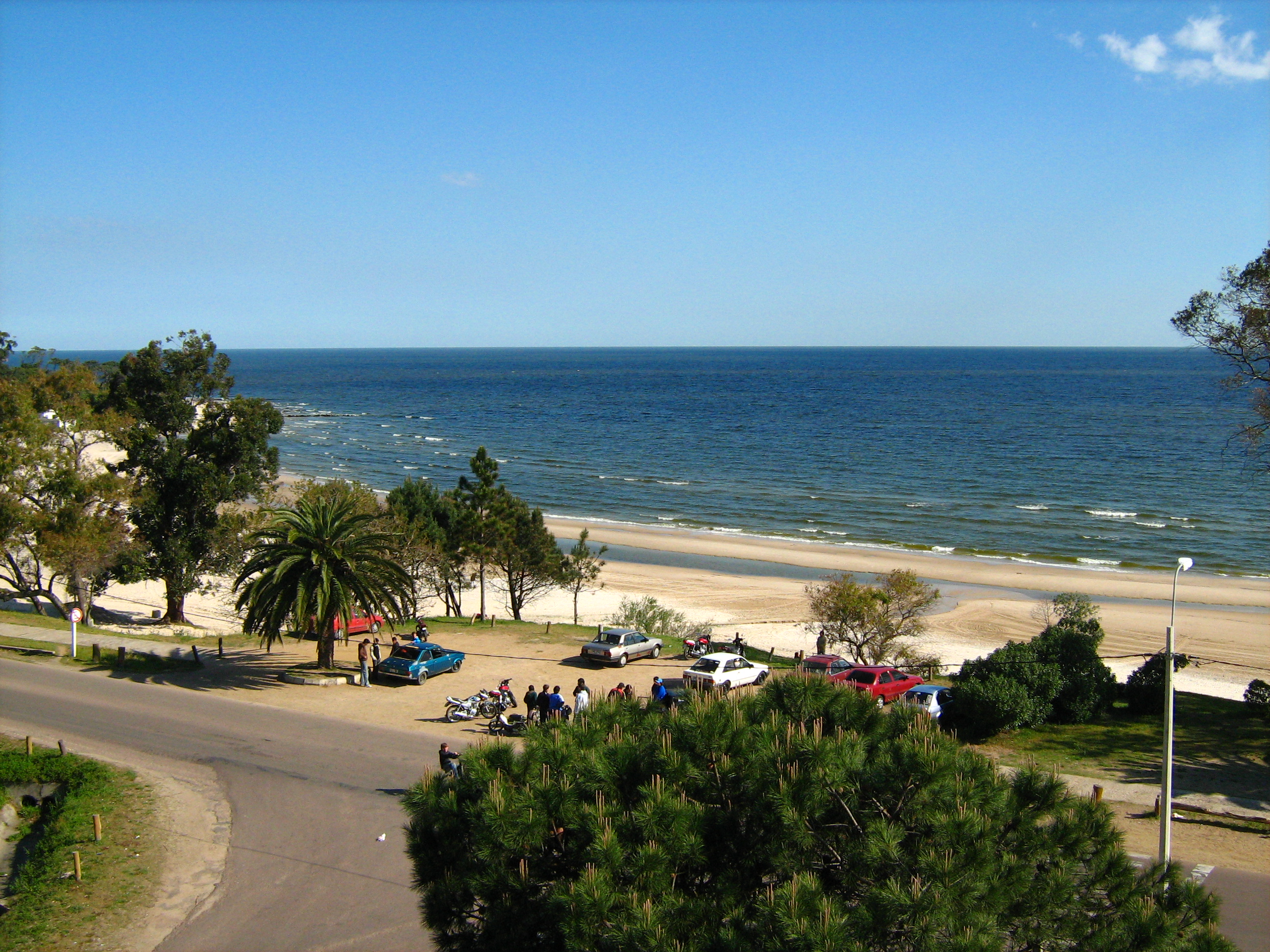
Canelones (Uruguay). Atlántida is one of the most traditional and beloved resorts on the Costa de Oro, on the Río de la Plata, in the southeast of the department of Canelones, about 50 km east of Montevideo via the Ruta Interbalnearia. Born in the early 20th century as a planned resort, it keeps a vintage charm of chalets among pine woods, tree-lined streets and a peaceful waterfront promenade. Its great symbol is El Águila, an enigmatic concrete structure on the beach that became the icon of the whole Canelones coast. It's a family-friendly, serene destination with a classic feel
📌Service town
Atlántida serves as the informal capital of the Costa de Oro and has good services of its own (hotels, shops, banks, a health center, dining), so it works as a base for the neighboring resorts. For larger services and the airport it relies on Montevideo (about 50 km away), whose air gateway is Carrasco International Airport (MVD), which is relatively close, in Canelones. The city of Canelones (departmental capital) and Pando offer administrative services. It has a bus terminal with frequent connections to Montevideo and the whole coast via the Ruta Interbalnearia
📌Best time to visit
Summer (December to March) is high season, when Atlántida fills with families and vacationers, the beaches and the promenade buzz with life and every service is running; it's a traditionally family destination, more affordable than the Maldonado coast. Spring and autumn are ideal for enjoying it calmly, with good weather and better prices, perfect for strolling among the pine woods and visiting El Águila without the crowds. Winter is quiet and cool, with little activity, but keeps its classic, wooded charm
📌Suggested days
One day covers the essentials: the beaches (Brava and Mansa), the promenade, El Águila and a stroll through the center and the pine woods. Two or three days add Eladio Dieste's Church of Cristo Obrero (a UNESCO World Heritage Site since 2021) in Estación Atlántida, the neighboring Costa de Oro resorts (Las Toscas, Parque del Plata, La Floresta) and trips to Montevideo. It's a good, quiet and affordable base for exploring the Costa de Oro at a relaxed pace
💱 Cambio de USD
Loading rate…
🌤️ Clima en Atlántida
Loading weather…
Atlántida is one of those Costa de Oro resorts where time seems to pass more slowly. Just 50 kilometers from Montevideo, on the Río de la Plata, this town of pine woods and old chalets was conceived in the early 20th century as a planned resort, and it still keeps that vintage, family feel that made it famous. Its tree-lined streets slope down to a peaceful promenade and two beaches —the Mansa and the Brava— that in summer fill with Uruguayan and Argentine families who return year after year.
The great symbol of Atlántida is El Águila: a strange and fascinating bird-shaped concrete structure that juts out over Brava beach, built in the 1940s and surrounded by legends about its true origin and purpose. Turned into the icon of the entire Costa de Oro, it's the resort's must-take postcard and the spot where every visitor poses for a photo. A few minutes away, in Estación Atlántida, is another unexpected gem: the Church of Cristo Obrero, a masterpiece by engineer Eladio Dieste, declared a UNESCO World Heritage Site in 2021.
This guide covers the essentials of Atlántida with a practical and warm eye: which beaches to choose, how to get there from Montevideo, where to stay and eat, and how to combine it with the neighboring Costa de Oro resorts. It's an ideal destination for anyone seeking rest, coastal nature and the charm of the most traditional seaside Uruguay, without the bustle or the prices of Punta del Este.
📖 History of Atlántida
Atlántida was born as a planned resort in the early 20th century, when these lands of pine woods and coast, in southeastern Canelones, began to be subdivided and forested to create a summer spot. The decisive push came from the businessman Juan Carlos Robbio Burgwardt and the land-development company that urbanized the area in the first decades of the century, laying out streets, planting pine woods and promoting the building of chalets. The name evokes the mythical lost continent of Atlantis and fits the romantic spirit of the era. The resort grew quickly as a destination for the rising Montevideo middle class, favored by its closeness to the capital and by improved communications. In the 1930s and 1940s it established itself as one of the main tourist centers of the Costa de Oro, with hotels, promenades and an intense summer life. In those years its most enigmatic structure was built: El Águila, a bird-of-prey-shaped concrete structure on Brava beach, whose exact origin and function have been lost among versions and legends (from a lookout and bar to supposed uses during the Second World War), and which ended up becoming the symbol of the resort and of the entire coast. In 1958-1960 the Church of Cristo Obrero y Nuestra Señora de Lourdes was built in Estación Atlántida, the work of engineer Eladio Dieste, which in 2021 was declared a UNESCO World Heritage Site. Over the course of the 20th century, Atlántida gained a permanent population and consolidated as the service hub of the Costa de Oro. The full story is on our history page.
Read the full history →
🗺️ What to see
1
El Águila
The enigmatic bird-shaped concrete monument on Brava beach, icon of Atlántida and of the whole Costa de Oro.
El Águila ('The Eagle') is, without question, the symbol of Atlántida and one of the most recognizable images of the entire Uruguayan Costa de Oro. It's a curious concrete structure shaped like the head of a bird of prey, jutting out over the rocks of Brava beach, at the eastern end of the resort. Its silhouette, half sculpture and half architecture, stands out against the Río de la Plata and is the must-take postcard of the place: practically every visitor stops to be photographed beside it.
The story of El Águila is shrouded in mystery and legend, which is part of its appeal. It was built around the 1940s and, according to the most widespread versions, it may have functioned as a lookout, a bar or the house of an eccentric owner; other, more fanciful versions link it to supposed uses during the Second World War. What is certain is that its exact origin and original function were never entirely clear, and that enigmatic aura is part of its charm.
Today El Águila is a panoramic point and a place to stroll: from its surroundings you get a lovely view of Brava beach and the river, and it's one of the most photographed corners of the resort, especially at sunset. It's integrated into the coastal landscape and its surroundings are freely accessible.
How to get there: it's at the eastern end of Atlántida, on Brava beach, a few minutes on foot or by car from the resort's center. Best time: any day, but sunset gives the best light for photos. Tips: combine the visit with a walk along Brava beach and the promenade.
ℹ️ Distance: Eastern end of Atlántida, on Brava beach (on foot or by car from the center) · Best time: Any day; sunset for the best light · Admission: Free (open access to the surroundings) · Duration: 30 to 45 minutes
2
Church of Cristo Obrero (Eladio Dieste) — UNESCO World Heritage Site
Engineer Eladio Dieste's masterpiece in Estación Atlántida, declared a UNESCO World Heritage Site in 2021.
A few minutes from the center of Atlántida, in the locality of Estación Atlántida, stands one of the jewels of Latin American modern architecture: the Church of Cristo Obrero y Nuestra Señora de Lourdes, the work of Uruguayan engineer Eladio Dieste, built between 1958 and 1960. It is considered his masterpiece and the most celebrated example of his 'reinforced ceramic' technique, a construction system of his own that combines brick, steel and structural calculation to achieve undulating walls and vaults of astonishing subtlety and lightness.
The interior of the church surprises with its light: the curved walls, seemingly fragile, hold up a broad, warm nave, lit by openings that Dieste designed masterfully to let natural light in a filtered, shifting way throughout the day. It's an architecture born of the brick tradition yet radically modern, and it has been studied and admired by architects the world over.
On 27 July 2021, UNESCO declared this church a World Heritage Site (at its 44th session), recognizing its exceptional universal value as a testimony of postwar architectural renewal and of a modernity rooted in local building tradition. It's an unmissable visit for lovers of architecture and a source of pride for all of Uruguay.
How to get there: by car or remís from the center of Atlántida to Estación Atlántida (about 5-10 minutes); you can also get there by local bus. Best time: any day; check mass and visiting hours, as it's a church in active use. Tips: respect the silence if a religious service is underway; morning light usually best enhances the play of shadow in the interior.
ℹ️ Distance: Estación Atlántida, about 5-10 minutes by car from the center of Atlántida · Best time: Any day; check mass and visiting hours · Admission: Free (church with open access during opening hours; a voluntary donation is appreciated) · Duration: 30 to 45 minutes
3
Mansa beach
Atlántida's calmest-water beach, with wide sand and little surf, ideal for families with children.
Mansa beach ('calm beach') is, as its name suggests, the quietest in Atlántida: its waters usually have less surf and a gentle slope, which makes it ideal for families with children and for those seeking a peaceful swim in the Río de la Plata. It's a wide beach, of light-colored sand, bordered by the promenade and the pine woods characteristic of the resort.
In summer it's the heart of Atlántida's beach life: umbrellas, children's games, walks along the shore and the classic mate facing the water. For its serene character, it's the favorite of families and of those who spend long stays at the resort. It has seasonal services (beach bars, umbrella rentals) and lifeguards in the busiest months.
The Mansa is also a good place to walk along the shore at sunset and enjoy the relaxed atmosphere that characterizes the Costa de Oro. Behind the beach, the tree-lined streets invite you to stroll among the traditional chalets.
How to get there: it's on the Atlántida promenade, a few minutes from the center; reachable on foot, by bike or by car. Best time: summer for swimming; the rest of the year for quiet walks. Safety tips: swim in areas with lifeguards and mind your belongings in high season.
ℹ️ Distance: On the Atlántida promenade (on foot or by bike from the center) · Best time: Summer for swimming; year-round for walking · Admission: Free (public beach) · Duration: Half a day or more
4
Brava beach
Atlántida's higher-surf beach, beside El Águila, favored by young people and for walking among the rocks.
Atlántida's Brava beach ('rough beach') is the counterpart of the Mansa: it has more surf and a somewhat wilder character, which makes it appealing to younger people and to those who enjoy a livelier sea. It stretches beside El Águila, the resort's symbolic monument, which makes it one of the most visited and photographed areas.
It's a wide sandy beach, with rocky sections that give it character and invite you to walk and explore the coast. Being next to El Águila, it combines a swim or a walk very well with a visit to the resort's icon and its lookouts. At sunset, the combination of the beach, the rocks and the silhouette of El Águila offers one of the best postcards of Atlántida.
The Brava has seasonal services and is a good spot to spend the afternoon, especially for those who prefer a more youthful atmosphere than the Mansa's. As with any open-sea beach, it pays to mind the surf and the lifeguards' recommendations.
How to get there: it's at the eastern end of the resort, beside El Águila, a few minutes from the center. Best time: summer for swimming; sunset for photos beside El Águila. Safety tips: be careful with the surf and currents; swim near the lifeguard posts in season.
ℹ️ Distance: Eastern end of Atlántida, beside El Águila · Best time: Summer for swimming; sunset for photos · Admission: Free (public beach) · Duration: Half a day
5
Promenade and center of Atlántida
The coastal walk and the resort's core, with its pine woods, old chalets and traditional shops.
The Atlántida promenade and its center hold the resort's life and are ideal for getting to know its quiet, wooded atmosphere. The promenade skirts the beaches and lets you walk, cycle or simply sit and watch the Río de la Plata, especially lovely at sunset. Behind it, the resort's core unfolds in tree-lined streets, with its characteristic pine woods and many old chalets that recall the origin of the place in the early 20th century.
The center of Atlántida has a commercial life of its own, with shops, bakeries, ice cream parlors, restaurants and services that run year-round (more intensely in summer). It's the heart of the Costa de Oro and a good place to stock up, grab a bite or have a coffee between strolls. The atmosphere is that of a traditional, family-oriented seaside town without great luxuries.
Strolling the tree-lined streets, discovering the period chalets and enjoying the coolness of the pine woods is part of the charm of Atlántida, a resort where the forested nature and the summer architecture live together in harmony.
How to get there: the center and the promenade are a few minutes from the beaches; explored on foot or by bike. Best time: any moment; summer for full life, the rest of the year for calm. Tips: rent a bike to comfortably explore the resort and its surroundings.
ℹ️ Distance: Center of the resort, beside the beaches (on foot or by bike) · Best time: Year-round; summer for full life · Admission: Free (open stroll) · Duration: 1 to 2 hours
6
Pine woods and the Costa de Oro surroundings
The pine and eucalyptus forests surrounding Atlántida and the neighboring resorts, ideal for walking and cycling.
One of the most characteristic features of Atlántida and of the whole Costa de Oro are its pine woods: extensive forests of pines and eucalyptus planted over the 20th century to fix the sands and give shade to the resorts. Today those pine woods are an essential part of the landscape and the charm of the area, and they offer a cool, fragrant setting for walking, running or cycling, away from the bustle of the beaches.
The pine woods connect Atlántida with the neighboring Costa de Oro resorts, such as Las Toscas, Parque del Plata and La Floresta, forming a green continuum along the coast. Exploring them is a pleasant way to discover the resort's residential life, with its chalets hidden among the trees and its quiet streets.
The surroundings of Atlántida also invite you to explore the Costa de Oro as a whole: a succession of wooded, peaceful resorts, ideal for a restful getaway a few kilometers from Montevideo. Lovers of nature and the outdoors find here a serene and accessible destination.
How to get there: the pine woods surround the resort and are reachable on foot, by bike or by car. Best time: year-round; spring and autumn are ideal for the weather. Tips: bring repellent in the warm months and comfortable shoes for walking.
ℹ️ Distance: Surroundings of Atlántida and neighboring Costa de Oro resorts · Best time: Year-round; spring and autumn ideal · Admission: Free (open access) · Duration: 1 to 2 hours or more
What nobody tells you💵 Prices
Tickets
| Type | Price |
|---|
| El Águila (surroundings and lookouts) | Free (open access to the surroundings) |
| Church of Cristo Obrero (Eladio Dieste, Estación Atlántida) | Free (open access; a voluntary donation is welcome) |
| Beaches (Mansa and Brava) | Free (public beaches) |
| Promenade and center of Atlántida | Free (open stroll) |
| Pine woods and Costa de Oro surroundings | Free (open access) |
| Beach bars and beach services (season) | Umbrella and lounger rental: UYU 300-600 per day approx. (verified July 2026, summer; check when you visit) |
🔄 updated monthlyOfficial / reference values · double-check when buying
Activities and tours
| Activity | Price | Duration | Operator |
|---|
| Beach day at the Mansa or the Brava | Free (beach-bar service separate, UYU 300-600/day, verified July 2026) | Half a day or more | Public beaches (seasonal beach bars) |
| Bike ride through the pine woods and the promenade | Rental approx. UYU 350-550 per day (source: local rentals, verified July 2026, season) | 1-2 h | Local seasonal rentals |
| Photo walk to El Águila and Brava beach | Free | 1 h | Self-guided |
| Visit to the Church of Cristo Obrero (Eladio Dieste) | Free | 30-45 min | Cristo Obrero Parish, Estación Atlántida |
| Getaway along the Costa de Oro (Las Toscas, Parque del Plata, La Floresta) | Free in your own car; suburban bus approx. UYU 60-120 per stretch, with STM card or cash (verified July 2026) | Half a day | Self-guided or local transport |
| Shore fishing from the rocks | Free (open activity) | Variable | Free activity |
🔄 updated monthlyOfficial / reference values · double-check when buying
🚌 How to get there and distances
Getting around
| Mode | Price | Duration | Notes |
|---|
| On foot | Free | Variable | Atlántida is a compact resort; the center, the promenade and the beaches are comfortably walkable |
| Bicycle | Rental approx. UYU 350-550 per day (source: local rentals, verified July 2026) | Variable | Ideal for exploring the pine woods, the promenade and connecting with neighboring Costa de Oro resorts |
| Private or rental car | Fuel + Ruta Interbalnearia toll (car category: UYU 190 base rate, UYU 162 with electronic toll, UYU 207 with SUCIVE) (source: MTOP, in effect since December 2025, verified July 2026) | Variable | The most comfortable way to get around the Costa de Oro and to arrive from Montevideo via the Ruta Interbalnearia (a single toll, at Pando) |
| Suburban and inter-departmental bus | Short stretches within the Costa de Oro approx. UYU 60-120 (source: MTOP/COPSA suburban fares, verified July 2026) | Variable | COPSA's suburban line 710 runs along the Costa de Oro (Estación Atlántida ↔ Montevideo) and there are also COT services. As a suburban service of the Montevideo Metropolitan Area, Atlántida IS within the zone where the STM card works: you can pay with the (rechargeable) STM card as well as cash. This sets it apart from the deep interior (Rocha, for example), where the bus is paid in cash |
| Bus schedule and location app | Free (the app) | — | In the Montevideo Metropolitan Area —which includes the Costa de Oro— Moovit and the official Cómo Ir app (from the STM) are used to check schedules, routes and real-time bus arrival. For long-distance inter-departmental services, urubus.com.uy and the COPSA and COT sites (source: Moovit / Cómo Ir / COPSA, verified July 2026) |
| Taxi and remís | Approx. UYU 250-450 for short trips within the resort (source: local car-hire firms, verified July 2026) | Variable | Available in the resort, useful for specific transfers and at night |
🔄 updated monthlyOfficial / reference values · double-check when buying
How to get there
| Route | Airlines / operators | Avg. price | Duration |
|---|
| Montevideo → Atlántida (car via Ruta Interbalnearia) | Private or rental car | Car-category toll: UYU 190 (base) / UYU 162 (electronic toll) / UYU 207 (SUCIVE) (source: MTOP, verified July 2026) | Approx. 45 min to 1 h (about 50 km) |
| Montevideo → Atlántida (bus) | COPSA (suburban line 710) and COT from Tres Cruces | Approx. UYU 200-320 depending on the service (source: COPSA/COT, verified July 2026); paid with STM card or cash (metropolitan suburban zone) | Approx. 1 h to 1.5 h depending on stops |
| Carrasco Airport (MVD) → Atlántida | Taxi, remís, transfers or rental car | Remís/taxi approx. UYU 1,800-2,800 (source: local car-hire firms, verified July 2026; check when booking) | Approx. 30 to 45 min |
| Punta del Este / Maldonado → Atlántida (via Ruta Interbalnearia) | Inter-departmental buses (COT, COPSA) or car | Bus ticket approx. UYU 280-380 depending on the company (source: COT/COPSA, verified July 2026) | Approx. 1 h to 1.5 h |
🔄 updated monthlyOfficial / reference values · double-check when buying
🏨 Where to stay
No exact prices: a scale from $ (budget) to $$$$$ (luxury), with 2-3 options per category.
| Category | Price | Recommended options |
|---|
| Central hotels and inns | $$$$$ | Approx. € 49-64 per night (3-4 star hotels, source: booking aggregators, verified July 2026); traditional hotels and inns in the center of Atlántida and near the promenade, with a family feel and a good location for beach and services. Many run year-round |
| Cabins and houses among the pine woods | $$$$$ | From UYU 2,500-5,000 per night depending on capacity and season (source: local rentals, verified July 2026); cabins and rental houses among the pine woods of the resort and the neighboring resorts, ideal for families and long stays. Very popular in summer season |
| Budget / hostels and campgrounds | $$$$$ | From US$ 29-40 per night in budget rooms or homestay-type lodgings (source: booking aggregators, verified July 2026); budget options, hostels and campgrounds in Atlántida and the Costa de Oro, chosen by budget travelers and by families in summer |
| Charming inns | $$$$$ | From € 70-100 per night approx. (source: booking aggregators, verified July 2026); some charming inns and boutique lodgings among the pine woods and near the sea, for those seeking more comfort and quiet |
🍴 Where to eat
| Type | Price | Options / signature dish |
|---|
| Grills and Uruguayan-cuisine restaurants | $$$$$ | UYU 500-900 per dish or set menu (verified July 2026); grills with asado, offal and wood-fired meats, as well as home-style Uruguayan-cuisine restaurants in the center and near the promenade. Asado is the star of the local table |
| Fish and seafood | $$$$$ | UYU 550-950 per main course (verified July 2026); restaurants offering local fish and seafood, taking advantage of the closeness of the Río de la Plata. A good seafront option in season |
| Beach bars | $$$$$ | UYU 300-600 per order or platter (verified July 2026); beach bars on the Mansa and the Brava with simple food, platters, fried snacks, drinks and a place to eat with your feet in the sand during the summer |
| Bakeries, ice cream parlors and cafés | $$$$$ | UYU 150-350 per order (verified July 2026); bakeries with bizcochos and homemade bread, artisanal ice cream parlors and cafés in the center of Atlántida, classics for the afternoon snack and the afternoon mate |
❓ Frequently asked questions
Where is Atlántida and how do I get there from Montevideo?+
Atlántida is in the southeast of the department of Canelones, on the Río de la Plata, about 50 km east of Montevideo. You get there very easily by car via the Ruta Interbalnearia (45 minutes to 1 hour, with a toll of about UYU 190 for the car category, or UYU 162 with electronic toll) or by bus (COPSA suburban line 710 or COT), with regular frequencies year-round. Carrasco Airport is relatively close (30-45 min).
How do you pay for the bus in Atlántida? Does the STM card work?+
Yes. Atlántida and the whole Costa de Oro are part of the Montevideo Metropolitan Area, so the suburban buses (like COPSA's line 710) accept the rechargeable STM card as well as cash. Unlike the deep interior of Uruguay —for example the Rocha coast, where the bus is paid in cash— here it pays to have your STM card loaded. To check schedules and bus location in real time, use the Moovit and Cómo Ir apps (the official STM app).
What is El Águila and why is it famous?+
El Águila is the symbol of Atlántida and of the whole Costa de Oro: a concrete structure shaped like the head of a bird of prey, jutting out over Brava beach, built around the 1940s. Its original origin and function are shrouded in mystery and legend, which adds to its appeal. It's the resort's must-take postcard.
What is Eladio Dieste's Church of Cristo Obrero?+
It's a masterpiece of Uruguayan modern architecture, built between 1958 and 1960 in Estación Atlántida by engineer Eladio Dieste, using his 'reinforced ceramic' technique with undulating brick walls. On 27 July 2021 it was declared a UNESCO World Heritage Site. The visit is free and it's just 5-10 minutes by car from the center of Atlántida.
What's the best time to visit Atlántida?+
Summer (December to March) is high season, when every service is running and the beaches fill with families. Spring and autumn are ideal for enjoying it calmly, with good weather and better prices. Winter is quiet and cool, but keeps its wooded charm.
Is it a family destination?+
Yes, Atlántida is a traditionally family resort, with calm beaches like the Mansa (ideal for kids), pine woods for walking and a serene, affordable atmosphere. It's cheaper and more peaceful than the Maldonado coast and Punta del Este.
Which beach do I choose, the Mansa or the Brava?+
The Mansa has calmer waters and little surf, ideal for families with children and for a peaceful swim. The Brava has more surf and a wilder character, with rocky sections, and is next to El Águila, so it's popular with younger people. Ideally, get to know both.
How many days is it worth staying?+
One day covers the essentials (beaches, promenade, El Águila and the center). With 2 to 3 days you can add the Church of Cristo Obrero, the neighboring Costa de Oro resorts and trips to Montevideo, enjoying the quiet pace of the place. It's a good base for exploring the Costa de Oro.
Sources consulted (15)
- Wikipedia (ES) — «Atlántida (Canelones)»: https://es.wikipedia.org/wiki/Atl%C3%A1ntida_(Canelones)
- Wikipedia (ES) — «Costa de Oro (Uruguay)»: https://es.wikipedia.org/wiki/Costa_de_Oro_(Uruguay)
- Wikipedia (ES) — «El Águila (Atlántida)»: https://es.wikipedia.org/wiki/El_%C3%81guila_(Atl%C3%A1ntida)
- Presidencia de Uruguay — «Iglesia Cristo Obrero de Atlántida fue declarada Patrimonio Mundial por la Unesco» (27 jul 2021): https://www.gub.uy/presidencia/comunicacion/noticias/iglesia-cristo-obrero-atlantida-fue-declarada-patrimonio-mundial-unesco
- Ministerio de Turismo del Uruguay — «Costa de Oro»: https://www.gub.uy/ministerio-turismo/
- Intendencia de Canelones — Turismo: https://www.imcanelones.gub.uy/
- Wikipedia (ES) — «El Águila (Atlántida)»: https://es.wikipedia.org/wiki/El_%C3%81guila_(Atl%C3%A1ntida)
- Ministerio de Educación y Cultura — Iglesia de Cristo Obrero Unesco: https://www.gub.uy/ministerio-educacion-cultura/comunicacion/noticias/iglesia-atlantida-obra-eladio-dieste-es-patrimonio-mundial
- Ministerio de Transporte y Obras Públicas — Tarifas de peajes (auto UYU 190 / telepeaje UYU 162, verificado julio 2026): https://www.gub.uy/ministerio-transporte-obras-publicas/politicas-y-gestion/tarifas
- COPSA — servicio suburbano y tarjeta STM (Área Metropolitana, verificado julio 2026): https://suburbana.copsa.com.uy/informacion
- COT (transporte interdepartamental, oficial): https://cot.com.uy/
- Moovit — Línea 710 (Estación Atlántida ↔ Montevideo), horarios y ubicación en tiempo real: https://moovitapp.com/index/en/public_transit-line-710-Montevideo-1672-1768435-25545669-0
- URUBUS — Montevideo a Atlántida: https://www.urubus.com.uy/
- Intendencia de Canelones — Turismo: https://www.imcanelones.gub.uy/
- Ministerio de Turismo del Uruguay: https://www.gub.uy/ministerio-turismo/