📌Department
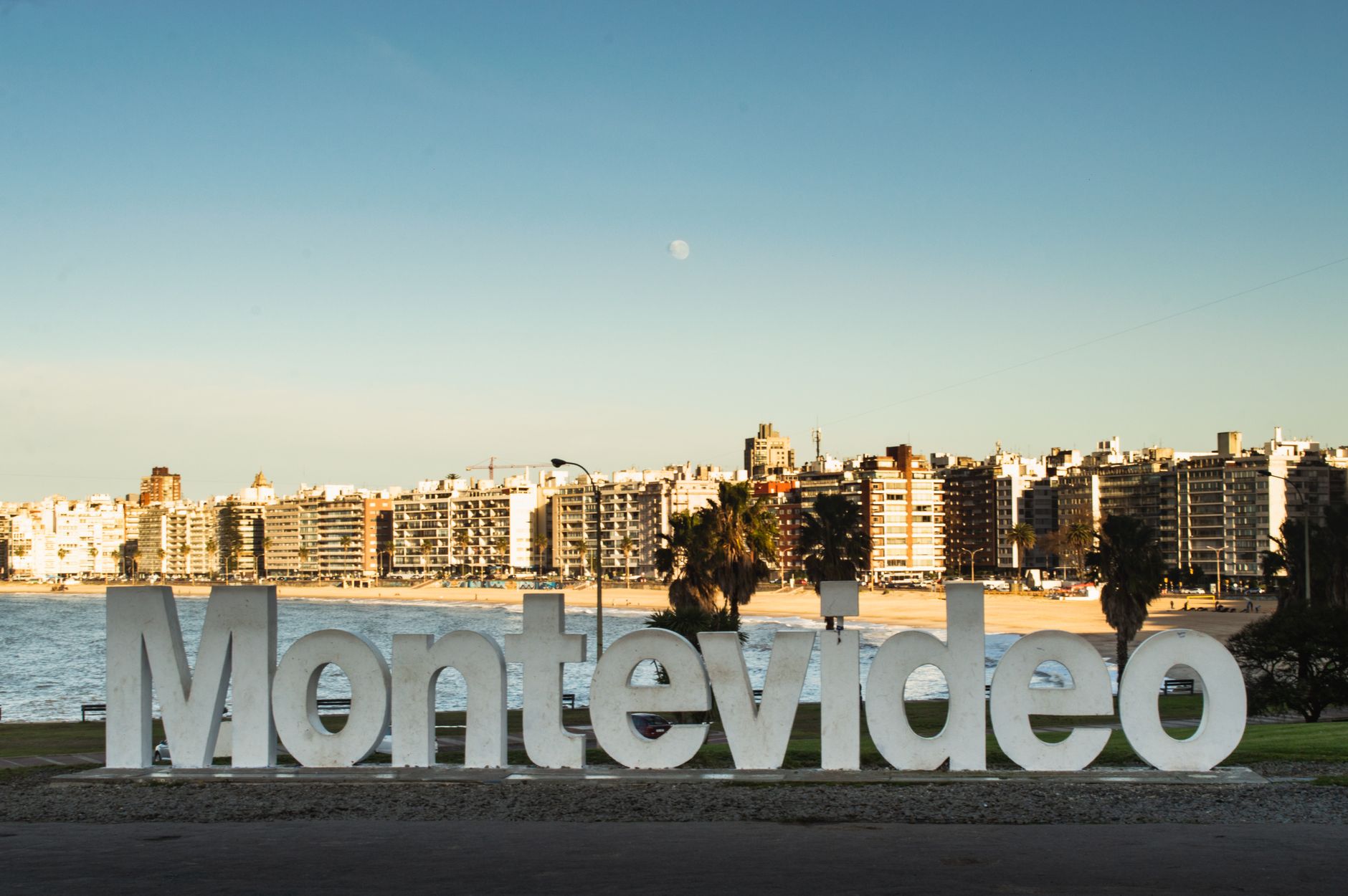
Montevideo (Uruguay). It's the country's capital and the smallest department in area but the most populated, with about 1.3 million inhabitants in the city and almost half the country's population in its metropolitan area. It sits on the northern coast of the Río de la Plata, that enormous, brown river-sea that defines it, and around it grew the great ramblas, the neighborhoods with history and the most intense cultural life in Uruguay. It's a quiet capital, of human scale and deeply Rioplatense, a sister of Buenos Aires on the other side of the river
📌Service city
Montevideo concentrates all the country's services. It has Carrasco International Airport (MVD), about 20 km from the center, which is the main air gateway of Uruguay; the Tres Cruces Terminal, the great hub of long-distance and suburban buses; and the port, which receives cruise ships and the boat (Buquebus and ferries) that connects with Buenos Aires and Colonia. There's a wide network of urban buses, taxis and apps, hotels for all budgets, hospitals, exchange bureaus, ATMs and tourism offices. It's the natural base for touring the rest of the country
📌Best time to visit
Montevideo is enjoyed year-round, but the climate makes a difference. Summer (December to March) is warm and bright, ideal for the rambla and the urban beaches like Pocitos and Ramírez, though there can be days of a lot of heat and humidity; it's also when the city beats with festivals and outdoor life. Autumn and spring are mild and very pleasant for walking the Ciudad Vieja and the neighborhoods. Winter (June to August) is cool, windy and humid, with less tourism, but it has its melancholic charm and lower prices. Two special moments: Carnival (the longest in the world, with its tablados and the Desfile de Llamadas in January-February) and the Semana Criolla of Holy Week
📌Suggested days
With 2 days you cover the essentials: the Ciudad Vieja with the Plaza Independencia and the Palacio Salvo, the Sarandí pedestrian street, the Plaza Matriz, the Mercado del Puerto with its grill, the Teatro Solís and a stretch of the rambla. With 3 to 4 days you add the Mercado Agrícola, the Pocitos neighborhood and its beach, the Estadio Centenario and its football museum, the Prado and a house-museum. With more time, Montevideo is the perfect base for getaways to Colonia del Sacramento, the beaches of Maldonado and Rocha or the thermal interior of the litoral
💱 Cambio de USD
Loading rate…
🌤️ Clima en Montevideo
Loading weather…
Montevideo is a capital that takes its time. It doesn't have the rush or the monumental scale of other big Latin American cities: it has, instead, a rambla of more than 20 kilometers facing the Río de la Plata along which the whole city goes out to walk, run, cycle and, above all, drink mate looking at the water. That waterfront is the heart of Montevideo life, the place where the city breathes facing that brown, immense river-sea that seems to have no shore on the other side.
But Montevideo is much more than its rambla. It's the Ciudad Vieja, its historic core, with cobbled streets, art deco and eclectic buildings somewhat worn but full of character, squares with history and the smell of grill from the Mercado del Puerto. It's the Teatro Solís and the culture that's lived intensely. It's the longest Carnival in the world, with its murgas, its tablados and the Desfile de Llamadas, where Afro-Uruguayan candombe makes the street tremble to the rhythm of the drums. And it's, of course, a football city, with the mythical Estadio Centenario, where the first World Cup final was played in 1930.
This guide covers the essentials of Montevideo with a practical and warm eye: what to see in the Ciudad Vieja, how to experience the rambla and the urban beaches, where to eat a good chivito or an asado, how to get around and how to make the most of the city as a base to get to know the rest of the country. Montevideo is a friendly capital, safe in its usual areas and of human scale, that wins over the traveler slowly, with its quiet pace and its warm people.
📖 History of Montevideo
The history of Montevideo begins as a move on the chessboard of the Río de la Plata. Unlike Buenos Aires, founded by the Spanish, the area where Montevideo is today was for a long time a land disputed between the crowns of Spain and Portugal. The Portuguese, from their Colonia do Sacramento, pressed on the Banda Oriental, and to stop them the Spanish decided to found a stronghold with one of the best natural ports in the region. Thus, between 1724 and 1730, the governor Bruno Mauricio de Zabala carried out the founding of San Felipe y Santiago de Montevideo, which was born as a walled, military city. About the origin of its curious name runs one of the most famous legends of the Río de la Plata: that of 'Monte VI de Este a Oeste' ('Hill VI from East to West') noted by a navigator on a map, though there are several explanations. During the colonial era, Montevideo grew as a port rival of Buenos Aires and as the seat of the Real Apostadero de Marina. In the independence wars it was a key setting; José Gervasio Artigas, the national hero, emerged from these lands. After Uruguay's independence in 1828-1830, Montevideo consolidated as the capital, lived the long and dramatic Sitio Grande (Great Siege) during the Guerra Grande (1843-1851) and, in the early 20th century, became a prosperous, Europeanized capital, that of the 'Batlle-era Uruguay', with great public works, mass immigration and a flourishing cultural life. The full story is on our history page.
Read the full history →
🗺️ What to see
1
Ciudad Vieja and Plaza Matriz
The historic core of Montevideo, with cobbled streets, colonial squares, museums and the cultural heartbeat of the city.
The Ciudad Vieja (Old Town) is the historic heart of Montevideo, the peninsula where the walled city was born in the 18th century. Today it's a fascinating neighborhood of contrasts: colonial buildings, eclectic palaces and art deco jewels coexist with art galleries, cafés, trendy bars and offices, on often cobbled streets that invite you to explore them on foot without a fixed course. It's the area richest in history and heritage in the country.
Its heart is the Plaza Matriz (officially Plaza Constitución), the oldest square in Montevideo, presided over by the Metropolitan Cathedral (Iglesia Matriz) and the Cabildo, the old colonial government building today turned into a museum. In the center of the square is a beautiful 19th-century marble fountain. From here starts the Sarandí pedestrian street, the commercial and tourist street par excellence, which crosses the Ciudad Vieja to the Plaza Independencia, passing antique dealers, bookshops and, on Sundays, the market.
Exploring the Ciudad Vieja also means discovering corners like the Plaza Zabala (with the statue of the founder), the old Mercado del Puerto, the Pérez Castellano pedestrian street, the old houses of Bartolomé Mitre street and the remains of the colonial wall at the Puerta de la Ciudadela, the arch that separates the historic core from the Plaza Independencia. It's a neighborhood that buzzes with life by day and is best explored on foot.
How to get there: it's at the western end of the city, beside the port; reached on foot from the Centro, by bus or by taxi/app. Best time: by day, especially weekdays and Sundays for the Tristán Narvaja market and the activity of the area. Safety tips: as in any historic core, it pays to explore it by day on the busy streets, mind your belongings and at night move around the lively bar areas or by taxi/app.
ℹ️ Distance: Western end of the city, beside the port (on foot, bus or taxi/app) · Best time: By day; Sundays for the Tristán Narvaja market · Admission: Free (open access to streets and squares) · Duration: 2 to 3 hours
2
Plaza Independencia and Palacio Salvo
The great square that joins the Ciudad Vieja with the Centro, with the Artigas mausoleum and the iconic Palacio Salvo.
The Plaza Independencia is the most important and symbolic square in Montevideo, the point where the Ciudad Vieja and the Centro meet, marked by the Puerta de la Ciudadela, the only remnant of the old colonial wall. In the middle of the square rises the imposing equestrian statue of José Gervasio Artigas, Uruguay's foremost national hero, and beneath it is the Mausoleum of Artigas, a solemn underground chamber guarded by soldiers where his remains rest.
Dominating the square is the Palacio Salvo, one of the most emblematic and beloved buildings in Montevideo. Inaugurated in 1928 and the work of architect Mario Palanti, it was for a time the tallest building in South America, with its 100 meters of height and its unmistakable silhouette crowned by a tower. It's the spiritual 'twin' of the Palacio Barolo in Buenos Aires, the work of the same architect, and both are inspired by Dante's Divine Comedy. It can be visited with 45-minute guided tours that go up to the rooftop and the lookout, and include the 'La Cumparsita' Tango Museum.
Around the square are other notable buildings: the Teatro Solís on one side, the Edificio Ciudadela and, on Avenida 18 de Julio which begins here, the start of the city's great commercial artery. The square, with its palm trees and its monumental scale, is the best point to begin to understand Montevideo.
How to get there: in the heart of the center, on foot from the Ciudad Vieja via the Sarandí pedestrian street or from the Centro via 18 de Julio; by bus or taxi/app. Best time: at any hour; the Mausoleum of Artigas and the changing of the guard are a classic daytime visit. Tips: book the guided visit to the Palacio Salvo through Red Ticket; there are tours in Spanish Monday to Sunday (10:30, 12, 2 and 4:30 p.m. approx., check).
ℹ️ Distance: Heart of the center, between Ciudad Vieja and the Centro (on foot) · Best time: Any hour; guided tours at fixed daytime hours · Admission: Square and Mausoleum of Artigas: free. Palacio Salvo (45-min guided tour, includes the Tango Museum): UYU 400 / about US$ 10 (verified July 2026; check when you visit) · Duration: 1 to 2 hours
3
Mercado del Puerto
The mythical iron market of the Ciudad Vieja, today a temple of Uruguayan asado with its wood-fired grills.
The Mercado del Puerto is one of the most flavorful and emblematic visits in Montevideo. It's a beautiful iron and glass building inaugurated in 1868, with a large Victorian industrial structure that originally functioned as a food market beside the port. Over time it transformed into what it is today: a temple of the Uruguayan grill, where dozens of wood-fired grills fill the air with smoke and the aroma of asado.
Entering the Mercado del Puerto at midday, especially on weekends, is to experience a feast for the senses: the grills displaying chorizos, blood sausages, offal, ribs, provoleta and the ever-present chivito; the bustle of the diners; the street musicians outside. It's the place par excellence to try Uruguayan asado in its most authentic and popular version, seated at a counter facing the grill. The classic accompaniment is the 'medio y medio', a refreshing mix of white wine and sparkling wine.
Beyond eating, the building itself is worth the visit for its architecture, and the surroundings of the Ciudad Vieja around it (the Pérez Castellano pedestrian street, the art galleries) complete the stroll. It pays to go hungry and, if possible, avoid peak hours to get a seat more calmly.
How to get there: at the edge of the Ciudad Vieja, beside the port; on foot from the Plaza Matriz or by taxi/app. Best time: at midday, especially weekends, which is when it's at its splendor (at night it has less activity). Safety tips: the port area is best explored by day; on leaving, move around the busy streets or by taxi/app. Bring cash for the more traditional grills.
ℹ️ Distance: Edge of the Ciudad Vieja, beside the port (on foot or taxi/app) · Best time: Midday, especially weekends · Admission: Free (access to the building); à la carte food US$ 15-30 per person at the grills (verified July 2026) · Duration: 1 to 2 hours
4
Teatro Solís
The great theater of Montevideo, a neoclassical jewel of 1856 and the country's main cultural stage.
The Teatro Solís is the most important theater in Uruguay and one of the oldest and most prestigious in South America. Inaugurated in 1856, it's a magnificent neoclassical building, with its columned facade and its horseshoe-shaped Italian-style hall, which has been the stage for operas, concerts, ballet and theater for more than a century and a half. Figures like Enrico Caruso, Arturo Toscanini, Sarah Bernhardt and Anna Pavlova passed across its stage.
After a thorough restoration in the early 21st century, the Solís recovered all its splendor and today combines the elegance of its historic architecture with modern technology. Its main hall, its foyers, its marble and its acoustics make it a pride of the city. It's the venue for Montevideo's main opera and symphony seasons.
You can see it inside in two ways: attending a show (the best way to experience it) or taking one of the guided visits that tour the hall, the boxes, the stage and the history of the theater. It's located beside the Plaza Independencia, in the heart of the center, so it combines perfectly with a tour of the Ciudad Vieja and the historic core.
How to get there: beside the Plaza Independencia, steps from the Ciudad Vieja; on foot, by bus or taxi/app. Best time: the guided visits are held at daytime hours (confirm days and times); for a show, according to the program. Tips: the guided visits usually have a low cost and sometimes there are days with free or reduced admission; it pays to book on the theater's official website.
ℹ️ Distance: Beside the Plaza Independencia, steps from the Ciudad Vieja (on foot) · Best time: Guided visits at daytime hours; shows according to the program · Admission: Guided visit approx. US$ 5-8 per person (verified July 2026; check when you visit); show tickets according to the program · Duration: 45 min to 1 hour
5
Rambla of Montevideo and Pocitos
The 20-plus km waterfront facing the Río de la Plata, the soul of the city, with its urban beaches and sunsets.
The Rambla of Montevideo is the most emblematic and beloved public space in the city: a waterfront avenue of more than 20 kilometers that skirts the Río de la Plata from the Ciudad Vieja to the eastern edge of the city, linking neighborhoods, beaches and parks. It's the place where all of Montevideo goes out to walk, run, cycle, fish, meet with friends and, above all, drink mate looking at the water as the afternoon falls. It's, in many ways, the outdoor living room of the city.
Along the rambla follow neighborhoods and urban beaches. Ramírez Beach, beside the Parque Rodó, is the closest to the center. But the jewel is the Pocitos area, an elegant and lively neighborhood with a sandy beach in the middle of the city, surrounded by buildings, cafés and life; its curving rambla, with the silhouette of the buildings in the background, is one of the classic postcards of Montevideo. Further east follow Buceo (with its marina), Malvín, Carrasco and other beaches.
The sunset on the rambla is a spectacle: the sun falling over the Río de la Plata tints the sky with oranges and pinks, and the waterfront fills with people with their thermos and their mate. Touring it by bike (there are bike paths and rental bikes) is one of the best ways to get to know the city facing the river.
How to get there: the rambla crosses half the city; accessed from any coastal neighborhood on foot, by bus, bike or taxi/app. Best time: the sunset is unmissable; weekends and summer fill it with life. Tips: bring your mate (or buy one) to join the ritual; in summer, the urban beaches like Pocitos and Ramírez are suitable for swimming depending on the water status (check).
ℹ️ Distance: Runs along the whole coast of the city (on foot, bike, bus or taxi/app) · Best time: Sunset; weekends and summer for beach life · Admission: Free (public space) · Duration: 1 to 3 hours
6
Estadio Centenario and Football Museum
The stadium where the first World Cup final was played in 1930, a historic monument of world football.
The Estadio Centenario is one of the most sacred places in the history of world football. Inaugurated in 1930 to host the first World Cup in history —which Uruguay not only organized but won, defeating Argentina in the final—, it was built to commemorate the centenary of the country's first Constitution. For its historical value, FIFA declared it a 'Historical Monument of World Football', the only stadium in the world with that distinction.
Its Torre de los Homenajes, an art deco structure of about 100 meters that rises over one of the stands, is its unmistakable hallmark and can be visited for an add-on to the admission. Inside the stadium operates the Football Museum, which covers the epic history of the Uruguayan national team, its two world championships (1930 and the famous 'Maracanazo' of 1950, when Uruguay defeated Brazil in the Maracanã itself), its Olympic glories and the great idols of the celeste football.
The visit combines the museum with access to the stands and, depending on the moment, to other sectors of the stadium, which lets you step onto the setting where the World Cup mystique was born. For a football lover, it's an unmissable visit; for any traveler, a way to understand the passion football arouses in this small country that is, nonetheless, a historic football power.
How to get there: it's in the Parque Batlle, in the center-east of the city; by bus or taxi/app. Best time: for the museum, Monday to Saturday from 10 a.m. to 5 p.m. (confirm). Tips: foreigners pay a different rate from Uruguayans; add the Torre de los Homenajes supplement if you want the panoramic views; to attend a match, buy tickets through official channels.
ℹ️ Distance: Parque Batlle, center-east of the city (bus or taxi/app) · Best time: Monday to Saturday, 10 a.m. to 5 p.m. (confirm) · Admission: Foreigners UYU 300 approx. (US$ 7-8); Uruguayans with ID UYU 150. Torre de los Homenajes: + UYU 100 (verified July 2026; check when you visit) · Duration: 1 to 2 hours
7
Mercado Agrícola de Montevideo (MAM)
The historic 1913 food market recycled, today a great gastronomic hub and hub of local products.
The Mercado Agrícola de Montevideo, known by its initials MAM, is a beautiful example of heritage recovery. It's a historic 1913 building, of elegant architecture, that was born as the city's great wholesale market of fruit, vegetables and provisions. After decades of deterioration, it was restored and reopened in 2013, transforming into one of the most appealing gastronomic and commercial spaces in Montevideo, without losing its market soul.
Today the MAM combines traditional stalls of fruit, vegetables, meats, cold cuts, cheeses, bakeries and spices with a great offer of restaurants, cafés, food trucks and gourmet shops. It's an ideal place to have lunch or a snack, try Uruguayan products, buy delicatessen to take home or simply stroll beneath its great recovered structure. It has a very lively food court and there are usually activities, markets and music.
It's in the Goes neighborhood, a bit outside the classic tourist circuit, which makes it a more authentic visit, mixed with the everyday life of Montevideo. It's a good example of how the city recycles its architectural jewels to give them new life.
How to get there: in the Goes neighborhood, north of the Centro; by bus or taxi/app (it's not in the historic core). Best time: at midday or in the afternoon, when it's liveliest; on weekends there are usually activities. Tips: it combines well with a morning or afternoon dedicated to getting to know less touristy neighborhoods; bring an appetite for local products.
ℹ️ Distance: Goes neighborhood, north of the Centro (bus or taxi/app) · Best time: Midday or afternoon; weekends with activities · Admission: Free (open access); à la carte food and shopping US$ 8-20 per person (verified July 2026) · Duration: 1 to 2 hours
8
Parque Rodó
The great recreational park of Montevideo beside the rambla, with its lake, its amusement park and cultural life.
The Parque Rodó is one of the most popular and beloved parks in Montevideo, a great green space beside the rambla and Ramírez Beach, in the neighborhood of the same name. Named in honor of the Uruguayan writer José Enrique Rodó, it's a classic family and weekend outing, with its ancient trees, its artificial lake with boats, its trails and its relaxed atmosphere.
Within and around the park there are several attractions. The historic Amusement Park (with its Ferris wheel and classic rides) gives it a nostalgic and endearing air. The lake, where you can rent rowing or pedal boats, is one of its most photogenic corners. On weekends an artisan market is usually set up and there are food stalls. It's a place where the ritual of mate and the picnic is the star.
Around the park are important cultural institutions, such as the National Museum of Visual Arts (with the largest collection of Uruguayan art, free admission) and the School of Architecture, as well as the nearby Ramírez Beach. The whole ensemble, next to the rambla, makes the area one of the best places to spend an afternoon outdoors in the city.
How to get there: in the Parque Rodó neighborhood, beside the rambla and Ramírez Beach; on foot from the Centro, by bus or taxi/app. Best time: on weekends and on nice days, when it fills with life; the sunset beside the rambla is beautiful. Tips: combine the park with a stroll along the rambla and with the National Museum of Visual Arts, free admission.
ℹ️ Distance: Parque Rodó neighborhood, beside the rambla (on foot from the Centro) · Best time: Weekends and sunny days; sunset · Admission: Free (park and National Museum of Visual Arts); boats on the lake approx. US$ 5-8 per 20-30 min (verified July 2026) · Duration: 1 to 2 hours
What nobody tells you💵 Prices
Tickets
| Type | Price |
|---|
| Ciudad Vieja, Plaza Matriz and Plaza Independencia (stroll) | Free (open access to streets and squares) |
| Mausoleum of Artigas (Plaza Independencia) | Free (open access; check hours) |
| Palacio Salvo (45-min guided tour with Tango Museum) | UYU 400 / about US$ 10 per person (verified July 2026; check when you visit; bookings via Red Ticket) |
| Teatro Solís (guided visit) | US$ 5-8 per person approx. (verified July 2026; check); there are usually days with reduced or free admission |
| Mercado del Puerto (access to the building) | Free (open access; you pay for what you consume at the grills) |
| Rambla, urban beaches and Parque Rodó | Free (public spaces) |
| Football Museum (Estadio Centenario) | Foreigners UYU 300 (~US$ 7-8); Uruguayans with ID UYU 150. Torre de los Homenajes +UYU 100 (verified July 2026) |
| Mercado Agrícola de Montevideo (MAM) | Free (open access; you pay for what you consume) |
| National Museum of Visual Arts (Parque Rodó) | Free (open access; confirm hours) |
🔄 updated monthlyOfficial / reference values · double-check when buying
Activities and tours
| Activity | Price | Duration | Operator |
|---|
| City tour of the Ciudad Vieja and the Centro (on foot or by bus) | Free walking tour (suggested tip US$ 10-15); paid tours US$ 20-35 per person (verified July 2026) | Half a day | Local agencies and guides; free walking tours |
| Bike ride along the rambla | Rental US$ 10-20 per day; guided bike tour US$ 25-40 per person (verified July 2026) | 2-3 h | Montevideo bike rental companies and bike tours |
| Guided visit to the Teatro Solís | US$ 5-8 per person approx. (verified July 2026; check) | 45 min to 1 h | Teatro Solís (official) |
| Visit to the Estadio Centenario and Football Museum | UYU 300 foreigners / UYU 150 Uruguayans; + UYU 100 Torre de los Homenajes (verified July 2026) | 1-2 h | Football Museum (official, AUF) |
| Asado / grill experience at the Mercado del Puerto | US$ 15-30 per person (verified July 2026) | 1-2 h | Mercado del Puerto grills |
| Tour of tablados and candombe at Carnival | US$ 15-30 per person at a tablado (January-February season; verified July 2026; check) | One night | Tablados and agencies in Carnival season |
| Day trip to Colonia del Sacramento | US$ 50-90 per person on an organized excursion (includes round-trip ferry; verified July 2026) | Full day | Montevideo agencies |
🔄 updated monthlyOfficial / reference values · double-check when buying
🚌 How to get there and distances
Getting around
| Mode | Price | Duration | Notes |
|---|
| Urban bus (STM system) | With the STM card: 1-hour ticket UYU 52 (allows one transfer within 60 min); cash on board: UYU 64. Source: Intendencia de Montevideo, fares in effect since 5 January 2026, verified July 2026 | Variable | A wide network that covers the whole city. Paid with the STM card (cheaper, and the 1-hour ticket enables transfers) or in cash on board the bus. The STM card is obtained and topped up at STM shops, Abitab and Redpagos; you can also postpay with bank agreements (BROU, OCA, Creditel, etc.). It's the most affordable option, though it can be slow at peak hours |
| Real-time app (Cómo Ir, Moovit, Bondi) | Free (the apps) | — | To see where the bus is in real time and plan routes, in Montevideo three apps are used: 'Cómo Ir', the official one of the Intendencia de Montevideo, which shows the buses' GPS location and builds the route; Moovit, the most popular and with the most coverage (it also works for the metropolitan area and the interior); and Bondi, widely used by Montevideans to see schedules. Source: Intendencia de Montevideo / Moovit, verified July 2026 |
| Taxi | Flag drop approx. UYU 65-80 + cost per unit/km (verified July 2026; check when you visit) | Variable | Metered taxis, plentiful and safe. You can pay in cash or, in most, by card. Convenient for medium distances and at night |
| Ride-hailing apps (Uber, Cabify, inDrive) | US$ 3-8 for short trips within the city (depending on demand; verified July 2026) | Variable | They work well throughout Montevideo and are usually comfortable and reasonably priced; highly recommended at night. Paid with a card loaded in the app or in cash |
| Bicycle | Rental US$ 10-20 per day (verified July 2026; check when you visit) | Variable | The rambla has a bike path and is ideal for cycling. There are rental services and public bikes (Movete/Intendencia system) |
| On foot | Free | Variable | The Ciudad Vieja, the Centro and the coastal neighborhoods are very well explored on foot; it's the best way to enjoy the human scale of the city |
🔄 updated monthlyOfficial / reference values · double-check when buying
How to get there
| Route | Airlines / operators | Avg. price | Duration |
|---|
| Carrasco Airport (MVD) → Centro / Ciudad Vieja | Metered taxis, apps (Uber/Cabify) and buses (urban lines and direct services like COT/Copsa) | Taxi/remís approx. US$ 25-35; urban bus from UYU 64 in cash (or UYU 52 with the STM card); direct terminal services somewhat more expensive (verified July 2026) | 20 to 40 min depending on traffic (about 20 km) |
| Buenos Aires → Montevideo (direct ferry) | Buquebus (fast direct service) | From US$ 90 approx. in promotional tourist class; higher fares in high season (verified July 2026; check) | Direct by water about 2 h 15 |
| Buenos Aires → Colonia → Montevideo (ferry + bus) | Buquebus / Colonia Express + bus to Montevideo | From US$ 55-70 approx. combining ferry and bus (cheaper than the direct; verified July 2026) | Ferry 1 to 3 h + Colonia–Montevideo bus (about 2 h 30) |
| Arrival by long-distance bus (Tres Cruces Terminal) | National companies (COT, CUT, Núñez, Cynsa, etc.) | Depending on the origin; Punta del Este US$ 12-16, Colonia US$ 10-14 (verified July 2026) | Depending on the origin (Punta del Este about 2 h, Colonia about 2 h 30, Salto about 6 h) |
| International flights to Carrasco (MVD) | Airlines with regional and international connections | Variable depending on origin and season; Buenos Aires from US$ 80-150 one way (verified July 2026) | Depending on the origin (Buenos Aires about 50 min, São Paulo about 2 h 30) |
🔄 updated monthlyOfficial / reference values · double-check when buying
🏨 Where to stay
No exact prices: a scale from $ (budget) to $$$$$ (luxury), with 2-3 options per category.
| Category | Price | Recommended options |
|---|
| Luxury / classics facing the rambla and the Centro | $$$$$ | US$ 150-300 per night; high-end hotels in the Centro, Pocitos and rambla area, with river views and full services, including international chains (verified July 2026; check when you visit) |
| Mid-range in the Centro and Pocitos | $$$$$ | US$ 60-110 per night; a wide offer of mid-range hotels in the Centro (near 18 de Julio and the Plaza Independencia) and in Pocitos (beside the beach and the rambla). Good balance of location, comfort and price (verified July 2026; check when you visit) |
| Charm in the Ciudad Vieja | $$$$$ | US$ 80-150 per night; boutique hotels and lodgings with character in historic buildings of the old core, for those who want to sleep in the cultural heart of the city (verified July 2026; check when you visit) |
| Budget / hostels | $$$$$ | US$ 15-35 per night; hostels and budget hotels in the Ciudad Vieja, the Centro and Pocitos, very popular with backpackers and budget travelers (verified July 2026; check when you visit) |
🍴 Where to eat
| Type | Price | Options / signature dish |
|---|
| Grills and asado (the national dish) | $$$$$ | US$ 15-35 per dish; Uruguayan asado is a religion: short rib, flank, sirloin cap, chorizo, blood sausage and offal over the wood fire. The Mercado del Puerto is the popular temple, but there are great grills all over the city (verified July 2026; check when you visit) |
| Chivito (the flagship sandwich of Uruguay) | $$$$$ | US$ 8-16 per dish; the chivito is the most iconic dish of Uruguayan popular cuisine: a generous sandwich (or plate) of beef tenderloin with ham, cheese, egg, lettuce, tomato, bacon and more, with fries. Found at bars, chiviterías and grills all over the city (verified July 2026; check when you visit) |
| Contemporary and signature cuisine (Ciudad Vieja and Pocitos) | $$$$$ | US$ 30-60 per dish; a growing modern gastronomic scene, with signature-cuisine restaurants, local products and Uruguayan wines (especially Tannat), concentrated in the Ciudad Vieja, the Centro and Pocitos (verified July 2026; check when you visit) |
| Cafés, patisseries and sweets (medialunas, chajá dessert) | $$$$$ | US$ 3-10 per order; historic cafés and patisseries to try the medialunas, the dulce de leche, the Uruguayan alfajor and the chajá dessert. The café culture and the afternoon snack with mate are part of the day-to-day of Montevideo (verified July 2026; check when you visit) |
❓ Frequently asked questions
Is it safe to travel to Montevideo?+
Montevideo is one of the quietest capitals in the region, but as in any big city it pays to take basic precautions: carry little cash in sight, mind your phone, move around at night by taxi/app and avoid little-traveled areas or peripheral neighborhoods that aren't touristy. The traveler's usual areas (Ciudad Vieja by day, Centro, Pocitos, the rambla) are enjoyed normally using common sense.
How many days do I need to see Montevideo?+
With 2 days you cover the essentials: the Ciudad Vieja with its squares, the Sarandí pedestrian street, the Mercado del Puerto, the Teatro Solís, the Plaza Independencia with the Palacio Salvo (admission UYU 400) and a stretch of rambla. With 3 to 4 days you add the Estadio Centenario and the Football Museum, the Mercado Agrícola, Pocitos and its beach, the Parque Rodó and a museum. It's also the ideal base for getaways to Colonia, Punta del Este or the interior.
What's the best time to go?+
Summer (December to March) is warm and bright, perfect for the rambla and the urban beaches, but busier. Autumn and spring are mild and very pleasant for walking the city. Winter is cool, windy and humid, with less tourism and lower prices. If Carnival (the longest in the world) or candombe appeal to you, travel in January-February, when the Desfile de Llamadas and the tablados take place.
How do I get around the city and how do you pay for the bus?+
The urban bus system (STM) covers the whole city; the 1-hour ticket costs UYU 52 with the STM card (and enables one transfer within 60 minutes) or UYU 64 in cash on the bus (in effect since 5 January 2026). The STM card is obtained and topped up at STM shops, Abitab and Redpagos. To see where the bus is in real time, use the 'Cómo Ir' app (official of the Intendencia), Moovit or Bondi. For medium distances and at night, the most comfortable is a taxi (metered) or app (Uber/Cabify/inDrive), which work well and are safe. The Ciudad Vieja, the Centro and the coastal neighborhoods are very well explored on foot, and the rambla is ideal for cycling (verified July 2026).
What is the STM card and do I need one for the bus in Montevideo?+
The STM (Metropolitan Transport System) is the rechargeable card with which you pay for the Montevideo urban bus and the suburban bus of the metropolitan area. It's not mandatory —you can pay in cash on board (UYU 64 for the 1-hour ticket)— but with the card it's cheaper (UYU 52) and gives you a free transfer within the hour. It's obtained and topped up at STM shops, Abitab and Redpagos. Note: the STM only works in Montevideo and its metropolitan area; in the rest of the interior (Rocha, Maldonado, Soriano, Lavalleja, etc.) the bus is paid in cash and this card does not apply (verified July 2026).
What currency is used and how do I pay?+
The currency is the Uruguayan peso (UYU). At many tourist businesses dollars are also accepted and, in some, reais, but it pays to operate in Uruguayan pesos for better prices. Cards are widely used and there are ATMs all over the city. It pays to check updated exchange rates at the time of the trip.
What must I eat in Montevideo?+
Uruguayan asado (short rib, offal, chorizo) at a grill, ideally at the Mercado del Puerto (US$ 15-30 per person); the chivito (US$ 8-16), the country's flagship sandwich; a good Tannat wine; and for dessert, the chajá dessert, the alfajor and the medialunas with a coffee. And, of course, join the ritual of mate on the rambla.
Is it worth using Montevideo as a base to get to know Uruguay?+
Yes. For its central position and its good connections (Tres Cruces Terminal, airport and port), Montevideo is the best base for touring the country: Colonia del Sacramento is about 2 h 30 away (ferry from Buenos Aires + bus, or by car), Punta del Este about 2 h, and from here buses leave for the whole thermal litoral and the Atlantic coast of Rocha. Many travelers combine a few days in the capital with getaways to the coast or the interior.
Sources consulted (22)
- Wikipedia (ES) — «Montevideo»: https://es.wikipedia.org/wiki/Montevideo
- Wikipedia (ES) — «Historia de Montevideo»: https://es.wikipedia.org/wiki/Historia_de_Montevideo
- Wikipedia (EN) — «Montevideo»: https://en.wikipedia.org/wiki/Montevideo
- Ministerio de Turismo del Uruguay — Montevideo: https://www.gub.uy/ministerio-turismo/
- Descubrí Montevideo (Intendencia de Montevideo): https://descubrimontevideo.uy/
- Teatro Solís (oficial): https://www.teatrosolis.org.uy/
- Museo del Fútbol — Estadio Centenario, reservar tickets: https://www.estadiocentenario.com.uy/es/museo-del-futbol/reservar-tickets/
- Wikipedia (ES) — «Palacio Salvo»: https://es.wikipedia.org/wiki/Palacio_Salvo
- Ideas Para Viajar — Precio entrada Palacio Salvo: https://ideasparaviajar.com/precio-entrada-palacio-salvo
- Wikipedia (ES) — «Mercado del Puerto (Montevideo)»: https://es.wikipedia.org/wiki/Mercado_del_Puerto
- Wikipedia (ES) — «Mercado Agrícola de Montevideo»: https://es.wikipedia.org/wiki/Mercado_Agr%C3%ADcola_de_Montevideo
- Wikipedia (ES) — «Carnaval de Montevideo»: https://es.wikipedia.org/wiki/Carnaval_de_Montevideo
- Wikipedia (ES) — «Candombe»: https://es.wikipedia.org/wiki/Candombe
- Aeropuerto Internacional de Carrasco (oficial): https://www.aeropuertodecarrasco.com.uy/
- Terminal Tres Cruces (oficial): https://www.trescruces.com.uy/
- Buquebus (oficial): https://www.buquebus.com/
- Intendencia de Montevideo — Tarifas del transporte colectivo urbano (STM): https://montevideo.gub.uy/tipo/area-tematica/sistema-de-transporte-metropolitano/tarifas-del-transporte-colectivo-urbano
- Intendencia de Montevideo — App 'Cómo Ir' (seguimiento de ómnibus en tiempo real): https://montevideo.gub.uy/
- Moovit — Planificador de transporte público Montevideo (horarios en tiempo real): https://moovitapp.com/index/es/transporte_p%C3%BAblico-Montevideo-1672
- Ministerio de Turismo del Uruguay: https://www.gub.uy/ministerio-turismo/
- Wikipedia (ES) — «Gastronomía de Uruguay»: https://es.wikipedia.org/wiki/Gastronom%C3%ADa_de_Uruguay
- Wikipedia (ES) — «Chivito (Uruguay)»: https://es.wikipedia.org/wiki/Chivito_(Uruguay)