Affiliate link: we earn a commission.
📌What it is
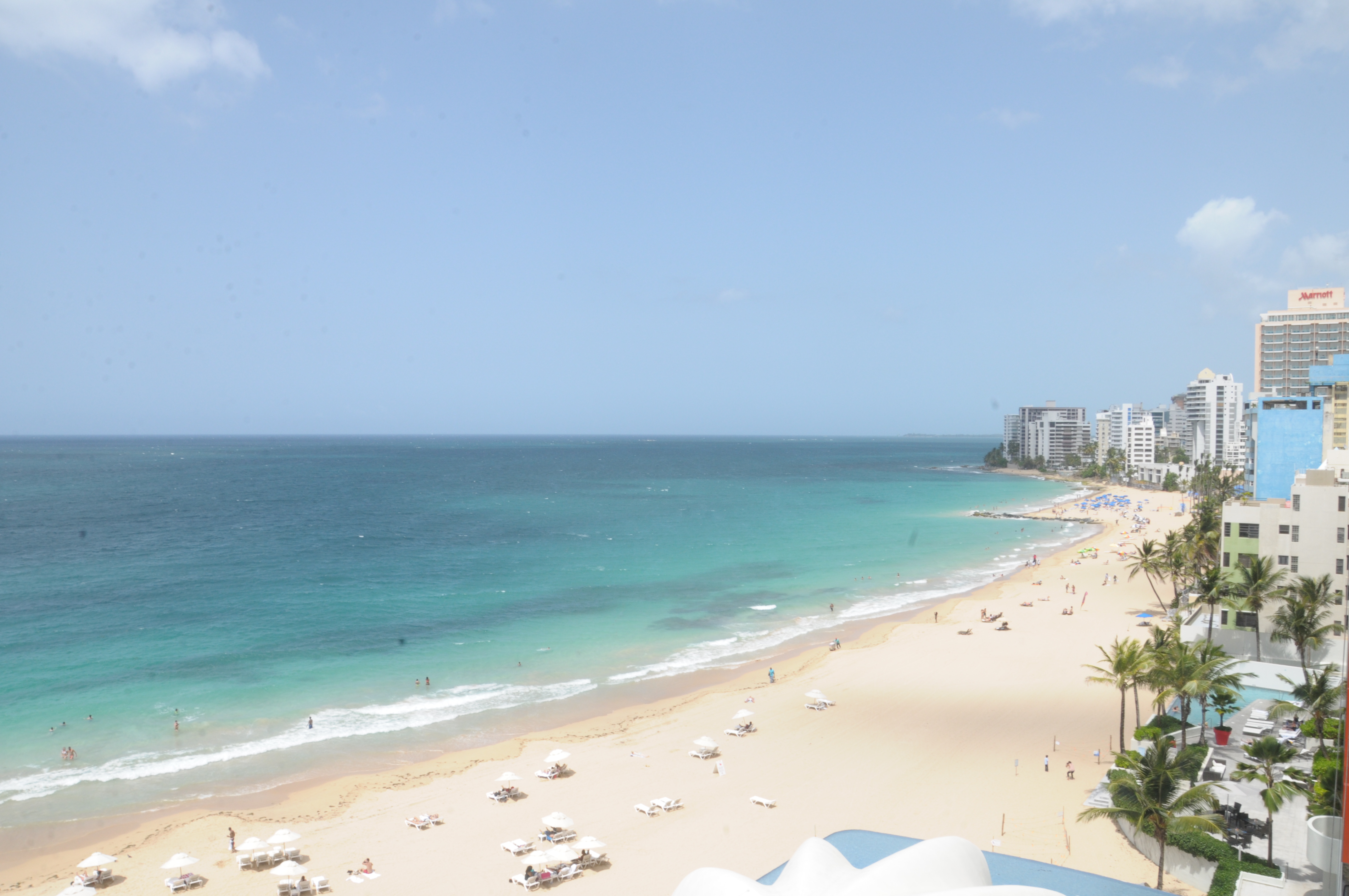
Condado is the most elegant beach and tourist district of San Juan, capital of Puerto Rico. It stretches along a coastal strip between the Atlantic Ocean and the Condado Lagoon, connected with Old San Juan and Santurce. It's the capital's classic 'hotel zone' — comparable to a Caribbean Miami Beach — with big oceanfront hotels, top-tier restaurants, luxury shops, nightlife and a very busy urban beach. It's part of the municipality of San Juan
📌Service town
Condado is part of San Juan, so it has all services at hand: hotels, restaurants, banks, pharmacies and shops. Luis Muñoz Marín International Airport (SJU) is about 10-12 km away (15-25 min). Old San Juan is a few minutes away by taxi/app, as are Santurce, Ocean Park and Isla Verde. You get around mostly by taxi/app and on foot along its main avenue (Ashford Avenue)
📌Best time to go
Tropical climate year-round (24-31 °C). The dry season (December to April) is the most pleasant and the one with the highest demand and prices, especially at Christmas and January. Summer brings more heat, brief afternoon rains and better rates. Hurricane season runs from June to November (peak August-October): it's best to follow the forecast and get insurance. For the beach, the morning usually has the calmest sea
📌Suggested days
Condado is, above all, a base to stay in and enjoy the beach, food and nightlife while touring San Juan and the island. As an attraction in itself it's covered in 1 day (beach, walk along Ashford Avenue, sunset and dinner). The usual thing is to use it as a base for 3 to 5 days, combining it with Old San Juan, Santurce and excursions to El Yunque, Fajardo or the eastern beaches
💱 USD exchange rate
Loading rate…
Condado is the cosmopolitan, beachy face of San Juan. If Old San Juan is history and cobblestones, Condado is sea, luxury hotels, trendy restaurants and nightlife facing the Atlantic Ocean. Its development in the early 20th century, inspired by the great US resorts, made it the capital's tourist district par excellence, an elegant neighborhood concentrating some of the best hotels and the most vibrant cuisine on the island.
Stretched between the Atlantic and the Condado Lagoon, the district revolves around Ashford Avenue, its main artery, where historic and modern hotels, boutiques, cafés and restaurants line up. Its golden-sand beach invites you to swim (with attention to the currents), while the lagoon offers kayaking and paddleboarding in calm waters. As evening falls, the bars and rooftops fill up to watch the sunset, and at night Condado unfolds one of the most sophisticated scenes in San Juan.
This guide covers the essentials of Condado with a practical, warm eye: its beach and its lagoon, its food and its nightlife, and its ideal role as a base for discovering the rest of San Juan and Puerto Rico. It's the perfect option for those who want to combine the sea and the comfort of a hotel zone with the culture of Old San Juan, all a few minutes away.
📖 History of Condado
Condado was born as a residential and tourist area at the beginning of the 20th century, at the height of Puerto Rico's boom under the new US sovereignty (after 1898). The construction of the Dos Hermanos bridge, which crossed the entrance of the Condado Lagoon connecting the San Juan islet with the Santurce area, opened the door to its development. In 1919 the emblematic Condado Vanderbilt hotel opened, driven by interests tied to the Vanderbilt family, which marked the start of the district's elegant, tourist calling, in the image of the great fashionable resorts. Throughout the 20th century, Condado consolidated itself as the capital's main hotel and leisure area, with Ashford Avenue as its great artery, filling with hotels, casinos, restaurants and shops. After periods of boom and decline, it saw a major renovation in recent decades that restored the shine to its historic hotels and cemented it as one of the most coveted destinations in the urban Caribbean. The history of San Juan, of which Condado is part, is on our history page.
Read the full history ↓🏛️ Condado is in San Juan
The capital and one of the oldest cities founded by Europeans in the Americas: born at Caparra, walled against the Atlantic and crowned by El Morro and San Cristóbal, it blends five centuries of colonial history with the most intense cultural life in the Caribbean.
Read the history of San Juan →🗺️ What to see
Tours nearby, in San Juan
A local guide tells you in half an hour what no sign at the site will ever explain. We look ours up on Civitatis: guided in Spanish and booked online with no fuss. They have 12 activities in San Juan. And there are free tours here: you book without paying and tip the guide whatever you think at the end, so trying one costs you nothing. Three are below so you get the idea: tap any of them and they all open.
They depart from San Juan, 3 km away. Affiliate link: we earn a commission.
1
Condado Beach
The most elegant urban beach in San Juan, golden sand facing the Atlantic, lined with hotels and restaurants.
Read more ↓
Condado Beach is the district's great protagonist and one of the busiest urban beaches in San Juan. It's a strip of golden sand facing the Atlantic Ocean, lined with hotels, condos and restaurants, with the energy of a lively tourist zone by day and by night. It's the ideal place to combine swimming and sun with the convenience of having all services just steps away.
The beach has stretches of different character: some more sheltered and calm, perfect for families, and others with stronger surf and currents, so it's best to pay attention to the flags and safety guidance. The Ventana al Mar area, a public park across from the avenue, is a good access point, with green spaces, sculptures and events. Toward the western end, near the bridge, calmer pools form that are ideal for splashing around.
Beyond swimming, Condado Beach is a social stage: people running or walking along the shore, surfers and paddleboarders, and at sunset, the bars and rooftops that fill up to watch the sun set over the sea. It's the postcard of modern, beachy San Juan.
Getting there: it runs along the Condado district, accessible from Ashford Avenue and the hotels; a few minutes by taxi/app from Old San Juan. Best time and hours: in the morning for a calmer sea; sunset for the atmosphere. Safety tips: respect the flags and lifeguards (there are rip currents on some stretches), carry little cash and watch your belongings in the sand.
ℹ️ Distance: Along the Condado district, across from Ashford Avenue (on foot or taxi/app) · Best time to go: Morning for a calm sea; sunset for the atmosphere · Admission: Free (public beach) · Duration: Half a day or more
3
Condado Lagoon (kayaking and paddleboarding)
The calm-water lagoon separating Condado from Miramar, ideal for water sports and sunsets.
Read more ↓
The Condado Lagoon is a calm body of water that separates the Condado district from the Miramar area and connects with the ocean through the entrance that crosses the Dos Hermanos bridge. Unlike the beach, with its Atlantic surf, the lagoon offers calm, sheltered waters, perfect for risk-free water sports: it's one of the best places in San Juan for kayaking, stand-up paddleboarding or a boat ride.
Several operators rent equipment and offer guided excursions across the lagoon, including sunset and sometimes nighttime trips, on which you can see iguanas, fish, the occasional manatee and birds. Paddling its waters, with the Condado skyline and the hotels in the background, is a different and relaxing way to get to know the district. The Condado Lagoon Park, on the shore, is a pleasant public space with trails and views.
It's an ideal activity for families and for those looking to combine the beach with some movement in a safe setting. The sunset over the lagoon, with the golden light reflecting on the water, is one of the loveliest moments of the day.
Getting there: the lagoon borders Condado on its inner side; the rental and departure points are next to the Dos Hermanos bridge and the avenue. Best time and hours: in the morning or at sunset, with less wind and better light. Tips: book the excursions in advance in high season, bring sunscreen and clothes that can get wet, and check the guided sunset trips.
ℹ️ Distance: Inner side of Condado, next to the Dos Hermanos bridge (on foot) · Best time to go: Morning or sunset (less wind, better light) · Admission: The park is free; kayak/paddle rental US$25–40 per hour, guided sunset tour US$45–65 per person (2025, confirm when you visit) · Duration: 1 to 2 hours
4
Historic hotels: Condado Vanderbilt and La Concha
The emblematic hotels that define the district's character, from 1920s luxury to the modern icon.
Read more ↓
Condado was born hand in hand with its great hotels, and two of them are true icons of the district worth getting to know even if you don't stay there. The Condado Vanderbilt Hotel, opened in 1919 and driven by interests tied to the famous Vanderbilt family, was the hotel that kicked off the area's elegant, tourist calling. Its stately architecture, carefully restored, evokes the golden age of the great resorts; its lobby, its restaurants and its sea view keep it as one of the most luxurious hotels in the Caribbean.
A few steps away is La Concha Resort, another symbol of the district, an example of mid-20th-century modern tropical architecture, famous for the great concrete 'shell' (concha) of its seaside restaurant, a landmark of Caribbean design. Renovated to combine its retro essence with modern comfort, its lobby and bars are a lively meeting point of Condado's social life.
Beyond the lodging, these hotels — and others on the avenue — concentrate restaurants, bars, rooftops and casinos that are part of the district experience. Peeking into their lobbies, having a drink on their oceanfront terraces or dining in their restaurants is a way to experience Condado's glamour.
Getting there: they're on Ashford Avenue, in the heart of Condado, on foot. Best time and hours: at sunset and night, to enjoy their bars and views. Tips: many of their spaces (bars, restaurants, terraces) are open to the public even if you're not a guest; ideal for a drink with a sea view.
ℹ️ Distance: On Ashford Avenue, in Condado (on foot) · Best time to go: Sunset and night (bars and views) · Admission: Free access to lobbies; drinks at bars/restaurants from US$12–20 (2025, confirm when you visit); lodging separate · Duration: 1 to 2 hours
5
Condado sunset and nightlife
The rooftops, beach bars and restaurants that make Condado one of the best evening plans in San Juan.
Read more ↓
Condado is, along with Santurce, one of the epicenters of San Juan's nightlife, with a more sophisticated and cosmopolitan profile. The day starts to liven up at sunset, when the beach bars, the terraces and the hotel rooftops fill up to watch the sun set over the Atlantic, drink in hand. It's one of the best places in the capital for the sunset, with signature cocktails, music and sea views.
As night falls, the offer unfolds along Ashford Avenue and its surroundings: modern criollo, signature and international restaurants; lounges and cocktail bars; and the casinos of the big hotels, an area tradition. The atmosphere is elegant and varied, with local and tourist crowds, and it comes especially alive on weekends.
Condado thus combines, in a few blocks, beach, food and nightlife, which makes it ideal as a base for those who want everything at hand. And always with the bonus of being a few minutes from Old San Juan and Santurce, which respectively bring the historic and the more alternative night scene.
Getting there: everything is concentrated around Ashford Avenue and the beach, on foot. Best time and hours: sunset for the 'sunset'; weekend nights for the scene. Safety tips: carry little cash, watch your phone and return by taxi/app if you go far; book at the most sought-after restaurants and rooftops.
ℹ️ Distance: Ashford Avenue, hotel rooftops and beach bars (on foot) · Best time to go: Sunset for the 'sunset'; weekend nights for the scene · Admission: Bars and rooftops generally without cover, drinks from US$12–18; casinos with free access, minimum age (2025, confirm when you visit) · Duration: An evening
6
Ocean Park (the neighboring beach, quieter)
The bohemian, relaxed beach next to Condado, ideal for those seeking less bustle and a good vibe.
Read more ↓
Just east of Condado, separated by a residential stretch, lies Ocean Park beach, one of the favorites of San Juan locals and of travelers looking for a quieter, more bohemian alternative to the lively Condado Beach. It's a wide, golden strip of sand, with waters often good for swimming and sheltered areas, in a setting of houses, small hotels and guesthouses, without the big resorts of the neighboring beaches.
Ocean Park has a relaxed, diverse atmosphere, much loved by the local community and by travelers who want to combine beach with calm. It's good for swimming, water sports like kitesurfing and windsurfing (when there's wind) or simply spending the day sunbathing. On weekends it comes alive with families and groups of friends.
Its more secluded character and its offer of boutique lodging and guesthouses make it ideal for those who prefer a quieter San Juan without giving up being steps from Condado and all its food and nightlife.
Getting there: it's east of Condado; reached on foot along the shore (a good walk) or by taxi/app in a few minutes. Best time and hours: in the morning for a calmer sea; any sunny day for sunbathing. Tips: it pairs perfectly with Condado on the same trip; respect the flags and, if you're after quiet, this is the best option in the area.
ℹ️ Distance: East of Condado (on foot along the shore or taxi/app) · Best time to go: Morning for a calm sea; sunny days for sunbathing · Admission: Free (public beach) · Duration: Half a day or more
🛡️ Getting sick far from home shouldn't cost you thousands of USD
Abroad, getting sick is more than a bad day. In many destinations public healthcare depends on appointments, queues and availability, and private care is paid upfront. An emergency can cost thousands of USD, right when you are far from home and on a tight budget. That is why I recommend you never leave without travel assistance.
I recommend GO! Assistance because it covers what matters: medical care, emergencies, medication and hospitalization depending on the plan. It protects you 24 hours a day, anywhere in the world, with real-time solutions on the ground. GO! 365 ECO and GO! 365 give you USD 45,000 of global coverage: the first with a USD 100 deductible, the second with none.
If you quote from Argentina, in October GO! also offers 12 interest-free instalments on all its products.
An emergency abroad can cost thousands of dollars. Travel with assistance.
GO! Assistance has 50% off in October and, with our link, you get an extra 20%.
Pick origin, destination, dates and ages and see the price of your travel assistance in a minute.
📶 Internet from the moment you land
I have never been left without internet on a trip. I land and my phone connects to the strongest network in the country I am visiting: I can let people know I arrived, sort out transport, book tours and keep posting content at a super affordable price (really cheap!). I always use the Maya Mobile eSIM, check out its plans by clicking the banner. See Maya Mobile plans →
Affiliate link: we earn a commission.


💵 Prices
Tickets
| Type | Price |
|---|
| Condado Beach | Free (public beach) |
| Ashford Avenue (strolling and shopping) | Free (walking is free); shopping and drinks separate |
| Condado Lagoon (kayak/paddle rental, per hour) | Single kayak ~US$20–35 (1–2 h), SUP from ~US$20; up to US$40 for a double kayak (source: San Juan Paddleboarding, Velauno and Condado Kayak Rental, verified July 2026) |
| Guided kayak excursion on the lagoon (sunset) | US$45–65 per person (source: local operators via Viator/GetYourGuide, verified July 2026) |
| Ventana al Mar Park | Free (open access) |
| Hotel rooftops and bars (drinks) | US$12–20 per drink (2025; confirm when you visit) |
| Hotel casinos | Free access (gambling separate; minimum age, 18+ or 21+ depending on the casino) |
| Ocean Park beach | Free (public beach) |
🔄 updated monthlyOfficial / reference values · double-check when buying
Activities and tours
| Activity | Price | Duration | Operator |
|---|
| Kayaking or stand-up paddleboarding on the Condado Lagoon | US$25–40 per hour | 1-2 h | San Juan Water Fun, Velauno and other Condado operators (confirm 2025) |
| Night or sunset kayak excursion on the lagoon | US$45–65 per person | 1.5-2 h | Local water-sports operators (confirm 2025) |
| Surf or paddle lesson on the beach | US$60–90 per person (group lesson, about 1.5 h) | 1-2 h | Condado/Ocean Park surf schools (confirm 2025) |
| Food tour along Ashford Avenue | US$70–110 per person | 3 h | Local food tours like Spoon Food Tours (confirm 2025) |
| Cocktail and piña colada tasting on a rooftop | US$12–20 per drink | 1-2 h | Condado bars and hotels (confirm 2025) |
| Kitesurfing or windsurfing at Ocean Park (with wind) | US$80–150 per lesson (1-1.5 h) | 1-2 h | Ocean Park schools (confirm 2025) |
| Spa day at a hotel | US$150–350 (treatment + access to facilities) | Half a day | Condado hotel spas (confirm 2025) |
🔄 updated monthlyOfficial / reference values · double-check when buying
🚌 How to get there and distances
Getting around
NotesCondado is comfortably walkable along Ashford Avenue and the beach; you can also walk to Ocean Park along the shore
Taxi and apps (Uber / Lyft)
PriceUS$8–15 within San Juan depending on the route; Uber and Lyft are the only ride-share apps operating on the island (source: The Kai Life 'Uber in Puerto Rico 2026', verified July 2026)
NotesThe most comfortable way to connect with Old San Juan, Santurce, Isla Verde and the airport. Paid through the app (card); recommended at night. There isn't an abundance of UberXL, so request with extra time at peak hours
AMA buses (Metropolitan Bus Authority)
PriceUS$0.75 urban fare; express routes E20 and E30 US$2.00 (source: SJU-airport.com / AMA, verified July 2026)
NotesPaid TO THE DRIVER when boarding: coins with the exact amount OR contactless card/phone/watch (tap-to-pay) — they now accept contactless payment. No change given. There are lines connecting Condado with Old San Juan (Covadonga stop) and Santurce, cheap but with irregular frequency
PriceUS$1.50 per ride; free transfer to the bus within 2 h using the same payment method (source: Wikipedia 'Tren Urbano' / metro map, verified July 2026)
NotesThe metro does NOT reach Condado or the airport: its most useful station is Sagrado Corazón (Santurce), from where you combine with a bus or Uber. It's more useful for getting toward Bayamón/Guaynabo than within the tourist zone
Real-time app
Free (Moovit / Google Maps)
NotesTo see where the bus is, routes and schedules for the AMA and Tren Urbano, the app that works best in San Juan is Moovit (with live alight alerts); Google Maps also covers the routes (source: Moovit San Juan, verified July 2026)
PriceUS$45–90 per day depending on category and season (source: rental aggregators, verified July 2026)
NotesVery useful for excursions outside San Juan (El Yunque, Fajardo, the rest of the island). In the district parking can be limited; hotels usually offer valet from US$20–35 per night. Tolls use AutoExpreso (transponder), check that the rental includes it
NotesSome rental services let you tour the coastal area; convenient for short distances between Condado and Ocean Park
🔄 updated monthlyOfficial / reference values · double-check when buying
How to get there
Luis Muñoz Marín Airport (SJU) → Condado (taxi or app)
Avg. priceTourist taxi Zone 3 (Condado, Ocean Park, Miramar) ~US$17 fixed; Uber/Lyft about US$13–20 (source: SJU-airport.com and The Kai Life, verified July 2026)
Santurce / Isla Verde → Condado
US$6–12 by taxi/app
From the rest of the island by car
Cruise arrival (at Old San Juan) and transfer to Condado
US$10–15 (2025)
🔄 updated monthlyOfficial / reference values · double-check when buying
🏨 Where to stay
No exact prices: a scale from $ (budget) to $$$$$ (luxury), with 2-3 options per category.
Luxury / oceanfront resorts
Recommended optionsUS$350–700 a night; e.g. Condado Vanderbilt Hotel and La Concha Renaissance San Juan Resort, with spa, pools, casino and top-tier restaurants (high season 2025; confirm when booking). For high season and holidays, book well in advance
Recommended optionsUS$220–380 a night; design boutique hotels like Dreamcatcher Hotel or Villa Herencia-style boutiques in Condado, with style, rooftops and good food
Mid-range and aparthotels
Recommended optionsUS$140–230 a night; mid-range hotels and aparthotels like Courtyard San Juan Condado or similar, steps from the beach and restaurants, with good value for location
Budget, guesthouses and hostels (Ocean Park)
Recommended optionsUS$70–140 a night; guesthouses, small hotels and hostels, especially in Ocean Park and the edges of Condado, ideal for tight budgets that want to be near the beach
🍴 Where to eat
Modern criollo and signature cuisine
Options / signature dishUS$35–65 per main dish; Ashford Avenue concentrates several of the most acclaimed signature restaurants in San Juan, which reinterpret Puerto Rican and Caribbean cuisine with contemporary technique
Seafood spots and international cuisine
Options / signature dishUS$25–50 per dish; seafood spots with Caribbean fish and lobster and international restaurants (Mediterranean, Asian, Italian) that reflect the district's cosmopolitan character
Cocktail bars, rooftops and piña colada
Options / signature dishUS$12–20 per drink; signature cocktail bars, rooftops with a sea view and hotel terraces where you can have a piña colada or a Puerto Rican rum at sunset
Cafés, brunch and casual food
Options / signature dishUS$12–25 per dish; specialty cafés, brunch spots, ice-cream parlors and casual food for everyday, very popular among locals and travelers, spread along the avenue and Ocean Park
📖 History of Condado
Origins, formation and what the sources say.
From walled San Juan to the eastward expansion (after 1898)
For almost four centuries, San Juan was, essentially, the city enclosed within the walled islet we today call Old San Juan. Beyond the walls, to the east, stretched sparsely populated lands, mangroves, lagoons and the area that over time would become Santurce. The Condado district, as we know it, simply didn't exist: it was part of that coastal periphery of the capital.
The situation began to change after 1898, when Puerto Rico passed from Spanish to US sovereignty. The new era brought investment, modernization and a model of urban development that looked toward the United States. The city needed to grow beyond the islet, and the coastal strip to the east — between the Atlantic Ocean and the Condado Lagoon — offered an ideal setting: beaches, sea breeze and closeness to the historic center.
The key to opening that expansion was the physical connection. In the early 20th century the Dos Hermanos bridge was built, crossing the entrance of the Condado Lagoon and linking the San Juan islet with the Condado and Santurce area. That bridge was, literally, the road by which tourist and residential development reached the district, laying the foundations of what would be the capital's main beach and hotel area.
The Dos Hermanos bridge as the trigger
The sources agree that the construction of the Dos Hermanos bridge, in the early 20th century, was decisive in connecting the San Juan islet with the Condado strip and enabling its urbanization and tourist development.
Source: https://en.wikipedia.org/wiki/Condado_(San_Juan)
The Condado Vanderbilt and the birth of luxury tourism (1919)
The true birth certificate of Condado as a tourist district came in 1919, with the opening of the Condado Vanderbilt Hotel. Driven by interests tied to the famous and wealthy Vanderbilt family, this stately oceanfront hotel was conceived as a luxury resort on a par with the great fashionable destinations of the era, with the aim of attracting wealthy US travelers to the recently acquired Caribbean territory.
The Condado Vanderbilt set the tone for the district: elegance, sea and cosmopolitanism. Its success drew new construction — hotels, summer residences, shops — and consolidated Condado's calling as the tourist district par excellence of San Juan. Ashford Avenue gradually took shape as its main artery, and the district began to resemble the US resorts that served as its model.
Throughout the following decades, Condado grew and diversified. The great expansion of tourism in Puerto Rico in the mid-20th century — when the island was promoted as an accessible Caribbean destination for Americans — spurred the construction of more hotels, restaurants, casinos and shops, cementing Condado as the heart of the capital's leisure and hotel scene.
The role of the Vanderbilt family
The sources link the Condado Vanderbilt Hotel (1919) with interests of the Vanderbilt family, as part of the push for luxury tourism in Puerto Rico after it passed to US sovereignty. The specific details of the family's involvement and the financing vary between accounts.
Source: https://en.wikipedia.org/wiki/Condado_Vanderbilt_Hotel
The Caribbean tourism boom and modern tropical architecture (mid-20th century)
The mid-decades of the 20th century were the golden age of Condado. Amid Puerto Rico's economic modernization program (the so-called 'Operation Bootstrap') and the promotion of the island as a tourist destination for the US public, San Juan experienced a hotel boom, and Condado was its showcase. New hotels, casinos and restaurants were built, and the district filled with the glamorous life of a fashionable Caribbean resort.
From that era dates one of the district's architectural icons: the La Concha hotel, an outstanding example of the modern tropical architecture that flourished in San Juan mid-century. Its famous concrete 'shell' — the curved structure housing its seaside restaurant — became a landmark of Caribbean design, a symbol of the optimistic modernity of those years. Local and international architects left in Condado and San Juan numerous examples of this style, which combined modern lines with adaptation to the tropical climate.
Condado thus asserted itself as San Juan's 'Riviera': a district of oceanfront hotels, casinos, nightlife and elegant commerce, where travelers, artists and figures of the era gathered. Ashford Avenue was its great boulevard and the beach, its great attraction.
Condado's modern tropical architecture
The sources highlight that Condado and San Juan preserve notable examples of mid-20th-century modern tropical architecture, with La Concha and its shell-shaped structure as an emblematic case. It's a 20th-century heritage, distinct from the colonial one of Old San Juan.
Source: https://en.wikipedia.org/wiki/La_Concha_Resort
Decline, renovation and today's Condado
As happens with many tourist areas, Condado didn't escape the cycles of boom and decline. After decades of splendor, toward the end of the 20th century the district went through a period of some deterioration: some of its historic hotels aged, closed or lost their shine, and competition from new destinations and other areas of the island took away its prominence. Condado seemed to have lost part of its old glamour.
However, in recent decades the district saw a major renovation. Its emblematic hotels were restored and reopened with large investments — the Condado Vanderbilt recovered its original splendor and La Concha was modernized while keeping its retro essence — and the district was revitalized with new signature restaurants, cocktail bars, rooftops and top-tier commerce. Ashford Avenue recovered its status as one of the most coveted dining and leisure destinations in San Juan.
Today Condado combines its century-old resort history with a fully contemporary offer: it's one of the most cosmopolitan and desirable districts in the capital, where luxury, food, beach and nightlife coexist. That mix of renewed tourist tradition and modernity keeps it as one of the best bases for discovering San Juan and Puerto Rico.
The renovation of the historic hotels
The sources and the tourist promotion itself highlight that, after a period of decline, Condado saw a strong renovation in recent decades, with the restoration of emblematic hotels like the Condado Vanderbilt and La Concha and the arrival of new food and nightlife.
Source: https://www.discoverpuertorico.com/region/condado
Condado in the life and identity of San Juan
Condado represents a distinct and complementary face of historic San Juan. While Old San Juan guards the colonial legacy of five centuries, Condado embodies the San Juan of the 20th and 21st centuries: the modern, beachy, cosmopolitan city, open to tourism and international trends. Together, both districts sum up the capital's double soul: that of the walled past and that of the present facing the sea.
For many visitors, Condado is the gateway to Puerto Rico: the area where they stay, eat and rest while discovering the island. Its privileged location — between Old San Juan, Santurce and the eastern beaches — and its complete offer of hotels, food and leisure make it an ideal base. From here you set out to tour the colonial castles, the street art of Santurce, El Yunque, the bioluminescent bays of Fajardo or the paradisiacal beaches of the rest of the island.
Beyond the hotels and restaurants, Condado also has its local pulse: residents walking along the shore at dawn, families spending the day at the beach or the lagoon, San Juan locals going out to dine and have a drink. It's a district that knows how to combine the glamour of tourism with the everyday life of the Caribbean capital, and that, after more than a century of history, remains synonymous with the elegant, seafront San Juan.
Condado as San Juan's tourist base
Tourist promotion and guides present Condado as one of the preferred bases for visiting San Juan, for its combination of beach, hotels, food and closeness to Old San Juan, Santurce and the eastern-island excursions.
Source: https://www.discoverpuertorico.com/region/condado
❓ Frequently asked questions
Should you stay in Condado or in Old San Juan?+
It depends on what you're after. Condado is ideal if you want beach, hotels with a pool, food and sophisticated nightlife, with Old San Juan a few minutes away. Old San Juan is better if you prioritize history and the colonial atmosphere, but it has no beach at the hotel's doorstep. Many travelers choose Condado as a base for its balance between sea, comfort and closeness to everything.
Is Condado Beach good for swimming?+
Yes, but with care: Condado Beach has stretches with surf and rip currents, especially in the open sea, and others more sheltered and calm. Always respect the flags and the lifeguards' guidance, and swim in the marked areas. If you're after calmer waters, neighboring Ocean Park or the pools near the bridge are usually better.
What do I do in the Condado Lagoon?+
The lagoon, with its calm waters, is perfect for kayaking, stand-up paddleboarding and boat rides, with several operators renting equipment (about US$25–40 an hour) and offering excursions, including sunset and nighttime trips (US$45–65 per person). It's an ideal activity for families and for those who want some movement in a safe setting, without the beach's surf.
How do I get around from Condado?+
Within the district, everything is walkable along Ashford Avenue and the beach. To connect with Old San Juan, Santurce, Isla Verde or the airport, the most comfortable option is a taxi or app (Uber and Lyft, the only ones operating on the island), with fares of about US$8-20 depending on the route; from the airport a fixed tourist-taxi rate of about US$17 applies to Zone 3 (Condado). There are AMA buses (US$0.75; express E20/E30 US$2.00), cheaper but with irregular frequency. For excursions outside San Juan it's best to rent a car (US$45-90/day) or go with an organized tour.
How do you pay for the bus in San Juan and which app is best?+
The AMA bus costs US$0.75 (express routes E20/E30, US$2.00) and is paid directly to the driver when boarding: either with coins for the exact amount — no change given — or with a contactless card, phone or watch (tap-to-pay), which is now enabled. The Tren Urbano costs US$1.50 but doesn't reach Condado or the airport. To see in real time where the bus is coming, the routes and the schedules, the app that works best in San Juan is Moovit (Google Maps also covers the routes). Verified July 2026.
Is Condado safe?+
Yes, it's one of San Juan's tourist areas, calm and well-traveled by day and by night along its main avenue. As in any urban and nightlife area, it's best to carry little cash, watch your phone and belongings on the beach, and get around by taxi/app at night if you go away from the busy streets.
When is it best to come to Condado?+
The dry season (December to April) has the best weather, but it's the one with the highest demand and prices, especially at Christmas and January. Summer brings more heat, brief afternoon rains and better rates. Hurricane season runs from June to November (peak August-October): follow the forecast and consider travel insurance.
Can I enter the historic hotels without staying there?+
Yes, many of the spaces at Condado's emblematic hotels — like the Condado Vanderbilt or La Concha — have bars, restaurants, rooftops and casinos open to the public even if you're not a guest, with drinks from about US$12-20. It's a good way to enjoy the district's glamour, have a drink with a sea view or dine, without needing to stay there.
More places in Puerto Rico
Sources consulted (15)
- Wikipedia (EN) — «Condado (San Juan)»: https://en.wikipedia.org/wiki/Condado_(San_Juan)
- Wikipedia (EN) — «San Juan, Puerto Rico»: https://en.wikipedia.org/wiki/San_Juan,_Puerto_Rico
- Wikipedia (EN) — «Condado Vanderbilt Hotel»: https://en.wikipedia.org/wiki/Condado_Vanderbilt_Hotel
- Discover Puerto Rico — «Condado»: https://www.discoverpuertorico.com/region/condado
- Discover Puerto Rico — «Beaches»: https://www.discoverpuertorico.com/things-to-do/beaches
- Discover Puerto Rico — «Condado Lagoon»: https://www.discoverpuertorico.com/profile/condado-lagoon/
- Discover Puerto Rico — «Food & Drink»: https://www.discoverpuertorico.com/things-to-do/food-drink
- Discover Puerto Rico — «Nightlife»: https://www.discoverpuertorico.com/things-to-do/nightlife
- Discover Puerto Rico — «Getting Around Puerto Rico»: https://www.discoverpuertorico.com/trip-planning/getting-around-puerto-rico
- SJU Airport — «Taxi Fares & Zones» (flat fare Zone 3): https://sju-airport.com/taxi/
- SJU Airport — «Airport Buses (AMA) Routes and Fares»: https://sju-airport.com/bus/
- Wikipedia (EN) — «Tren Urbano» (fare and transfers): https://en.wikipedia.org/wiki/Tren_Urbano
- Moovit — «San Juan Public Transit Guide» (real-time app): https://moovitapp.com/index/en/public_transit-San_Juan-3851
- The Kai Life — «Uber in Puerto Rico: 2026 Guide»: https://www.thekailife.com/uber-in-puerto-rico/
- AutoExpreso — tarifas de peaje PR-22/PR-26: https://www.autoexpreso.com/