Viajá con Gus
HomeEl SalvadorPlaya El Sunzal
Playa El Sunzal
🇸🇻 El Salvador · Pacific Coast

Playa El Sunzal

Jump to what you need
📌Department
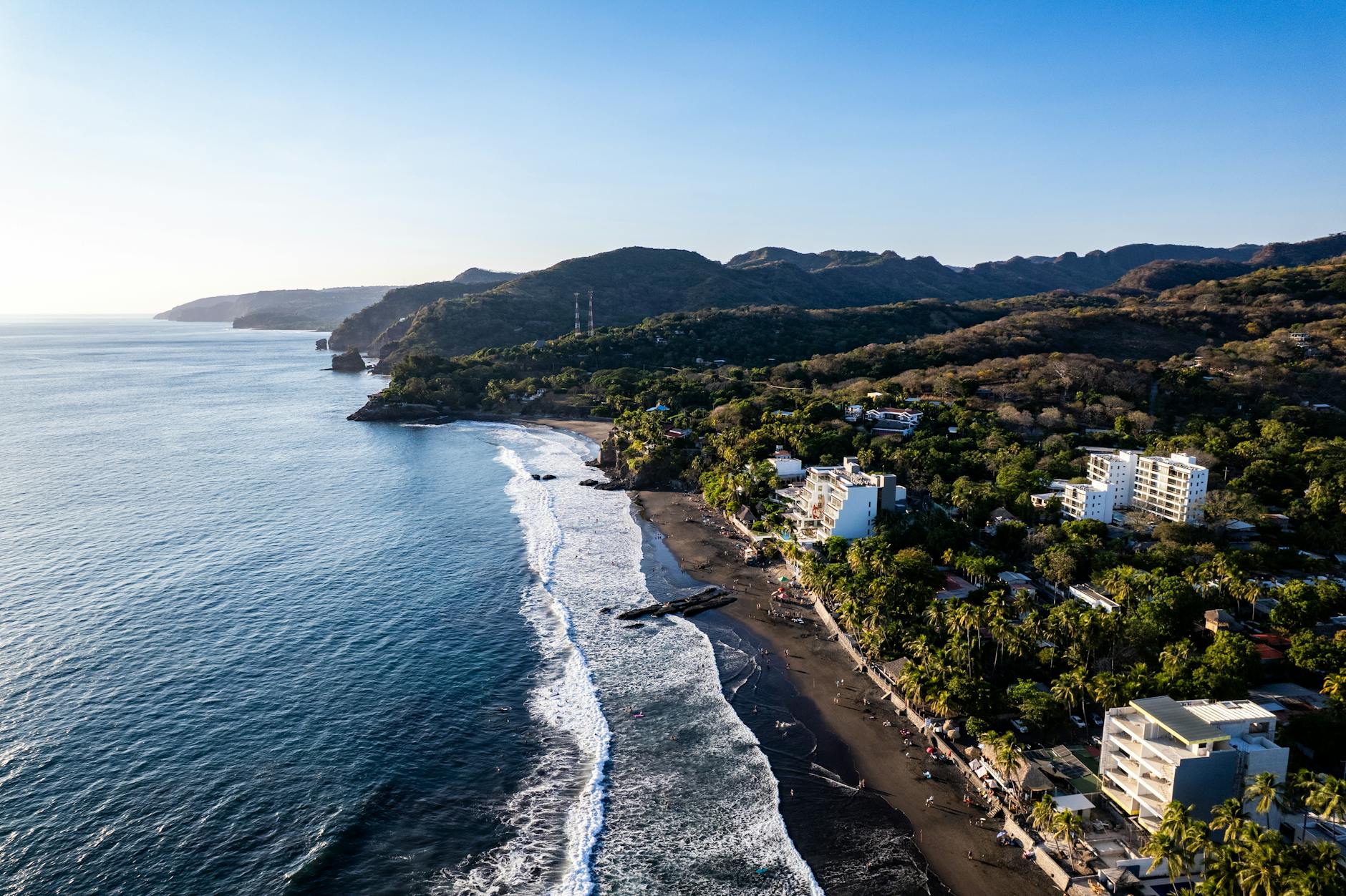
La Libertad (El Salvador). Playa El Sunzal is one of the most famous surf spots in El Salvador and Central America, on the Costa del Bálsamo, the immediate neighbor of the celebrated Playa El Tunco. It is known for its long, consistent waves —especially the El Sunzal right—, its dark volcanic sand and its surf scene. It was one of the venues of the 2021 ISA World Surfing Championship. It is a destination for surf, sea and beach.
📌Service city
The neighboring beach and surf service hub is El Tunco, right next door, with hostels, bars, restaurants and surf schools. The port of La Libertad is very close (about 6-8 km), and the capital, San Salvador, roughly 40-50 km away (around 1 hour along the Coastal highway, CA-2). El Sunzal has beachfront hotels and restaurants; for a wider choice and nightlife, El Tunco is the reference point.
📌Currency
El Salvador has used the US dollar (USD) since 2001. In the surf zone many places take cards. It is worth carrying cash in small bills for lessons, board rentals, moto-taxis and local eateries.
📌Best time to visit
El Sunzal has waves all year, but the best time for surfing is the Pacific swell season, above all from March to October, when the southern swells arrive and the waves are bigger and more consistent. The dry season (November to April) brings sunny days and a calmer sea, ideal for beginners and for enjoying the beach. The water is warm all year.
📌Suggested days
El Sunzal can be enjoyed in a day or, better still, over several, especially if you are going to surf. The essentials: surf or take lessons on its famous wave, enjoy the dark-sand beach, watch the sunset over the Pacific and make the most of being close to El Tunco for the surf scene, the bars and the restaurants. It is easy to combine with El Tunco, El Palmarcito, El Zonte (Bitcoin Beach) and La Libertad on a surf-and-sea getaway.
💱 USD exchange rate
Loading rate…
🌤️ Weather in Playa El Sunzal
Loading weather…

Playa El Sunzal is one of El Salvador's surfing gems: a beach of dark volcanic sand on the Costa del Bálsamo, in the department of La Libertad, famous throughout the surfing world for its long, perfect and consistent wave. The immediate neighbor of the celebrated El Tunco, El Sunzal forms with it one of the best-known surf hubs in Central America, where the Salvadoran Pacific delivers some of the finest waves in the region.

What sets El Sunzal apart is the quality of its break: a long, elegant right that peels over a bottom of rock and sand, ideal for intermediate and advanced surfers, though with days that suit learners too. Around it a relaxed, cosmopolitan scene of surfers from all over the world has grown up, with beachfront hotels, restaurants and the energy of nearby El Tunco just steps away.

This guide walks you through Playa El Sunzal with a practical and warm eye: how to surf or learn on its wave, what to expect from the beach and the sea, how to make the most of being close to El Tunco and El Zonte, where to eat and sleep facing the Pacific and how to get there from San Salvador, with real prices verified in July 2026. It is a must for surf lovers and for anyone who wants to experience the best beach and surf side of El Salvador.

📖 History of Playa El Sunzal

Playa El Sunzal is part of the Costa del Bálsamo, a stretch of El Salvador's Pacific coastline in the department of La Libertad, historically associated with balsam production (an aromatic resin that gave the area its name and was harvested from pre-Hispanic and colonial times). For a long time this coastal strip was a place of fishing villages and balsam harvesting, with beaches of dark volcanic sand washed by the Pacific. El Sunzal's great transformation came with surfing: as the quality of its waves —especially its long right— was discovered and spread by word of mouth, the beach became one of the most renowned surf spots in El Salvador and Central America, drawing local and international surfers. Together with neighboring El Tunco, El Sunzal led the development of surf tourism in the area, which over recent decades turned the Costa del Bálsamo into a world-famous destination. El Salvador bet heavily on surfing as a tourist draw, going on to host the 2021 ISA World Surfing Championship and promoting its coastline —the so-called 'Surf City'— as one of the continent's great surf destinations. Today, El Sunzal lives off surfing and beach tourism, with hotels, restaurants and schools, holding on to its reputation as one of the country's best waves. The full history is on our history page.

Read the full history ↓

🏛️ Playa El Sunzal is in la Libertad

The surfing coast of El Salvador: the Costa del Bálsamo with El Tunco, El Sunzal and El Zonte —the 'Bitcoin Beach'—, heart of the 'Surf City' project, plus the Maya ruins of Joya de Cerén and San Andrés, the garden city of Santa Tecla and the El Boquerón crater of the San Salvador volcano.

Read the history of La Libertad →

🗺️ What to see

1
The El Sunzal wave (surfing)
The famous long, consistent El Sunzal right, one of the best waves in El Salvador and Central America.
El Sunzal's great draw is its wave, one of the most famous and prized in El Salvador and in all of Central America. It is a long, elegant and consistent right that breaks over a bottom of rock and sand and offers wide rides, hugely enjoyable for intermediate and advanced surfers, with days that also suit those who are learning. The quality and consistency of the break, especially during the southern swell season (March to October), make El Sunzal a compulsory stop on the Salvadoran Pacific surf circuit. The beach fills with boards and with surfers from all over the world. It was one of the venues of the 2021 ISA World Surfing Championship. For beginners, the schools and instructors in the area (many based in neighboring El Tunco) offer lessons for around US$ 25-35 per person (1-1,5 h with the board included; source: El Tunco/El Sunzal surf schools, verified July 2026) and board rental for around US$ 10-15 a day, picking the most suitable days and times.
ℹ️ Distance: Playa El Sunzal, next to El Tunco (Costa del Bálsamo) · Best time: Mar-Oct for bigger waves; dry season for learning · Price: Lesson US$ 25-35; board rental US$ 10-15/day (verified July 2026; check when you visit) · Duration: Surf sessions of 1 to 2 hours
2
The beach and the sunset over the Pacific
Dark volcanic sand, warm sea and spectacular sunsets over the Pacific Ocean.
Beyond the surfing, El Sunzal is a beach for enjoying the sea and the scenery of the Salvadoran Pacific. Its sand is dark, of volcanic origin, typical of the Costa del Bálsamo, and its warm water invites a swim, with the precautions that come with a coast that has surf. The setting, with its cliffs and vegetation, gives it an attractive natural frame. One of the great pleasures of El Sunzal is the sunset: like the whole Pacific coast of El Salvador, it offers spectacular sundowns, with the sky ablaze over the ocean, the ideal moment to unwind on the beach or from a beachfront restaurant. Watching the surfers in the water silhouetted against the setting sun is a classic postcard of the place. The beach thus combines the appeal of the sport with that of a destination for sea and rest.
ℹ️ Distance: Playa El Sunzal (on foot from the hotel area) · Best time: Dry season for clear skies; sunset all year · Price: Open access to the beach (free) · Duration: Half a day to a full day
3
El Tunco (neighboring beach town)
The center of the area's surf life, steps from El Sunzal: bars, hostels, schools and the 'tunco' rock.
El Sunzal is the immediate neighbor of El Tunco, the most famous and liveliest beach town in Salvadoran surfing, just steps away. El Tunco concentrates the area's surf life: hostels, bars, restaurants, surf shops, schools and a well-known nightlife, plus its iconic pig-shaped rock (the 'tunco') that gives it its name. Many visitors stay in El Tunco —for its services, ATMs, supermarkets and atmosphere— and go to surf at El Sunzal, which is within walking distance. At sunset, El Tunco's main street fills with people, music and tables facing the sea. It is the perfect service base for a surf stay at El Sunzal.
ℹ️ Distance: Steps from El Sunzal (you can walk there) · Best time: All year; the nights are when the buzz happens · Price: Free access; drinks US$ 2-4, meals from US$ 6 · Duration: An afternoon and evening, or several days
4
El Palmarcito (quiet cove)
A small neighboring cove with a calmer feel, ideal for learning or for serene beach days.
Very close to El Sunzal, along the Coastal highway, is the small cove of El Palmarcito, with a quieter, more sheltered feel. Its wave, more versatile, suits beginners and experienced surfers alike, in a less crowded setting than El Tunco/El Sunzal. It is the ideal complement to the circuit for anyone after a calmer spot to learn, rest or enjoy the beach in peace. Its small dark-sand cove and its sunsets are its greatest charm. Easy to combine with El Sunzal on a moto-taxi ride of a few minutes.
ℹ️ Distance: A few km from El Sunzal (Coastal highway) · Best time: Dry season for learning; Mar-Oct for more waves · Price: Open access to the beach (free) · Duration: Half a day
5
El Zonte (Bitcoin Beach)
The beach famous for the experiment with bitcoin as a local currency, with natural pools and waterfalls.
To the west, within the same Costa del Bálsamo circuit, lies El Zonte, a quiet beach that became world-famous as 'Bitcoin Beach': from 2019 a local community began using bitcoin in daily life, an experiment that came before the adoption of bitcoin as legal tender in El Salvador (2021-2025). Besides the crypto curiosity, El Zonte is a beautiful dark-sand beach, with good waves, natural pools at low tide and waterfalls nearby, in an alternative, laid-back atmosphere, with hostels, cafés and restaurants. It is a stop worth making on the circuit, easy to combine with El Sunzal.
ℹ️ Distance: West of El Sunzal, along the Coastal highway · Best time: All year; natural pools at low tide · Price: Open access to the beach (free) · Duration: Half a day
6
Port of La Libertad and the seafood market
The area's main port, with its pier, fresh-catch market and renovated 'Surf City' boardwalk.
About 6-8 km from El Sunzal is the Port of La Libertad, the area's main town and a historic fishing port. Its pier ('embarcadero') houses a lively seafood market where the fishermen sell the day's catch, and it is famous for its pupusas and fresh seafood cocktails at fair prices. The boardwalk, renovated as part of the 'Surf City' project, offers a seafront promenade, restaurants, play areas for children and views of the Pacific. It is a good place to eat seafood and get a feel for Salvadoran port life. It sits on the way between San Salvador and the surf zone.
ℹ️ Distance: About 6-8 km from El Sunzal (Coastal highway) · Best time: Mornings for the fresh seafood market · Price: Free access; seafood cocktail from US$ 4-8 · Duration: A couple of hours
Advertisements
What nobody tells you

💵 Prices

Tickets

TypePrice
Access to El Sunzal beachFree (open access). Some access paths cross hotel/restaurant property and they may ask for a minimum spend
Surf lesson with an instructor (1-1,5 h, board included)US$ 25-35 per person (source: El Tunco/El Sunzal surf schools, verified July 2026; in El Sunzal and neighboring El Tunco). Check when you visit
Surfboard rental (full day)US$ 10-15 per day (verified July 2026)
Meal at beachfront restaurantsUS$ 8-30 per dish depending on the place (seafood, fish, international cuisine)
🔄 updated monthlyOfficial / reference values · double-check when buying

Activities and tours

ActivityPriceDurationOperator
Surfing the El Sunzal waveBoard rental US$ 10-15/day; with guide/photos US$ 30-60 (verified July 2026)Sessions of 1 to 2 hSchools and instructors of El Sunzal / El Tunco
Surf lessons for beginnersUS$ 25-35 per person (1-1,5 h with a board; verified July 2026)1 to 1,5 hoursSurf schools of El Tunco / El Sunzal
Beach day and sunset over the PacificFree (open access to the beach)Half a day to a dayOn your own
Tour of the Costa del Bálsamo (El Tunco, El Zonte, El Palmarcito)US$ 40-80 per person on a full-day tour (verified July 2026); free on your ownFull dayEl Tunco agencies / on your own
🔄 updated monthlyOfficial / reference values · double-check when buying
Advertisements

🚌 How to get there and distances

Getting around

ModePriceDurationNotes
On foot along the beach and El TuncoFreeVariableEl Sunzal and neighboring El Tunco are walkable; they are very close together
Moto-taxi (tuk-tuk) between beachesUS$ 1-5 for a short hop between El Sunzal, El Tunco and El Palmarcito (paid in cash to the driver; verified July 2026)5 to 15 minThe most practical way to move between neighboring beaches. There is no fixed fare: agree the price before you get in
Bus 80 (El Tunco/El Sunzal ↔ La Libertad, Coastal highway CA-2)US$ 0,25-0,35 per person, in cash to the conductor (verified July 2026)15-20 min to La LibertadRoute 80 runs along the CA-2 (you catch it at the entrance to the town, on the highway) every 15-20 min, roughly from 4:30 to 17:30. Payment is in cash with small bills: in this coastal area there is no rechargeable card and no bus payment app
Bus 102A/187 (San Salvador ↔ La Libertad coast)US$ 1-2 per person in cash (verified July 2026)Approx. 1 hIt links the capital with the surf zone from the Terminal de Occidente (San Salvador). To check routes, stops and schedules the Moovit app is the way to go, as it covers El Salvador's routes well
Uber / DiDi (ride apps)San Salvador → El Sunzal/El Tunco approx. US$ 20-35; short hops between beaches US$ 5-10 (verified July 2026)VariableUber and DiDi operate in San Salvador and reach the La Libertad coast; you pay through the app (card) or in cash. Safer and more transparent than a 'pirate' taxi. Coverage down at the beach can be patchy for the trip back
Tourist taxi or rental carShort taxi ride US$ 5-12; car rental from US$ 30-45/day (verified July 2026)VariableConvenient for touring the Costa del Bálsamo and combining the different surf beaches on your own
🔄 updated monthlyOfficial / reference values · double-check when buying

How to get there

RouteAirlines / operatorsAvg. priceDuration
San Salvador → El Sunzal / El Tunco (Coastal highway)Tourist shuttle, taxi/app or bus with a transferShuttle US$ 30-55 (up to 2-3 pax); bus approx. US$ 1-1,50 with a transfer in La LibertadApprox. 1 h (about 40-50 km)
International Airport (SAL) → El SunzalShuttle / private transferUS$ 40-60 for a private transfer (up to 3 pax; verified July 2026)Approx. 45 min to 1 h
La Libertad → El SunzalBus, moto-taxi or taxiBus US$ 0,35-0,75; moto-taxi/taxi US$ 5-1015 to 20 min
Combined with El Zonte and the Bálsamo beachesCar, moto-taxi or toursMoto-taxi per leg US$ 2-8; full-day tour US$ 40-80Depending on the route
🔄 updated monthlyOfficial / reference values · double-check when buying

🏨 Where to stay

No exact prices: a scale from $ (budget) to $$$$$ (luxury), with 2-3 options per category.

CategoryPriceRecommended options
Budget hostels in El Tunco / El Sunzal$$$$$US$ 12-30 a night (dorm bed or basic room). Surfer and backpacker atmosphere; a wider choice in neighboring El Tunco
Surf lodges and mid-range beachfront hotels$$$$$US$ 45-100 a night with A/C and, often, a pool. The usual base of the surf scene in El Sunzal and El Tunco
Boutique hotels and surf resorts$$$$$US$ 100-200 a night. Beachfront hotels with a pool, restaurant and views of the El Sunzal break
Premium properties and villas$$$$$US$ 200-350+ a night. High-end villas and lodgings on the cliffs of the Costa del Bálsamo, with full services

🍴 Where to eat

TypePriceOptions / signature dish
Pupuserías and traditional Salvadoran food$$$$$US$ 0,75-2 per pupusa; set lunch US$ 3-6. The cheapest and most authentic option; pupusas of cheese, bean, chicharrón or revueltas
Beach eateries and diners$$$$$US$ 5-10 per dish. Fried fish, rice with seafood, chicken and dishes of the day at simple eateries by the sea
Beachfront seafood restaurants$$$$$US$ 10-30 per dish. Ceviches, seafood cocktails, shrimp and fresh fish with a view of the Pacific, in El Sunzal, El Tunco and La Libertad
International / hotel restaurants and bars$$$$$US$ 15-35 per dish. International, fusion and chef-driven cooking at boutique hotels, bars and restaurants in lively El Tunco
Advertisements

📖 History of Playa El Sunzal

Origins, formation and what the sources say.

The Costa del Bálsamo: the region's origin

Decades before surfers from all over the world added its name to their bucket lists of must-ride waves, this coast was already internationally famous for something very different: a resin that Europe believed was Peruvian but that in fact came from here. Playa El Sunzal is part of the Costa del Bálsamo, a stretch of El Salvador's Pacific coast in the department of La Libertad, of dark volcanic-sand beaches bathed by the Pacific. The coast's name comes from balsam, the aromatic resin extracted from the Myroxylon balsamum tree, prized since pre-Hispanic times and, above all, during the colonial period, when the so-called 'balsam of Peru' —actually produced on this Salvadoran coast and shipped via Pacific ports— was traded in Europe as a valuable product for medicine, perfumery and liturgy.

For centuries, this coastal strip was an area of fishing and balsam-harvesting villages, with a life tied to the sea and to the tree that gave it its name. The black-sand beaches, the cliffs and the tropical vegetation shaped a rugged landscape, little transformed by tourism, where the main activity was artisanal fishing and the extraction of the resin. The region was historically inhabited by Pipil (Nahua) peoples, who already knew the uses of balsam long before the arrival of the Spanish.

This heritage of balsam and fishing is the historical backdrop of El Sunzal and the neighboring beaches. On top of that traditional coastal landscape would settle, much later, the great transformation that would bring the region to world fame: surfing, which would completely change the vocation and the economy of this part of the Salvadoran coast.

The discovery of surfing and the El Sunzal wave

El Sunzal's great transformation came at the hand of surfing. As the extraordinary quality of its waves was discovered and spread —especially its long, elegant right, which breaks over a bottom of rock and sand— the beach became one of the most renowned surf spots in El Salvador and all of Central America. Local surfers first, and then international ones, began to arrive, drawn by the consistency and perfection of its break.

The El Sunzal wave, together with those of the neighboring beaches, put this part of the Salvadoran Pacific on the world surf map. Its south swell season, over much of the year, guarantees waves for intermediate and advanced surfers, and the warmth of the water and the regularity of the conditions make it especially attractive. Little by little, El Sunzal and adjacent El Tunco became the heart of the country's surf scene.

This surf boom transformed the local economy: to fishing and the balsam heritage were added hotels, restaurants, surf schools and tourist services. The Costa del Bálsamo ceased to be just a stretch of fishing villages and became a surf destination of growing fame, with El Sunzal as one of its most celebrated and prestigious waves.

From 'Surf City' to a world destination

In recent decades, El Salvador bet decisively on surfing as one of its great tourist draws. The Pacific coast —and very especially the area of El Sunzal, El Tunco and the neighboring La Libertad beaches— was promoted under the 'Surf City' brand, with the aim of positioning the country as one of the continent's leading surf destinations. Investment in infrastructure, promotion and events accompanied that strategy.

The bet paid off internationally: El Salvador went on to host international surf competitions, which projected its waves to the world and reinforced its prestige on the sport's global circuit. El Sunzal, with its famous right, is among the emblematic waves of that projection, drawing surfers from every corner.

Today, El Sunzal lives off surfing and beach tourism, with hotels, resorts, restaurants and schools facing the sea, and it keeps its prestige as one of the best waves in El Salvador. The beach thus combines its historical backdrop —the heritage of balsam and fishing of the Costa del Bálsamo— with the global, cosmopolitan energy of surfing, on one of the most vibrant and renowned coasts of Central America. El Sunzal is, in short, a symbol of how surfing transformed the Salvadoran coast and opened it to the world.

Why the El Sunzal wave is special

What makes El Sunzal a world-class wave is no accident, but geography. The La Libertad coast is formed by a succession of rocky points oriented in such a way that they order the Pacific swell into long, even and predictable right-hand waves: surfers call them 'point breaks'. El Sunzal breaks over a bottom of stone and sand that grooms the wave and gives it a long, smooth ride, more forgiving than the neighboring and powerful Punta Roca of La Libertad —considered the country's most demanding wave. That's why El Sunzal is the favorite of intermediate and advanced surfers who want plenty of walls of water without the brutality of a barrel over live rock.

The other secret is constancy. El Salvador receives swells from the southern hemisphere during much of the year, with the strong season from March to October, when the South Pacific swells arrive clean at this coast. To that is added warm water almost all year, morning offshore winds that smooth the surface and a stable tropical temperature. That combination —a quality wave, warm water and consistency— is rare, and it's what put El Sunzal in the international surf guides long before the country promoted it officially.

The first to take advantage of it were Salvadoran surfers and the odd adventurous traveler of the 1970s and 1980s, when getting here was an odyssey and the country was going through difficult years. Over time, through word of mouth and specialized magazines, El Sunzal earned a place in the imagination of world surfing, and laid the foundations so that, decades later, El Salvador could present itself as the host of a world championship.

The 2021 ISA World Championship and El Sunzal today

El Sunzal's international recognition reached its highest point in 2021, when El Salvador hosted the ISA World Surfing Games, an event that also served as a qualifier on the way to the Olympic Games. The waves of El Sunzal and neighboring La Bocana (in El Tunco) were the stage of the competition, with surfers from dozens of countries, and they projected the image of the Salvadoran coast to the sporting world. For a country that for decades had been better known for its troubled recent history, surfing became a powerful tourist calling card.

That momentum was framed within the 'Surf City' strategy, with investments in coastal infrastructure, international promotion and improvements to access and security. El Sunzal, with its famous right, was consolidated as one of El Salvador's emblematic waves and as one of the most coveted surf destinations in Central America, frequented year-round by local and foreign surfers.

Today, El Sunzal lives fully off surfing and beach tourism, with hotels, resorts, restaurants and schools facing the sea. The beach combines its historical backdrop —the heritage of balsam and fishing of the Costa del Bálsamo— with the global, cosmopolitan energy of surfing. El Sunzal is, in short, a symbol of how surfing transformed the Salvadoran coast and opened it to the world, without losing its essence as a dark-sand beach bathed by the Pacific.

📚 Bibliography

  • Wikipedia (ES) — «El Sunzal»: https://es.wikipedia.org/wiki/El_Sunzal
  • Wikipedia (ES) — «Costa del Bálsamo»: https://es.wikipedia.org/wiki/Costa_del_B%C3%A1lsamo
  • Wikipedia (EN) — «Surfing in El Salvador»: https://en.wikipedia.org/wiki/Surfing_in_El_Salvador
  • Wikipedia (ES) — «Departamento de La Libertad (El Salvador)»: https://es.wikipedia.org/wiki/Departamento_de_La_Libertad_(El_Salvador)
  • International Surfing Association (ISA) — World Surfing Games 2021: https://isasurf.org/
  • Surf Atlas — El Tunco / Surf City: https://thesurfatlas.com/el-salvador-surf/el-tunco-surf/
  • El Salvador Travel — Surf City: https://elsalvador.travel/
  • Ministerio de Turismo de El Salvador (MITUR): https://mitur.gob.sv/
  • Wikipedia (ES) — «Myroxylon balsamum» (árbol del bálsamo): https://es.wikipedia.org/wiki/Myroxylon_balsamum
  • Wikipedia (ES) — «El Salvador»: https://es.wikipedia.org/wiki/El_Salvador

❓ Frequently asked questions

What is Playa El Sunzal?+
It is one of the most famous surf spots in El Salvador and Central America, on the Costa del Bálsamo (La Libertad), the immediate neighbor of El Tunco. It is known for its long, consistent wave —especially its right—, its dark volcanic sand and its surf scene. It was one of the venues of the 2021 ISA World Surfing Championship and is a compulsory stop on the 'Surf City' circuit.
How much does it cost to surf or take a lesson at El Sunzal?+
In 2025, a surf lesson with an instructor costs around US$ 25-35 per person (1 to 1,5 hours, with the board included), and renting a board on your own comes to around US$ 10-15 a day. There are surf guide and photo services for US$ 30-60. El Salvador uses the US dollar; it is worth carrying cash in small bills. Check the prices when you get there.
Is it only for expert surfers?+
No. The El Sunzal wave is hugely enjoyable for intermediate and advanced surfers, but there are also days and conditions that suit beginners, and the area (especially El Tunco) has many schools and instructors offering lessons and board rentals. Besides, El Sunzal can be enjoyed as a beach for resting and watching sunsets, without surfing.
When are the waves best?+
The best time for surfing is the Pacific swell season, above all from March to October, when the southern swells arrive and the waves are bigger and more consistent. The dry season (November to April) brings sunny days and a calmer sea, ideal for beginners. There are waves all year and the water is always warm.
How do I get to El Sunzal and how much does it cost?+
It is on the La Libertad coast, about 40-50 km from San Salvador (around 1 hour) along the Coastal highway. By shuttle or private transfer it costs around US$ 30-55 (up to 2-3 passengers); by bus, with a transfer in La Libertad, it comes to about US$ 1-1,50. It is right next to El Tunco and close to El Palmarcito and El Zonte; between beaches the moto-taxi is the way to go (US$ 2-5).
What is the difference between El Sunzal and El Tunco?+
They are right next to each other. El Tunco is the beach town with the surf life, the hostels, bars, restaurants and nightlife, plus its pig-shaped rock. El Sunzal is the neighboring beach with the great surf wave, more focused on surfing and resting. Many people stay in El Tunco for the services and surf at El Sunzal for the wave.
How do you pay for the bus, and which app is best for getting around?+
In the La Libertad surf zone the bus is paid in cash to the conductor, with small bills and coins: there is no rechargeable card or payment app on these coastal routes. Bus 80 links El Tunco/El Sunzal with La Libertad for about US$ 0,25-0,35, and from San Salvador buses such as the 102A/187 arrive for US$ 1-2. To check routes, stops and schedules the Moovit app is the way to go, as it covers El Salvador well. Uber and DiDi work from the capital and are paid through the app or in cash; between beaches the quickest option is the moto-taxi (US$ 1-5, in cash).
Sources consulted (12)
Still planning?
Explore more destinations in El Salvador
See all destinations →
Advertisements