GO! Assistance has 50% off in October and, with our link, you get an extra 20%.
Pick origin, destination, dates and ages and see the price of your travel assistance in a minute.
Affiliate link: we earn a commission.
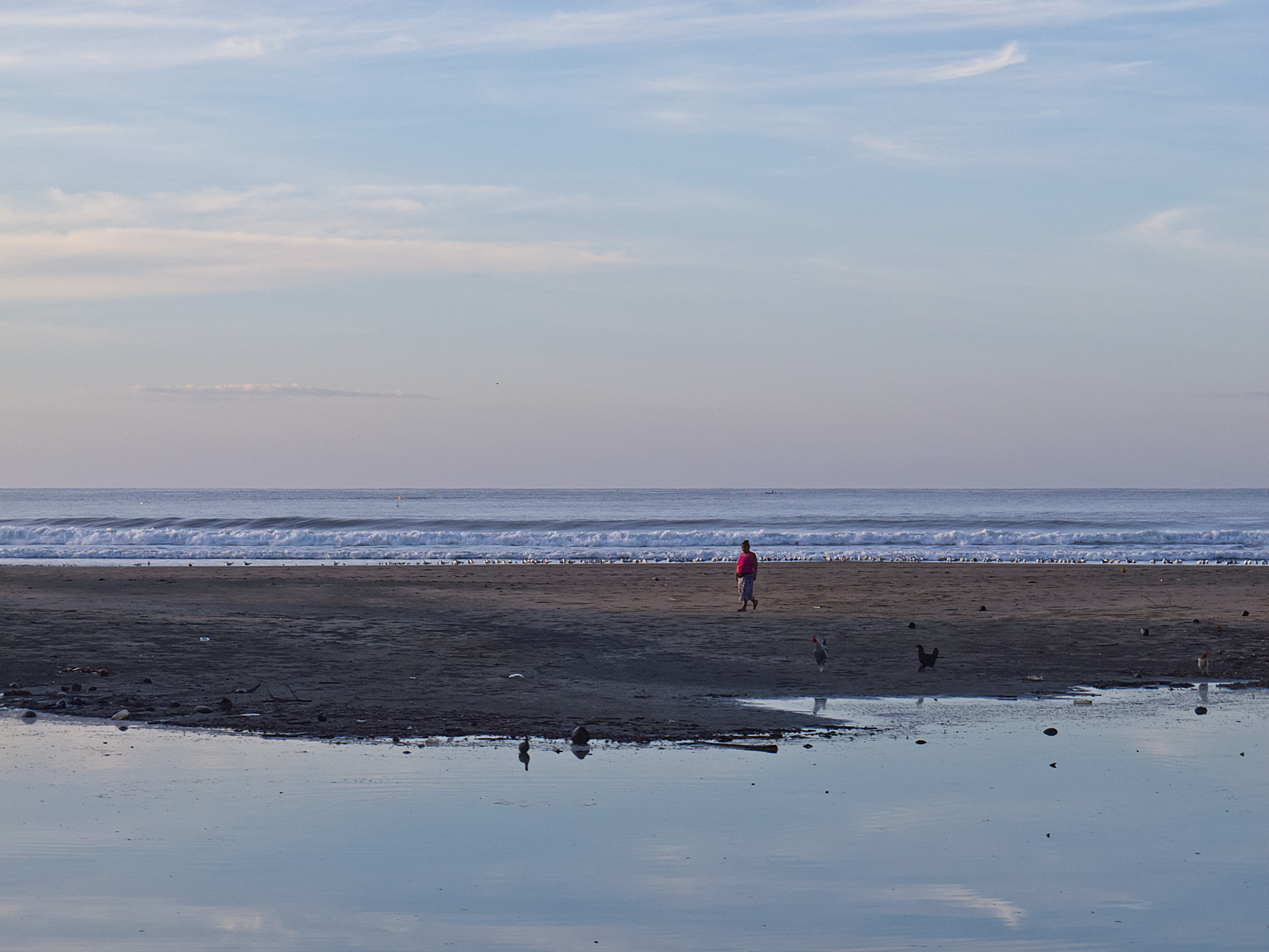
Playa El Cuco is the great beach of eastern El Salvador: a wide strip of sand on the Pacific coast of the department of San Miguel, loved for decades by the Salvadorans of the east as a destination of sun, sea and seafood. Farther from the capital than the famous beaches of the Costa del Bálsamo, El Cuco preserves a more local and authentic atmosphere, ideal for those who want to get to know the eastern, seafaring face of the country.
In recent years, El Cuco and its neighboring beaches have also joined the Salvadoran surf boom: a few minutes away are Las Flores and El Esterón, internationally famous breaks that draw surfers from all over the world. Thus, the area combines the best of two worlds: the local flavor of a traditional beach of seafood and families, and the wave quality of an emerging surf destination, all in a quieter, less crowded setting.
This guide covers Playa El Cuco with a practical and warm eye: where to enjoy the beach, where to eat the best seafood, where to surf on the neighboring beaches, how to watch the sunset and how to use it as a base to get to know the eastern coast of El Salvador. It's a perfect destination for anyone seeking beach, sea cuisine, surf and authenticity away from the more crowded circuits.
The eastern coast of El Salvador, in the department of San Miguel where Playa El Cuco is located, has historically been an area of fishing and coastal communities tied to the sea. The country's east, with the great city of San Miguel as its center, has an identity of its own within El Salvador, and its beaches have been for generations the traditional summering and weekend destination of the region's Salvadorans, especially at Holy Week. Playa El Cuco established itself as one of those popular beaches, known for its wide strip of sand, its fresh seafood and its family-friendly, local atmosphere, different from that of the more touristy surf beaches of the Costa del Bálsamo, closer to the capital. In recent decades, and within El Salvador's bet on surf tourism along its whole Pacific coast (with the Surf City brand), the El Cuco area gained prominence thanks to the world-class waves of neighboring beaches like Las Flores and El Esterón, which drew international surfers and investment in hotels and services. This combination of traditional beach and emerging surf transformed El Cuco into a growing destination within the Salvadoran east, while keeping its more local and quiet character. The full history is on our history page.
Read the full history ↓The great city of the east, third of the country, at the foot of the Chaparrastique volcano: founded in 1530 as San Miguel de la Frontera, capital of the famous November Carnival, base for the surf beaches of El Cuco and Las Flores and for Lake Olomega.
Read the history of San Miguel →If you only have one day, take a guided tour on the first one: it sets up the rest of your trip and saves you a lot of walking. We look ours up on Civitatis: guided in Spanish and booked online with no fuss. They have 10 activities in San Salvador. And there are free tours here: you book without paying and tip the guide whatever you think at the end, so trying one costs you nothing. Have a look below: tap any of them to see them all.
They depart from San Salvador, 130 km away. Affiliate link: we earn a commission.
Abroad, getting sick is more than a bad day. In many destinations public healthcare depends on appointments, queues and availability, and private care is paid upfront. An emergency can cost thousands of USD, right when you are far from home and on a tight budget. That is why I recommend you never leave without travel assistance.
I recommend GO! Assistance because it covers what matters: medical care, emergencies, medication and hospitalization depending on the plan. It protects you 24 hours a day, anywhere in the world, with real-time solutions on the ground. GO! 365 ECO and GO! 365 give you USD 45,000 of global coverage: the first with a USD 100 deductible, the second with none.
If you quote from Argentina, in October GO! also offers 12 interest-free instalments on all its products.
GO! Assistance has 50% off in October and, with our link, you get an extra 20%.
Pick origin, destination, dates and ages and see the price of your travel assistance in a minute.
I have never been left without internet on a trip. I land and my phone connects to the strongest network in the country I am visiting: I can let people know I arrived, sort out transport, book tours and keep posting content at a super affordable price (really cheap!). I always use the Maya Mobile eSIM, check out its plans by clicking the banner. See Maya Mobile plans →
Affiliate link: we earn a commission.
No exact prices: a scale from $ (budget) to $$$$$ (luxury), with 2-3 options per category.
Origins, formation and what the sources say.
The name sounds like a legend, and in part it is. The municipality to which Playa El Cuco belongs is called Chirilagua, a place name of Lenca origin in the Potón language that has been translated as 'river of the three stars': from the roots chiri (star) and lagua (three), with the particle gua that evokes water or the river. Before the surfers and the boards arrived, even before the name El Cuco existed, this strip of the eastern Pacific of El Salvador already had a long history, written by seafaring communities that lived off what the sea gave.
Playa El Cuco is located on the Pacific coast of the country's east, in the department of San Miguel. This coastal strip has been historically tied to the sea and to fishing, with communities that harnessed the resources of the ocean and the estuaries. The Salvadoran east, with the city of San Miguel as its great urban and commercial center, has a regional identity of its own within the country, and its beaches are part of that coastal culture. The area where El Cuco is located belongs to a setting of beaches, estuaries and mangroves characteristic of the eastern coast, a rich ecosystem linked to fishing activity.
For generations, the life of these communities revolved around artisanal fishing, local trade and the use of the sea's resources. That seafaring roots explains the strong seafood culinary tradition of El Cuco, one of its great attractions, and gives the beach an authentic, local character, different from that of the more internationally-oriented tourist destinations that developed near the capital.
The documented history of the El Cuco territory begins in the colonial era. Around 1770, according to the testimony of Archbishop Pedro Cortés y Larraz in his famous pastoral visit, Chirilagua was a prosperous hacienda of cattle and cereals, located within the parish of Conchagua. In 1786, with the administrative reorganization of the Intendancy of San Salvador, that hacienda was included in the district of San Miguel, one of the fifteen into which the territory was divided.
Over time, a hamlet gradually formed around the hacienda. By legislative decree of April 24, 1899, it was separated, along with Gualozo, from the district of San Miguel and incorporated into the municipality of Intipucá, in La Unión. A few years later, with General Tomás Regalado as president, a decree of April 20, 1901 gathered the valleys of Chirilagua, Gualozo, San Pedro, Guadalupe and Chilanguera and established them as a town with the name Chirilagua. Finally, during the administration of General Maximiliano Hernández Martínez, a decree of April 17, 1940 granted it the title of villa (town).
That trajectory —from cattle hacienda to coastal town— is what gradually shaped the municipality that today administers Playa El Cuco. During much of the 20th century, El Cuco was above all a place of fishermen and local summering, still very far from the international surf destination it would become decades later. The beach was known in the east, but practically unknown outside El Salvador.
Throughout the 20th century, Playa El Cuco established itself as one of the most popular summer beaches in eastern El Salvador. For the families of San Miguel and the whole eastern region, El Cuco was —and still is— the traditional weekend and holiday destination, especially during Holy Week, the great beach season in the country, when the coast fills with visitors.
The wide sandy beach, the seafood eateries, the seafront ranchos and the family atmosphere made El Cuco an endearing place for several generations of Salvadorans of the east. Unlike the surf beaches that would later become fashionable among international tourists, El Cuco long maintained a local and popular profile, tied to the leisure of the region's own population. The families arrived by bus or pickup from San Miguel, set up their rancho in the shade and spent the day among swims, fried fish and soft drinks, in a scene that repeats to this day.
That traditional character remains present, especially in high season, when El Cuco recovers its atmosphere of a Salvadoran family beach, with its cuisine, its music and its people. It's one of the beaches that best preserves the flavor of local summering in the country's east, even amid its growing tourist development.
The great novelty in the recent history of the El Cuco area was the emergence of international surf tourism, hand in hand with the waves of the neighboring beaches, especially Las Flores. This break, a right 'point break' over a rocky bottom that offers long, consistent waves, earned the reputation of being one of the best in El Salvador and Central America, drawing surfers from all over the world.
The discovery and spread of the quality of these waves gradually transformed the area. Hotels, surfcamps, surf schools and visitor-oriented services emerged; the Las Flores Resort, a complex facing the point break itself, became an emblem of that new stage. Beaches like Las Flores and El Esterón joined the world surf map, giving new prominence to the eastern coast, traditionally more removed from the tourist circuits.
Playa El Cuco, thanks to its proximity to these breaks and its status as a beach with services, benefited from that development, becoming a base and reference point of the area. Thus, to its traditional profile of a local seafood and summer beach, El Cuco added the dimension of international surf, in a combination that defines its current appeal.
The transformation of El Cuco was not only spontaneous: in recent years it became tied to a state policy. Surf City is the tourism strategy driven by the Salvadoran government to develop the whole Pacific coast through infrastructure improvements, road connectivity, drinking water, water treatment and training. Its first phase, inaugurated in February 2021, concentrated on the department of La Libertad, near the capital, where beaches like El Tunco and El Sunzal are located.
On April 3, 2025, Surf City II was inaugurated, a second phase focused precisely on the eastern region —the departments of San Miguel, Usulután and La Unión—, with investment in tourist infrastructure that fully reaches the El Cuco, Las Flores and El Esterón area. That public bet, together with El Salvador's alliance with the ISA (International Surfing Association) to host world surf championships, placed the eastern coast in the focus of national and international tourism.
For the traveler, this means that El Cuco is experiencing a stage of improvements and growth, with better access and services, but also the challenge of preserving the local, authentic character that made it special. The region represents the potential of the Salvadoran east: an area historically less known that now receives attention and investment, without yet having lost its fishing-village flavor.
Today, Playa El Cuco is experiencing a stage of transition and growth that combines its two souls. On one hand, it remains the traditional beach of the east, loved by the Salvadorans of the region, with its wide sand, its fresh seafood, its ranchos and its family atmosphere, especially vibrant in high season and at Holy Week. On the other, it has become a base for the emerging surf of the east, thanks to the proximity of Las Flores and El Esterón and the development of hotels and services for the international visitor.
This double identity is precisely what makes El Cuco attractive to the traveler looking for something different: a beach with a local, authentic flavor, less crowded than the destinations near the capital, but with access to top-level surf and a growing tourist offering. The area offers the chance to combine the relaxation of a traditional beach, the sea cuisine and the adrenaline of surf, all in the quieter setting of the Salvadoran east.
Within El Salvador's bet on developing tourism along its whole Pacific coast, the El Cuco region represents the potential of the country's east, an area less known but with much to offer. For those who want to leave the more traveled circuits and discover another face of the Salvadoran coast —to learn the history of a river of three stars and stay to watch the sunset with a plate of shrimp—, El Cuco is an excellent option.