Viajá con Gus
HomeHondurasSan Pedro Sula
San Pedro Sula
🇭🇳 Honduras · Central Honduras and Major Cities

San Pedro Sula

📌Department
Cortés (Honduras), of which it is the capital, in the northwest of the country, in the fertile Sula Valley. San Pedro Sula is the second city of Honduras and its industrial and commercial capital: the country's great economic engine, with industry, the maquila (assembly plants) and trade as its pillars. Although it's not a tourist destination in itself, it's the main gateway to Honduras (its airport is the busiest in the country) and the logistics hub from which you reach the Caribbean (Bay Islands, Tela, La Ceiba), the Maya west (Copán) and Lake Yojoa. It has a hot, humid lowland climate
📌Service city
San Pedro Sula is the largest service city in the country along with Tegucigalpa. It has the Ramón Villeda Morales International Airport (SAP), the busiest in Honduras, with numerous international and domestic connections. It has the country's main Gran Terminal Metropolitana bus station, hospitals, universities, hotels of all categories, shopping malls and intense commercial activity. It's the natural starting point for almost any trip through northern and western Honduras. It's wise to get around by apps or taxis and ask about safe areas
📌Best time to go
San Pedro Sula is in the hot and humid Sula Valley, with high temperatures and humidity for much of the year. The relatively drier and more bearable season runs from November to April; the rainy season (May to October) is more humid and hot, and the peak hurricane risk runs from August to November. As a transit and business city, it's visited year-round. Light clothing is advisable, and staying hydrated against the valley heat
📌Suggested days
San Pedro Sula is above all an entry and transit point. With half a day to 1 day you can see the main sights: the center with its cathedral and its square, the Museum of Anthropology and History, the Museum of Nature, the shopping malls and the cuisine. The usual thing is to use it as a base for one night to arrive or depart, and continue quickly toward the tourist destinations of the Caribbean (Roatán, Utila, Tela, La Ceiba), the west (Copán) or Lake Yojoa. Few travelers spend more than a full day here
💱 Cambio de USD
Loading rate…
🌤️ Clima en San Pedro Sula
Loading weather…

San Pedro Sula is the great gateway to Honduras and the country's economic engine. The second city in size after Tegucigalpa, it sits in the fertile and hot Sula Valley, in the northwest, and is known as the industrial and commercial capital of Honduras: here beat the industry, the maquila, the trade and the business that move much of the national economy. Its airport, the busiest in the country, and its strategic position make it the point from which almost all travelers begin or end their Honduran adventure.

It's not a classic tourist destination —it has no beaches or Maya ruins— but its importance is enormous: from San Pedro Sula you reach the country's great attractions in a few hours. To the north and east, the Caribbean: the ferries and flights to the Bay Islands (Roatán, Utila, Guanaja), and the coastal cities of Tela and La Ceiba. To the west, the Maya world of Copán and the colonial cities of Santa Rosa and Gracias. And halfway toward the center, the beautiful Lake Yojoa. It is, literally, the hub from which travel through Honduras unfolds.

This guide covers San Pedro Sula with a practical and warm eye: what to see if you have a few hours in the city (its center, its museums, its cuisine), how to use it as a base and springboard toward the destinations of the Caribbean and the west, how to arrive and get around, and how to do it with common sense. If you pass through 'San Pedro' on the way to the wonders of Honduras, this guide helps you make the most of your stop in the country's industrial capital and organize the rest of the trip from here.

📖 History of San Pedro Sula

San Pedro Sula was founded by the Spanish on June 27, 1536 by the conquistador Pedro de Alvarado, under the name San Pedro de Puerto Caballos (later San Pedro Sula), which makes it one of the oldest cities in Honduras. The name 'Sula' is associated with the valley and, according to some interpretations, with Indigenous words of the area. During the colonial era it was a modest town, eclipsed by other centers, in a hot region of fertile lands inhabited earlier by Indigenous peoples. San Pedro Sula's great takeoff came at the end of the 19th century and the start of the 20th with the banana boom: the Sula Valley, with its climate and its lands, became one of the great banana-producing zones in the world, and the American fruit companies (like United Fruit and Standard Fruit) developed plantations, railroads and infrastructure. San Pedro Sula grew dizzyingly as the center of that banana economy and, later, diversified into industry, the maquila (textile and manufacturing) and trade, becoming the industrial and economic capital of Honduras. Over the 20th and 21st centuries it experienced enormous growth and heavy urbanization, with the social and security challenges typical of a big city. Today it's the country's main economic engine and great gateway. The full story is on our history page.

Read the full history →

🏛️ San Pedro Sula is in Cortés

The industrial engine of Honduras: San Pedro Sula and the fertile Sula Valley, the colonial fortress of Omoa, Puerto Cortés —the largest port in Central America— and the turquoise Lake Yojoa with the Pulhapanzak waterfalls.

Read the history of Cortés →

🗺️ What to see

1
Historic center: Cathedral and Central Park
The heart of the city, with the cathedral and the central square, where the life of urban 'San Pedro' beats.
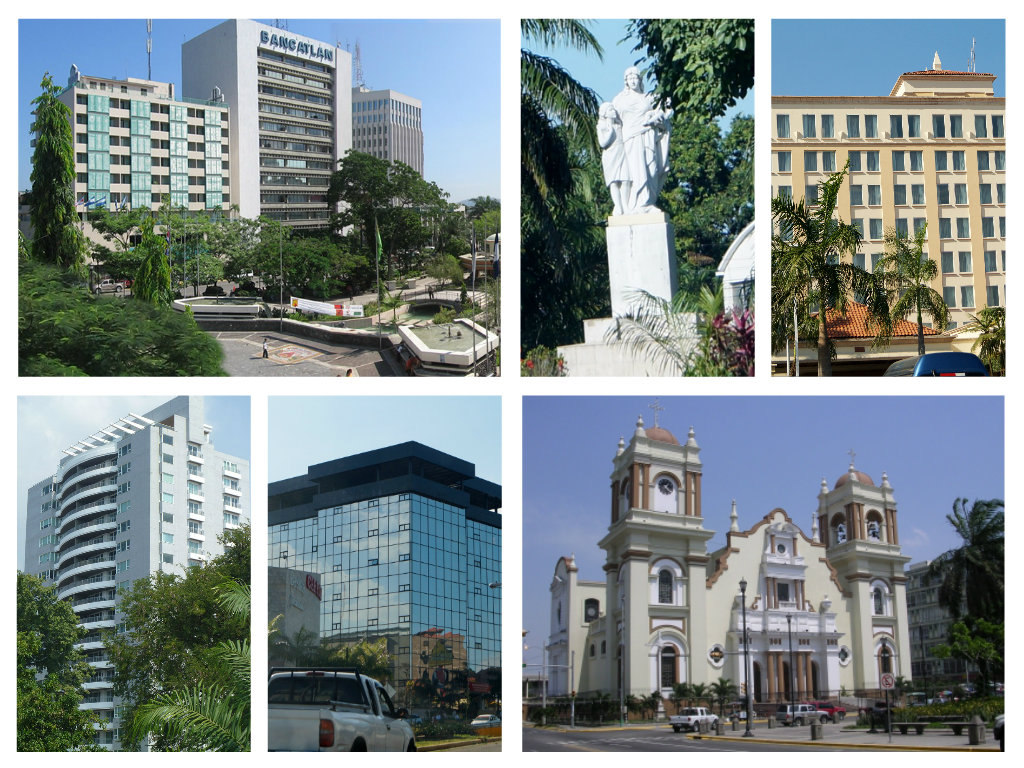
The historic center of San Pedro Sula is the traditional heart of the city and a good point to get to know the urban pulse of the industrial capital of Honduras. Its core is the Central Park (the main square), a lively space where the life of the center gathers, surrounded by buildings, shops and the imposing Cathedral of San Pedro Apóstol, the city's main church, of austere white lines, which presides over the square. Around the Central Park and in the streets of the center unfolds the intense commercial activity that characterizes San Pedro Sula: shops, markets, vendors, banks and the bustle of a city devoted to trade and business. It's a living, hardworking center, more than a monumental one, that reflects the thriving, economic character of the city. Wandering the center lets you see the cathedral, the square and the urban atmosphere of 'San Pedro.' It's best to do it by day, with common sense about your belongings, as in any big-city center. It's not as rich a colonial old town as those of other Honduran cities (San Pedro is more modern and industrial), but its square and its cathedral are the reference point of the center. Combining it with a visit to one of the nearby museums gives a picture of urban San Pedro. For most travelers, it's a brief stop before continuing toward the destinations of the Caribbean or the west.
ℹ️ Distance: City center; explored on foot · Best time to go: By day; any day (commercial center most active on weekdays) · Entry: Free (wandering the center, the square and the cathedral) · Duration: 1 to 2 hours
2
Museum of Anthropology and History
The main museum of San Pedro Sula, dedicated to the history and archaeology of the Sula Valley and the country's northwest.
The Museum of Anthropology and History of San Pedro Sula is the city's main cultural offering and a recommended visit for understanding the Sula Valley region and northwestern Honduras. The museum is dedicated to the history, archaeology and anthropology of the area, and offers a tour through the different stages of its settlement and development. Its halls display archaeological pieces from the pre-Hispanic cultures that inhabited the Sula Valley and the region (an area of great archaeological richness, in the zone of influence between the Maya world and other peoples), as well as sections dedicated to the colonial era, to the banana boom that transformed the region, and to the development of San Pedro Sula as an industrial city. It's a good way to put the area's history in context and to understand how bananas and industry shaped the region. Located in the city center, the museum is ideal for those who have a few hours in San Pedro Sula and want to make the most of them culturally, or for those interested in Honduran archaeology and history. It's wise to check opening hours and days. It's one of the few properly touristy attractions in the city center, and an interesting complement to the tour of the square and the cathedral. For the curious traveler, it provides keys to understanding the region surrounding the great industrial city of northern Honduras.
ℹ️ Distance: In the center of San Pedro Sula; on foot or by taxi/app · Best time to go: Museum opening days (check; it usually closes one day) · Hours: Mon to Sat 9:00-16:00; Sun 9:00-12:00; closed Tuesdays (source: Museum of Anthropology and History of SPS, verified July 2026) · Entry: About US$ 2.50 adults and ~US$ 1 children (differentiated fee for foreigners; cash only); confirm at museosps.com or its official Facebook (verified July 2026) · Duration: 1 to 1.5 hours
3
Museum of Nature and green areas
A museum about the biodiversity and nature of Honduras, and urban parks to breathe in the city.
For those interested in the extraordinary nature of Honduras, the Museum of Nature of San Pedro Sula offers a look at the flora, fauna, ecosystems and biological richness of the country. It's an educational visit, especially interesting for families and for anyone who wants to understand Honduran biodiversity before or after visiting the country's natural parks (like Pico Bonito, Cuero y Salado, La Tigra or Lake Yojoa). The city also has some green areas and urban parks that offer a break from the heat and the bustle. On the outskirts and in the mountains bordering the Sula Valley are natural spaces like Cusuco National Park (a cloud-forest park in the Merendón range, to the west of the city), which is an ecotourism and birdwatching destination for those who have more time and seek nature near San Pedro. These options, though modest compared with the country's great attractions, let anyone passing through San Pedro Sula complement their stay with a bit of natural and green culture. It's wise to check the museum's hours and the access conditions to the mountain parks (which usually require transport and, in the case of Cusuco, a guide). For most travelers, however, San Pedro Sula is mainly the springboard to the spectacular nature of other regions of Honduras, and these attractions are a complement for those with extra time in the city.
ℹ️ Distance: Museum in the city; Cusuco Park in the Merendón range (to the west, with transport) · Best time to go: Any day (museum); dry season for Cusuco and nature · Entry: Museum of Nature L 30–50 (US$ 1–2); Cusuco National Park L 50 (US$ 2) nationals, US$ 10 foreigners, plus community guide L 150 (2025; verify on visiting) · Duration: A few hours (museum); half a day to a full day (Cusuco)
4
San Pedro Sula as a base and springboard
The city's great advantage: its strategic position for reaching the Caribbean, the Maya west and Lake Yojoa.
San Pedro Sula's greatest value for the traveler lies not so much in its own attractions as in its strategic position: it's the great gateway and the logistics hub from which almost all tourism in northern and western Honduras unfolds. With the country's busiest airport and its main bus terminal, San Pedro is the natural starting point for the vast majority of trips through these regions. Toward the Caribbean, from San Pedro Sula you reach La Ceiba (gateway of the ferries to the Bay Islands) and Tela in a few hours along the coastal highway, and there are direct flights to Roatán; it's the obligatory route for anyone heading to the beaches and diving of the Honduran Caribbean. Toward the west, it's the starting point toward Copán Ruinas (the famous Maya ruins, 3-4 hours away) and the colonial cities of Santa Rosa de Copán and Gracias. And on the route toward the center of the country (heading to Tegucigalpa) you pass beside the beautiful Lake Yojoa, a little over an hour away. This springboard function means many travelers pass through San Pedro Sula at least one night, to connect flights and buses. It's wise to plan the connections well (ferry schedules, flights to the islands, bus departures), choose lodging near the airport or the terminal as suits you, and get around by apps or taxis. Well used, San Pedro Sula is the key that opens the doors to the Caribbean, the Maya world and the nature of Honduras. Thinking of it as a base, rather than a destination, is the best way to fit it into the trip.
ℹ️ Distance: Central hub: La Ceiba/Tela (2-3 h), Copán (3-4 h), Lake Yojoa (1-1.5 h), flights to Roatán · Best time to go: Year-round (depends on the final destination) · Entry: Bus to La Ceiba/Tela US$ 8–15; bus to Copán Ruinas US$ 12–25; flight to Roatán US$ 100–170 round trip (2025; verify on visiting) · Duration: A one-night stop (usual)
5
Central Park and Municipal Palace
The city's main square, with the Municipal Palace and historic buildings surrounding the civic heart of San Pedro Sula.
Besides the cathedral, the Central Park of San Pedro Sula is flanked by buildings of historical and administrative value, like the Municipal Palace, of early-20th-century architecture, which reflects the prosperity the banana and commercial boom brought to the city. Around the square some buildings from that golden era also survive, with details that recall the prosperous past of the 'industrial capital.' It's a good spot to sit for a moment, watch the comings and goings of office workers, vendors and families, and get an idea of how the civic center of the second city of Honduras works. On weekends there's usually more movement of people strolling or running errands, and on national holidays official ceremonies and parades take place in the square. Combining the visit to the Central Park with the Municipal Palace and the banana-era buildings helps to visually understand the economic history explained in the halls of the Museum of Anthropology and History, a few blocks away. It's a short stop but one that completes the tour of the city's historic center. Getting there: in the Central Park itself, next to the cathedral; on foot. Best time to go: weekdays to see the administrative activity; weekends for the family atmosphere. Tips: it's a brief stop, ideal to combine with the cathedral and the museum on the same walk through the center.
ℹ️ Distance: City's Central Park, next to the cathedral (on foot) · Best time to go: Any day; more movement on weekdays · Entry: Free (wandering the square and the building's exterior) · Duration: 20 to 30 minutes
6
Cuisine and nightlife of San Pedro Sula
The intense array of restaurants, bars and shopping malls that reflect the dynamism of the country's economic capital.
San Pedro Sula has, thanks to its economic weight and the diversity of people who live in it and visit it for business, the most varied culinary and entertainment offering in Honduras after Tegucigalpa. Modern areas like the surroundings of the big shopping malls concentrate restaurants of all kinds of cuisine, international chains, cafés and bars, with a level of infrastructure not found in the rest of the country. For the traveler on a stopover, this translates into a chance to eat well and varied: from traditional Honduran food (baleadas, plato típico, anafres) to grills, seafood from the nearby Caribbean and international cuisine. At night, some neighborhoods and shopping malls offer bars, clubs and nightlife, though it's wise to go out in a group or with local recommendations and get around by taxi or app. This urban, cosmopolitan side of San Pedro Sula contrasts with the image of a purely industrial city, and it's a pleasant way to spend a stopover night before continuing on. The shopping malls, moreover, offer air conditioning (welcome in the valley heat), cinemas and shops, a comfortable option for the waiting hours. Getting there: the culinary and commercial hubs are spread across the city, mostly in the modern areas; a taxi or app is recommended. Best time to go: at night for the social life; any day to eat well. Tips: get around by apps or trusted taxis, especially at night; ask for local or hotel recommendations.
ℹ️ Distance: Modern areas and shopping malls of the city (taxi or app) · Best time to go: Night for the social life; any day to eat · Entry: Free (wandering); spending at restaurants and bars US$ 8–25 per person · Duration: One night
What nobody tells you

💵 Prices

Tickets

TypePrice
Historic center (cathedral and square)Free (wandering the center)
Museum of Anthropology and History~US$ 2.50 adults, ~US$ 1 children (differentiated fee for foreigners; cash only; open Mon-Sat 9-16 and Sun 9-12, closed Tuesdays; verified July 2026)
Museum of NatureL 30–50 (US$ 1–2) approximate (2025; verify on visiting)
Cusuco National Park (Merendón range)L 50 (US$ 2) nationals; US$ 10 foreigners; community guide L 150 additional (2025)
Flight to Roatán or domestic destinationsUS$ 100–170 round trip (Roatán, 2025; verify on visiting)
Bus to La Ceiba, Tela, Copán or Lake YojoaUS$ 5–25 depending on destination and line (2025; see detail in llegarCiudad)
🔄 updated monthlyOfficial / reference values · double-check when buying

Activities and tours

ActivityPriceDurationOperator
City tour of the center and the museumsUS$ 20–40 per person (half a day, small group; 2025)Half a dayLocal guides and agencies (verify)
Visit to shopping malls and diningDepending on spendingA few hoursShopping malls and restaurants (verify)
Excursion to Cusuco National Park (cloud forest)US$ 40–70 per person with transport and guide from SPS (2025)Full dayEcotourism operators (verify)
Getaway to Lake YojoaUS$ 35–60 per person (full-day tour, 2025)Full dayAgencies and local transport (verify)
Connection to Caribbean and western destinationsBus US$ 5–25; flight to Roatán US$ 100–170 round trip (2025)Depending on destinationAirlines, ferries and buses (verify)
🔄 updated monthlyOfficial / reference values · double-check when buying

🚌 How to get there and distances

Getting around

ModePriceDurationNotes
Ride-hailing apps (Uber, InDrive)US$ 3–8 short urban leg; to the airport or terminal a bit more (verified July 2026)VariableThe most comfortable and advisable way to get around San Pedro Sula, for safety and for the fare being clear in advance. Uber operates in the city (including SAP airport) and InDrive too, with its negotiable-price model. You pay by card within the app or in cash; InDrive lets you top up balance at Punto Tengo or Simán pharmacies (minimum L 200). It's what the informed traveler uses instead of the urban bus (source: Uber Honduras, InDrive, verified July 2026)
TaxiUS$ 5 approx. short leg (5-10 min); US$ 10–15 to the airport or terminal (agree beforehand, verified July 2026)VariableTaxis for the city and transfers to the airport and terminal. They have no meter: agree the price before getting in, pay in cash and use trusted taxis or ones ordered by the hotel
Rental carUS$ 35–60 per day depending on category (market range, verified July 2026)Per dayUseful if you're going to explore the region on your own (Copán, coast, Yojoa). SAP airport has rental offices
Urban bus and rapiditosL 8–15 (~US$ 0.30–0.60) per leg, cash to the collector (verified July 2026)VariableA wide network of urban buses across the city. Paid in cash (lempiras) on board: there's NO rechargeable card or QR/app payment on the SPS urban bus. Very cheap, but it's wise to inform yourself about routes and safety; most travelers prefer Uber/InDrive
Real-time app / bus locationSan Pedro Sula does NOT have an official app showing the real-time location of the urban bus; Moovit has partial coverage of some routes, but the practical and safe way to get around is to order the ride by Uber or InDrive (which do show the car in real time) and use Google Maps for routes. For intercity buses, tickets of lines like Hedman Alas are bought at the terminal or on their website (verified July 2026)
Gran Terminal Metropolitana (intercity buses)Depending on destination (see llegarCiudad table)Depending on destinationThe country's main bus terminal: from here depart services to La Ceiba, Tela, Copán, Tegucigalpa, Lake Yojoa and the whole country. The ticket is paid at each company's ticket window (cash or card depending on the line; Hedman Alas also sells online). A key logistics hub
🔄 updated monthlyOfficial / reference values · double-check when buying

How to get there

RouteAirlines / operatorsAvg. priceDuration
Flight to San Pedro Sula (Ramón Villeda Morales Airport, SAP)Numerous international and domestic airlines: American, United, Avianca, Copa, among others (verify)Highly variable depending on origin and how far ahead you bookDepending on origin (the busiest in the country)
Bus from TegucigalpaHedman Alas (executive), El Rey, Viana and others (verify)US$ 15–30 depending on category (2025)About 4 to 5 h
Bus from La Ceiba / Tela (coast)Hedman Alas, Diana Express, Catisa and others (verify)US$ 5–15 depending on line and category (2025)La Ceiba ~3-4 h; Tela ~2-3 h
Bus from Copán Ruinas / Santa Rosa (west)Hedman Alas, Casasola and others (verify)US$ 8–24 depending on line and category (2025)Copán ~3-4 h; Santa Rosa ~3 h
SAP Airport → city / terminalTaxis and appsUS$ 15–25 approximate (2025)The airport is on the outskirts (20-40 min depending on destination)
🔄 updated monthlyOfficial / reference values · double-check when buying

🏨 Where to stay

No exact prices: a scale from $ (budget) to $$$$$ (luxury), with 2-3 options per category.

CategoryPriceRecommended options
Chain and higher-category hotels$$$$$US$ 100–200 a night; international chains in the modern and business areas of San Pedro Sula, with all services, very oriented to the corporate traveler (2025; verify when booking)
Mid-range and business hotels$$$$$US$ 45–90 a night; a wide range of mid-range hotels in the city and near the airport and terminal, practical for a connecting stop (2025)
Hostels and budget options$$$$$US$ 12–30 a night; hostels and budget hotels in the city, chosen by backpackers stopping over on the way to the Caribbean or the west. Prioritize location and safety (2025)
Hotels near the airport / terminal$$$$$US$ 50–90 a night; convenient hotels near the Ramón Villeda Morales Airport or the Gran Terminal Metropolitana, ideal for early flights or buses the next day (2025)

🍴 Where to eat

TypePriceOptions / signature dish
Traditional Honduran food (baleadas, plato típico)$$$$$US$ 2–6 per dish; baleadas, plato típico, chicken with tajadas, anafres and home cooking at diners and stalls in the city (2025)
International and chain restaurants$$$$$US$ 8–20 per dish; a huge array of international cuisine, chains and fast food, especially in the shopping malls and modern areas (2025)
Meats and grills$$$$$US$ 12–28 per dish; good steakhouses and grills, popular for business and family meals (2025)
Seafood from the nearby Caribbean$$$$$US$ 10–25 per dish; seafood and fresh-fish restaurants from the Caribbean, with seafood soups and coastal dishes (2025)

❓ Frequently asked questions

Is San Pedro Sula a tourist destination?+
Not in the classic sense: it has no beaches or ruins, it's above all the industrial and commercial capital of Honduras and a business center. Its great value for the traveler is being the country's main gateway (busiest airport) and the hub from which you reach the Caribbean (Bay Islands, Tela, La Ceiba), the Maya west (Copán) and Lake Yojoa. Most people use it as a transit base, not as a destination in itself.
How much time do I spend there?+
Little, in general. With half a day to a day you see the main sights: the center with the cathedral and the square, the Museum of Anthropology and History, and the cuisine. The usual thing is to spend a night to connect flights or buses and continue quickly toward the tourist destinations. Few travelers spend more than a full day here, except for business or to visit the nearby nature (like Cusuco Park).
How do I use San Pedro Sula for my trip?+
As a springboard. From here: direct flights to Roatán and buses/road to La Ceiba (ferries to the islands) and Tela, in a few hours; buses to Copán Ruinas (3-4 h) and to the colonial cities of the west (Santa Rosa, Gracias); and, on the way to Tegucigalpa, Lake Yojoa a little over 1 hour away. Plan the connections well (flights to islands, ferries, bus departures) and choose lodging according to your next departure.
Is San Pedro Sula safe?+
San Pedro Sula has had a reputation for security problems, though the situation varies by area and moment. The prudent thing is to get around by ride-hailing apps like Uber or InDrive (which show the car in real time and log the trip) or trusted taxis, especially at night, not display valuables, avoid areas you don't know, tour the center by day and ask locally or at the hotel. The modern areas, the shopping malls and the airport are handled normally by taking precautions.
How do I get around San Pedro Sula and how do I pay for transport?+
The most practical and safe way is to order the ride by Uber or InDrive, which operate across the whole city and at SAP airport: you enter the destination, see the price in advance and pay by card in the app or in cash (InDrive even lets you top up balance at Punto Tengo or Simán pharmacies). There are also taxis (no meter: agree the price beforehand and pay in cash) and a wide network of urban buses and rapiditos that cost L 8-15 and are paid in cash to the collector. There's no rechargeable card or real-time app for the urban bus; for routes people use Google Maps. For intercity buses, tickets are bought at the Gran Terminal Metropolitana or, in the case of Hedman Alas, also on their website (verified July 2026).
How do you get to San Pedro Sula?+
Above all by plane: the Ramón Villeda Morales Airport (SAP) is the busiest in Honduras, with many international and domestic connections, and it's usually the point of arrival in the country. By land, it's connected to Tegucigalpa (4-5 h) and to the whole region through the Gran Terminal Metropolitana, the country's main bus terminal.
Is there any nature nearby?+
Yes. In the Merendón range, west of the city, is Cusuco National Park, a cloud-forest park that is an ecotourism and birdwatching destination for those with extra time (it requires transport and a guide). And a little over 1 hour away, on the way to the center of the country, is the beautiful Lake Yojoa, ideal for a nature getaway of birds, waterfalls and cuisine.
What's the climate like?+
San Pedro Sula is in the hot and humid Sula Valley, with high temperatures and humidity for much of the year. The relatively more bearable season is November to April; the rainy season (May to October) is more humid and hot, with peak hurricane risk from August to November. Light clothing is advisable, and staying well hydrated against the valley heat.
Sources consulted (13)
Still planning?
Explore more destinations in Honduras
See all destinations →