📌Department
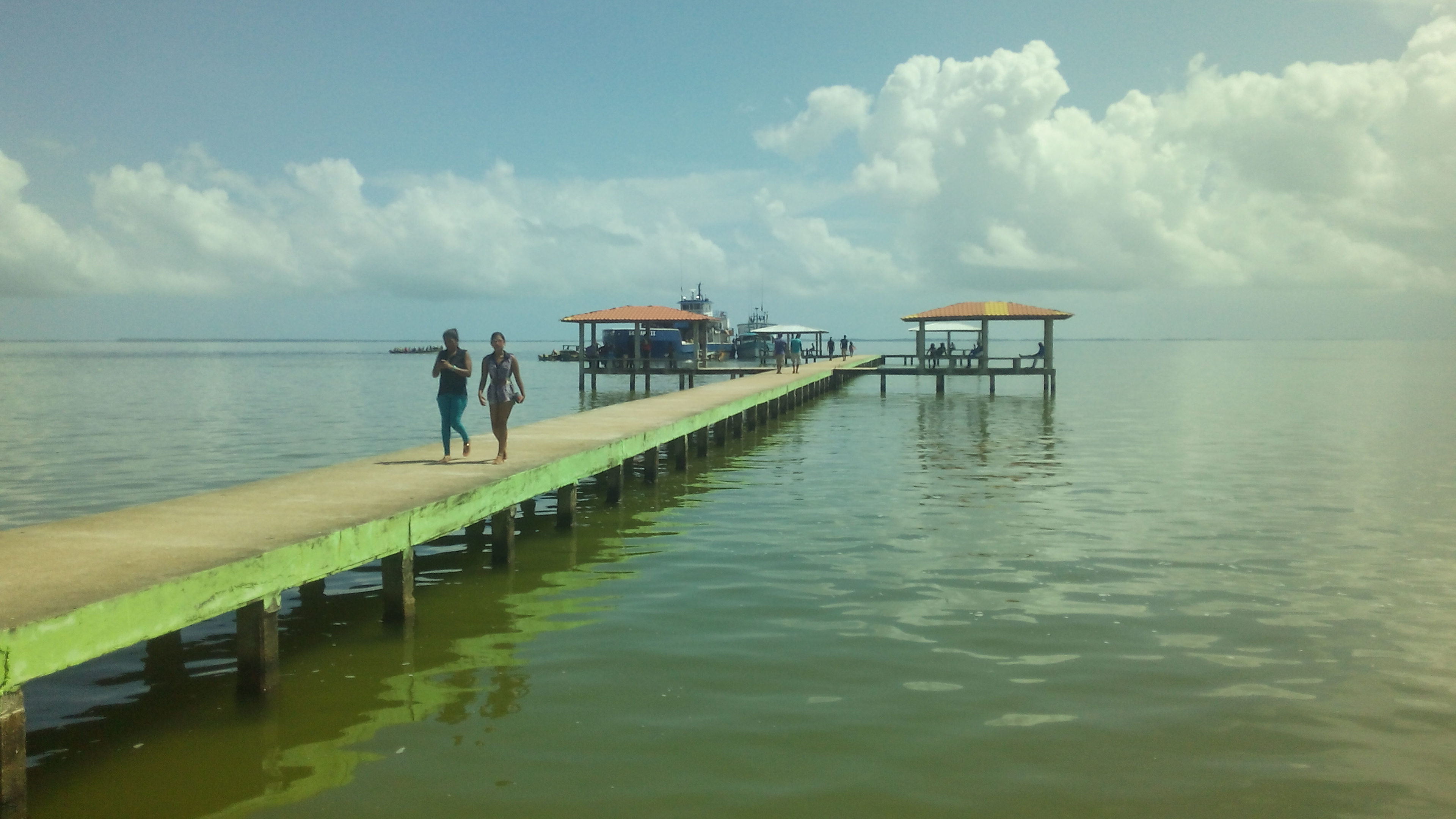
Puerto Lempira is the capital of the Gracias a Dios department, the easternmost and most remote in Honduras, in the heart of La Mosquitia. It's the region's main town and administrative center, set on the shore of Laguna de Caratasca, a huge Caribbean coastal lagoon. The area is overwhelmingly Miskito territory, in a landscape of lagoons, mangroves, pine savannas, rivers and rainforest. Cut off from the rest of the country, with no comfortable road connection, Puerto Lempira concentrates the services and institutions of a vast, sparsely populated department of great natural and cultural value
📌Service city
Puerto Lempira is itself the 'service city' of the eastern Mosquitia: it has a hospital, government offices, shops, simple lodgings, diners and an airstrip. Access is essentially by air: the usual way in is to fly a small plane from La Ceiba (the big logistics hub for all of La Mosquitia) to Puerto Lempira, with LANHSA (the only operator with a regular direct flight, 6 weekly frequencies) or CM Airlines. Within the town people get around on foot, by bicycle or by moto-taxi (tuk-tuk); there's no transport app or bus card, and everything is paid in cash (lempiras). Between communities transport is mostly by boat, across Laguna de Caratasca and along the rivers, plus a few roads in poor condition. There are no paved roads that comfortably link it with the rest of Honduras (source: LANHSA, CM Airlines and FlightConnections, verified July 2026)
📌Best time to go
The best time to visit is the dry season, roughly February to May, when the rains ease off, the lagoons and rivers are more navigable and getting around is easier. The rest of the year the rainy season dominates, with heavy downpours, swollen lagoons and difficult roads, though the landscape turns lush and green. It's a region with a hot, humid tropical climate and plenty of mosquitoes, so it pays to come well prepared any time of year
📌Suggested days
Puerto Lempira is not a conventional tourist destination but the center of a remote region. It's usually visited as part of a trip to the eastern Mosquitia, devoting 1 to 3 days to seeing Laguna de Caratasca, the Miskito communities, the mangroves and local life, or as a logistical and administrative base. Combined with other points in the Mosquitia, it can be worked into a trip of several days, always with local guides and operators and with flexibility given the logistics and the weather
💱 Cambio de USD
Loading rate…
🌤️ Clima en Puerto Lempira
Loading weather…
Puerto Lempira is the capital of the most remote corner of Honduras: the Gracias a Dios department, at the far eastern edge of La Mosquitia. Overlooking the immense Laguna de Caratasca, one of the largest coastal lagoons on the Central American Caribbean, it's the main town and administrative center of a vast, sparsely populated region of wild nature and living Indigenous cultures, a place the country's roads never reach.
Here, as throughout the Mosquitia, life revolves around water. Laguna de Caratasca and the rivers are the roads, the pantry and the scenery; fishing and paddling dugout canoes set the daily rhythm; and the population, mostly Miskito, keeps its language, its culture and its close bond with a world of lagoons, mangroves, pine savannas and rainforest. Puerto Lempira is the gateway to that world apart.
This guide covers the essentials of Puerto Lempira with a practical, honest eye: how to reach somewhere so isolated, what you can see and do on the lagoon and around it, what life in the Miskito communities is like, and why this destination —demanding in logistics but unique— rewards the traveler seeking the most authentic, natural and profound Honduras, completely off the conventional tourist track.
📖 History of Puerto Lempira
Puerto Lempira is the capital of the Gracias a Dios department, in the eastern Mosquitia of Honduras, on the shore of Laguna de Caratasca. The region has been inhabited since pre-Hispanic times by Indigenous peoples, today mainly Miskito, along with other groups. The department's name, Gracias a Dios ('Thanks be to God'), comes from the conquest era and is linked to Cape Gracias a Dios at the eastern tip, named according to tradition by navigators as they got past the difficulties of that coast. During the colonial period, La Mosquitia largely lay outside Spanish control, with strong British influence and an alliance with the Miskito people that gave rise to semi-autonomous political entities under British protection. The region's full incorporation into Honduras came about over time, through international agreements and boundary settlements. Puerto Lempira —whose name honors the chief Lempira, hero of the Honduran Indigenous resistance— grew as the main town and center of the eastern Mosquitia, and became the departmental capital when Gracias a Dios was organized as a department in the 20th century. The area lived through episodes tied to resource extraction, to the presence of bases and operations during the Central American conflicts of the 20th century and, in recent decades, to the challenges of insecurity and isolation. Today Puerto Lempira is the administrative heart of a region of extraordinary natural and cultural value. The full story is on our history page.
Read the full history →🏛️ Puerto Lempira is in Gracias a Dios
The Honduran Mosquitia: the most remote and wild corner of the country and its youngest department, land of the Miskito, Pech and Tawahka, of the Río Plátano Biosphere, virgin jungles, lagoons and rivers that serve as roads, with the legendary White City hidden in the jungle.
Read the history of Gracias a Dios →
🗺️ What to see
1
Laguna de Caratasca
The immense Caribbean coastal lagoon on whose shore Puerto Lempira sits, the axis of life in the region.
Laguna de Caratasca is the great natural star of Puerto Lempira and the eastern Mosquitia: a huge coastal lagoon connected to the Caribbean Sea, one of the largest in Central America, ringed by mangroves, savannas and communities. Puerto Lempira sits on its shore, and much of the region's life, economy and transport depends on it.
Cruising the lagoon by boat or dugout canoe is the central experience here. Its wide, calm waters, dotted with mangroves and Miskito communities, are home to waterbirds, fish and other species, and the basis of the small-scale fishing that sustains the population. Sailing the lagoon lets you take in its vastness, visit shoreline communities and watch the daily life bound up with the water.
The lagoon connects to the sea and to rivers and other lagoons, forming a water system that is the real road network of the eastern Mosquitia, where roads are scarce. Sunrises and sunsets over Caratasca, with the sky mirrored in the water and dugout canoes silhouetted against it, are one of Puerto Lempira's great visual gifts.
Getting there: the lagoon is at Puerto Lempira's feet; outings are arranged with local boatmen. Best time to go: dry season (February to May) for the best sailing conditions. Tips: agree the price and route before setting out; bring plenty of repellent, sunscreen, a hat and water; a life jacket; respect the wildlife and the communities.
ℹ️ Distance: At the feet of Puerto Lempira, in the eastern Mosquitia · Best time to go: Dry season (February to May) · Entry: L 500–1,200 per boat (group of up to 4-5 people, half a day, 2025; negotiable with local boatmen; verify on visiting) · Duration: Half a day to a full day
2
Miskito communities of the lagoon
The Miskito villages on the shores of Caratasca, with their culture, their fishing and their life on the water.
Around Laguna de Caratasca and in Puerto Lempira live Miskito communities, the largest Indigenous people of La Mosquitia. Getting to know their daily life is one of the most valuable experiences of a visit. The Miskito have their own language (Miskito) and a culture deeply tied to fishing, rivers, lagoons and boating, one that remains very much alive across the region.
Visiting the villages on the lagoon shore —on water outings from Puerto Lempira— lets you see the wooden houses beside the water, the dugout canoes, the fishing nets and the pace of community life. Talking with people, glimpsing how they make a living and learning about their traditions, their music and their organization is a way of understanding the Mosquitia from the inside, beyond the scenery.
The visit must always be made with respect: these are people's homes, not tourist attractions. Responsible tourism aims to benefit the local population by hiring guides, boatmen, lodging and food from the communities themselves. Coming with humility, asking permission before taking photos and valuing their culture is the best way to live this unique human experience.
Getting there: by boat across the lagoon from Puerto Lempira, with local guides. Best time to go: dry season. Tips: travel with respect; ask permission before photographing; support the local economy; learn about local customs; bring cash, since there are no banking services or modern comforts in the area.
ℹ️ Distance: Communities on the shores of Laguna de Caratasca (by boat from Puerto Lempira) · Best time to go: Dry season · Entry: L 300–700 per person (community guide + transfer, half a day, 2025; verify on visiting) · Duration: Half a day to a full day
3
Mangroves, savannas and nature of the eastern Mosquitia
The surrounding mangroves, pine savannas, rivers and rainforest around Caratasca, rich in birds and wildlife.
Puerto Lempira is surrounded by one of Honduras's most singular landscapes: the mosaic of mangroves, lagoons, pine savannas, rivers and rainforest that characterizes La Mosquitia. This little-altered, enormous expanse is a refuge of biodiversity and the natural setting in which the life of the eastern region's communities unfolds.
The mangroves fringing Laguna de Caratasca and the channels are an incredibly rich ecosystem, a nursery for fish and crustaceans and a refuge for a great variety of aquatic and migratory birds. The pine savannas —an open landscape typical of the Mosquitia and unusual in the tropics— add a striking contrast to the rainforest and the mangroves. The rivers that feed the lagoon connect to more inland, jungle-covered areas.
Exploring these environments by boat or, where possible, by land lets you watch the wildlife, appreciate the diversity of landscapes and grasp the natural richness of the region. Although Puerto Lempira is above all an administrative center, its surroundings offer an immersion in the wild nature of eastern Honduras, in a little-visited and very well-preserved corner.
Getting there: by boat across the lagoon and the channels, or along the area's roads, always with local guides. Best time to go: dry season; early in the morning for more birds and better light. Tips: hire local guides; bring plenty of repellent, binoculars if you have them, sunscreen and water; respect the ecosystems and leave no trash.
ℹ️ Distance: Around Laguna de Caratasca and the Puerto Lempira area · Best time to go: Dry season; early morning for birds · Entry: L 400–800 per group (boat + naturalist guide, half a day, 2025; verify on visiting) · Duration: Half a day to a full day
4
Town of Puerto Lempira (center of the eastern Mosquitia)
The main town and administrative center of Gracias a Dios, a window onto life in the Mosquitia.
Puerto Lempira is the main town and administrative center of the entire eastern Mosquitia, and walking through it is a glimpse into the life of this remote region. As capital of the Gracias a Dios department, it concentrates the government offices, the hospital, the shops, the lodgings and the basic services of a vast, sparsely populated territory, in a simple town on the shore of Laguna de Caratasca.
It's not a city of monuments or classic tourist attractions but a functional town with a local feel, where you see the everyday pulse of the Mosquitia: the bustle of the dock and the dugout canoes, the market and the shops, the mix of Miskito and other populations, and Puerto Lempira's role as a meeting point for the region's scattered communities. Walking its streets, you catch that character of a Honduran 'capital at the end of the world.'
For the traveler, Puerto Lempira is a logistical and administrative base: the place where the small plane lands, where you find services and from which outings on the lagoon and to the communities are organized. Its interest lies less in 'what there is to see' and more in what it represents: the heart of a unique, isolated and fascinating region.
Getting there: the town is explored on foot; access to the region is by air (small plane from La Ceiba). Best time to go: dry season for getting around. Tips: bring cash (there are no convenient banking services), repellent and patience with the logistics; take the chance to arrange guides and outings; take the usual safety precautions.
ℹ️ Distance: The town itself, capital of Gracias a Dios (on foot) · Best time to go: Dry season (to arrive and get around) · Entry: Free (wandering the town) · Duration: 1 to 2 hours
5
Small-scale fishing and life by the water
Heading out to fish with local fishermen, the central economic and cultural activity of the eastern Mosquitia.
Fishing is the heart of the economy and culture of Puerto Lempira and its neighboring communities. Going out with local fishermen, by dugout canoe or boat, onto the waters of Laguna de Caratasca or the nearby channels, lets you understand up close how the region's life depends on the water: the traditional fishing techniques, the kinds of fish and shellfish caught, and the daily rhythm set by the tides and the hours of the day.
Beyond the fishing itself, the experience usually includes preparing the freshly caught fish, with local recipes based on coconut, plantain and cassava, a chance to try Miskito cooking in its most authentic form, straight from those who make it.
This activity, always arranged with fishermen or community guides, is also a concrete way for tourism to bring direct income to the region's families, in a place where economic opportunities are scarce.
Getting there: arranged directly with local fishermen in Puerto Lempira or nearby communities. Best time to go: dry season, calmer waters. Tips: bring sunscreen, a hat and water; ask about the price and duration before setting out; it's an experience best enjoyed with an open mind and no rush.
ℹ️ Distance: On Laguna de Caratasca and channels near Puerto Lempira · Best time to go: Dry season; mornings with calmer waters · Entry: L 300–600 per person (half a day, includes boat and fisherman guide, 2025) · Duration: Half a day
6
Gateway to the Río Plátano Biosphere Reserve
Puerto Lempira serves as a connection point toward the World Heritage-listed reserve, further west.
Although the Río Plátano Biosphere Reserve —a UNESCO World Heritage Site and one of the last great pristine tropical forests in Central America— lies somewhat to the west of Puerto Lempira, within the Mosquitia, this town often serves as one of the connection and logistics points for those planning expeditions into that area, along with Brus Laguna and other towns in the region.
The reserve protects rainforests, rivers and exceptional biodiversity, as well as Pech, Miskito and Tawahka Indigenous communities. Reaching it from Puerto Lempira means coordinating internal flights, boats and specialized guides, with the complex logistics typical of one of the most remote areas on the continent.
For those in Puerto Lempira, it's worth asking locally about the available connections toward the Río Plátano, whether for a larger expedition or simply to grasp the immensity and natural richness of the whole Honduran Mosquitia, of which Puerto Lempira is merely a gateway.
Getting there: coordinate flights and boats from Puerto Lempira or directly from La Ceiba, depending on the operator. Best time to go: dry season, for the navigability of rivers and lagoons. Tips: this is a major expedition requiring its own planning and budget; consult operators specializing in the Mosquitia before planning the connection.
ℹ️ Distance: The reserve is further west of Puerto Lempira, within the Mosquitia · Best time to go: Dry season, for better navigability · Entry: A separate expedition, with its own costs for flights and specialized guides; consult Mosquitia operators · Duration: Several days (independent expedition)
What nobody tells you💵 Prices
Tickets
| Type | Price |
|---|
| Boat outings on Laguna de Caratasca | L 500–1,200 per boat, group of up to 4-5 people, half a day (market range, negotiable with local boatmen, verified July 2026) |
| Visit to Miskito communities | L 300–700 per person with a community guide (half a day, market range, verified July 2026) |
| Mangrove and savanna tours | L 400–800 per group (boat + guide, half a day, market range, verified July 2026) |
| Local guides (full day) | L 600–1,000 per day (market range; verify when hiring, verified July 2026) |
| La Ceiba – Puerto Lempira flight (small plane) | US$ 90–150 per leg approx. (market range; LANHSA or CM Airlines; verify fare and availability when booking, verified July 2026) |
🔄 updated monthlyOfficial / reference values · double-check when buying
Activities and tours
| Activity | Price | Duration | Operator |
|---|
| Boat outing on Laguna de Caratasca | L 500–1,200 per boat (group) | Half a day | Boatmen and community guides from Puerto Lempira |
| Visit to Miskito communities of the lagoon | L 300–700 per person | Half a day to a full day | Communities and local guides |
| Birdwatching in mangroves and savannas | L 400–800 per group | Half a day | Local nature guides |
| Small-scale fishing with local fishermen | L 300–600 per person (half a day, boat included) | Half a day | Community fishermen |
| Cultural exchange and learning about Miskito culture | L 400–900 per person depending on activities | Variable | Local communities |
🔄 updated monthlyOfficial / reference values · double-check when buying
🚌 How to get there and distances
Getting around
| Mode | Price | Duration | Notes |
|---|
| Small plane (La Ceiba – Puerto Lempira) | US$ 90–150 per leg approx. (market range; verify current fare with LANHSA or CM Airlines, verified July 2026) | About 1 h flight | The main access is by air: small planes from La Ceiba to the Puerto Lempira airstrip (code PEU). LANHSA is the only one with a regular direct flight (6 weekly frequencies, Jetstream 31/41 aircraft); CM Airlines also operates the route. You buy directly from the airline or at its La Ceiba office; you pay in cash or by transfer. Seats and schedules are limited; book ahead and allow flexibility for the weather (source: LANHSA, CM Airlines, FlightConnections, verified July 2026) |
| Moto-taxi / tuk-tuk (within the town) | L 20–40 per leg within the town (cash; the urban shared-taxi fare in Honduras was set at L 25 in April 2026) | A few minutes | The moto-taxi is the usual motorized transport within Puerto Lempira, a small town of dirt streets. There's NO real-time app (Moovit/Transit don't cover the area), NO rechargeable card or electronic bus payment: you flag it down on the street and pay in cash in lempiras. Agree the price before getting in (source: La Tribuna on the national shared-taxi fare, and Mosquitia travel guides, verified July 2026) |
| Boat / dugout canoe (lagoon and rivers) | L 100–300 per short leg between nearby communities; L 500–1,200 for longer trips (cash, negotiable with the boatman, verified July 2026) | Variable | The interregional transport par excellence: motorboats and dugout canoes for moving across Laguna de Caratasca, the mangroves, the rivers and between communities. There's no fixed schedule or ticket office: you arrange it directly with the boatmen at the dock and pay in cash; it's best to agree the price and route before setting out |
| On foot / bicycle (within the town) | Free | Variable | Puerto Lempira is covered on foot or by bike along dirt roads; distances within the town are short and paved streets barely exist (source: Fodor's Travel, verified July 2026) |
| Roads and limited overland transport | L 200–500 depending on distance and road condition (cash, verified July 2026) | Variable | There are some roads in poor condition toward communities in the region, passable with difficulty and depending on the season; most of the territory relies on air and river transport |
🔄 updated monthlyOfficial / reference values · double-check when buying
How to get there
| Route | Airlines / operators | Avg. price | Duration |
|---|
| La Ceiba → Puerto Lempira by small plane | LANHSA (the only one with a regular direct flight, 6 flights/week) and CM Airlines | US$ 90–150 per leg approx. (market range; verify current fare, verified July 2026) | About 1 h flight |
| Puerto Lempira → lagoon communities (boat) | Boatmen and local guides | L 100–500 depending on distance | Variable depending on the route |
| Puerto Lempira ↔ other Mosquitia communities (air/water) | Charter flights and local boats | Variable depending on distance and airline | Variable |
| La Ceiba as the logistics base of La Mosquitia | Flights and operators from La Ceiba | Depending on itinerary and airline | Depending on itinerary |
🔄 updated monthlyOfficial / reference values · double-check when buying
🏨 Where to stay
No exact prices: a scale from $ (budget) to $$$$$ (luxury), with 2-3 options per category.
| Category | Price | Recommended options |
|---|
| Local lodgings in Puerto Lempira | $$$$$ | US$ 20–40 a night; basic hotels and lodgings in the town, with limited services, practical for one or several nights as a base for the region. Check the ventilation, water and electricity, which can be intermittent |
| Community lodging / with families | $$$$$ | US$ 10–20 a night; within community tourism it's possible to stay with families or in community spaces on the lagoon, a direct way to support the local economy. Arrange ahead of time |
| Base in La Ceiba (before/after the trip) | $$$$$ | US$ 40–90 a night; La Ceiba, outside the region, offers hotels of various categories to organize the trip, rest and coordinate the flights to the Mosquitia |
🍴 Where to eat
| Type | Price | Options / signature dish |
|---|
| Miskito and lagoon cooking | $$$$$ | L 100–250 per dish; fresh fish, seafood, coconut soups (like rundown/seafood soup), plantain, cassava, rice and beans, at simple diners and community meals |
| Local diners | $$$$$ | L 60–150 per dish; basic diners in town serve the dish of the day and simple food. The choice is limited; it's best to coordinate meals with your lodging or the expedition |
| Dining in La Ceiba (logistics base) | $$$$$ | L 150–350 per dish; before and after the trip, La Ceiba offers seafood, traditional and international restaurants |
❓ Frequently asked questions
How do you get to Puerto Lempira?+
Access is essentially by air: you fly a small plane from La Ceiba, the logistics base of La Mosquitia, to the Puerto Lempira airstrip (code PEU). LANHSA is the only operator with a regular direct flight (6 frequencies per week, in Jetstream 31/41 aircraft) and CM Airlines also covers the route; the leg costs roughly US$ 90-150 and takes about 1 hour (verified July 2026). There are no paved roads that comfortably connect the area with the rest of the country. Within the region, transport is mostly by water (boats and dugout canoes across Laguna de Caratasca and the rivers). It's best to book flights ahead —directly with the airline or at its La Ceiba office— and allow flexibility for the weather.
How do I get around Puerto Lempira and how do I pay for transport?+
Puerto Lempira is a small town of dirt streets covered on foot or by bicycle; for longer stretches within town people use the moto-taxi (tuk-tuk), which you flag down on the street and which charges about L 20-40 per trip in cash (the urban shared-taxi fare in Honduras rose to L 25 in April 2026). There's no real-time transport app —Moovit and Transit don't cover the Mosquitia—, no rechargeable card and no QR/app payment: everything is paid in cash in lempiras, so it's wise to carry small bills. Between lagoon communities transport is by boat or dugout canoe, arranged directly with the boatmen at the dock and also paid in cash, agreeing the price before setting out (verified July 2026).
What can you do in Puerto Lempira?+
Cruise the immense Laguna de Caratasca by boat (from about L 500-1,200 per group), visit the Miskito communities on the shore, explore mangroves and savannas rich in birds, go small-scale fishing with locals and get to know the life and culture of the eastern Mosquitia. More than a destination of 'attractions,' it's an immersion in a remote region that is unique in nature and culture.
What's the best time to visit?+
The dry season, roughly February to May, is the best: the rains ease off, the lagoons and rivers are more navigable and getting around is easier. In the rainy season travel gets complicated by flooding and the roads. Any time of year it's a hot, humid region with plenty of mosquitoes, so you have to come well prepared.
Is it a destination for every kind of traveler?+
No. Puerto Lempira and La Mosquitia are demanding, remote destinations with very basic services, meant for adventurous, respectful travelers seeking authentic nature and culture. There are no modern comforts, no convenient ATMs and no conventional tourist infrastructure. Those who travel prepared, with local guides and an open mind, have a unique experience; those looking for comfort won't find their place here.
Where does the name Puerto Lempira come from?+
The name honors Lempira, the Lenca chief and hero of the Indigenous resistance against the Spanish conquest in the 16th century, a central figure in Honduran national identity (he also gives his name to the country's currency). The department it belongs to, Gracias a Dios, owes its name to the cape of the same name at the eastern tip, named according to tradition by navigators of the colonial era.
Is it safe to travel to Puerto Lempira and the Mosquitia?+
La Mosquitia is a remote region that in recent decades has faced challenges of isolation and insecurity, partly linked to illicit activities in remote areas of the Caribbean. It's wise to inform yourself very well and up to date before traveling, plan with serious local operators and guides, take precautions, and stay flexible. Traveling in an organized and responsible way, it's possible to get to know this exceptional region.
Sources consulted (13)
- Wikipedia (ES) — «Puerto Lempira»: https://es.wikipedia.org/wiki/Puerto_Lempira
- Wikipedia (ES) — «Departamento de Gracias a Dios»: https://es.wikipedia.org/wiki/Departamento_de_Gracias_a_Dios
- Wikipedia (ES) — «La Mosquitia»: https://es.wikipedia.org/wiki/La_Mosquitia
- Wikipedia (ES) — «Puerto Lempira»: https://es.wikipedia.org/wiki/Puerto_Lempira
- Wikipedia (ES) — «Laguna de Caratasca»: https://es.wikipedia.org/wiki/Laguna_de_Caratasca
- Instituto Hondureño de Turismo — Honduras Travel: https://www.honduras.travel/
- CM Airlines — Puerto Lempira: https://www.cmairlines.com/puerto-lempira
- FlightConnections — La Ceiba (LCE) a Puerto Lempira (PEU): https://www.flightconnections.com/flights-from-lce-to-peu
- Fodor's Travel — Puerto Lempira (cómo moverse): https://www.fodors.com/world/mexico-and-central-america/honduras/la-mosquitia/places/laguna-de-caratasca-and-eastern-la-mosquitia/puerto-lempira
- La Tribuna — «Tarifa de taxis colectivos ahora es de 25 lempiras» (abr. 2026): https://www.latribuna.hn/2026/04/28/tarifa-de-taxis-colectivos-ahora-es-de-25-lempiras/
- Wikipedia (ES) — «La Mosquitia»: https://es.wikipedia.org/wiki/La_Mosquitia
- Instituto Hondureño de Turismo — Honduras Travel: https://www.honduras.travel/
- Wikipedia (ES) — «Pueblo misquito»: https://es.wikipedia.org/wiki/Pueblo_misquito